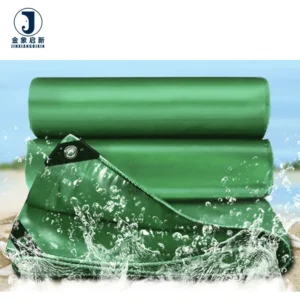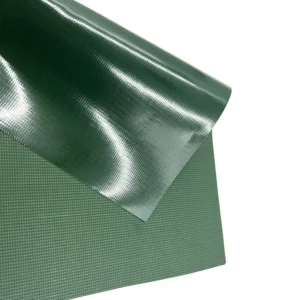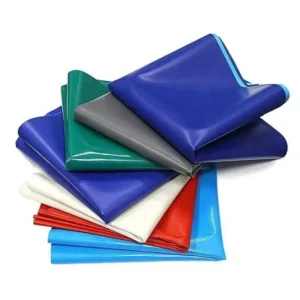

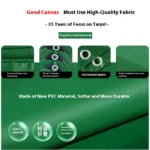
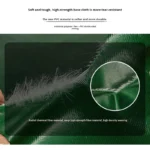
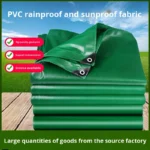
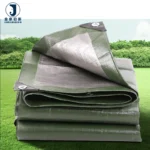
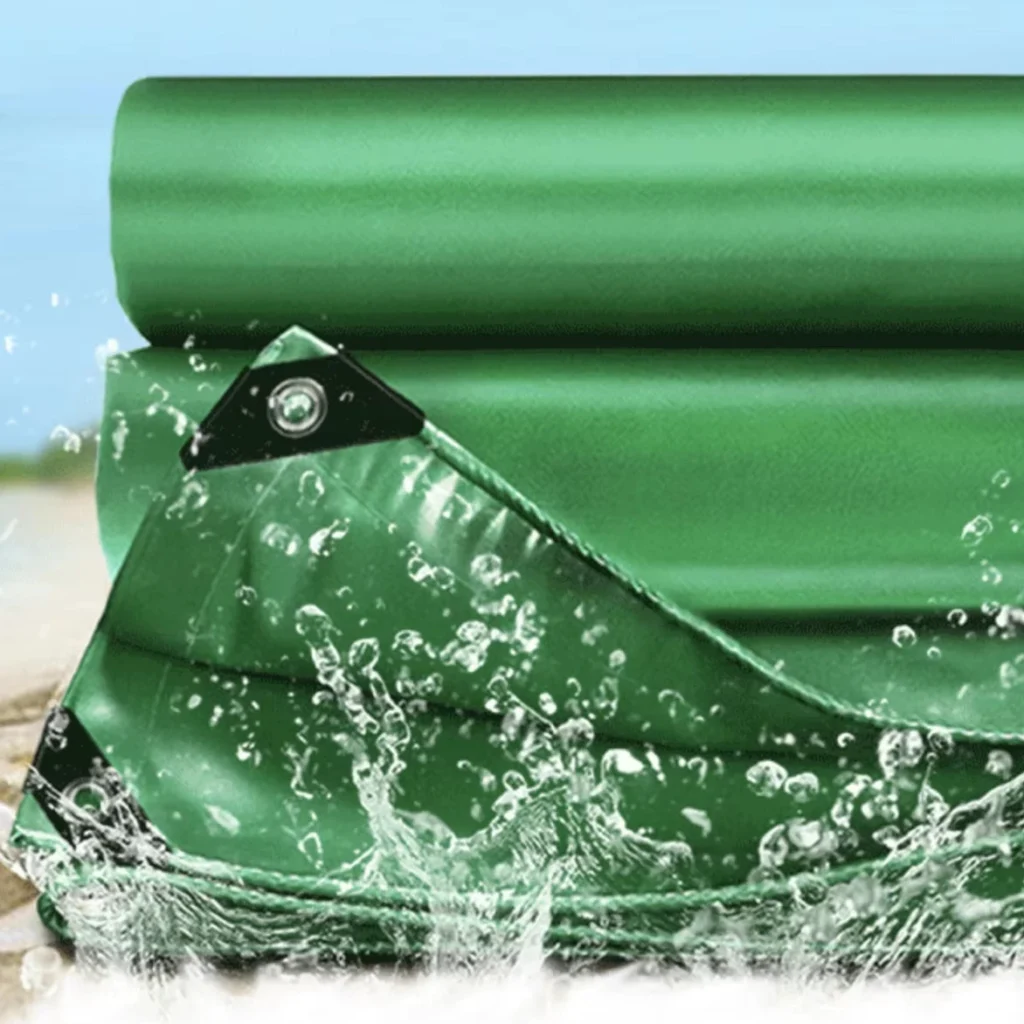
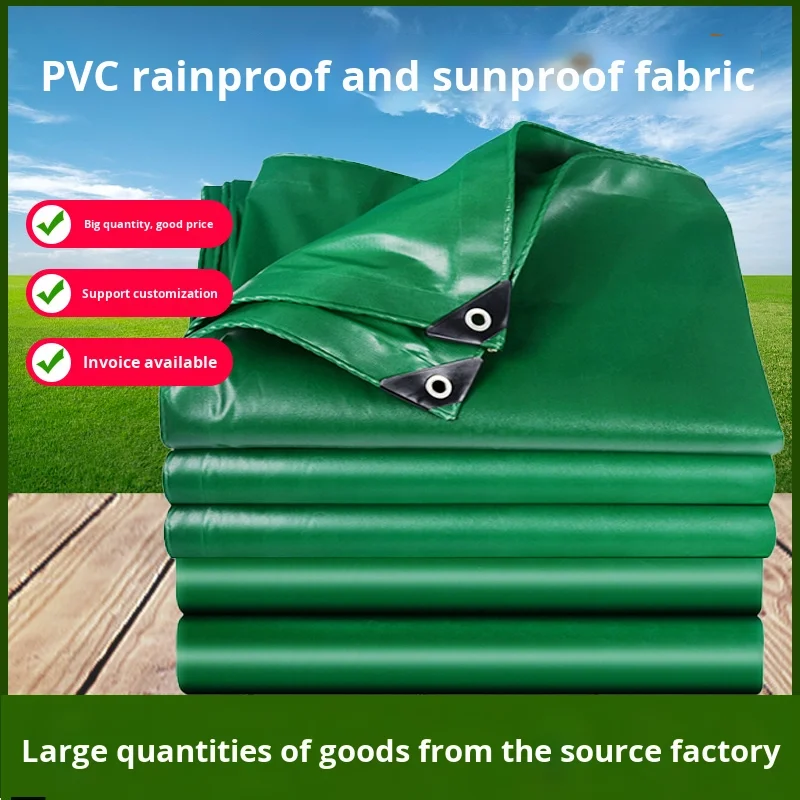
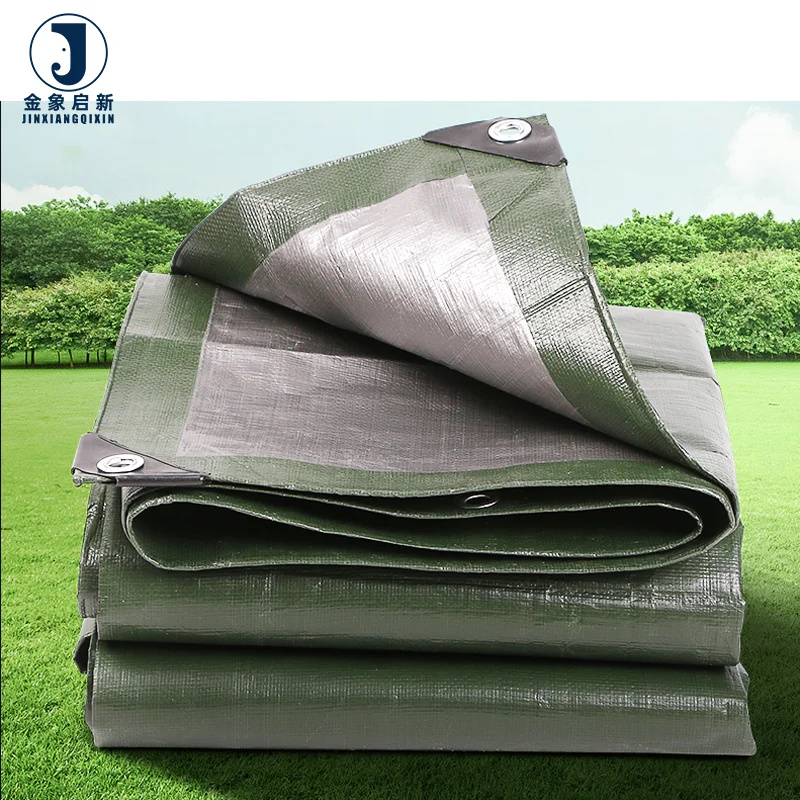
Baseline Technical Coated Fabric — developed through nearly 30 years of PVC-polyester coating process control, with dedicated QA verification at every roll stage before dispatch.
Technical Specifications
| Parameter | Value |
|---|---|
| Product Type | PVC Coated Tarpaulin Roll |
| Weight | 400 GSM |
| Total Thickness | 0.3 mm |
| Base Fabric Denier | 500D × 500D |
| Coating Material | PVC & Polyester |
| Water Resistance | Fully waterproof coated construction |
| Flame Retardancy | Available in flame retardant grades — confirm the grade required for your market |
| UV Treatment | Available with UV stabilisation — request test basis for your climate zone |
| Colour Options | Multiple colours available — confirm colour reference per batch |
| Certifications | ISO, CE |
Application Suitability
| Application | Exposure & Requirement |
|---|---|
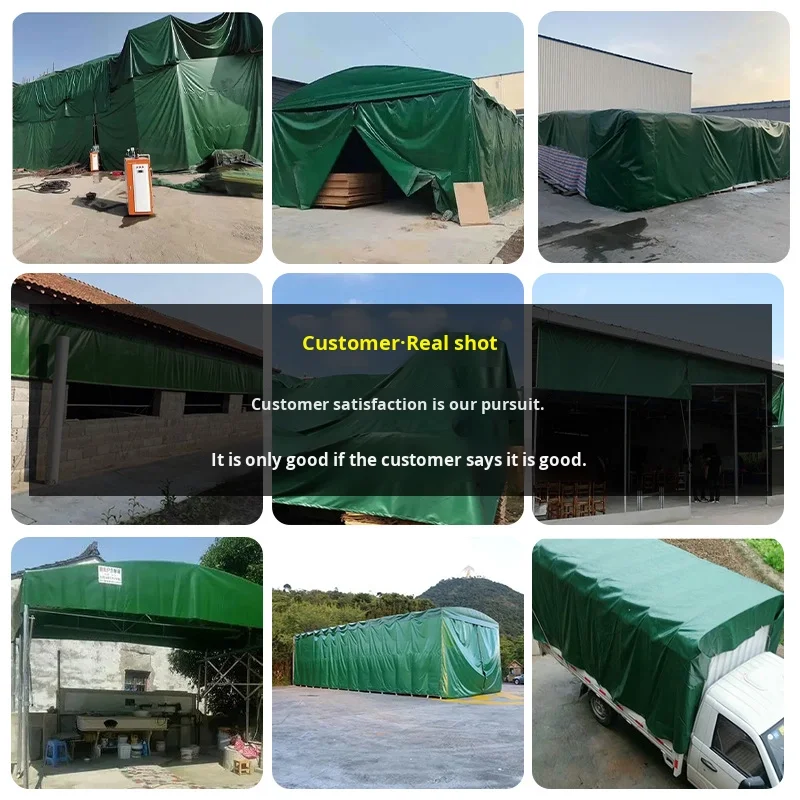
| Tent and awning canopy fabrication | Sustained wind load, solar exposure, repeated tension and release cycles |
| Industrial machine and equipment covers | Dust ingress prevention, moisture exposure, handling abrasion during fitting |
| Truck and trailer load protection | Road debris impact, weather exposure, flex at tie-down points |
| Membrane structure prototyping | Baseline tensile evaluation before specifying higher-grade technical fabrics |
| Temporary construction enclosure | Wind pressure, rain ingress, site handling and repositioning |
Why Undocumented Flame Retardancy Claims Put Your Project at Risk
Every roll should ship with the specific fire test standard stated on the quotation — not a generic "flame retardant" label.
Technical buyers on membrane structures, public event tents, and mining ventilation applications face compliance audits that demand a specific fire classification. A fabric described only as flame retardant without a cited standard such as B1, M2, or NFPA 701 creates ambiguity at inspection. When the local fire authority or site safety officer requests documentation, a missing test report halts the project. [NEED_CITE: fire classification standards for tensile membrane structures]
This 0.3mm 400g PVC coated tarpaulin roll is available with flame retardant treatment, and the exact grade must be confirmed against your project specification before bulk commitment. Requesting the test report upfront avoids costly material rejection after delivery.
Tensile Baseline for Mid-Weight Fabrication
The 500D × 500D polyester base fabric positions this PVC coated tarpaulin roll as a mid-weight technical textile for applications where moderate tensile performance meets cost efficiency. Fabricators working with hot air welding or high-frequency joining should validate seam adhesion on sample lengths before committing to full roll orders, as base fabric denier directly influences how the coating bonds at the weld line.
For tent and awning manufacturers, this denier and weight combination provides a balance between handling ease during fabrication and sufficient structural integrity for canopy spans. The polyester substrate maintains dimensional stability under tension, reducing the risk of fabric creep over time.
Coating Weight and Compliance Documentation
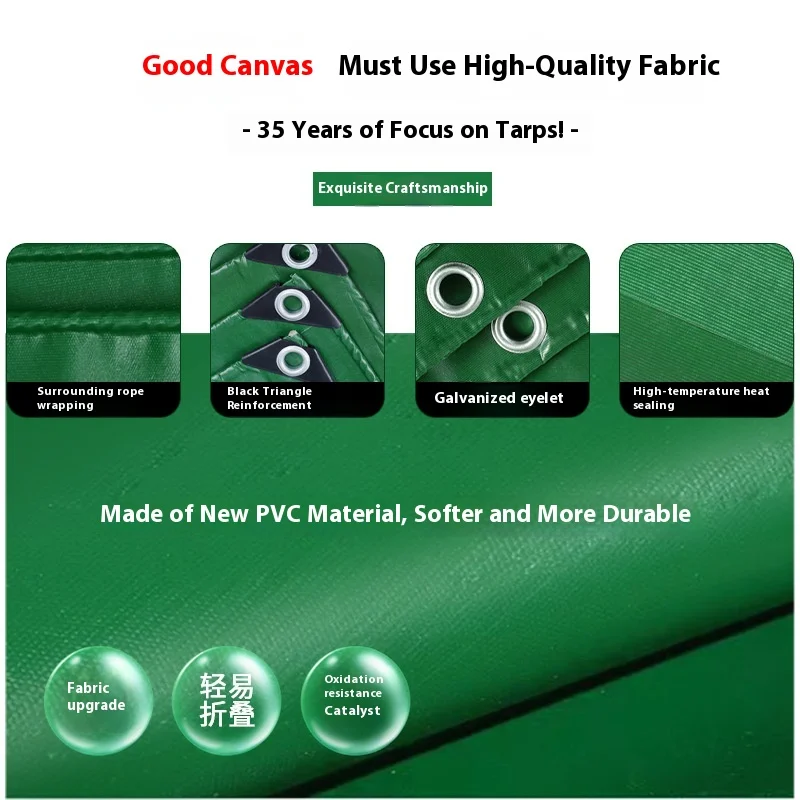
At 400 GSM total weight and 0.3 mm total thickness, the PVC coating delivers a waterproof barrier suitable for outdoor protective applications. Technical buyers sourcing for compliance-driven projects must align the treatment specification with local regulatory requirements. UV stabilisation and flame retardancy are available as treatment options — the critical step is documenting which standard applies. [NEED_CITE: ISO 1421 tensile and tear test methods for coated fabrics]
When specifying this material for membrane or inflatable structure prototyping, confirm that the coating formulation supports the joining method and operational temperature range your design demands. The material specification sheet should state the coating method, exact GSM, base fabric construction, and any applied treatments with their corresponding test standards.
How Base Fabric Denier and Coating Weight Interact
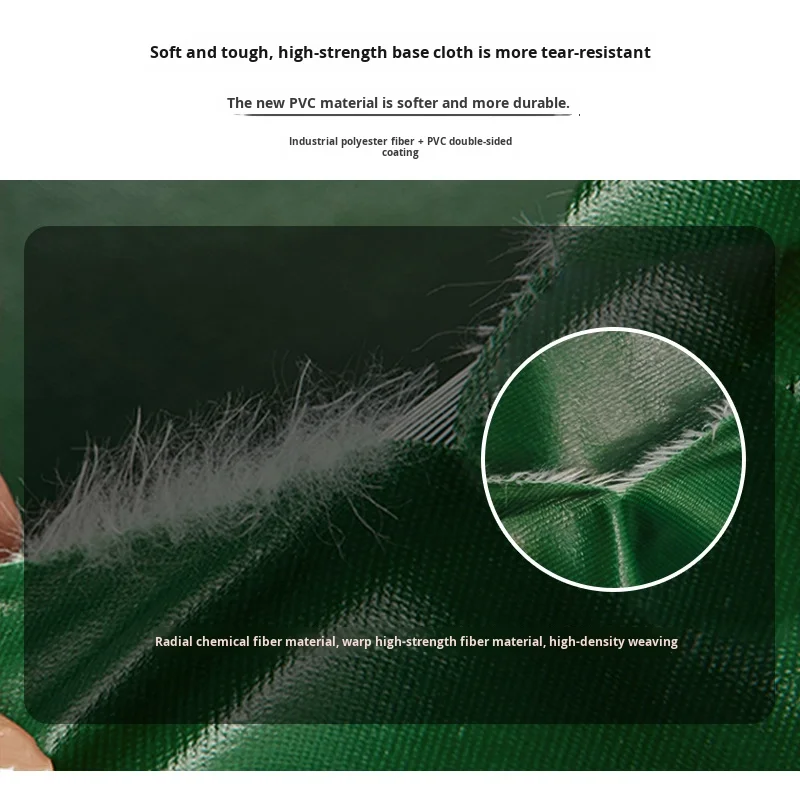
The 500D × 500D yarn construction determines the grid density that the PVC coating must penetrate and encapsulate. A denier of this count paired with 400 GSM total weight indicates that the coating fills the interstices of the woven polyester without excessive surface build. This balance affects how the material behaves during fabrication: insufficient coating penetration reduces peel strength at welded seams, while excessive coating thickness relative to the base fabric increases stiffness and may cause cracking at fold lines.
Polyester as a substrate offers inherent dimensional stability compared to nylon alternatives, which absorb moisture and shift dimensionally in humid conditions. The 0.3 mm thickness places this material in the lighter end of coated technical fabrics, meaning that cutting and handling during fabrication require standard workshop practices without heavy-duty equipment. The weight-to-denier ratio suggests a material engineered for applications where weight and pack size matter — tent panels, temporary covers, and awning skins where every kilogram of installed weight affects the supporting structure.
The Hidden Cost of Accepting Unverified Material Claims
A roll that arrives lighter than the 400 GSM stated on the quotation compromises every downstream specification: tensile capacity drops, coating thickness decreases, and waterproof integrity thins at stress points. Batch-to-batch colour variation becomes visible only when adjacent panels are installed side by side on a large awning or tent, triggering panel rejection and rework.
When flame retardancy is claimed without a cited test standard, the fabric may pass your internal workshop checks but fail the site compliance audit after installation. Welded seams that fail before the fabric itself indicate either incorrect welding parameters for the coating formulation or insufficient coating adhesion to the base fabric — both traceable to inadequate pre-order specification and sampling. [NEED_CITE: common failure modes in coated fabric welded seams]
Procurement Verification Built Into Every Order
Each roll undergoes dedicated QA inspection with weight and width verification against the stated 400 GSM and ordered dimensions before packing. The material specification sheet documents the exact base fabric denier, coating material, and applied treatments with references to the relevant test standards.
Pre-shipment inspection records are compiled roll by roll, providing traceability from production batch to dispatch. Colour consistency across the order is controlled through reference matching, reducing the risk of visible variation between adjacent panels after installation. Custom widths and lengths are available, with sample development completed within days for non-standard requirements.
Documentation & Verification
- Material specification sheet confirming 400 GSM, 500D × 500D base, and PVC coating method
- Fire classification test report supplied with grade-specific standard reference
- UV stabilisation test documentation stating exposure basis and degradation limits
- Pre-shipment roll inspection record with per-roll weight and width measurements
- ISO and CE certificates included in dispatch documentation package
- Certificate of origin and customs documentation for international shipment
Fabrication, Handling & Storage
- Hot air welding parameters should be validated on sample lengths of this 0.3 mm material before production runs
- Store rolls upright on end caps to prevent flat-spot deformation of the PVC coating surface
- Allow cold-transported rolls to reach workshop temperature before unrolling to avoid coating crack at the core
- Clean finished fabrications with mild detergent only — solvent-based cleaners may degrade the PVC coating
- Plan cutting layouts to minimise cross-grain seams on the 500D × 500D base fabric for structural panels
- Reinforce tie-down and eyelet attachment points with additional PVC patches to distribute load beyond the base fabric denier capacity
Before You Request a Quotation
Provide the specific application, expected exposure conditions, and any fire or safety classification required by your local authority or project specification. State the roll width, length, and annual volume you need so we can confirm production capacity and lead time. If colour matching to an existing installation or brand reference is required, share the RAL or Pantone code for sample development.
Frequently Asked Questions
Q: How is the 400 GSM weight verified on arrival, and what tolerance applies per roll?
A: Every roll is weighed during pre-shipment inspection and recorded against the quoted 400 GSM specification. The inspection report ships with your order, showing roll-by-roll measurements. If your project requires a tighter tolerance than standard production variance, specify this at inquiry stage so we can confirm achievability and adjust production controls accordingly.
Q: Which flame-retardant standard does this fabric meet — can you supply B1, M2, or NFPA 701 test reports?
A: This PVC coated tarpaulin roll is available in flame retardant grades, and the specific standard depends on the formulation selected for your order. State the fire classification required by your project — such as B1 per DIN 4102, M2, or NFPA 701 — at inquiry stage. We will confirm the available grade and include the corresponding test report with your shipment documentation.
Q: What is the UV treatment test basis and expected outdoor exposure duration for this grade?
A: UV stabilisation is available as a treatment option, and the test basis varies by formulation. Rather than quoting generic outdoor years, we supply the test standard and exposure hours specific to the UV package applied. Share your installation climate and expected service conditions so we can recommend the appropriate stabilisation level and provide the supporting test documentation.
Q: Is 500D × 500D base fabric sufficient for hot air welded seams under structural tension?
A: The 500D × 500D polyester base provides adequate strength for many tent and awning applications, but weld seam performance depends on both the base fabric and the coating adhesion. We recommend ordering sample lengths to validate your welding parameters and conduct peel tests before committing to bulk production. Our R&D team can advise on optimal welding temperature and speed for this 400 GSM specification.
Q: Can roll width and length be customised, and what is the minimum order for non-stock dimensions?
A: Custom widths and lengths are available for this PVC coated tarpaulin roll. Minimum order quantities depend on the specific dimensions and colour requested. Provide your required roll dimensions and target quantity at inquiry stage, and we will confirm the production minimum, lead time, and any setup requirements for your specification.