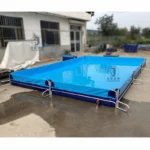
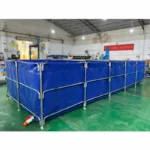
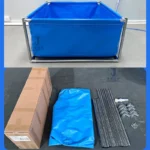
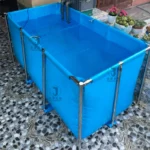
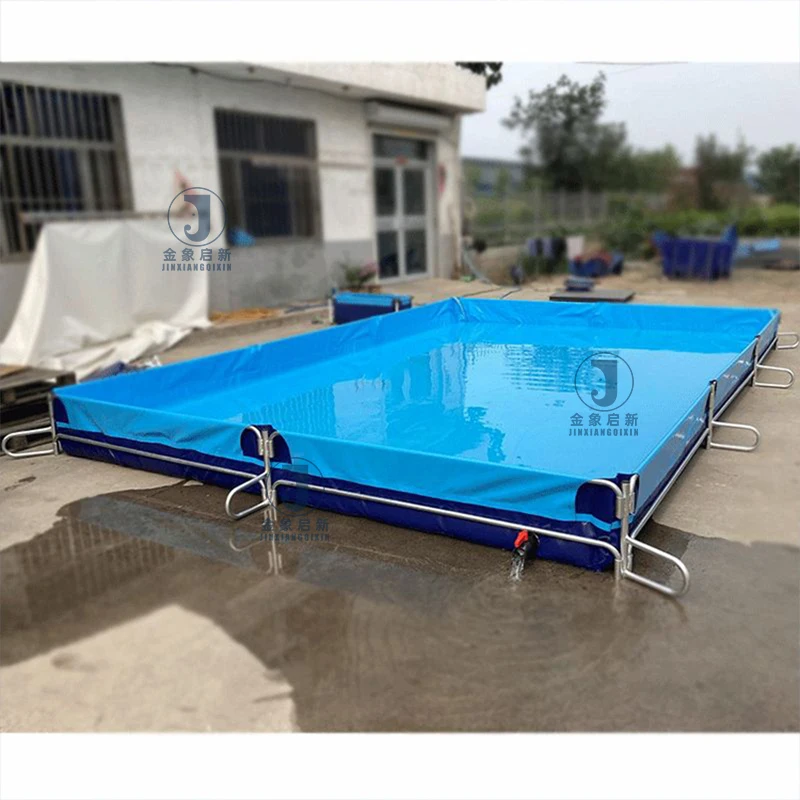
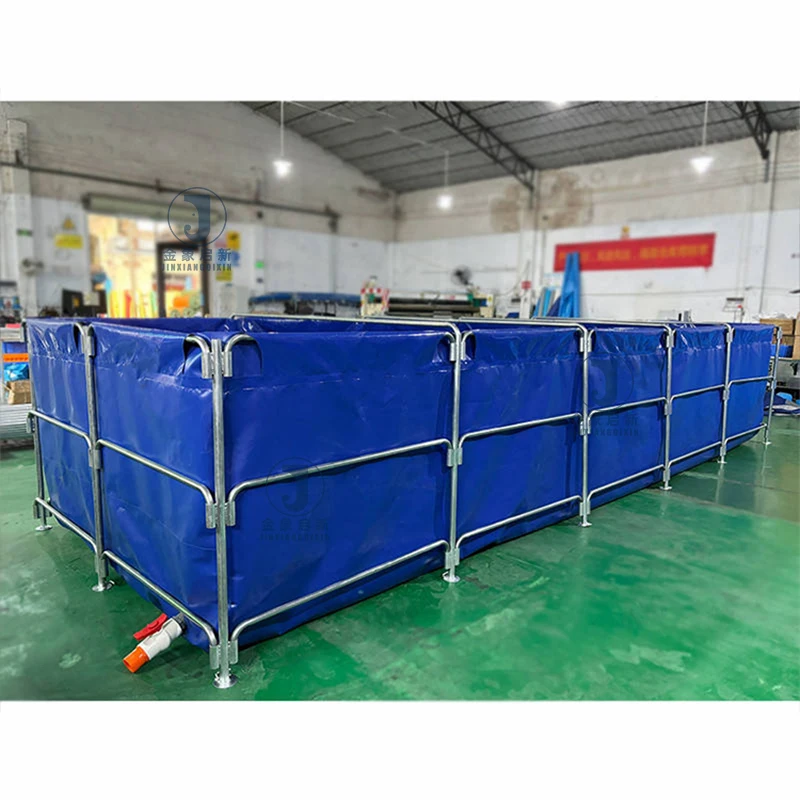
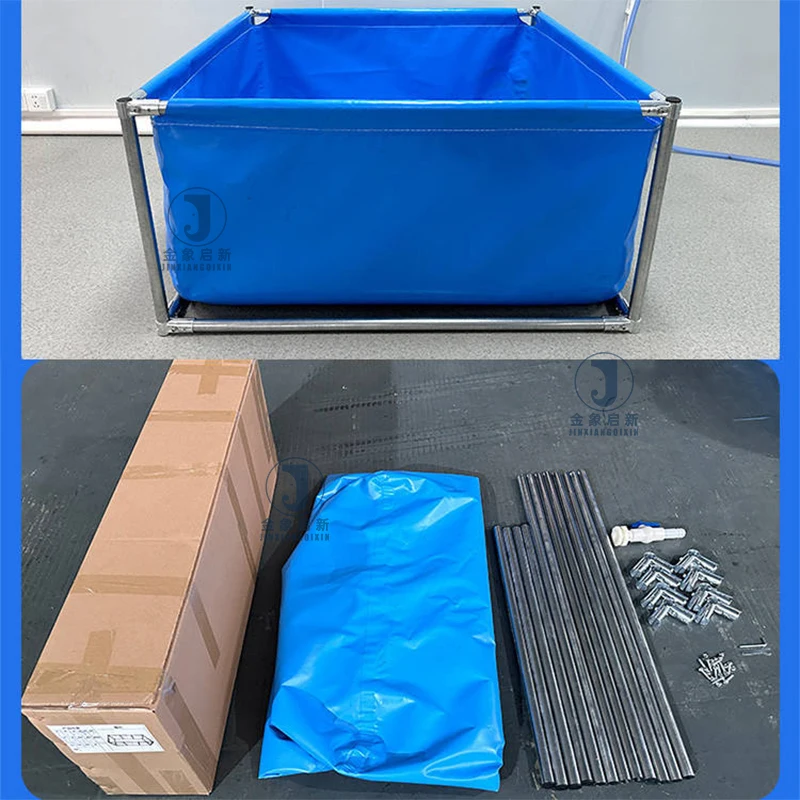
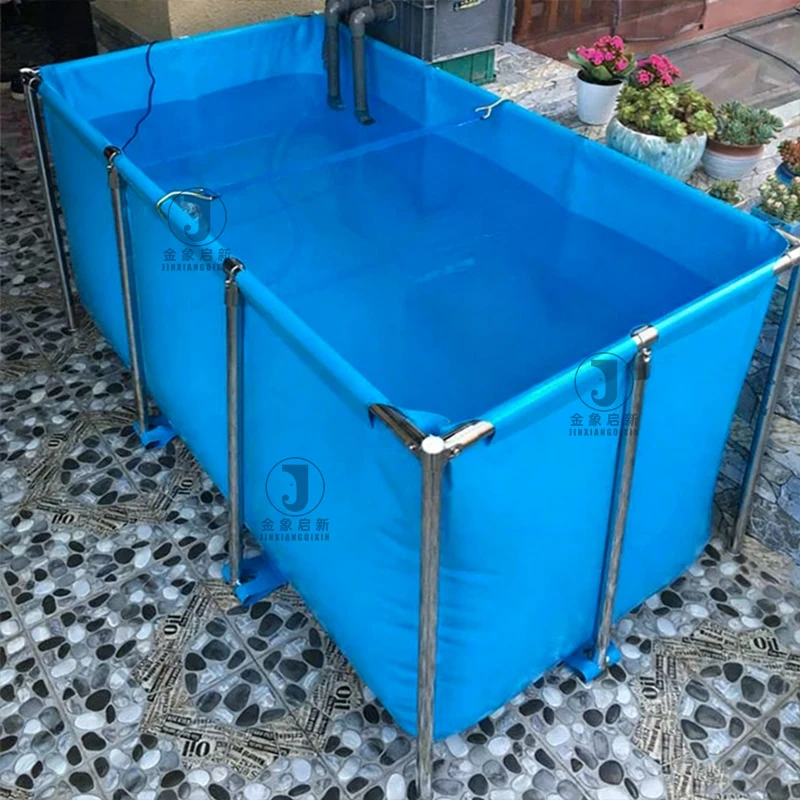
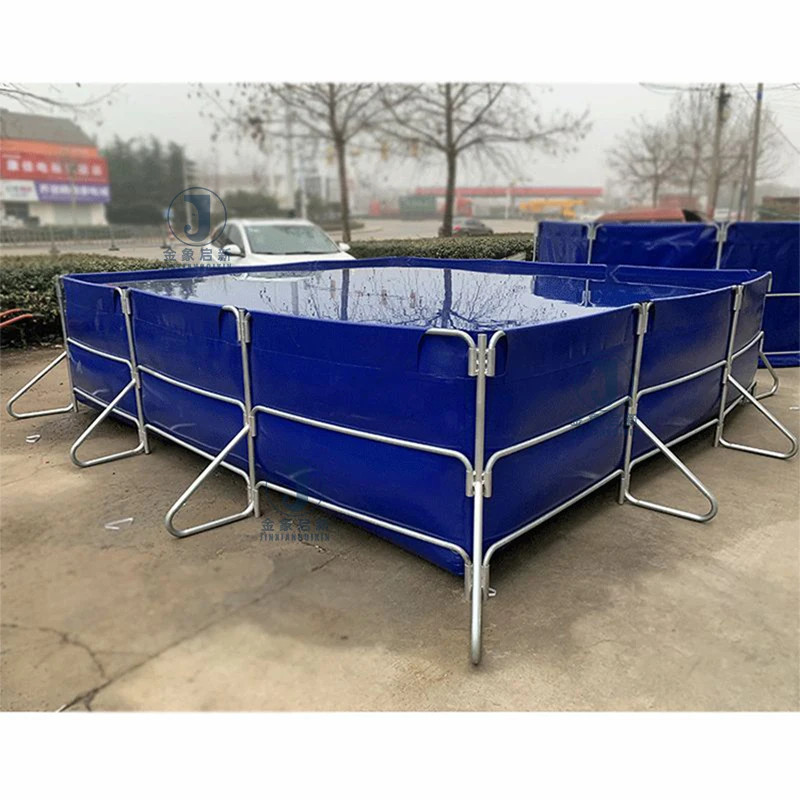
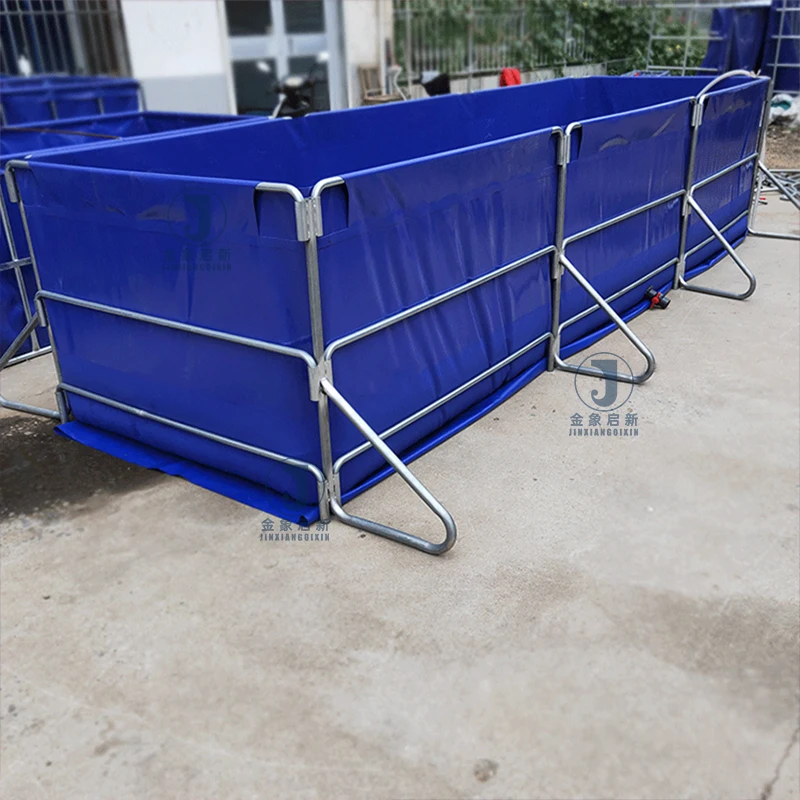
Process Control Excellence — Nearly 30 years of coating process refinement ensures every PVC fish pond liner roll carries verified GSM weight and consistent adhesion across the batch.
Technical Specifications
| Parameter | Value |
|---|---|
| Product Type | PVC Pond Liner |
| Coating Material | PVC & Polyester (double-sided PVC coating on polyester base fabric) |
| Base Fabric Yarn Count | 500D × 500D |
| Surface Characteristics | Smooth and soft surface with leather-like texture |
| Waterproof Construction | Double-sided PVC coating with overall sealing |
| Abrasion Resistance | Very strong |
| UV Resistance | Available in anti-UV grades — confirm the grade required for your market |
| Flame Retardancy | Flame-retardant type customizable (grade not stated in source) |
| Service Life | 3–5 years |
| Repairability | Repairable by hot air welding |
| Seaming Method | Integrated pressing (not stitched) |
| Thickness Range | 450–900 g/m² |
Application Suitability
| Application | Exposure & Requirement |
|---|---|
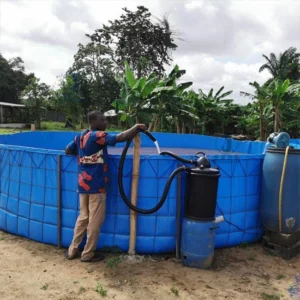
| Commercial fish farming ponds | Permanent water immersion, biological fouling, substrate puncture risk, sustained hydrostatic pressure |
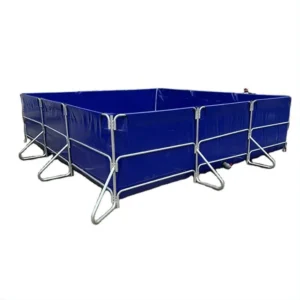
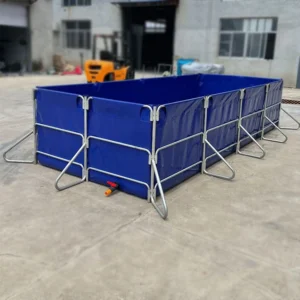
| Foldable aquaculture tank construction | Repeated assembly and disassembly, flex fatigue at fold lines, abrasion against frame supports |
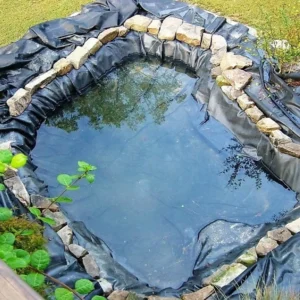
| Agricultural water reservoir lining | Seasonal UV exposure, soil chemistry contact, mechanical damage from maintenance equipment |
| Irrigation containment ponds | Continuous water retention, temperature cycling, algae and sediment accumulation |
Why Seam Integrity Decides Pond Liner Performance in Aquaculture
Stitched seams create needle holes that become the first leakage path once hydrostatic pressure builds.
Most pond liner failures reported by aquaculture operators trace back to the joining method rather than the fabric body. A liner panel may hold water perfectly, but a stitched seam introduces hundreds of perforation points per linear metre. Over weeks of constant water contact, those micro-holes widen under pressure and biological activity, turning a manageable installation into an emergency drain-and-repair situation [NEED_CITE: field failure analysis of coated fabric pond liners in aquaculture]. The PVC fish pond liner described here uses integrated pressing with hot-air weldable seams, closing the gap between fabric strength and joint strength so the weakest point is no longer the seam line.
Coated Fabric Construction for Sustained Water Containment
The double-sided PVC coating on a 500D × 500D polyester base fabric delivers structural integrity under the hydrostatic loads encountered in commercial aquaculture ponds. The polyester yarn provides tensile resistance, while the PVC coating on both faces seals the weave against water penetration. This construction approach means the PVC fish pond liner maintains dimensional stability even when installed on uneven ground where point loads concentrate against sharp substrate features.
Hot-Air Weld Joining Eliminates the Primary Failure Point
Conventional pond liners sewn with thread create a continuous line of perforations that degrade under constant water exposure. The integrated pressing construction used here avoids stitching entirely. When panels are joined by hot-air welding, the PVC coating on adjacent panels fuses into a continuous membrane. The resulting weld line carries the same coating thickness as the fabric body, removing the needle-hole vulnerability that accounts for a significant proportion of early-stage liner leaks [NEED_CITE: coated fabric seam failure modes in water containment applications].
Reading the Specification Sheet Beyond GSM Alone
A thickness range of 450–900 g/m² covers multiple grades within this liner family, and selecting the correct grade depends on the containment demands of the installation. Heavier grades provide greater coating mass on each face, which directly improves puncture resistance against rocky or shell-laden substrates. The 500D × 500D yarn count indicates the base fabric density — this denier level balances tensile strength with flexibility, allowing the liner to conform to pond contours without excessive stiffness during installation. The smooth, leather-like surface finish reduces friction against fish stock and simplifies sediment removal during pond cleaning cycles. Coating adhesion to the base fabric determines whether the PVC layer delaminates under prolonged immersion, making the bond strength between coating and yarn as critical as the GSM figure itself.
The Hidden Cost of Specifying Liner Weight Without Verifying Coating Adhesion
Quoting a pond liner at a given GSM without confirming how that weight distributes between base fabric and coating creates a specification blind spot. Two liners can share the same stated GSM yet differ substantially in coating thickness, meaning one may offer superior puncture resistance while the other relies more heavily on base fabric density. When coating adhesion is insufficient, the PVC layer separates from the polyester under sustained water immersion — a failure mode that appears as blistering or peeling at the panel edges long before the expected service interval [NEED_CITE: coating delamination mechanisms in PVC tarpaulin under hydrostatic load]. Batch-to-batch consistency in coating weight also matters: if roll-to-roll GSM varies, adjacent panels in the same pond may age at different rates, creating visible performance differences across the installation.
Why Specialist Contractors Source PVC Pond Liners Through This Facility
The 10-person R&D team handles material selection and custom sizing for non-standard pond geometries, developing samples within days for site-specific requirements. Three full production lines and 36 sets of professional equipment support bulk roll output with controlled coating weight across the production run. Dedicated QA/QC inspection at every production stage — from base fabric incoming check through coating adhesion testing to final roll winding — catches GSM deviation and surface defects before dispatch. ISO and CE certification frameworks govern the production environment, providing documentation traceability for aquaculture projects that require compliance records. The hot-air weldable construction of this PVC fish pond liner is validated through in-process seam testing, ensuring the joining method performs under the hydrostatic conditions the liner will encounter in service.
Documentation & Verification
- Material specification sheet stating base fabric denier, coating weight, and GSM for the selected grade
- UV treatment and flame-retardant test reports provided where the specified grade requires compliance evidence
- Pre-shipment inspection record confirming 100% roll inspection against stated coating weight and surface quality
- Certificate of origin and customs documentation prepared for cross-border aquaculture project shipments
- Roll packing list detailing batch numbers and GSM verification per roll for traceability
Fabrication, Handling & Storage
- Hot-air weld temperature and dwell time must match the 450–900 g/m² grade selected to avoid coating scorch or incomplete fusion
- Integrated pressed seams require clean, dry mating surfaces before welding to maintain bond integrity on the PVC coating
- Store rolls upright on pallets in shaded conditions to prevent compression creasing of the smooth leather-like surface
- Unfold liner panels at ambient temperature — cold PVC coating becomes stiff and risks cracking at fold lines during installation
- Field repairs use compatible PVC patch material welded with the same hot-air equipment to restore waterproof continuity
- Cut panels with a straight blade on a flat surface to maintain clean edges for subsequent weld joining
Requesting a Specification Match for Your Aquaculture Project
Provide the pond dimensions, substrate type, and whether the installation involves permanent or seasonal water containment. Specify any flame-retardant or anti-UV grade requirements dictated by your local compliance framework. Confirm whether you need full custom-cut panels with finished edge hems or roll stock for on-site fabrication, and indicate your target volume and delivery schedule so the production team can align the run accordingly.
Frequently Asked Questions
Q: How can I verify coating adhesion and seam weld integrity when the liner rolls arrive on site?
A: Request the pre-shipment inspection record that documents coating adhesion test results per roll. On arrival, perform a cross-hatch adhesion check on a sample cut from the roll end. For welded seams, conduct a peel test at the weld line to confirm the bond strength matches the fabric body rather than separating at the coating-to-yarn interface.
Q: What flame-retardant grades are available for this PVC pond liner and which standards do they cover?
A: Flame-retardant formulations are customizable to match the compliance grade required by your market. Confirm the specific standard — such as local fire safety classifications for agricultural structures — at the inquiry stage so the correct additive package can be specified and a test report generated for your project documentation.
Q: How does this PVC coated pond liner compare to PE alternatives for long-term aquaculture use?
A: PVC coated polyester offers hot-air weldable seam repair in the field, while PE liners typically require full panel replacement when damaged. The double-sided PVC coating on a 500D base fabric provides puncture resistance and dimensional stability under hydrostatic load that thin-gauge PE films cannot match in sustained commercial aquaculture containment.
Q: Can the liner be custom-cut to irregular pond shapes with reinforced edge details?
A: Custom sizing is available through the R&D team, who develop cut patterns based on your pond geometry. Edge reinforcement and hem finishing are specified at the inquiry stage. Samples are produced for approval before the full fabrication run to confirm fit, weld line placement, and handling characteristics on site.
Q: What is the correct procedure for repairing field damage to the installed pond liner?
A: Clean and dry the damaged area, then apply a compatible PVC patch using hot-air welding equipment at the temperature suited to your selected GSM grade. The repair fuses the patch coating to the existing liner surface, restoring waterproof continuity. This repairability extends service life without requiring full pond drain and liner replacement.