



Coating weight precision — Every roll leaves our facility with verified GSM against the stated specification, supported by in-process QA across three dedicated production lines.
Technical Specifications
| Parameter | Value |
|---|---|
| Product Type | PVC Coated Tarpaulin |
| Base Material | High-strength polyester mesh fabric with PVC coating |
| Weight Range | 250 GSM to 1000 GSM (confirm the grade required for your application) |
| Total Thickness | 0.32 mm to 0.65 mm (varies by grade) |
| Base Fabric Denier | 500D×500D, 500D×1000D, 840D×840D, 1000D×1000D, 2000D×2000D |
| Mesh Count | 15×15, 18×18, 18×25, 20×20, 20×23, 23×24, 30×17, 30×30 |
| Coating Method | Laminated technology & Hot-melt coating technology |
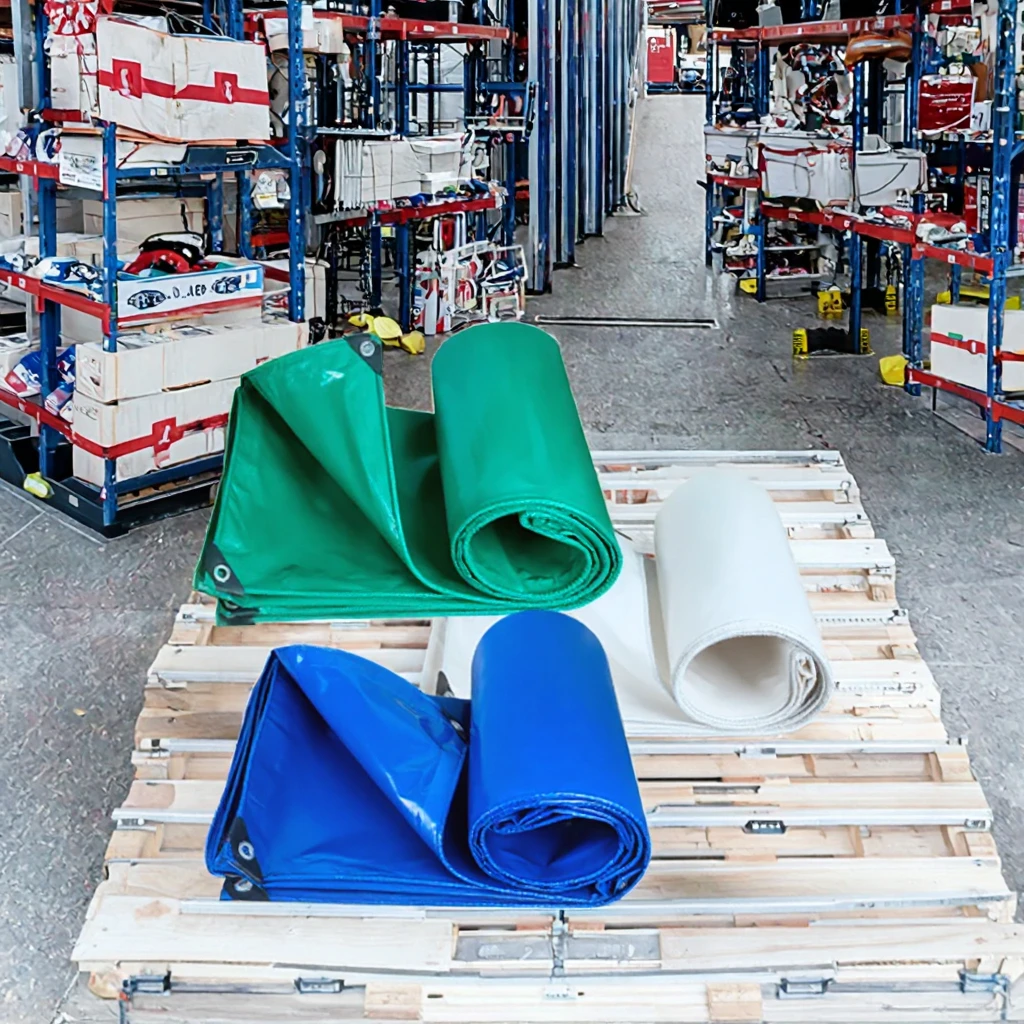
| Roll Width | 2 m, 2.1 m (custom widths available — confirm requirement) |
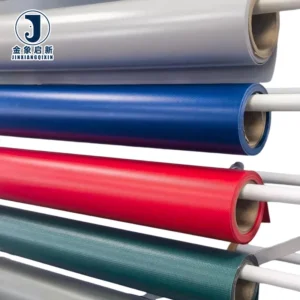
| Roll Length | 75 m (for 2 m width), 50 m (for 2.1 m width) |
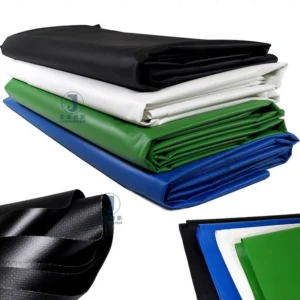
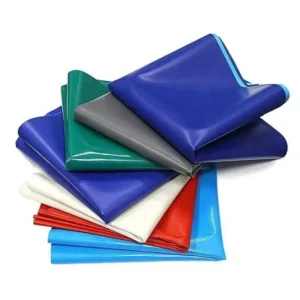
| Colour Options | Blue, Red, Yellow, Light Blue, Grey (custom colours available) |
| Key Features | Waterproof, Anti-UV (test basis not stated in source), Cold Crack Resistance, Anti-Mildew, Anti-Static (surface resistance value to be confirmed), Flame Retardant (optional — confirm the grade required for your market) |
| Standards | ISO, CE |
Application Suitability
| Application | Exposure & Requirement |
|---|---|
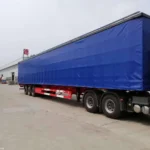
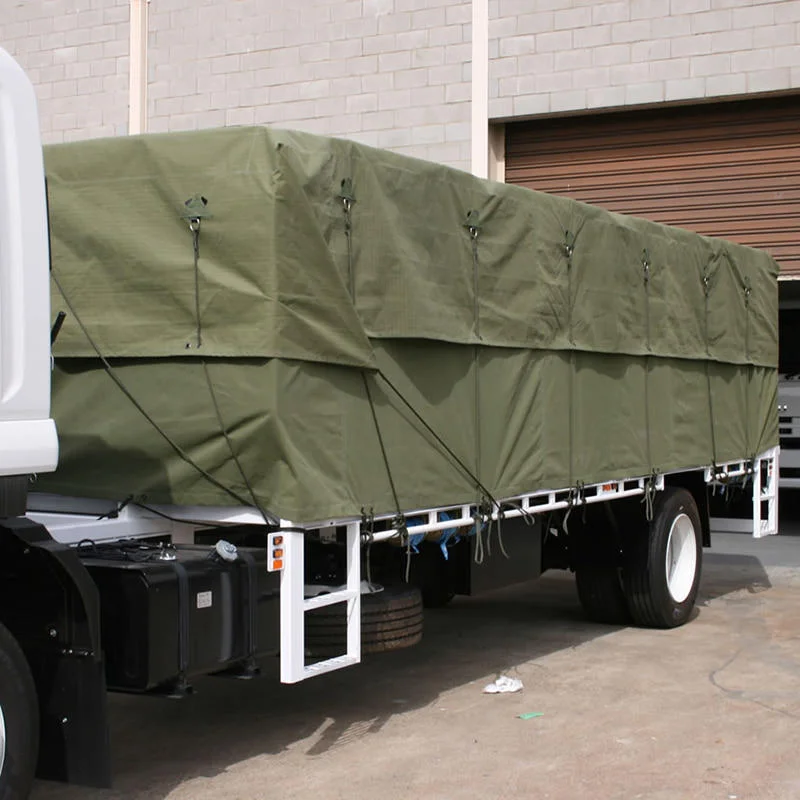
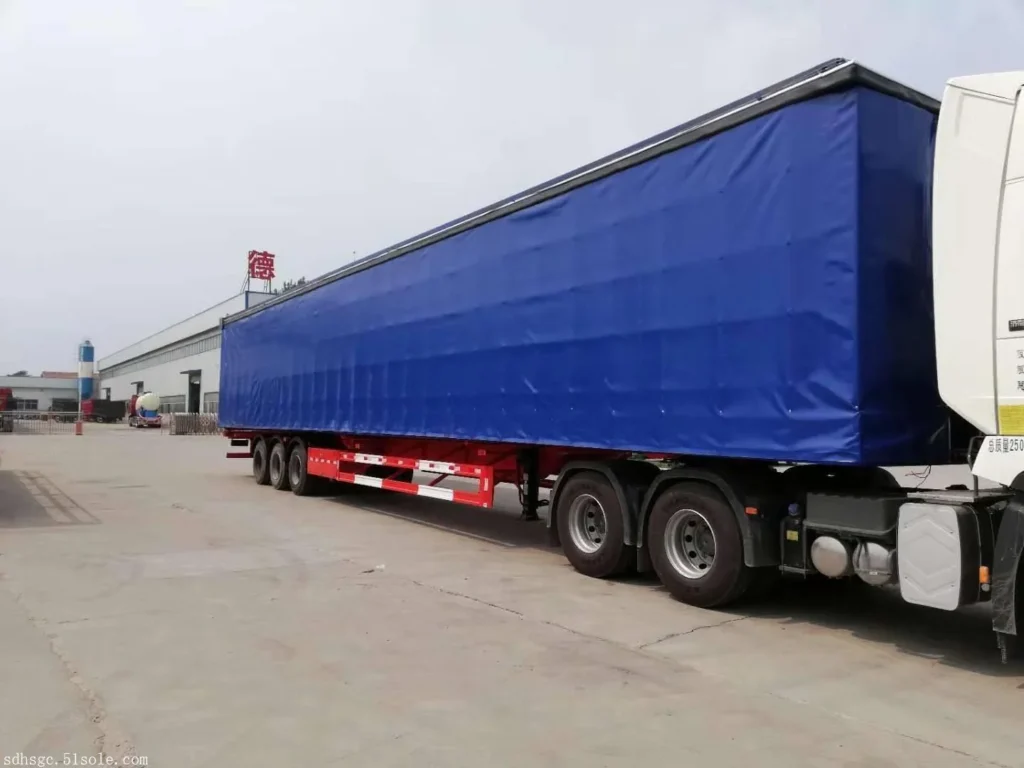
| Truck and trailer side curtains | Constant flexing at load points, road abrasion, UV exposure, wind-driven rain ingress |
| Cargo ship and goods yard covers | Prolonged outdoor weathering, salt spray, mechanical handling and tie-down stress |
| Inflatable and membrane structures | Sustained air pressure load, seam integrity under tension, UV and thermal cycling |
| Fish tanks, pools and liquid storage | Permanent water contact, hydrostatic pressure, puncture resistance at seams |
| Mining and tunnelling ventilation duct | Fire-retardant and anti-static compliance, airflow containment, sub-zero ambient conditions |
| Push-and-pull tents and dust covers | Repeated folding and unfolding, abrasion at frame contact points, dust sealing |
Why Coating Weight Verification Matters More Than Quoted GSM for PVC Tarpaulin Roll
A roll that arrives lighter than the quotation stated compromises the entire fabricated product — and the liability lands on you, not your supplier.
When a logistics fleet orders PVC tarpaulin roll for side curtain fabrication, the quoted GSM becomes the basis for tensile and tear expectations. If the delivered material is lighter, the curtain fails earlier at flex points where the load shifts during transit. We have seen heavy-grade coated rolls fail at the weld line because the coating weight on arrival did not match what was specified at order confirmation. [NEED_CITE: tensile and tear test methods for coated fabrics per ISO 1421]
The problem is rarely deliberate short-weighting. More often, inconsistent coating application across the production line means the roll edges meet specification while the centre runs thin. Without roll-by-roll verification before dispatch, this variation goes undetected until the fabricator welds the seams and discovers the material does not perform as expected.
Hot-Melt Coating and Laminated Technology for Duct and Structure Fabrication
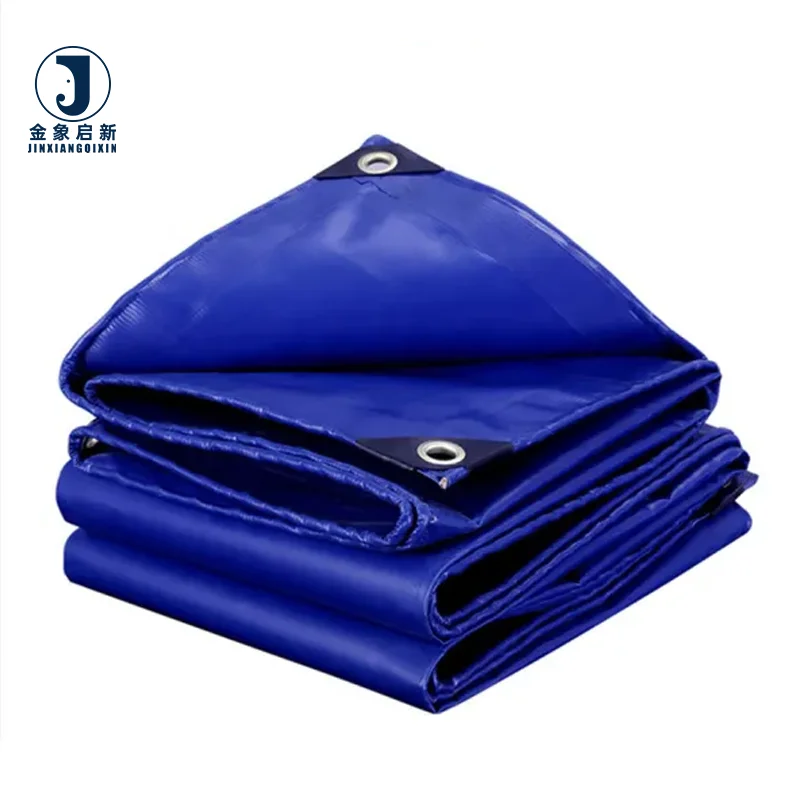
The PVC coated tarpaulin roll is produced using both hot-melt coating and laminated technology, each suited to different fabrication outcomes. Hot-melt coating delivers uniform coating weight across the full width, which directly supports high-frequency welding consistency when fabricators join panels into ventilation ducts or inflatable structures. Laminated construction bonds the PVC layers to the polyester scrim under heat and pressure, producing strong inter-layer adhesion that resists delamination under sustained air pressure or mechanical flexing.
Anti-Static Treatment and Fire-Retardant Grades for Compliance Submissions
Ventilation duct supplied without the fire-retardant or anti-static certification the site requires creates a compliance gap that delays project handover. Our PVC coated tarpaulin roll is available with anti-static treatment and flame retardant grades — confirm the specific surface resistance value or fire classification your project demands, and we will supply the corresponding test documentation. Mining, tunnelling and aviation ground ventilation applications each reference different compliance frameworks, and the material specification must match the site acceptance criteria before fabrication begins. [NEED_CITE: fire classification standards for ventilation duct materials in underground mining]
How Base Fabric Denier and Mesh Count Determine Real-World Performance
The GSM figure alone does not tell you how the fabric will behave under load. A 500 GSM roll built on a 500D×500D base with a 20×20 mesh count will have different tensile and tear characteristics than one built on a 1000D×1000D base with a 15×15 mesh. The higher denier yarn provides greater individual yarn strength, while the mesh count determines how those yarns are distributed across the fabric plane. For inflatable membrane structures that sustain continuous air pressure, a tighter mesh with moderate denier may outperform a heavier but more open weave when it comes to containing small punctures from propagating into full tears. The coating method further influences performance: hot-melt coating penetrates the scrim more thoroughly than laminated construction, producing better inter-layer bonding that supports cleaner weld seams in duct fabrication. Coating thickness also affects cold crack resistance — thicker PVC layers remain flexible at lower temperatures, which matters for ventilation duct installed in sub-zero tunnelling environments.
What Specification Mismatches Cost at the Fabrication Stage
When the base fabric denier is too low for the intended application, the fabric tears at tie-down points or weld seams before the coating itself shows any wear. A roll specified at one GSM but delivered lighter will weld differently — the high-frequency settings calibrated for the quoted weight will burn through thinner material, creating weak seams that fail under load. Batch colour variation across rolls in the same order becomes visible the moment two panels are installed side by side on a membrane structure or truck curtain, forcing rework that delays the entire project. Anti-static treatment claimed without a surface resistance test report means the duct cannot pass site inspection, and the contractor absorbs the replacement cost. [NEED_CITE: common failure modes in PVC coated fabric at welded seam junctions]
What Supports Consistent Supply Across Projects
Three full production lines and 36 sets of professional equipment allow us to schedule PVC coated tarpaulin roll production with reliable lead times, even for custom widths and colours that other suppliers decline or quote at prohibitive minimums. A 10-person R&D team handles material selection, sample development and specification matching — when you need a particular base fabric denier paired with a specific coating weight, the team develops a sample for your approval before bulk production begins. Dedicated QA at every production stage includes 100% pre-shipment inspection, verifying GSM, colour reference and coating adhesion on a roll-by-roll basis rather than sampling from a batch. Deep process control over coating weight, built through nearly 30 years of focused coated fabric production, means the specification you confirm at order is the specification that ships.
Documentation & Verification
- Material specification sheet stating GSM, base fabric denier, coating method and colour reference for each roll
- Test report for anti-static surface resistance or flame retardant grade where applicable to your order
- Pre-shipment inspection record with roll-by-roll weight verification against the stated specification
- ISO and CE certificates included with every shipment for cross-border compliance
- Certificate of origin and roll packing list with customs documentation for project supply chains
Fabrication, Handling & Storage
- High-frequency welding parameters should be calibrated to the specific GSM and coating method of your roll — hot-melt coated fabric requires different energy settings than laminated grades
- Store rolls upright on their cores to prevent flat spots and edge creasing that compromise weld seam quality during fabrication
- For cold crack resistant grades, allow the roll to acclimatise to workshop temperature before unrolling to avoid surface micro-cracking at low ambient conditions
- Custom widths reduce offcut waste during duct panel layout — confirm your target panel dimensions before ordering to optimise roll width selection
- Clean PVC surfaces with mild detergent only; solvent-based cleaners can degrade the anti-mildew treatment and affect subsequent weld adhesion
What We Need to Specify the Right Roll for Your Project
Tell us the end application and the environmental conditions the fabricated product will face — sustained air pressure, sub-zero temperatures, chemical exposure, or continuous outdoor weathering. If your project requires fire-retardant or anti-static compliance, share the specific standard or surface resistance value your site acceptance criteria reference. Confirm whether you need roll stock only or finished cut sizes, along with target roll width and estimated annual volume.
Frequently Asked Questions
Q: What surface resistance value can the anti-static treatment achieve, and which test standard applies?
A: Anti-static treatment is available on our PVC coated tarpaulin roll, but the achievable surface resistance value depends on the specific formulation matched to your compliance requirement. Share the test standard your project references — such as those required for mining or aviation ventilation — and we will confirm the value and supply the corresponding test report with your shipment.
Q: Are fire-retardant grades available for mining and aviation ventilation duct compliance?
A: Flame retardant grades are available as an option. The specific fire classification you need depends on the regulatory framework your project falls under. Confirm the grade required for your market and we will match the formulation and include the test documentation in your shipment package.
Q: What roll widths and lengths are available, and can I order custom dimensions?
A: Standard rolls ship at 2 m width by 75 m length or 2.1 m width by 50 m length. Custom widths are available for duct fabrication yield optimisation — provide your target panel dimensions and we will recommend the roll width that minimises offcut waste across your production run.
Q: How do you ensure colour consistency across multiple rolls in the same order?
A: Every roll is checked against the confirmed colour reference during pre-shipment inspection. Batch inspection records cover colour consistency alongside GSM verification and coating adhesion, so membrane structure projects installed panel-by-panel do not show visible colour shifts between adjacent rolls.
Q: What welding parameters work best for this PVC coated fabric in duct construction?
A: Welding settings depend on the specific GSM, coating method and thickness of your roll. Hot-melt coated grades generally require different high-frequency energy levels than laminated grades. Request our fabrication guidance when you confirm your specification, and we will provide parameter recommendations matched to your material grade.