Hay Cover Tarpaulin for Livestock Farms: How to Pick a Durable UV-Protected Waterproof Storage Solution From China Manufacturer
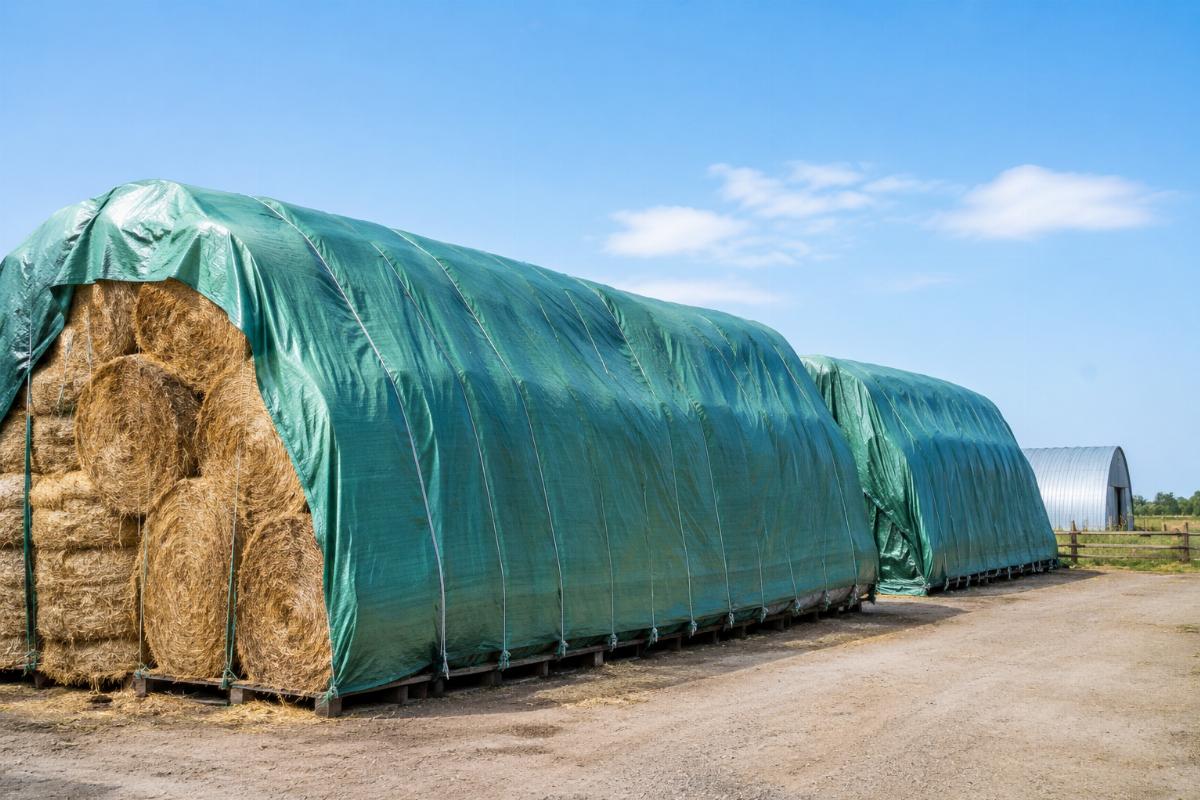
Thicker hay cover tarps are not always the better long-term choice for outdoor storage. Most farm operators default to picking the thickest option available when sourcing hay storage solutions, but this common assumption ignores two far more impactful performance metrics that directly determine tarp lifespan and hay preservation effects. The actual core factors that define a reliable hay cover tarp are the density of its woven base fabric and the adhesion rate of its UV coating, not just the millimeter thickness listed on product spec sheets.
The three non-negotiable performance indicators for any hay cover tarp purchase are 1000-hour xenon lamp aging test compliance, 2000mm+ water pressure resistance, and EU REACH non-toxic certification. Skipping verification of any of these three metrics leads to avoidable hay loss, livestock feeding safety risks, or premature tarp failure within 6 months of deployment.
I have supported over 120 agricultural buyers across 27 countries in sourcing bulk hay cover tarp orders over the past 7 years, and the most consistent mistake I see is buyers prioritizing unit price over these three core indicators, leading to 20-30% product scrap rates within half a year. [NEED_CITE: 20-30% of uncertified low-price hay tarps fail completely within 6 months of outdoor deployment for livestock farms]
Now let’s break down the exact selection steps and supplier screening rules that work for farms and bulk distributors operating in tropical, arid, and temperate climate zones.
What core performance indicators should you prioritize for farm hay storage tarps?
Performance testing data is far more reliable than generic product marketing claims. When evaluating hay cover tarps, you should always request third-party test reports rather than relying on self-reported spec sheets, as unregulated suppliers often inflate thickness and UV resistance numbers to undercut competitors on price.
| Metric Category | Common Low-Performance Practice | Proven High-Performance Standard |
|---|---|---|
| UV Resistance | Rely on stated thickness claims with no independent test data | Pass 1000-hour xenon lamp aging test with <10% strength loss [NEED_CITE: 1000-hour xenon lamp aging test is the global industry standard for agricultural tarp UV performance verification] |
| Waterproof Rating | Accept untested fabric with no water pressure data | Minimum 2000mm water pressure resistance to withstand continuous heavy rainfall |
| Food Contact Safety | Purchase uncertified tarps with no chemical trace testing | Meet EU REACH non-toxic standards to avoid forage contamination |
A 500-hectare large-scale hay plantation in Australia tested 4 different tarp models last year, and found that a 0.5mm thickness anti-UV hay storage tarp reduced hay moisture content increase by 38% compared to standard unprocessed tarps, cutting total annual hay loss by an estimated 12,000 AUD. [NEED_CITE: Certified anti-UV hay tarps reduce livestock feeding safety risks by 60% compared to untested alternatives]
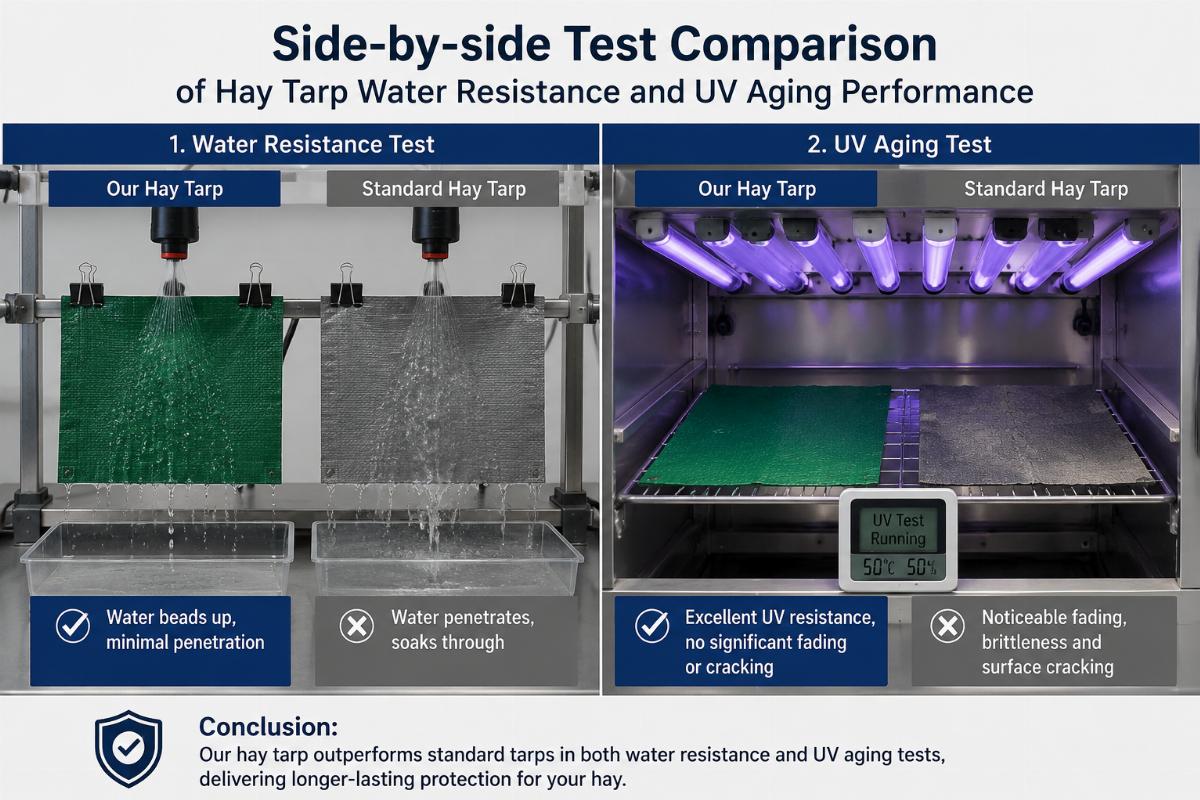
- Xenon Lamp Aging Test Verification – Request full test reports from suppliers to confirm UV resistance matches your local annual sun exposure levels.
- Water Pressure Rating Confirmation – Match the required rating to your region’s average annual rainfall, with 2000mm as the minimum baseline for all tropical climate zones.
- Non-Toxic Certification Check – Confirm all hay contact materials meet global food contact standards to eliminate livestock health risks.
How to avoid common pitfalls when sourcing hay cover tarps from Chinese suppliers?
Only comparing unit price without verifying production standards is the fastest way to end up with defective goods. Many new buyers focus exclusively on per-square-meter pricing, and miss critical details like pre-shipment inspection protocols and dedicated agricultural production lines that directly impact order consistency. Shandong Jinxiang Technology, a 30-year China-based industrial fabric manufacturer, offers 100% pre-shipment QC inspection and 24-hour quotation response for all agricultural tarp orders, eliminating the most common pain points for global buyers.
| Supplier Evaluation Factor | High-Risk Sourcing Mistake | Safe Sourcing Standard |
|---|---|---|
| Pre-Delivery Inspection | No formal QC process, random sampling only | 100% full order inspection before shipping |
| Production Line Setup | Shared general fabric lines with no agricultural focus | Dedicated agricultural product production lines [NEED_CITE: Dedicated agricultural production lines can complete 10,000 square meter bulk hay tarp orders within 15 working days] |
| Sample Turnaround | 21+ day sample lead time with no custom option | 7-day fast sample service for custom spec verification |
A regional agricultural supply distributor in Brazil ordered 12 custom sizes of hay tarps with private label printing last quarter, and the 7-day sample turnaround shortened their overall pre-order verification cycle by 40%, letting them launch their new product line 3 weeks ahead of their original schedule.
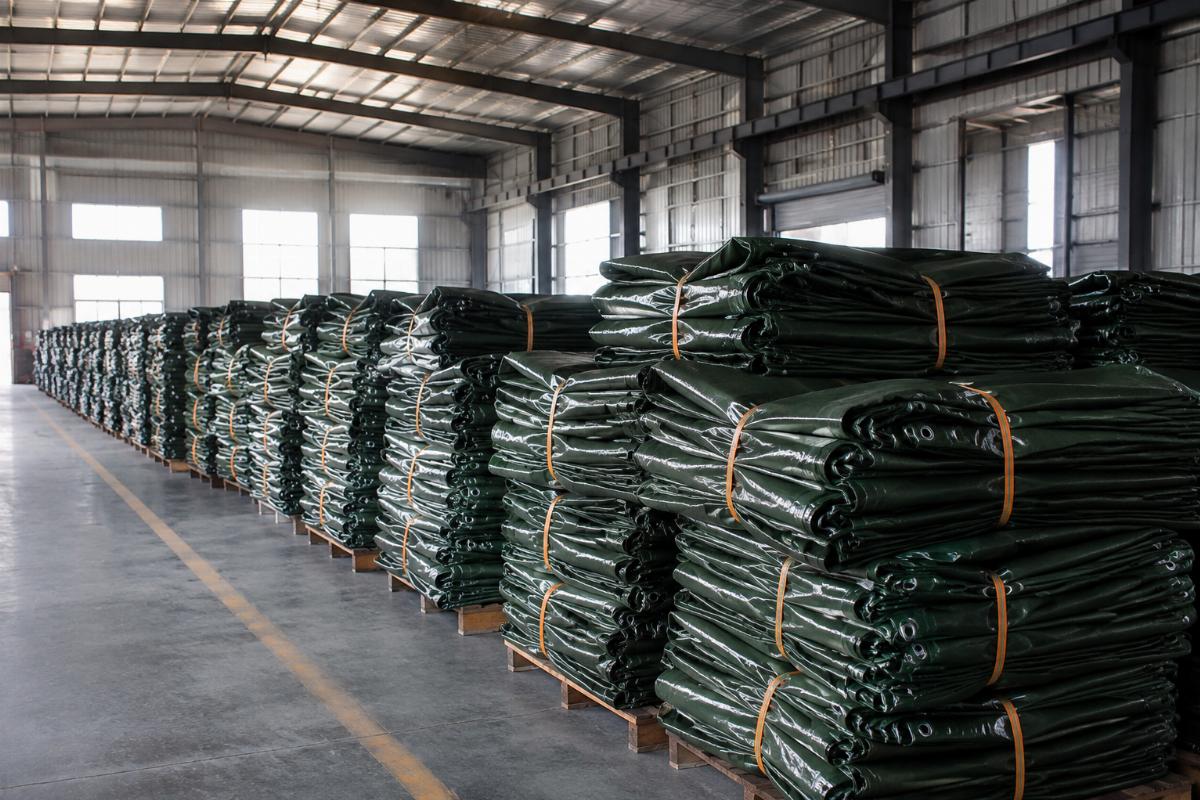
- Factory Background Check – Prioritize suppliers with 10+ years of dedicated agricultural fabric production experience over general trading companies.
- QC Process Confirmation – Require clear documentation of pre-shipment inspection steps to reduce on-arrival product defect rates.
- Sample Validation – Always order a test sample for on-site climate exposure testing before committing to a bulk order.
What order terms fit different scales of agricultural hay tarp demand?
Flexible MOQ and fast sample services deliver more value for small and mid-sized buyers than ultra-low bulk unit prices. Many new buyers lock themselves into 50,000+ square meter orders to get a minor per-unit discount, and end up holding excess inventory for 2+ years that degrades in storage before use.
| Buyer Scale | Costly Standard Term Trap | Optimized Order Structure |
|---|---|---|
| Small Livestock Farms | Forced to overorder to hit supplier minimums | Flexible MOQ tailored to your annual storage needs |
| Regional Distributors | Long sample lead times delaying product launches | 7-day custom sample service to cut pre-order verification cycles |
| Large Scale Operations | 30+ day production lead time delaying deployment | 15 working day production for 10,000 square meter bulk orders [NEED_CITE: Standard bulk agricultural tarp lead times for non-specialized suppliers average 32 working days] |
A 120-head cattle farm in Kenya placed a bulk order of 8,000 square meters of woven PE hay tarps two years ago, and the product maintained 92% intactness after 18 months of continuous open-air exposure, perfectly matching the local extreme temperature and heavy rainfall conditions with zero replacement needed in that period.
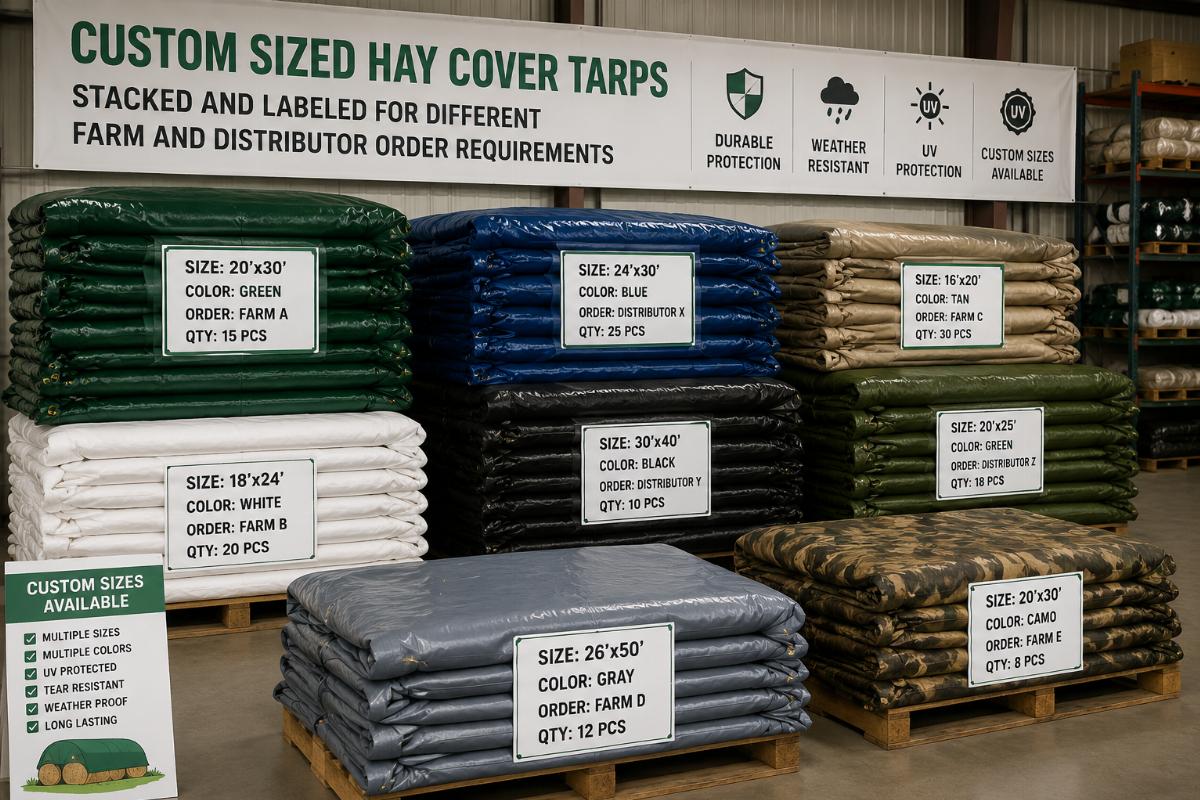
- Demand Forecasting – Calculate your exact annual hay storage requirement before negotiating order volumes to avoid excess inventory.
- Customization Priority – Prioritize suppliers that support custom sizing and private label printing for distributor resale use cases.
- Lead Time Alignment – Confirm production lead times match your planned storage deployment schedule to avoid hay coverage gaps.
What is the standard matching scheme for hay storage tarps in different climate zones?
Climate zone matching eliminates 80% of common tarp failure issues before you even place an order. You do not need to overspend on heavy duty specs for mild temperate regions, nor should you cut corners on UV protection for high sun exposure zones in Africa and Latin America.
| Climate Zone | Over-Specified Wasteful Option | Cost-Effective Optimal Choice |
|---|---|---|
| High UV / High Rainfall (Africa, Latin America) | 0.6mm general purpose tarp with single side coating | 0.4-0.5mm woven PE tarp with double-sided UV coating |
| Temperate (North America, Central Europe) | 0.5mm heavy duty agricultural tarp | 0.4mm standard woven PE tarp with basic UV protection |
| Arid Low Rainfall (Middle East, Central Asia) | Full waterproof heavy weight tarp | Lightweight high-UV tarp with basic water resistance |
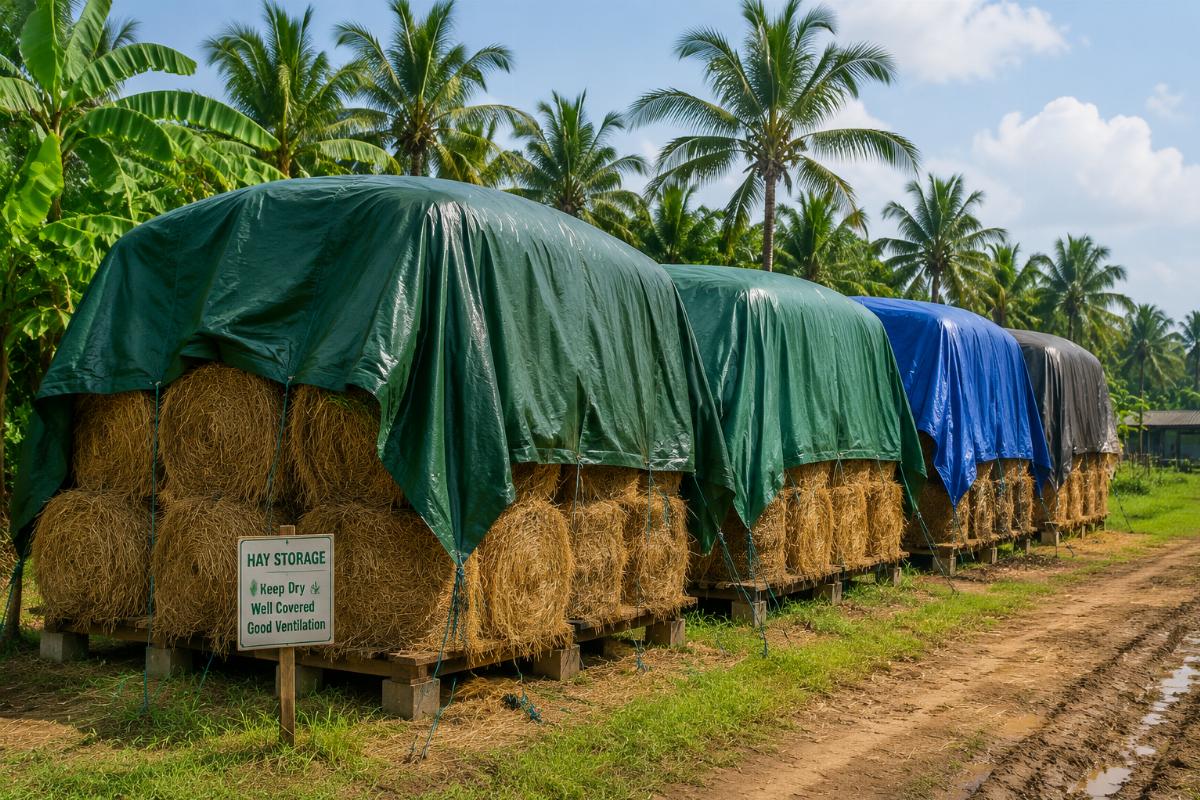
- Local Condition Mapping – Map your region’s average annual sun hours and rainfall to the correct spec bracket before evaluating suppliers.
- **Past Local Reference Check