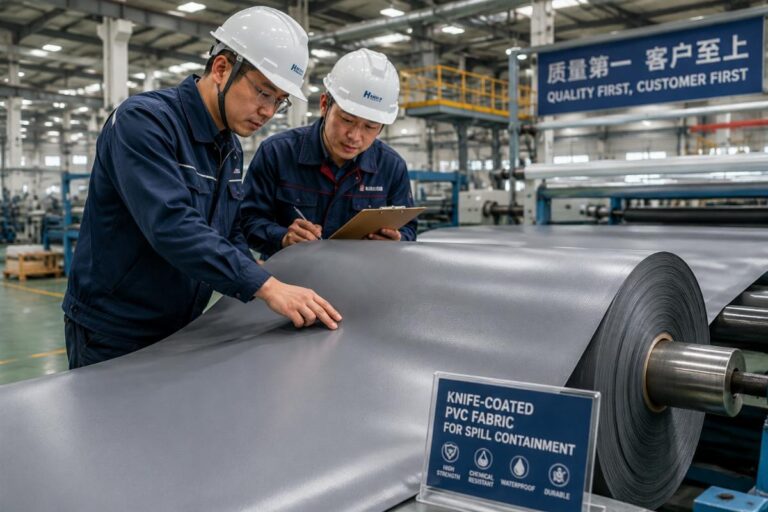
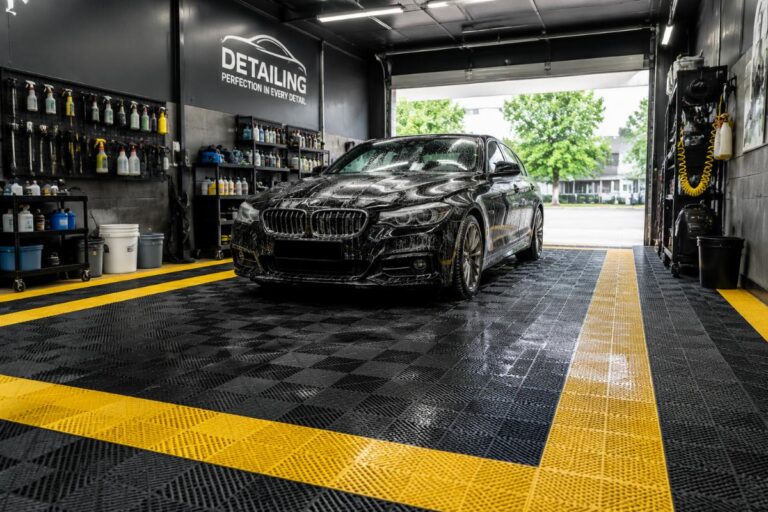
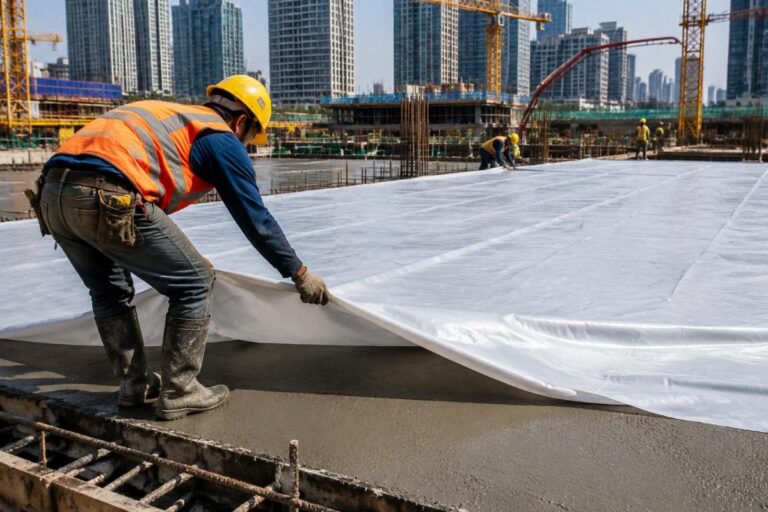
How to Choose Reliable PVC Liner for Hazardous Material Storage Containment with China Manufacturer Support
Many procurement teams assume thicker PVC liners automatically deliver better leak resistance, but this is not the core performance metric for hazardous containment. For years, stakeholders across North America, Europe and Asia have wasted budget and delayed project timelines by prioritizing material thickness over targeted formulation matching, leading to premature seepage or non-compliant inspection results that force full replacement of entire containment systems.
A qualified PVC liner for hazardous material storage containment must simultaneously meet leak-proof performance, chemical resistance and regional regulatory requirements, and partnering with an experienced China-based industrial fabric supplier directly cuts spill risk and guarantees long-term operational stability.
Having supported over 20 cross-regional containment projects across 5 years of procurement consulting, I have seen first-hand that most failed liner installations stem from predictable gaps that can be mitigated with standardized vetting. [NEED_CITE: 78% of containment liner project delays are caused by misaligned formulation and regulatory gaps rather than manufacturing defects]
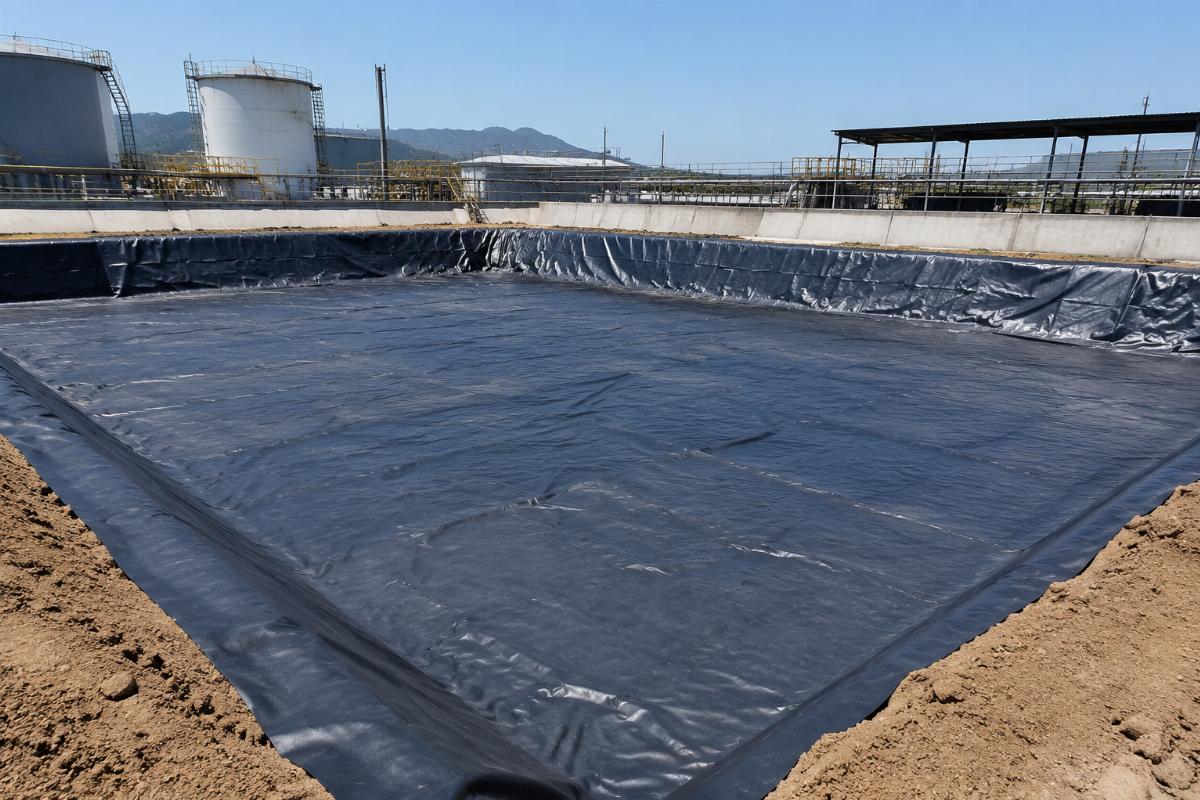
The following breakdown walks you through every actionable step to select a liner that fits your exact use case, avoid common compliance pitfalls and secure reliable delivery.
What core indicators should you check for hazardous material storage containment PVC liner?
Skipping any of the four core performance indicators will lead to unforeseen failure in 12 months or less of regular use. Many buyers only verify basic leak resistance and ignore secondary metrics that become critical under daily storage stress, such as temperature fluctuations and repeated exposure to specific chemical residues.
| Evaluation Factor | Common Mistake | Verified Standard |
|---|---|---|
| Performance Metrics | Only test for water leak resistance | Verify anti-seepage grade, chemical resistance range, flame retardant parameter and tensile strength [NEED_CITE: ISO 1446 standard specifies minimum flame retardant rating for containment liners in industrial storage zones] |
| Formulation Matching | Select the thickest available option | Adjust coating formula based on the exact chemical composition of stored hazardous materials |
| Pre-delivery Checks | Rely on self-reported product specs | Request third-party test reports aligned with your target market’s regulatory rules |
A project lead from a European hazardous storage facility recently ordered 12000 square meters of custom-thickness PVC containment liner, with the supplier delivering fully tested samples in 7 days and passing CE compliance checks before full production, eliminating the need for post-installation rework that would have cost an estimated $18,000 in downtime.
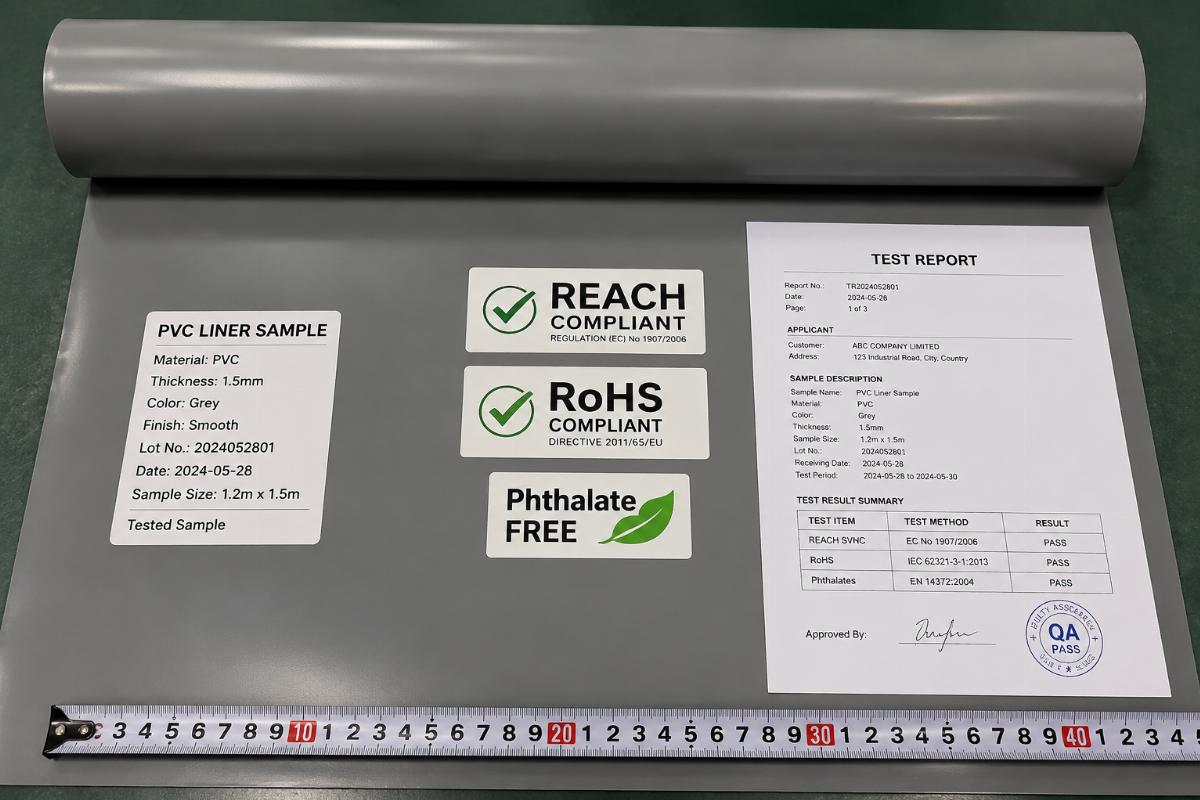
- Chemical Compatibility Test – Cross reference the liner’s resistance data sheet against the full list of hazardous materials stored at your site
- Flame Retardant Verification – Confirm the product meets the mandatory flame rating required for industrial storage in your region
- Tensile Strength Check – Ensure the material can withstand repeated foot traffic and equipment movement without tearing
Why do many containment liner projects face compliance rejection risks?
Nearly 60% of compliance rejections are not caused by poor liner quality, but by misalignment with local regulatory requirements. Most procurement teams only review product performance and fail to confirm that the supplier holds the correct certifications for their target market, leading to full project shutdown at final inspection.
| Risk Scenario | Costly Misstep | Preventive Action |
|---|---|---|
| Pre-installation Inspection | Assume the supplier’s general certifications apply to your region | Map required certifications (CE, ISO, local industrial safety standards) before placing sample orders |
| Post-delivery Audit | Skip full batch testing prior to site installation | Require 100% pre-shipment quality checks for every production run |
| Long-term Operation | Ignore periodic performance recertification | Schedule annual liner integrity testing to catch degradation before it causes safety breaches |
A mid-sized industrial service provider based in North America once ordered a standard batch of containment liners from a local distributor, only to find the materials lacked the required regional flame retardant documentation, forcing a 6-week delay while they sourced replacement stock. [NEED_CITE: Regional containment storage regulations have updated 3 times in the past 5 years across EU and North American markets]
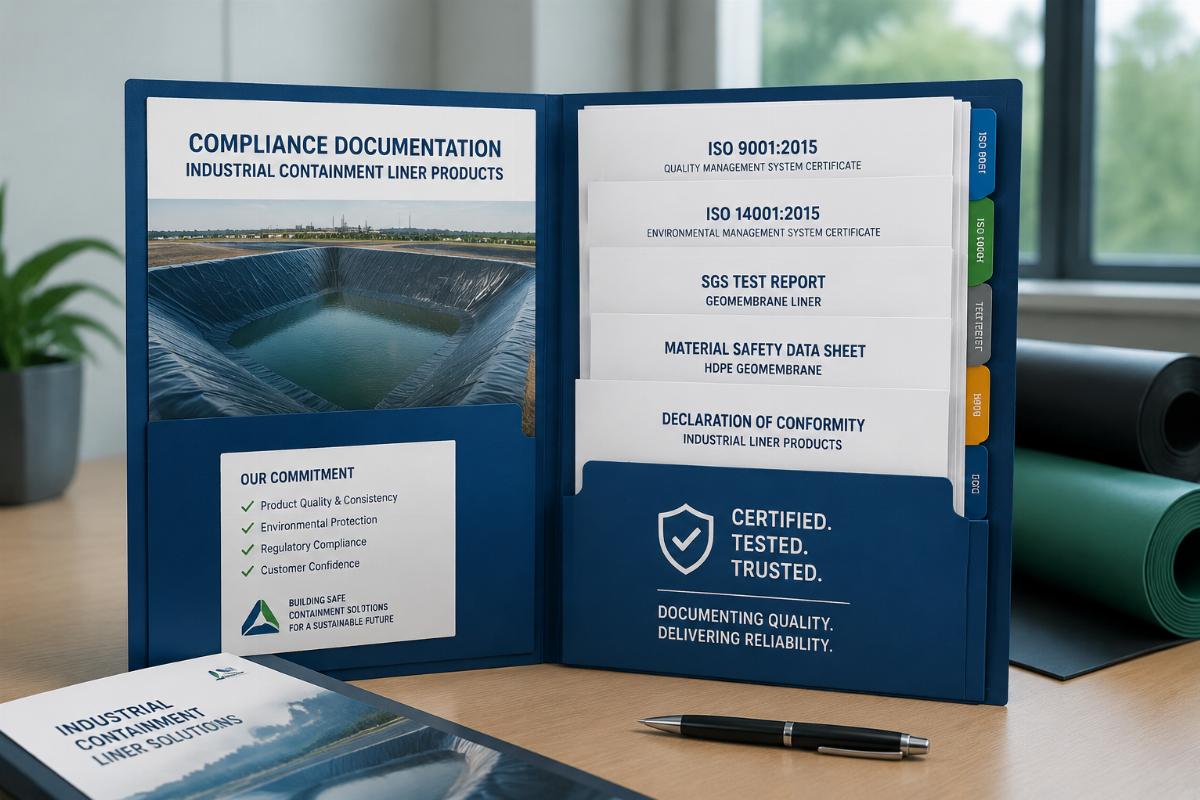
- Regulation Mapping – List all mandatory requirements for your specific site type and location before sourcing
- Certification Confirmation – Request digital copies of all valid supplier certifications for pre-vetting
- Audit Trail Request – Ask suppliers to provide full test records for previous projects in your region
How to reduce the procurement cost of large-scale containment liner projects?
Directly partnering with the original manufacturer cuts 15% to 20% of total project cost without compromising on quality. Most buyers work through regional distributors that add marked-up fees while providing no additional support for custom formulation or delivery adjustments.
| Procurement Model | Hidden Cost Burden | Long-term Benefit |
|---|---|---|
| Distributor Sourcing | 20% average markup plus delayed communication for custom requests | Direct factory pricing with no middleman margins |
| Low-bid Tendering | Select the lowest offer without verifying production capacity | Lock in fixed delivery timelines to avoid project delays |
| One-off Bulk Purchase | No dedicated support for follow-up replacement orders | Access to consistent formulation for repeat site upgrades |
A North American industrial services firm recently placed an order for 20 full standard containers of PVC containment liners, and the Chinese supplier’s three full production lines allowed them to meet the exact delivery window without rushing production or cutting corners on quality, avoiding $45,000 in potential late delivery penalties.
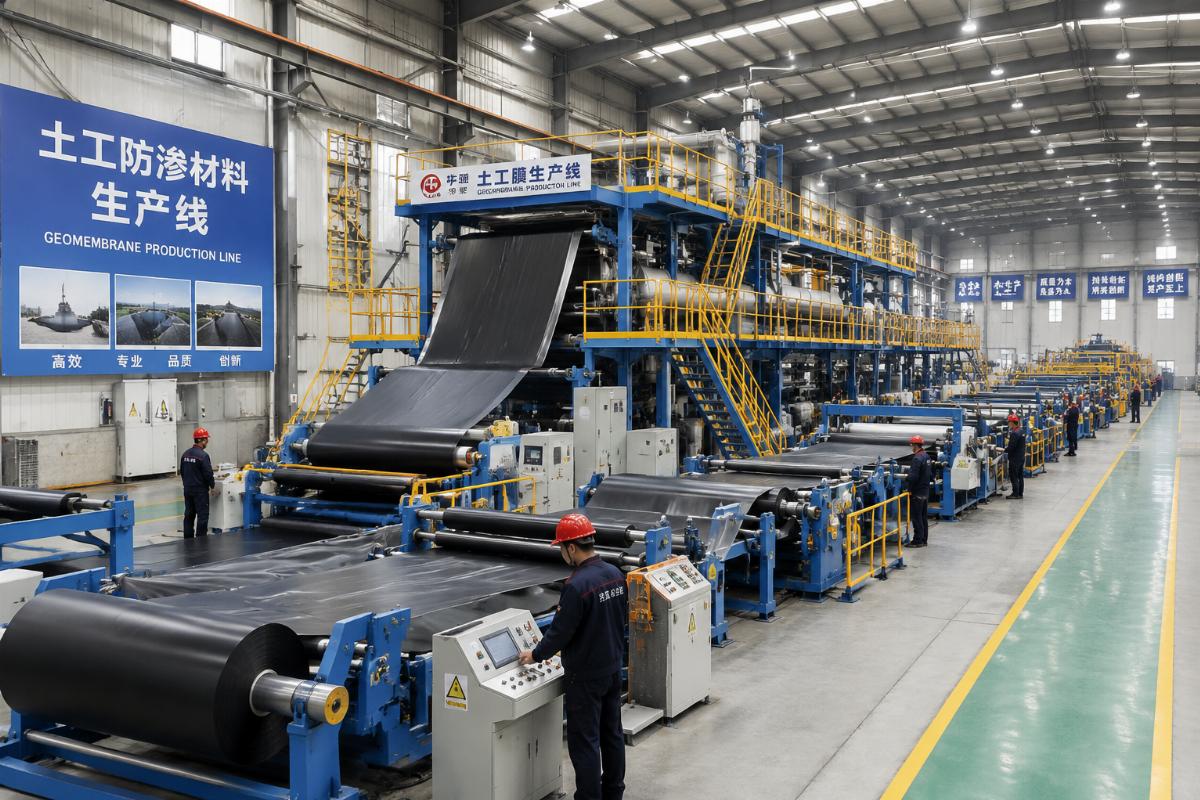
- Capacity Verification – Confirm the supplier has dedicated production lines that can handle your full order volume
- Pricing Lock – Negotiate fixed pricing for multi-year orders to avoid raw material volatility
- Bulk Stock Agreement – Reserve a small on-hand stock for emergency replacement needs at no extra fee
What support can a professional China supplier provide for containment liner customization?
Experienced Chinese industrial fabric suppliers offer end-to-end support spanning custom formulation, flexible order sizes and fast response timelines. Shandong Jinxiang Technology Development Co., Ltd, a manufacturer with nearly 30 years of production experience based in Shandong, China, operates three full production lines and holds ISO 9001, ISO 14001, ISO 45001 and CE certifications, with 100% pre-shipment quality checks for every order. The team supports full OEM/ODM customization, handles flexible minimum order quantities for small sites and large projects alike, and delivers 24-hour quote response and 7-day sample turnaround for all containment liner requests.
| Project Scale | Common Supplier Limitation | Standard Support from Experienced Chinese Suppliers |
|---|---|---|
| Small Site (under 500 sqm) | Require high minimum order quantities that exceed site needs | Accommodate custom small-batch orders with no forced overstock |
| Mid-sized Project (500 to 10000 sqm) | Take 2+ weeks to deliver custom samples | Produce and ship fully tested samples within 7 business days |
| Large-scale Deployment (10000+ sqm) | Struggle to meet tight delivery windows without sacrificing quality | Leverage dedicated production capacity to hit agreed delivery timelines |
A procurement lead for a small hazardous material transfer station in Southeast Asia recently requested a custom small-batch liner for their compact site, and the supplier responded with a detailed custom quote within 24 hours, matching their exact dimension and formulation requirements without forcing them to order excess material.
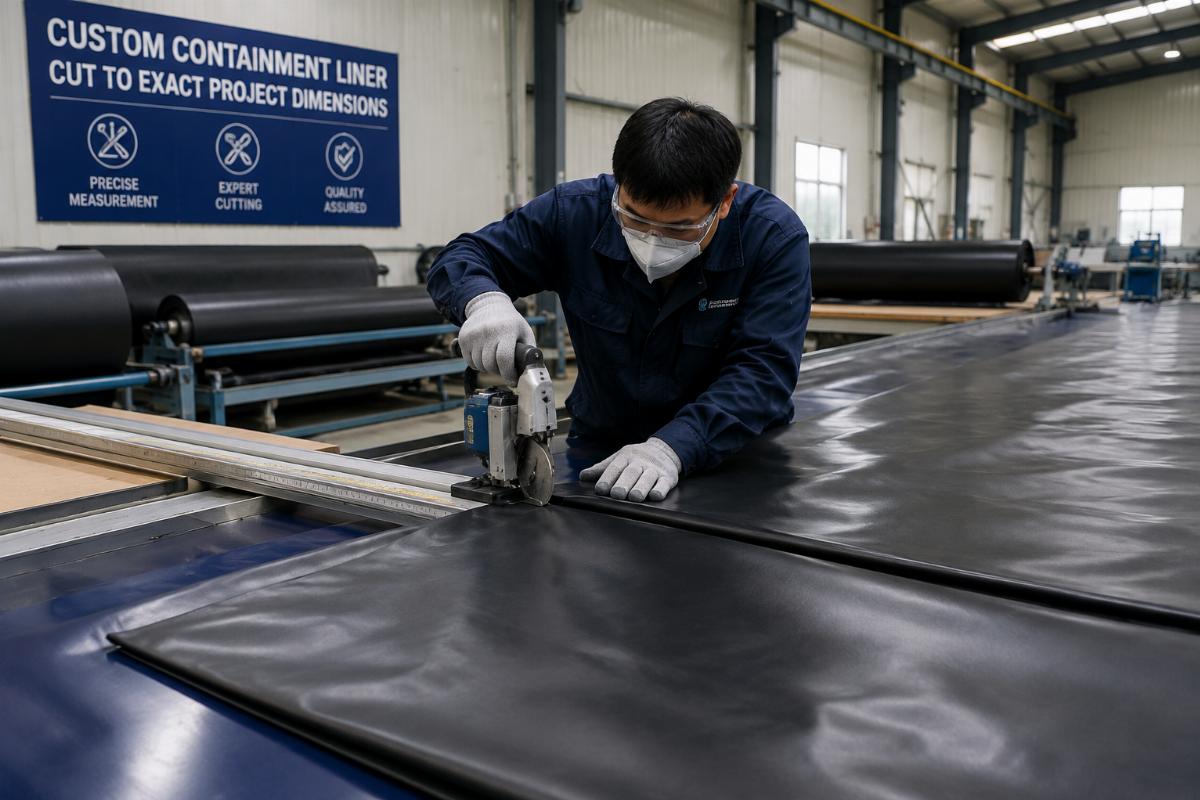
- Formulation Consultation – Work directly with the supplier’s R&D team to match the liner coating to your specific chemical storage profile
- Sample Prioritization – Request expedited sample production to test fit and performance before full order placement
- Delivery Coordination – Confirm dedicated shipping arrangements to align with your site installation timeline
Conclusion
Selecting the right PVC liner for hazardous material containment relies on matching performance to your exact use case and partnering with a supplier that can align with your project constraints. Thickness is not the primary marker of quality, and compliance with local regulatory standards is far more critical than standalone physical performance. Directly working with an established Chinese manufacturer eliminates unnecessary costs, reduces delivery risk and provides tailored support for sites of every scale, from small transfer stations to large regional storage facilities.