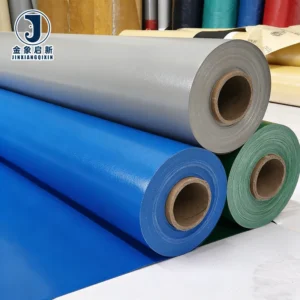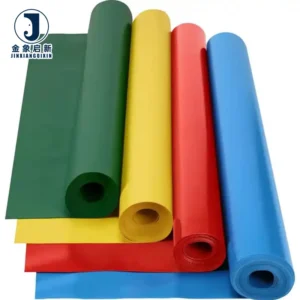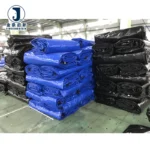
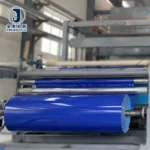

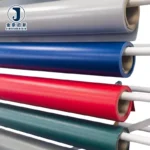
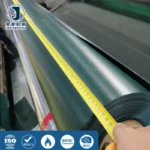
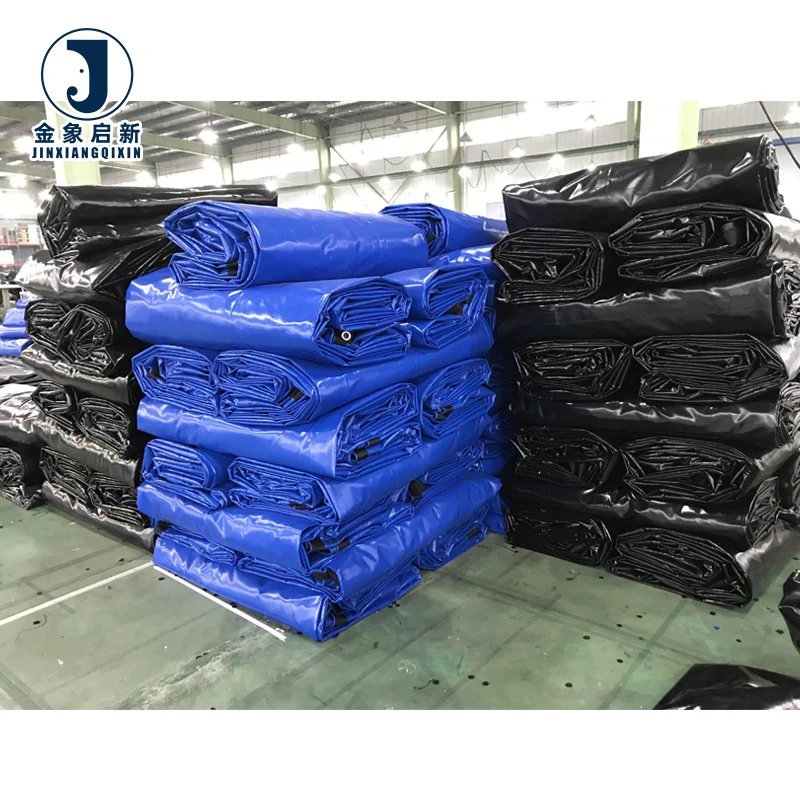
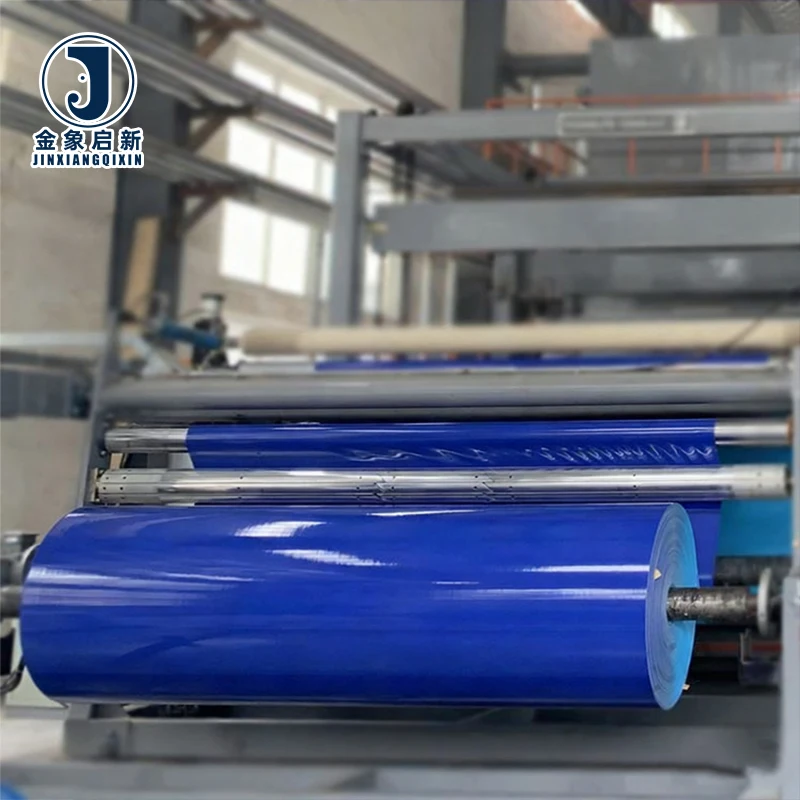
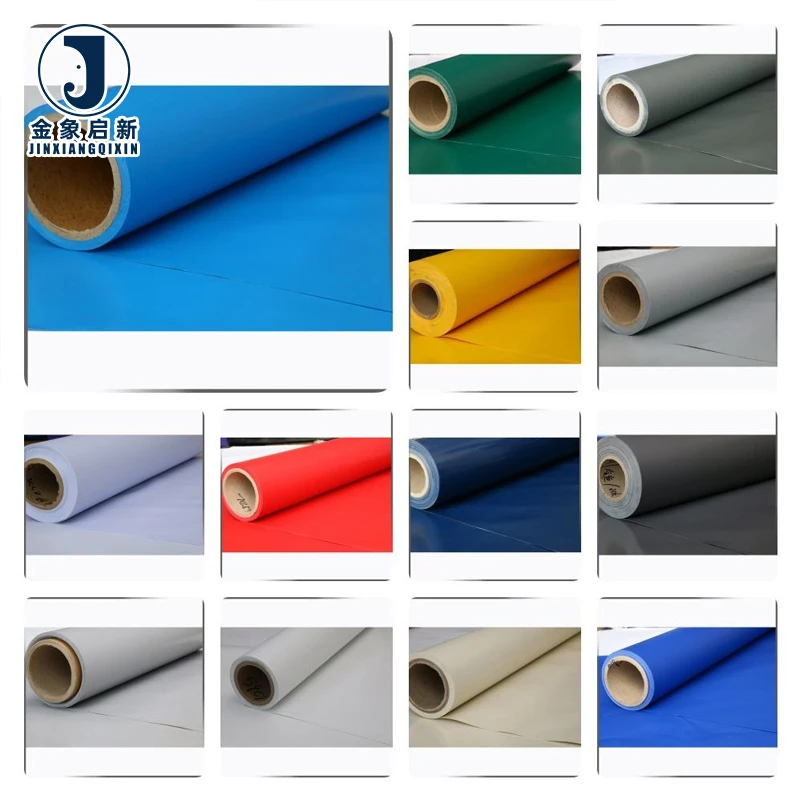
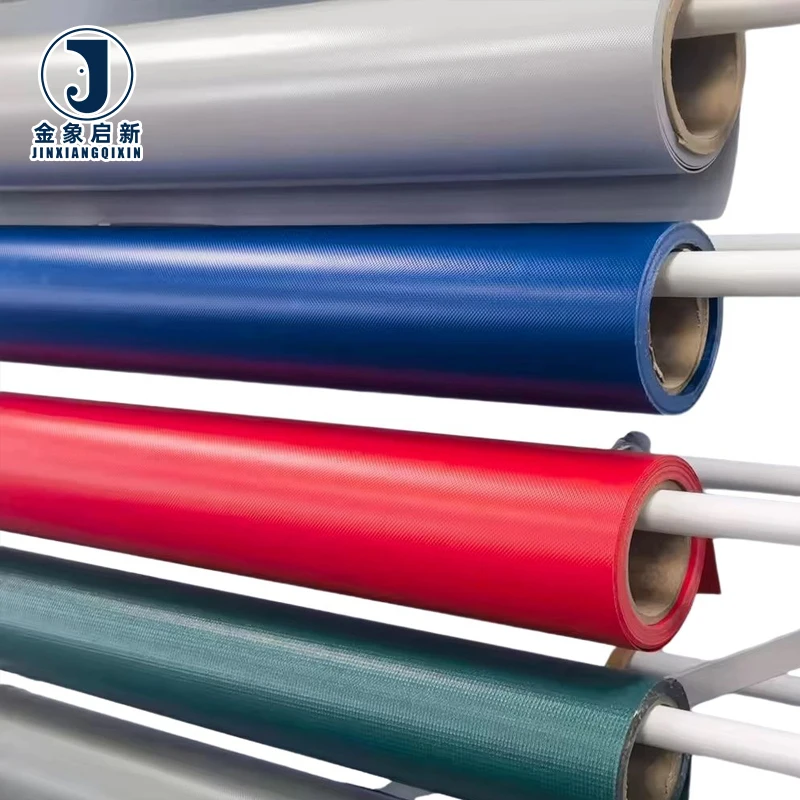
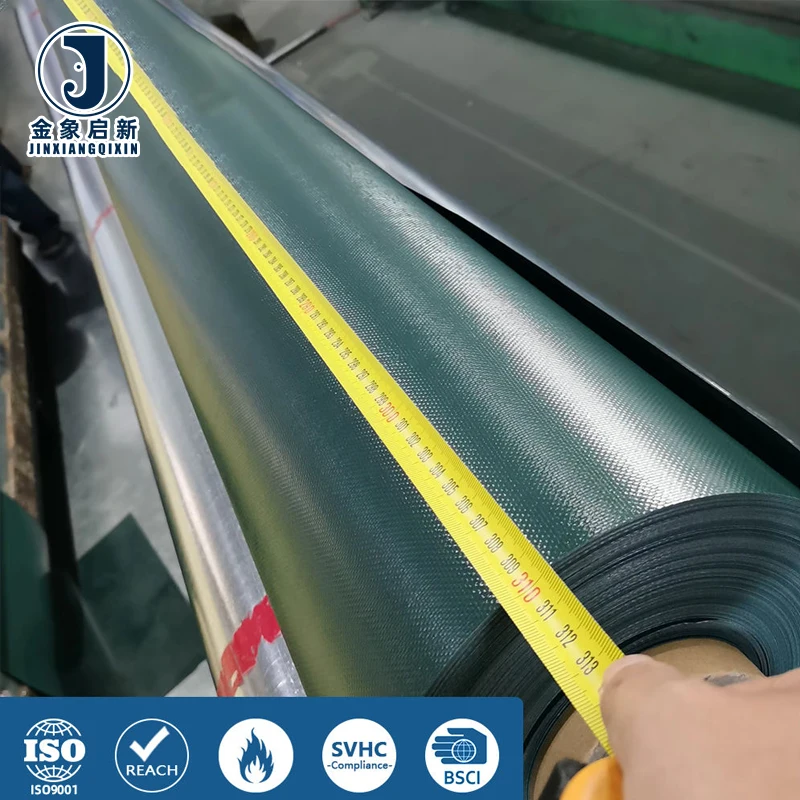
Proven Coating Adhesion Control — Every 650 GSM roll undergoes in-process peel and weight verification before leaving the line, keeping membrane fabricators free of delamination risk on tensioned structures.
Technical Specifications
| Parameter | Value |
|---|---|
| Product Type | PVC Coated Tarpaulin |
| Weight | 650 GSM |
| Base Fabric | PVC Coated Polyester Fabric |
| Waterproof | Yes |
| Fire Retardant | Available in fire retardant grades — confirm the grade required for your market |
| UV Resistance | Available with UV treatment — test basis to be confirmed at inquiry |
| Anti-Mildew | Yes |
| Anti-Oxidation | Yes |
| Chemical Resistance | Oil and Stain Resistant, Acid and Alkali Resistant |
| Temperature Resistance | High Temperature and Cold Resistant |
| Flexibility | Highly Flexible, Resistant to Cracking |
| Self-Cleaning | Yes |
| Welding Compatibility | HF, Hot Air, Sewing |
| Certifications | ISO, CE |
Application Suitability
| Application | Exposure & Requirement |
|---|---|
| Stadium architectural membranes | Sustained UV and weather exposure, self-cleaning surface required, fire retardant compliance for public assembly |
| Airport hangar covers | Wide temperature fluctuation, wind load, aviation fire safety standards |
| Tensile structures | Constant mechanical tension, seam integrity under flex, long-term weather resistance |
| Portable storage structures | Outdoor UV and rain exposure, repeated assembly and tear-down cycles |
| Shade systems | Direct solar exposure, colour stability, structural tension across spans |
| Inflatable and membrane structures | Internal air pressure stress, sealed seam requirement, flexibility under movement |
Why a Test Report Matters More Than a Fire Retardant Claim on PVC Coated Tarpaulin Rolls
Fabric without a grade-stamped test report cannot pass a building inspector’s desk, no matter what the quotation says.
Architectural membrane contractors regularly receive rolls labelled "fire retardant" only to discover at site inspection that the certificate does not reference the standard the local authority enforces. The project stalls. Rework costs multiply. The PVC coated tarpaulin roll that looked compliant on paper becomes the reason the structure fails handover [NEED_CITE: fire classification standards for architectural textiles vary by jurisdiction, including DIN 4102, NFPA 701 and local building codes]. When sourcing for airport hangars or stadium roofs, the applicable standard must be locked before production begins, not after the container arrives.
Matching Ventilation and Membrane Compliance to the Destination Market
Different jurisdictions enforce different fire classification frameworks for technical textiles used in public and industrial structures. A PVC coated tarpaulin roll bound for a European stadium project must align with the classification required under the relevant EN or national standard, while the same material shipped to a North American airport hangar site will face an entirely different test protocol. Confirming the applicable grade at the inquiry stage eliminates the gap between what the data sheet promises and what the inspector accepts [NEED_CITE: architectural membrane fire classification pathways across major markets].
Welding Behaviour on Curved Tensile Panels
Complex architectural shapes demand seams that follow compound curves without puckering or delaminating. High-frequency welding produces flat, sealed joins suited to straight and gently curved panels, while hot-air welding offers the positional flexibility needed for tight radii on stadium canopy sections. Sewing remains relevant for structural attachment points where mechanical fastening supplements the bond. This 650 GSM PVC coated tarpaulin roll supports all three methods, giving fabricators freedom to choose the join technique that matches the geometry of each panel.
How Weight, Coating Adhesion and Base Fabric Interact in Membrane Applications
The 650 GSM weight of this PVC coated tarpaulin roll reflects the combined contribution of the polyester base fabric and the PVC coating layers. In tensile structures, the base fabric denier and weave density govern how the material distributes load across warp and weft, while the coating weight determines surface protection, weld receptivity and resistance to environmental ingress. A heavier coating does not automatically mean higher tensile strength — if the base fabric is underspecified, the coating adds weight without adding structural capacity. The adhesion between coating and base fabric, governed by the coating process and surface preparation, directly affects how well the material resists delamination at welded seams under sustained tension. For architectural applications, the balance between base fabric density and coating weight matters far more than GSM alone. Fire retardant additives, when specified, are incorporated into the coating compound and must be verified against the target market’s test standard — the grade applicable in one region may not satisfy another [NEED_CITE: tensile and tear test methods for coated fabrics per ISO 1421].
The Hidden Cost of Accepting Rolls Without Weight and Coating Verification
When a roll arrives below the quoted GSM, the shortfall is not just a commercial issue — it signals inconsistent coating application that can affect weld behaviour, UV treatment concentration and long-term weather resistance. On a stadium roof where dozens of panels are tensioned side by side, even slight variation in coating weight between rolls can produce visible differences in surface sheen and colour depth once installed. Seam failures on membrane structures rarely originate in the field of the fabric; they start at the weld line where coating adhesion is weakest. Without documented pre-shipment weight verification, the first sign of a problem is a panel pulling apart under wind load [NEED_CITE: common failure modes in architectural membrane installations traced to coating inconsistency].
Why Fabricators Source This Material Through Jinan Jinxiang
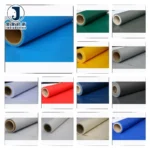
Three dedicated production lines allow this 650 GSM PVC coated tarpaulin roll to be manufactured with consistent coating weight across the full run, reducing roll-to-roll variation that disrupts fabrication schedules. The 10-person R&D team develops samples within days when a project requires a specific colour, width or fire retardant grade confirmation. In-process QA checks at every coating stage catch adhesion or weight deviations before the roll reaches the winding station. A full pre-shipment inspection of every roll ensures that the GSM, colour and surface finish match the approved sample. Custom widths and pattern printing are supported with sample approval before bulk commitment, avoiding the cost of container-load errors.
Documentation & Verification
- Material specification sheet stating 650 GSM, base fabric type, coating compound and colour reference
- Fire retardant test report matched to the destination market’s building code upon confirmation
- UV resistance test basis documented to support architectural exposure claims
- Weight verification record per roll from pre-shipment inspection
- ISO and CE certificates, certificate of origin and customs documentation included
- Roll packing list with batch traceability for international project logistics
Fabrication, Handling & Storage
- HF welding at matched power and speed settings produces sealed seams on 650 GSM membrane panels
- Hot-air welding suitable for curved tensile sections where positional control is required
- Sewn seams at structural attachment points should use UV-resistant thread matching the coating weight
- Store rolls upright on pallets to prevent permanent creasing across the PVC coating surface
- Allow cold-stored rolls to reach ambient temperature before unrolling to avoid coating crack risk
- Clean with mild detergent only; avoid solvents that degrade the self-cleaning surface treatment
What to Include With Your Inquiry
Specify the fire retardant grade or test standard your project jurisdiction requires, along with the applicable building code reference. Confirm the roll width needed and whether custom colour matching or pattern printing is part of the scope. Indicate the total linear metre requirement and whether you need sample approval before bulk production.
Frequently Asked Questions
Q: Which fire retardant grade should I specify for an architectural membrane project?
A: The applicable grade depends on the destination market’s building code. European projects typically reference DIN 4102 or EN 13501 classifications, while North American sites may require NFPA 701 compliance. Confirm the standard with your local authority or project engineer at inquiry stage so the correct test report is prepared with your shipment.
Q: How is the UV resistance of this PVC coated tarpaulin roll validated?
A: UV treatment is incorporated into the coating compound during production. The specific test basis and exposure duration are documented in the test report supplied with your order. Request the test documentation at inquiry to confirm it aligns with the environmental conditions your stadium or hangar structure will face.
Q: What is the GSM verification process from order to delivery?
A: The quoted 650 GSM is verified through in-process checks during coating and again during 100% pre-shipment inspection. Each roll’s weight is recorded against the material specification sheet, and the inspection record accompanies your documentation package to confirm no weight shortfall occurred.
Q: Which welding method works best for curved tensile membrane panels?
A: High-frequency welding suits straight and gentle curves, producing flat sealed joins. Hot-air welding offers better positional control for tight radii on complex stadium canopy geometry. Sewing is used at structural attachment points. This 650 GSM roll supports all three methods.
Q: How does the self-cleaning surface affect maintenance on installed structures?
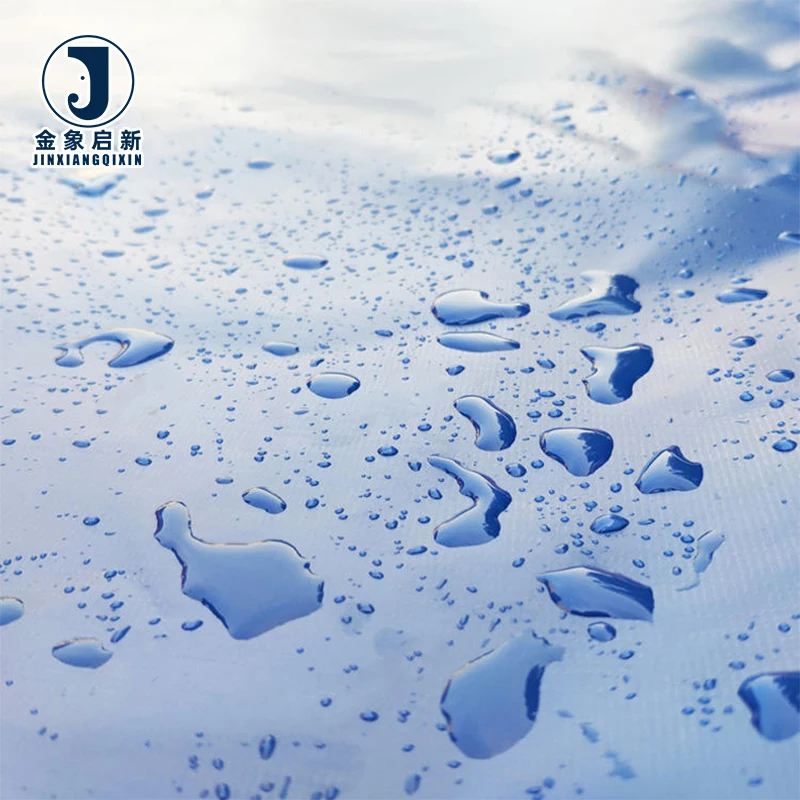
A: The self-cleaning treatment on this PVC coated tarpaulin roll causes water to sheet across the surface rather than pool, carrying loose dirt away. This reduces the frequency of manual cleaning cycles on large-format installations such as stadium roofs and airport hangar canopies, though periodic inspection is still recommended.