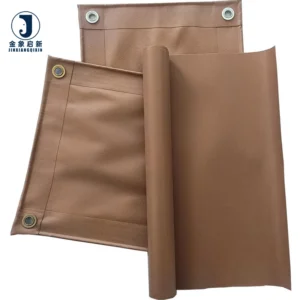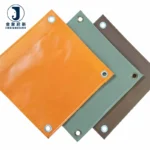
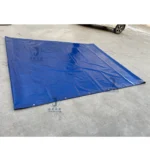
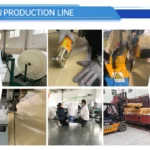

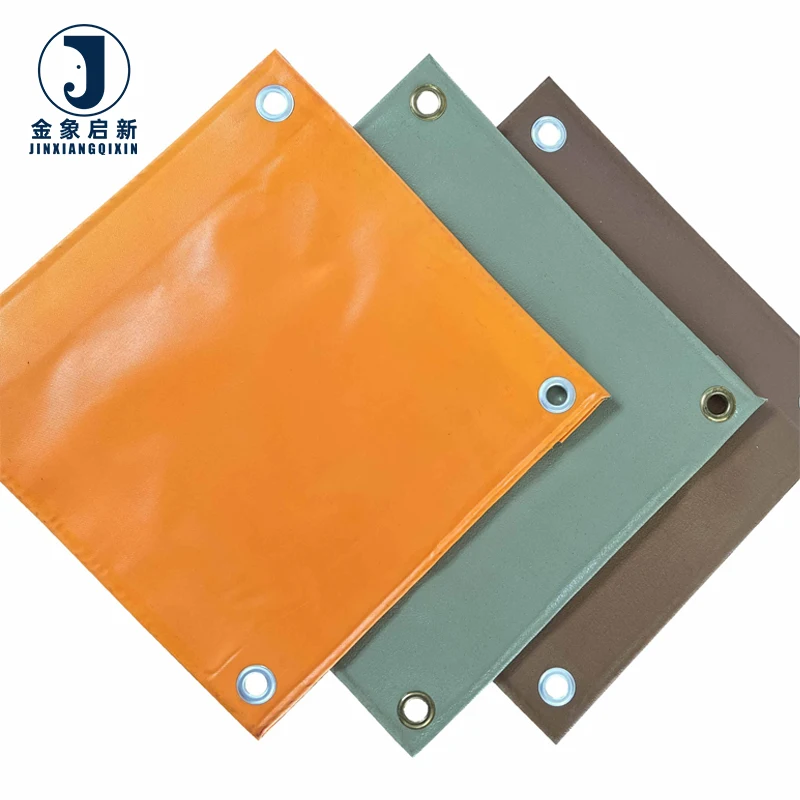
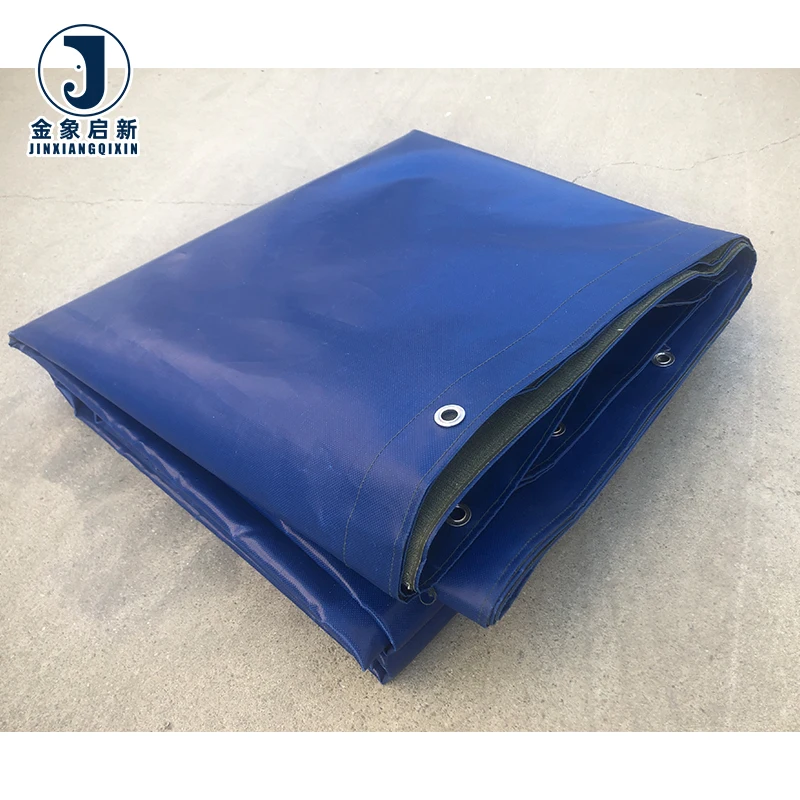
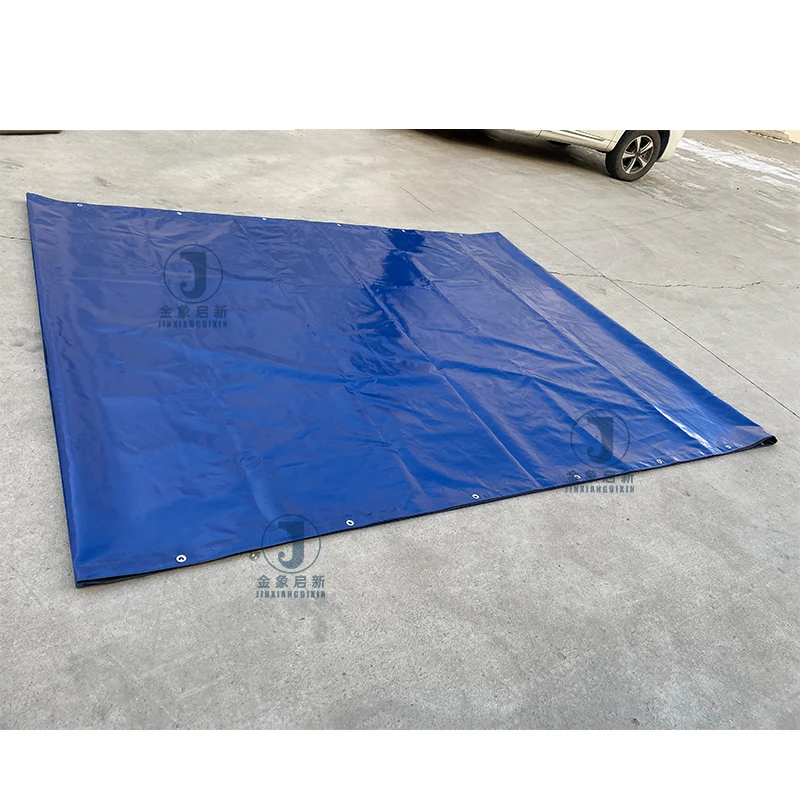
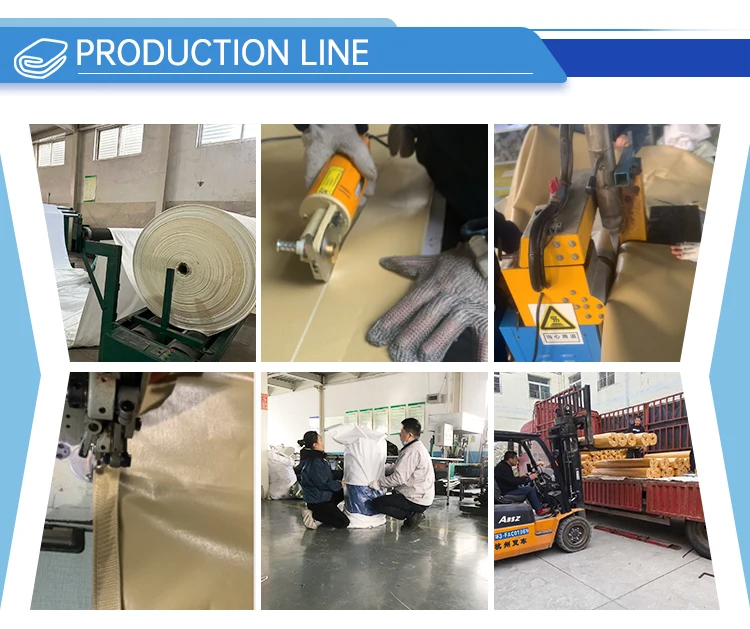
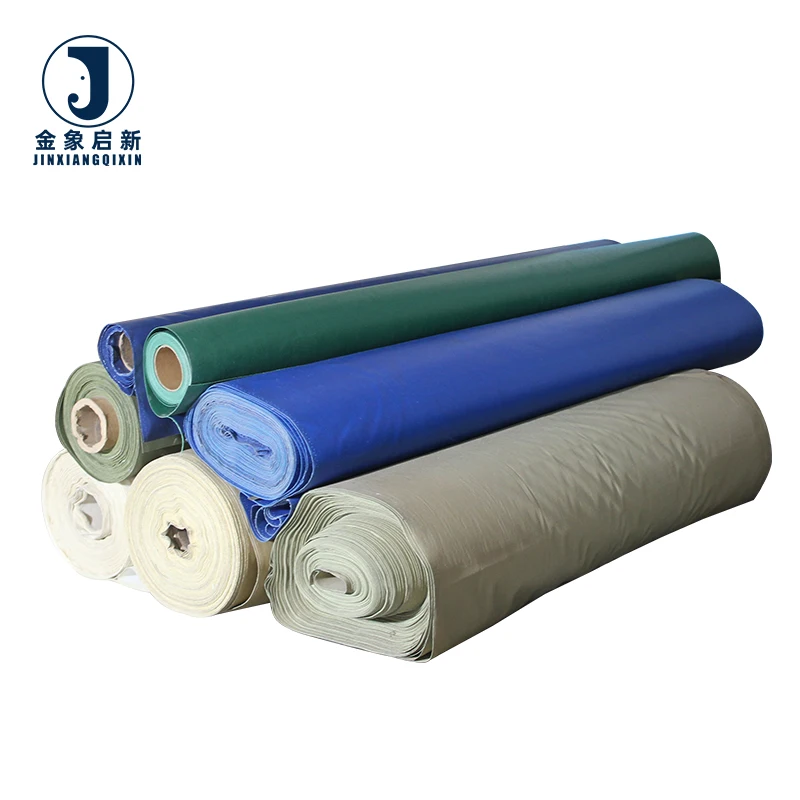
Process-Controlled Coating Weight — Deep control over PVC adhesion and GSM consistency across three full production lines, verified roll-by-roll before dispatch for printable and anti-static fabric orders.
Technical Specifications
| Parameter | Value |
|---|---|
| Product Type | PVC Coated Tarpaulin |
| Base Fabric | 100% high tenacity polyester yarn |
| Coating Material | PVC |
| Coating Technology | Lamination and hot melt coating |
| Weight Options | 400–500 g/m² (medium), 700–1000 g/m² (heavy-duty), 1100–1500 g/m² (super heavy) |
| Thickness Options | 0.35–0.45 mm (medium), 0.70–1.0 mm (heavy-duty), 1.2–1.5 mm (super heavy) |
| Base Denier | 500D (medium), 1000D (heavy-duty), 500D–2000D (super heavy) |
| Tensile Strength (Medium) | Warp 1500–2000 / Weft 1200–1800 N/5cm |
| Tensile Strength (Heavy-duty) | Warp 2000–2500 / Weft 1800–2200 N/5cm |
| Tensile Strength (Super Heavy) | Warp 2500–3000 / Weft 2200–2800 N/5cm |
| Cold Crack Resistance | -30°C |
| Waterproof | Yes |
| Anti-Mildew | Mold resistant (test basis not stated) |
| Anti-Static | Available — confirm surface resistance value or standard with test report |
| Flame Retardant | Available in flame retardant grades — confirm the grade required for your market |
| UV Treatment | Available — confirm test basis for UV stabilisation |
| Printable Surface | Suitable for large-format digital printing |
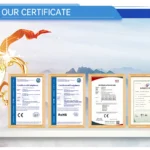
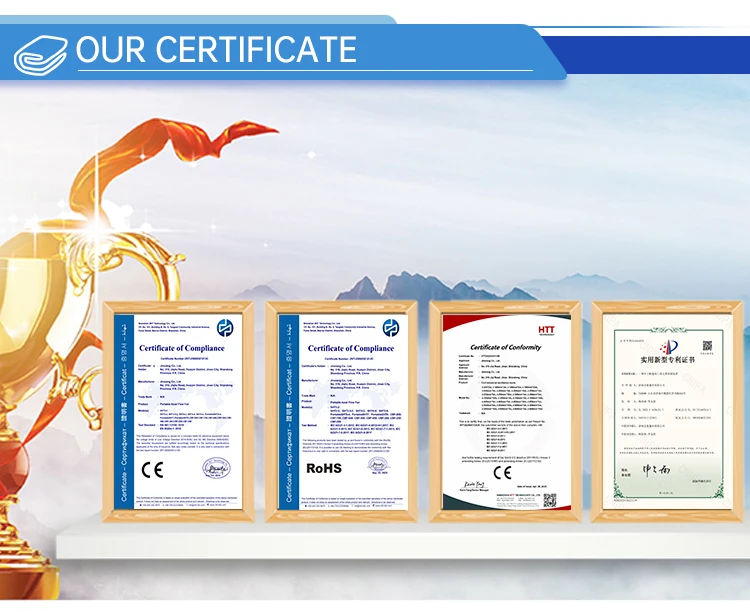
| Standards | ISO and CE certified manufacturer |
Application Suitability
| Application | Exposure & Requirement |
|---|---|
| Exhibition booth backdrops | Indoor or semi-outdoor staging, large-format print fidelity, static control in carpeted venues, fire-retardant compliance for public assembly |
| Event signage and tensioned displays | Repeated rigging and de-rigging, flex stress at grommet and clamp points, colour consistency across adjacent panels |
| Membrane and inflatable structures | Continuous tensile load, air pressure differential, static dissipation in enclosed environments |
| Industrial pipe canopy and enclosure | Moisture exposure, dust accumulation, chemical splash, abrasion from contact with steel frameworks |
| Wide-format digital print substrates | Ink adhesion and colour accuracy, surface smoothness for solvent and UV-curable ink systems |
Why Anti-Static Certification Matters More Than the Claim Itself
When a ventilation duct or specialist fabric arrives on site without the fire-retardant or anti-static certification the project demands, the entire installation stalls. An Anti-Static Printable PVC Coated Tarpaulin specified for exhibition or enclosed structure use must carry a test report that matches the venue’s safety standard — not just a line on the quotation.
Verify the test standard and surface resistance value before you approve the material, because a claim without documentation is a liability, not a specification.
Procurement teams regularly encounter coated fabric labelled "anti-static" with no measurable surface resistance value behind it [NEED_CITE: anti-static test methods for coated textiles and surface resistivity standards]. In public assembly venues, exhibition halls, and mining-adjacent structures, the safety officer will ask for the certificate, not the data sheet. When the documentation gap surfaces during a pre-opening inspection, the contractor faces re-sourcing under deadline pressure, often at premium cost and compromised lead time. The specification conversation should begin with the destination market’s exact compliance requirement and work backward to the fabric grade that satisfies it.
Static Dissipation in Enclosed and High-Traffic Venues
Static charge accumulation on PVC surfaces creates risks beyond discomfort — dust attraction degrades print appearance on exhibition graphics, and in environments with combustible dust or sensitive electronics, uncontrolled static discharge introduces a genuine hazard. Anti-static treatment modifies the surface resistivity of the PVC coating, allowing charge to dissipate rather than accumulate. For contractors building exhibition booths, event backdrops, or tensioned membrane structures in venues with strict safety protocols, the Anti-Static Printable PVC Coated Tarpaulin must be supported by a verifiable test report showing the measured surface resistance value against an applicable standard. Requesting this documentation during the sample approval stage prevents costly substitution or rejection at the installation phase.
Print Fidelity Across Full Booth Graphics
Large-format digital printing on PVC coated fabric demands a surface that accepts solvent, eco-solvent, and UV-curable inks without dot gain or colour shift. The printable surface on this Anti-Static Printable PVC Coated Tarpaulin is engineered to hold fine detail and saturated colour fields across panels that may span several metres in width. Exhibition contractors assembling multi-panel backdrops need roll-to-roll colour consistency so that adjacent sections align visually once rigged on the booth frame. Batch-level quality control at every production stage addresses the colour variation problem that becomes visible only after installation, when panels stand side by side under venue lighting.
Reading the Specification Sheet Beyond GSM
Weight per square metre tells you how much material is present, but it does not describe how that material will perform under load. The base fabric denier and knitting density determine the tensile and tear resistance, while the coating method — lamination versus hot melt — governs the bond between the PVC layer and the polyester scrim [NEED_CITE: coating adhesion and peel strength test methods for laminated fabrics per ISO standards]. A 1000D base fabric with hot melt coating achieves different peel strength characteristics than a 500D base with lamination, even at comparable GSM. For tensioned structures and inflatable applications where the fabric carries continuous load, the relationship between denier, weave density, and coating adhesion defines how the material behaves at seam lines and clamp points. Cold crack resistance to -30°C sets the lower boundary for outdoor and semi-outdoor event environments, ensuring the PVC coating remains flexible when temperatures drop during evening events or winter installations. The thickness range, from 0.35 mm in medium grades to 1.5 mm in super heavy grades, correlates with rigidity and handling weight — lighter grades drape more easily over complex frames, while heavier grades resist puncture and abrasion in industrial canopy applications.
The Cost of Specifying on Price Per Kilogram Alone
When procurement decisions reduce coated fabric to cost per kilogram, the consequences surface at the worst possible moment. A booth backdrop that arrives lighter than the quoted GSM may sag under its own weight once tensioned across the frame, pulling print graphics out of register and forcing a full reprint days before the show opens. Anti-static fabric supplied without supporting test documentation can halt a venue’s safety sign-off, leaving the contractor to source replacement material on an emergency timeline [NEED_CITE: pre-opening safety inspection requirements for temporary structures in exhibition venues]. Roll-to-roll colour variation, invisible in the warehouse but glaring under exhibition lighting, forces panel rejection and re-ordering — delays that compound when the show date is immovable. These failures share a common root: specifications verified only on paper, never against physical test results or pre-shipment inspection records.
Why Technical Buyers Source This Fabric Here
Deep process control over PVC coating weight and adhesion comes from nearly 30 years focused exclusively on coated fabric, with three full production lines and 36 sets of professional equipment supporting consistent output across bulk orders. A 10-person R&D team handles material selection, custom width development, and sample production within days, allowing contractors to validate print compatibility and anti-static performance before committing to a full production run. Dedicated QA/QC operates at every production stage with 100% pre-shipment inspection, catching GSM deviation and colour drift before rolls leave the facility. Full documentation packages — including material specification sheets, test reports for applicable grades, and roll packing lists — ship with every order, giving site engineers the paperwork they need for compliance submissions without chasing suppliers after delivery.
Documentation & Verification
- Material specification sheet stating exact GSM, base fabric denier, coating method, and colour reference per roll
- Test report for anti-static surface resistance value or applicable standard where treatment is specified
- Flame retardant test certificate matching destination market fire safety requirements for public venues
- Pre-shipment inspection record with roll-by-roll weight and colour verification before dispatch
- Certificate of origin and customs documentation supporting international shipment
Fabrication, Handling & Storage
- Hot melt coated grades weld cleanly at standard high-frequency or hot air parameters — test seam settings on a sample offcut before production runs
- Medium-duty rolls at 0.35–0.45 mm thickness drape readily over exhibition frames but require careful edge reinforcement at clamp and grommet points
- Store rolls upright on pallets in a dry, shaded environment to prevent permanent creasing and surface marking on the printable face
- Allow cold-stored rolls to acclimatise to ambient temperature before unrolling to avoid coating stiffness and cracking at below-zero temperatures
- Clean printed surfaces with mild, non-solvent cleaners to preserve ink adhesion and avoid damaging the anti-static treatment layer
What to Include in Your Enquiry
Specify the venue type and any fire-retardant or anti-static compliance standard the installation must meet, along with the total square metreage and required roll widths. Indicate whether you need blank rolls for your own print facility or pre-printed panels with colour references for approval. Confirm whether the application involves tensioned rigging, inflatable inflation pressure, or simple draping, so the correct weight grade and base fabric denier can be recommended.
Frequently Asked Questions
Q: What test standard or surface resistance value supports the anti-static claim?
A: Anti-static treatment is available across the range, but the specific surface resistance value and test standard depend on the grade selected. Request the test report during sample approval so you can confirm the measured value matches your venue or project requirement before production begins. We supply documentation with every shipment to support site-level compliance verification.
Q: Which fire-retardant grade applies to exhibition and public venue use?
A: Fire-retardant requirements vary by country, venue operator, and local authority having jurisdiction. Some exhibition halls require classification to specific national standards. Share your destination market and venue specification early in the enquiry so the correct flame retardant grade can be confirmed with a matching test certificate before your order enters production.
Q: How is colour accuracy ensured for large-format printed backdrops?
A: Roll-to-roll colour consistency is managed through dedicated quality control at every production stage with full pre-shipment inspection. For multi-panel backdrops, request a print sample on the exact production roll so your print provider can profile ink settings and verify colour match before the full print run proceeds.
Q: How do I verify the GSM stated on the quotation matches the delivered rolls?
A: Every roll undergoes weight verification against the stated GSM during pre-shipment inspection, and the inspection record ships with your documentation package. On receipt, you can cross-check by cutting a measured sample from the roll end and confirming the weight per square metre against the specification sheet.
Q: What are the lead times and minimums for custom width or printed PVC fabric?
A: Lead times depend on the weight grade, width, and whether printing or special treatments are required. Custom widths and printed orders typically carry longer lead times than stock roll grades. Provide your required dimensions, quantity, and treatment specifications in your enquiry so an accurate production schedule can be confirmed with your quotation.