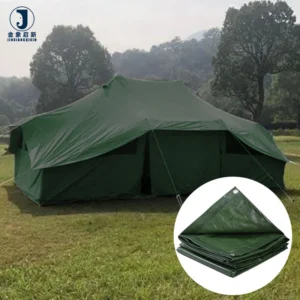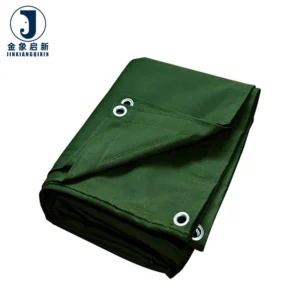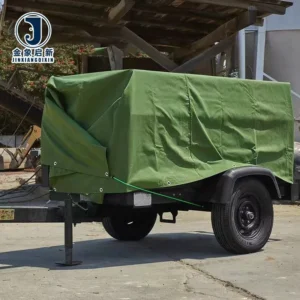




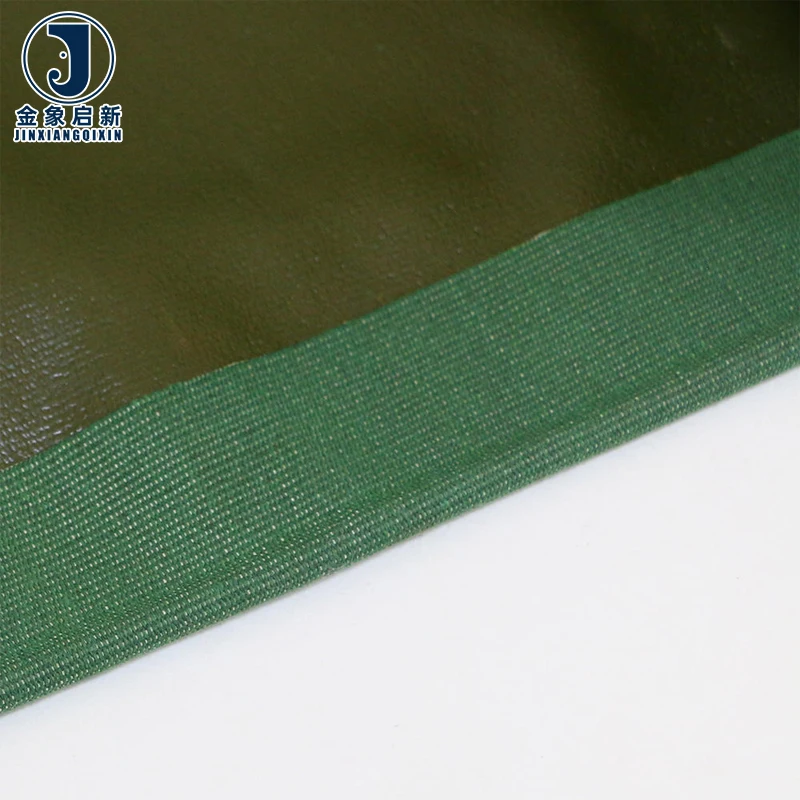

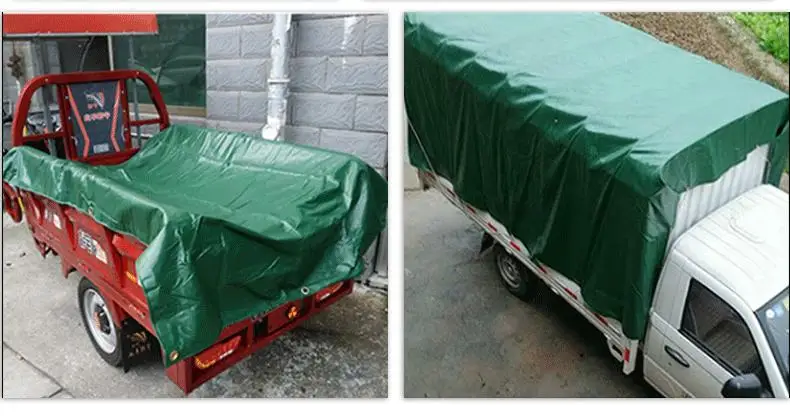
Process Control — three full production lines with dedicated QA at every stage ensure that each roll of this laminated canvas tarpaulin meets the stated weight and coating specification before it leaves the factory.
Technical Specifications
| Parameter | Value |
|---|---|
| Product Type | Canvas Tarpaulin |
| Weight | 600 GSM |
| Base Fabric | Woven Plain Canvas |
| Coating Method | Laminated |
| Waterproof | Yes |
| UV Treatment | Claimed (test basis not stated in source) |
| Flame Retardant | Claimed (grade not stated in source) |
| Reinforced Edges | Yes |
| Colour / Finish | Available on request |
| Custom Width and Length | Available — confirm requirement |
Application Suitability
| Application | Exposure & Requirement |
|---|---|
| Mining and tunnelling temporary enclosures | Dust, moisture, mechanical impact, fire safety compliance on site |
| Aviation ground support covering | Fuel splash, UV exposure, wind load, flame retardant documentation |
| Construction equipment protection | Rain, abrasion from steel edges, repeated handling and folding |
| Specialist membrane and inflatable structures | Tensile load at seams, sustained weather exposure, fire classification |
| Industrial ventilation-adjacent containment | Airborne particulates, temperature fluctuation, fire safety zone requirements |
Why "Flame Retardant" Without a Grade Creates Risk on Site
A flame retardant claim only matters when backed by a test report matching the standard your site inspector will check.
Ventilation duct and specialist structure contractors have seen fabric arrive on site labelled "flame retardant" with no supporting documentation, leading to failed inspections and costly re-ordering under project deadlines. The issue is not the fabric itself but the gap between a supplier’s statement and the fire classification your local authority or principal contractor demands. Without a grade referenced to a recognised standard — such as DIN 4102, NFPA 701, or the M2 classification — there is no way to confirm whether the laminated canvas tarpaulin you specified actually meets the compliance threshold. [NEED_CITE: fire classification standards for temporary enclosures in mining and construction]
This heavy duty woven canvas laminated tarpaulin is positioned for environments where fire safety documentation is non-negotiable. Before committing to volume, request the test report that corresponds to your target market’s requirements and verify that the grade covers the specific coating construction — not just a generic base fabric sample.
Laminated Construction and What It Means for Containment Projects
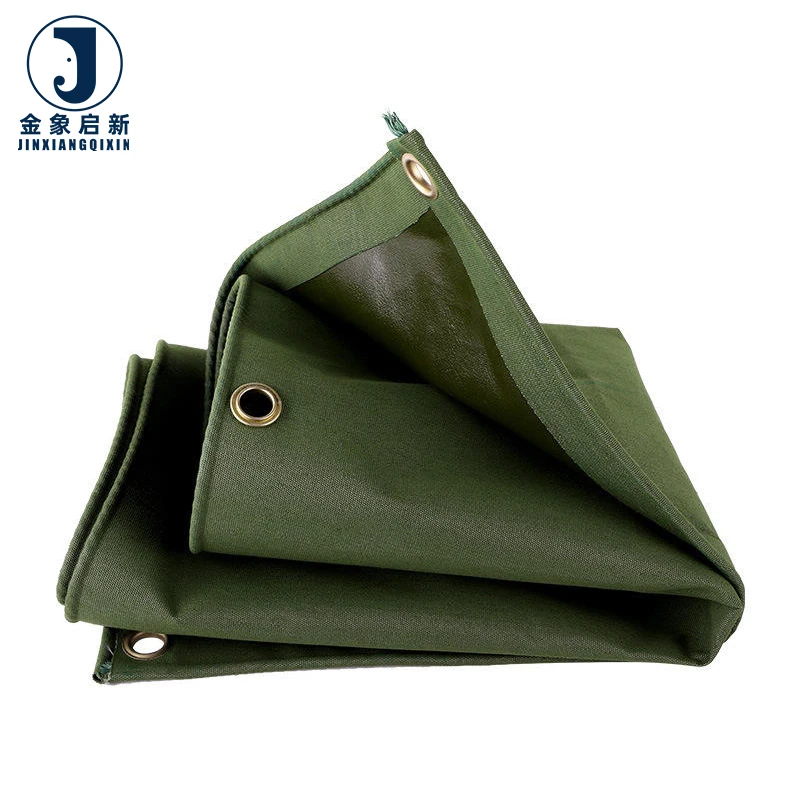
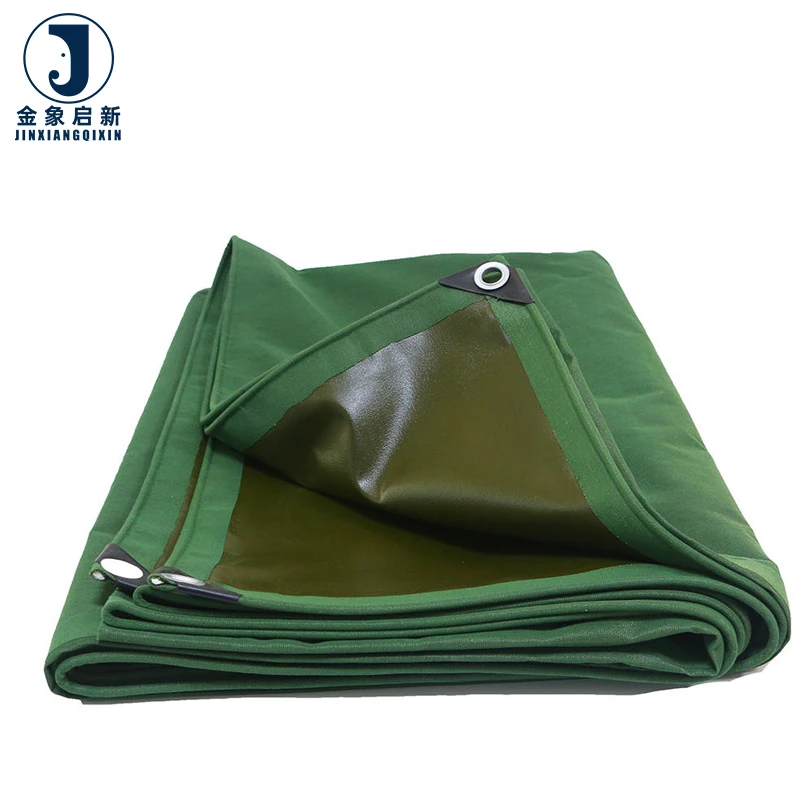
The laminated coating method bonds the PVC layer to the woven canvas base under heat and pressure, producing a fully waterproof barrier that resists delamination under repeated folding. For mining and tunnelling contractors using this canvas tarpaulin as temporary enclosure fabric, the bond integrity directly affects how the material performs when pulled taut across frame structures and exposed to vibration from nearby equipment. Laminated construction also supports heat-welded seams, which is critical when panel joins must carry structural load without peeling apart.
Fire Safety Documentation and the Specialist Structure Angle
Aviation hangars, temporary warehouses and inflatable membrane structures all sit within fire safety zones where the authority having jurisdiction will ask for a specific classification before granting occupancy. A laminated canvas tarpaulin carrying a flame retardant claim must be accompanied by a test report referencing the exact standard applicable to that jurisdiction. This is where the procurement process either saves time or creates delays — confirm the required grade early, request the documentation during the sampling phase, and ensure the test report covers the laminated construction rather than a different coating method. [NEED_CITE: DIN 4102 fire classification for building materials]
Understanding How Weight, Weave and Coating Interact at 600 GSM
A stated weight of 600 GSM encompasses both the woven canvas base fabric and the laminated PVC coating, meaning the actual tensile and tear performance depends on how that weight is distributed between the two layers. A heavier base fabric with a lighter laminate will resist tearing differently than a lighter base with a thicker coating, even though both read 600 GSM on the specification sheet. The woven plain canvas construction provides a consistent grid of warp and weft yarns that distributes load across the fabric plane, while the laminated coating adds waterproof integrity and surface abrasion resistance. When evaluating this material for ventilation-adjacent or structural applications, request the breakdown of base fabric weight versus coating weight to understand where the strength is actually coming from.
What Happens When the Specification Does Not Match the Site Requirement
A ventilation duct contractor who receives fabric without the fire retardant or anti-static certification the site requires faces an immediate problem: the material cannot be installed, the project schedule slips, and the cost of replacement falls on whoever approved the purchase order. Similarly, when GSM stated on the quotation is not verified on arrival, the material may be lighter than agreed, which translates to reduced tear resistance at stress points where the fabric is tensioned or folded repeatedly. Batch colour inconsistency between rolls becomes visible once panels are installed side by side on a large enclosure, forcing selective re-rolling or complete replacement. [NEED_CITE: tensile and tear test methods for coated fabrics per ISO 1421]
Why Contractors Source This Laminated Canvas Tarpaulin Here
Nearly 30 years of focused production on coated fabric means the coating weight and adhesion process for this laminated canvas tarpaulin is controlled through institutional knowledge, not trial and error. Three full production lines and 36 sets of professional equipment provide the capacity to fulfil bulk orders with consistent on-time delivery, even when custom widths or colours extend lead times elsewhere. The 10-person R&D team handles material selection, custom sizing and sample development, so a contractor specifying fire retardant grades can get a representative sample tested before committing to a production run. Dedicated QA and QC at every production stage, with 100 percent inspection before shipment, means the GSM, colour and coating integrity of each roll is verified rather than assumed. Samples for custom requirements are developed within days, keeping the pre-approval cycle short.
Documentation & Verification
- Material specification sheet stating 600 GSM, woven plain canvas base fabric and laminated coating method
- Test report for flame retardant and UV treatment grades — request the standard applicable to your market
- ISO and CE certificates accompanying each shipment for compliance records
- Pre-shipment inspection record confirming roll-by-roll weight and coating verification
- Roll packing list with roll count, net weight and dimensions for customs and receiving
- Certificate of origin for import duty classification and trade agreement eligibility
Fabrication, Handling & Storage
- Heat-weld seams at temperatures suited to laminated PVC; test peel strength before production runs on 600 GSM stock
- Reinforce eyelet and tie-down points with additional canvas patches to spread load across the woven base fabric
- Store rolls upright on pallets to prevent permanent creasing through the laminated coating layers
- Allow cold-stored rolls to reach ambient temperature before unrolling to avoid coating crack at the laminate bond line
- Use mild detergent for cleaning; avoid solvent-based products that can degrade the laminated PVC surface
- Plan cut patterns to minimise offcuts and reduce the number of welded seams in large enclosure panels
Before You Request a Quote
Provide the specific fire safety standard or classification your site authority requires, along with the exposure conditions the fabric will face — sustained UV, chemical contact, or mechanical abrasion. Confirm whether you need rolls at a specific width for your own fabrication, or finished panels cut to dimension with reinforced edges and eyelets. If colour consistency across multiple rolls is critical for your installation, state the reference colour and request batch samples before production begins.
Frequently Asked Questions
Q: What flame retardant grade does this 600 GSM laminated canvas tarpaulin carry, and will it satisfy my local fire authority?
A: The flame retardant treatment is claimed but the specific grade is not stated in the current product documentation. Before specifying, share the fire classification standard your site requires — such as DIN 4102, NFPA 701 or M2 — and request a test report covering this exact laminated construction. The R&D team can develop a sample treated to your required grade for independent verification before you commit to a production order.
Q: How do I verify the 600 GSM weight when the rolls arrive on site?
A: Request the material specification sheet that states the base fabric weight and coating weight breakdown alongside the total 600 GSM figure. On arrival, cut a measured sample from each roll and weigh it against the stated specification. The pre-shipment inspection record documents the weight verification performed at the factory, giving you a baseline to compare against your own receiving inspection.
Q: What test basis supports the UV resistance claim, and how does that translate to outdoor service life?
A: The UV treatment is claimed but the specific test standard and exposure duration are not stated in the current documentation. Request the test report — whether based on accelerated weathering or outdoor exposure — and compare the results to the UV conditions at your installation site. The R&D team can adjust the UV stabiliser package if your application demands a higher threshold than the standard formulation provides.
Q: Is this laminated canvas tarpaulin suitable for mining and tunnelling environments that require anti-static compliance?
A: Anti-static treatment is a separate specification from flame retardant treatment and must be confirmed independently. If your mining or tunnelling site mandates anti-static properties for ventilation-adjacent fabric, state the required surface resistivity range in your inquiry. The production team can formulate accordingly and provide a test report documenting the measured values against your specified standard.
Q: What is the minimum order quantity if I need a custom width or colour for this 600 GSM laminated canvas?
A: Custom widths, colours and finishes are available, and the minimum order quantity depends on the specific combination you require. The 10-person R&D team develops samples within days so you can approve colour, weight and coating integrity before full production. Share your target width, annual volume and colour reference in your inquiry to receive a precise MOQ and lead time.