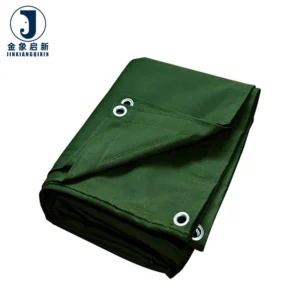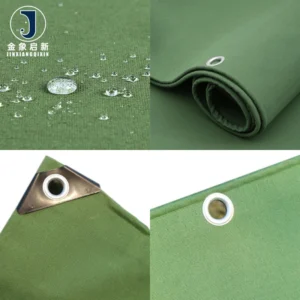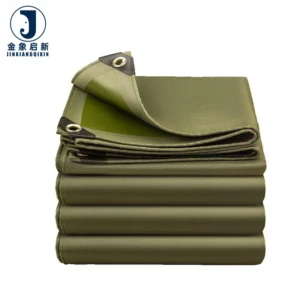

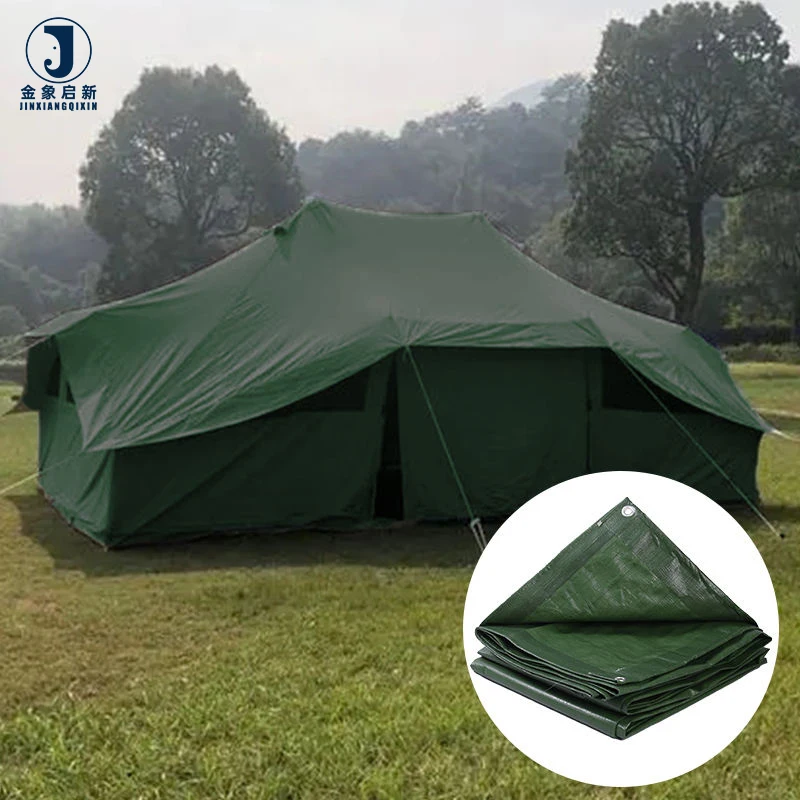
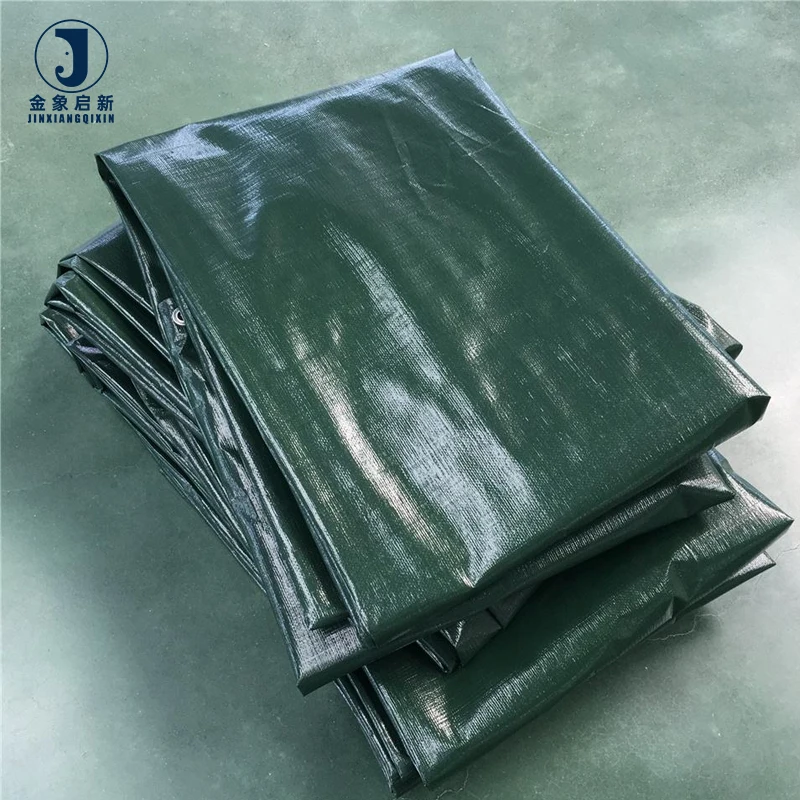
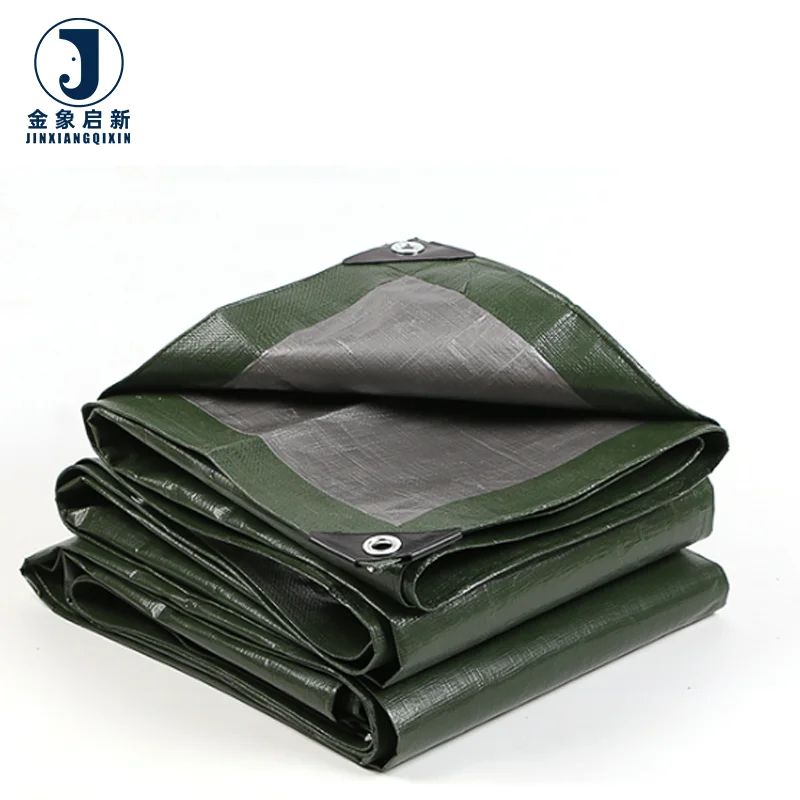
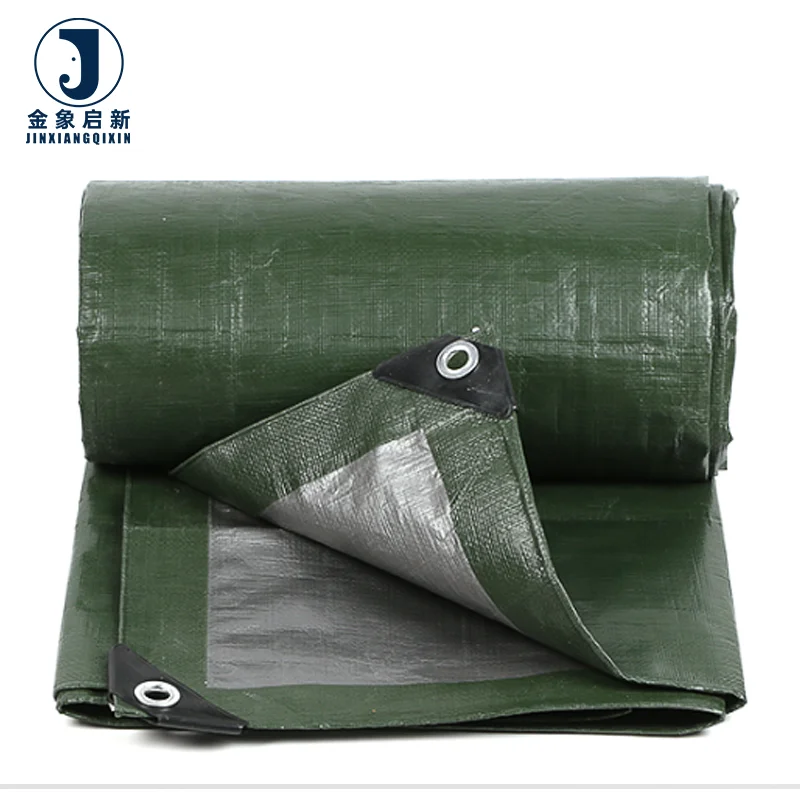
Technical Fabric Expertise — Three production lines configured for specialist PE and coated fabric runs, supporting custom fire-resistant and anti-static treatments for ventilation and structural applications.
Technical Specifications
| Parameter | Value |
|---|---|
| Product Type | PE Tarpaulin |
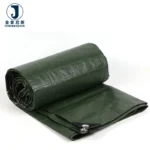
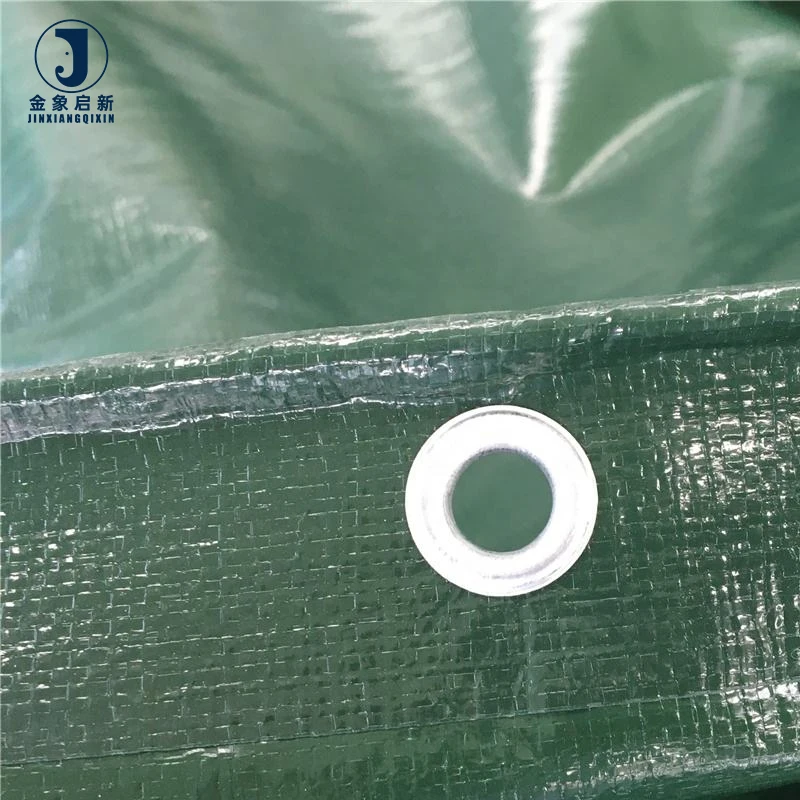
| Material | HDPE woven fabric with LDPE coating on both sides |
| Mesh Density | 6×6 to 16×16 (selectable) |
| Weight Range | From 50 g/m² up to 300 g/m² |
| Color Options | Blue, Orange, White, Black, Grey, Yellow, Green, Red, custom colors available |
| Sheet Sizes | 2×3, 3×4, 3×5, 4×5, 5×6, 6×8, 10×10, 10×12, 12×14, or custom dimensions |
| Roll Length | 100m per roll or custom length |
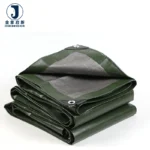
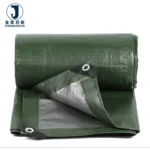
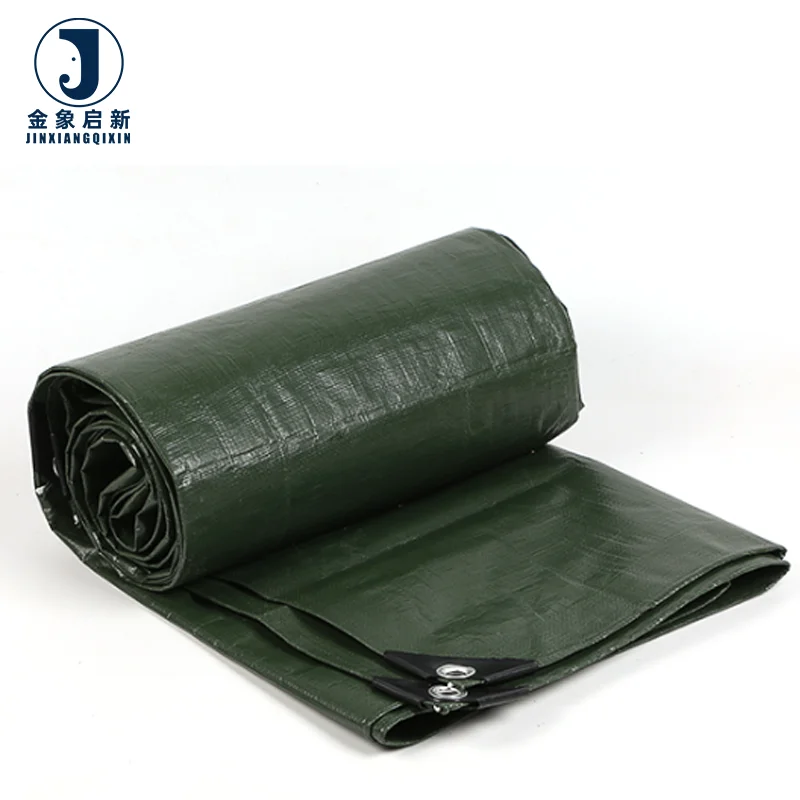
| Edge & Corner Making | PP rope hem on all edges; black plastic triangle reinforcement at all corners |
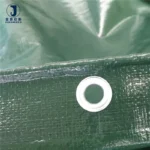
| Eyelet Configuration | Rustproof aluminum eyelets at 1m or 1.5m spacing, or as specified |
| Special Treatment | Fire resistant / UV protection available (confirm grade required for your jurisdiction) |
| Anti-Aging Additives | Anti-oxidants, anti-exposure, and anti-aging compounds incorporated |
| Corrosion Resistance | Acid and alkali resistance claimed (test basis not stated) |
| Standards | ISO, CE (company-level certification) |
Application Suitability
| Application | Exposure & Requirement |
|---|---|
| Temporary ventilation enclosures in mining and tunnelling | Constant airflow pressure, particulate abrasion, fire-safety compliance underground |
| Blackout covers for inflatable and membrane structures | Total light exclusion, structural wind loading, repeated inflation cycles |
| Construction site barriers and equipment shrouds | Chemical splash, acid rain exposure, UV degradation over extended outdoor periods |
| Specialist structure wrapping and duct insulation | Flex movement at joints, thermal cycling, anti-static requirements in confined spaces |
| Industrial stockpile covers | Long-term weather exposure, wind uplift, puncture risk from sharp-edged materials |
Why Fire-Retardant PE Tarpaulin Specifications Fail on Site
A fabric labeled "fire resistant" without a cited standard is a compliance risk, not a safety solution.
Mining and tunnelling contractors frequently receive ventilation duct fabric and temporary structure covers with fire-retardant claims unsupported by any test documentation. The material passes a simple flame-flick test in the warehouse but fails the site safety audit because the applicable standard — whether M2, B1, or NFPA 701 — was never specified in the purchase order. The cost of replacing non-compliant fire retardant PE tarpaulin underground is not just material; it is lost shift time and regulatory delay [NEED_CITE: fire classification standards for underground ventilation materials]. When the grade is undefined, the supplier defaults to the cheapest additive package, and the buyer discovers the gap only when the site inspector asks for the certificate.
Ventilation Enclosure and Duct Wrapping Requirements
Mining and tunnelling ventilation systems demand fabric that maintains structural integrity under continuous positive or negative air pressure. This fire retardant PE tarpaulin is available in mesh densities from 6×6 to 16×16, allowing selection based on the airflow restriction and tensile load your specific duct geometry requires. Lower mesh counts reduce weight and cost for temporary brattices, while higher densities provide the tear resistance needed at junction points and bend radii.
The HDPE woven base with double-side LDPE coating creates a barrier that resists moisture ingress and particulate buildup inside the duct run. For installations where static charge accumulation is a concern in combustible dust environments, anti-static treatment can be incorporated — confirm the surface resistance value required by your site safety standard before committing to production [NEED_CITE: anti-static surface resistance requirements for mining ventilation fabric].
Blackout and Specialist Structure Fabric Considerations
Inflatable and membrane structures used for temporary event spaces, mobile clean rooms, or environmental enclosures often require total light exclusion. The blackout grades of this PE tarpaulin achieve opacity through the LDPE coating formulation rather than a laminated film layer, which means the light-blocking property does not delaminate under repeated flex cycles or thermal expansion.
For structures that undergo inflation and deflation cycles, the material must tolerate repeated folding without coating crack or loss of fire-resistant additive effectiveness. Custom eyelet spacing at 1m intervals provides the attachment density needed for high-wind sites, while the PP rope hem distributes load across the full perimeter rather than concentrating stress at individual grommets. Colour consistency across multiple rolls is verified before dispatch to avoid visible shade variation when panels are installed adjacent to one another on the same structure [NEED_CITE: colour matching standards for multi-panel fabric installations].
How Mesh Density, GSM, and Coating Weight Interact
The tensile and tear performance of PE tarpaulin depends on the relationship between base fabric weave density and total coating weight, not on GSM alone. A 300 g/m² fabric with a 6×6 mesh and heavy LDPE fill will behave very differently under load than a 300 g/m² fabric at 16×16 mesh with a thinner coating layer. The higher mesh count distributes stress across more yarn intersections, slowing tear propagation, while the heavier coating on a low-mesh fabric adds stiffness and puncture resistance but can crack at fold lines in cold conditions.
The double-side LDPE coating method used here encapsulates the HDPE base fabric, protecting individual yarns from UV degradation and chemical attack while maintaining the flexibility needed for field fabrication. Anti-oxidant and anti-aging additives are compounded into the coating rather than applied as a surface treatment, which means they do not wash off during cleaning or degrade with surface abrasion. Understanding which parameter drives performance in your specific application — mesh count for tear resistance, coating weight for chemical barrier, or GSM for overall durability — determines which grade to specify.
The Cost of Specifying the Wrong Grade for Specialist Applications
When PE tarpaulin is selected on price per square metre without verifying the fire-retardant grade against site requirements, the material may pass initial installation but fail the compliance inspection that follows. Underground mining operations face regulatory shutdown if ventilation fabric cannot produce a valid test report citing the jurisdiction-specific standard. Above ground, temporary structures clad in non-rated blackout fabric create liability exposure for the contractor if a fire event triggers an investigation.
Batch-to-batch inconsistency in GSM and colour creates problems that only become visible after installation, when adjacent panels show visible shade differences or when the fabric fails at loads the quoted specification should have supported. Welded seams on low-mesh, high-coating-weight fabric can fail before the body of the material does, because the heat input required to fuse thick LDPE layers degrades the underlying HDPE yarn [NEED_CITE: weld seam failure modes in coated polyethylene fabrics]. Pre-production sampling and documented in-process inspection prevent these outcomes.
Why Procure Specialist Fabric Through This Channel
Three full production lines and 36 sets of professional equipment support volume runs with consistent output across every roll in your order. The 10-person R&D team handles material selection and sample development for custom fire-resistant grades, confirming additive packages against your target standard before bulk production begins.
Dedicated QA and QC checkpoints at each production stage ensure that GSM, mesh density, and coating weight are verified against your specification rather than left to assumption. Pre-shipment inspection covers 100 percent of the order, documenting colour consistency, eyelet pull strength, and dimensional accuracy before any roll or sheet leaves the facility. Custom widths, lengths, and printing options are available without the prohibitive minimums that prevent smaller specialist contractors from accessing made-to-order fabric.
Documentation & Verification
- Material specification sheet confirming exact GSM, mesh count, and LDPE coating weight for the grade selected
- Fire-resistant test report citing the specific standard applicable to your jurisdiction, available on request
- Pre-shipment inspection record with roll-by-roll or sheet-by-sheet verification of colour and eyelet integrity
- Certificate of origin and customs documentation to support import clearance in your destination market
- ISO and CE certification copies for contractor pre-qualification and site audit submissions
Fabrication, Handling & Storage
- Heat welding parameters must account for double-side LDPE coating thickness; test seam settings on a sample before production
- PP rope hem and reinforced corner triangles distribute tie-down loads; avoid point-loading eyelets without perimeter support
- Store rolls horizontally on pallets to prevent edge compression marks that affect unrolling and cutting accuracy
- Deploy in cold conditions carefully; LDPE becomes less flexible below freezing, increasing risk of coating crack at fold lines
- Cut sheets with allowance for thermal expansion in direct sunlight; dark colours expand more than light grades
- Clean with mild detergent only; solvents and strong alkalis can degrade the LDPE coating surface over time
Before You Send an Enquiry
Specify the ventilation duct diameter, operating pressure, and whether the installation is underground or above ground so we can recommend the correct mesh density and fire-resistant treatment. Provide the applicable fire classification standard for your market — M2, B1, NFPA 701, or another code — so the correct additive package and test documentation can be arranged before production.
Indicate whether you need rolls for your own fabrication or finished sheets with custom eyelet spacing and reinforcement. If colour matching across a multi-panel structure is critical, request a production sample to confirm shade before committing to the full order volume.
Frequently Asked Questions
Q: What fire-retardant standard can this fire retardant PE tarpaulin meet, and is the test report project-specific?
A: Fire-resistant treatment is available on request, and the applicable standard — such as M2, B1, or NFPA 701 — must be confirmed at enquiry stage. Test reports are generated against the specific standard you nominate for your jurisdiction. Provide your site compliance requirements early so the correct additive package is selected before bulk production begins.
Q: Is anti-static treatment available, and what surface resistance value is guaranteed?
A: Anti-static treatment can be incorporated for installations in combustible dust or gas environments. The guaranteed surface resistance value depends on the specific standard your site safety plan references. Confirm the required measurement method and threshold in writing during the specification stage so that the treatment formulation and test protocol are aligned to your compliance audit.
Q: How do I specify mesh density and GSM to meet both airflow and tensile requirements for ventilation enclosures?
A: Lower mesh counts like 6×6 reduce weight and allow more air permeability, suitable for low-pressure temporary brattices. Higher mesh counts such as 14×14 or 16×16 increase tear resistance for duct runs with bends and junctions. Provide your duct diameter, operating pressure, and bend radius so we can recommend the mesh and GSM combination that balances airflow restriction with structural durability.
Q: Can eyelet spacing and reinforcement be tailored to high-wind or high-flex specialist structure loads?
A: Eyelet spacing is available at 1m or 1.5m intervals, or custom spacing on request. All corners include black plastic triangle reinforcement, and all edges are hemmed with PP rope to distribute load. For structures subject to high wind uplift or repeated inflation cycles, closer eyelet spacing and additional reinforcement at stress points can be specified during the order confirmation stage.
Q: What documentation accompanies shipment to satisfy mining or tunnelling site compliance audits?
A: Each shipment includes a material specification sheet stating GSM, mesh count, and coating weight, along with ISO and CE certificates. Fire-resistant test reports are provided when the treatment grade has been confirmed and tested to your nominated standard. Pre-shipment inspection records, roll packing lists, and certificates of origin are included to support site safety audits and customs clearance.