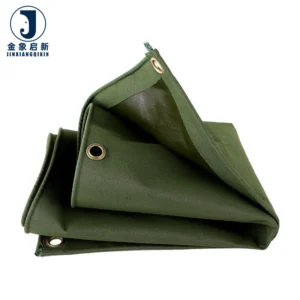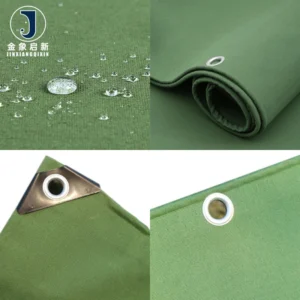



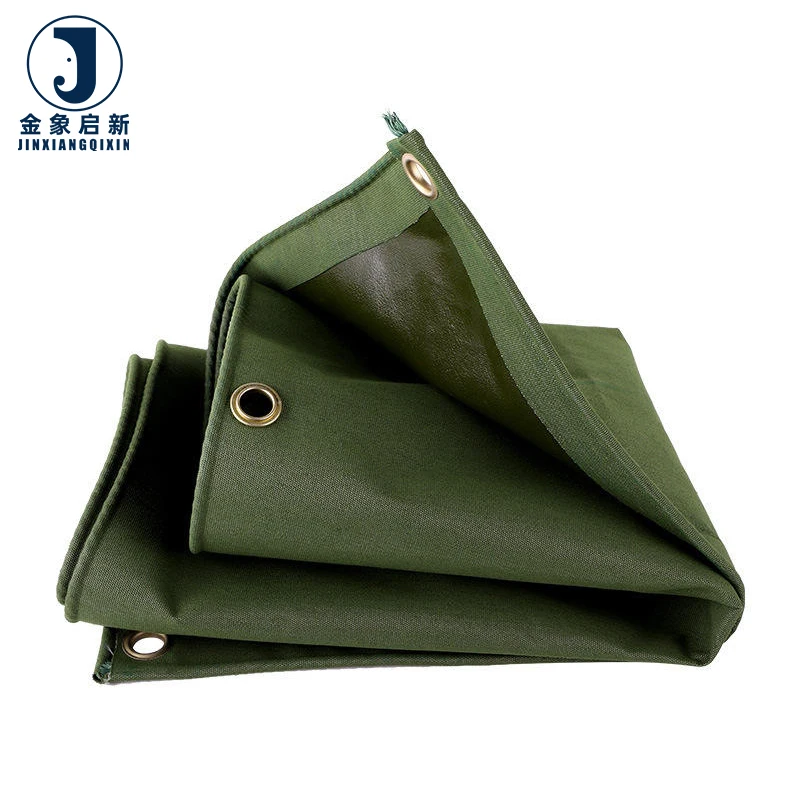
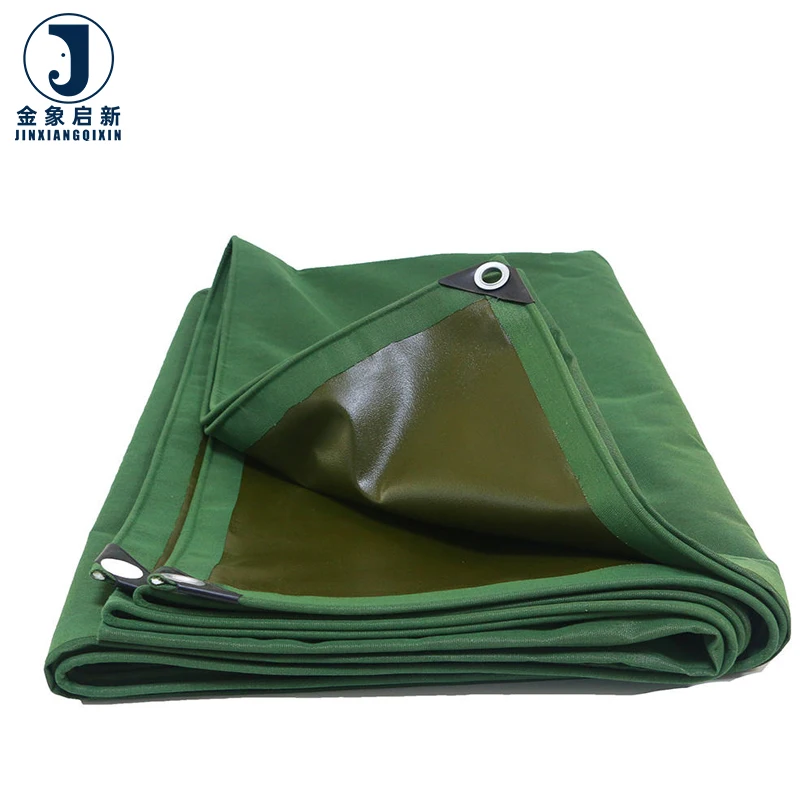


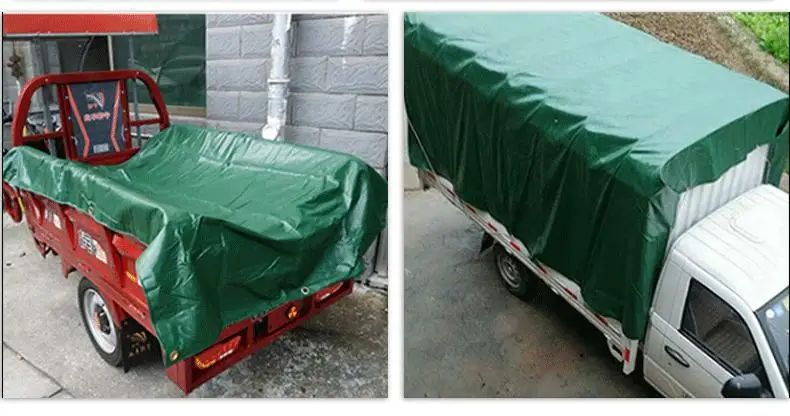
Precision in Every Roll — our QA process inspects coating weight, lamination adhesion, and edge reinforcement on every 600 GSM laminated canvas tarpaulin before it leaves the production line.
Technical Specifications
| Parameter | Value |
|---|---|
| Product Type | Canvas Tarps |
| Material | Woven Plain Canvas Laminated |
| Weight | 600 GSM |
| Coating Method | Laminated |
| Fire Performance | Flame Retardant (grade not stated in source) |
| Surface Treatment | UV Resistant (test basis not stated in source), Waterproof |
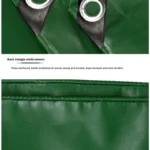
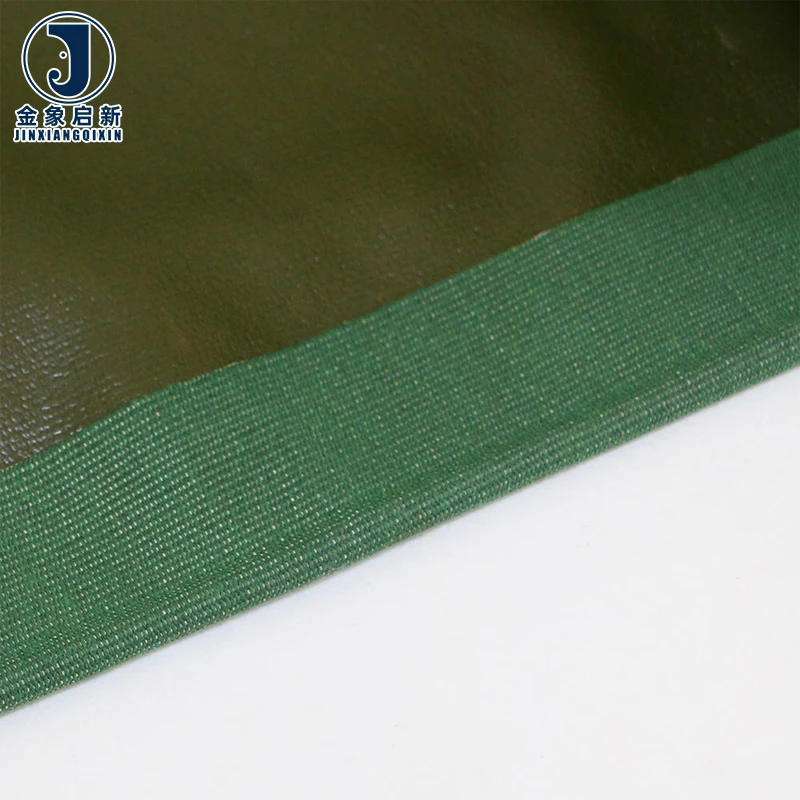
| Edge Construction | Reinforced Edges |
| Assembly State | Finished Tarpaulin |
Application Suitability
| Application | Exposure & Requirement |
|---|---|
| Fire-retardant ventilation ducts for mining and aviation hangars | Constant airflow pressure, flex cycling, mandatory fire compliance documentation |
| Membrane and inflatable structure fabric | Biaxial tension, wind load, UV exposure on semi-permanent shelters |
| Tunnelling and underground construction air duct covers | Continuous moisture contact, mechanical abrasion from rock dust, confined-space safety standards |
| Industrial multi-use covers and equipment shelters | Weather exposure, repeated handling, protection against debris and contaminants |
Why a Flame-Retardant Claim Without a Grade Fails the Site Inspector
Every roll must carry documented fire performance matching the standard your project specifies.
Ventilation ductwork in mining, tunnelling, and aviation environments operates under strict fire-safety oversight. When a laminated canvas tarpaulin 600 gsm fire retardant certified claim appears on the quotation but no test report citing M2, B1, NFPA 701, or DIN 4102 accompanies the shipment, the site inspector halts installation. [NEED_CITE: fire classification standards for flexible duct and membrane materials in underground mining]. We have seen entire duct runs removed after the first audit because the documentation gap was discovered too late. The fabric itself may perform adequately, but without the paper trail the project cannot proceed.
Laminated Construction and Dimensional Stability for Duct Fabrication
The laminated canvas tarpaulin 600 gsm fire retardant certified is built on a woven plain canvas base that is laminated on both sides. This method bonds the polymer layers to the base fabric under heat and pressure, producing a flat, dimensionally stable sheet. For ventilation duct fabrication, this stability matters: the material must hold its shape when cut into pattern panels and joined by heat welding or sewing, without distorting under the tension of hanging duct runs.
Reinforced Edges at High-Stress Flex Points
Ventilation ducts and inflatable structures concentrate mechanical stress at seams, edges, and attachment points. The reinforced edges on this 600 GSM laminated canvas tarpaulin address tear propagation where the material flexes repeatedly during operation. In mining ventilation, a duct suspended from tunnel roof bolts sways with airflow surges and equipment movement; edge reinforcement prevents small nicks from growing into full-width failures that would depressurise the airway. [NEED_CITE: tear propagation behaviour in coated and laminated technical fabrics under cyclic flex loading].
Reading the Spec Sheet: What 600 GSM Laminated Canvas Actually Means
GSM alone describes mass per unit area, not strength. A 600 GSM laminated canvas achieves its tensile and tear performance through the combination of base fabric denier, weave density, and the weight of the laminated polymer layers. The lamination process typically yields higher peel strength than simple coating, which matters when the fabric is heat-welded at seams — the bond between layers must survive the welding temperature without delaminating. Flame-retardant treatment is applied during or after lamination, and the grade achieved depends on the specific chemical formulation used; buyers should confirm the test standard required by their destination market before production begins. The UV-resistant treatment protects the surface from degradation during outdoor exposure, though the test basis should be verified for projects requiring documented weathering data. Waterproof performance is inherent in the laminated barrier, which blocks moisture penetration across the full fabric surface.
The Hidden Cost of Specifying Without Verification
When a ventilation duct project specifies flame-retardant fabric but accepts delivery without checking the test report against the site requirement, the consequences surface at the worst possible time — during the compliance audit. Removal and reinstallation of duct runs in an active mining tunnel multiplies labour costs and delays production. Similarly, accepting rolls without verifying GSM against the material specification sheet risks receiving lighter fabric that cannot withstand the air pressure and mechanical stress the system was designed for. Edge reinforcement that looks adequate on the first metre may thin out further along the roll if in-process QA is not enforced consistently. [NEED_CITE: ISO 1421 tensile and tear test methods for coated and laminated fabrics].
Why Technical Buyers Source This Fabric Here
Three full production lines and 36 sets of professional equipment handle bulk orders of laminated canvas tarpaulin with consistent output scheduling. A 10-person R&D team develops custom samples within days, adjusting lamination parameters and flame-retardant formulation to match your project specification. Dedicated QA/QC runs at every production stage, with full roll-length inspection of edge reinforcement integrity and GSM verification before shipment. The near-30-year focus on coated and laminated fabric means process control over lamination adhesion is built into the production routine, not added as an afterthought. ISO and CE certified operations provide the documentation framework that mining and tunnelling procurement teams require. [NEED_CITE: quality management system requirements for technical textile manufacturing].
Documentation & Verification
- Material specification sheet stating 600 GSM, base fabric denier, and laminate weight breakdown
- Flame-retardant test report citing the specific standard your project requires
- UV resistance test basis documented for outdoor-exposed membrane and duct applications
- Pre-shipment inspection record confirming reinforced edge integrity across full roll length
- Certificate of origin and customs documentation for cross-border technical fabric procurement
Fabrication, Handling & Storage
- Heat-weld laminated canvas at temperatures matched to the polymer layer; test weld settings on a sample strip before production
- Sewn seams on 600 GSM laminated canvas should use bonded polyester thread with UV-resistant treatment to match the fabric service life
- Reinforced edges require additional bar-tack stitching at attachment points for suspended duct installations
- Store rolls upright on pallets in a dry, shaded area to prevent flat-spot deformation of the laminated surface
- Clean laminated surfaces with mild detergent and soft brush; avoid solvents that may attack the polymer laminate bond
What We Need to Quote Accurately
Provide the ventilation duct diameter and run length, or the membrane structure panel dimensions, so we can recommend roll width and calculate cutting yield. Confirm the fire-retardant standard enforced at your project site — M2, B1, NFPA 701, or DIN 4102 — so the correct formulation is specified. Indicate whether you need finished cut-and-sewn duct sections or roll stock for your own fabrication facility.
Frequently Asked Questions
Q: What fire-retardant grade does this 600 GSM canvas meet, and which test standard applies?
A: The fabric is produced with flame-retardant treatment, but the specific grade — M2, B1, NFPA 701, or DIN 4102 — is confirmed per your project requirement before production. We supply the corresponding test report with each shipment. State your site standard at inquiry stage so the correct formulation is applied.
Q: How is the 600 GSM verified on arrival, and what does the pre-shipment inspection cover?
A: Each roll is weighed and measured during pre-shipment inspection, and the GSM is recorded against the material specification sheet. The inspection also covers edge reinforcement continuity, surface consistency, and lamination adhesion across the full roll length. The inspection record ships with your documentation package.
Q: What are the roll width and length options for duct fabrication and membrane structure cutting?
A: Roll width and length are configured to your cutting pattern requirements. Provide your panel dimensions and target yield so we can recommend the most material-efficient roll specification. Custom widths are available subject to production line capability and minimum order confirmation.
Q: Can this laminated canvas be heat-welded or must it be sewn for duct and inflatable assembly?
A: The laminated construction supports heat welding, which produces airtight seams suitable for ventilation duct applications. Sewing with sealed needle holes is also viable for structural membrane panels. We recommend testing weld parameters on a sample piece before committing to full production runs.
Q: What documentation ships with each roll for site compliance audits in mining and tunnelling?
A: Each shipment includes the material specification sheet, flame-retardant test report, pre-shipment inspection record, roll packing list, certificate of origin, and ISO and CE certificates. Additional documentation can be prepared to match the specific compliance framework of your mining or tunnelling project.