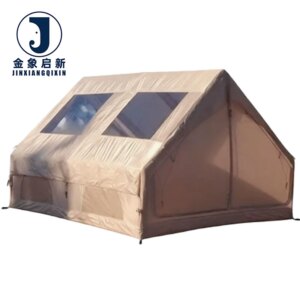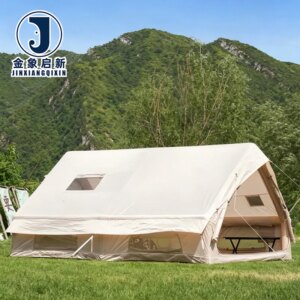

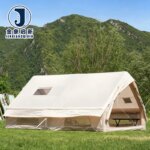
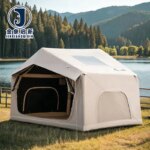
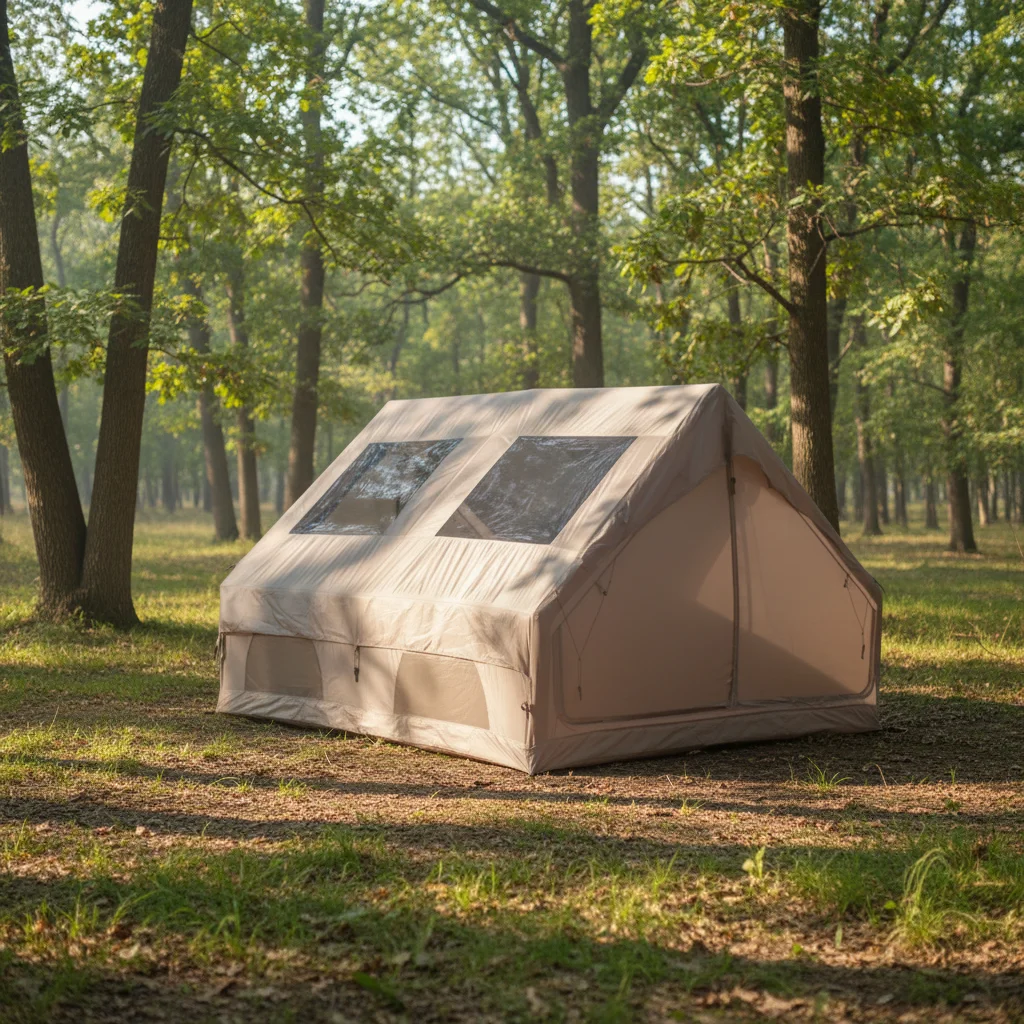

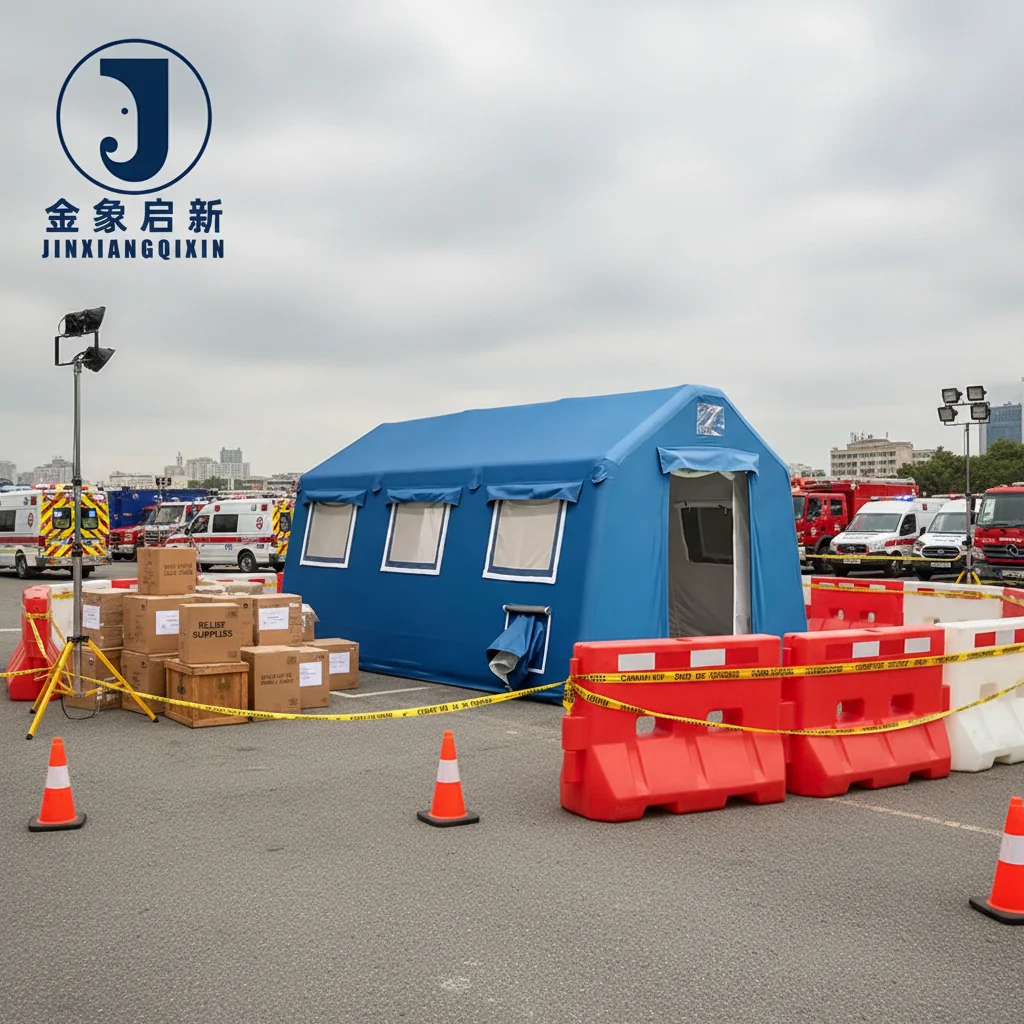
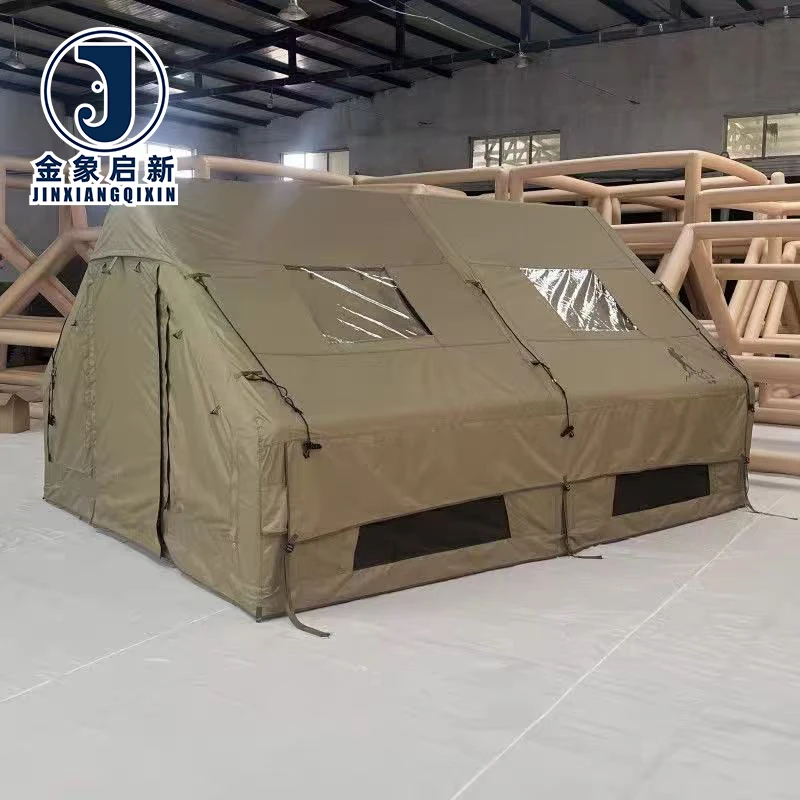
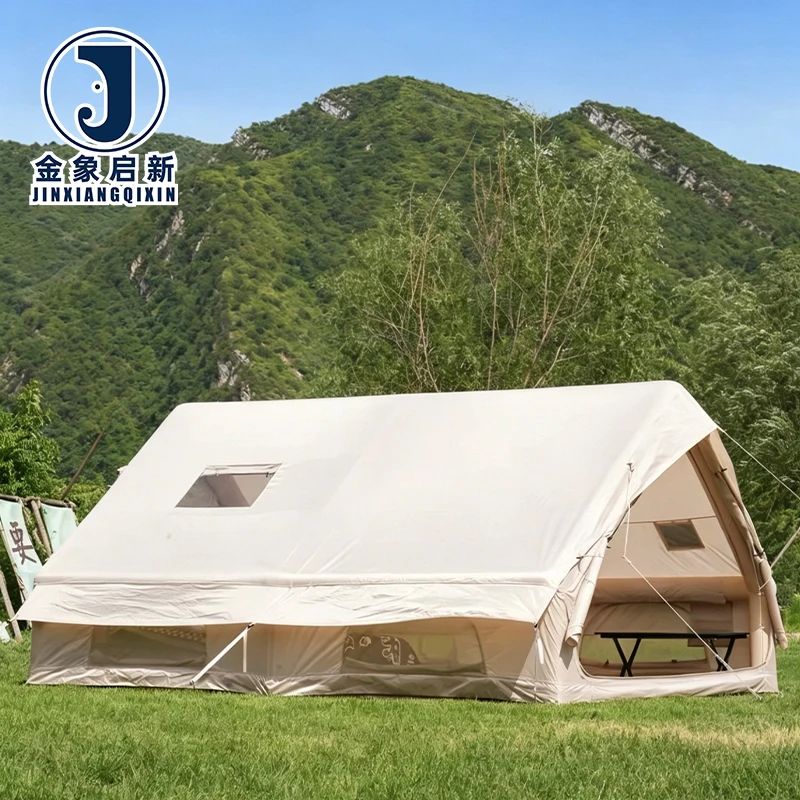
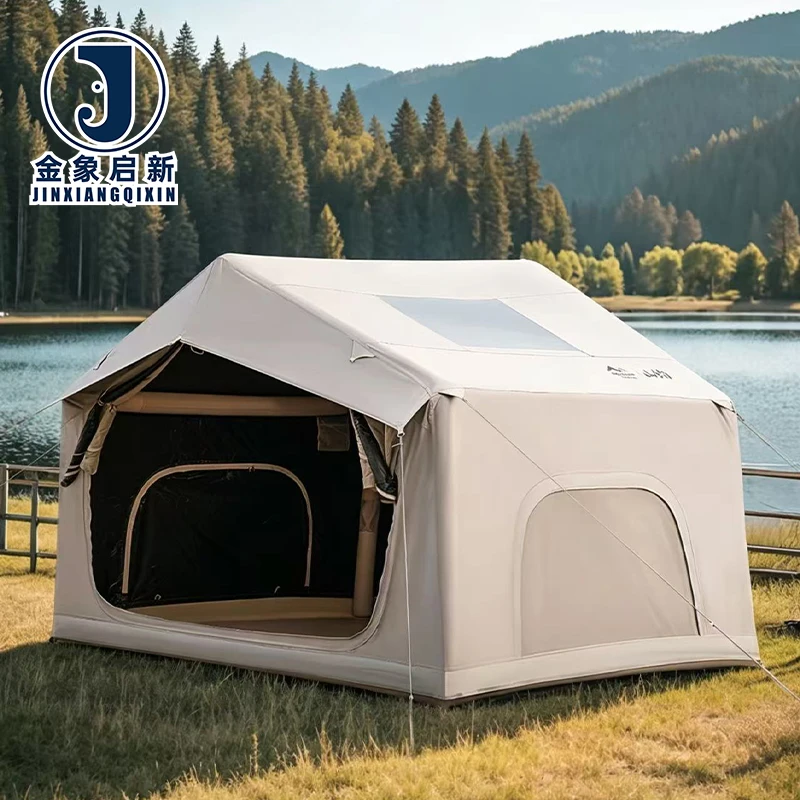
Coated Fabric Process Control — Nearly three decades of PVC coating expertise ensures batch-specific verification of waterproof performance and material composition for every inflatable shelter fabric shipment.
Technical Specifications
| Parameter | Value |
|---|---|
| Product Type | Inflatable Tent |
| Core Material | PVC tarpaulin |
| Waterproof Rating | 3000mm |
| Flame Retardant | Fire-retardant formulation (confirm specific grade such as M2 / B1 / NFPA 701 with technical team) |
| UV Resistance | UV-resistant treatment (test basis available on request) |
| Tear Resistance | Tear-resistant construction (test standard available on request) |
| Season Rating | 4-Season |
| Opening Mechanism | Quick Automatic Opening (Inflatable) |
| Customization | OEM & ODM, sample customization, pattern printing |
| Certifications | ISO9001, ISO14001, ISO45001, CE |
Application Suitability
| Application | Exposure & Requirement |
|---|---|
| Disaster recovery temporary site offices | Rapid deployment, continuous weather exposure, fire safety compliance for occupied structures |
| Emergency equipment storage shelters | Moisture ingress prevention, UV degradation resistance, dimensional stability under wind load |
| Mobile command centers for infrastructure projects | Quick inflation by single operator, interior climate retention, repeated setup and teardown cycles |
| Remote industrial site workspace solutions | Extended outdoor exposure, abrasion from site conditions, certified material traceability |
What "Fire-Retardant" Means Without a Test Certificate Behind It
Inflatable tent fire retardant compliance requires batch-specific documentation, not just a claim on a data sheet.
When procurement teams specify a certified inflatable shelter fabric for mining or aviation sites, the absence of a verifiable test certificate creates a compliance gap that is often discovered only during site inspection. We have seen emergency shelters rejected at the gate because the supplier stated "fire-retardant" without linking it to the standard the site safety officer actually enforces [NEED_CITE: DIN 4102 fire classification for building materials]. The consequence is not a paperwork delay — it is a structure that cannot be occupied until the correct documentation arrives or the fabric is replaced entirely.
Compliance Documentation That Travels With Every Roll
Every shipment of this inflatable tent fire retardant fabric includes a batch-specific quality inspection report. This document records the waterproof performance test results and material composition verification for the exact production run, not a generic certificate reused across multiple orders. Buyers deploying structures in regulated environments can present this documentation directly to site safety auditors.
Rapid Inflation Architecture for Emergency Timelines
The quick automatic opening mechanism allows a single operator to inflate the structure without external rigging or heavy equipment. This matters most in disaster recovery windows where hours determine whether temporary medical facilities or command centers are operational before conditions deteriorate. The 4-season construction maintains structural integrity across temperature extremes encountered in remote infrastructure deployments [NEED_CITE: tensile and tear test methods for coated fabrics per ISO 1421].
Understanding the 3000mm Waterproof Rating in Context
A 3000mm waterproof rating indicates the hydrostatic head pressure the PVC tarpaulin can withstand before moisture penetration occurs. For inflatable disaster relief shelters deployed on saturated ground or in sustained rainfall, this rating determines whether the interior remains dry during the critical first days of operation. The rating is verified through batch testing rather than assumed from the base material specification. Combined with the tear-resistant construction, the fabric maintains its waterproof barrier even when the structure flexes under wind loading or when equipment is moved against the interior walls. The PVC coating method directly influences how well the waterproof layer adheres to the base fabric during repeated inflation and deflation cycles.
The Cost of Undocumented Material Claims
When an inflatable emergency shelter arrives at a mining site without the fire-retardant grade the safety plan requires, the entire deployment halts. We observe this pattern repeatedly: the quotation states compliance, but the shipment lacks the specific test certificate linking the fabric to M2, B1, or NFPA 701 standards [NEED_CITE: NFPA 701 standard for flame propagation of textiles]. Similarly, UV-resistant treatment claimed without a test basis leaves buyers unable to predict how the fabric will perform after months of exposure in high-altitude or equatorial sites. These gaps force emergency procurement of replacement structures at premium lead times.
Why Procurement Teams Source This Fabric Here
The 9,180-square-meter facility operates three full production lines with 36 sets of professional processing equipment, supporting volume requirements without subcontracting coating operations to external vendors. A 10-technician R&D team handles pattern printing, custom sizing, and sample development in-house, reducing the lead time between specification approval and production start. Every production run undergoes dedicated QA/QC at each stage with 100% pre-shipment inspection, ensuring dimensional accuracy and coating consistency across the entire order. ISO9001, ISO14001, ISO45001, and CE certifications are maintained as active documentation, not expired certificates referenced for marketing purposes.
Documentation & Verification
- Batch-specific inspection report covering 3000mm waterproof performance and PVC coating weight verification
- Fire-retardant test certificates provided upon request, with records retained for five-year traceability
- ISO9001, ISO14001, ISO45001, and CE certificates included as standard shipment documentation
- Pre-production sample approval required before mass production to confirm dimensional and performance specifications
- Certificate of origin and customs support documentation prepared for cross-border procurement compliance
Fabrication, Handling & Storage
- Heat welding parameters must match PVC coating thickness to prevent seam failure at inflation stress points
- Store rolls upright in climate-controlled environment to prevent permanent creasing in the PVC tarpaulin surface
- UV-resistant treatment requires compatible cleaning agents — avoid solvent-based products that degrade the coating layer
- Confirm fire-retardant grade with local compliance requirements before cutting fabric to custom shelter dimensions
- Allow fabric to acclimate to ambient temperature before inflation to prevent low-temperature coating brittleness
Specifying Your Inflatable Shelter Requirements
To receive an accurate quotation and sample development timeline, provide the deployment environment details including expected temperature range, wind exposure, and duration of outdoor service. Specify the fire-retardant standard required by your site safety plan or destination market regulations. Indicate whether you require finished tent structures with inflation systems or fabric rolls for in-house fabrication, and include any pattern printing or custom dimensional requirements.
Frequently Asked Questions
Q: Which fire-retardant standard applies to my market — M2, B1, or NFPA 701?
A: The applicable standard depends on your destination country’s building and temporary structure regulations. Our technical team provides test certificates aligned to M2 (France), B1 (Germany DIN 4102), or NFPA 701 (North America) based on your project specification. Confirm the required grade during the inquiry stage so batch testing can be arranged before production.
Q: What UV treatment test documentation is available for outdoor service life prediction?
A: UV-resistant treatment test reports are furnished upon request, documenting the specific testing methodology and exposure conditions. Because outdoor service life depends on geographic location, altitude, and seasonal UV intensity, we provide the test basis rather than a fixed year claim. Review the test documentation with your engineering team to assess suitability for your deployment environment.
Q: Can dimensions, color, and pattern printing be customized for my project?
A: Full OEM and ODM customization is available including custom dimensions, color matching, and pattern printing. A pre-production sample is developed for your approval before mass production begins, confirming dimensional accuracy, color consistency, and print alignment. Sample development lead time depends on customization complexity and is confirmed during the quotation stage.
Q: What documentation package accompanies each shipment?
A: Each shipment includes a batch-specific quality inspection report, material specification sheet, ISO and CE certificates, pre-shipment inspection record, roll packing list, and certificate of origin. Fire-retardant and UV test certificates are included when applicable to your order specification. Customs support documentation is prepared to facilitate cross-border clearance.
Q: How is batch-to-batch color and material consistency maintained across large orders?
A: Dedicated QA/QC inspection occurs at every production stage, with 100% pre-shipment verification of coating weight, color consistency, and dimensional accuracy. The coating process control developed over nearly 30 years of PVC tarpaulin production ensures that multiple rolls within the same order maintain uniform appearance and performance characteristics when installed side by side.