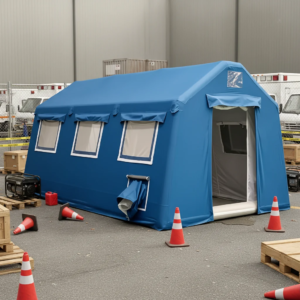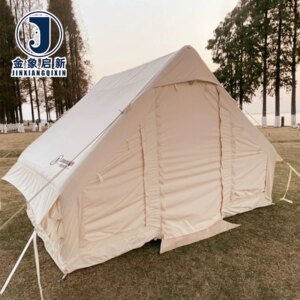


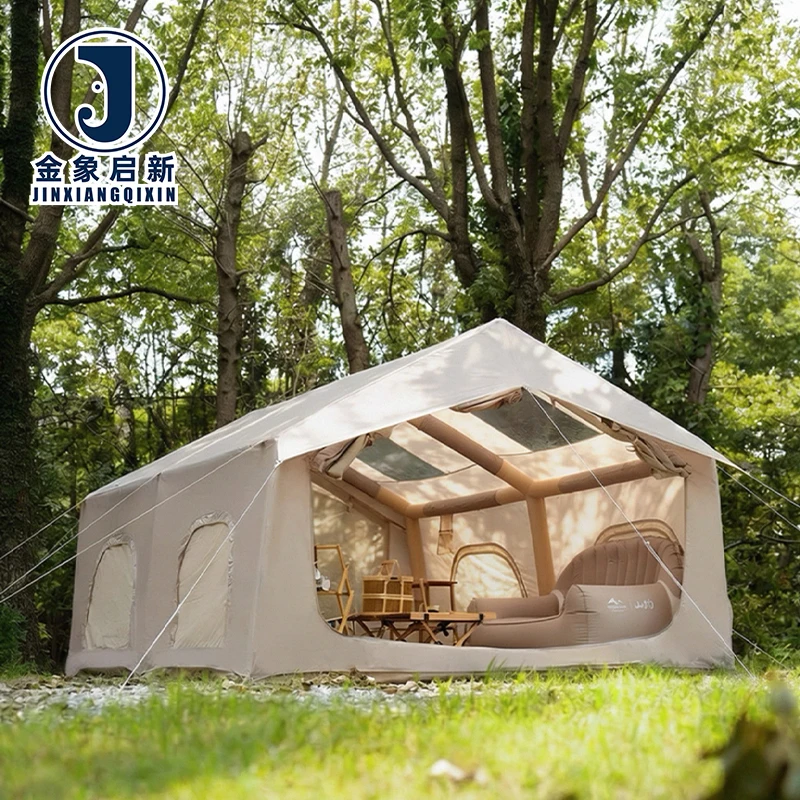

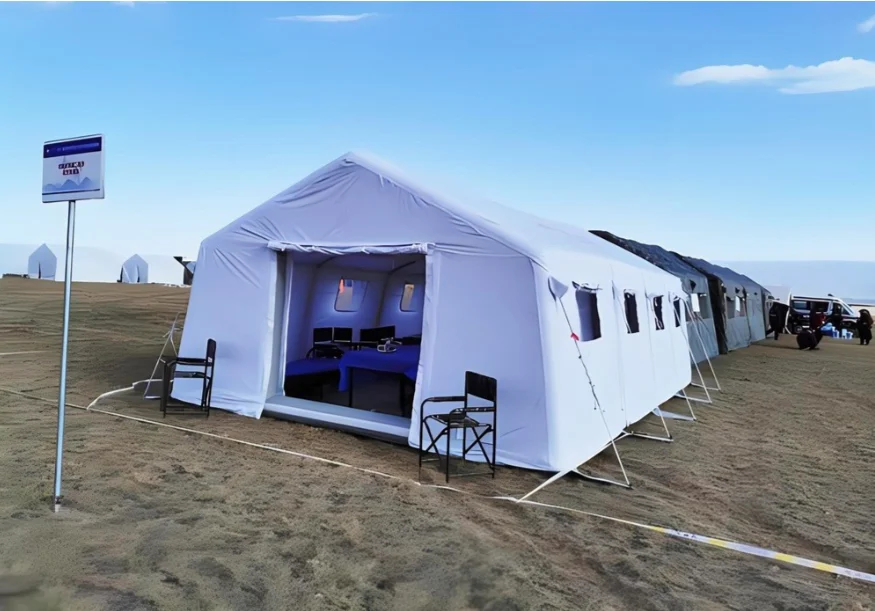
Certified Grade Inflatable Tent for Disaster Relief — engineered under strict full-process quality inspection with dedicated QA and QC staff at every stage, ensuring each inflatable structure meets the compliance demands of disaster relief and industrial site deployment.
Technical Specifications
| Parameter | Value |
|---|---|
| Product Type | Inflatable Tent |
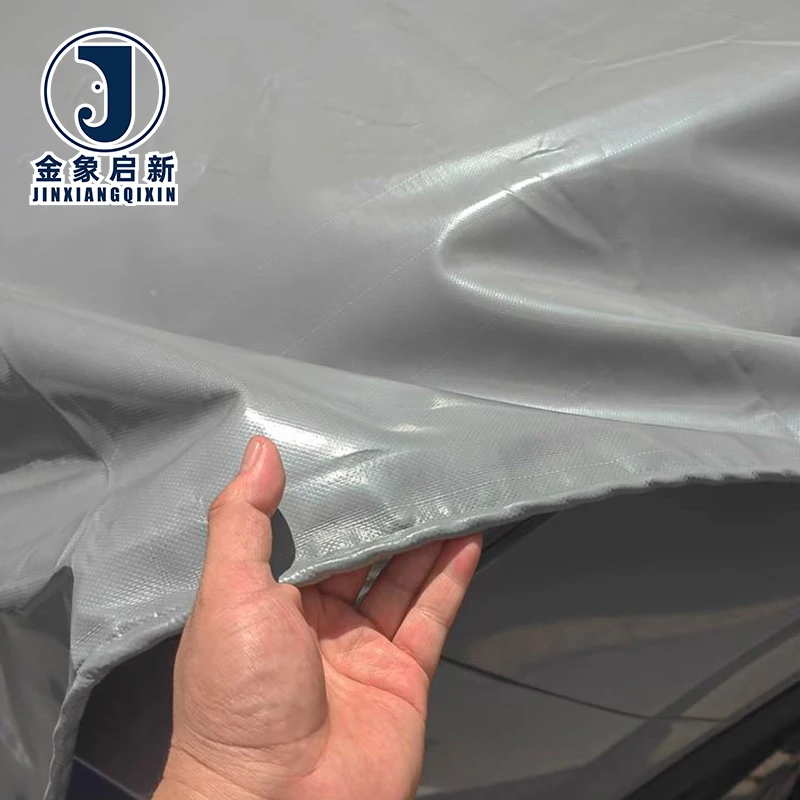
| Core Material | PVC Tarpaulin |
| Product Form | Inflatable structure with single layer construction |
| Waterproof Performance | Fully waterproof coated construction |
| UV Resistance | UV-resistant treatment applied (test basis not stated in source — confirm standard required for your market) |
| Tear Resistance | Tear-resistant PVC coated fabric construction |
| Fire Retardancy | Fire-retardant treatment available (grade not stated in source — confirm the grade required for your market) |
| Anti-static Property | Anti-static treatment available (standard not stated in source — confirm compliance requirement) |
| Certifications | ISO9001, ISO14001, ISO45001, CE |
| Customization | OEM & ODM supported, including sample customization and pattern printing |
| R&D Capability | 10-technician team handling material selection, custom sizing, and sample development |
Application Suitability
| Application | Exposure & Requirement |
|---|---|
| Emergency response shelters in disaster relief | Rapid deployment under pressure, variable weather, repeated inflation cycles, compliance with relief agency safety standards |
| Temporary site accommodation for infrastructure projects | Extended outdoor exposure, wind loading on inflated form, UV and rain resistance, fire-retardant compliance on regulated sites |
| Mobile storage solutions for outdoor events | High foot traffic proximity, weather protection for equipment, quick assembly and teardown, transport between venues |
Why Fire-Retardant Certification Matters Before the Tent Leaves the Factory
Inflatable tent fabric fire retardant certified to a named standard is the difference between passing a site safety audit and being turned away at the gate.
When disaster relief agencies or infrastructure contractors receive inflatable structures, the first document requested is often the fire classification report. Fabric described generically as "fire retardant" without a grade or test standard attached creates immediate compliance risk. The site safety officer cannot accept a material claim unsupported by a certificate that names the specific standard the fabric was tested against. This is where procurement decisions succeed or fail — not on price or lead time, but on whether the documentation matches the regulatory requirement of the installation country [NEED_CITE: fire classification standards for temporary structures in international disaster relief operations].
Deploying Inflatable Structures Where Time Is Measured in Minutes
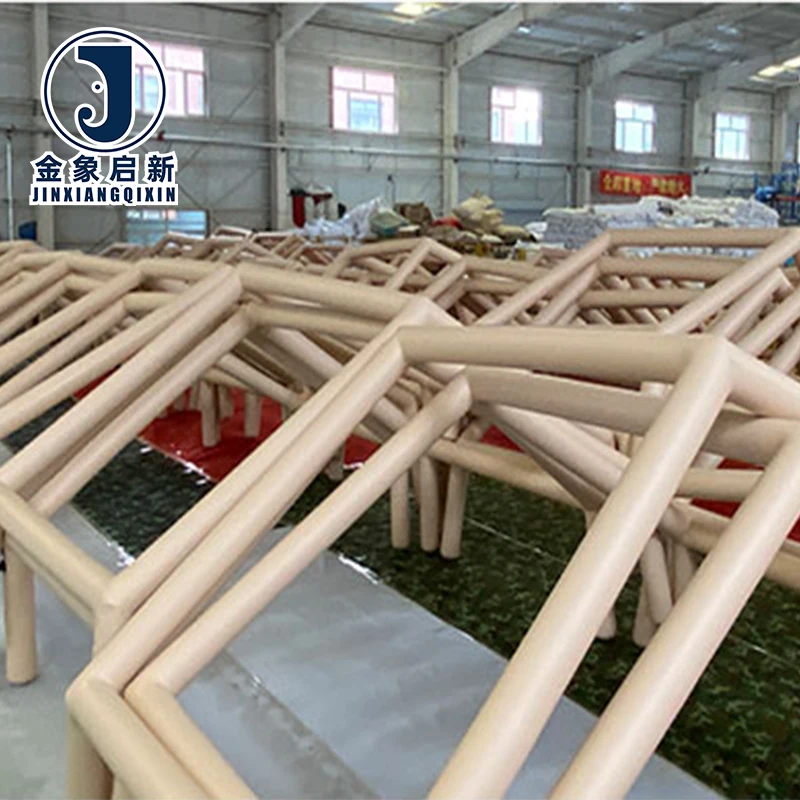
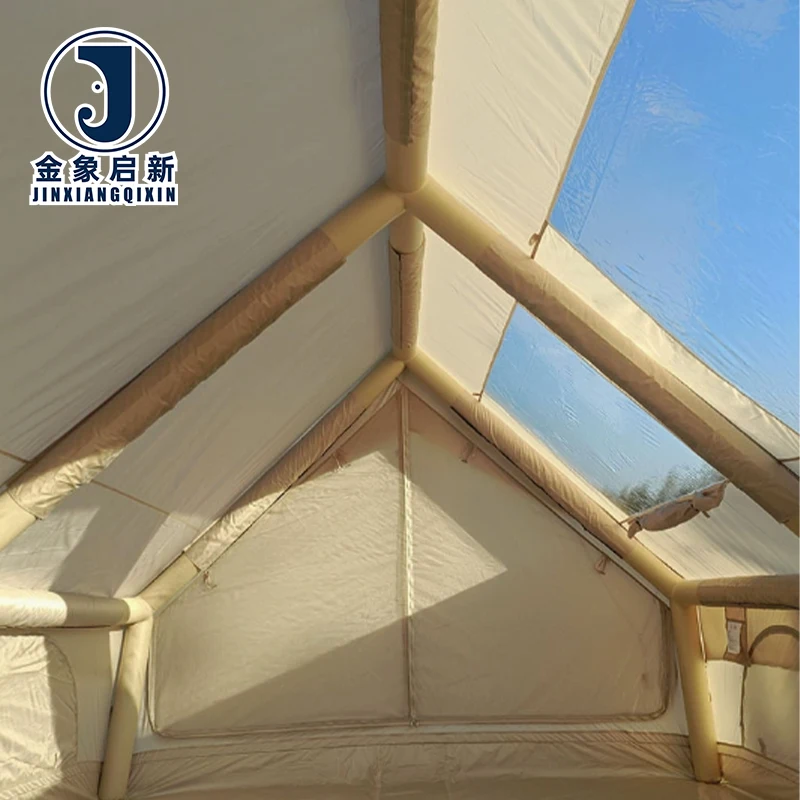
The single-layer inflatable construction of this PVC tarpaulin shelter eliminates the pole-and-sleeve assembly that slows conventional tent deployment. Once the air beams are inflated, the structure achieves its full form and becomes operational. For disaster relief teams working against weather windows or infrastructure contractors mobilising to remote project sites, this rapid-deployment capability compresses setup from hours to minutes.
Designing for Four-Season Exposure on Inflatable Membrane Surfaces
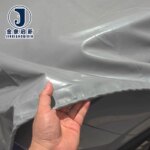
The PVC tarpaulin core material provides waterproof protection and tear-resistant performance across variable conditions. UV-resistant treatment is applied to address extended outdoor exposure, though the specific test basis should be confirmed against your target market requirements. Inflatable structures face a distinct stress profile compared to rigid shelters — the membrane must maintain integrity under continuous internal pressure while resisting wind-driven abrasion and solar degradation on every exposed surface [NEED_CITE: tensile and tear test methods for coated fabrics per ISO 1421].
Understanding How PVC Coating Weight and Base Fabric Interact in Inflatable Forms
In inflatable tent applications, the PVC tarpaulin specification must balance structural rigidity with manageable weight. The coating applied to the base fabric determines waterproof performance, weldability for air-beam seams, and overall durability under inflation pressure. A heavier coating improves puncture resistance but adds transport mass, which matters when structures must be airlifted or carried to remote disaster zones. The base fabric weave and denier influence how tear propagation is arrested — a critical factor when a single puncture can compromise an entire inflated structure. Fire-retardant and anti-static treatments, where applicable, must be verified against the compliance framework of the installation site before production begins.
What Happens When Inflatable Fabric Specifications Are Misaligned With the Deployment Environment
Receiving inflatable tent fabric that lacks the fire-retardant grade required by local building or site safety codes means the entire structure is rejected at inspection. This is not a minor paperwork issue — it halts operations, delays relief efforts, and forces emergency re-procurement under compressed timelines. Similarly, fabric that was not tested for anti-static properties in environments where static discharge poses ignition risk creates an unquantified hazard. Batch-to-batch inconsistency in coating weight or treatment application can mean the first structure passes audit while the second fails, even within the same shipment [NEED_CITE: coating weight verification practices for industrial PVC tarpaulin].
Why Procurement Teams Source Inflatable Tent Fabric Through This Facility
The 10-technician R&D team develops custom samples within days, allowing buyers to validate fire-retardant grade, anti-static treatment, and sizing before committing to production volume. Three full production lines and 36 sets of professional processing equipment provide the capacity to fulfil multi-unit orders for disaster relief campaigns without extended delays. A dedicated QA and QC team inspects every production stage, with 100% pre-shipment inspection ensuring that the fabric leaving the facility matches the specification sheet signed off during sampling. Pattern printing and OEM customisation are handled in-house, maintaining control over print durability on PVC tarpaulin surfaces. The ISO9001, ISO14001, ISO45001, and CE certifications are maintained under the same quality management system that governs daily production.
Documentation & Verification
- Material specification sheet stating PVC coating type, treatment applied, and compliance data for each batch
- Test report for fire-retardant and anti-static grades where applicable, naming the standard tested against
- Pre-shipment inspection record with dedicated QA and QC sign-off per roll or finished unit
- ISO9001, ISO14001, ISO45001, and CE certificates available as part of shipment documentation package
- Batch-specific quality inspection records tracing material from coating through final assembly
Fabrication, Handling & Storage
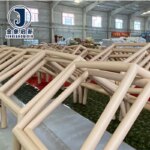
- Heat-weld seams on PVC tarpaulin air beams using manufacturer-recommended temperature to avoid coating delamination at inflation stress points
- Store rolled inflatable fabric vertically in dry conditions to prevent permanent creasing that weakens the coated surface
- Clean PVC tarpaulin membrane with pH-neutral detergent to preserve fire-retardant and anti-static treatment integrity
- Inspect welded air-beam junctions after each inflation cycle, as flex fatigue concentrates at seam intersections
- Repair minor punctures with compatible PVC patch material and solvent weld matching the original coating type
Starting Your Inflatable Tent Fabric Enquiry
Provide the deployment environment details — climate exposure range, wind loading expectations, and whether the installation site mandates a specific fire-retardant grade or anti-static standard. Confirm the required dimensions, quantity, and whether you need finished inflatable units or fabric rolls for your own fabrication. Specify any pattern printing, colour requirements, or custom sizing so that samples can be developed for your approval before production is scheduled.
Frequently Asked Questions
Q: What fire-retardant grade is available for this inflatable tent fabric and how is it verified?
A: Fire-retardant treatment is available for this PVC tarpaulin inflatable tent fabric, but the specific grade depends on your target market’s regulatory framework. During the enquiry process, specify the fire classification standard required at your installation site — whether it references DIN 4102, NFPA 701, or another national code. The testing and documentation will be aligned to the standard you confirm before production begins.
Q: How is anti-static performance documented for compliance-sensitive inflatable structure projects?
A: Anti-static treatment can be applied to this inflatable tent fabric where the deployment environment requires static discharge control. The applicable surface resistance standard must be confirmed during the specification phase so that testing and certification align with your site audit requirements. Batch-specific documentation accompanies shipment to support compliance verification.
Q: Can I request a custom sample before committing to a bulk inflatable tent order?
A: The 10-technician R&D team develops custom samples covering size, material specification, pattern printing, and treatment options. Samples are typically produced within days of specification confirmation. This allows you to validate the PVC tarpaulin performance, fire-retardant grade, and construction details before authorising full production volume.
Q: What certification documentation ships with each inflatable tent order?
A: Each shipment includes the relevant ISO9001, ISO14001, ISO45001, and CE certificates alongside batch-specific material specification sheets and pre-shipment inspection records. Where fire-retardant or anti-static testing has been conducted, the corresponding test reports naming the applicable standard are included in the documentation package for your site compliance files.