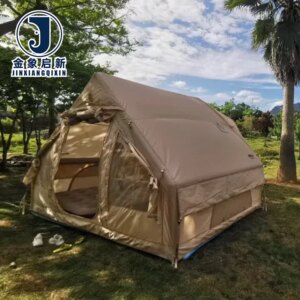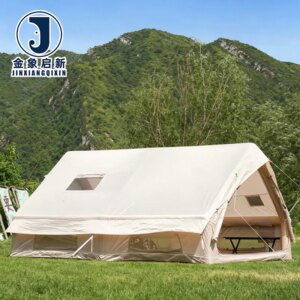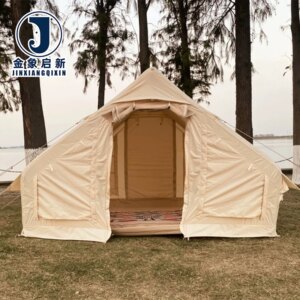

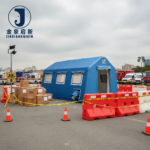
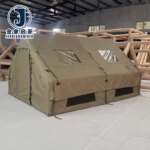
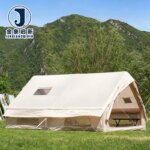
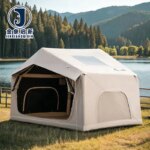
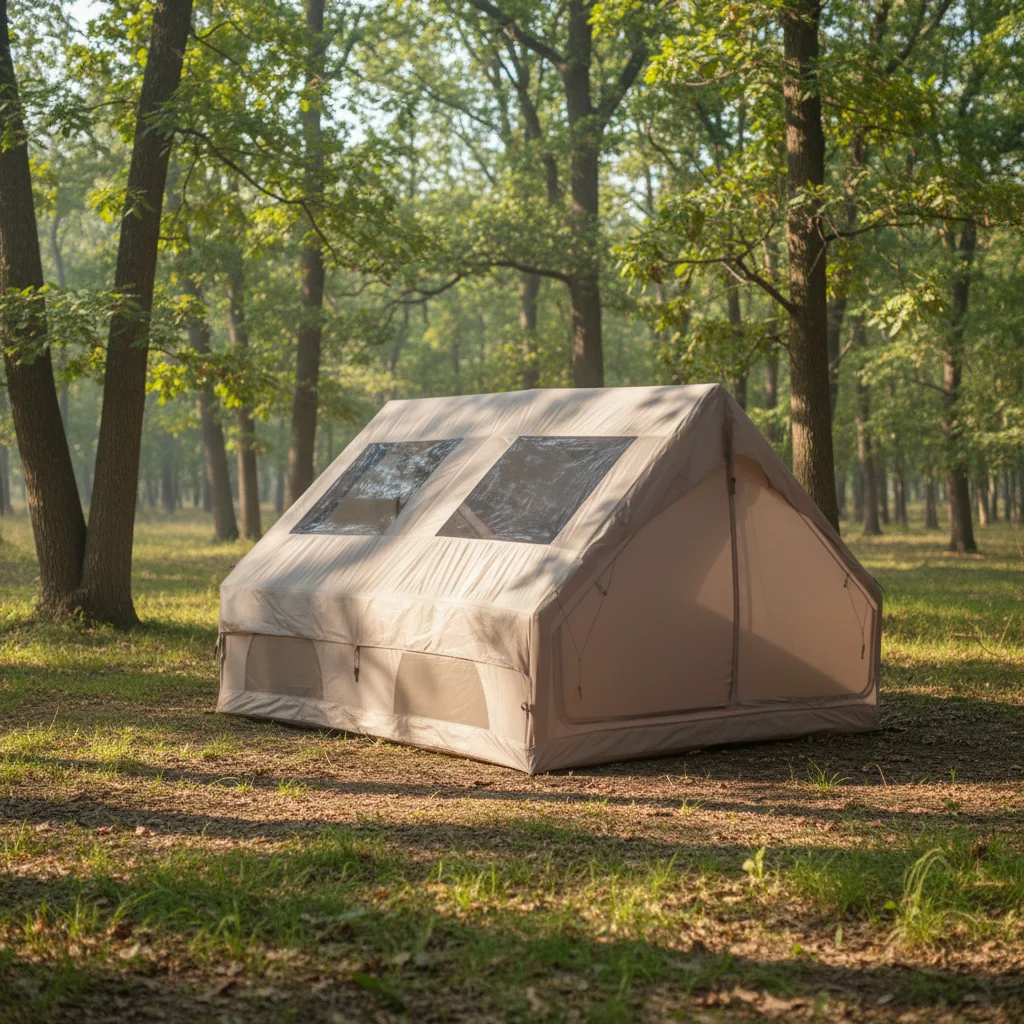

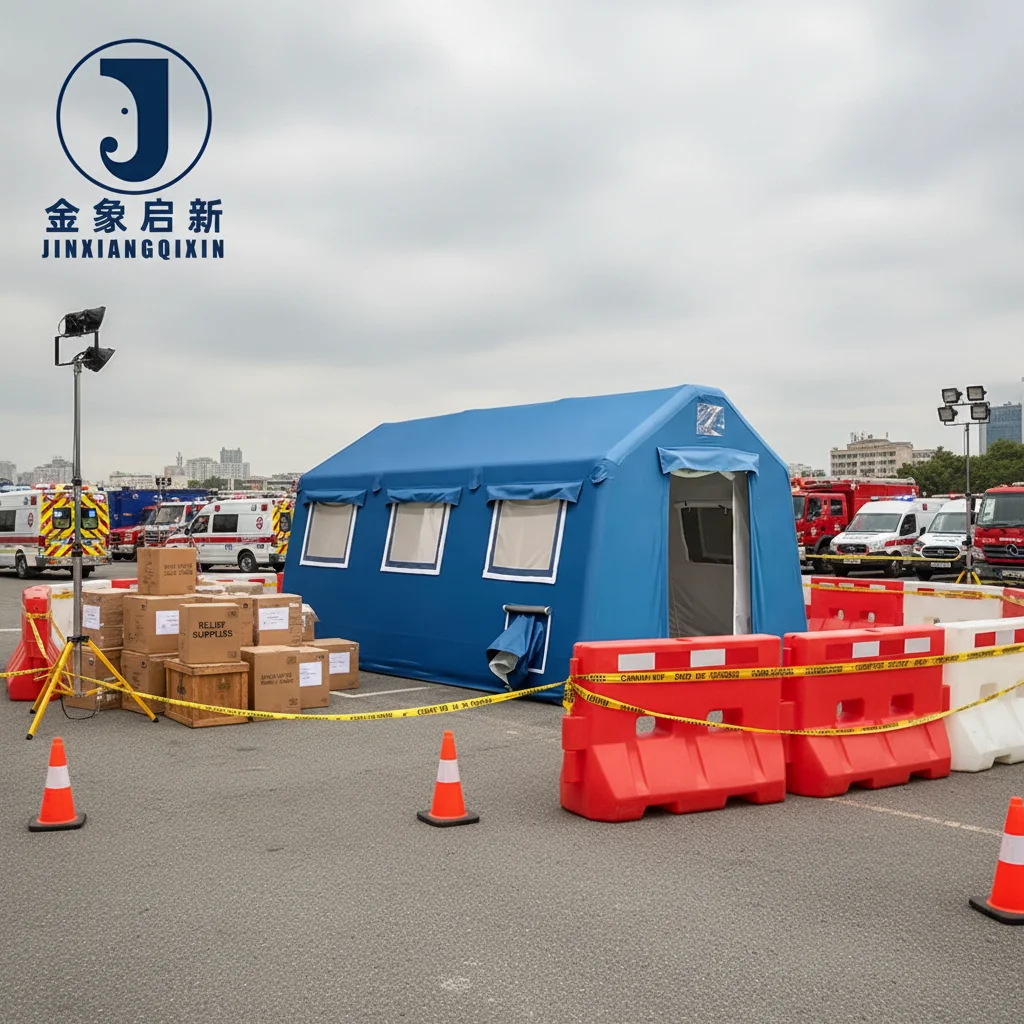
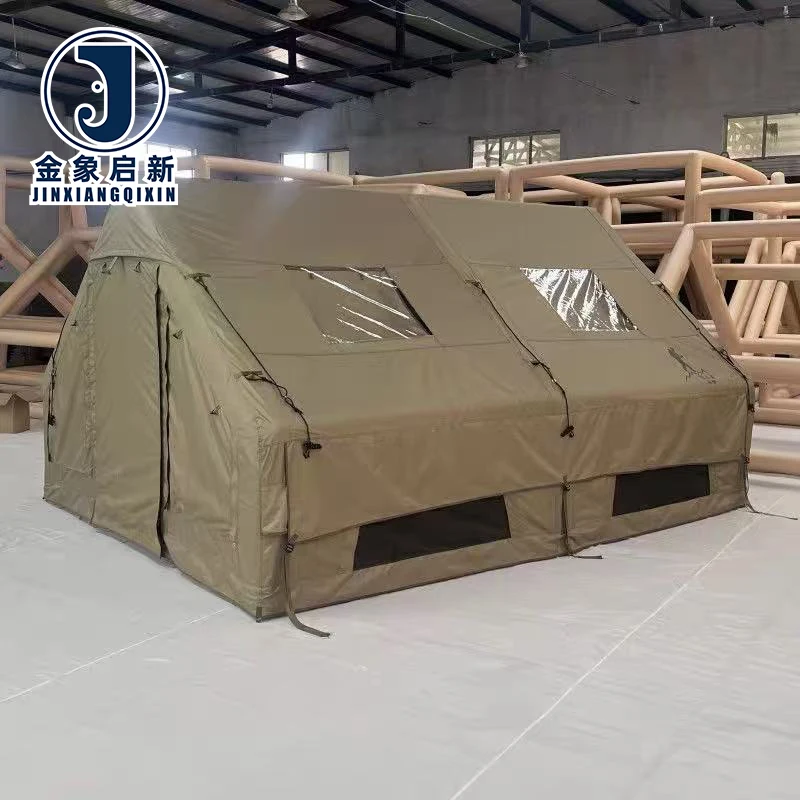
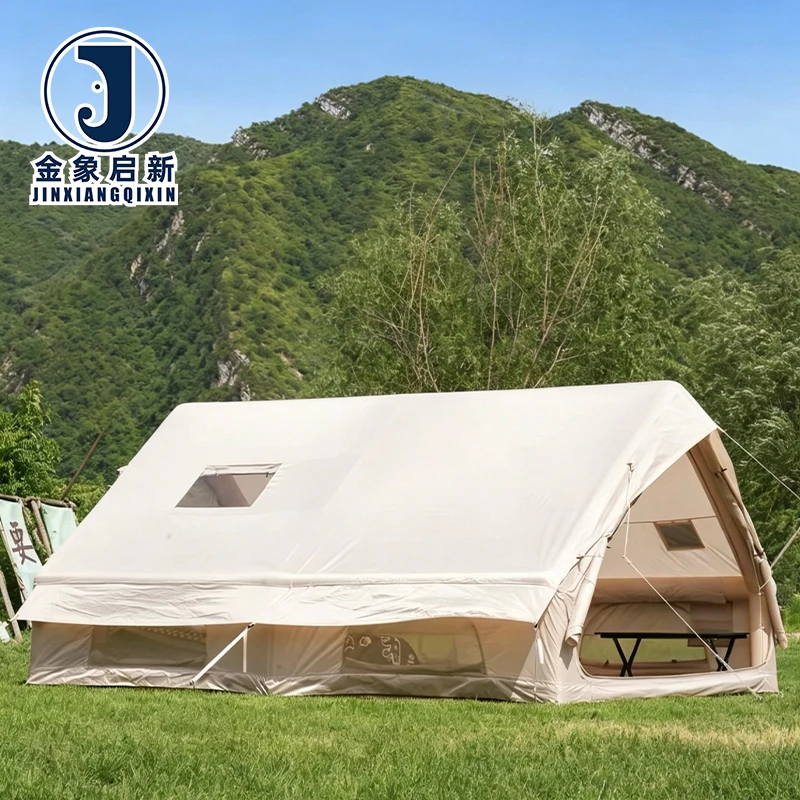
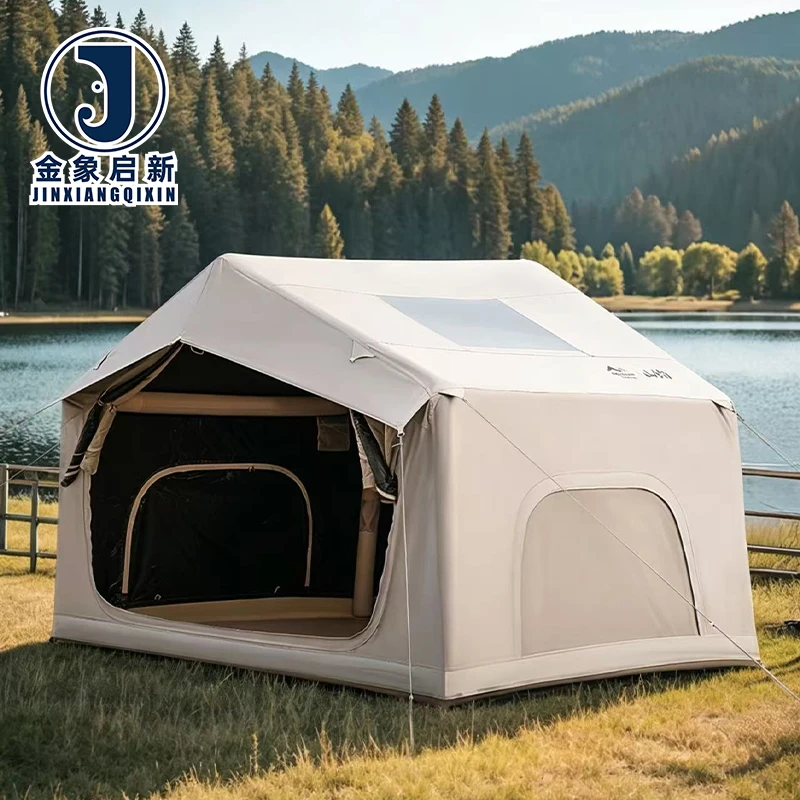
Certified Fabric Compliance — every batch of this inflatable tent is backed by a full traceability package, tested against declared properties and shipped with documentation that site inspectors actually require.
Technical Specifications
| Parameter | Value |
|---|---|
| Product Type | Inflatable Tent |
| Core Material | PVC tarpaulin |
| Waterproof Rating | 3000mm |
| Fire Retardant | Available in fire-retardant grades — confirm the grade required for your market |
| UV Resistance | UV-resistant treatment available (test basis to be confirmed per market requirement) |
| Tear Resistance | Tear-resistant construction (test standard to be confirmed) |
| Season Rating | 4-season |
| Deployment | Quick automatic opening via inflation |
| Customization | OEM & ODM, sample customization, pattern printing |
| Standards | ISO 9001, ISO 14001, ISO 45001, CE |
Application Suitability
| Application | Exposure & Requirement |
|---|---|
| Mining & tunnelling site shelters | Continuous underground moisture, mandatory fire-retardant certification, rapid deployment between shifts |
| Disaster recovery command centers | Unpredictable weather exposure, need for immediate operational readiness, multi-day continuous occupation |
| Remote infrastructure project offices | Prolonged UV exposure, wind loading on temporary structures, repeated inflation-deflation cycles |
| Aviation maintenance temporary enclosures | Strict fire safety compliance, large clear-span interior, rapid assembly on tarmac surfaces |
What Happens When Inflatable Shelters Arrive Without the Certificates Your Site Demands
Every inflatable tent deployed to a regulated industrial site must carry documentation that matches the safety officer’s checklist — not just a claim on the quotation.
Ventilation duct and specialist structure contractors regularly face a situation where the fire-retardant or anti-static certification promised during procurement never materialises at the gate. The shelter arrives, but the paperwork does not. Site safety officers reject the delivery, operations stall, and the project absorbs delay costs that far exceed the fabric price difference. [NEED_CITE: industrial site fire safety documentation requirements for temporary structures]
This Inflatable Tent addresses that gap by shipping with a batch-specific certification package. Each unit carries the test documentation tied to its production run, so the compliance trail is unbroken from the production line to the deployment site.
Compliance Documentation That Travels With Every Shelter
Contractors working in mining, tunnelling, and aviation environments operate under strict regulatory frameworks where temporary structures must meet the same fire safety standards as permanent installations. This Inflatable Tent is manufactured under ISO 9001, ISO 14001, ISO 45001, and CE certification systems, meaning the quality management process behind the fabric is auditable. The documentation package includes material specification sheets, performance test certificates, and inspection records that site compliance officers can verify independently. [NEED_CITE: ISO management system requirements for coated fabric manufacturing]
Rapid Deployment Without Compromising Structural Integrity
Emergency and industrial scenarios do not allow for multi-hour assembly sequences. The quick automatic opening mechanism of this inflatable shelter means operational readiness within minutes of arrival on site. The PVC tarpaulin construction maintains structural rigidity once inflated, and the 3000mm waterproof rating ensures that interior operations continue uninterrupted during heavy rainfall. The 4-season rating reflects performance across temperature extremes, from cold-weather stiffness concerns to high-heat softening thresholds that affect inflation pressure management.
Material Properties and Their Practical Implications
The PVC tarpaulin core serves as both the structural envelope and the weather barrier, which means every material property directly affects field performance. Waterproof performance at 3000mm indicates the hydrostatic head the fabric can withstand before water penetration — relevant for prolonged exposure during storm conditions on disaster recovery sites. The tear-resistant construction addresses a critical failure mode in inflatable structures: once a puncture or tear initiates, internal pressure drives the tear to propagate rapidly across the panel. [NEED_CITE: tear propagation behaviour in inflated PVC structures under differential pressure]
Fire-retardant performance is available across different grades, and the specific grade must be matched to the regulatory framework of the deployment region. A mining site in one jurisdiction may mandate a different classification than an aviation maintenance facility in another. UV-resistant treatment extends the service life of shelters deployed for extended outdoor operations, though the test basis should be confirmed against the specific exposure duration your project requires. The interplay between these treatments — fire retardant, UV stabilisation, and waterproofing — must be balanced during coating formulation, as excessive loading of one additive can affect the others.
The Hidden Cost of Specifying on Price Alone
When procurement decisions prioritise unit cost over certification completeness, the consequences surface at the worst possible moment. A shelter that arrives without verifiable fire-retardant test documentation cannot be deployed on a regulated site, regardless of how well the fabric actually performs. Batch inconsistency in flame-retardant additive loading means that even within a single order, some panels may pass testing while others fail — a problem that only emerges during site inspection. [NEED_CITE: batch variability in flame retardant additive concentration across coated fabric production runs]
Inflatable structures add another layer of risk: unlike static tarpaulin covers, a material failure under inflation pressure results in immediate structural collapse rather than gradual degradation. Welded seam integrity is equally critical, as the seams bear concentrated stress at inflation points and flex zones. When seams fail before the fabric itself, the entire shelter becomes inoperable until repaired or replaced.
Why Source This Inflatable Tent Through Jinxiang
Three full production lines and 36 sets of processing equipment provide the capacity to fulfil bulk orders for emergency stockpiling programmes without sacrificing lead time reliability. The 10-technician R&D team handles material selection, custom dimension development, and pattern printing directly — customisation requests are engineered in-house rather than outsourced to third-party printers.
Dedicated QA and QC personnel are stationed at every production stage, with 100% inspection before shipment. This means waterproof performance, seam strength, and inflation behaviour are verified on every unit, not sampled from a batch. The 7-stage quality inspection process generates test records that are stored for 5 years, providing long-term traceability for organisations that require audit-ready documentation across multi-year procurement frameworks. [NEED_CITE: quality inspection protocols for inflatable PVC structures in industrial procurement]
Sample development is completed within days for custom requirements, allowing procurement teams to validate dimensions, printing quality, and material hand-feel before committing to full production runs.
Documentation & Verification
- Material specification sheet detailing PVC composition, waterproof rating, and treatment options per unit
- Fire-retardant test report aligned to the grade specified for your target market
- Batch-specific quality inspection record with waterproof performance results included per shipment
- ISO 9001, ISO 14001, ISO 45001, and CE certificates available as part of the delivery package
- Certificate of origin and customs documentation for cross-border industrial procurement
- MSDS and performance test certificates supplied upon request for specialist compliance submissions
Fabrication, Handling & Storage
- Heat-weld all seams using temperature settings calibrated to the specific PVC tarpaulin grade to prevent delamination under inflation pressure
- Store inflated units in dry conditions away from direct sunlight to preserve UV-resistant treatment effectiveness over extended storage periods
- Avoid folding along identical crease lines during repacking to prevent stress concentration on the tear-resistant PVC tarpaulin panels
- Use only PVC-compatible cleaning agents on the 3000mm-rated waterproof surface to avoid degrading the coating layer
- Inspect welded seams at inflation valves and structural joints before each deployment for signs of adhesive fatigue
- Allow the PVC tarpaulin fabric to reach ambient temperature before inflation in cold-weather deployments to prevent brittle cracking
Before You Request a Quote
To provide an accurate specification, share the deployment environment — whether underground mining, open-site disaster recovery, or aviation tarmac — along with the fire-retardant grade or anti-static classification your site safety officer requires. Confirm whether you need the inflatable tent supplied in standard dimensions or custom sizes with specific pattern printing or branding. Indicate your projected annual volume and whether sample approval is needed before production commitment.
Frequently Asked Questions
Q: What fire-retardant grades are available for this inflatable tent?
A: The PVC tarpaulin is available in fire-retardant grades suited to industrial temporary structures. The specific grade must be confirmed against your target market’s regulatory framework, as mining, aviation, and construction sites each reference different classification standards. Request the applicable test report during the specification phase to ensure alignment with your site safety requirements before production begins.
Q: Can anti-static certification be provided for mining and tunnelling deployments?
A: Anti-static treatment is available for PVC tarpaulin used in environments where electrostatic discharge poses a risk, such as underground mining and tunnelling operations. The certification documentation ships with the batch-specific inspection record. Confirm the anti-static standard required by your site operator during the inquiry stage so the correct formulation can be applied during coating.
Q: How does the sample approval process work before mass production?
A: A sample reflecting your specified dimensions, colour, and any pattern printing requirements is developed within days of design confirmation. The sample undergoes the same QA checks applied to production units, including seam integrity and inflation behaviour. Once approved, the sample specification is locked as the production reference to ensure consistency across the full order.
Q: What documentation ships with each inflatable tent order?
A: Each shipment includes a material specification sheet, batch-specific quality inspection report, waterproof performance test results, ISO and CE certificates, and a packing list. MSDS and additional performance test certificates are available upon request. For cross-border procurement, certificates of origin and customs support documentation are provided as standard to facilitate import clearance.
Q: What customisation options exist for dimensions and branding?
A: OEM and ODM services cover custom dimensions, colour selection, and pattern printing applied directly to the PVC tarpaulin surface. The 10-technician R&D team manages sample development in-house, ensuring the printed branding and structural dimensions are validated before production. Custom widths and lengths are supported across the three full production lines with sample confirmation required prior to bulk manufacturing.