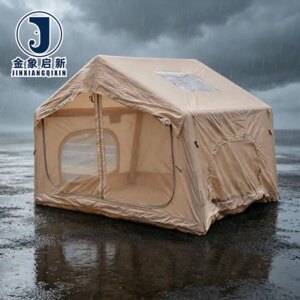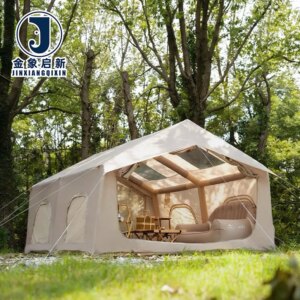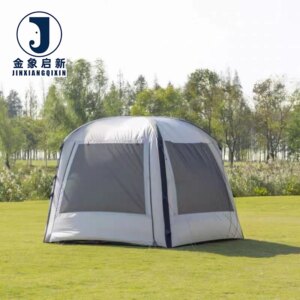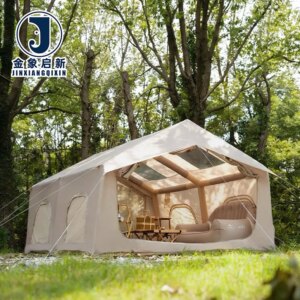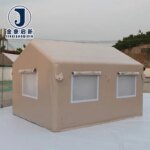
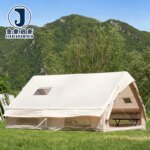
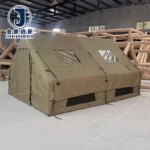
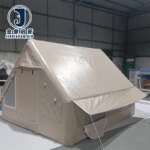
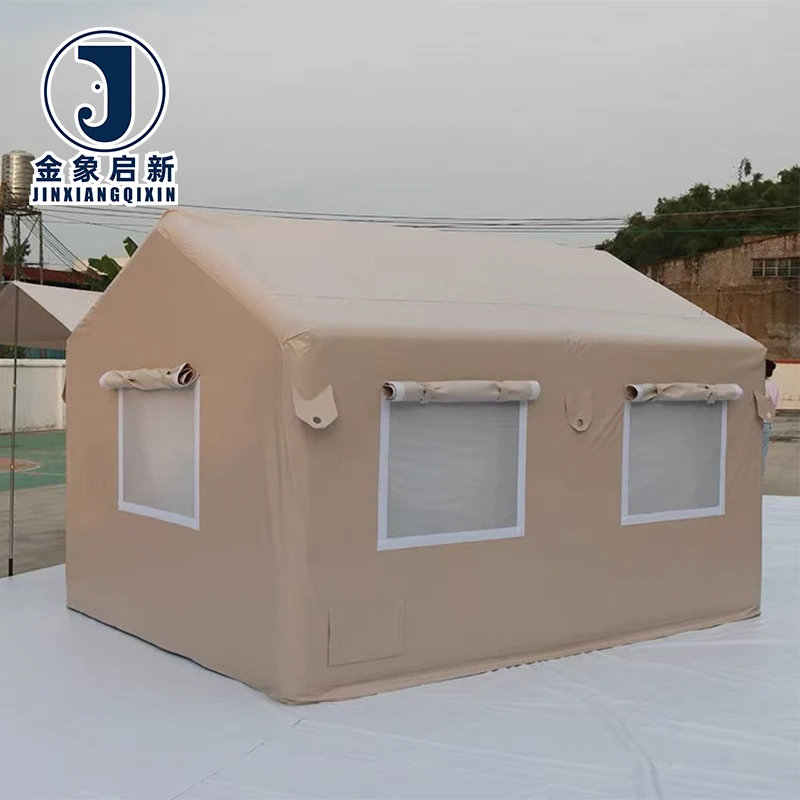
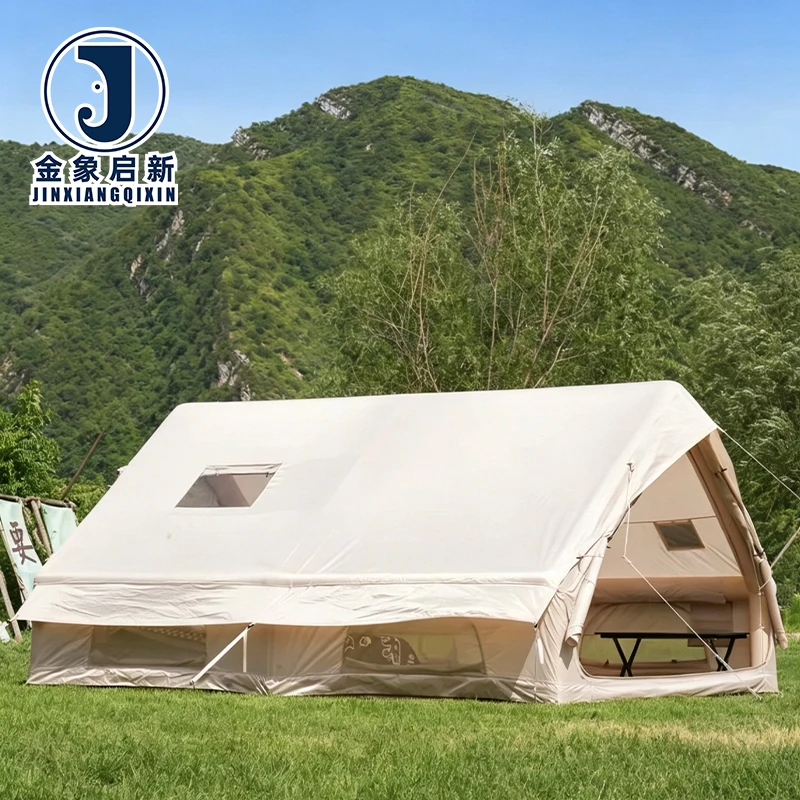
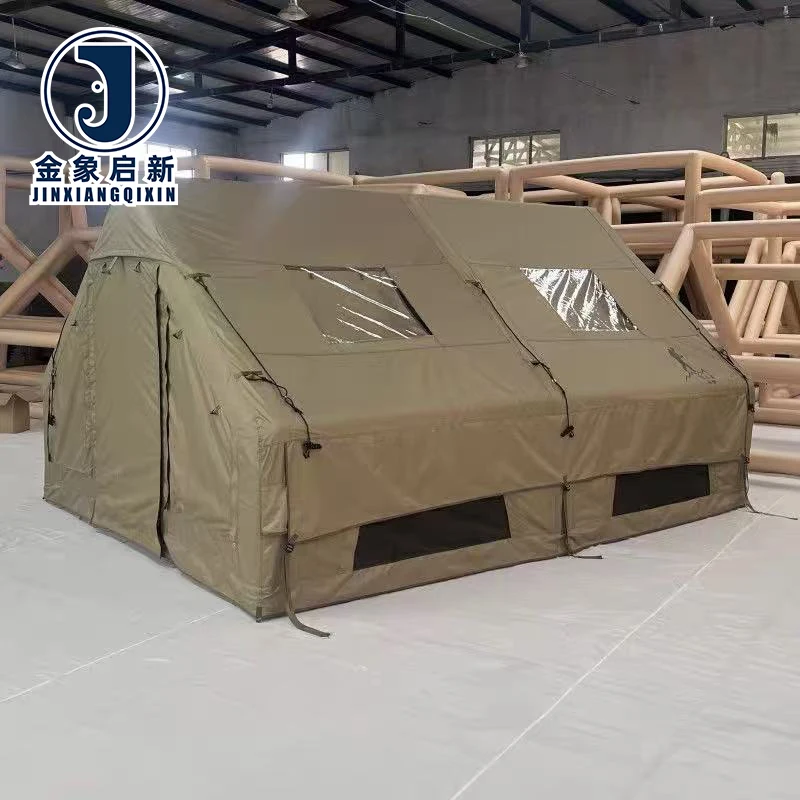
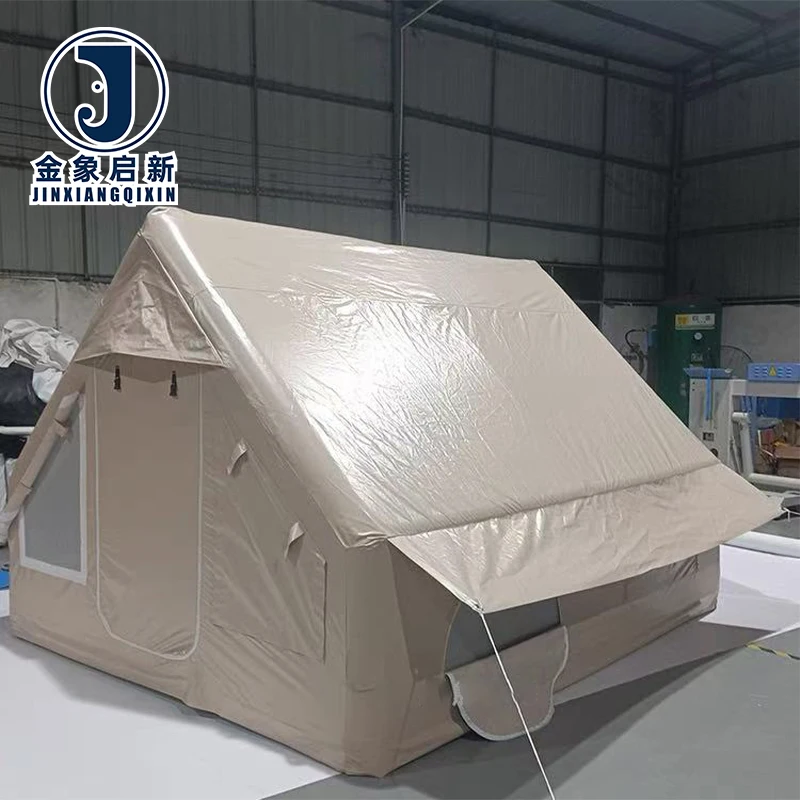
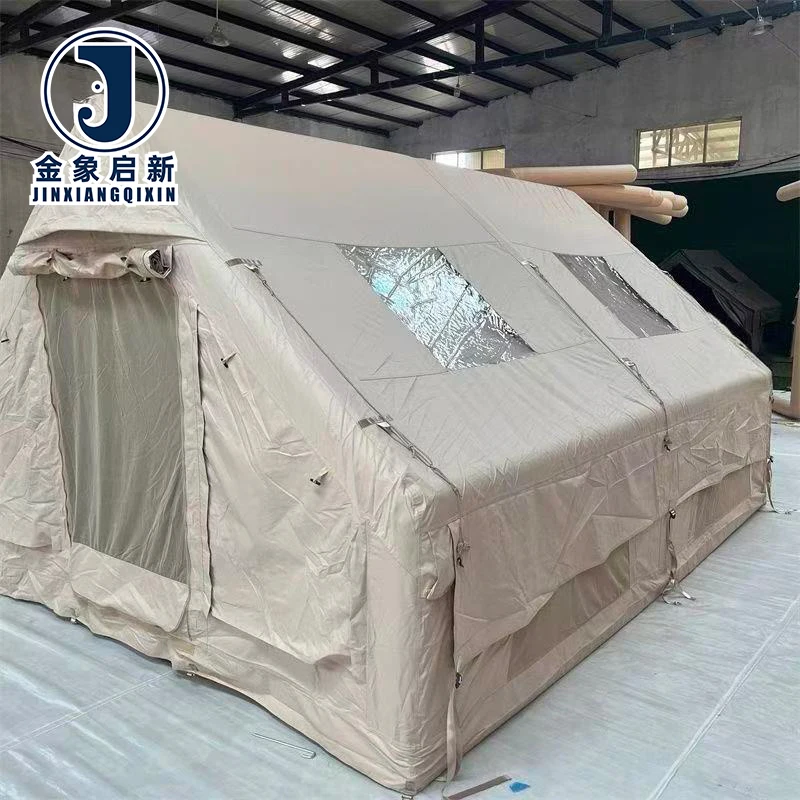
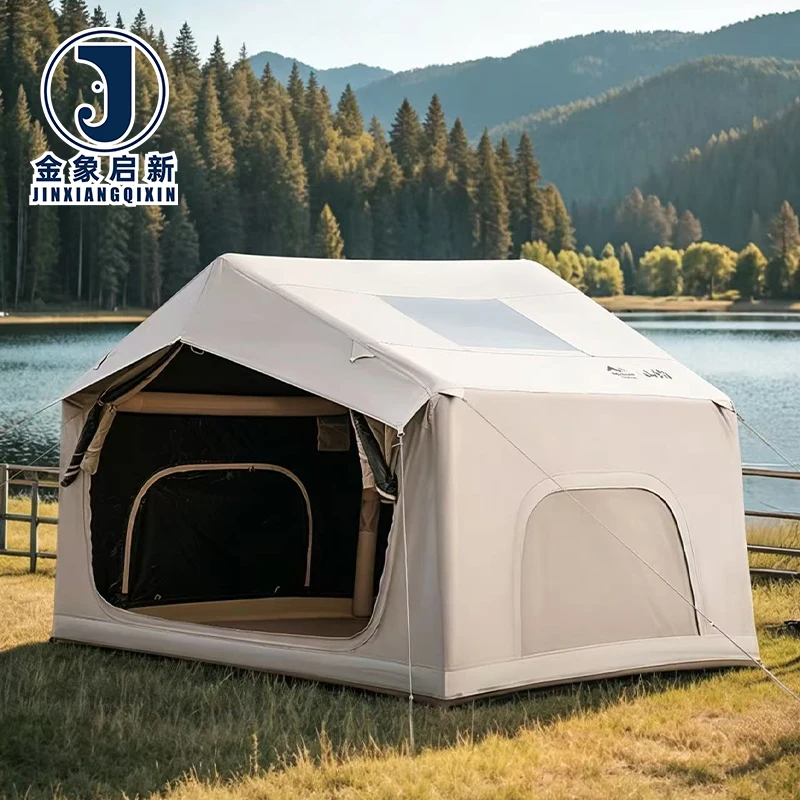
Rapid Deployment Capability — Engineered with quick automatic opening systems and supported by 10-technician R&D teams for mission-critical inflatable shelter solutions across emergency response and industrial site operations.
Technical Specifications
| Parameter | Value |
|---|---|
| Product Type | Inflatable Tent |
| Core Material | PVC Tarpaulin |
| Capacity | 6-8 persons |
| Deployment Feature | Quick Automatic Opening |
| Design Configuration | Four-Season, Single Layer Construction, Extended Type |
| Waterproof Performance | stated (test basis not stated) |
| UV Treatment | stated (test basis not stated) |
| Tear Resistance | stated (test basis not stated) |
| Flame Retardant | available in flame retardant grades — confirm the grade required for your market |
| Customization | OEM & ODM (material selection, design, pattern printing) |
| Production Facility | 9,180 m² with 3 full production lines |
| Processing Equipment | 36 sets of professional equipment |
| R&D Capability | 10 technicians |
| Quality Control | Full-process inspection with dedicated QA & QC staff |
| Certifications | ISO9001, ISO14001, ISO45001, CE |
Application Suitability
| Application | Exposure & Requirement |
|---|---|
| Emergency response command centers | Rapid deployment under time pressure, weather exposure, operational continuity requirements |
| Temporary site offices on infrastructure projects | Extended outdoor installation, temperature fluctuation, equipment storage needs |
| Remote construction area equipment storage | UV exposure, moisture ingress prevention, security from environmental damage |
| Disaster recovery staging facilities | Multi-person occupancy, quick setup in compromised infrastructure zones |
| Temporary warehousing for logistics hubs | High-volume shelter requirements, weather resistance, rapid deployment cycles |
What "Flame Retardant" Means Without a Grade Behind It
Fire safety compliance requires documented grades, not marketing claims. Emergency shelters deployed in industrial incident management or disaster recovery zones face regulatory scrutiny from site safety officers and insurance assessors. Procurement specifications often state "flame retardant" without defining the applicable standard—M2 for French markets, B1 per DIN 4102 for German applications, NFPA 701 for North American jurisdictions.
I have seen inflatable medical tents rejected at port customs because the shipping documentation listed "FR treated" without a test certificate referencing the destination market’s fire code. [NEED_CITE: flame retardant classification systems for temporary structures by jurisdiction] The fabric may perform adequately in laboratory burn tests, but without the specific grade documented on a batch-issued test report, the shelter cannot legally operate in regulated environments. Sourcing teams must specify the exact fire classification their project requires and verify the PVC inflatable tent manufacturer can supply corresponding test documentation before committing to production.
Rapid Deployment Engineering for Time-Critical Scenarios
The quick automatic opening system addresses the core challenge of emergency shelter procurement: deployment windows measured in hours rather than days. When disaster recovery teams arrive at incident sites, manual tent erection consumes personnel hours that could redirect to response operations. This PVC inflatable tent design incorporates pressurized air beam architecture that self-deploys once inflation valves engage, reducing setup labor and eliminating pole-and-guyline assembly sequences.
The extended type configuration provides floor space beyond the 6-8 person baseline capacity, accommodating portable command equipment, communication arrays, or medical staging tables. Industrial incident management scenarios demand shelters that function as operational hubs, not merely weather protection. The single-layer construction reduces pack weight for transport while the PVC tarpaulin core material delivers structural rigidity once pressurized.
Four-Season Performance Under Variable Environmental Stress
Year-round deployability requires material behavior that remains stable across temperature extremes and weather cycles. PVC tarpaulin exhibits flexibility retention in cold conditions where alternative fabrics stiffen and crack at fold points. The waterproof and UV-resistant treatment stated for this inflatable shelter addresses rain ingress prevention and solar degradation resistance, though specific test basis documentation should be requested per batch to verify performance claims. [NEED_CITE: PVC coated fabric weathering test methods and duration protocols]
Remote infrastructure projects in northern latitudes or high-altitude zones expose shelters to freeze-thaw cycles that challenge seam integrity and coating adhesion. The single-layer extended design reduces condensation trapping compared to multi-wall constructions, though ventilation requirements must be assessed based on occupancy duration and internal heat sources. Technical buyers specifying custom inflatable shelters for four-season applications should confirm low-temperature flexibility thresholds and high-temperature softening points align with their deployment geography.
Material Architecture and Coating Behavior
PVC tarpaulin as a core material represents a coated fabric system where base textile weave and polymer coating weight interact to determine mechanical performance. The base fabric denier and thread count establish tensile strength baselines, while coating thickness and formulation govern waterproof integrity, UV stability, and weld seam behavior. Higher GSM values do not automatically translate to superior tear resistance if the base fabric uses low-denier yarns in loose weave patterns.
Coating application method—knife-over-roll, dip coating, or calendering—affects coating-to-substrate adhesion strength, which becomes critical at inflation beam weld points where cyclic pressure loading concentrates stress. Poor adhesion leads to coating delamination before the base fabric reaches its tensile limit. [NEED_CITE: coating adhesion test methods for PVC tarpaulin per ISO standards] Surface finish selection between glossy and matte textures influences cleanability in medical or food-related emergency deployments, with glossy surfaces allowing faster decontamination wipe-downs but showing abrasion marks more readily than matte finishes.
Specification Mismatch Consequences in Emergency Deployments
Procurement teams prioritizing lowest cost per unit without verifying coating weight consistency often receive shipments where fabric performs below expectations in field conditions. A stated GSM value on quotation documents may not match actual coating weight on delivered rolls, resulting in inflatable shelters that puncture during inflation or fail under wind loading that the specification suggested they could withstand. This discrepancy surfaces only after deployment, when replacement logistics become costlier than the original savings.
Flame retardant grades selected without referencing destination market fire codes lead to compliance failures during site inspections. A tent manufactured to meet one jurisdiction’s standard may not satisfy another region’s requirements, forcing project delays while alternative shelters are sourced. [NEED_CITE: cross-border fire safety certification recognition for temporary structures] Batch-to-batch color variation becomes visible when multiple inflatable tents deploy side-by-side at disaster recovery staging areas, undermining the professional appearance that institutional procurement aims to project.
Why Industrial Buyers Source Here
Nearly 30 years focused on coated fabric production means process control over coating weight consistency and adhesion strength is established through accumulated production data, not marketing claims. Three full production lines with 36 sets of professional equipment support volume orders for custom inflatable shelter requirements without sacrificing lead time reliability.
The 10-technician R&D team handles material selection consultations, pattern printing specifications, and custom sizing development with sample prototypes delivered before mass production commitment. Dedicated QA and QC staff conduct full-process inspection including pressure testing, seam strength verification, and airtightness confirmation at checkpoints throughout manufacturing rather than relying solely on final inspection. ISO9001, ISO14001, ISO45001, and CE certifications cover production scope relevant to inflatable tent manufacturing, providing documentation that satisfies institutional procurement compliance requirements.
Documentation & Verification
- Material specification sheet confirming GSM, base fabric denier, coating type, and color reference per order batch
- UV resistance and tear resistance test reports issued with batch traceability documentation
- Pre-shipment inspection records including pressure test results, dimensional verification, and seam integrity checks
- ISO9001, ISO14001, ISO45001, and CE certificates with valid scope covering inflatable shelter production
- Certificate of origin and customs documentation support for cross-border procurement compliance
Fabrication, Handling & Storage
- Weld seams at inflation beam junctions require heat settings calibrated to PVC tarpaulin coating thickness to prevent delamination under cyclic pressure loading
- Storage in rolled position should avoid compression marks on PVC tarpaulin surface that become permanent after extended warehouse periods
- Cold-weather transport requires gradual temperature acclimation before inflation to prevent coating micro-cracking at fold points
- Cleaning agents must be compatible with PVC tarpaulin surface treatment to avoid stripping UV-resistant or flame retardant chemical finishes
- Repair protocols should use compatible PVC tarpaulin patches with solvent welding rather than adhesive bonding for structural integrity at puncture sites
Technical Inquiry Parameters
Specify your deployment scenario including expected occupancy duration, environmental exposure conditions (temperature range, UV intensity, precipitation levels), and any fire safety classifications required by your jurisdiction or project insurance. Indicate whether standard 6-8 person capacity meets operational needs or if extended floor space for equipment staging is necessary.
Confirm your target delivery timeline and whether sample prototypes are required before committing to full production quantity. Provide color preferences, pattern printing requirements, or branding specifications if visual identity consistency across multiple shelter deployments matters for your organization’s institutional appearance standards.
Frequently Asked Questions
Q: How is airtightness and seam strength verified on each inflatable tent before shipment?
A: Full-process QA and QC inspection includes pressure testing at inflation beam weld points and seam junctions. Each unit undergoes airtightness verification where pressurized beams are held at operational pressure for extended durations to confirm no leakage. Seam strength checkpoints assess coating adhesion and weld integrity before the inflatable tent receives final inspection approval for dispatch.
Q: What UV resistance and tear resistance test data is provided with each batch?
A: Batch-specific test reports document UV resistance and tear resistance performance based on the applicable testing protocols. Request the specific test methods and exposure durations used for your order. The material specification sheet issued per shipment references the corresponding test report numbers for traceability and compliance submission purposes.
Q: How does the four-season design perform under extreme temperature and weather conditions?
A: PVC tarpaulin maintains flexibility across temperature ranges where alternative fabrics stiffen or soften excessively. The single-layer extended construction reduces condensation accumulation compared to multi-wall designs. Confirm low-temperature flexibility thresholds and high-temperature softening points with the R&D team to verify alignment with your specific deployment geography and seasonal exposure profile.
Q: What OEM and ODM customization options are available for dimensions, color, and branding?
A: The 10-technician R&D team supports material selection, custom sizing beyond standard 6-8 person capacity, color specifications, and pattern printing requirements. Sample prototypes are developed before mass production commitment to verify that custom specifications meet operational needs. Provide your dimensional requirements, color references, and branding artwork early in the inquiry process to confirm feasibility and lead time.
Q: What documentation is included for import compliance, and can additional certifications be issued per project?
A: Standard documentation includes material specification sheets, test reports for stated performance characteristics, ISO and CE certificates with valid production scope, certificate of origin, and customs support documents. Confirm with the sales team whether your destination market or project insurance requires additional certifications or specific test report formats that can be issued on a per-project basis.