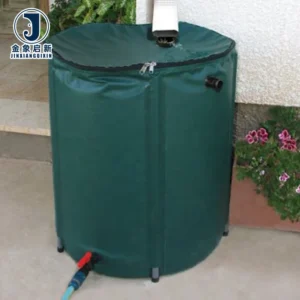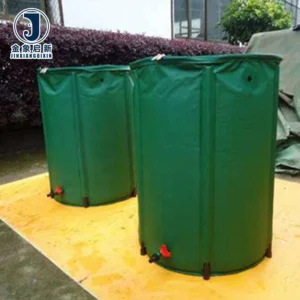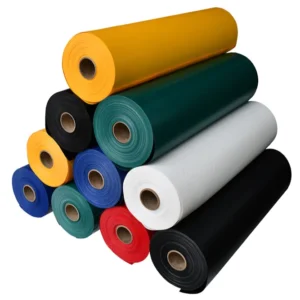
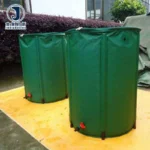
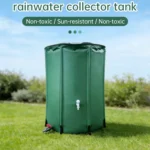
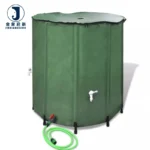
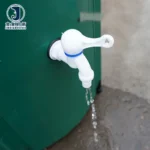
Precision-Coated Technical Fabric — Three full production lines and 36 sets of professional equipment ensure consistent PVC coating adhesion and weight control across every batch of water storage bladders we fabricate.
Technical Specifications
| Parameter | Value |
|---|---|
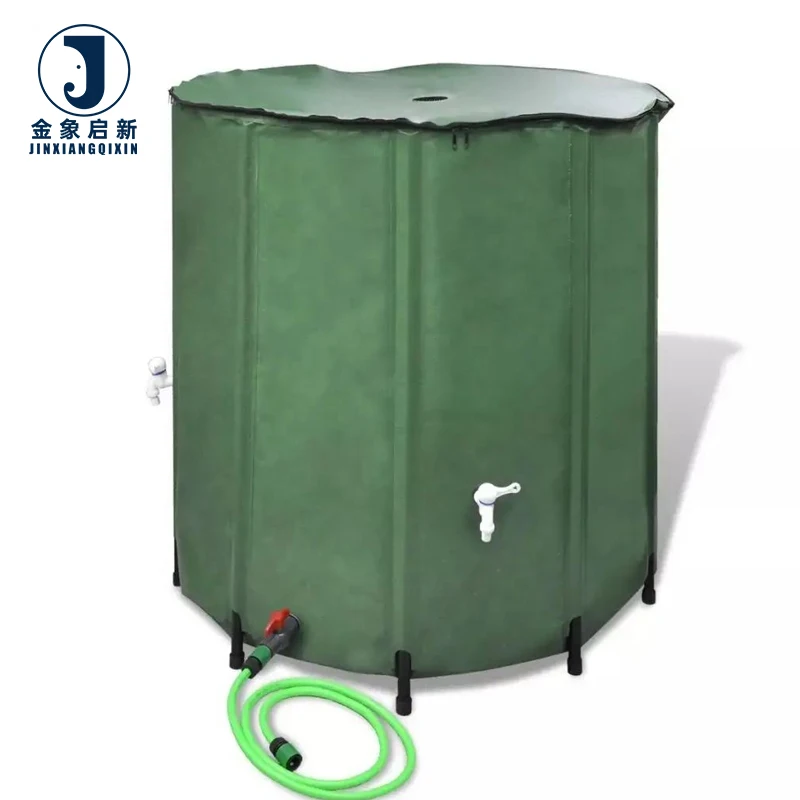
| Product Type | Collapsible Rainwater Collection Barrel |
| Capacity | 750L (50 Gallon) |
| Base Fabric | PVC Mesh Cloth |
| Support Structure | PVC Support Rod |
| Waterproof | Yes |
| Anti-UV | Available — confirm the test standard required for your market |
| Anti-Mildew | Yes |
| Flame Retardant | Available — confirm the grade required for your market |
| Anti-Static | Available — confirm the standard required for your market |
| Tear-Resistant | Yes |
| Abrasion-Resistant | Yes |
| Shrink-Resistant | Yes |
| Anti-Bacteria | Yes |
| Windproof | Yes |
| Key Features | Waterproof, anti-mildew, anti-bacteria, tear-resistant, abrasion-resistant, shrink-resistant, windproof construction with collapsible PVC rod frame |
Application Suitability
| Application | Exposure & Requirement |
|---|---|
| Construction and mining site water collection | Dust-laden environments, heavy equipment proximity, need for rapid deployment and collapse for relocation |
| Agricultural and aquaculture irrigation supply | Continuous outdoor UV exposure, biological growth risk in standing water, seasonal deployment |
| Remote or temporary installation water reserve | Transport to inaccessible locations, repeated folding and unfolding cycles, variable weather exposure |
| Garden rainwater harvesting | Residential outdoor conditions, water quality maintenance for plant irrigation, space-efficient storage when empty |
When a Collapsible Rain Barrel Water Storage Bladder Fails in the Field, the Seam Goes First
Welded joints on flexible water containers endure cyclic stress every time the barrel is filled and drained.
A collapsible rain barrel water storage bladder filled to capacity exerts outward pressure on every vertical and horizontal seam. When the PVC mesh cloth and coating do not bond with sufficient peel strength, water finds the weakest point — usually a corner weld or the rod channel — long before the body fabric shows wear. Sourcing teams evaluating flexible water storage often focus on base fabric weight while overlooking how the coating method determines whether the weld outlasts the material itself [NEED_CITE: tensile and peel strength test methods for coated fabrics per ISO 1421].
PVC Mesh Construction and Structural Rod Design
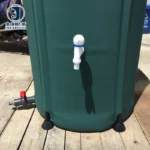
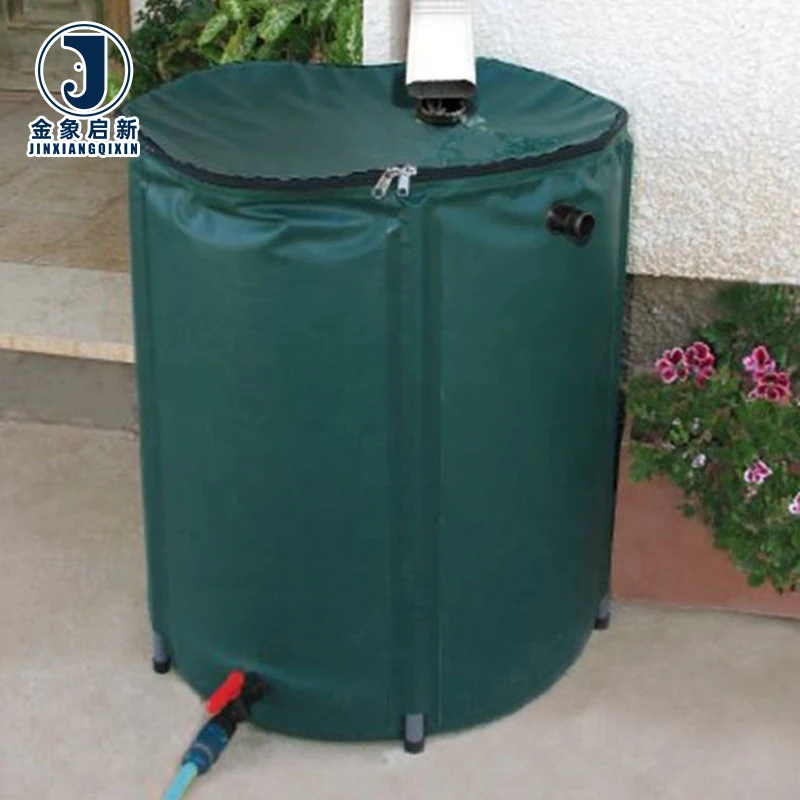
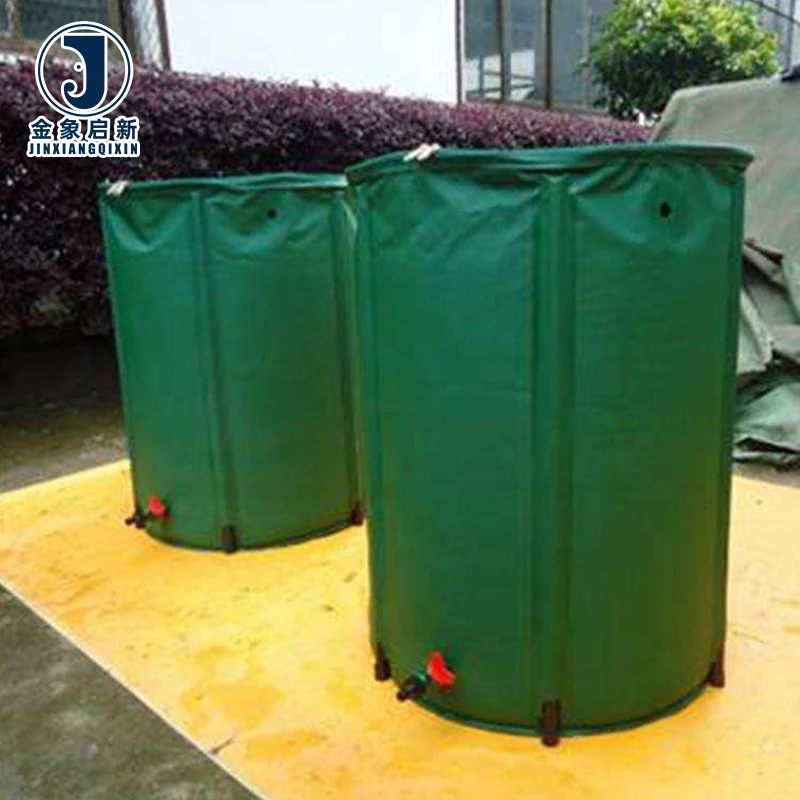
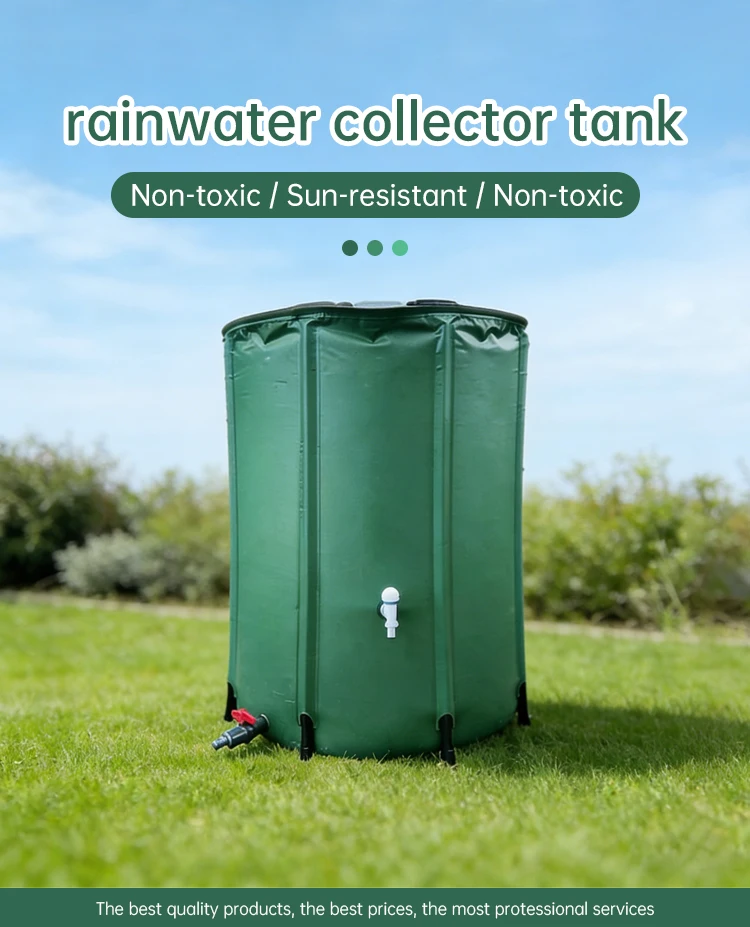
The base fabric for this collapsible rain barrel water storage bladder uses PVC mesh cloth, where the coating penetrates the woven scrim rather than sitting on the surface. This produces a bond that resists delamination when the barrel is repeatedly collapsed and redeployed. The PVC support rods slot into dedicated channels, giving the barrel its self-standing form without requiring external bracing or a rigid frame. When emptied, the rods withdraw and the entire unit folds flat for transport or off-season storage.
Anti-Mildew and Anti-Bacteria Treatment for Stored Water Quality
Standing water inside a flexible container creates conditions for biological growth on the interior coating surface. The anti-mildew and anti-bacteria treatment applied to this PVC mesh cloth inhibits organism colonisation, which matters when rainwater is stored for days or weeks before use in irrigation or site dust suppression [NEED_CITE: ISO 846 test method for evaluating anti-microbial activity on plastics]. Without this treatment, biofilm accumulates at the weld lines and rod channels first, degrading the coating adhesion from the inside outward.
How Coating Penetration Determines Weld Integrity on Water Storage Bladders
The PVC mesh cloth used here relies on coating that flows through the woven scrim during fabrication, rather than a laminated film bonded to one side. This through-coating method produces higher peel strength at the weld zone because the heat-activated PVC fuses coating from both fabric panels into a continuous layer. When coating sits only on the surface — typical of calendar-laminated fabrics — the weld bond depends on a thin film that can separate under the hydrostatic pressure of a full 750L barrel. Fabricators working with this material must calibrate hot-air or wedge welder temperature to the coating weight and mesh density, as overheating degrades the PVC and underheating leaves a cold joint that fails on the first fill cycle.
The Cost of Overlooking Coating Adhesion in Collapsible Water Containers
Buyers who specify a collapsible water storage bladder based on fabric weight alone encounter failures that trace back to poor coating-to-scrim adhesion. A barrel that holds water on the test bench may develop seam leaks within weeks of field deployment because the coating peels away from the mesh under cyclic loading. On construction sites, a leaking barrel means lost water supply for dust control and equipment wash-down, forcing crews to source water from tankers at substantially higher cost. In agricultural settings, slow leaks at the base weld go unnoticed until irrigation schedules are disrupted during critical growth periods [NEED_CITE: common failure modes in flexible liquid storage bladders under cyclic hydrostatic loading].
Why Technical Fabric Expertise Matters for Water Storage Fabrication
Three full production lines and 36 sets of professional equipment allow us to run dedicated coating and welding parameters for water storage bladders without competing for line time against tarpaulin or duct orders. A 10-person R&D team develops custom capacity samples within days, adjusting rod channel geometry and seam reinforcement to match specific deployment conditions. Every unit undergoes 100% pre-shipment inspection, with seam integrity and rod fitment verified individually before packing. Material specification sheets document the PVC mesh denier, coating weight, and treatment details for each production batch. ISO and CE certified processes ensure that export documentation meets destination market requirements without delays at customs.
Documentation & Verification
- PVC mesh denier and coating weight stated on material specification sheet per batch
- Anti-mildew and anti-bacteria treatment confirmation documented for water contact applications
- Weld seam inspection record included with each pre-shipment batch
- UV resistance and flame retardant test reports supplied where applicable to site compliance
- ISO and CE certificates provided for export documentation packages
- Roll packing list and certificate of origin included for customs clearance
Fabrication, Handling & Storage
- Heat-weld seams at calibrated temperature matching the PVC mesh coating weight to prevent cold joints
- PVC support rods should be withdrawn before extended flat storage to avoid permanent channel deformation
- Store collapsed barrels in dry, shaded conditions to preserve anti-mildew treatment efficacy
- Clean interior surfaces with mild pH-neutral detergent to avoid degrading the anti-bacteria coating layer
- Inspect rod channels for abrasion after repeated deployment cycles in sandy or gritty site conditions
- Repair minor punctures with PVC-compatible adhesive patches applied to clean, dry mesh surfaces
What We Need to Quote Your Water Storage Requirement
Tell us the deployment environment — whether the barrel will sit on a construction site, a farm, or a remote location — and the expected fill-drain cycles per season. Specify any fire safety or anti-static compliance your site mandates so we can confirm the applicable test standard. If you need a capacity other than 750L, provide the target volume and we will develop a sample with adjusted rod geometry and seam layout for your approval before production.
Frequently Asked Questions
Q: What PVC mesh denier and coating weight is used in the rain barrel fabric?
A: The specific denier and coating weight are documented on the material specification sheet issued with each production batch. We recommend requesting this sheet during the sampling stage so you can verify the fabric construction matches your durability and flexibility requirements before committing to a production order.
Q: Are UV resistance and flame retardant claims supported by test reports?
A: UV resistance and flame retardant treatments are available, and test reports are supplied when these treatments are specified for your order. We need to know which standard your site or market requires so the correct grade is applied and documented before shipment.
Q: What custom capacities are available beyond the standard 750L?
A: Our R&D team develops custom capacity bladders by adjusting the PVC mesh panel dimensions and support rod length. Provide your target volume and we produce a sample within days, allowing you to evaluate the collapsed footprint and deployed stability before approving bulk production.
Q: How is the PVC support rod structure engineered for repeated collapse and deployment?
A: The support rods sit in dedicated welded channels within the PVC mesh body. The channel dimensions and rod diameter are matched so the rods slide freely during setup and collapse without abrading the coating. Inspect channels periodically for wear if the barrel is deployed and collapsed frequently on abrasive surfaces.
Q: What certifications and export documentation accompany shipment?
A: Each shipment includes ISO and CE certificates, a material specification sheet, a pre-shipment inspection record, a packing list, and a certificate of origin. Additional documentation such as specific treatment test reports is included based on the treatments applied to your order.