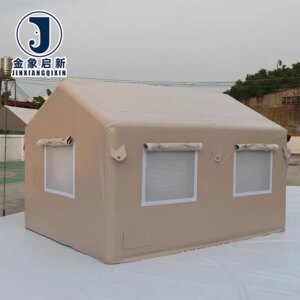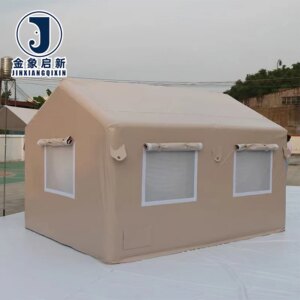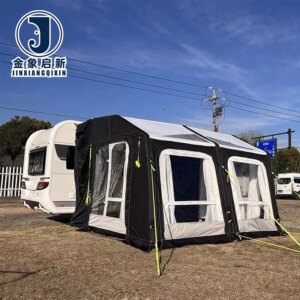
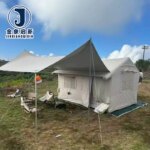
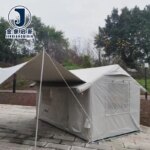
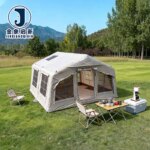
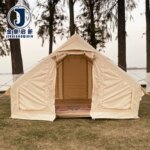
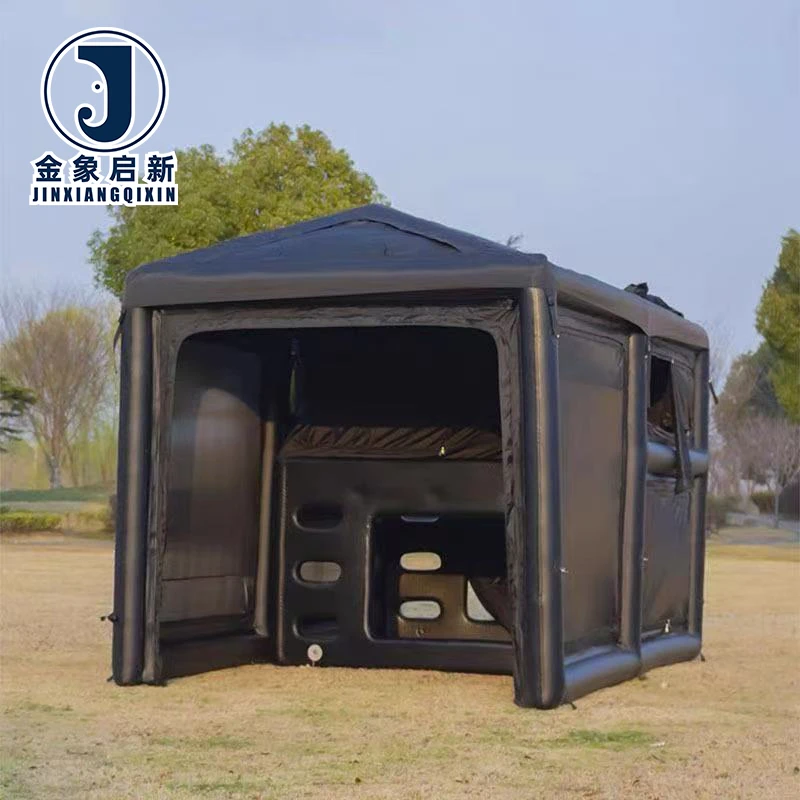
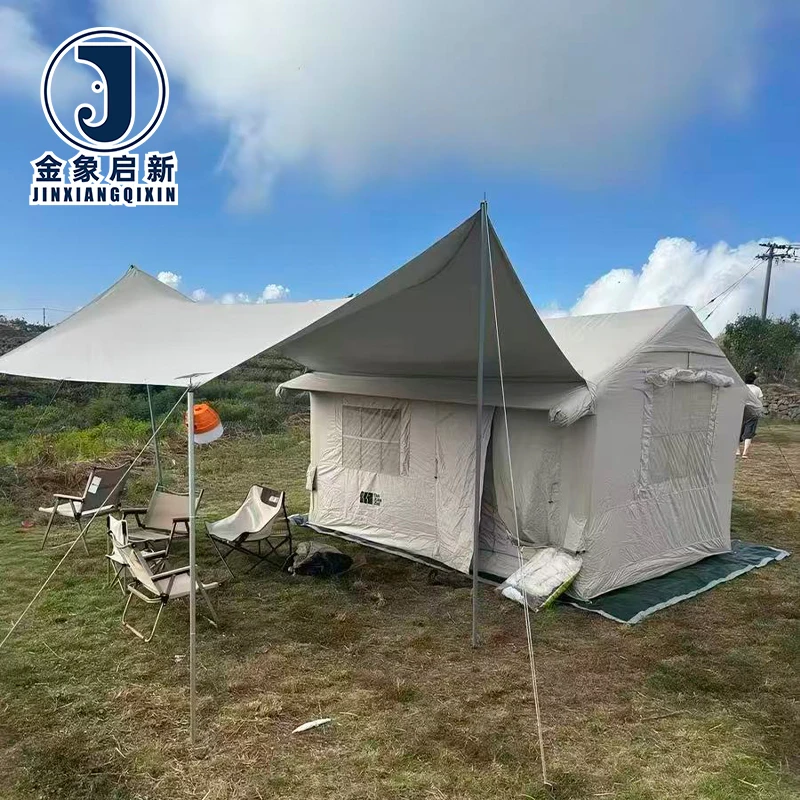
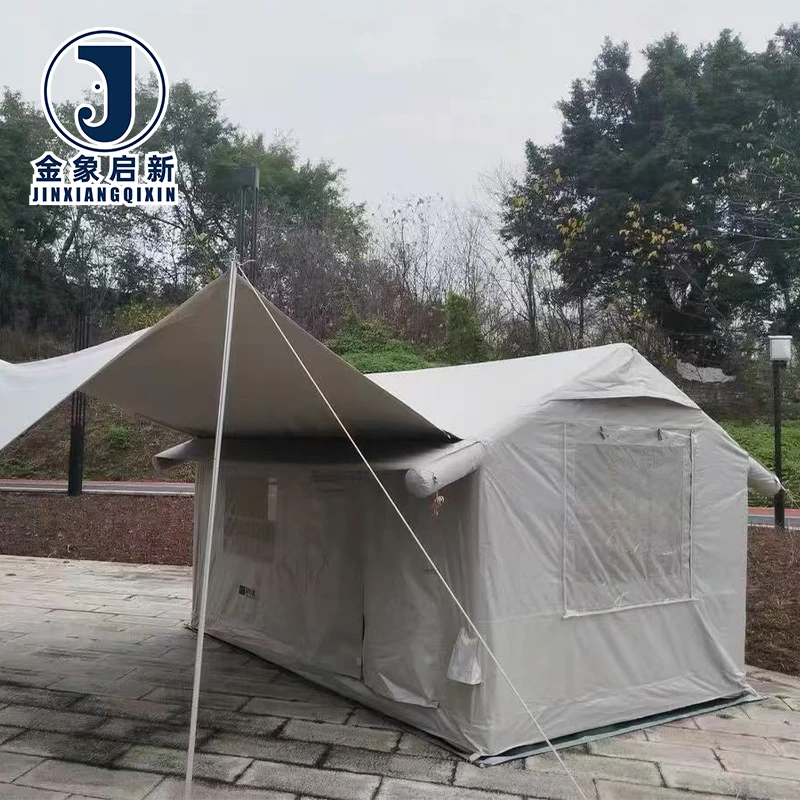
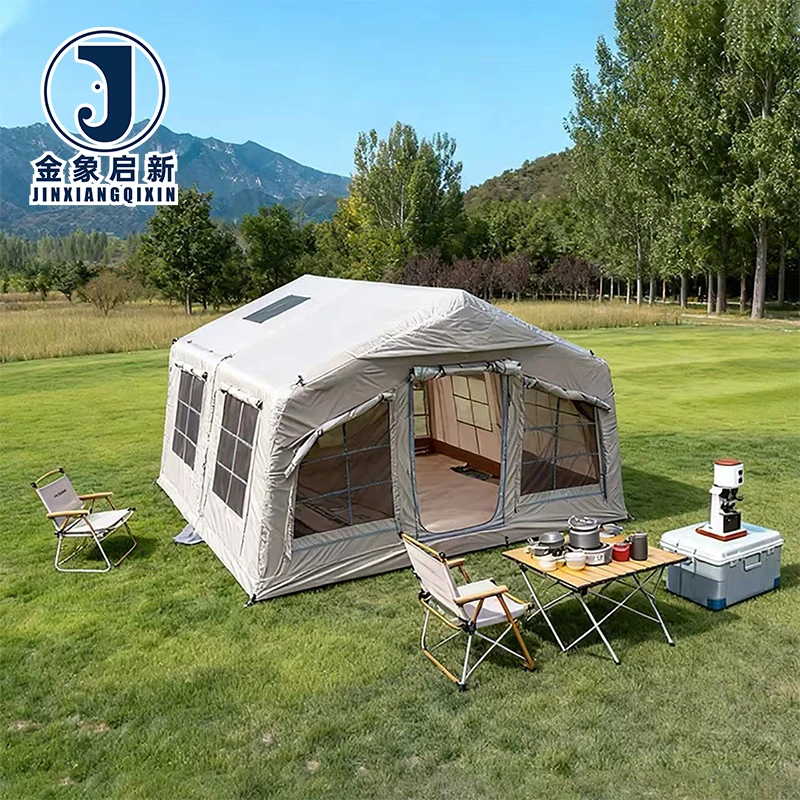
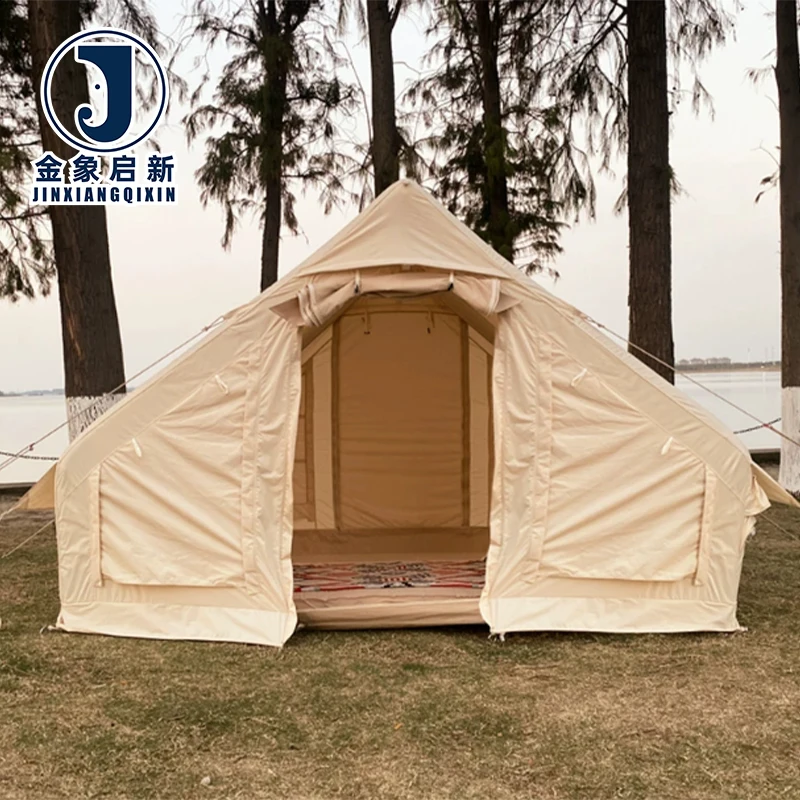
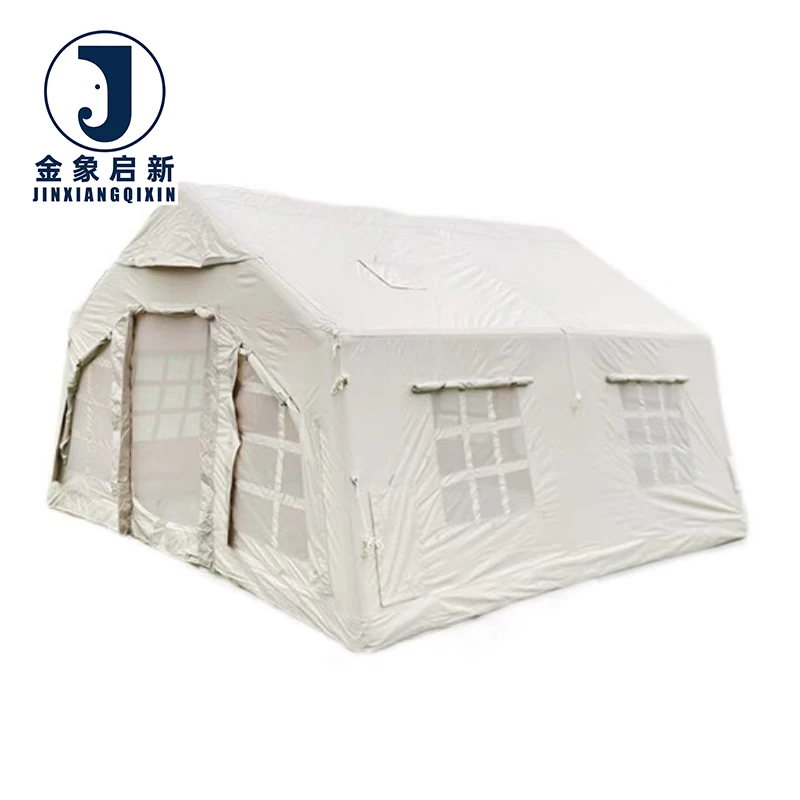
Proven Process Control — Nearly 30 years of coated fabric expertise applied to inflatable tent structures, with full QA at every stage from coating to final air-hold testing.
Technical Specifications
| Parameter | Value |
|---|---|
| Product Type | Inflatable Camping Tent |
| Core Material | PVC Tarpaulin (PVC knife-coated fabric) |
| Product Forms | Single Layer Construction, Extended Type |
| Key Performance | Waterproof, UV-resistant (test basis not stated — confirm with technical team), Tear-resistant, Quick automatic opening |
| Customization Service | OEM & ODM (sample customization, pattern printing) |
| Production Facility | 9,180 m² with 3 full production lines and 36 sets of processing equipment |
| R&D Team | 10 technicians |
| Quality Control | Full-process inspection with dedicated QA & QC staff |
| Certifications | ISO9001, ISO14001, ISO45001, CE |
Application Suitability
| Application | Exposure & Requirement |
|---|---|
| Commercial camping ground operations | Year-round guest accommodation requiring all-weather waterproof shelter and UV-resistant fabric for prolonged outdoor deployment |
| Industrial site temporary shelters | Equipment storage and personnel protection exposed to dust, moisture, and mechanical abrasion on active work sites |
| Emergency response logistics | Rapid-deploy structures in field conditions demanding quick automatic opening and structural reliability under unpredictable weather |
| Outdoor event management | Flexible space configurations with repeated setup and teardown cycles requiring tear-resistant seams and durable air-holding tubes |
When an Inflatable Tent Fabric Manufacturer Skips the Test Report, You Carry the Risk
Every commercial inflatable camping tent order must ship with traceable inspection records and compliance documentation — not just a promise on the quotation.
Inflatable structures deployed on industrial sites or commercial campgrounds face a compliance check the moment they go up. Site inspectors ask for fire classification. Insurance assessors request material certificates. When the supplier cannot produce a test report tied to the specific batch, the entire installation stalls. I have seen project timelines slip because the inflatable tent fabric manufacturer treated documentation as an afterthought rather than a production deliverable [NEED_CITE: compliance requirements for temporary inflatable structures on regulated sites].
Rapid Deployment Engineered into the Material
The quick automatic opening mechanism of this inflatable camping tent depends on air-holding tubes that maintain pressure without seam leakage. PVC knife-coated fabric provides the peel strength needed at welded joints, where air pressure exerts continuous outward force. Each tube section is fabricated to hold shape across temperature variations, supporting reliable inflation during early-morning setups when ambient temperatures drop and fabric stiffness increases.
Four-Season Exposure Without Structural Compromise
Commercial camping operators and industrial project managers deploy these shelters across seasons where temperature swings, rain loading, and wind forces test every welded seam. The waterproof and tear-resistant construction addresses the two failure modes that end an inflatable structure’s service life prematurely — water ingress through micro-pinholes in the coating, and tear propagation from a small puncture under wind load. UV-resistant treatment is available in grades suited to different exposure durations; confirm the grade required for your climate zone with the technical team before placing a production order [NEED_CITE: UV degradation mechanisms in PVC coated fabrics under continuous outdoor exposure].
How Coating Method and Base Fabric Determine Real-World Performance
PVC knife-coated fabric achieves its structural properties through a process where liquid PVC is applied directly onto the woven base fabric under controlled tension. This method produces a mechanical bond between coating and yarn that outperforms simple lamination in peel strength — a critical property for inflatable tent tubes that flex under internal air pressure and external wind loads. The base fabric weave density determines how effectively the load distributes across the textile when a point stress occurs, such as a guy-line attachment or a contact point with rough ground. Heavier base yarns resist tear propagation, but without adequate coating adhesion, the fabric can delaminate at stress concentrations before the yarn itself fails. Surface finish affects both cleanability and print receptivity; a matte finish reduces glare and improves ink adhesion for custom branding, while a glossy surface sheds dirt more readily in muddy field conditions.
The Hidden Cost of Specifying on Price Alone
When an inflatable tent order is awarded on lowest cost per unit, the compromises appear in the field. Coating weight drops below the level needed for reliable air retention, and tubes lose pressure within hours rather than days. Weld parameters set for lighter fabric produce incomplete fusion on heavier grades, creating seams that fail at the exact point where internal pressure concentrates [NEED_CITE: weld failure analysis in PVC coated inflatable structures]. Batch-to-batch colour variation becomes visible when multiple tents stand side by side at a commercial campground. Fire classification paperwork arrives without a test report tied to the material actually shipped, leaving the site operator exposed during the next compliance audit.
Why Technical Buyers Source This Inflatable Camping Tent Here
Coated fabric is the only product category this facility has manufactured for nearly three decades, producing deep process knowledge specific to PVC knife-coated construction. Three full production lines and 36 sets of professional equipment support volume orders while maintaining consistent coating weight across every roll. A 10-person R&D team handles material selection, pattern printing, size adjustment, and sample development — meaning a custom inflatable camping tent project moves from inquiry to approved sample within days, not weeks. Dedicated QA and QC staff inspect at every production stage, with 100 percent pre-shipment inspection covering air-hold integrity, weld strength, and dimensional accuracy. ISO9001, ISO14001, ISO45001, and CE certifications are maintained as active production standards, not archived certificates.
Documentation & Verification
- Material specification sheet stating base fabric type, coating method, and performance parameters per batch
- Waterproof integrity and structural load-bearing test results documented for each production run
- ISO9001, ISO14001, ISO45001, and CE compliance records arranged for project-specific audit submission
- Pre-shipment inspection record covering weld seams, air retention, and dimensional tolerances
- Certificate of origin and customs documentation included with every export shipment
Fabrication, Handling & Storage
- Heat-weld PVC knife-coated seams using temperature and dwell time settings matched to the fabric thickness for complete fusion
- Store rolled inflatable tent fabric upright in a dry environment to prevent permanent crease marks on the coating surface
- Clean with mild pH-neutral detergent to preserve the waterproof coating integrity and any applied UV-resistant treatment
- Inflate fully after long-term storage to check air-hold performance before deploying on a commercial or industrial site
- Repair minor punctures with compatible PVC adhesive patches applied to a clean, dry surface for reliable bond strength
Start Your Inflatable Tent Project Specification
Provide the deployment environment, expected wind and temperature range, and any fire-retardant or anti-static classification required by your local regulations. Confirm whether you need finished tents in specific dimensions or roll stock for your own fabrication line. Share your target colour references, pattern printing requirements, and estimated annual volume so the technical team can recommend the appropriate material grade and production schedule.
Frequently Asked Questions
Q: What customization options are available for inflatable tent dimensions, material thickness, and surface printing?
A: OEM and ODM services cover size adjustment, material thickness variation, and custom pattern printing. The 10-person R&D team develops pre-production samples for client confirmation before mass manufacturing begins. Minimum order quantities depend on the complexity of the custom specification and whether finished tents or roll stock are required. Submit your dimensional drawings and performance requirements to receive a tailored production recommendation.
Q: How is batch-to-batch colour and material consistency controlled across large-volume inflatable tent orders?
A: Full-process quality inspection with dedicated QA and QC staff monitors coating weight, colour consistency, and fabric adhesion at every production stage. Each batch undergoes 100 percent pre-shipment inspection against the approved sample. Batch-specific quality inspection reports document the results, providing traceable records that commercial operators and industrial project managers require for multi-unit deployments.
Q: What fire-retardant or anti-static certifications are available for inflatable structures used in regulated industrial sites?
A: Fire-retardant and anti-static treatments are available in various grades to meet specific market requirements. The applicable classification depends on your local regulations and the intended deployment environment. Confirm the exact grade your site demands — such as B1 per DIN 4102 or an equivalent regional standard — and the technical team will match the material specification and supply the corresponding test documentation with your order.
Q: How are welded seams and air-holding integrity tested before shipment to prevent field failures?
A: Every inflatable camping tent undergoes pre-shipment inspection that includes weld seam evaluation and inflation testing under controlled conditions. PVC knife-coated fabric supports strong thermal fusion at seams, and inspection staff verify that weld parameters match the specific fabric thickness. Any unit showing pressure loss or seam weakness is corrected or replaced before dispatch, ensuring field reliability upon arrival.
Q: What documentation ships with each commercial inflatable tent order for compliance and audit purposes?
A: Each order includes a material specification sheet, batch-specific inspection reports, ISO9001, ISO14001, ISO45001, and CE compliance records, a pre-shipment inspection record, and a certificate of origin. These documents are compiled per project and can be formatted to meet specific audit requirements. Confirm your documentation needs during the inquiry stage so the packaging includes everything your site inspector or insurance assessor requires.