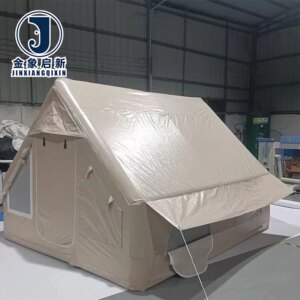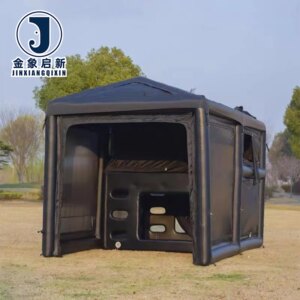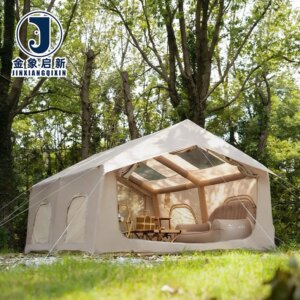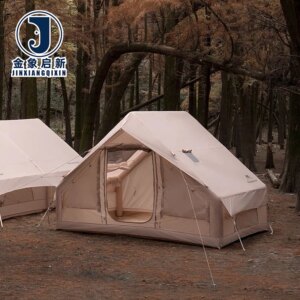

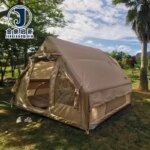
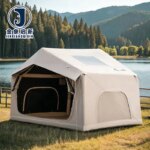
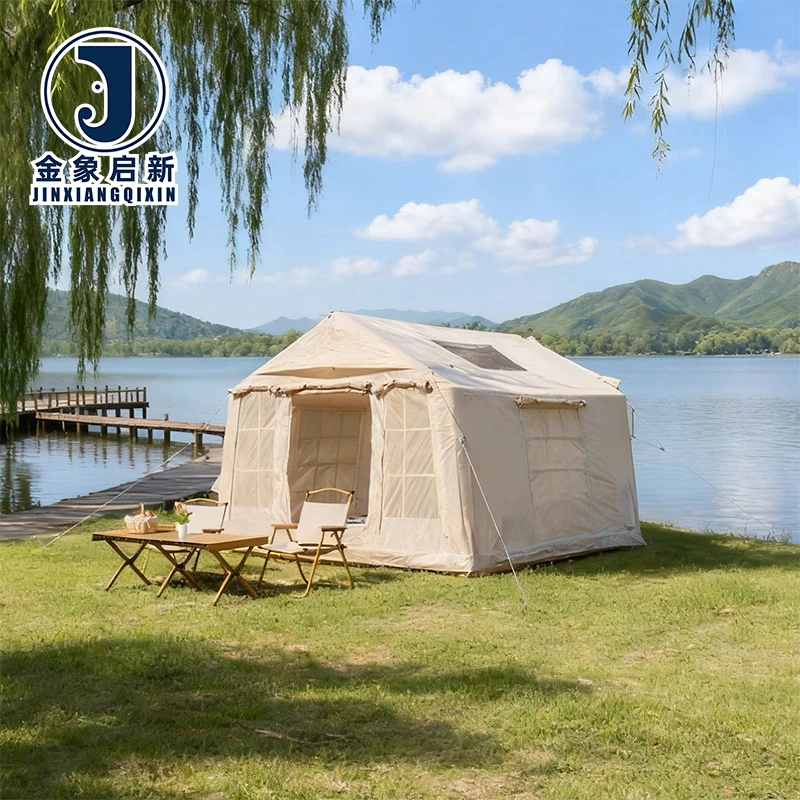
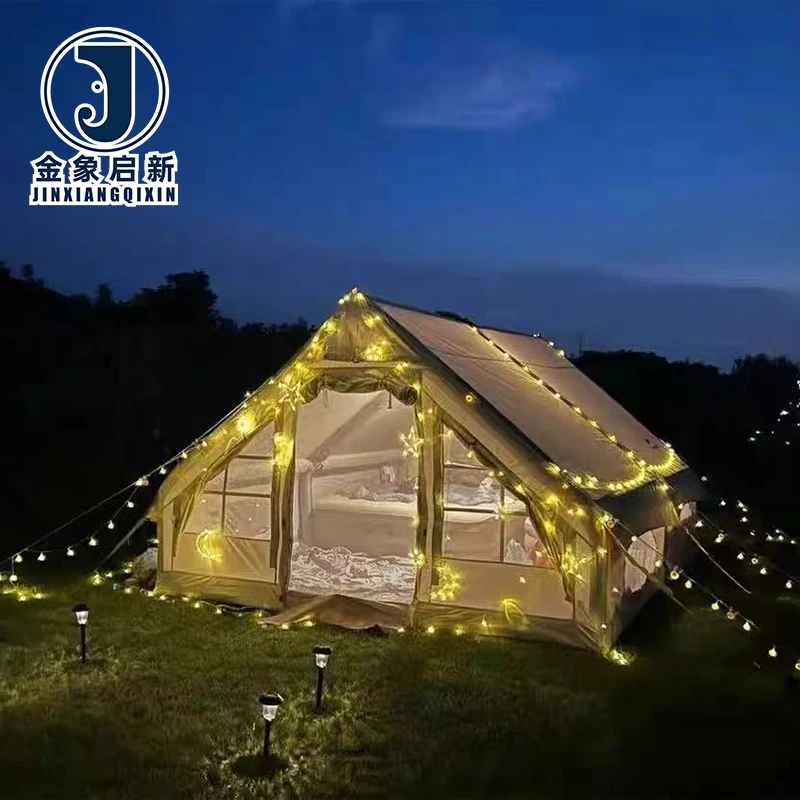
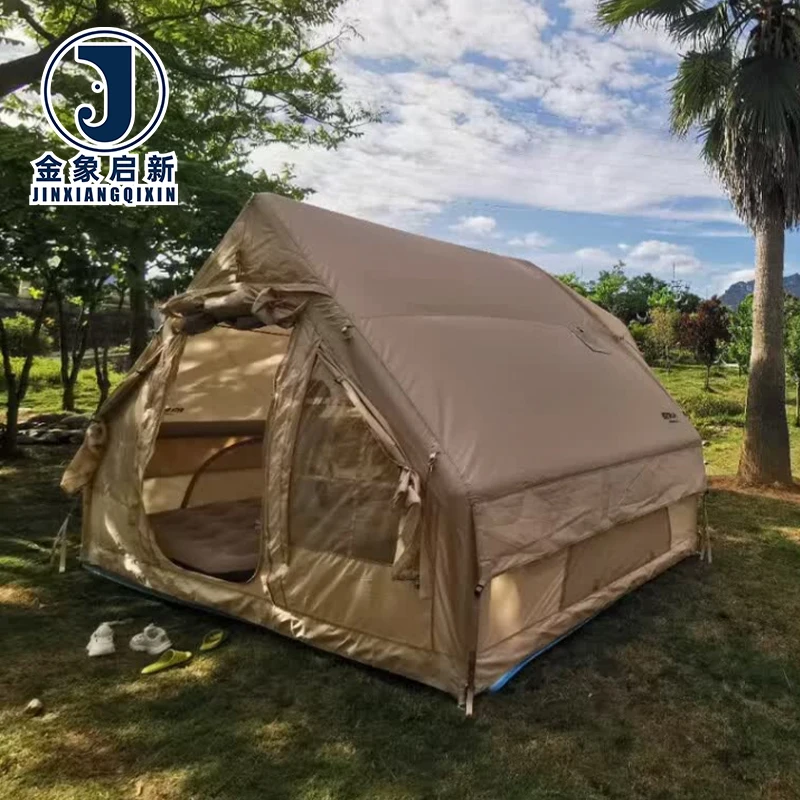
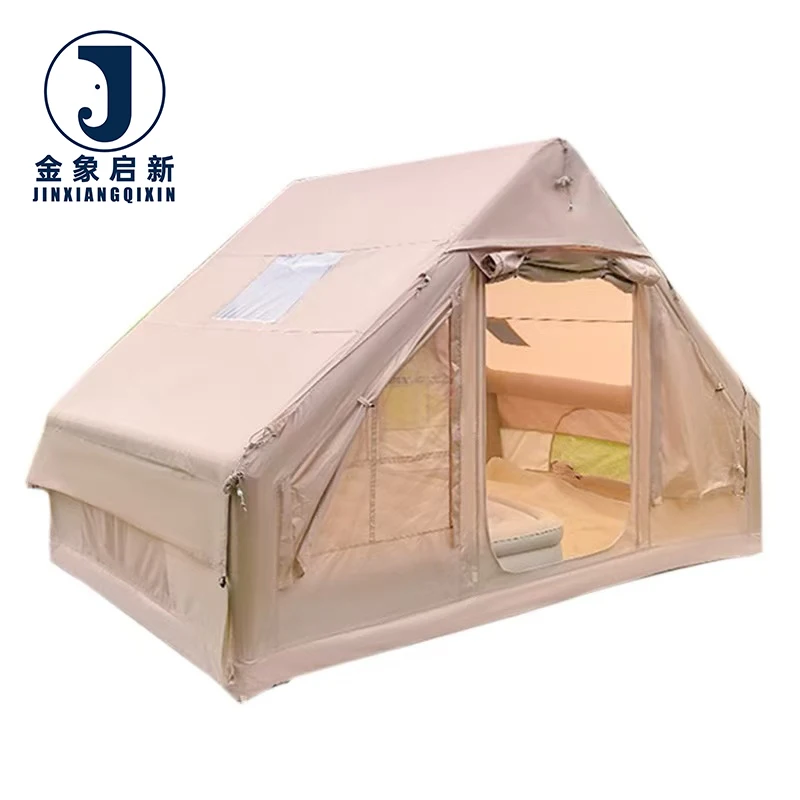
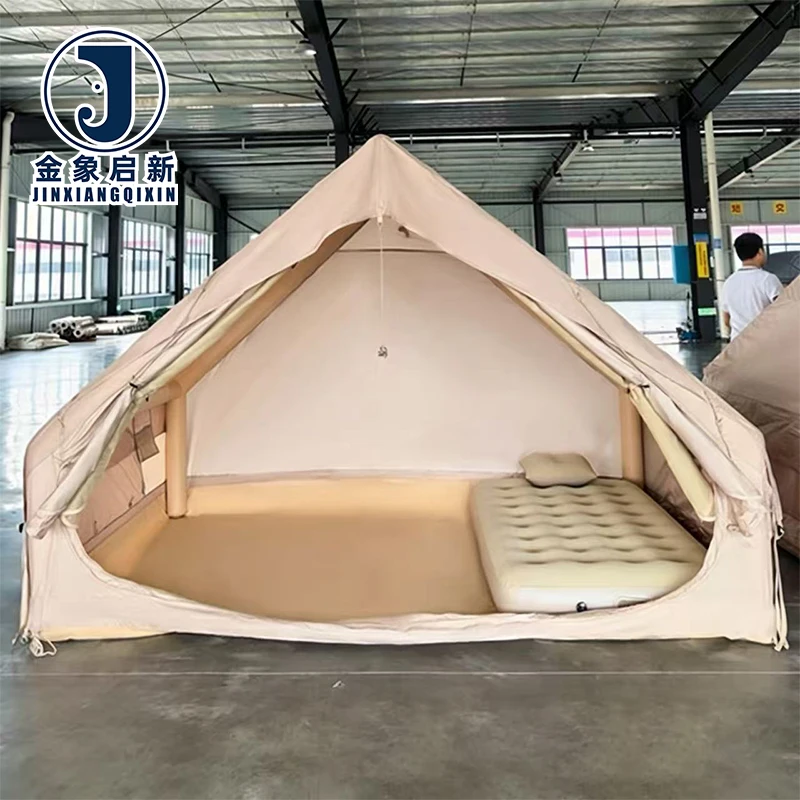
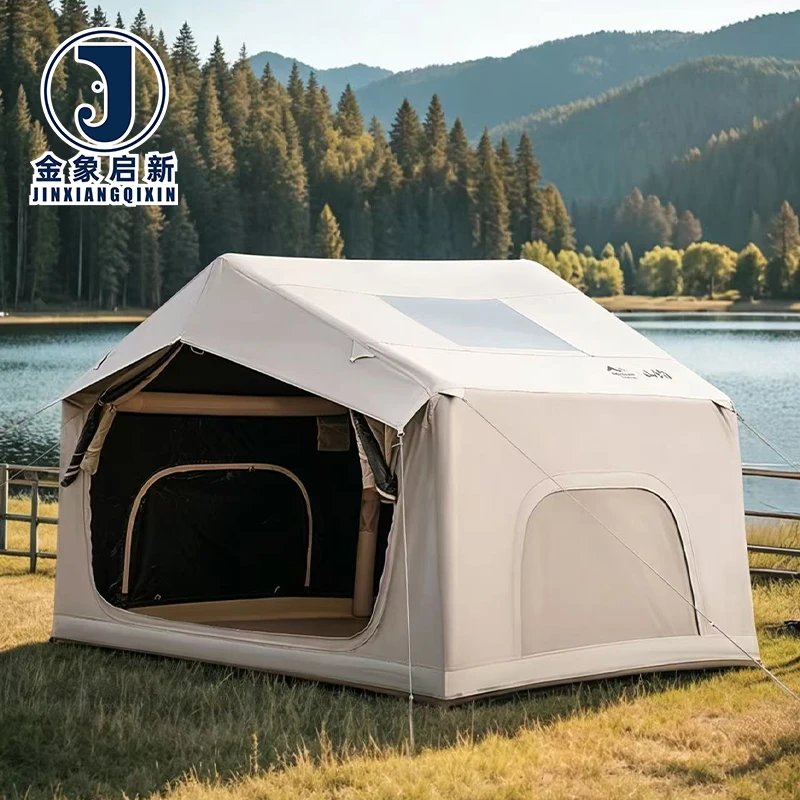
Process Mastery — Nearly 30 years focused on coated fabric production, with dedicated QA/QC at every stage ensuring batch-to-batch consistency for inflatable tent membrane fabrication.
Technical Specifications
| Parameter | Value |
|---|---|
| Product Type | Inflatable Tent |
| Core Material | PVC tarpaulin |
| Waterproof | Yes |
| UV-resistant | Yes (test basis not stated) |
| Tear-resistant | Yes (grade not stated) |
| Fire-retardant | Yes (grade not stated) |
| Anti-static | Yes (surface resistance or standard not stated) |
| Construction | Single layer |
| Season Rating | Four-season |
| Capacity | 6-8 Person |
| Opening Mechanism | Quick automatic opening (inflatable) |
| Customization | OEM & ODM, sample customization, pattern printing, material thickness adjustment, custom color matching, branding |
| Production Facility Area | 9180 square meters |
| Production Lines | 3 full production lines |
| Processing Equipment | 36 sets |
| R&D Team | 10 technicians |
| Standards | ISO9001, ISO14001, ISO45001, CE |
Application Suitability
| Application | Exposure & Requirement |
|---|---|
| Mining and tunnelling inflatable shelters | Continuous underground deployment, strict fire-retardant and anti-static compliance, abrasion from rock contact |
| Specialist membrane and inflatable structure projects | Architectural tension loads, sustained UV exposure, airtight seam integrity under internal pressure |
| Aviation and industrial rapid-inflation enclosures | Temporary deployment on contaminated ground, fuel and chemical exposure, rapid pressurization cycles |
| Commercial four-season camping equipment | Year-round weather cycles, repeated inflation-deflation fatigue, consumer safety compliance |
| Wholesale outdoor gear distribution | Batch consistency across production runs, packaging for retail or industrial channels, documented traceability |
Why Fire-Retardant and Anti-static Claims Without Certification Stall Your Project
Inflatable Tent Fabric fire retardant / anti-static / certified — if the membrane material arrives without a test report stating the exact grade and surface resistance value, site inspectors will reject the structure before it is inflated.
Commercial outdoor gear producers and mining contractors regularly specify fire-retardant PVC fabric for inflatable shelters, only to discover that the supplied rolls carry no documentation beyond a generic "flame retardant" label. The structure fails compliance review, the project timeline stalls, and rework costs compound. Anti-static requirements in underground or aviation environments are equally unforgiving — a fabric that accumulates dust or generates static discharge creates a direct ignition hazard. The gap between a supplier’s claim and a verifiable test result is where projects fail. [NEED_CITE: fire safety compliance requirements for temporary inflatable structures in mining and aviation]
Membrane Integrity Under Internal Pressure
An inflatable tent relies entirely on the coated fabric’s ability to hold air under continuous internal pressure. Every seam, every valve surround, and every panel junction must remain airtight through repeated inflation cycles. Inflatable Tent Fabric fire retardant / anti-static / certified formulations are engineered to maintain coating adhesion and dimensional stability when the membrane is stretched to its operating tension. Single-layer construction reduces weight and simplifies thermal welding, but demands that the PVC coating itself provides the full barrier performance. Any inconsistency in coating weight or base fabric weave becomes a leak path once the structure is pressurized.
Compliance Documentation as a Procurement Gate
For mining, tunnelling, and aviation contractors, the fire-retardant grade and anti-static surface resistance of the inflatable membrane are not optional specifications — they are contractual compliance gates. Available in fire-retardant grades — confirm the grade required for your market, whether M2, B1, NFPA 701, or DIN 4102. Anti-static treatment must be verified with a stated surface resistance value to meet specialist structure compliance requirements. [NEED_CITE: surface resistance thresholds for anti-static fabrics in underground mining applications] Procurement teams that accept material without these documents at the quotation stage typically discover the gap at pre-shipment inspection, when lead time for re-testing or re-production has already been lost.
How Base Fabric and Coating Weight Determine Inflatable Performance
The structural behaviour of an inflatable tent membrane is governed by the interaction between the base fabric’s denier and weave density and the PVC coating weight applied to each face. A higher denier yarn in the warp direction resists the circumferential tension created by internal air pressure, while the weft density controls cross-panel stability. The coating weight determines airtightness and weldability — too thin, and thermal welding burns through the PVC layer; too thick, and the membrane becomes rigid and prone to crease cracking during repeated inflation cycles. UV-resistant and waterproof treatments are integrated into the coating formulation, protecting the membrane during extended outdoor deployment. Fire-retardant additives, where specified, are compounded into the PVC plastisol before coating, meaning the protection is distributed through the coating layer rather than applied as a surface finish that can wear off. [NEED_CITE: relationship between PVC coating weight and thermal welding parameters for inflatable membrane fabrication]
The Cost of Specifying Inflatable Membrane Fabric on Price Alone
When inflatable tent fabric is selected primarily on unit cost, the consequences surface during fabrication and deployment. Coating weight that falls below the stated GSM leads to porous weld lines that leak under pressure. Base fabric with insufficient tear resistance allows a small puncture to propagate across an entire panel during inflation. Colour variation between rolls in the same production batch forces fabricators to sort and match panels manually, adding labour cost and delaying assembly. Fire-retardant treatment that lacks a verifiable test report means the finished structure cannot be deployed on regulated sites, turning a completed order into dead inventory. [NEED_CITE: common failure modes in PVC inflatable membrane structures related to material specification gaps]
Why Procurement Teams Source Inflatable Membrane Fabric Here
Deep process control over PVC coating weight and adhesion, built across nearly 30 years of coated fabric production, ensures that every roll of inflatable tent membrane meets the airtightness and weldability demands of pressurized structures. Three full production lines and 36 sets of processing equipment deliver the bulk capacity required for commercial outdoor gear manufacturing schedules, with on-time delivery supporting just-in-time assembly operations. A 10-technician R&D team handles material formulation adjustments, custom colour matching, and sample development, producing trial rolls within days for fabricator approval. Dedicated QA/QC personnel conduct in-process inspection at every coating and finishing stage, with 100% pre-shipment verification of GSM, colour consistency, and airtightness performance. ISO9001, ISO14001, ISO45001, and CE certifications underpin a quality management system that produces traceable documentation for every batch dispatched.
Documentation & Verification
- Material specification sheet stating GSM, base fabric denier, and PVC coating weight for each roll batch
- Fire-retardant test report stating applicable grade — M2, B1, NFPA 701, or DIN 4102 — where specified
- Anti-static surface resistance measurement report for mining and aviation membrane applications
- Pre-shipment inspection record including airtightness and pressure-hold test results per roll
- ISO9001, ISO14001, ISO45001, and CE certificates traceable to the production batch
- Roll packing list with net weight, gross weight, and roll dimensions for logistics planning
Fabrication, Handling & Storage
- Thermal welding parameters must match the PVC coating weight — request recommended temperature and dwell time settings for the supplied membrane grade
- Store rolls horizontally on padded racking to prevent creasing that compromises airtightness at fold lines
- Cut panels with rotary blades to avoid fraying the base fabric edges before welding seam allowances
- Allow membrane panels to relax at ambient temperature before welding in cold conditions to prevent coating brittleness at the joint
- Clean fabricated membranes with mild detergent only — solvent-based cleaners can degrade the PVC coating surface and compromise fire-retardant additive integrity
- Inflate test each completed structure to operating pressure and hold for the specified duration before dispatch to verify seam integrity
What to Include in Your Inflatable Membrane Fabric Inquiry
Provide the target deployment environment and any fire-retardant or anti-static compliance standards required by the end-use site. State the membrane width, roll length, and annual volume to allow accurate production scheduling across the three dedicated lines. Specify colour references, pattern printing requirements, and whether you need raw rolls or pre-cut panels with valve reinforcement zones prepared for welding.
Frequently Asked Questions
Q: Which fire-retardant standard applies to inflatable structures in my region?
A: Fire-retardant requirements vary by jurisdiction and application sector. Mining and tunnelling sites typically reference DIN 4102 B1 or equivalent national standards, while commercial event structures may require NFPA 701 or M2 classification. Confirm the specific standard with your site safety officer or regulatory authority before placing your order, and request the corresponding test report with your material documentation.
Q: What surface resistance value is required for anti-static inflatable fabric in mining applications?
A: Underground mining regulations specify maximum surface resistance thresholds to prevent static discharge in explosive atmospheres. The required value depends on the ventilation classification and gas monitoring protocols of the specific site. Provide your site’s anti-static specification at the inquiry stage so the PVC formulation can be adjusted and tested to produce a compliant membrane with verifiable surface resistance documentation.
Q: How is PVC coating weight verified on inflatable membrane fabric upon delivery?
A: Each roll is accompanied by a material specification sheet stating the GSM, base fabric denier, and coating weight verified during production. Buyers may conduct independent gravimetric testing on arrival by cutting a measured sample, dissolving the PVC coating in a specified solvent, and weighing the remaining base fabric. Any discrepancy should be reported with the pre-shipment inspection record for resolution.
Q: What welding parameters are recommended for inflatable tent membrane joints?
A: Thermal welding temperature, pressure, and dwell time must be matched to the PVC coating weight and formulation of the specific membrane batch. Overheating burns through the coating layer and creates leak paths, while insufficient heat produces cold welds that separate under internal pressure. Request the recommended welding parameter sheet for your membrane grade and conduct test welds on offcuts before production fabrication begins.
Q: What are the minimum order quantities and lead times for custom-width inflatable tent fabric rolls?
A: Minimum order quantities and production lead times depend on the specified width, colour, and fire-retardant or anti-static formulation required. Custom widths and colours involve dedicated production line setup and raw material batching. Provide your target roll dimensions and annual volume at the inquiry stage to receive an accurate quotation with confirmed lead time and minimum order parameters.