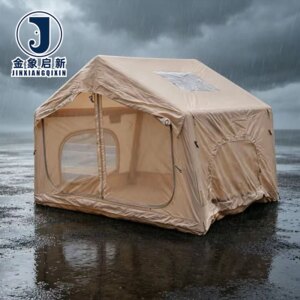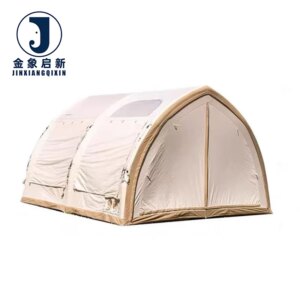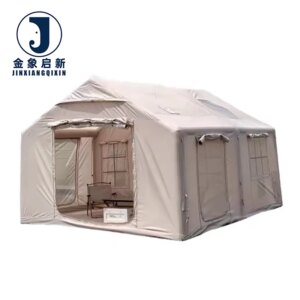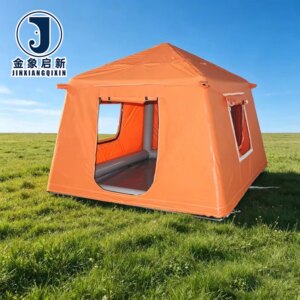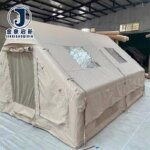
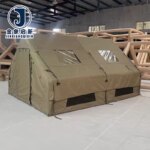
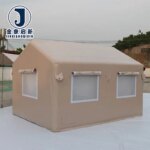
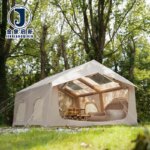
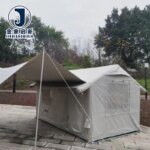
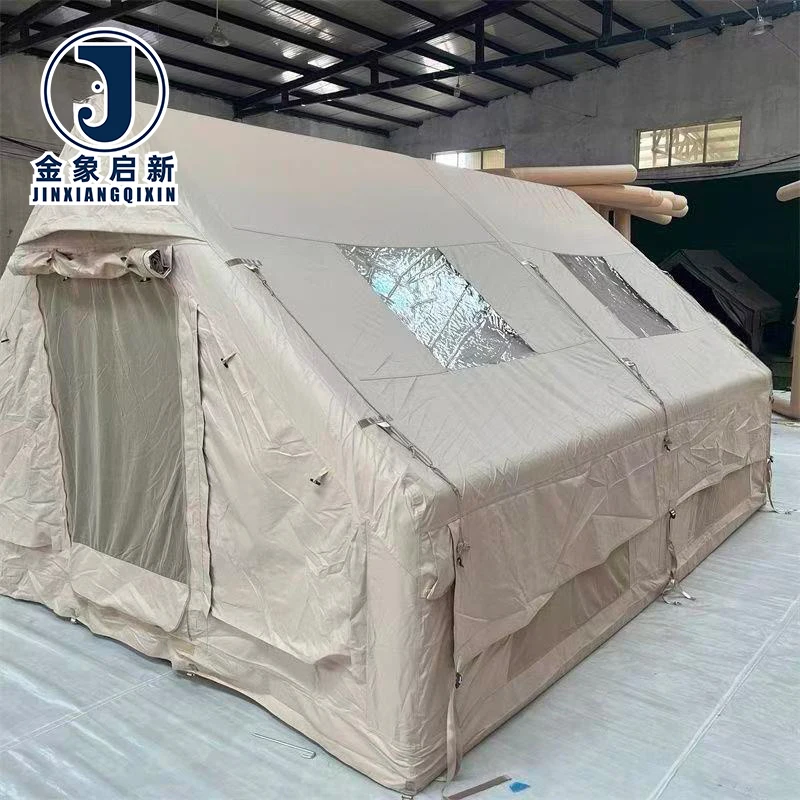
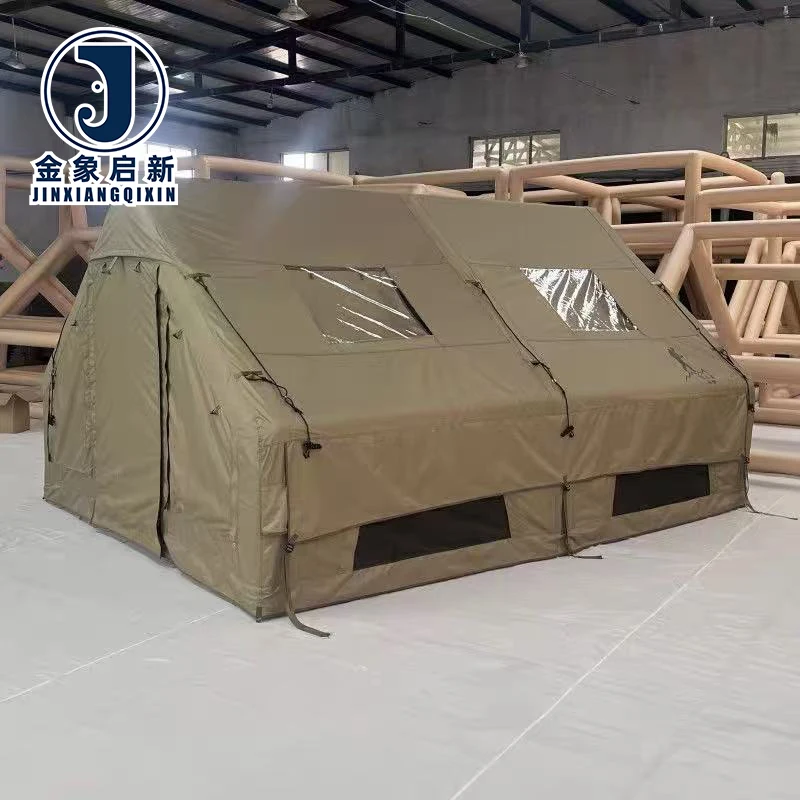
Proven Compliance Record — every batch of inflatable tent fabric ships with the fire-retardant, UV, and anti-static test reports your site approval depends on, eliminating the guesswork that stalls industrial projects.
Technical Specifications
| Parameter | Value |
|---|---|
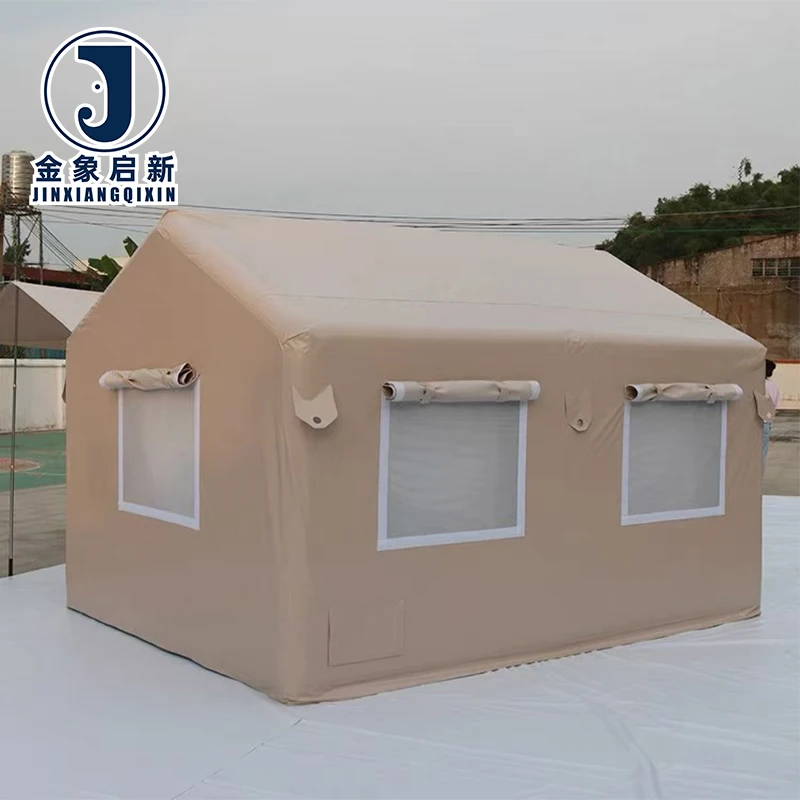
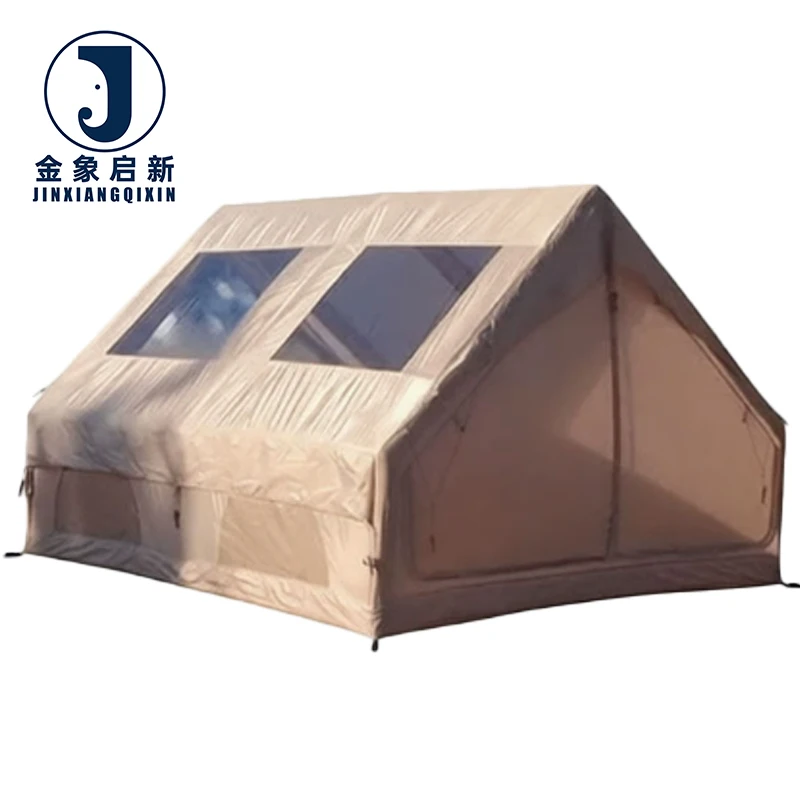
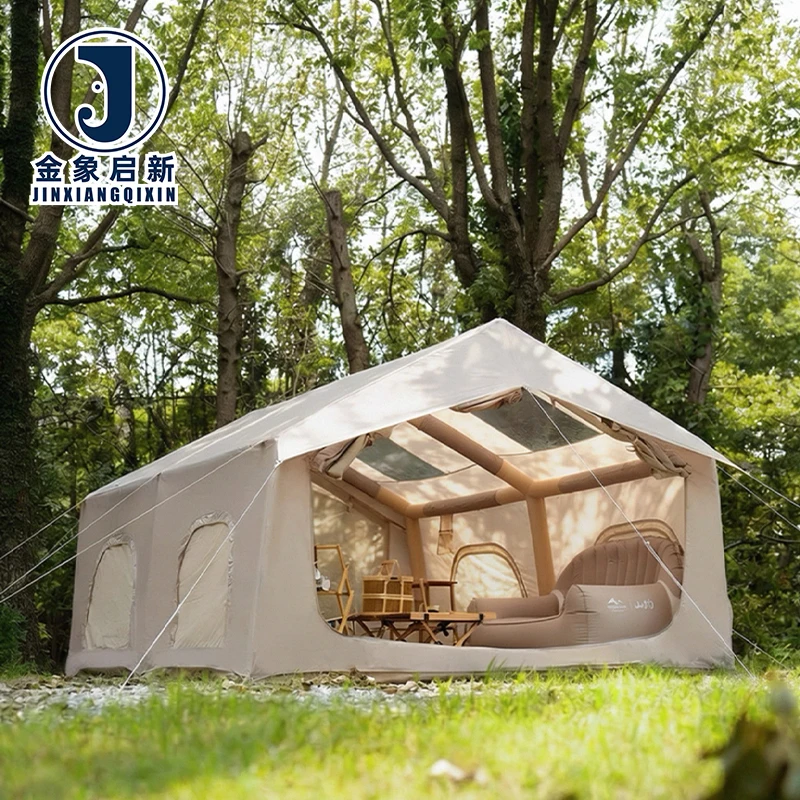
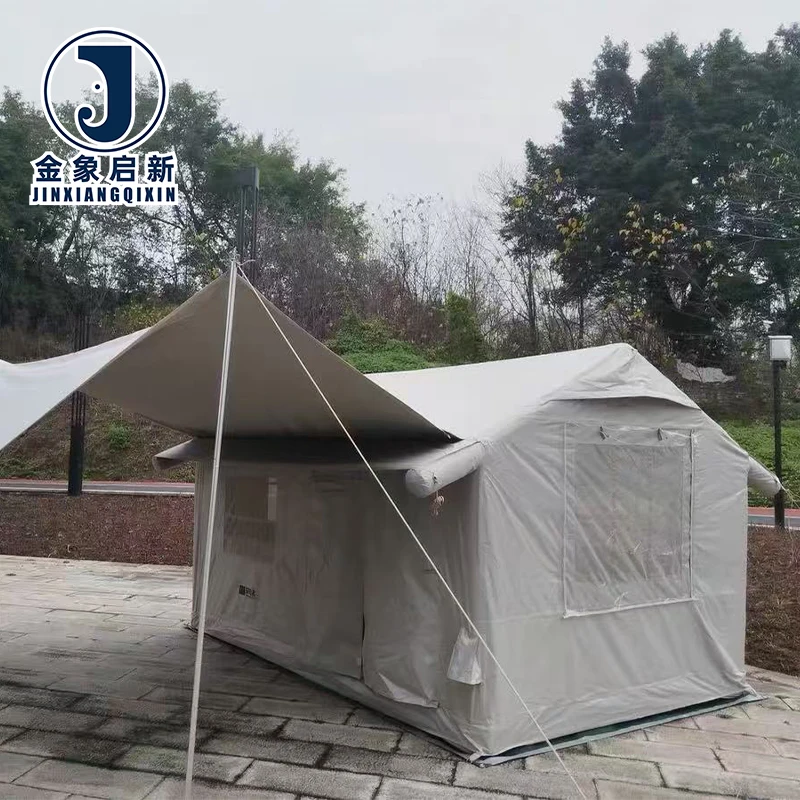
| Product Type | Inflatable Tent |
| Core Material | PVC Tarpaulin |
| Key Performance | Waterproof, UV-resistant (test basis not stated in source), Tear-resistant |
| Capacity | 6-8 Person |
| Season Rating | 4 Season |
| Opening Mechanism | Automatic Opening (Inflatable) |
| Fire-Retardant Treatment | Available in flame retardant grades — confirm the grade required for your market |
| Anti-Static Treatment | Available upon request — verify compliance standard needed |
| Customization | OEM & ODM, sample customization, pattern printing |
| Production Facility | 9,180 m² with 3 full production lines and 36 sets of professional equipment |
| R&D Support | 10 technicians |
| Standards | ISO 9001, ISO 14001, ISO 45001, CE |
Application Suitability
| Application | Exposure & Requirement |
|---|---|
| Mining and tunnelling temporary shelters | Continuous dust, moisture ingress, mandatory fire-retardant certification on site |
| Construction site command centres | Wind load on inflated panels, UV exposure across seasons, rapid deployment and strike |
| Commercial outdoor event enclosures | Public safety compliance, branding on fabric surface, repeated inflation cycles |
| Aviation maintenance hangars (inflatable) | Fuel-vapour environment, anti-static fabric requirement, large clear-span inflation |
| Industrial camping operations | Four-season temperature variation, ground moisture, abrasion from frequent relocation |
Why "Certified" Inflatable Tent Fabric Still Fails Site Inspection
Certification only protects you when the test report matches the exact batch and grade delivered.
Procurement teams sourcing inflatable tent fabric for regulated sites regularly face a gap between the certificate on file and the material that arrives. A fire-retardant certificate referencing a generic product family does not satisfy an inspector who needs batch-specific proof. UV-stability claims without a stated test method leave the buyer exposed when the membrane degrades mid-season. [NEED_CITE: fire classification standards for temporary industrial shelters vary by jurisdiction] The consequence is a halted project, a rejected delivery, and weeks of re-ordering while the site stands open.
Coating Weight and Compliance Documentation
Inflatable tent fabric for industrial use must balance inflation pressure, structural rigidity, and regulatory compliance. The PVC tarpaulin core used in this inflatable tent provides the waterproof and tear-resistant foundation that keeps inflated panels standing under wind and rain. For mining, tunnelling, and aviation-adjacent shelters, the fire-retardant grade must be confirmed before production begins so that the correct additive package is compounded into the coating. Batch-level test reports then tie the delivered fabric to the certification the site safety officer requires.
Weld Integrity Under Repeated Inflation Cycles
Every inflatable structure flexes at the seams each time it is inflated and deflated. High-frequency or hot-air welding on PVC tarpaulin creates a bonded zone whose strength depends on coating adhesion, weld temperature, and dwell time. When the weld parameters are off, the seam peels before the base fabric reaches its tear threshold — a failure that shows up after the first few deployments rather than during factory testing. [NEED_CITE: tensile and tear test methods for coated fabrics per ISO 1421] Our in-process QA checks weld peel strength at intervals across every production run, catching drift before it becomes a field failure.
Reading the Specification Sheet Beyond GSM
Two inflatable tent fabrics can share the same stated GSM yet perform differently under inflation load. GSM combines base fabric weight and coating weight into one number, but it is the denier of the yarn and the weave density of the base cloth that govern how a puncture propagates into a tear. A heavier coating adds waterproofing and weld-ability but does not compensate for a loosely woven scrim. Conversely, a tight high-denier base with a thin coating may tear well but lack the surface film needed for reliable heat-welded seams. For four-season inflatable tent applications, the balance between scrim construction and coating thickness determines whether panels hold pressure in freezing temperatures without becoming brittle. Buyers specifying material for membrane or inflatable structures should request the base fabric denier and weave count alongside GSM to make an informed comparison.
The Hidden Cost of Skipping Batch-Level Verification
When a project orders inflatable tent fabric in bulk and accepts only a general certificate, the risk accumulates silently. A colour shift between rolls becomes visible only after panels are welded side by side on site. An anti-static treatment that was listed in the catalogue but not compounded into the specific batch fails the spark test in a fuel-adjacent zone. Weld seams that passed a single sample test peel under the sustained pressure of a full-size shelter. [NEED_CITE: common causes of coated fabric seam failure under cyclic loading] Each of these failures costs more than the verification step that would have prevented it — re-shipping, re-welding, and the downtime of an un-erected shelter on a live project.
Why Specialist Buyers Place Repeat Orders Here
Nearly 30 years of coated-fabric process control means coating weight and adhesion are managed at the formulation stage, not adjusted after the fact. Three full production lines and 36 sets of equipment give the capacity to deliver container-volume orders without compressing cure times. A 10-person R&D team handles material selection, custom dimensions, and pattern printing in-house, so sample approval happens before the production run rather than during it. Dedicated QA and QC staff inspect every roll before it leaves the facility, with waterproof testing, structural load testing, and deployment functionality checks recorded per batch. The documentation package — specification sheet, test reports, certificate of origin — is assembled before dispatch, not chased after arrival.
Documentation & Verification
- Material specification sheet stating base fabric denier, coating type, and confirmed GSM for every roll
- Fire-retardant and anti-static test reports matched to the batch number on the packing list
- ISO 9001, ISO 14001, ISO 45001, and CE certificates included in the shipment dossier
- Pre-shipment inspection record covering waterproof, load, and deployment checks
- Certificate of origin and customs documentation prepared for the destination country
Fabrication, Handling & Storage
- Heat-weld seams at manufacturer-recommended temperature and dwell time to match the PVC coating thickness
- Store rolls horizontally on pallets to avoid creasing the coated surface before cutting
- Inflate test panels in ambient conditions similar to the deployment site to verify seam integrity
- Use PVC-compatible cleaners only; solvent-based products can soften the coating layer
- Repair minor field punctures with matching PVC tarpaulin patches welded at the same temperature setting
How to Structure Your Inquiry
Provide the deployment environment — mining, tunnelling, commercial event, or industrial camping — along with the fire-retardant or anti-static standard your site mandates. Specify the panel dimensions, inflation pressure range, and whether you need fabric by the roll or finished welded panels. Confirm any pattern printing, branding, or colour requirements so that a sample can be produced for approval before the production run begins.
Frequently Asked Questions
Q: What fire-retardant and anti-static certifications are available for inflatable structure fabric?
A: Flame-retardant grades and anti-static treatments are available; the specific test standard must match your site or jurisdiction. Provide the required classification — such as the fire standard mandated by your local mining or aviation authority — and the corresponding test report is generated for the exact batch shipped.
Q: How is batch-to-batch colour and coating consistency controlled across production runs?
A: Coating formulation and colour pigment dosing are managed per production run with in-process QA checkpoints. Pre-shipment inspection includes a visual comparison across rolls in the same order. Buyers can request a signed colour-reference sample before full production to set the acceptance benchmark.
Q: What custom sizing, pattern printing, and OEM/ODM options are supported?
A: The 10-person R&D team develops custom dimensions, surface pattern printing, and OEM/ODM specifications from an initial brief. A physical sample is produced for buyer approval before bulk manufacturing. This process applies to both roll-stock fabric and finished welded inflatable tent panels.
Q: How are welded seams tested to ensure structural integrity under inflation load?
A: Weld peel strength is sampled at intervals during production and recorded in the pre-shipment inspection. Finished inflatable tent panels undergo deployment functionality checks — full inflation, sustained pressure hold, and deflation — to confirm seam performance before packing.
Q: What documentation is provided to support site compliance and regulatory approval?
A: Each shipment includes a material specification sheet, applicable fire-retardant and anti-static test reports, ISO and CE certificates, a pre-shipment inspection record, certificate of origin, and packing list. Additional documentation can be prepared to match the regulatory requirements of the destination market.