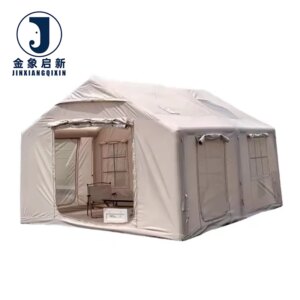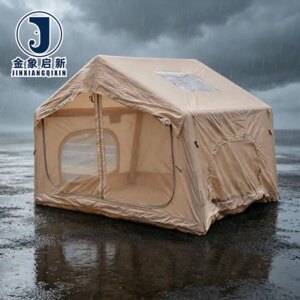

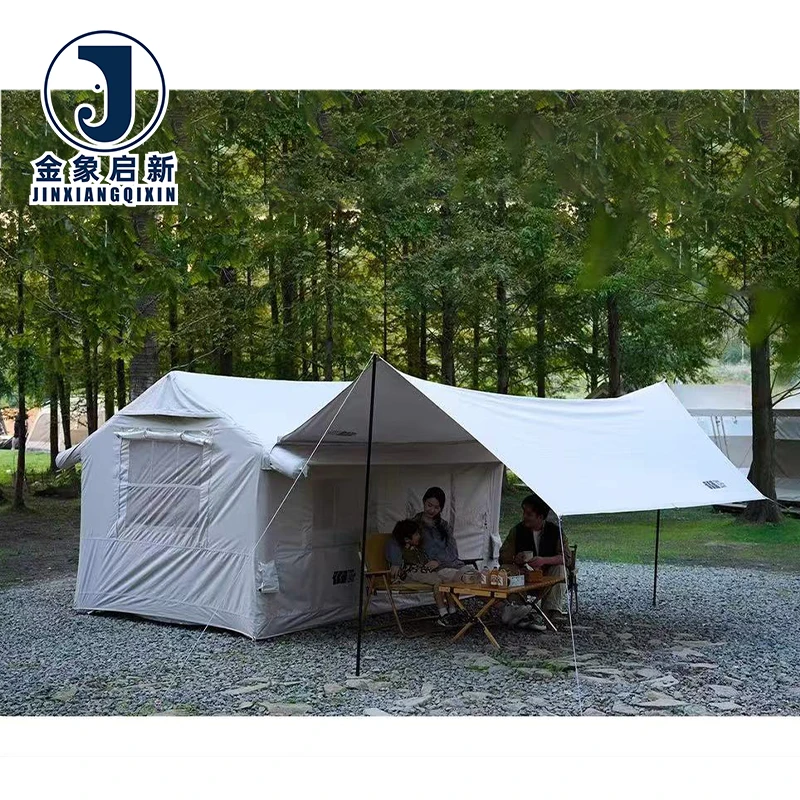
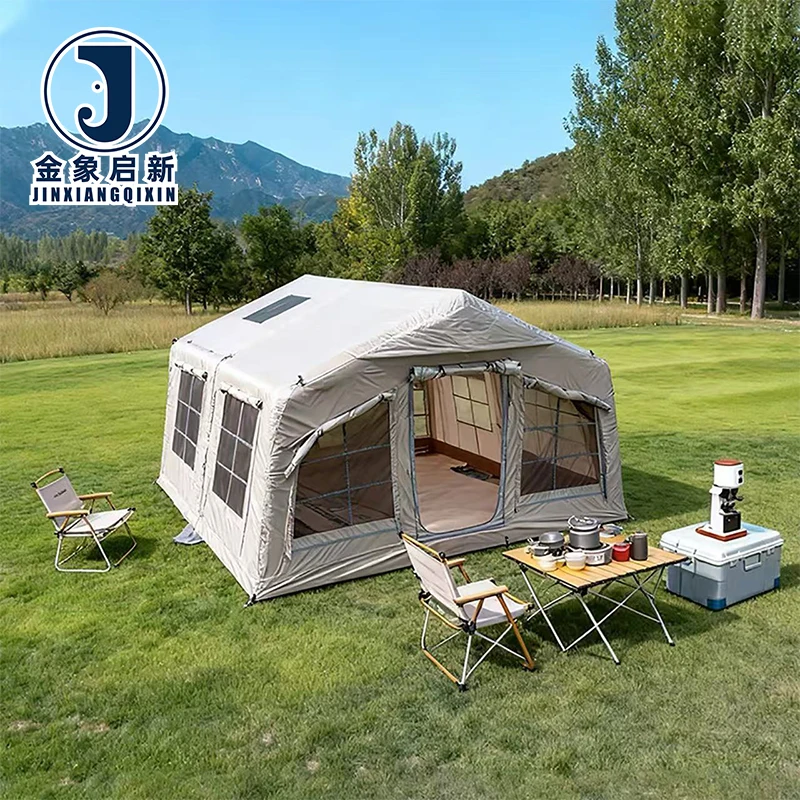
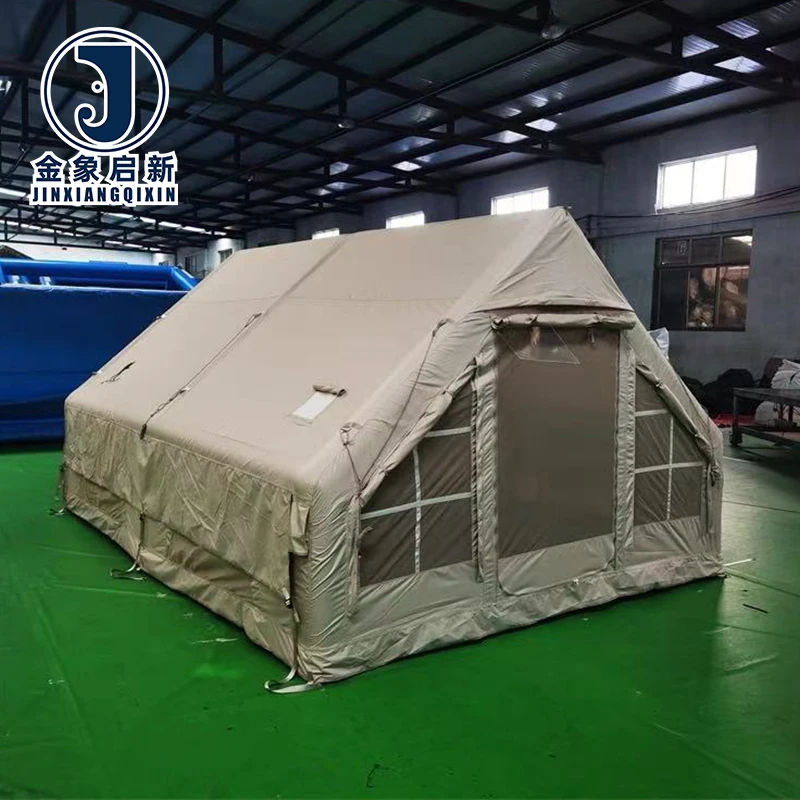
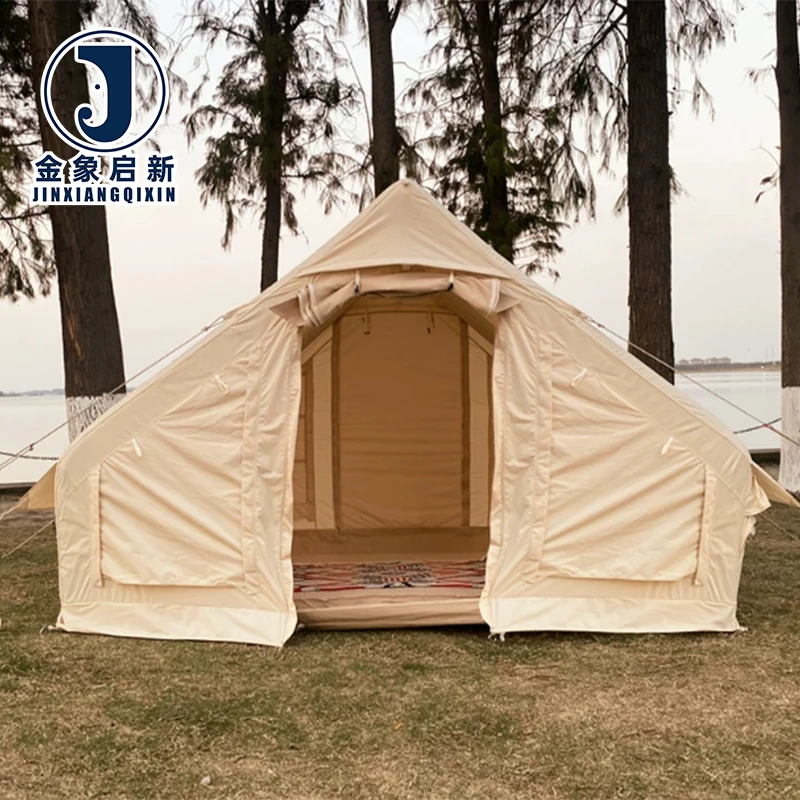
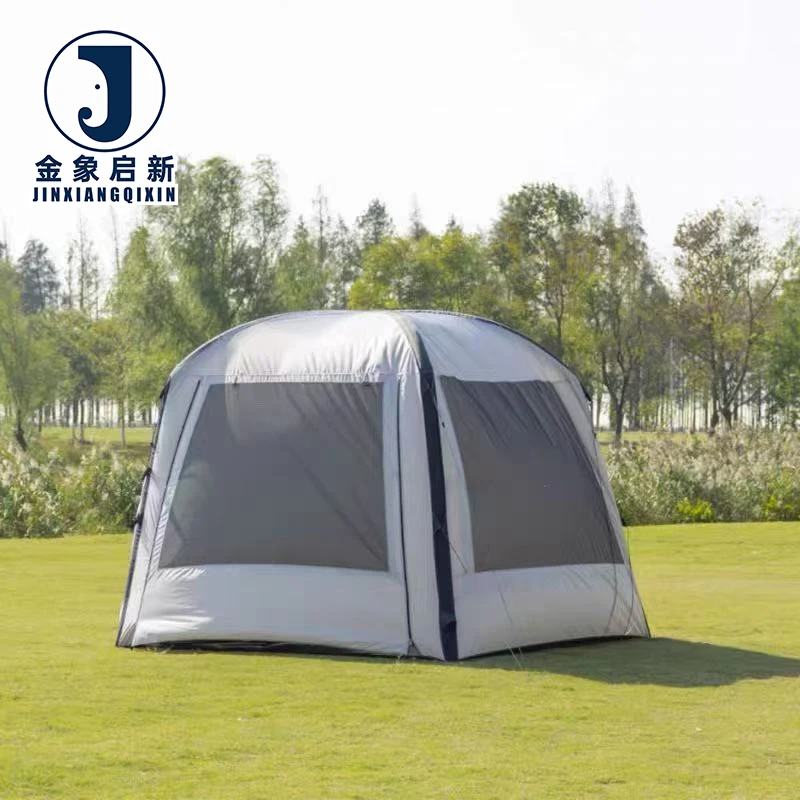
Proven Process Control — nearly three decades focused on coated fabric ensures every roll of inflatable tent fabric leaving our facility meets the stated fire-retardant and anti-static compliance the site demands.
Technical Specifications
| Parameter | Value |
|---|---|
| Product Type | Inflatable Tent |
| Core Material | PVC Tarpaulin |
| Waterproof | Yes |
| UV-resistant | Available — confirm UV grade required for your market |
| Tear-resistant | Available — confirm tear grade required for your application |
| Fire-retardant | Available in fire-retardant grades — confirm the grade required for your market |
| Anti-static | Available in anti-static grades — confirm the standard required for your site |
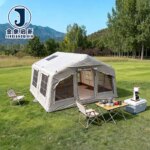
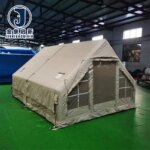
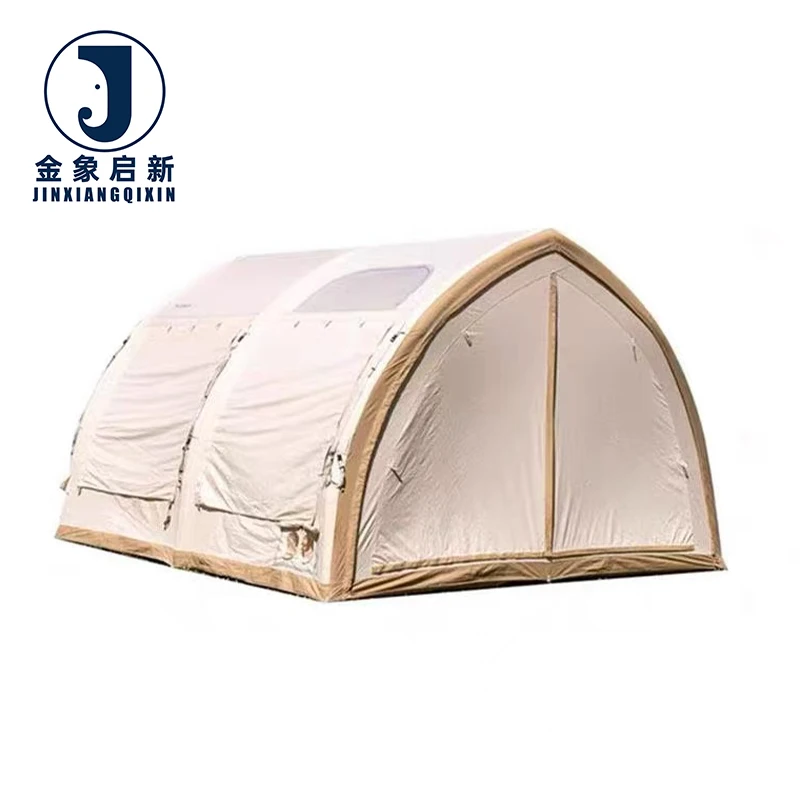
| Product Forms | Single Layer Construction, Extended Type |
| Opening Mechanism | Automatic opening design |
| Seasonal Rating | Four-season design |
| Customization | OEM & ODM — sample customization, pattern printing |
| Production Standards | ISO9001, ISO14001, ISO45001, CE |
Application Suitability
| Application | Exposure & Requirement |
|---|---|
| Emergency disaster relief inflatable shelters | Rapid deployment, harsh weather, repeated inflation cycles, humanitarian logistics constraints |
| Mining and tunnelling temporary site structures | Underground fire safety compliance, particulate exposure, confined-space ventilation adjacency |
| Aviation and industrial workspace inflatable enclosures | Anti-static environment requirements, fuel-adjacent zones, regulatory audit readiness |
| Construction site mobile storage and workspaces | UV and rain exposure, wind loading on inflated membrane, equipment abrasion at base contact points |
What "Certified" Means When Inflatable Tent Fabric Fails the Site Audit
A certificate on paper does not stop a safety inspector from rejecting your structure on day one.
Contractors deploying inflatable shelters on regulated sites frequently discover that the Inflatable Tent Fabric fire retardant documentation accompanying their shipment does not match the specific classification their jurisdiction requires. The fabric may carry a general flame-retardant claim, yet the local authority demands a particular test standard — and the gap between those two positions halts the project. Anti-static performance faces the same verification problem in aviation and mining zones where uncontrolled static discharge poses a tangible ignition hazard. [NEED_CITE: fire classification standards for temporary structures in industrial zones]
Material Compliance Starts at the Coating Stage
Fire-retardant behaviour in PVC inflatable tent fabric is determined during the coating formulation stage, not applied as a surface afterthought. The compound must incorporate the correct additive package uniformly across the full production run. When coating weight and additive dispersion are controlled from the first metre to the last, the resulting Inflatable Tent Fabric fire retardant performance remains consistent roll to roll — which is what the site inspector actually checks.
Anti-static Treatment and Controlled Environments
Inflatable structures deployed near aviation fuel handling, grain silos, or mining ventilation shafts require anti-static fabric to prevent charge accumulation on the membrane surface. The treatment must survive inflation friction, folding, and transport without degrading. Specifying the anti-static grade your environment demands — and verifying it with a batch-specific test report — is the only reliable procurement path. [NEED_CITE: anti-static testing standards for inflatable structures in hazardous zones]
Reading the Specification Sheet Beyond the Headline Numbers
Coated PVC tarpaulin used for inflatable structures performs according to several interacting variables. Base fabric denier and weave density determine how the material resists tear propagation once a puncture initiates — a critical factor for inflated membranes under constant internal pressure. Coating method and weight govern the bond between the PVC layer and the polyester scrim; poor adhesion shows up as delamination at the heat-welded seams, which are the highest-stress points on any inflatable structure. Surface finish affects field cleanability and how well printed branding or safety markings adhere during extended outdoor deployment. Fire-retardant classification systems vary by market — M2 in France, B1 under DIN 4102 in Germany, NFPA 701 in North America — and the fabric specification must name the exact standard your destination requires, not a generic claim. [NEED_CITE: relationship between coating adhesion and seam integrity in inflatable fabric structures]
The Cost of Undocumented Compliance Claims
When the Inflatable Tent Fabric fire retardant or anti-static grade is not backed by a traceable test report tied to the specific production batch, the buyer absorbs all the risk. A site auditor can shut down the structure mid-deployment, forcing costly removal and replacement. Fabric that passes fire testing in one roll but fails in the next — because additive loading was inconsistent — creates a liability that no quotation discount can offset. Welded seams on inflatable membranes fail first when the coating formulation prioritises weight reduction over adhesion strength, and that failure typically occurs at the exact point the structure flexes under wind load. [NEED_CITE: common failure modes in PVC inflatable membrane structures under cyclic pressure loading]
Why Technical Buyers Source Inflatable Fabric Here
Three full production lines running dedicated coated-fabric runs mean your inflatable tent fabric order is not queued behind unrelated product categories competing for line time. The 10-person R&D team handles material selection and sample development specifically for inflatable and membrane applications, not generic tarpaulin work. Every batch undergoes full-process quality inspection with dedicated QA and QC staff checking coating weight, adhesion, and treatment performance at multiple stages — not only at final packing. Sample development for custom fire-retardant or anti-static grades is completed before mass production begins, so you approve the actual material your order will use. ISO9001, ISO14001, ISO45001, and CE certification frameworks govern the production system, providing the documentation trail that regulated sites demand.
Documentation & Verification
- Material specification sheet stating base fabric type, coating composition, and confirmed treatment grades
- Fire-retardant test report matched to the specific standard required by the destination market
- Anti-static test documentation available per batch upon request
- Pre-shipment inspection record confirming coating weight and treatment consistency
- Certificate of origin and customs support documentation for international shipment
- ISO9001, ISO14001, ISO45001, and CE certificates accompanying each order
Fabrication, Handling & Storage
- Heat-weld seam temperature must match the PVC coating formulation to prevent delamination at inflation stress points
- Store rolls upright on pallets to avoid flat-spot deformation of the coated PVC tarpaulin surface
- Avoid folding inflatable membrane panels at the same crease line repeatedly during field packing
- Use PVC-compatible cleaners only — solvent-based products degrade the coating and compromise fire-retardant treatment
- Confirm inflation blower pressure rating against the fabric’s four-season construction limits before deployment
- Repair field punctures with compatible PVC adhesive patches; heat-weld repairs require controlled shop conditions
Preparing Your Inflatable Tent Fabric Inquiry
Specify the fire-retardant classification and anti-static standard your site or jurisdiction requires, not a general request for compliant fabric. Confirm whether you need rolls for your own fabrication line or finished inflatable structures with automated opening systems. State the deployment environment — underground mining, aviation-adjacent, open-air disaster relief — so the correct coating formulation and seasonal rating can be matched to your exposure conditions.
Frequently Asked Questions
Q: What fire-retardant and anti-static certifications apply to this inflatable tent fabric?
A: The fabric is available in fire-retardant and anti-static grades aligned with international standards such as DIN 4102, NFPA 701, or region-specific classifications. The exact certification provided with your shipment matches the standard your destination market requires. Confirm the applicable grade at inquiry stage so the correct formulation is produced and documented before dispatch.
Q: How is flame retardant grade verified and documented for site compliance?
A: Each production batch undergoes testing and a report is generated matching the fabric to its stated fire classification. This batch-specific test documentation accompanies your shipment and can be presented directly to site auditors. Request sample verification before mass production to confirm the grade meets your regulatory requirement.
Q: What OEM and ODM customization options are available for inflatable structures?
A: Custom sizing, pattern printing, colour matching, and single-layer or extended-type construction are all available. The R&D team develops samples based on your drawings and performance requirements. Sample approval is required before production begins, ensuring the final inflatable tent fabric matches your specifications exactly.
Q: How do you verify performance parameters such as anti-static and UV resistance?
A: Anti-static and UV-resistant treatments are applied during the coating formulation stage and verified through batch-specific testing. Test reports documenting actual measured values are available on request. Buyers are encouraged to specify the exact standard their deployment environment demands so testing aligns with compliance requirements.
Q: What is the sample approval and production lead time process for custom inflatable tent orders?
A: Samples are developed within days for custom requirements including fire-retardant grade, anti-static treatment, sizing, and colour. Once you approve the sample, production scheduling follows based on order volume and complexity. Full-process QA inspection runs throughout production, with 100% pre-shipment inspection before dispatch.