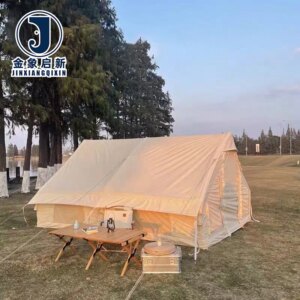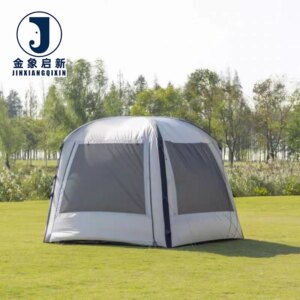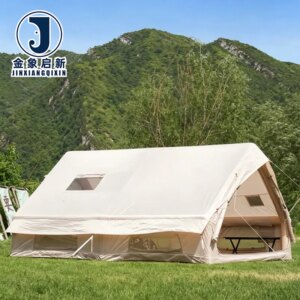




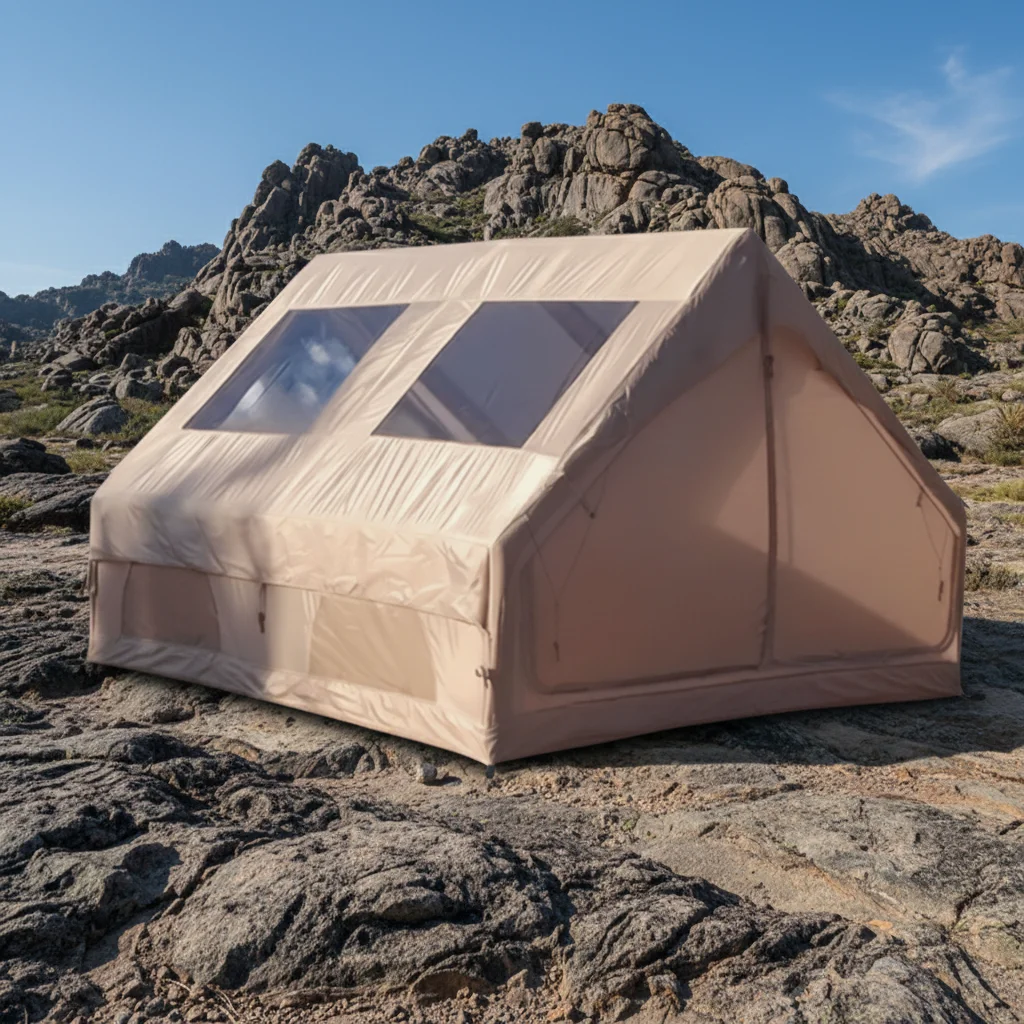



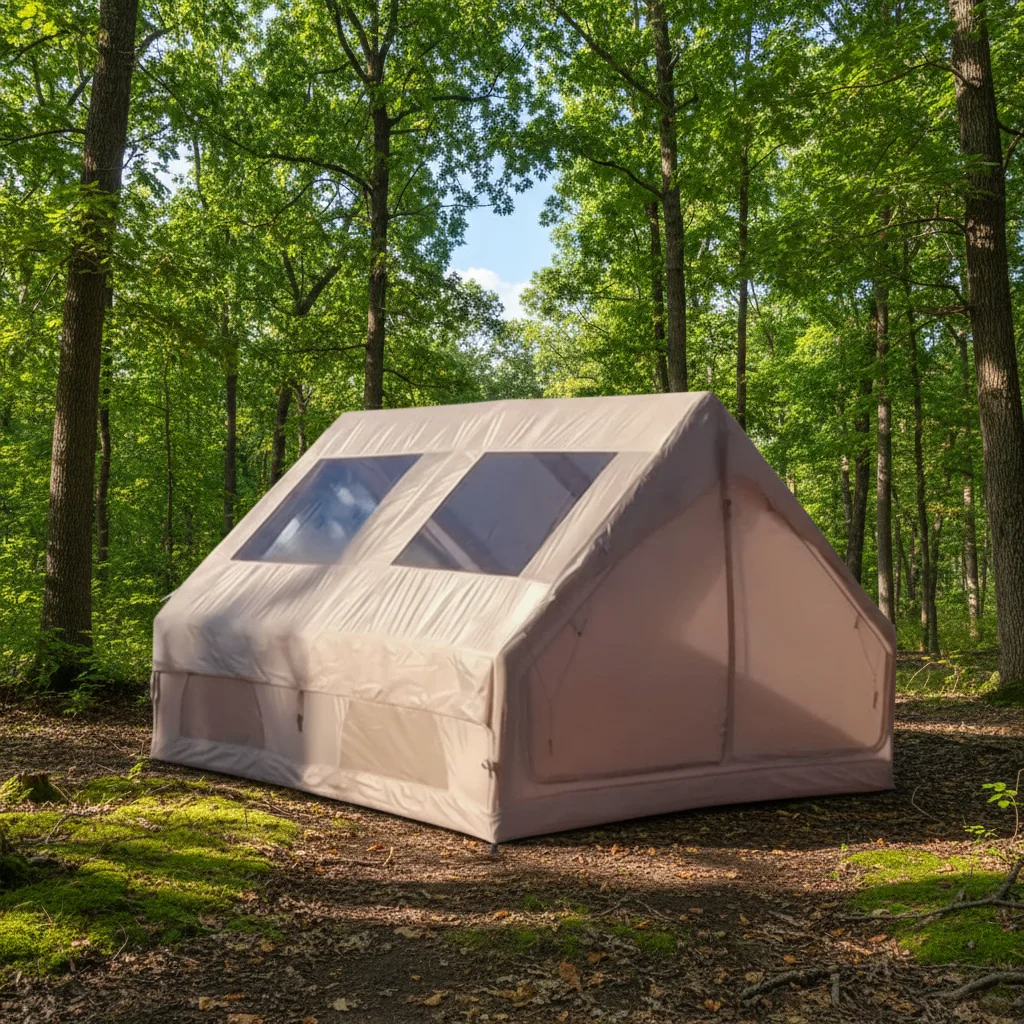

Coated Fabric Process Control — Nearly 30 years of PVC coating expertise applied to inflatable structure fabric, ensuring verified GSM, adhesion strength, and treatment compliance for every production run.
Technical Specifications
| Parameter | Value |
|---|---|
| Product Type | Inflatable Tent |
| Core Material | PVC Tarpaulin |
| Waterproof | Fully waterproof coated construction |
| UV Treatment | UV-resistant (test basis not stated in source) |
| Flame Retardant | Fire-retardant (grade not stated in source) |
| Anti-Static | Anti-static (surface resistance or standard not stated in source) |
| Tear Resistance | Tear-resistant (test standard not stated in source) |
| Inflation Mechanism | Quick automatic opening structure |
| Production Facility | 9,180 m² with 3 full production lines |
| Processing Equipment | 36 sets of professional equipment |
| R&D Capacity | 10 technicians |
| Customization | OEM & ODM (sample customization, pattern printing, material selection, product design) |
| Quality Control | Full-process inspection with dedicated QA & QC on site |
| Certifications | ISO9001, ISO14001, ISO45001, CE |
Application Suitability
| Application | Exposure & Requirement |
|---|---|
| Mining & tunnelling temporary shelters | Proximity to ventilation systems requiring fire-retardant and anti-static compliance, dust, mechanical abrasion |
| Aviation ground operations enclosures | Jet blast exposure, strict fire safety mandates, rapid deployment for maintenance or cargo staging |
| Emergency relief disaster response | Time-critical inflation, harsh weather, repeated packing and redeployment cycles |
| Remote industrial field operations | UV exposure, wind loading, temperature fluctuation, requirement for certified documentation on site |
Why Certification Gaps Halt Inflatable Shelter Deployment Before Inflation
A PVC inflatable tent that lacks documented fire-retardant and anti-static verification cannot be deployed on regulated industrial sites, regardless of its structural performance.
Purchasing managers for mining camps and aviation ground operations frequently receive inflatable structures with verbal assurances about safety treatments but no test reports to back them up. The result is a shelter that sits unopened on the dock because the site safety officer will not approve installation without paperwork. [NEED_CITE: fire-retardant classification requirements for temporary industrial shelters]
This compliance gap is particularly damaging in emergency relief scenarios where every hour of delayed deployment affects displaced populations. Inflatable tent procurement must therefore treat documentation as a primary specification, not an afterthought appended to the shipping invoice.
Engineering Inflatable Structures for Rapid Field Deployment
The PVC inflatable tent design integrates a quick automatic opening mechanism that reduces on-site setup time for teams operating under logistical pressure. The PVC tarpaulin core provides the structural membrane that holds inflation pressure while resisting puncture from ground debris and equipment contact. Each unit is produced under full-process quality inspection to ensure seam integrity across repeated inflation and deflation cycles.
Managing Electrostatic and Fire Risk in Confined Inflatable Environments
Inflatable shelters concentrate air volume within a sealed membrane, making fire-retardant and anti-static treatments critical for occupant safety. The fabric is available in fire-retardant grades — confirm the grade required for your market and site regulation before placing the order. Anti-static treatment addresses the risk of electrostatic discharge in dry, dusty environments typical of mining and desert operations. [NEED_CITE: anti-static surface resistance standards for industrial fabric applications]
Decoding PVC Tarpaulin Performance for Inflatable Membrane Use
The relationship between base fabric construction and coating weight determines how the inflatable tent membrane behaves under internal pressure and external wind load. PVC tarpaulin used in inflatable structures must balance tensile strength for holding shape against flexibility for folding and transport. The coating adhesion strength directly affects whether the membrane delaminates at welded seams during repeated inflation cycles, which is the most common failure point in inflatable shelter membranes. Heat-welded seams must achieve peel strength equal to or exceeding the base fabric tear resistance to prevent seam failure before the fabric body reaches its structural limit. The overall GSM influences both packed weight for transport logistics and the rigidity of the inflated form. Surface treatment determines whether the exterior sheds dust accumulation or requires frequent cleaning in field conditions. [NEED_CITE: coating adhesion test methods for PVC tarpaulin per ISO standards]
The Hidden Cost of Undocumented Treatment Specifications
When fire-retardant treatment is claimed without a corresponding test report, the inflatable tent may pass initial visual inspection but fail the site compliance audit once deployed. This triggers removal, replacement logistics, and project delays that far exceed the fabric cost difference. Anti-static performance that is not quantified by surface resistance measurement leaves the buyer unable to verify whether the treatment survives repeated packing cycles or degrades after UV exposure. [NEED_CITE: degradation of anti-static treatment on PVC fabrics under field conditions]
Batch-to-batch inconsistency in coating weight produces inflatable structures that behave differently under identical inflation pressure, complicating field repairs and replacement part compatibility. Buyers who specify treatment requirements without demanding documentation upfront absorb all downstream compliance risk.
Why Industrial Buyers Source Inflatable Tent Fabric Here
Deep process control over PVC coating weight and adhesion, developed across nearly 30 years of coated fabric production, ensures the inflatable membrane performs consistently under internal pressure and structural flex.
Three full production lines and 36 sets of professional equipment support bulk order volumes while maintaining the quality discipline required for certified inflatable structures.
A 10-technician R&D team handles material selection, custom dimensioning, pattern printing, and product design, developing samples within days for buyer verification before mass production commitment.
Dedicated QA and QC staff conduct full-process inspection at every production stage with 100% pre-shipment verification, ensuring the PVC inflatable tent leaving the facility matches the approved specification.
ISO9001, ISO14001, ISO45001, and CE certifications are maintained and documented, providing the compliance paper trail that regulated sites demand before structure installation.
Documentation & Verification
- Material specification sheet stating base fabric, PVC coating weight, and treatment grades for the inflatable tent order
- Fire-retardant and anti-static test reports aligned with project site compliance requirements
- Pre-shipment inspection record confirming GSM and coating adhesion per production batch
- ISO9001, ISO14001, ISO45001, and CE certificates provided for audit submission
- Certificate of origin and customs documentation for cross-border inflatable structure procurement
- Roll packing list with batch-level traceability for field quality tracking
Fabrication, Handling & Storage
- Heat-weld seams using temperature and dwell time parameters matched to the PVC tarpaulin coating weight for optimal peel strength.
- Store PVC inflatable tent rolls upright on pallets to prevent permanent creasing of the coated membrane surface.
- Avoid dragging the PVC tarpaulin membrane across abrasive ground surfaces during field deployment to protect coating integrity.
- Inflate and test the structure indoors before final site placement to verify seam integrity under working pressure.
- Clean the PVC tarpaulin surface with mild detergent only, as solvent-based cleaners may degrade anti-static treatment.
- Repair minor punctures using compatible PVC adhesive patches applied to a clean, dry membrane surface.
Request a Technical Quotation for Your Inflatable Structure Project
Provide your deployment environment details including expected wind load, temperature range, and any fire-retardant or anti-static grades mandated by site safety regulation. Specify the required dimensions, quantity, and whether you need finished inflatable tent units or roll stock for your own fabrication line. Indicate your sample approval requirements and target delivery timeline so we can align production scheduling to your project milestones.
Frequently Asked Questions
Q: What fire-retardant grade does the inflatable fabric carry and which test standard applies?
A: The PVC inflatable tent fabric is available in fire-retardant grades, with the specific grade and applicable test standard confirmed against your project specification. Provide your site regulation or market requirement during inquiry, and the corresponding test report will be included in the documentation package shipped with your order.
Q: How is anti-static performance measured and what surface resistance value is achieved?
A: Anti-static treatment is applied to the PVC tarpaulin membrane to manage electrostatic discharge risk in dry and dusty environments. The specific surface resistance value and measurement method depend on the grade selected. Confirm your required threshold during specification review so the appropriate treatment and test documentation can be prepared.
Q: What certification documentation ships with each batch for site compliance audits?
A: Each PVC inflatable tent shipment includes the material specification sheet, applicable fire-retardant and anti-static test reports, pre-shipment inspection record, ISO9001, ISO14001, ISO45001, and CE certificates, certificate of origin, and batch-level packing list for full quality traceability.
Q: How are custom dimensions, printing, and material grades handled under OEM/ODM service?
A: The 10-technician R&D team manages full customization including inflatable tent dimensions, pattern printing, PVC tarpaulin material grade selection, and structural design. Samples are developed within days for buyer review and approval before mass production begins, ensuring the final output matches your exact project requirements.
Q: What is the sample development and approval process before mass production begins?
A: Submit your PVC inflatable tent specifications including dimensions, treatment requirements, and any custom printing needs. The R&D team produces a sample reflecting the agreed material and construction parameters. Once you approve the sample, mass production proceeds under full-process QA/QC inspection with 100% pre-shipment verification against the approved benchmark.