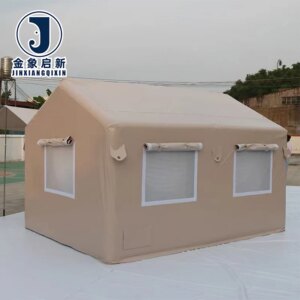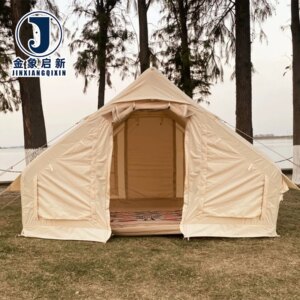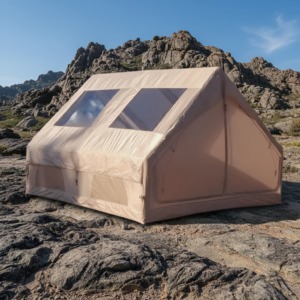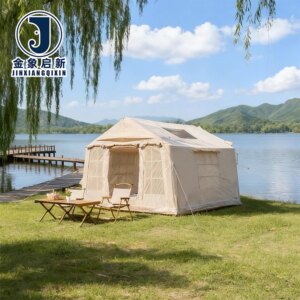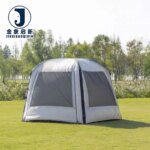
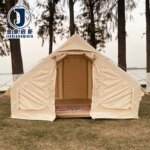
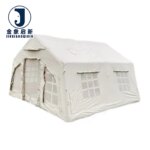
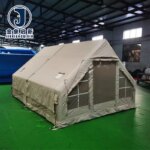

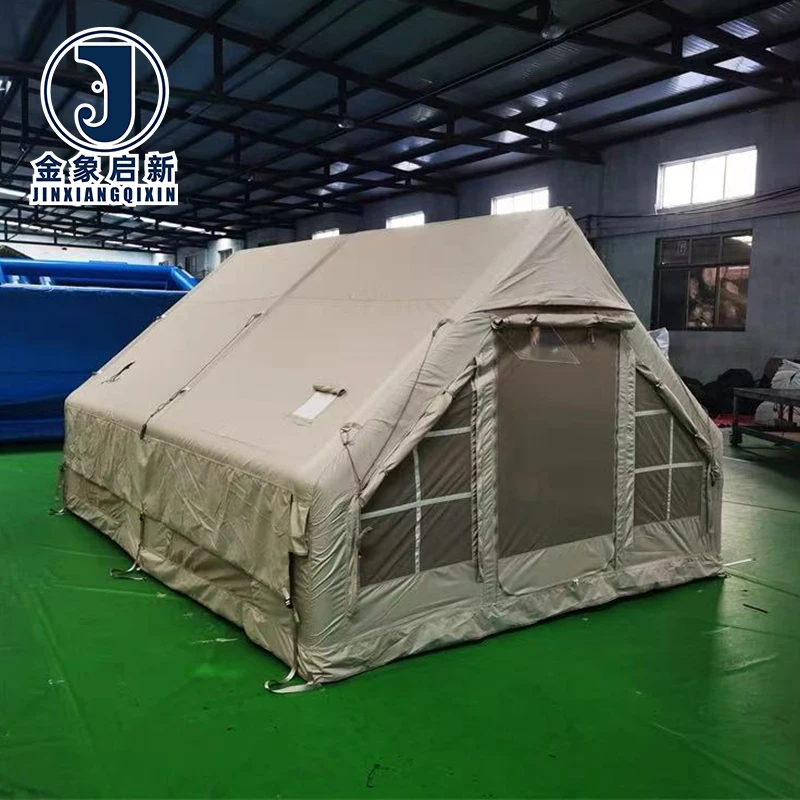
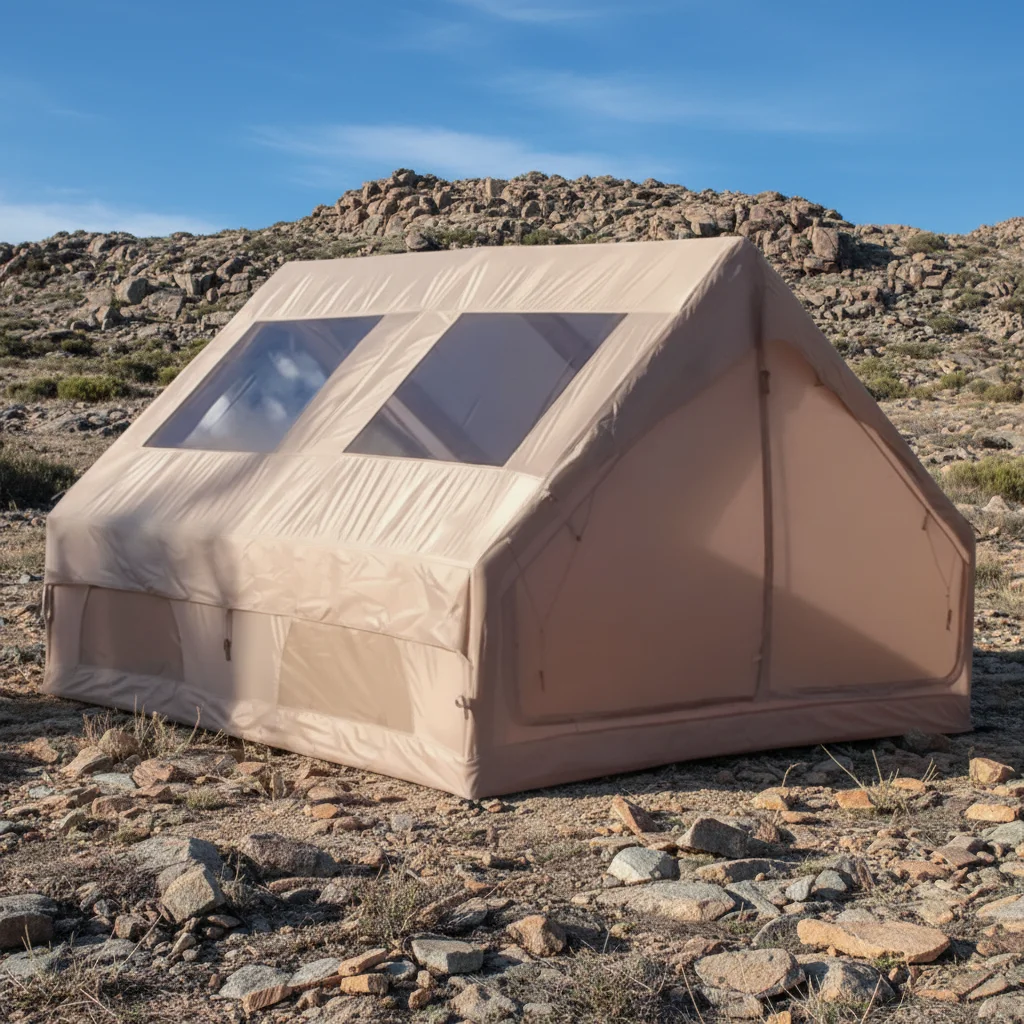
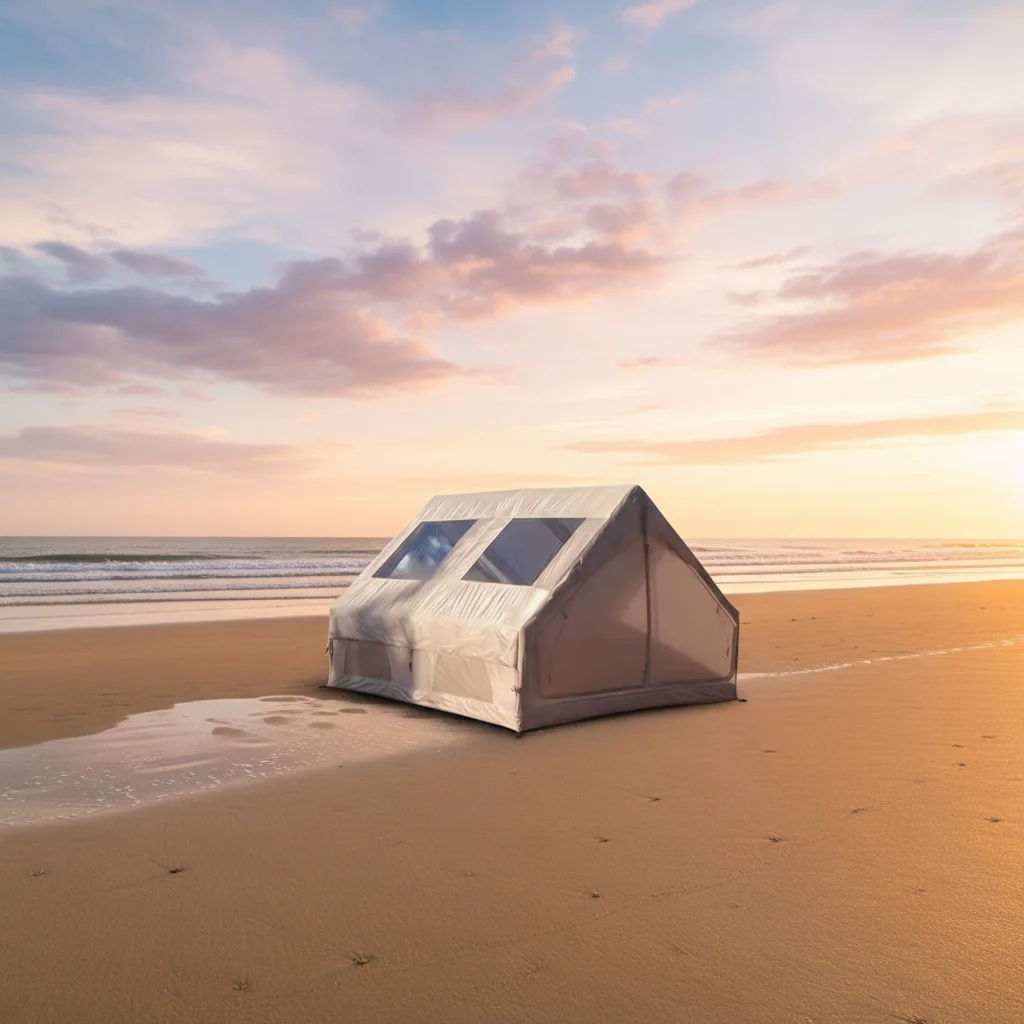
Proven Coated Fabric Expertise — nearly 30 years of PVC coating process control applied to inflatable membrane structures, ensuring fire-retardant and anti-static compliance for every roll shipped.
Technical Specifications
| Parameter | Value |
|---|---|
| Product Type | Inflatable Tent Fabric |
| Core Material | PVC tarpaulin |
| Structure | Single-layer PVC construction |
| Waterproof | Yes |
| UV-resistant | Available with UV treatment — confirm test standard required for your market |
| Tear-resistant | Yes |
| Flame-retardant | Available in flame retardant grades — confirm the grade required for your market |
| Anti-static | Available with anti-static treatment — confirm surface resistance standard for your site |
| Capacity (Finished Tent Reference) | 6-person |
| Opening Mechanism | Automatic opening |
| Season Rating | Four-season |
| Certifications | ISO9001, ISO14001, ISO45001, CE |
| Customization | OEM & ODM, sample customization, pattern printing, size adjustments, material thickness modifications, color matching, branding |
Application Suitability
| Application | Exposure & Requirement |
|---|---|
| Commercial glamping sites | Year-round weather exposure, repeated inflation cycles, guest safety compliance, UV degradation from continuous sun |
| Event infrastructure (inflatable domes) | Rapid deployment and teardown, transport abrasion, wind load stress at seam junctions, crowd safety fire codes |
| Industrial temporary shelters | Mining or aviation site fire-retardant and anti-static mandates, chemical exposure, structural membrane tension |
| Tourism hospitality operations | Four-season thermal performance, aesthetic consistency across units, branding and pattern durability |
What "Certified Fire Retardant" Actually Means for Inflatable Tent Fabric
Certification without a test report matching your jurisdiction’s fire code is just a word on a spec sheet.
Inflatable structure contractors routinely receive fabric described as fire retardant, only to discover at site inspection that the test standard does not align with local fire safety regulations. The gap between a supplier’s claim and a site inspector’s requirement causes project delays and rejections. The inflatable tent fabric fire retardant certified for one market may fail the classification demanded by another, making batch-specific documentation essential before the roll is ever cut. [NEED_CITE: fire classification standards for temporary membrane structures]
Membrane Behaviour Under Inflation Stress
Inflatable tent structures impose continuous internal pressure on the fabric membrane, creating sustained tensile load across the entire surface. Unlike static covers, inflatable tent fabric must maintain dimensional stability without creep or elongation over extended inflation periods. The single-layer PVC tarpaulin construction balances structural rigidity for air-beam inflation with the transport and deployment efficiency that commercial operators require for rapid site setup.
Seam Weld Demands in Repeated Inflation Cycles
Every inflation and deflation cycle introduces flex stress concentrated at welded seam junctions, where the coating must bond to itself under heat and pressure. A seam that fails before the base fabric indicates insufficient weld penetration or incompatible coating formulation at the joint. Fabricators specifying inflatable tent fabric fire retardant certified for industrial sites must verify that seam weld integrity matches the base fabric’s tear resistance to prevent catastrophic deflation during use. [NEED_CITE: hot-air weld adhesion testing for PVC coated fabrics]
Coating Formulation and Four-Season Exposure
Four-season deployment subjects PVC membrane fabric to thermal cycling between summer heat and winter cold, testing the coating’s plasticiser retention and low-temperature flexibility. UV exposure breaks down unprotected PVC surfaces, causing chalking and embrittlement over prolonged outdoor service. The coating formulation must balance UV stability with the heat-weldability needed during fabrication, since additives that improve weather resistance can sometimes interfere with seam bonding parameters. [NEED_CITE: UV degradation mechanisms in plasticised PVC membranes]
Specification Gaps That Surface After Installation
A common procurement failure occurs when fabric arrives without the specific fire-retardant or anti-static certification the site requires, discovered only when the safety inspector reviews the documentation package. Batch colour variation between rolls becomes visible once inflatable units are installed side by side at a glamping site, forcing replacement of entire structures. Welded seams that separate under inflation pressure — before the fabric itself shows any sign of failure — point to a mismatch between welding temperature settings and the coating’s thermal behaviour. [NEED_CITE: common failure modes in inflatable membrane structures]
Why Fabricate From This Source
Three full production lines and 36 sets of professional processing equipment support bulk inflatable tent fabric runs with consistent coating weight across every roll in the order. The 10-person R&D team handles material selection, pattern printing, custom sizing, and sample development specifically for inflatable membrane applications. Dedicated QA and QC staff conduct 100% inspection at every production stage, and every fabricated inflatable unit undergoes 24-hour inflation testing before shipment to verify air-hold integrity. ISO9001, ISO14001, ISO45001, and CE certifications provide the documentation chain that compliance audits demand for commercial and industrial inflatable structures.
Documentation & Verification
- Material specification sheet stating PVC composition, coating weight, and base fabric details for each inflatable tent fabric batch
- Batch-specific quality inspection report covering waterproofing, tear resistance, and UV stability results
- Fire-retardant and anti-static test reports matched to the grade specified on your purchase order
- ISO9001, ISO14001, ISO45001, and CE certificates supplied for compliance audits
- 24-hour pre-shipment inflation testing record confirming air-hold integrity of fabricated units
- Roll packing list and certificate of origin for customs clearance
Fabrication, Handling & Storage
- Hot-air welding temperature must match the PVC coating formulation to achieve full seam penetration without scorching the membrane surface
- Store rolls on flat racks in shaded areas to prevent compression creases that become visible after inflation
- Allow cold-transported rolls to reach ambient temperature before unrolling to avoid coating crack damage
- Use mild detergent and soft cloth for cleaning — abrasive solvents degrade the PVC coating surface
- Field repairs require compatible PVC adhesive patches applied to clean, dry membrane surfaces
- Pattern cutting layouts should account for seam allowance at every air-beam sleeve junction
Inquiry Guidelines for Procurement
Provide your target market’s fire safety classification and any anti-static surface resistance requirement so the correct treatment grade is specified from the start. Confirm whether you need roll stock for your own fabrication line or fully fabricated inflatable units with 24-hour inflation testing. Include your annual volume estimate and any pattern printing or colour matching requirements for branding consistency across your inflatable tent fleet.
Frequently Asked Questions
Q: What fire-retardant grade does the inflatable tent fabric carry, and does it meet my target market’s fire safety regulations?
A: The fabric is available in multiple flame retardant grades. Fire safety requirements vary significantly by jurisdiction — for example, building material classifications differ from temporary structure standards. Provide your local fire code reference so we can match the correct test standard and supply the corresponding batch-specific test report with your shipment documentation.
Q: What is the anti-static surface resistance value, and is a test report available for mining or aviation site compliance?
A: Anti-static treatment is applied to specification, and surface resistance values depend on the grade selected for your application. Mining and aviation sites typically require documented resistance readings within defined ranges. Share your site’s compliance standard, and we will supply the matching test report alongside the material specification sheet.
Q: How is UV resistance validated — what test duration or standard supports the outdoor service life claim?
A: UV treatment is formulated for extended outdoor exposure across four-season conditions. The specific test method and exposure duration depend on the treatment grade selected. Request the UV stability test report for your batch, which documents the accelerated weathering protocol used and the resulting performance data for your engineering verification.
Q: What OEM customization options are available for inflatable tent dimensions and branding?
A: Customization covers size adjustments, air-beam sleeve design, material thickness modifications, pattern printing, colour matching, and branding. Our 10-person R&D team develops samples within days for custom requirements, allowing you to approve material feel, weld behaviour, and print quality before full production begins on your inflatable tent order.
Q: How do you ensure seam weld integrity under repeated inflation and deflation stress cycles?
A: Every fabricated inflatable unit undergoes 24-hour continuous inflation testing before shipment, verifying that all seam welds hold pressure without leakage. Our QA team inspects weld penetration and coating adhesion at each seam junction during production, ensuring weld strength matches the base fabric’s tear resistance for long-term commercial use.