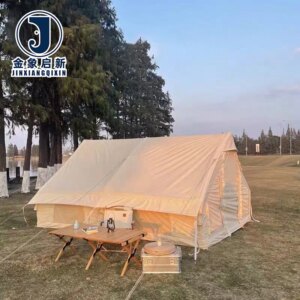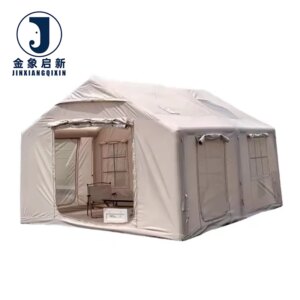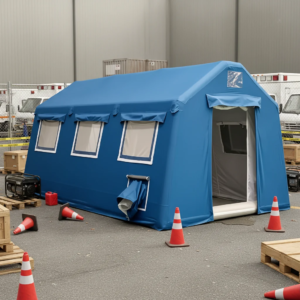
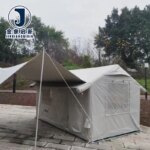

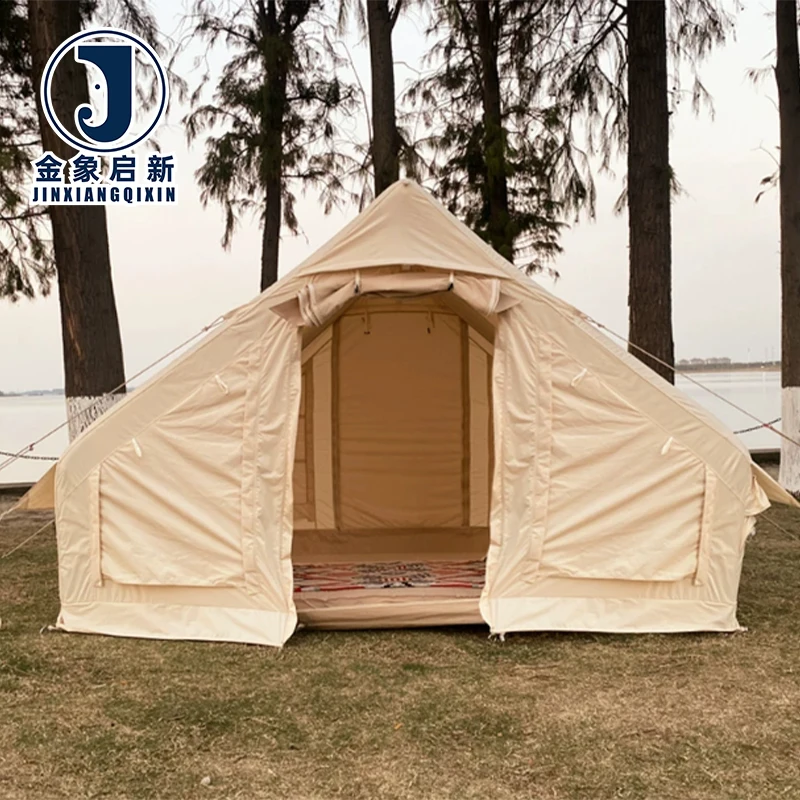
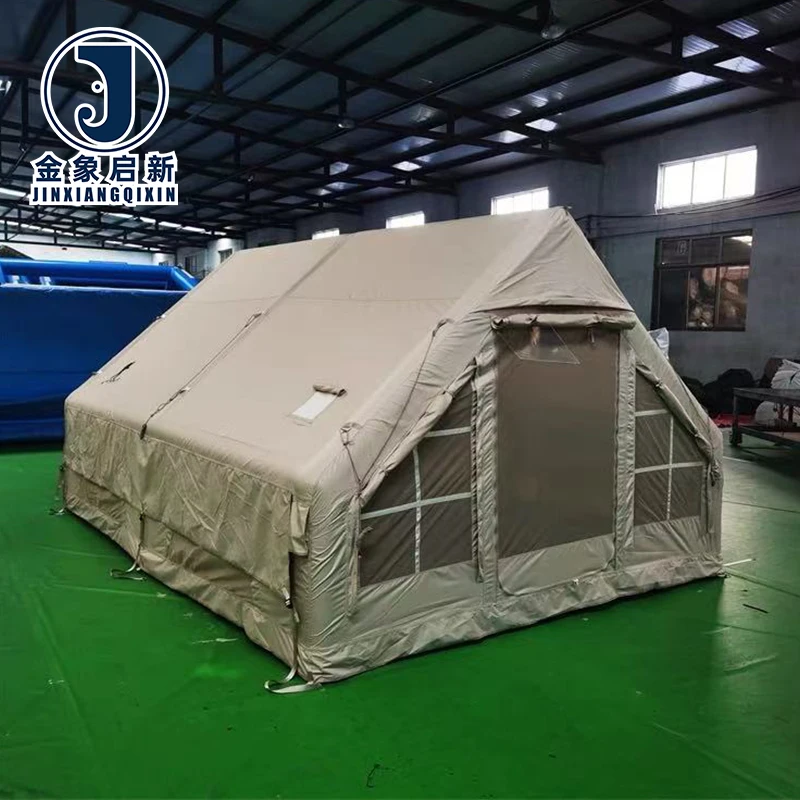
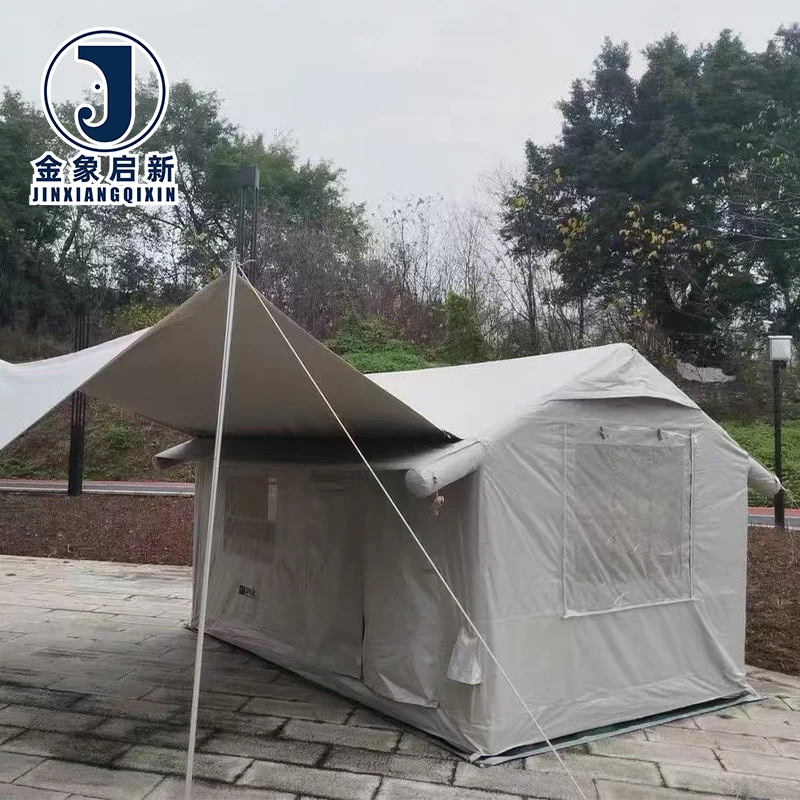
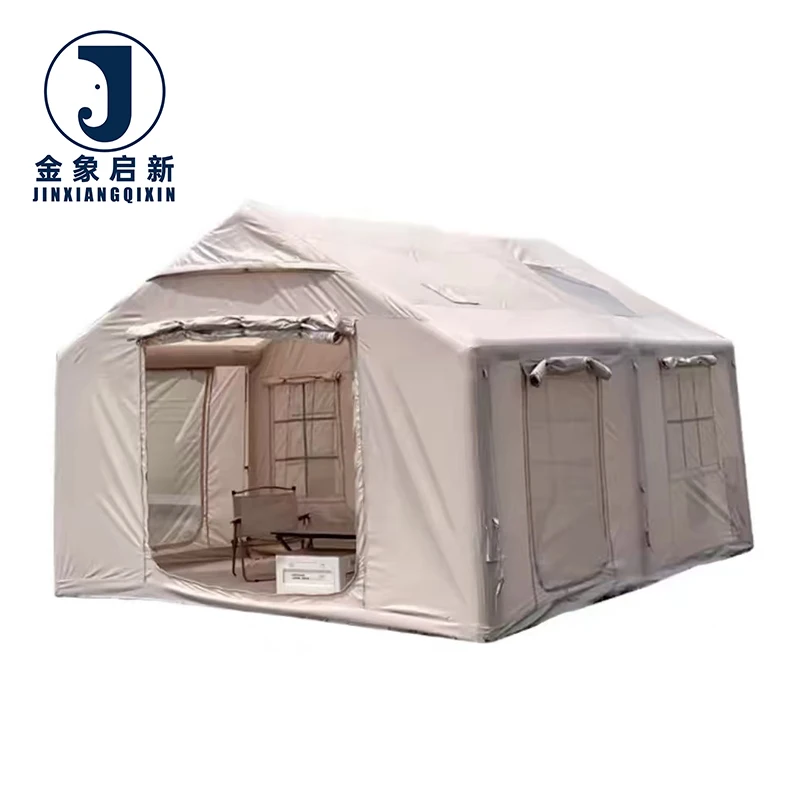
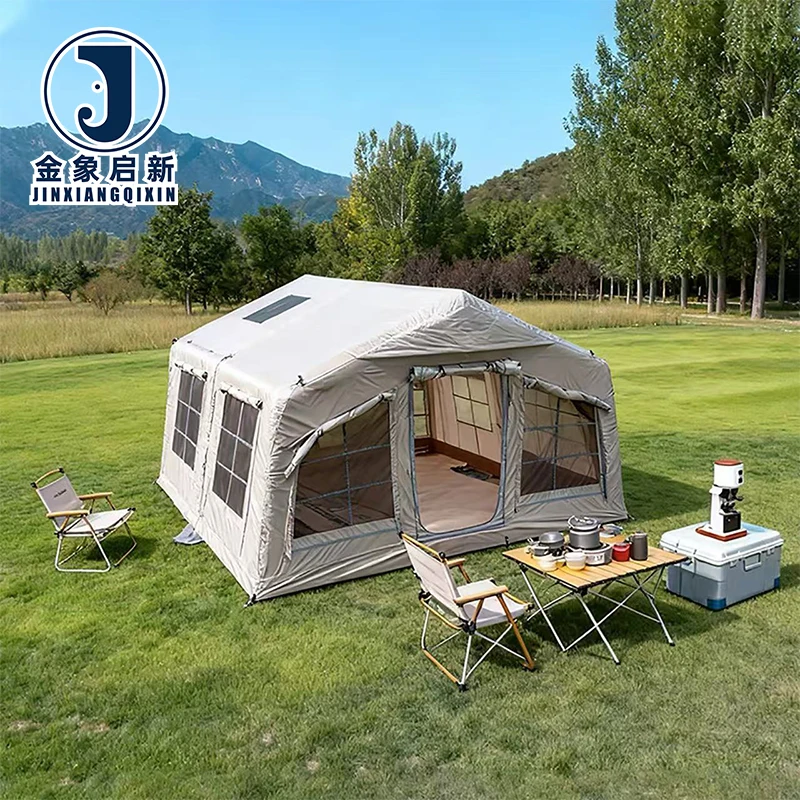
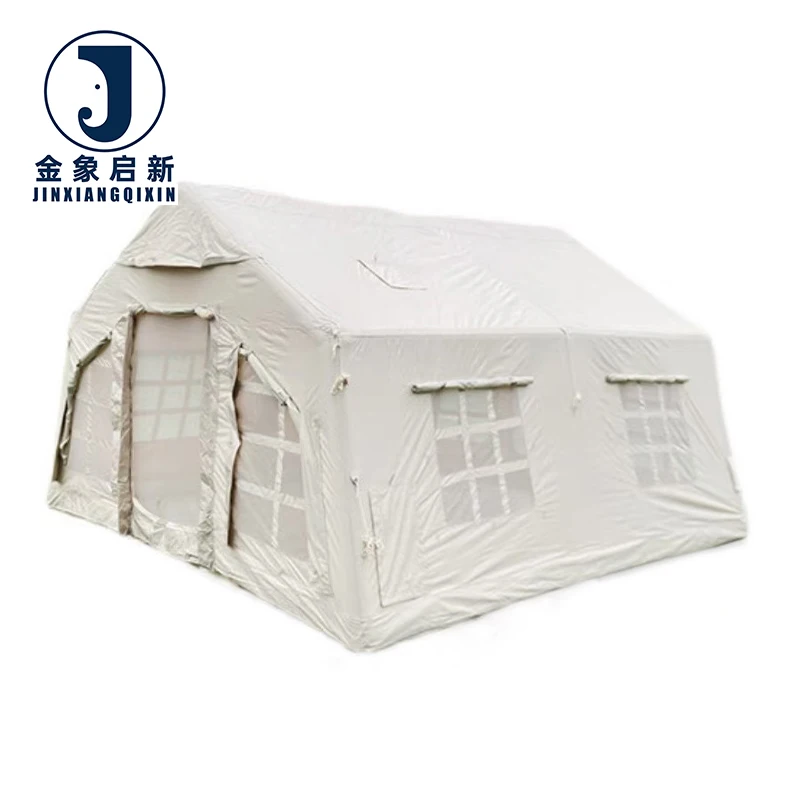
Certified Fabric Process Control — nearly 30 years focused on coated fabric production ensures every batch of PVC inflatable tent fabric meets declared specifications with full traceability and documentation.
Technical Specifications
| Parameter | Value |
|---|---|
| Product Type | Inflatable Tent |
| Core Material | PVC tarpaulin |
| Product Form | Inflatable, extended type, single layer construction |
| Key Performance | Waterproof, windproof, 4-season suitable, quick automatic opening |
| Customization Service | OEM & ODM (sample customization, pattern printing) |
| Production Facility Area | 9,180 square meters |
| Production Lines | 3 full production lines |
| Processing Equipment | 36 sets of professional processing equipment |
| R&D Team Scale | 10 technicians |
| Standards | ISO9001, ISO14001, ISO45001, CE |
Application Suitability
| Application | Exposure & Requirement |
|---|---|
| Mining emergency shelters | Underground dust, rapid deployment, fire-retardant compliance per site regulation |
| Tunnelling command centers | Confined space ventilation, moisture ingress, continuous inflation pressure |
| Aviation ground support covers | Jet blast proximity, fuel vapour exposure, anti-static surface requirement |
| Disaster recovery staging areas | All-weather seasonal exposure, repeated inflation cycles, transport abrasion |
| Construction site temporary workspaces | UV and rain exposure, wind load on inflated membrane, site vehicle contact |
Why Certification Gaps Shut Down Your Inflatable Shelter Before It Inflates
Inflatable tent fabric without matching fire-retardant or anti-static test documentation fails the site audit before deployment begins.
Mining and tunnelling contractors routinely specify inflatable emergency shelters for rapid deployment, yet the fabric arrives without the test report the site safety officer requires. Aviation ground operations demand anti-static membrane material, but the delivered roll carries only a generic certificate that does not reference the specific batch or standard. When compliance documentation does not match the material on site, the entire shelter remains deflated in storage while procurement scrambles for replacements. [NEED_CITE: fire-retardant compliance requirements for temporary industrial shelters]
How Inflatable Tent Fabric Supports Rapid-Deployment Shelter Systems
Inflatable tent fabric for industrial and emergency shelter use must balance membrane flexibility with structural integrity under continuous inflation pressure. PVC inflatable tent fabric in single layer construction provides the necessary air-holding capability while remaining light enough for transport to remote project sites. The extended-type form factor allows shelters to deploy across longer spans without intermediate support columns, which is critical when a mining site or disaster recovery zone needs covered workspace immediately.
Seam and Weld Behaviour Under Inflation Stress
The weld line on an inflatable membrane carries constant internal pressure and must outperform the base fabric in peel strength. Inflatable tent fabric produced on calibrated processing equipment maintains consistent coating adhesion across the full roll width, which directly affects how well thermal welds hold during repeated inflation and deflation cycles. When the coating weight varies across the web, weld parameters that work on one section may underperform on another — a common source of early membrane failure in field-deployed shelters. [NEED_CITE: thermal welding parameters for PVC coated membrane structures]
Reading the Specification Sheet Beyond the Headline GSM
The stated GSM of inflatable tent fabric tells you the total coated weight but does not reveal how that weight is distributed between base fabric and coating layers. A higher proportion of coating relative to base yarn increases waterproofness and surface durability but can reduce tear propagation resistance. The base fabric denier and weave density determine how the membrane behaves when punctured — a tight weave limits tear spread, while a loose weave allows damage to extend rapidly under inflation load. Coating method also matters: knife-over-roll coating produces a uniform layer suited to welding, while laminated constructions may delaminate under the cyclic stress of inflation. Selecting the correct balance depends on whether the shelter prioritises wind load resistance, transport weight, or long-term membrane durability.
What Happens When the Fabric Specification Does Not Match the Compliance Requirement
A mining contractor orders inflatable emergency shelters specifying fire-retardant membrane fabric, but the supplier ships a standard grade without confirming the test standard required at that particular site. The shelter passes visual inspection but fails the safety audit when the documentation does not reference the applicable classification. Similarly, anti-static inflatable tent fabric ordered for aviation fuel-handling zones must state the measured surface resistance value on the batch certificate — a generic material claim without a measured value leaves the buyer unable to satisfy the site inspector. These documentation gaps cause project delays that far exceed the material cost difference between compliant and non-compliant grades. [NEED_CITE: surface resistance measurement standards for anti-static industrial fabrics]
Why Industrial Buyers Source Inflatable Membrane Fabric Through This Facility
Deep process control over coating weight and adhesion means the PVC inflatable tent fabric you sample is the same material that ships in production volume. Three full production lines and 36 sets of professional processing equipment support consistent output across large orders without sacrificing weld-line integrity. A 10-person R&D team develops custom samples within days, allowing you to confirm membrane behaviour under inflation before committing to bulk. Dedicated QA and QC staff inspect every production stage, with 100 percent pre-shipment verification against the order specification. Documentation packages accompany each delivery with the test reports and certificates your site compliance team requires.
Documentation & Verification
- Material specification sheet stating core material, coating type, and confirmed product form
- Fire-retardant test report referencing the specific grade and test standard per batch
- Anti-static surface resistance value documented on the material certificate where specified
- Batch quality inspection record with roll-by-roll verification before dispatch
- Pre-shipment inspection record and certificate of origin for customs and site audit
- ISO9001, ISO14001, ISO45001, and CE certificates included in the shipment package
Fabrication, Handling & Storage
- Thermal weld temperature and dwell time must match the specific PVC coating formulation on this single layer membrane
- Store rolls upright on pallets to prevent flat-spot creasing that affects inflation uniformity
- Inflate test panels before full shelter assembly to confirm weld integrity across each seam
- Use compatible PVC adhesive for field repairs on punctured inflatable tent fabric membranes
- Avoid dragging rolls on unprotected ground to prevent abrasion damage to the coating surface
- Allow cold-stored rolls to reach ambient temperature before unrolling to prevent coating cracking
What to Include in Your Inquiry
Provide the deployment environment, including whether the inflatable shelter will serve mining, aviation, construction, or disaster response applications. State any fire-retardant grade or anti-static surface resistance requirement mandated by your site safety regulations. Confirm the total membrane area needed, preferred roll width, and whether OEM pattern printing or sample development is required before bulk production.
Frequently Asked Questions
Q: What fire-retardant grade is available for inflatable tent fabric and which test standard applies?
A: Fire-retardant grades are available for inflatable tent fabric, with the applicable test standard depending on your regional compliance requirement and site specification. Confirm the grade needed for your market — such as the classification required by your mining or aviation safety authority — and request the corresponding batch test report with your order documentation package.
Q: How is anti-static performance verified and what surface resistance value is documented?
A: Anti-static inflatable tent fabric is measured for surface resistance, and the resulting value is recorded on the material specification sheet accompanying your shipment. The documented value allows your site safety team to verify compliance against the standard required for aviation, fuel-handling, or explosive-atmosphere environments before the shelter is deployed.
Q: What documentation is included for site compliance audits in mining, aviation and tunnelling projects?
A: Each shipment includes a material specification sheet, batch quality inspection record, applicable test reports, pre-shipment inspection record, certificate of origin, and ISO and CE certificates. This documentation package supports site compliance audits for mining emergency shelters, aviation ground support covers, and tunnelling command centers where regulatory inspection is mandatory.
Q: How do you control colour consistency across rolls when multiple inflatable shelters are deployed side by side?
A: Colour consistency across rolls is managed through controlled pigment dosing and in-process inspection at the coating stage. When multiple inflatable shelters are deployed in the same location, batch-matched production ensures uniform appearance. Request colour reference confirmation during sample approval to verify the shade before bulk manufacturing begins.