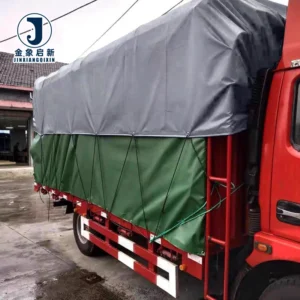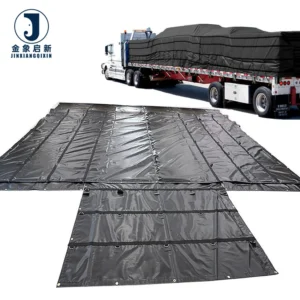
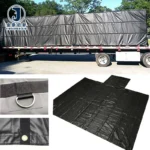
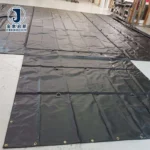
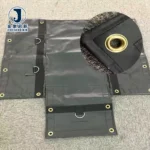
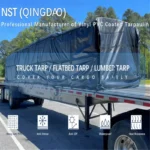
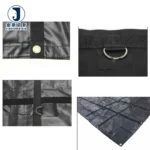
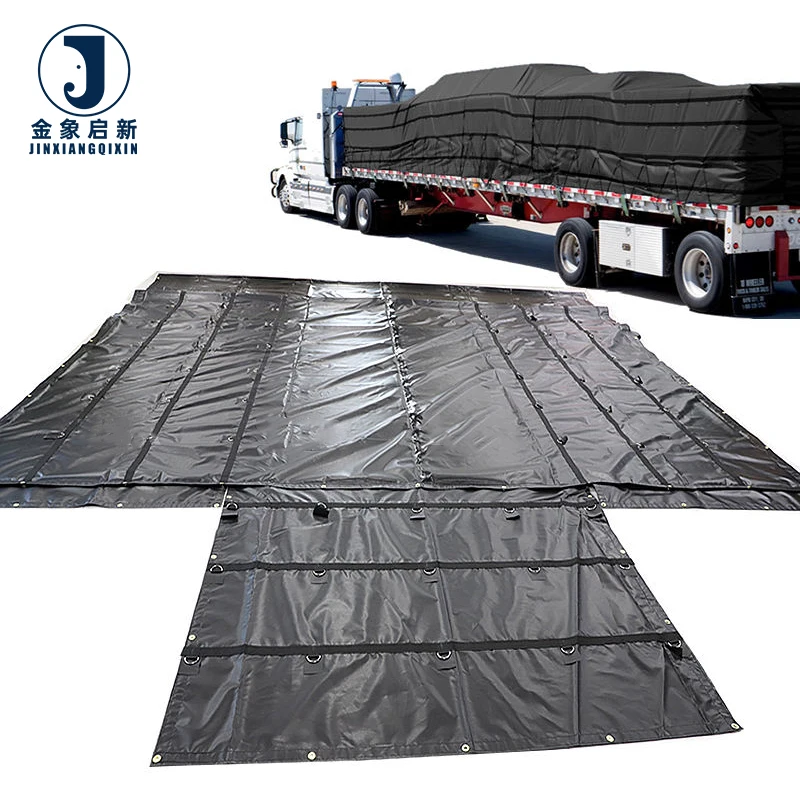
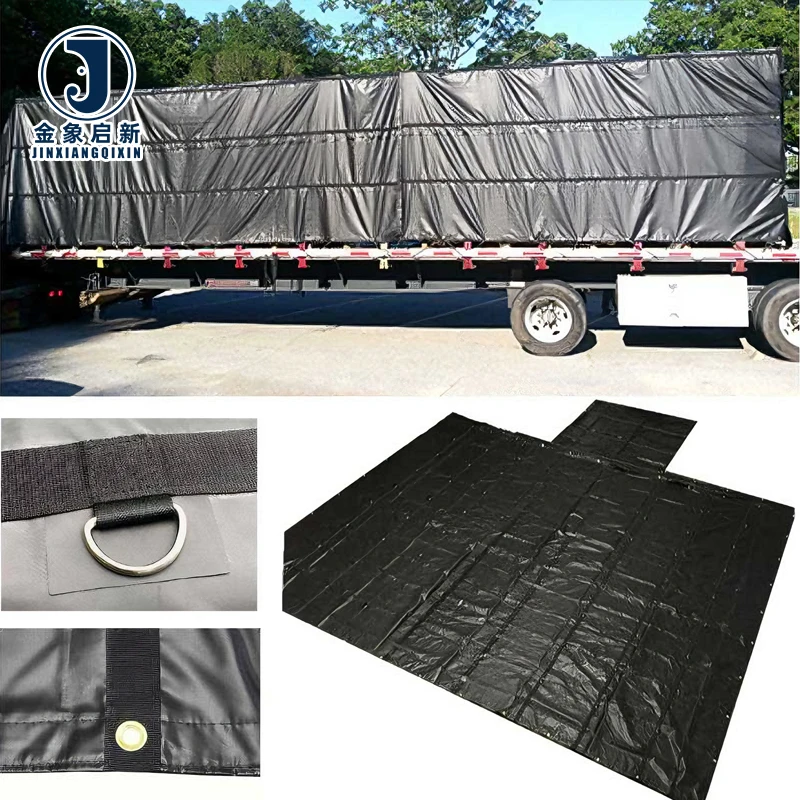
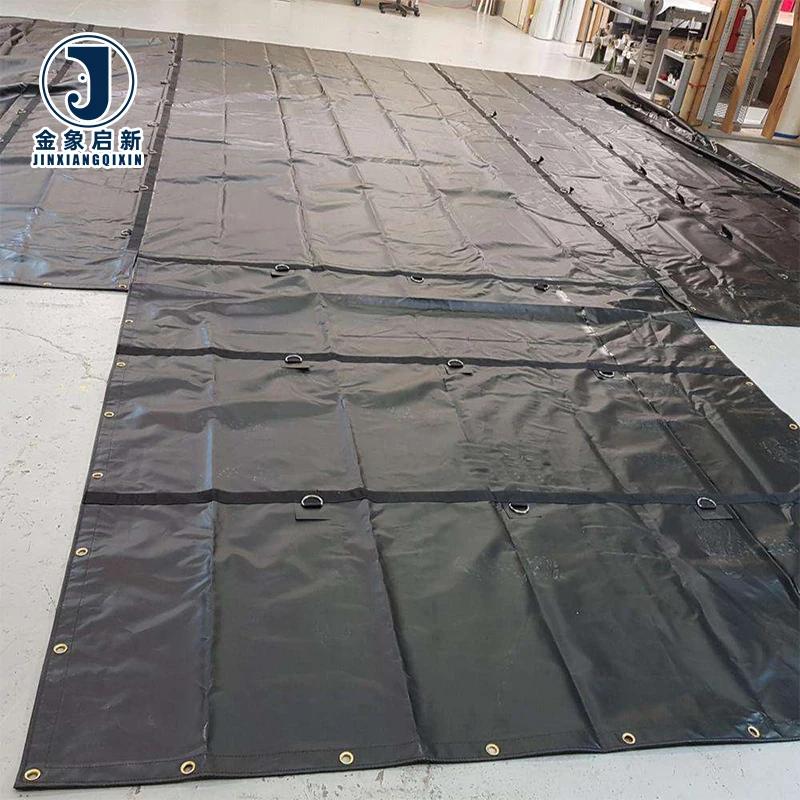
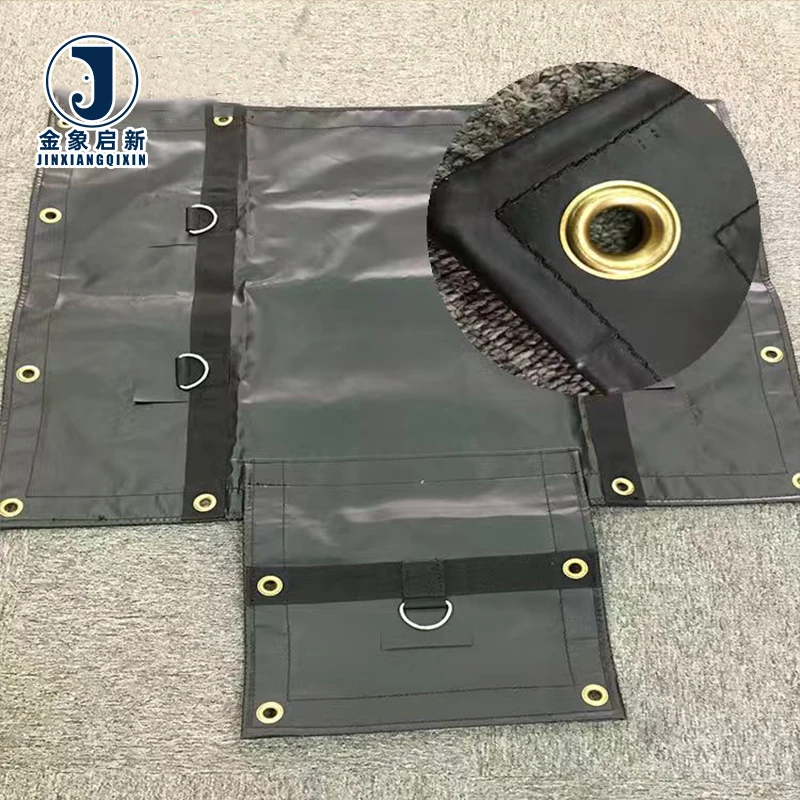

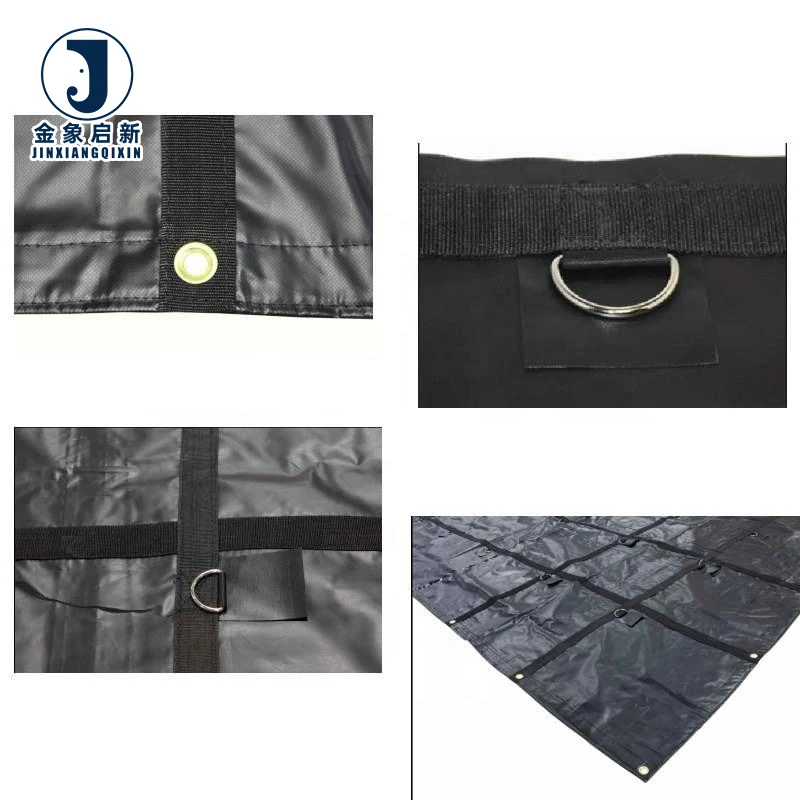
Deep Process Control Over Coated Fabric — nearly three decades of focused manufacturing ensure each flatbed lumber tarp meets specified weight and coating adhesion standards before dispatch.
Technical Specifications
| Parameter | Value |
|---|---|
| Product Type | PVC Truck Cover |
| Material | PVC / Vinyl / RipSTOP |
| Weight Options | 14oz / 18oz |
| Drop Length | 8′ Drops |
| Panel Configuration | 1PC / 2PC / 3PC |
| Waterproof | Yes |
| Abrasion-Resistant | Yes (grade not stated) |
| Anti-Mildew | Yes (grade not stated) |
| Anti-Pull | Yes (test basis not stated) |
| Customizable Density | Yes (specific values not provided) |
Application Suitability
| Application | Exposure & Requirement |
|---|---|
| Flatbed semi-truck lumber transport | Constant highway wind load, road spray, abrasion from timber edges and strapping tension |
| Steel and building material coverage | Heavy cargo contact, sharp edge puncture risk, prolonged outdoor UV and weather exposure |
| Oversized or irregular freight on open trailers | Non-uniform load profiles requiring drop panel coverage and multi-panel securement |
Why Certified Flatbed Semi Truck Lumber Tarp Specifications Matter Beyond the Quotation
A tarp that measures lighter than quoted on arrival is not a cost saving — it is an early failure waiting to happen on the highway.
Fleet operators and transport equipment builders regularly face a gap between the weight grade stated on the purchase order and the actual material received. A 14oz flatbed semi truck lumber tarp that arrives closer to 12oz will flex differently under wind load, and the seams will carry stress the fabric was never engineered to handle. [NEED_CITE: tensile and tear test methods for coated fabrics per ISO 1421] When the coating weight and base fabric denier are not verified at the mill, the tarp may look correct on the trailer but fail at the tie-down points within weeks of service. The problem compounds when multiple units are deployed across a fleet — inconsistent weight means inconsistent behaviour under load, making maintenance planning unreliable.
Panel Configuration That Matches Real Load Profiles
A single-piece tarp suits short, uniform loads, but flatbed lumber shipments rarely stay that simple. The 1PC, 2PC, and 3PC construction options allow the flatbed semi truck lumber tarp to be configured around the actual cargo length and tie-down pattern. Multi-panel layouts reduce the unsupported span between securement points, which lowers the flapping stress that drives seam fatigue on long-haul routes.
Drop Panels Engineered for Stacked Cargo Heights
The 8′ drop length addresses the vertical face of a stacked lumber load that a standard flat tarp leaves exposed. Side coverage prevents road spray and wind-driven rain from penetrating the cargo stack, which is critical for moisture-sensitive timber and building materials. When the drop dimension matches the load profile, the tarp sits flush rather than bridging across gaps that invite tearing under highway wind pressure. [NEED_CITE: DIN 4102 fire classification for building materials]
How RipSTOP Weave and Coating Weight Interact on the Road
The RipSTOP base fabric introduces a grid reinforcement pattern that arrests tear propagation before a small puncture becomes a full-panel failure. Combined with the 14oz or 18oz coating weight range, this construction delivers anti-pull security at the tie-down and edge-hem zones where cargo shifts transmit the highest concentrated forces. Heavier coating adds mass and stiffness that improves wind-load behaviour, while the RipSTOP weave ensures that any local damage remains contained rather than spreading across the tarp surface during transit.
The Hidden Cost of Under-Specified Tarp Weight
When a flatbed tarp arrives lighter than the agreed grade, the immediate consequence is rarely visible — the colour and dimensions appear correct. The failure emerges at the welded seams and eyelet reinforcement zones, where the fabric cannot sustain the cyclic loading imposed by highway speeds and cargo movement. [NEED_CITE: coated fabric peel strength and weld integrity testing per ISO standards] Operators then face unplanned tarp replacement mid-contract, cargo damage claims from exposed loads, and the administrative burden of sourcing emergency replacements at short notice. The cumulative cost of a single underweight tarp in a fleet often exceeds the price difference of specifying the correct grade from the outset.
Why Source Flatbed Lumber Tarps Through This Facility
The 10-person R&D team handles pattern layout and panel sizing so that drop dimensions and multi-panel configurations match your specific trailer models rather than generic catalogue sizes. Three full production lines and 36 sets of professional equipment provide the capacity to fulfil fleet-scale orders with consistent coating weight across every panel. Dedicated QA/QC runs at every production stage, with 100% pre-shipment inspection verifying drop length, panel count, and weight grade against your purchase order. ISO and CE certified systems underpin the manufacturing process, and custom samples are developed within days so that material feel and construction can be evaluated before full production begins.
Documentation & Verification
- Material specification sheet confirming PVC or RipSTOP base fabric type and coating weight per panel
- Pre-shipment inspection record verifying 8′ drop length and 1PC/2PC/3PC panel count
- Weight grade verification confirming 14oz or 18oz per order line before dispatch
- Anti-mildew and abrasion-resistant treatment claims with stated test basis on request
- ISO and CE certificates supporting manufacturing quality management systems
Fabrication, Handling & Storage
- Heat-weld seams at temperatures matched to 14oz or 18oz PVC coating to prevent delamination
- Reinforce tie-down and eyelet zones with additional RipSTOP fabric layers at high-stress points
- Store rolls and folded panels flat to avoid permanent crease marks in the PVC coating
- Allow cold-stored tarps to reach ambient temperature before unfolding to prevent coating crack
- Use mild detergent for cleaning — abrasive solvents may degrade the anti-mildew treatment
- Repair minor road damage with PVC-compatible adhesive patches matched to the coating weight
What to Include in Your Enquiry
Specify the trailer make and model, typical cargo dimensions, and whether the load requires full side and top coverage or top-only protection. Indicate the weight grade needed for your operating conditions and any anti-mildew or abrasion-resistance requirements tied to your route climate. Confirm whether you need finished tarps with edge hems and tie-down points, or roll stock for in-house fabrication.
Frequently Asked Questions
Q: How is the 14oz or 18oz weight verified on arrival?
A: Every production run undergoes 100% pre-shipment inspection, and the weight grade is measured against the stated specification before dispatch. You receive an inspection record with your order confirming the actual weight per panel. If you need third-party verification, independent lab testing can be arranged against recognised coated fabric standards.
Q: Do the anti-mildew and abrasion-resistant claims come with a test report?
A: These treatments are applied during manufacturing, and the specification sheet states the treatment type. Test reports are available upon request — confirm the test method required for your market so that the correct documentation is prepared before production. Different regional standards may apply depending on your operating environment.
Q: Can the drop length and panel count be customised for specific trailer models?
A: The standard 8′ drop and 1PC/2PC/3PC configurations cover most flatbed lumber applications, but custom dimensions are available. Provide your trailer model and typical load profile, and the R&D team will develop a sample with the recommended panel layout and drop measurement for your approval before full production.
Q: What is the difference between Vinyl and RipSTOP construction?
A: Vinyl refers to the PVC coating applied to the fabric surface for waterproofing and weather resistance. RipSTOP describes the base fabric weave, which incorporates a reinforcement grid that stops small tears from spreading. The two work together — the RipSTOP weave provides structural integrity while the Vinyl coating delivers surface protection against the elements.