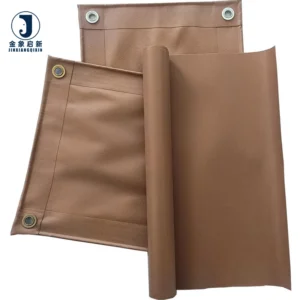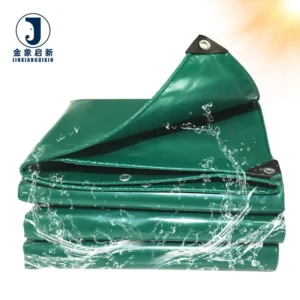
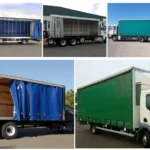
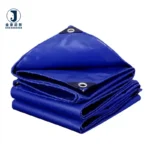
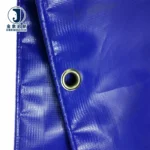
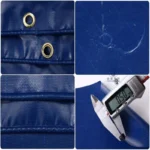
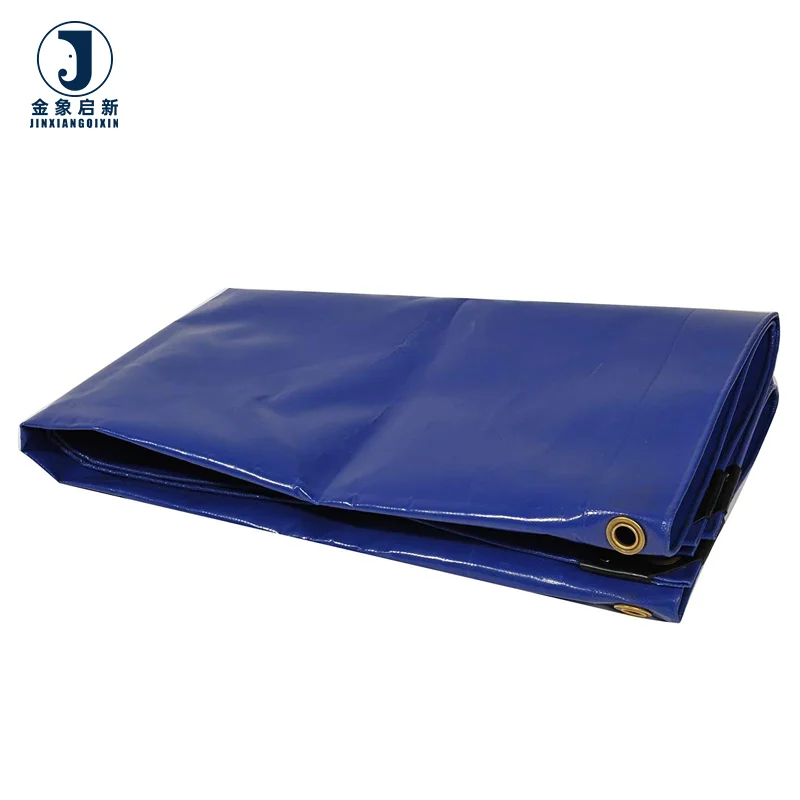
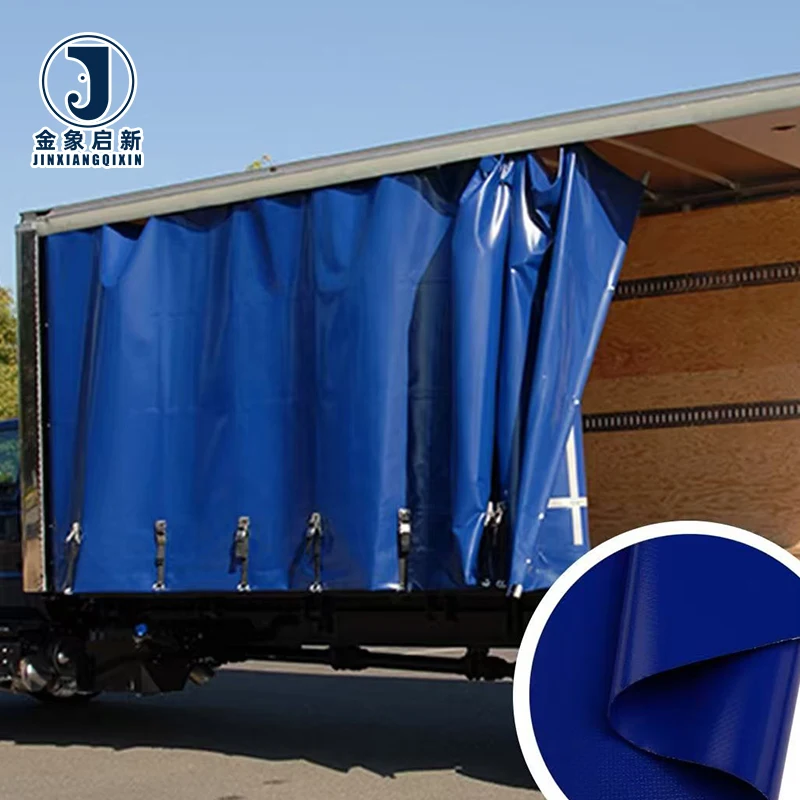
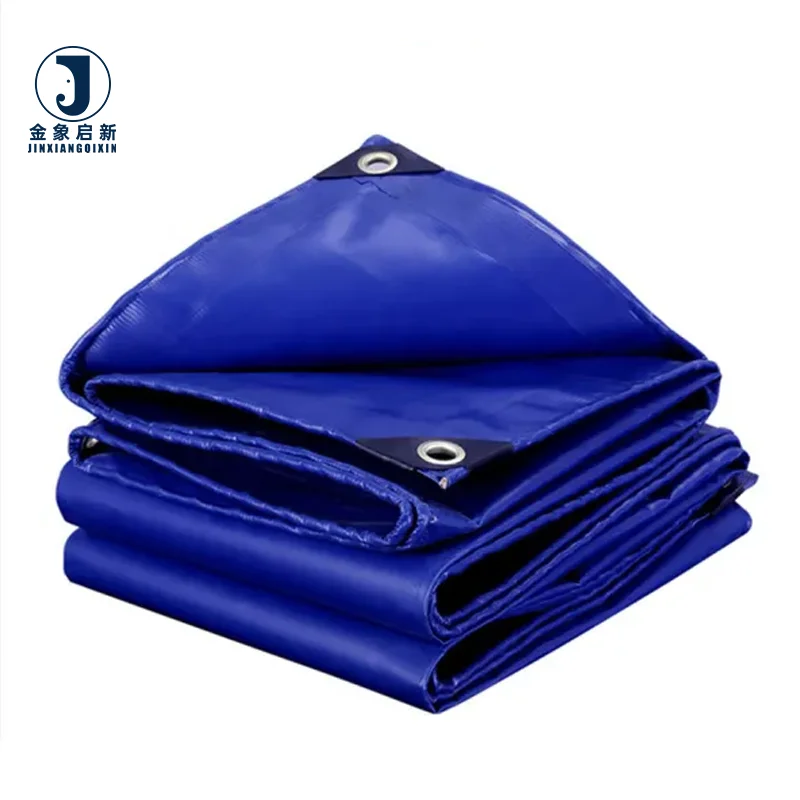
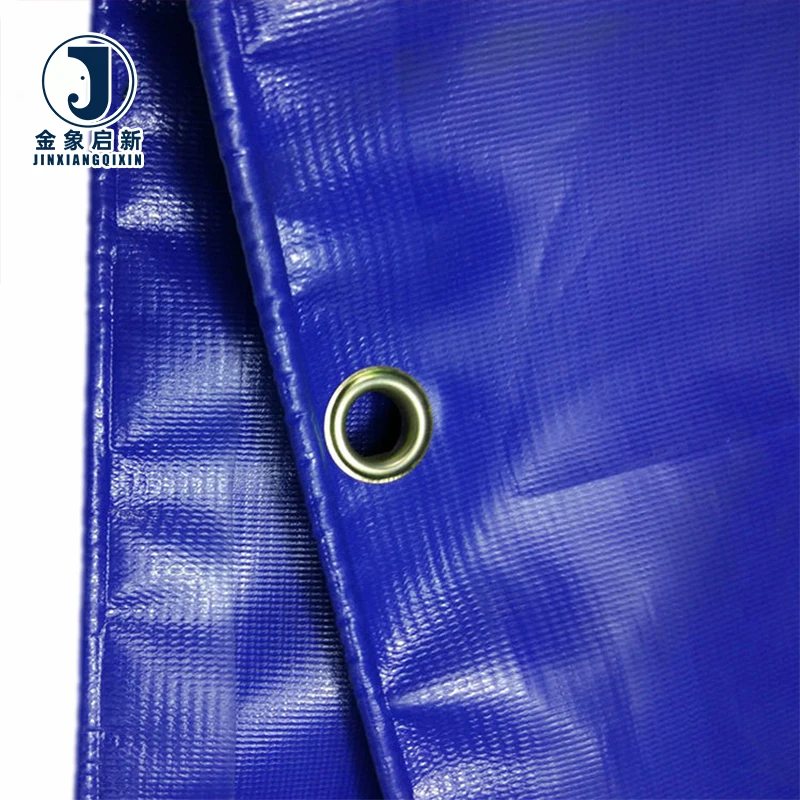
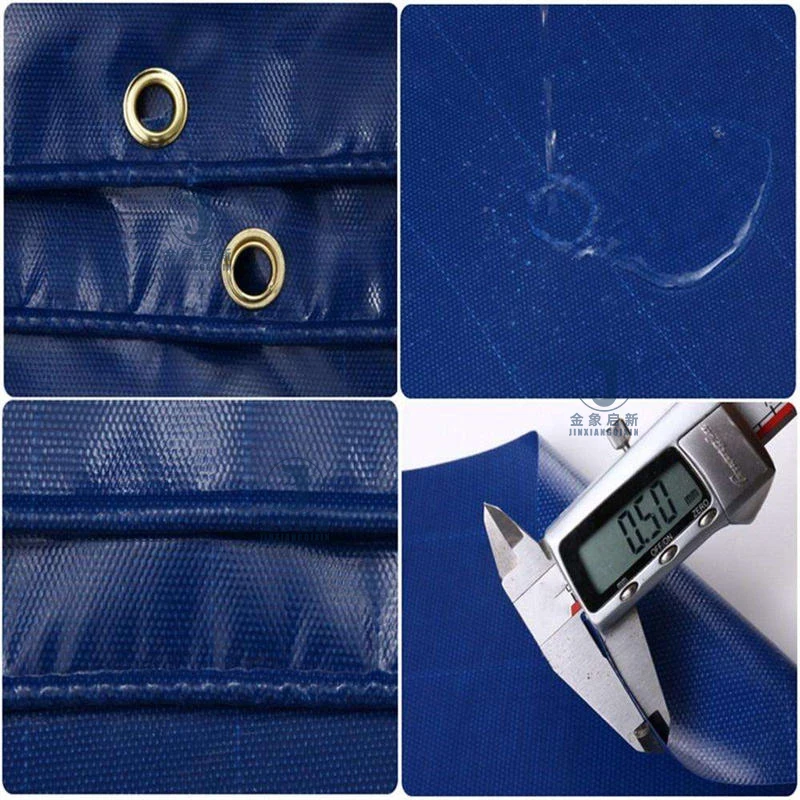
Process-Controlled Coating — three full production lines with in-line GSM monitoring ensure the 900GSM PVC coated tarpaulin you specify is the weight you receive on site.
Technical Specifications
| Parameter | Value |
|---|---|
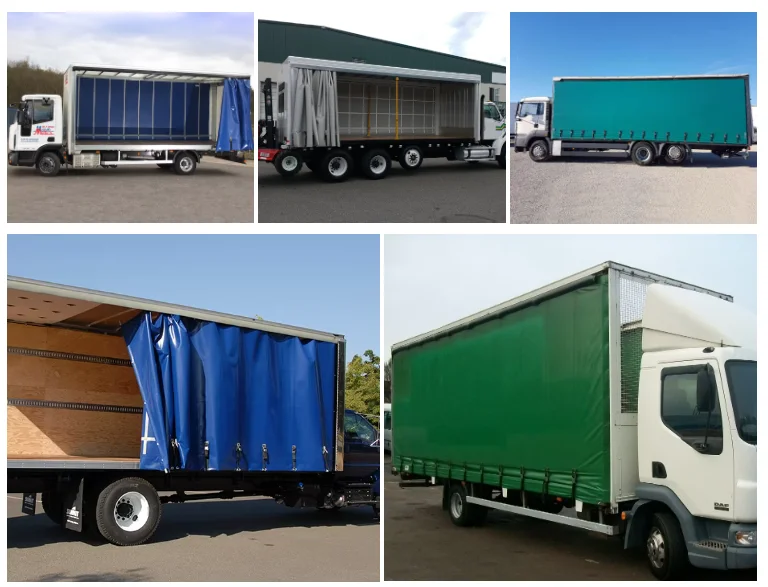
| Product Type | Heavy Duty PVC Coated Tarpaulin Curtains for Lorries |
| Base Fabric Denier | 200D×300D, 500D×500D, 840D×840D, 1000D×1000D (confirm grade for your application) |
| Weave | Panama |
| Coating Material | PVC |
| Weight Range | 250 GSM – 1500 GSM (confirm the grade ordered) |
| Colour Options | Blue, yellow, black, green, white (custom colours available) |
| Surface Finish | Glossy or matte |
| Temperature Range | -15 °C to 70 °C |
| UV Treatment | Customised (test basis not stated — request report) |
| Flame Retardant | FR treated (grade not stated — confirm standard for your market) |
| Anti-Mildew | Anti-fungal treated |
| Waterproof Rating | Waterproof, rain-resistant |
| Certifications | ISO, CE |
Application Suitability
| Application | Exposure & Requirement |
|---|---|
| Mining and tunnelling ventilation ducts | Continuous forced-air pressure, sub-surface humidity, mandatory fire-retardant compliance |
| Aviation ground support ducting | Fuel-rich tarmac environment, rapid deployment and tear-down, flame certification |
| Inflatable and membrane structures | Sustained internal pressure, solar UV load, wind-induced flex cycles |
| Specialist industrial enclosures | Chemical-laden air, abrasive dust, temperature fluctuation |
Why a Stated GSM Does Not Guarantee Duct Integrity on Arrival
A roll that reads 900GSM on the quotation can arrive lighter if coating weight is not verified roll-by-roll before dispatch.
Ventilation duct fabric in mining and tunnelling operates under continuous positive pressure, and every square metre carries the load. When PVC coated tarpaulin arrives below the quoted weight, the tensile reserve drops and the duct becomes vulnerable to splitting at the seams under airflow surges. Procurement teams often discover the shortfall only after the fabric has been welded into duct sections and installed underground, where replacement is costly and production halts are measured in shifts rather than hours [NEED_CITE: pre-shipment weight verification methods for coated fabrics per ISO 1421].
Coating Adhesion and Welded Duct Joints
Ventilation ducts are fabricated by thermal welding, and the seam must carry the same load as the parent fabric. The Panama weave base used in this 900GSM PVC coated tarpaulin provides a textured surface that promotes mechanical keying of the PVC coating, supporting consistent adhesion across the weld zone. When coating adhesion is uneven, heat-welded joints delaminate under the cyclic pressure of fan start-up and shutdown, creating air leaks that reduce effective airflow at the working face.
Fire-Retardant Compliance for Sub-Surface and Aviation Use
Mining regulations in most jurisdictions mandate a specific flame-retardant classification for all fabric used underground, and aviation ground-support ducts follow equally strict airport authority standards. This PVC coated tarpaulin is available in flame retardant grades — confirm the grade required for your market before placing a production order. Requesting the test report aligned to M2, B1, NFPA 701 or DIN 4102 ensures the fabric will pass site inspection without rework [NEED_CITE: DIN 4102 fire classification for building materials and duct fabrics].
How Base Denier and Coating Weight Interact Under Duct Pressure
The 250 GSM – 1500 GSM range covers the full product family; the specific grade ordered determines how the base fabric and coating share the mechanical load. Heavier denier yarns (840D×840D or 1000D×1000D) resist tear propagation when a puncture occurs from handling or rock contact in a tunnel. The PVC coating contributes stiffness and air-tightness but cannot compensate for an under-specification base cloth. Selecting denier and GSM together — rather than GSM alone — ensures the duct fabric has adequate tensile reserve for long runs and high static pressures. The temperature range of -15 °C to 70 °C covers most sub-surface and outdoor structure environments, though extreme desert or arctic installations require confirmation of low-temperature flexibility limits. Surface finish, glossy or matte, influences dust accumulation inside the duct and cleaning frequency on membrane structures.
What Happens When the Wrong Grade Reaches the Site
A ventilation duct fabricated from fabric that lacks the fire-retardant grade required by the mine safety authority will fail compliance inspection, forcing a complete strip-out and re-installation. Similarly, if the coating weight is lower than specified, the fabric becomes more pliable than designed, and the duct sags between suspension rings, restricting airflow and increasing fan energy consumption [NEED_CITE: airflow resistance and duct sag in textile ventilation systems]. Batch-to-batch colour variation matters less underground but becomes visible on above-ground membrane structures where panels are joined side by side in daylight.
Why Fabrication Starts with Verified Documentation
Every roll of this PVC coated tarpaulin can be supplied with a documentation package built for compliance-heavy projects. The 10-person R&D team develops samples within days when a new duct diameter or membrane panel size is required, and the QA protocol inspects every roll before it leaves the line. Three full production lines with 36 sets of professional equipment allow bulk orders to be fulfilled without compressing the coating curing cycle, which directly affects long-term adhesion and weld integrity.
Documentation & Verification
- Material specification sheet stating exact GSM, base denier and coating weight for the grade ordered
- Flame retardant test report matched to the batch and the standard your jurisdiction requires
- Pre-shipment inspection record with roll-by-roll weight verification and colour check
- ISO and CE certificates with traceable numbers included in the dispatch documentation
- Certificate of origin and customs paperwork prepared for cross-border project sites
Fabrication, Handling & Storage
- Thermal welding parameters must match the specific 900GSM coating thickness — request recommended temperature and dwell time before first production run
- Store rolls horizontally on racking to prevent permanent creasing of the PVC coating at the Panama weave intersections
- Allow fabric to acclimatise to workshop temperature before welding, especially when ambient conditions are below 10 °C
- Use compatible PVC-based repair patches for field damage to maintain air-tightness in pressurised duct runs
- Cut membrane panels with allowance for thermal expansion across the stated -15 °C to 70 °C operating range
How to Scope Your Enquiry
Provide the duct diameter, run length and static pressure your fan system delivers, together with the fire-retardant standard enforced on your site. If the fabric will be used in a membrane or inflatable structure, specify panel dimensions, wind-load data and any colour or translucency requirements. State whether you need rolls in standard widths or finished panels with welded hems, and indicate the annual volume so production scheduling can be aligned to your project milestones.
Frequently Asked Questions
Q: Which fire-retardant standard applies to mining ventilation ducts in my region?
A: Requirements vary by jurisdiction — common standards include DIN 4102 B1 in Europe, NFPA 701 in North America and M2 in France. Specify the standard your mine safety authority enforces when requesting a quotation, and the matching test report will be included with your shipment documentation.
Q: How is the 900GSM weight verified before the rolls ship?
A: Each roll is weighed and sampled during the pre-shipment inspection. A roll-by-roll verification record showing actual GSM against the quoted value is included in the dispatch package, allowing you to cross-check on arrival without waiting for independent lab results.
Q: Can this PVC coated tarpaulin be used for anti-static duct applications in gassy mines?
A: Anti-static treatment is available as a custom option. Provide the surface-resistance threshold mandated by your site safety standard so the correct formulation can be selected and a corresponding test report supplied with the batch.
Q: What welding parameters are recommended for Panama weave PVC duct fabrication?
A: Welding temperature and dwell time depend on the exact coating thickness and ambient conditions. Request the manufacturer’s recommended hot-air or wedge-weld settings for the specific GSM grade ordered, and run test welds on off-cuts before full production.
Q: Is custom width available for long membrane panels with minimal seams?
A: Custom widths can be produced to reduce transverse seams on large membrane panels. Provide the required panel dimensions and annual volume, and a sample roll will be developed for trial fabrication before bulk production is scheduled.