
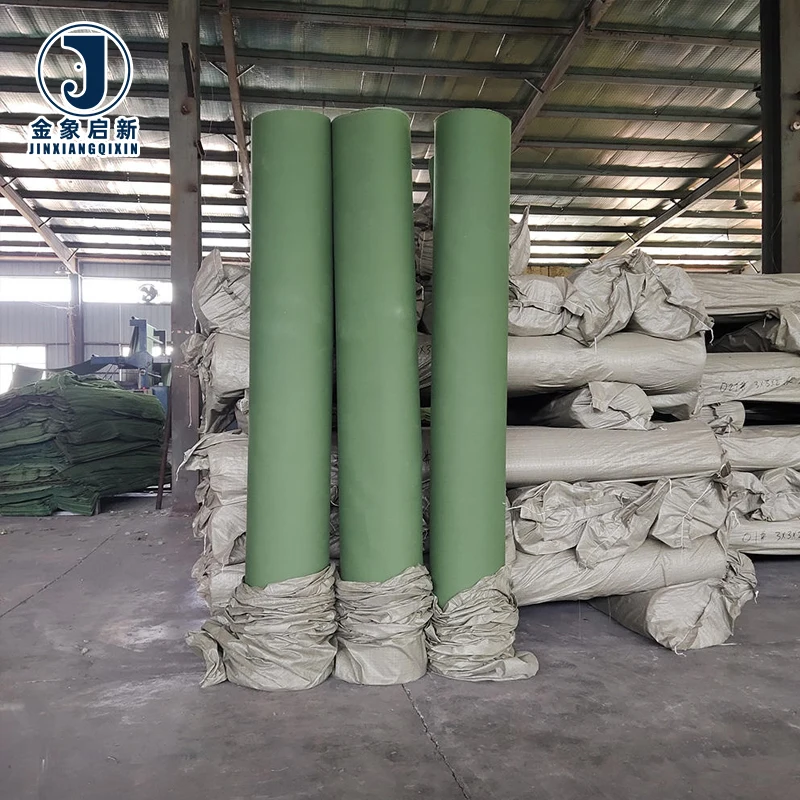
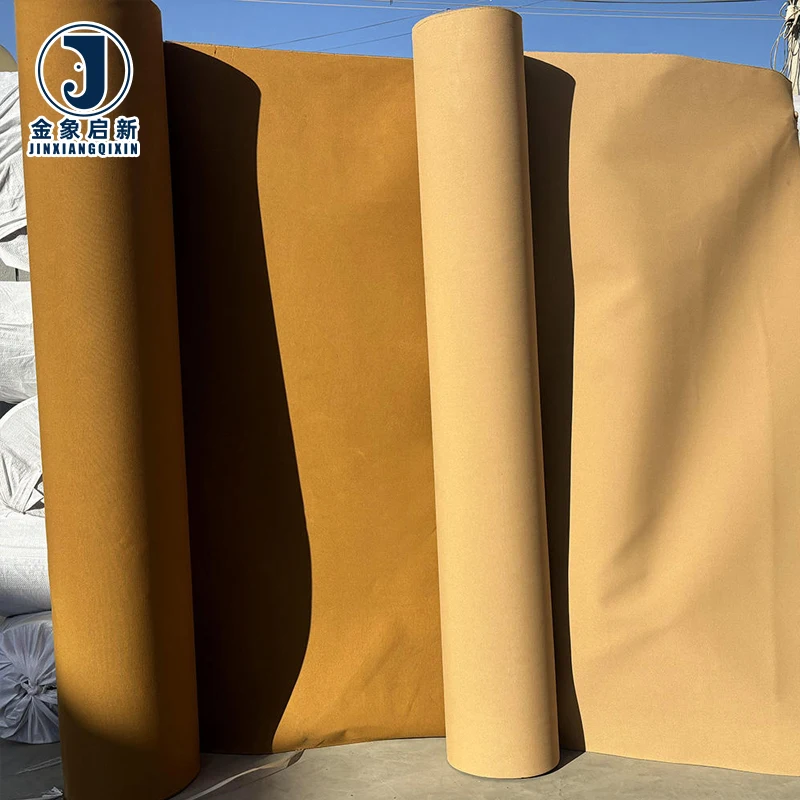

Process Control Depth — nearly three decades focused on coated fabric manufacturing, with dedicated QA at every production stage ensuring material compliance from first coating to final dispatch.
Technical Specifications
| Parameter | Value |
|---|---|
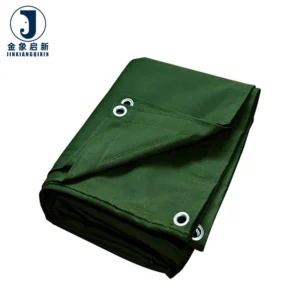
| Product Type | PVC Laminated Canvas Tarpaulin |
| Coating Material | PVC |
| Coating Method | Laminated |
| Base Fabric | Woven canvas |
| Waterproof | Yes |
| Heat Resistant | Yes (grade available on request — confirm the grade required for your project) |
| UV Treatment | Available (test basis to be confirmed with specification sheet) |
| Flame Retardant | Available in flame retardant grades — confirm the classification required for your market (e.g. M2 / B1 / NFPA 701) |
| Tear Resistance | Tear resistant woven construction (test standard available on request) |
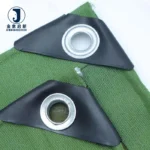
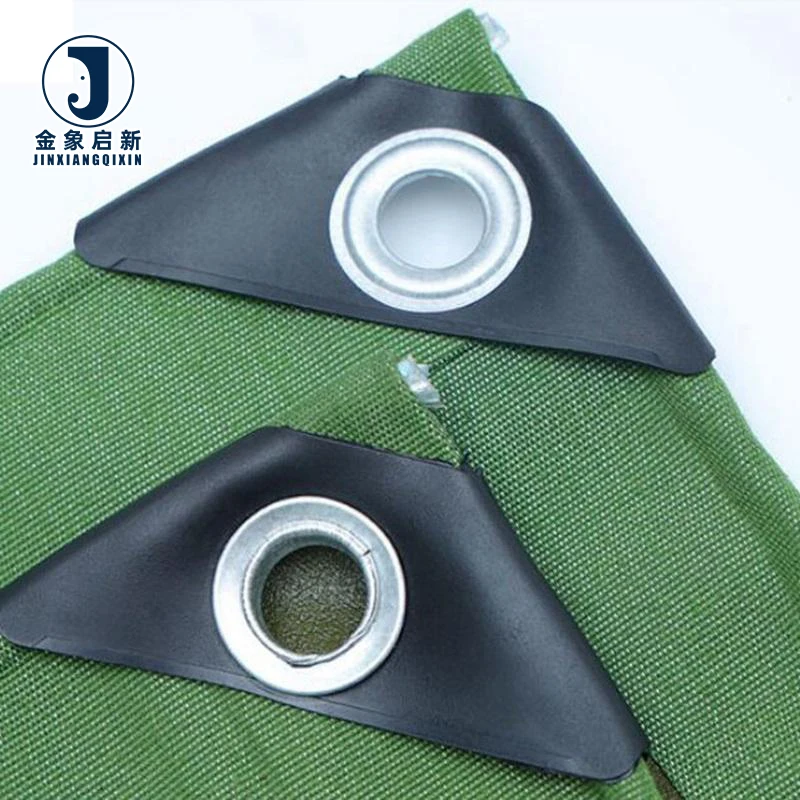
| Edge Fixing | Eyelets installed on all four sides |
| Custom Sizing | Available in custom widths and lengths |
Application Suitability
| Application | Exposure & Requirement |
|---|---|
| Membrane and inflatable structures | Wind load tension, thermal cycling, secure anchoring at perimeter fixings |
| Industrial tent fabric for regulated sites | Heat exposure, fire safety compliance, waterproof envelope performance |
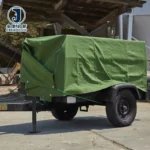
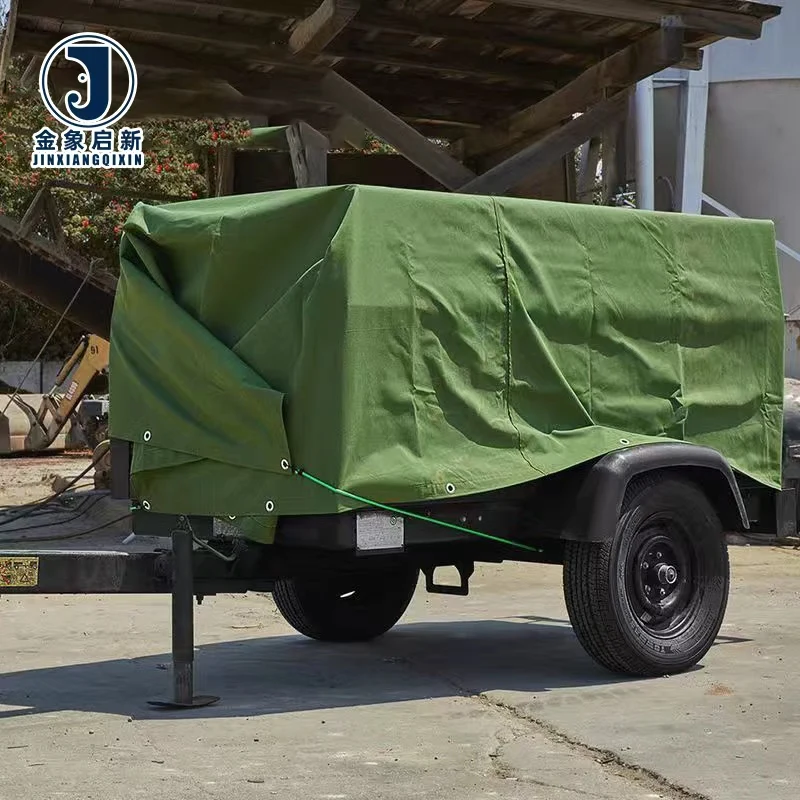
| Engine hood and vehicle covers | Contact heat, abrasion from vibration, UV degradation over extended parking |
| Roof and temporary shelter covers | Rain ingress prevention, wind uplift resistance, structural drape |
| Outdoor floor and ground protection | Foot traffic abrasion, moisture exposure, puncture from equipment loads |
| Sun and rain shelters (hanging installations) | Gravity sag, wind flutter, eyelet pull-through under sustained load |
Why Material Compliance Documentation Matters More Than a Data Sheet Claim
Suppliers often quote heat resistant or flame retardant PVC laminated canvas tarpaulin without attaching the test report that proves the grade — leaving buyers to discover the gap only when a site inspector or fire marshal asks for documentation. Our material documentation package addresses compliance from the first inquiry, not after the fabric is already on site.
I have reviewed too many project files where the specification called for a verified fire classification, but the delivered roll carried only a generic claim on the label. The result is either a costly material swap mid-project or a failed inspection that delays handover. In regulated environments — mining ventilation, aviation hangars, temporary event structures — the paperwork is as critical as the fabric itself [NEED_CITE: fire classification requirements for temporary structures and membrane buildings].
Coating Method and Its Impact on Structural Behaviour
The laminated PVC coating method bonds the PVC film to the woven canvas base under heat and pressure, producing a fabric with strong dimensional stability. For membrane and inflatable structure applications, this stability matters because the fabric must hold its geometry under sustained tension without stretching or distorting at the seams.
PVC laminated canvas tarpaulin fabricated into tensioned structures benefits from this consistency — the woven base resists bias stretch, and the laminated coating follows the base fabric movement rather than creeping independently. This is distinct from some knife-coated constructions where the coating layer can behave separately from the weave under prolonged load.
Thermal Exposure and What the Grade Actually Covers
Heat resistance in coated fabrics is not a single number. It encompasses the temperature at which the PVC coating begins to soften and lose adhesion, the point at which the base fabric itself degrades, and the behaviour of welded seams under thermal cycling. Each of these may carry a different threshold.
When specifying PVC laminated canvas tarpaulin for environments with heat sources — engine bays, industrial process enclosures, structures near exhaust systems — the relevant grade must cover all three failure modes. Requesting the test report with the specific grade ensures the material matches the actual thermal environment, not just a laboratory benchmark [NEED_CITE: thermal ageing test methods for PVC coated fabrics].
Reading Between the Specification Lines
The woven canvas base provides the structural backbone: its denier and weave density govern how the fabric resists tear propagation once a puncture or cut occurs. A heavier base fabric generally offers higher tear resistance, but the weave pattern — ripstop, plain, or twill — determines whether a tear arrests or runs.
The laminated PVC coating contributes waterproofing and surface durability. Its weight and adhesion quality influence how well the fabric withstands flexing without delamination. At welded seams, coating adhesion to the base fabric is the limiting factor; if the bond fails before the fabric tears, the seam becomes the weak point.
Eyelet placement on all four sides distributes anchoring loads across the fabric perimeter. The reinforcement around each eyelet — typically a welded or bonded patch — must match the expected pull-out force in wind-exposed installations. Undersized patches lead to tear-out at the first sustained gust.
The Cost of Specifying on Claim Alone
When flame retardant classification is stated without a supporting test certificate, the buyer absorbs the entire compliance risk. A structure installed with uncertified fabric may pass initial visual inspection but fail when documentation is audited — forcing removal and replacement at the buyer’s expense [NEED_CITE: regulatory consequences of non-certified flame retardant materials in temporary structures].
Batch inconsistency in heat resistant formulations can mean one roll performs within specification while the next degrades prematurely under identical conditions. Without pre-shipment verification against the stated grade, this variability surfaces only in the field. Colour drift between rolls in the same order compounds the problem when panels are installed side by side on a visible structure.
Sourcing With Verification Built In
Three full production lines and 36 sets of professional equipment support volume output while maintaining coating weight and adhesion control across every roll of PVC laminated canvas tarpaulin.
A 10-person R&D team handles material selection and sample development, producing samples within days when custom widths, colours, or treatment grades are required for project approval.
Dedicated QA and QC at every production stage — from base fabric inspection through coating, lamination, cutting, and eyelet installation — ensures each roll is checked before it leaves the facility.
Pre-shipment inspection records document GSM, coating adhesion, eyelet placement, and roll consistency, giving buyers a verification trail that supports site compliance requirements.
ISO and CE certified manufacturing processes underpin the documentation package, supporting export to regulated markets across North America, Europe, and Asia.
Documentation & Verification
- Material specification sheet stating coating method, base fabric construction, and heat resistance grade
- Test report for heat resistance and flame retardant classification applicable to project compliance requirements
- Pre-shipment inspection record confirming eyelet placement, hem reinforcement, and roll-to-roll consistency
- ISO and CE certificates supporting export documentation for regulated installations
- Roll packing list with weight and dimensions for customs and freight planning
Fabrication, Handling & Storage
- Heat welding parameters must match the laminated PVC coating formulation — request recommended temperature and dwell settings before fabrication
- Eyelet reinforcement patches should be bonded to the woven canvas base, not just the coating surface, to prevent pull-through under load
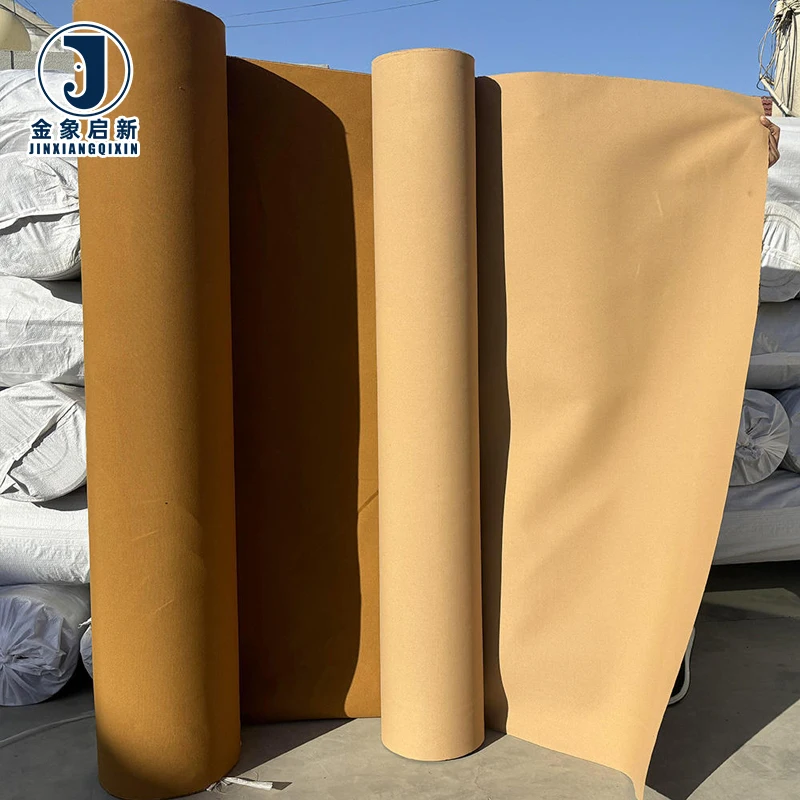
- Store rolls horizontally on pallets in a shaded, ventilated area to prevent flat-spot deformation of the laminated coating
- Avoid dragging cut panels across abrasive surfaces; the woven canvas base is tear resistant but surface abrasion marks the PVC layer
- Clean with mild detergent and soft brush; solvent-based cleaners may degrade the laminated PVC coating bond
- For field repairs, use compatible PVC repair tape applied to both sides of the tear with firm pressure
What to Include in Your Inquiry
Provide the specific application — whether membrane structure, industrial tent, or equipment cover — along with the environmental exposure conditions including any heat sources or fire safety regulations that apply at the installation site.
Specify the required flame retardant or heat resistant classification for your market, along with the total linear metres and preferred roll width. If finished panels with eyelets are needed rather than roll stock, include the cut dimensions and any site-specific reinforcement requirements.
Frequently Asked Questions
Q: What heat resistance grade is available and which test standard supports it?
A: Heat resistant grades are available for this PVC laminated canvas tarpaulin, with the specific classification and test standard documented on the material specification sheet. Confirm the temperature threshold and test method required by your project specification or local regulation, and we will match the formulation and provide the supporting test report with your order documentation.
Q: Which flame retardant classifications can be supplied — M2, B1, or NFPA 701?
A: Multiple flame retardant grades are available depending on the market and application requirement. Specify whether your project requires classification under European, American, or other regional standards. The applicable test certificate is included in the documentation package, ensuring the delivered PVC laminated canvas tarpaulin meets the compliance standard your site inspector or fire marshal requires.
Q: Is laminated PVC or knife-coated PVC better suited for membrane and inflatable structures?
A: Laminated PVC on woven canvas generally provides superior dimensional stability under sustained tension, which is critical for membrane structures that must maintain geometry. Knife-coated fabrics offer different flexibility characteristics. The choice depends on your structure’s engineering requirements — share your design load and inflation pressure specifications so the appropriate coating method can be recommended.
Q: Can custom widths and roll lengths be produced for large-format tent fabrication?
A: Custom widths and roll lengths are available, produced on our coating lines with the same process control applied to standard stock. Lead times depend on the width, colour, and treatment grade specified. Samples are developed within days for approval before full production runs, ensuring the PVC laminated canvas tarpaulin meets your fabrication requirements before commitment.
Q: Is anti-static treatment available for mining or aviation ventilation environments?
A: Anti-static treatment can be applied to PVC laminated canvas tarpaulin for environments where static discharge poses a hazard, such as mining ventilation ducts or aviation fuel handling areas. Specify the anti-static standard required by your site safety regulations, and we will confirm the treatment formulation and provide the corresponding test documentation with your shipment.