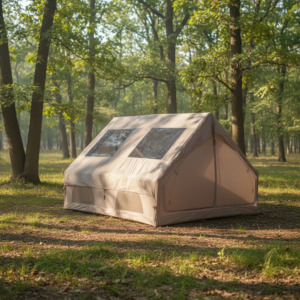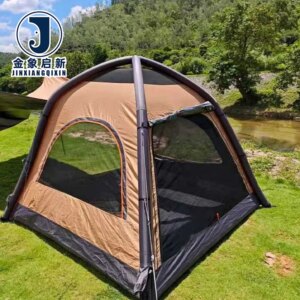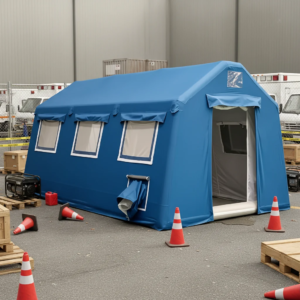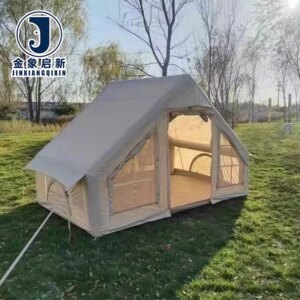
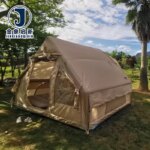
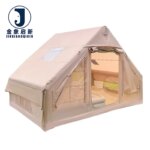
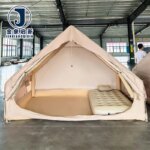
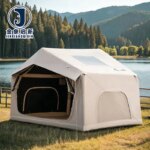
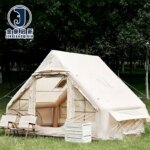
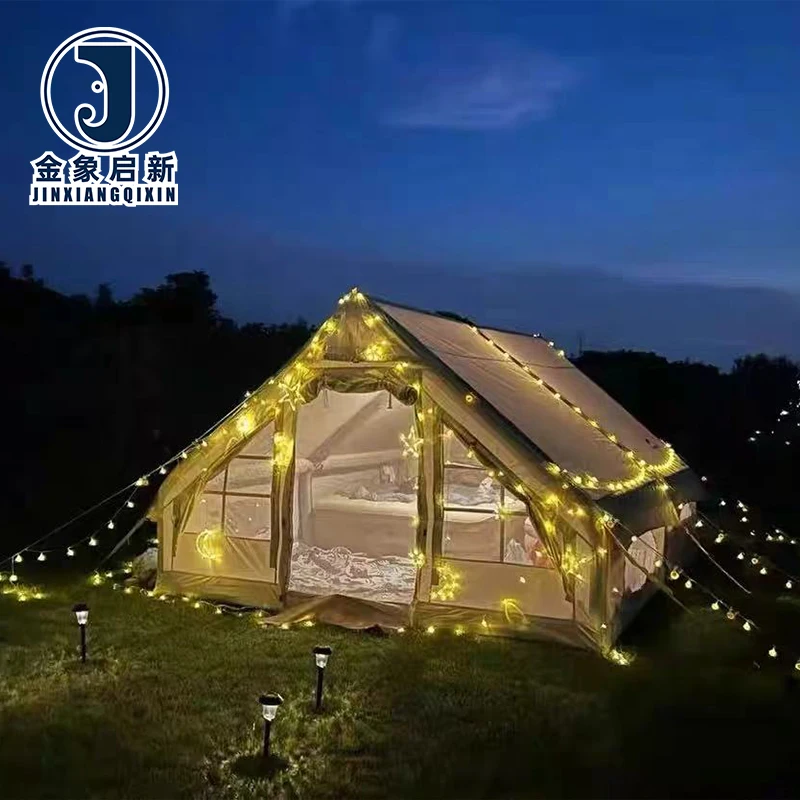
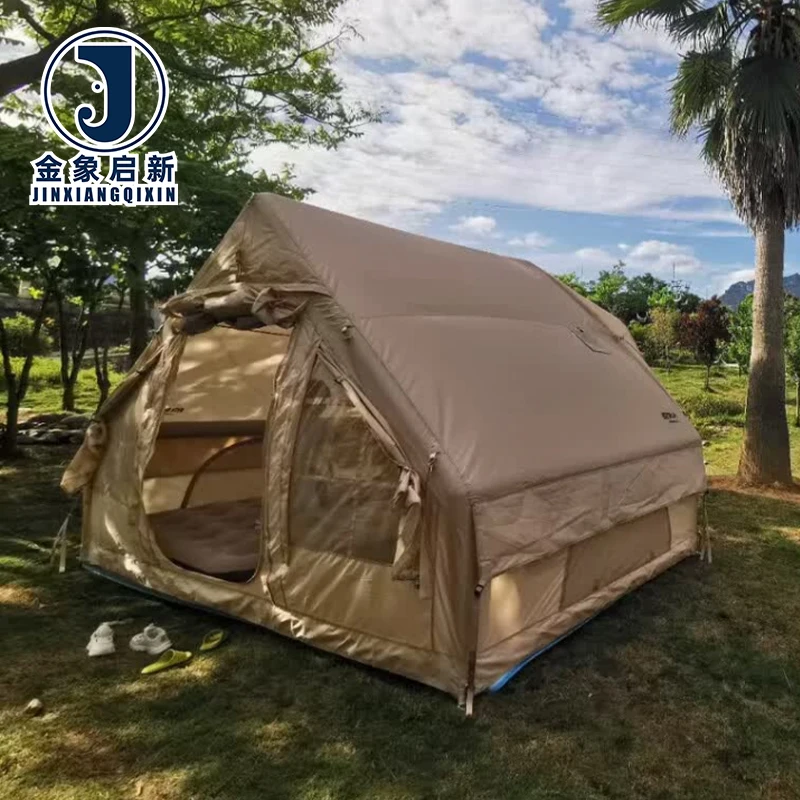
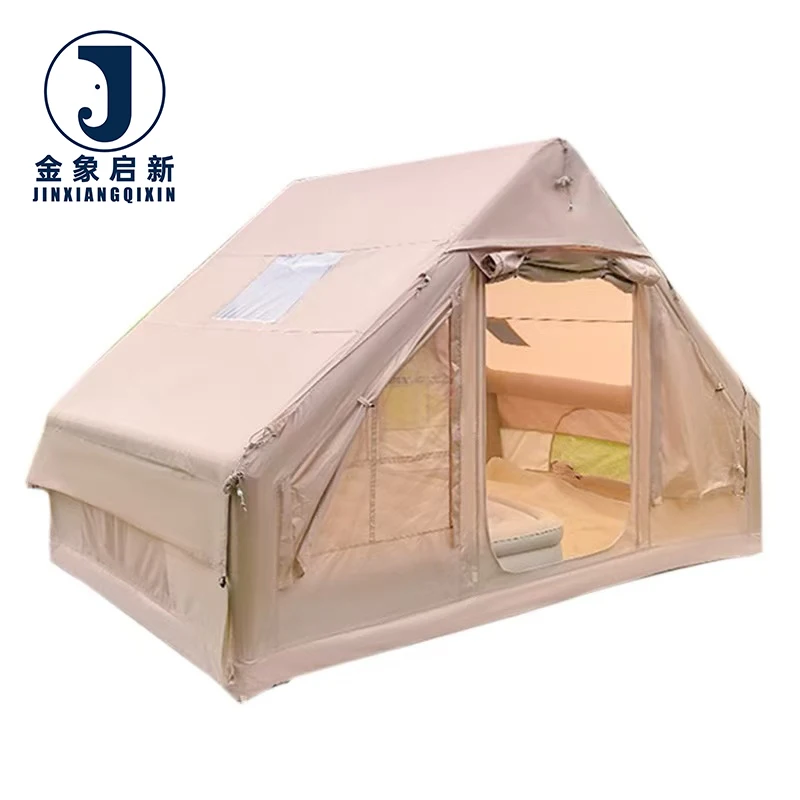
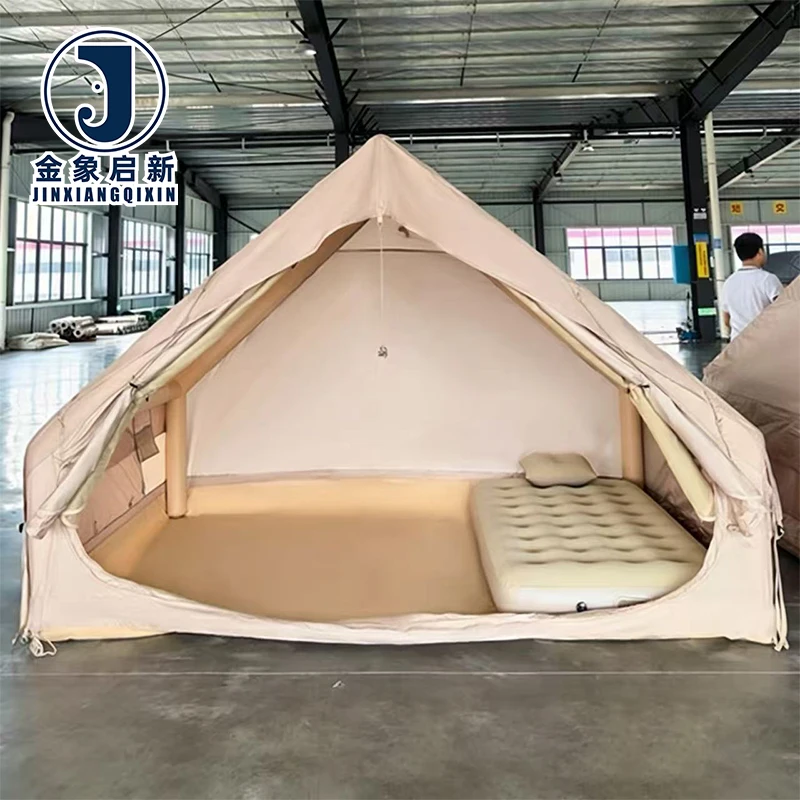
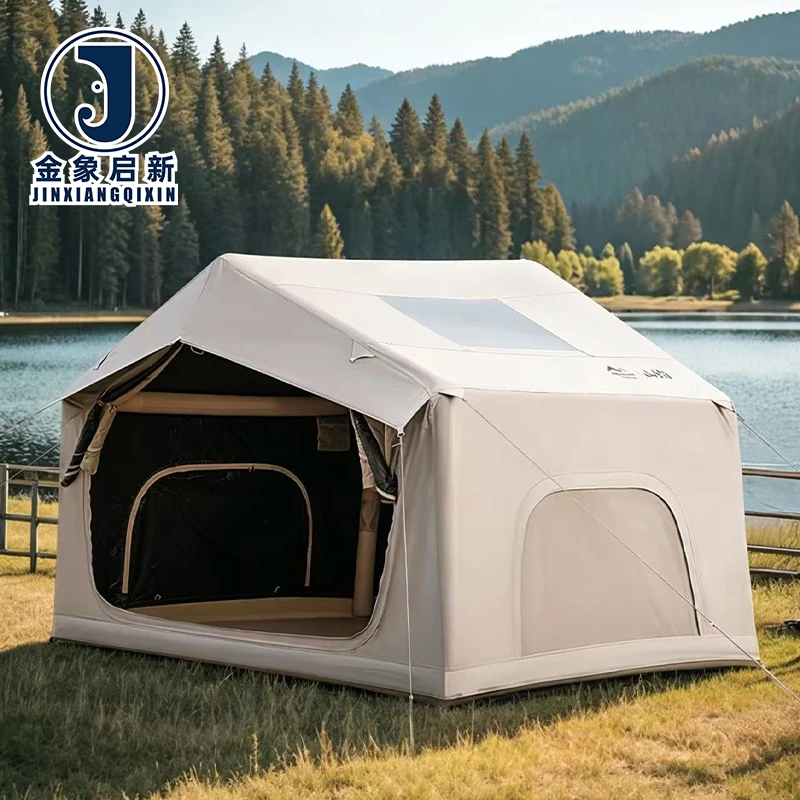
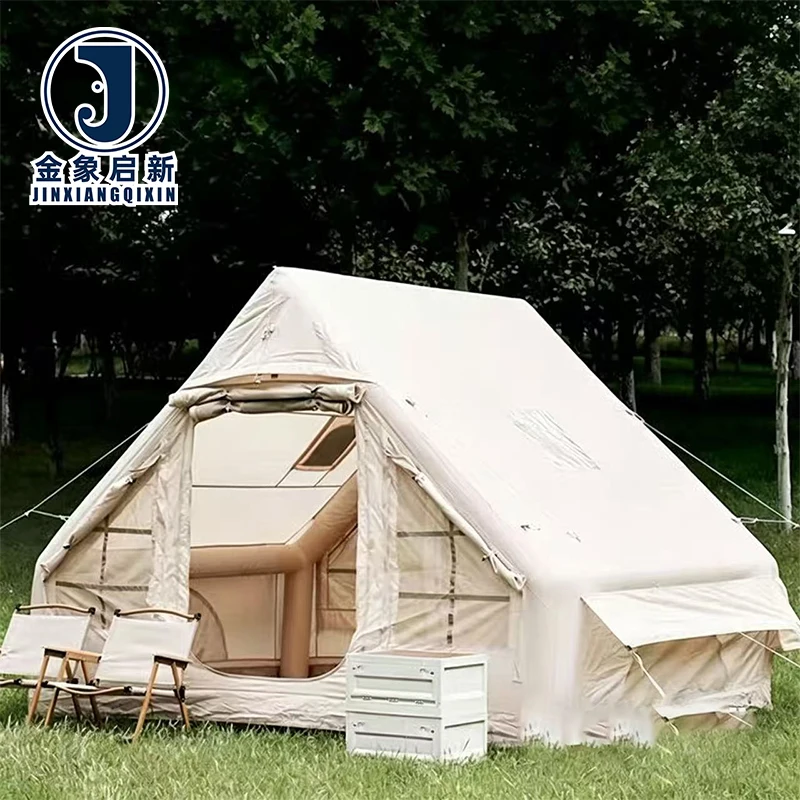
Coating Process Control — nearly 30 years of PVC coating experience applied to inflatable and membrane structure fabrics, ensuring adhesion and weight consistency across every production run.
Technical Specifications
| Parameter | Value |
|---|---|
| Product Type | Inflatable Tent |
| Core Material | PVC tarpaulin |
| Waterproof | Yes, fully coated construction |
| UV Resistance | Available with UV-resistant treatment — confirm grade required for your market |
| Fire Retardancy | Available in fire-retardant grades — confirm the grade required for your market |
| Anti-Static | Available with anti-static treatment — confirm standard required for your project |
| Tear Resistance | Tear-resistant construction |
| Capacity | 4-6 Person |
| Opening Mechanism | Quick automatic inflatable opening |
| Intended Season | Summer |
| Customization | OEM and ODM, sample customization, pattern printing |
| Standards | ISO 9001, ISO 14001, ISO 45001, CE |
Application Suitability
| Application | Exposure & Requirement |
|---|---|
| Mining and tunnelling inflatable shelters | Continuous underground moisture, dust, mechanical abrasion, mandatory fire-retardant and anti-static compliance |
| Aviation site inflatable enclosures | Fuel vapour proximity, wind loading, rapid deployment and collapse cycles, strict fire classification |
| Construction site inflatable covers | UV exposure, rain ingress, repeated inflation and deflation, site handling damage |
| Commercial summer camping product lines | Consumer UV and waterproof expectations, batch colour consistency across large retail orders |
| Membrane structure fabrication | Long-term tension, weld seam integrity, thermal expansion and contraction |
What Happens When Inflatable Fabric Ships Without Validated Test Reports
Certified inflatable tent fabric means every roll carries batch-specific documentation, not just a datasheet claim.
When a mining contractor receives ventilation duct or inflatable shelter material that lists "flame retardant" on the quotation but provides no test report, the entire installation can be rejected at site inspection. The same applies to anti-static claims in environments where surface resistivity must fall within a defined range. Sourcing teams frequently discover after delivery that the supplied grade does not match the safety standard their project demands, forcing removal and replacement at significant cost. Inflatable Tent Fabric fire retardant anti-static certified documentation should accompany every shipment as standard practice, not as a special request [NEED_CITE: fire classification standards for temporary structures in mining and construction environments].
Coating Integrity Under Inflation Pressure
Every time an inflatable tent or shelter is pressurised, the PVC tarpaulin shell stretches and flexes at the weld seams. The coating must maintain full adhesion to the base fabric through repeated inflation cycles without delaminating at the stress points. This fabric is produced across three full lines with in-process QA checks at the coating stage, verifying adhesion before the roll moves to finishing. For membrane structure manufacturers, consistent coating weight across the roll width means predictable behaviour when panels are joined by thermal welding.
Certification Documentation as a Procurement Gate
Contractors working on aviation, mining or tunnelling projects cannot accept material on trust alone. Site safety officers require written evidence of fire-retardant grade and anti-static surface resistivity before approving installation. This inflatable tent fabric ships with the documentation chain that technical buyers need: material specification sheets, batch test reports where applicable, and ISO 9001, ISO 14001, ISO 45001 and CE certificates. Procurement teams specify the exact grade their project demands, and the matching test data follows the shipment [NEED_CITE: ISO 1421 tensile and tear test methods for coated fabrics].
Reading Beyond the Spec Sheet for Inflatable Applications
The base fabric denier and weave density determine how a puncture or cut propagates under tension — critical for inflatable structures that operate under continuous internal pressure. A tighter weave limits tear spread, while the PVC coating weight governs waterproof integrity and UV shielding at the surface. Fire-retardant treatment operates within the coating chemistry itself, so specifying the correct grade requires knowing which safety standard your end market enforces. Anti-static treatment addresses surface charge accumulation, which matters in environments with combustible dust or vapour. Coating method and weight directly influence thermal welding behaviour, since the melt characteristics of the PVC layer dictate the temperature and dwell time needed for a structurally sound seam.
The Cost of Overlooking Grade Verification at the Specification Stage
When a buyer accepts a quotation that says "fire retardant" without confirming the specific grade, the delivered fabric may pass a basic flame test but fail the classification required by the project’s safety audit. The same pattern appears with anti-static treatment: surface resistivity measured under one standard does not automatically satisfy another. Inflatable structures deployed in mining or aviation environments face regulatory inspection, and a documentation gap at delivery can halt the entire project until replacement material arrives. Weld seam failures on inflatable shells often trace back to coating formulation differences between batches, making pre-production sample approval essential before committing to full production runs [NEED_CITE: weld seam failure modes in coated technical fabrics].
Why Technical Buyers Source This Fabric Here
Production runs are monitored by a dedicated QA and QC team conducting 100 percent inspection before dispatch, so inflatable tent fabric rolls leave the facility with verified coating weight and treatment consistency. The 10-person R&D team handles material selection, sample development and pattern printing within days, allowing buyers to validate weld behaviour and colour match before authorising bulk production. Three full production lines and 36 sets of processing equipment support the volume requirements of commercial outdoor gear manufacturers without sacrificing batch-to-batch uniformity. Every order ships with complete documentation: specification sheets, test reports for applicable grades, certificates and pre-shipment inspection records. Custom widths, colours and printing are accommodated without the extended lead times typical of specialist coated fabrics.
Documentation & Verification
- Material specification sheet stating PVC base fabric type, coating weight and treatment grades per roll
- Batch-specific test reports for fire-retardant grade and anti-static surface resistivity where applicable
- ISO 9001, ISO 14001, ISO 45001 and CE certificates included with shipment paperwork
- Pre-shipment inspection record confirming 100 percent QA and QC verification before dispatch
- Certificate of origin and customs documentation supporting international clearance
Fabrication, Handling & Storage
- Thermal welding temperature and dwell time should be calibrated to the PVC coating weight of this inflatable tent fabric before production runs begin
- Store rolls horizontally on racking to prevent compression marks on the coated PVC surface
- Use compatible PVC adhesive and primer for field repairs on inflatable shelter seams
- Clean with mild detergent only; aggressive solvents will degrade the PVC coating layer
- Allow cold-stored rolls to reach ambient temperature before unrolling to avoid cracking the PVC coating
How to Structure Your Inflatable Fabric Inquiry
Provide the intended application environment, including any fire-retardant or anti-static standards your project must satisfy. Specify the required roll width, colour references and whether pattern printing or OEM branding is needed. Confirm your annual volume and target delivery schedule so production can be allocated across available lines. Request a pre-production sample if weld parameters or material hand need validation before bulk commitment.
Frequently Asked Questions
Q: What fire-retardant grades are available for inflatable tent fabric, and how do I specify the correct one?
A: This inflatable tent fabric is available in fire-retardant grades suitable for mining, aviation and construction applications. Specify the safety standard your end market requires — such as a national mining code or aviation ground equipment classification — and the matching grade will be confirmed with a batch test report. Always request the test documentation before authorising full production.
Q: Can anti-static surface resistivity be tested and certified per batch?
A: Anti-static treatment is applied during coating and can be measured for surface resistivity. State the standard or resistivity range your project demands in your inquiry. Batch-specific test data is provided with shipment documentation so site safety officers can verify compliance during inspection without additional third-party testing delays.
Q: What customisation options exist for size, printing and colour matching?
A: OEM and ODM customisation covers width, length, colour matching to buyer reference and pattern printing for branding or identification. The R&D team develops samples within days so buyers can assess weld behaviour, colour accuracy and print resolution before committing to bulk production across the three available lines.
Q: What documentation accompanies each shipment for compliance and customs clearance?
A: Each order ships with a material specification sheet, applicable batch test reports, ISO 9001, ISO 14001, ISO 45001 and CE certificates, a pre-shipment inspection record, roll packing list and certificate of origin. This documentation package supports both regulatory compliance verification at the project site and customs clearance at the destination port.
Q: How does thermal welding perform on this PVC tarpaulin for inflatable structure assembly?
A: The PVC coating formulation on this fabric is designed for thermal welding, which is the standard joining method for inflatable and membrane structures. Weld temperature and dwell time should be calibrated using a pre-production sample to ensure seam strength matches the parent fabric. Consistent coating weight across the roll supports uniform weld behaviour throughout the production run.