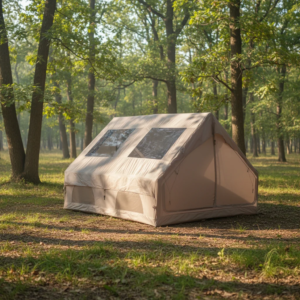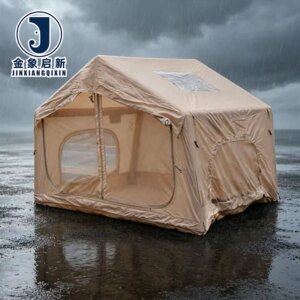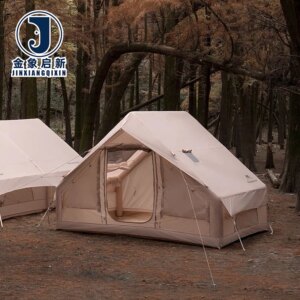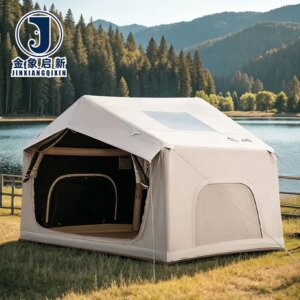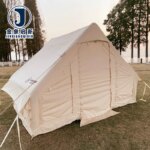
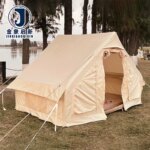
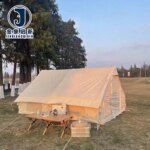
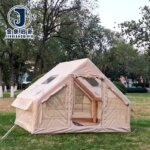
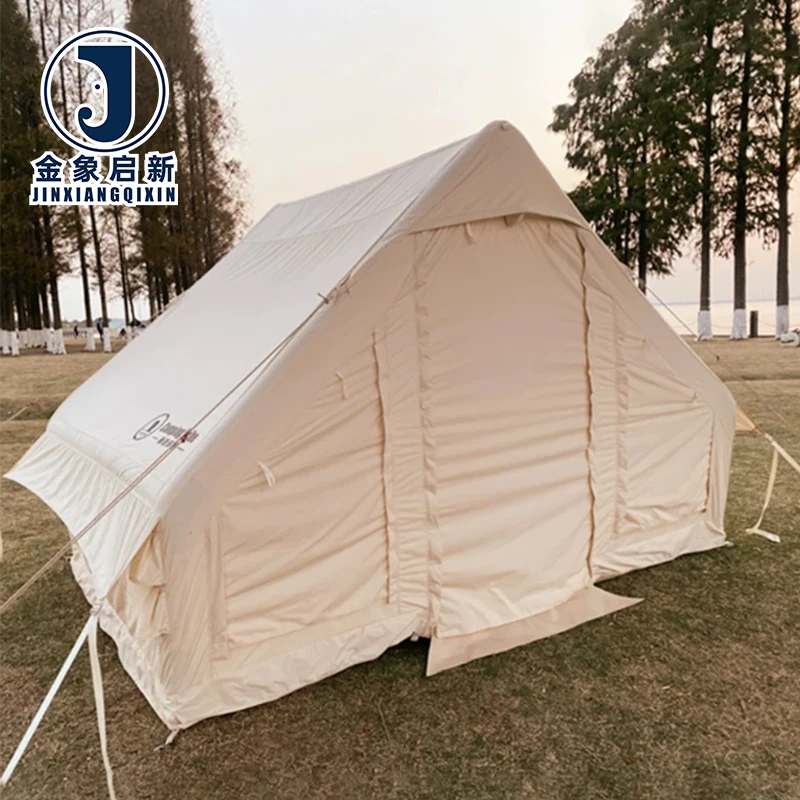
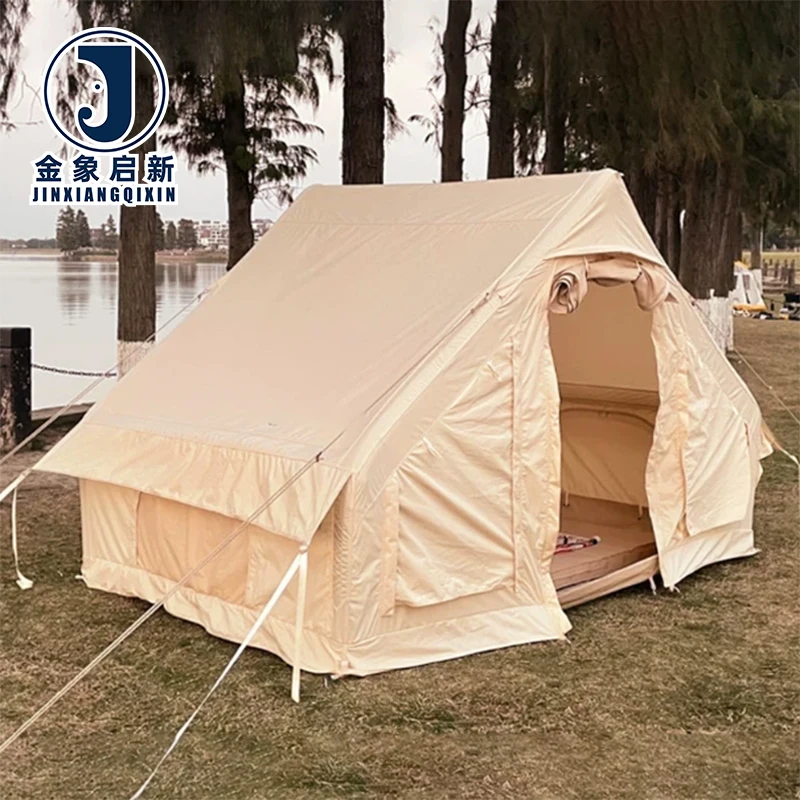
Proven Process Control — Nearly three decades of coated fabric production backing every roll of inflatable structure material, with in-process QA at every coating stage to hold GSM and adhesion within tolerance.
Technical Specifications
| Parameter | Value |
|---|---|
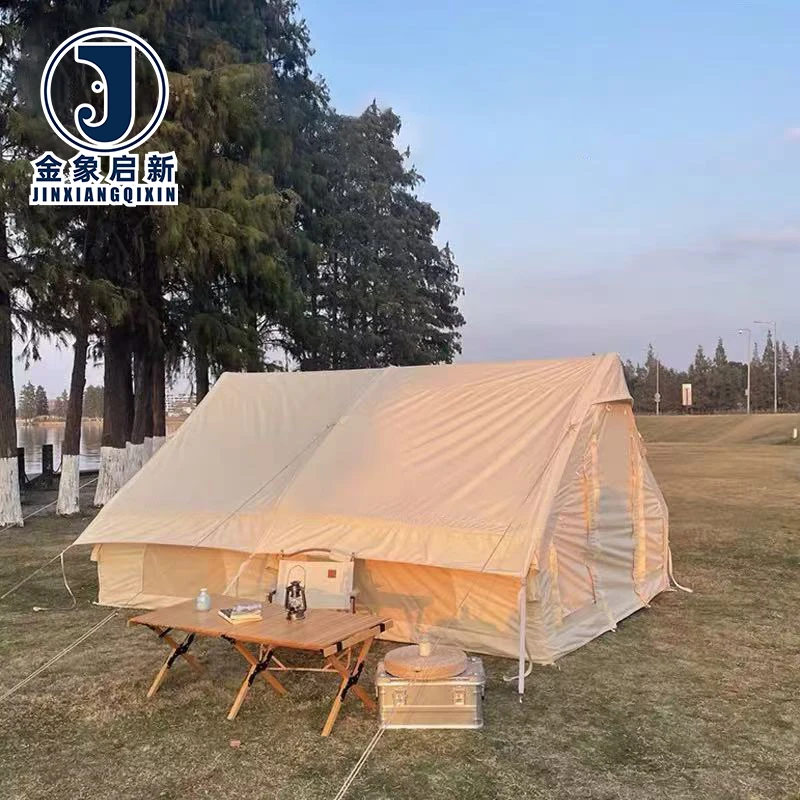
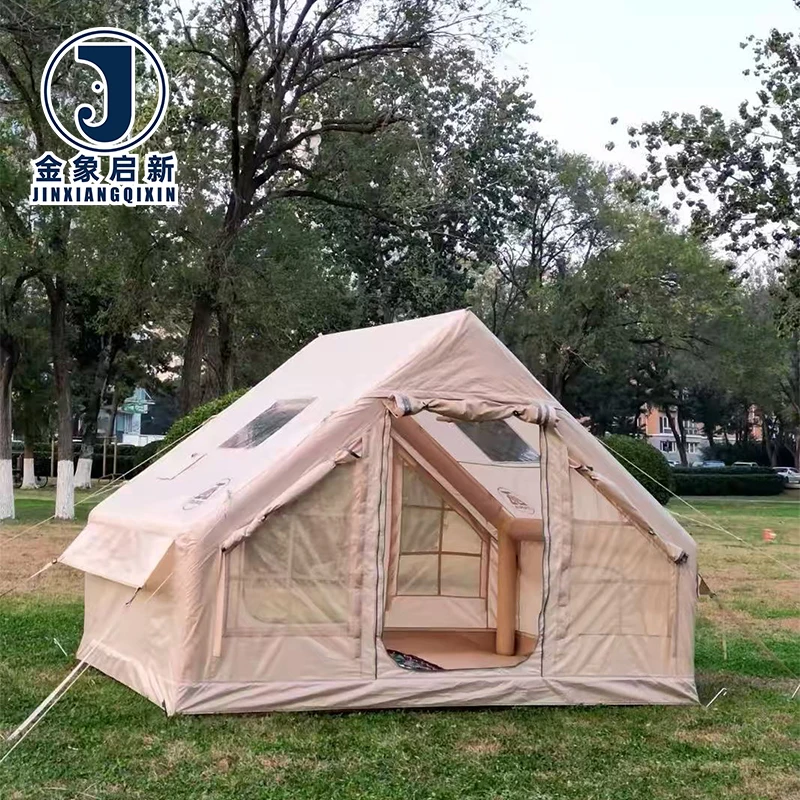
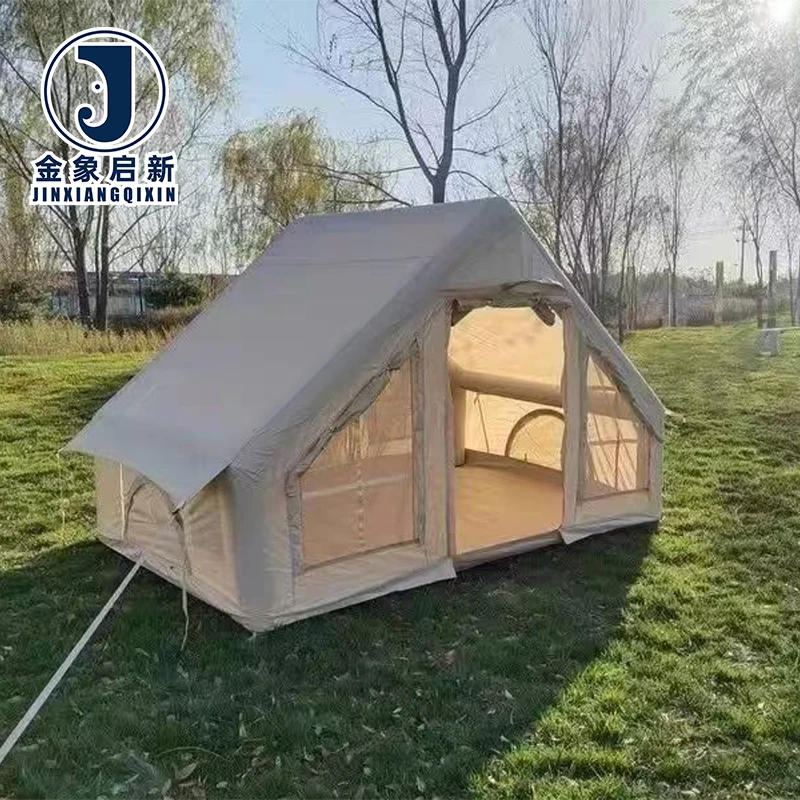
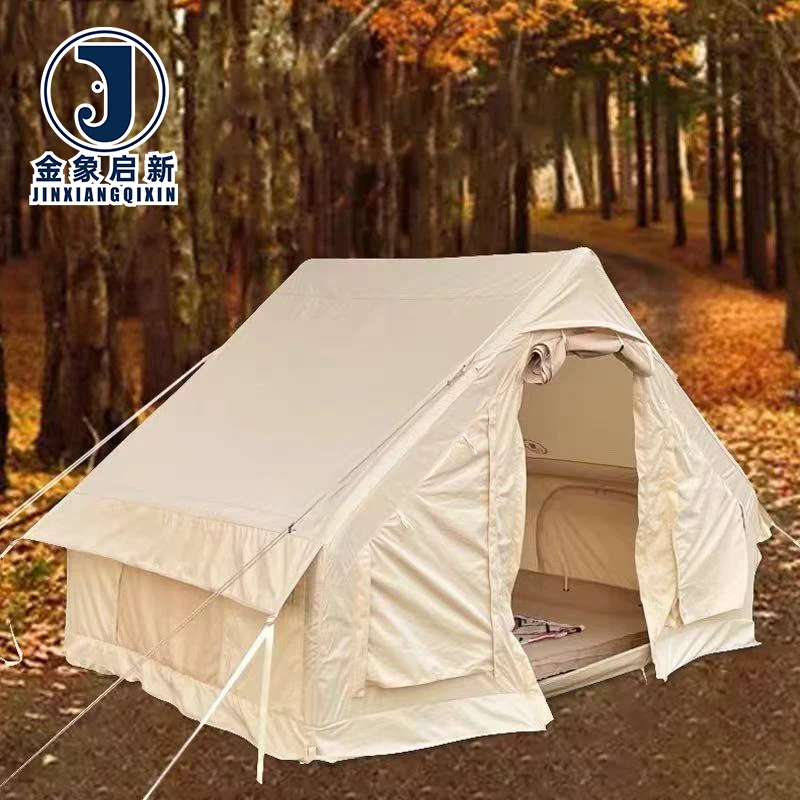
| Product Type | Inflatable Tent |
| Core Material | UV Water-resistant PVC Fabric |
| Fabric Thickness Range | 0.3mm to 0.8mm |
| UV Resistance | Maintains 90% UV protection after 500 hours accelerated weathering (test basis not stated) |
| Tear Resistance | Exceeds 300N warp and weft (test basis not stated) |
| Wind Load Capacity | Up to 12m/s (verify against site conditions) |
| Airtightness | Maintains pressure for 72 hours (test basis not stated) |
| Weight Reduction | 15% lighter than traditional multi-layer tents |
| Key Features | Waterproof, UV-resistant, Tear-resistant, Single-layer inflatable structure |
| Customization | OEM & ODM — sample customization, pattern printing, custom Pantone colours |
Application Suitability
| Application | Exposure & Requirement |
|---|---|
| Industrial site temporary shelters | Constant UV exposure, wind loading, rapid deployment between sites, abrasion from ground contact |
| Outdoor event management structures | Multi-day weather exposure, high foot traffic, visual branding consistency across units |
| Construction site accommodations | Dust ingress prevention, thermal comfort, fire compliance on regulated sites |
| Mobile exhibition spaces | Frequent inflation and deflation cycles, transport abrasion, colour matching across batches |
| Mining and tunnelling camp structures | Remote deployment, extended unattended operation, high wind and particulate exposure |
What Happens When Inflatable Structure Fabric Fails on Site
Inflatable tent manufacturer selection often comes down to who can prove performance before the first unit ships.
Buyers ordering custom inflatable structure fabric for commercial deployment face a specific set of risks. Fabric that degrades under UV after a single season forces early replacement across an entire fleet of structures. Airtightness claims that lack documented testing lead to pressure loss in remote locations where no maintenance crew is available. Batch-to-batch variation in colour or coating weight becomes visible the moment two units stand side by side at a marketing activation or event site. These failures are expensive not because of the fabric cost, but because of the operational downtime and reputational damage they create. [NEED_CITE: coated fabric degradation mechanisms under prolonged UV exposure]
Coating Formulation and UV Stability in the Field
PVC inflatable tent fabric requires a coating formulation that balances plasticiser retention with UV stabiliser loading. When stabilisers are under-dosed, the surface chalks and the base fabric becomes exposed to moisture ingress. The material used here is formulated to retain the majority of its UV protection through extended accelerated weathering cycles, which correlates to sustained performance across multi-season commercial deployments. Consistent coating weight across the full production run ensures that no single panel in a multi-unit order degrades faster than the rest.
Airtightness Engineering for Unattended Commercial Operation
The inflation bladder and seam construction must hold internal pressure without continuous monitoring. A 72-hour pressure retention test provides a baseline for how the structure behaves during multi-day events or remote site deployments where daily inspection is impractical. Welded seams on this inflatable tent fabric are the most common failure point — the bond between coating layers must exceed the tensile load imposed by internal pressure and wind-induced flexing. Single-layer construction reduces the total seam length, which in turn reduces the number of potential leak paths across the structure. [NEED_CITE: heat-welded seam strength testing for PVC coated fabrics]
How Thickness, Tear Strength, and Wind Load Interact
Fabric thickness between 0.3mm and 0.8mm directly influences both the inflation pressure the structure can hold and the tear propagation resistance when a puncture occurs. A thicker coating adds weight but provides a larger material buffer before a tear reaches the base fabric. The stated tear resistance exceeding 300N in both warp and weft directions indicates that the base fabric weave contributes meaningfully to structural integrity — the coating alone cannot carry that load. Wind load capacity to 12m/s depends on the combined effect of fabric tension, anchor point design, and inflation pressure, so site-specific assessment remains necessary. Coating adhesion to the base fabric determines whether a surface puncture stays localised or delaminates across a panel.
The Cost of Underspecifying Inflatable Structure Fabric
Specifying inflatable tent fabric on thickness alone without verifying tear strength or coating adhesion leads to field failures that are difficult to repair on site. A coating that is too thin for the intended wind load will tear at stress concentration points around door openings and anchor attachments. If airtightness is not verified per production batch, pressure loss rates vary between units — some hold for days while others deflate overnight. Colour variation between production batches forces buyers to reject partial shipments or accept visible mismatches across a commercial installation. These problems compound when the supplier cannot provide test documentation tied to the specific batch delivered. [NEED_CITE: coating adhesion failure modes in inflatable PVC structures]
Why Source Inflatable Tent Fabric Through This Facility
Three full production lines and 36 sets of professional equipment support the volume consistency required for multi-unit commercial orders. A dedicated 10-person R&D team handles sample development, pattern printing specifications, and custom thickness formulation before production begins. Every roll undergoes full-process QA and QC inspection rather than end-of-line sampling, catching coating weight deviation and adhesion faults before they reach the cutting table. Sample turnaround within days allows buyers to verify material hand-feel, weld behaviour, and colour accuracy before committing to production volume. ISO 9001, ISO 14001, ISO 45001, and CE certifications are held at facility level and available for compliance documentation.
Documentation & Verification
- Material specification sheet stating fabric thickness, base fabric construction, and coating type per batch
- UV and tear resistance test reports matched to the specific production run shipped
- Airtightness test record documenting pressure hold duration and test conditions
- ISO and CE certificate copies formatted for customs clearance in destination markets
- Pre-shipment inspection record covering coating weight, colour, and dimensional checks
- Roll packing list with batch traceability codes for field-level material tracking
Fabrication, Handling & Storage
- Heat-weld seams at temperatures matched to the 0.3mm–0.8mm thickness range to avoid coating burn-through or cold joints
- Store rolls vertically on padded racks to prevent flat-spot creasing that compromises inflation uniformity
- Clean PVC surfaces with pH-neutral detergents — solvent-based cleaners strip the UV stabiliser layer
- Allow fabric to reach ambient temperature before inflation in cold conditions to prevent low-temp cracking
- Repair field punctures with compatible PVC patch kits matched to the original coating thickness
- Cut patterns to maximise panel yield and minimise cross-grain seams that concentrate stress under wind load
Requesting a Quotation for Your Project
Provide the intended application, expected deployment duration, and site wind conditions so we can recommend the appropriate thickness and construction. Specify any colour matching requirements against Pantone references, along with logo or pattern printing needs. Confirm the fire classification or compliance standard required by your destination market. Indicate whether you need finished inflatable tent units or fabric rolls for your own fabrication line.
Frequently Asked Questions
Q: Can fabric thickness and colour be customised per project?
A: Yes. The material is available in thicknesses from 0.3mm to 0.8mm, with custom Pantone colour matching and pattern printing supported through OEM and ODM services. Custom samples are developed before production so buyers can confirm visual and physical properties against their specification.
Q: Are third-party test reports provided for UV and tear performance?
A: Test data for UV resistance and tear strength is supplied with each production batch. Reports document the testing conditions and results so buyers can verify compliance with project specifications and destination market requirements before the material ships.
Q: What is the airtightness standard and pressure retention time?
A: Each inflatable structure batch undergoes a pressure retention test documented at 72 hours. The test record is included with shipment documentation, giving buyers a verified baseline for field deployment planning and maintenance scheduling across remote or unattended sites.
Q: How do ISO and CE certifications support import compliance?
A: Facility-level ISO 9001, ISO 14001, ISO 45001, and CE certifications are available as documented copies for customs clearance and internal procurement audits. These documents support regulatory compliance in markets that require certified manufacturing systems for imported technical textiles.
Q: Is batch-to-batch colour consistency guaranteed across large orders?
A: Colour is controlled through formulation records and checked during pre-shipment inspection against the approved sample reference. Buyers ordering multiple units for a single deployment receive material from matched production runs to maintain visual uniformity across the installation.