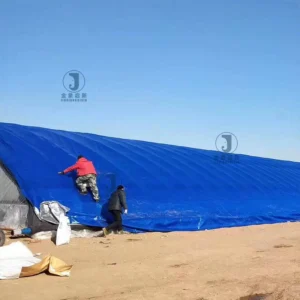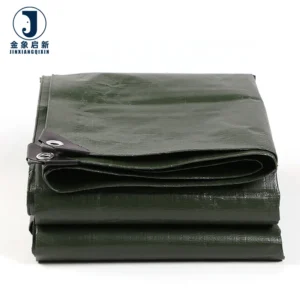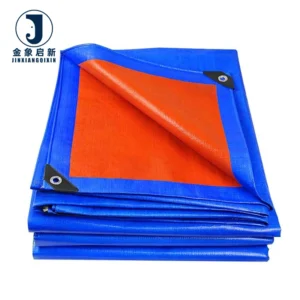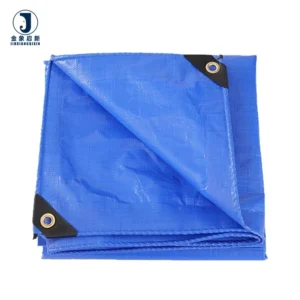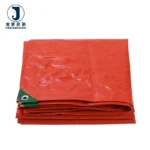
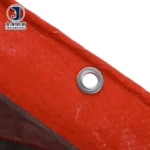
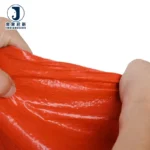
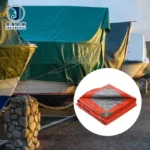
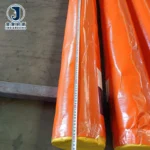

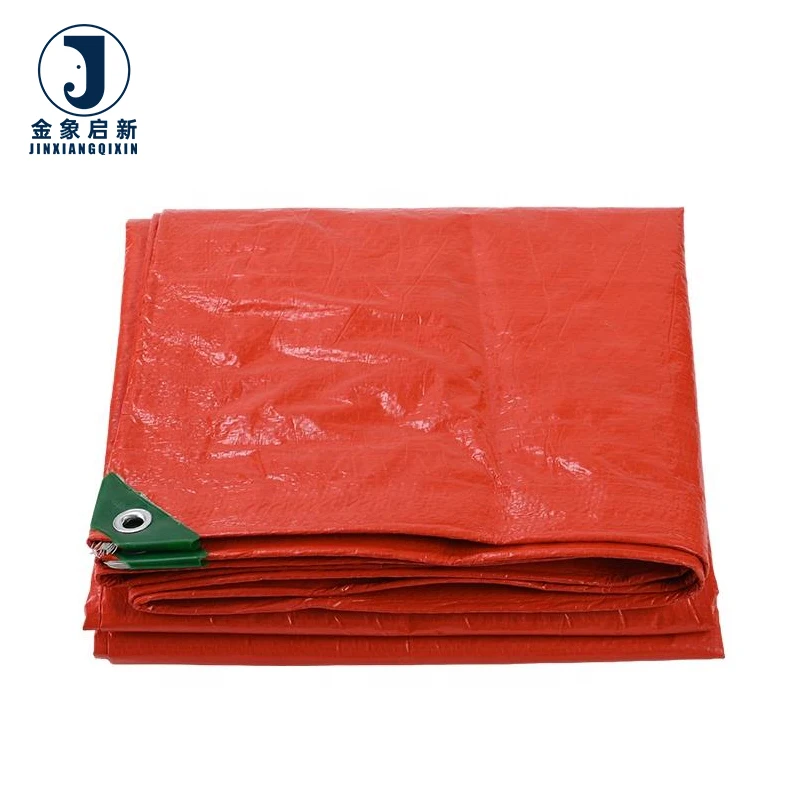
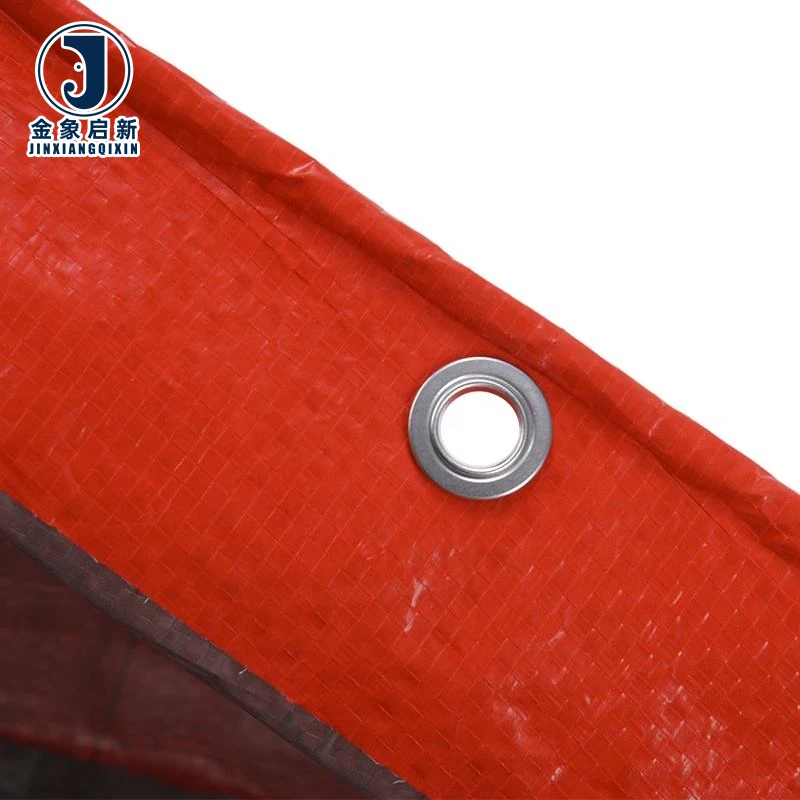
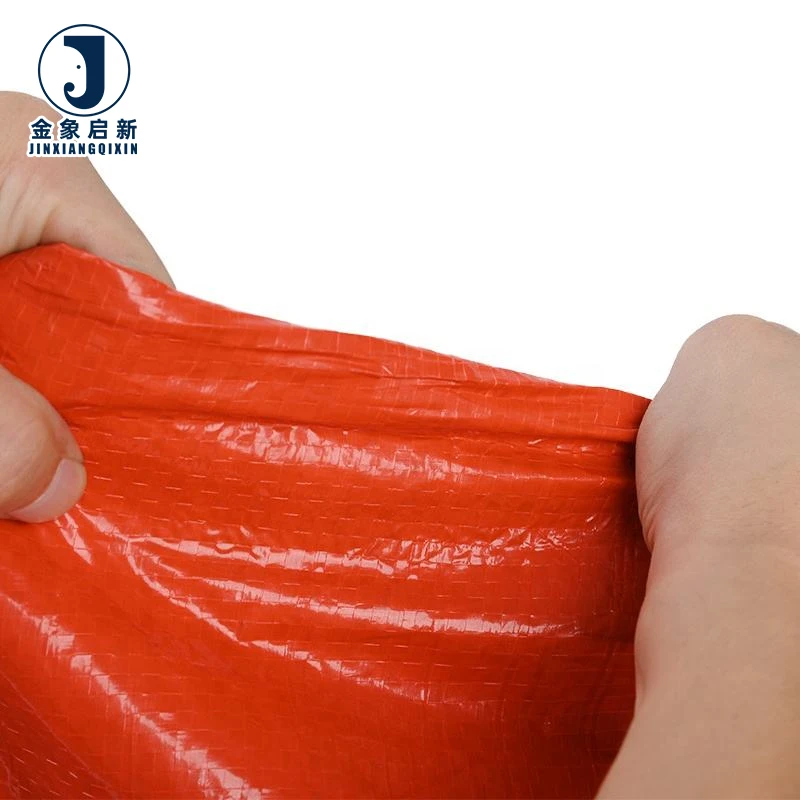
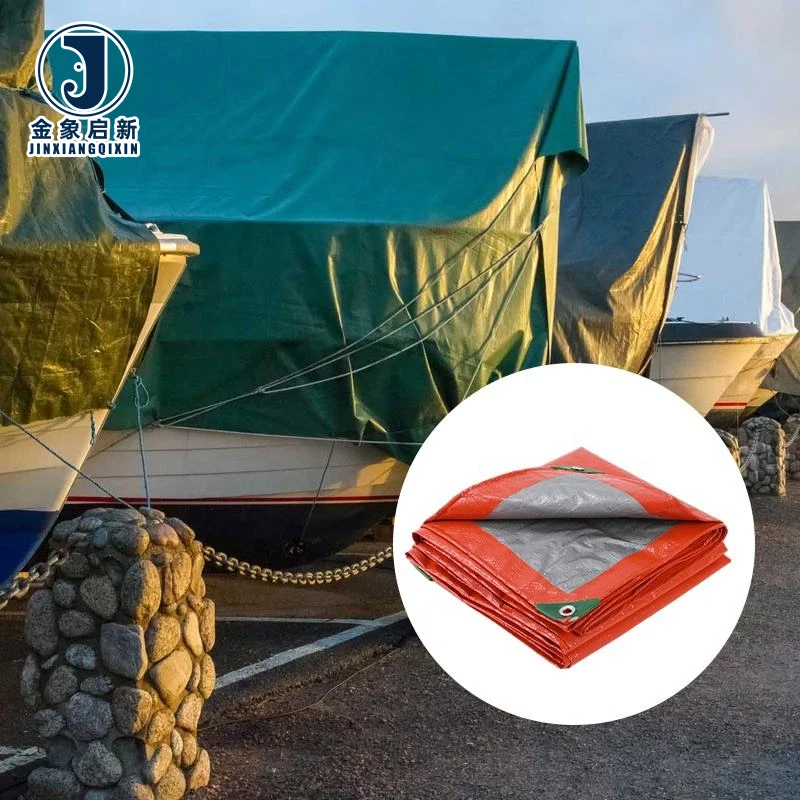
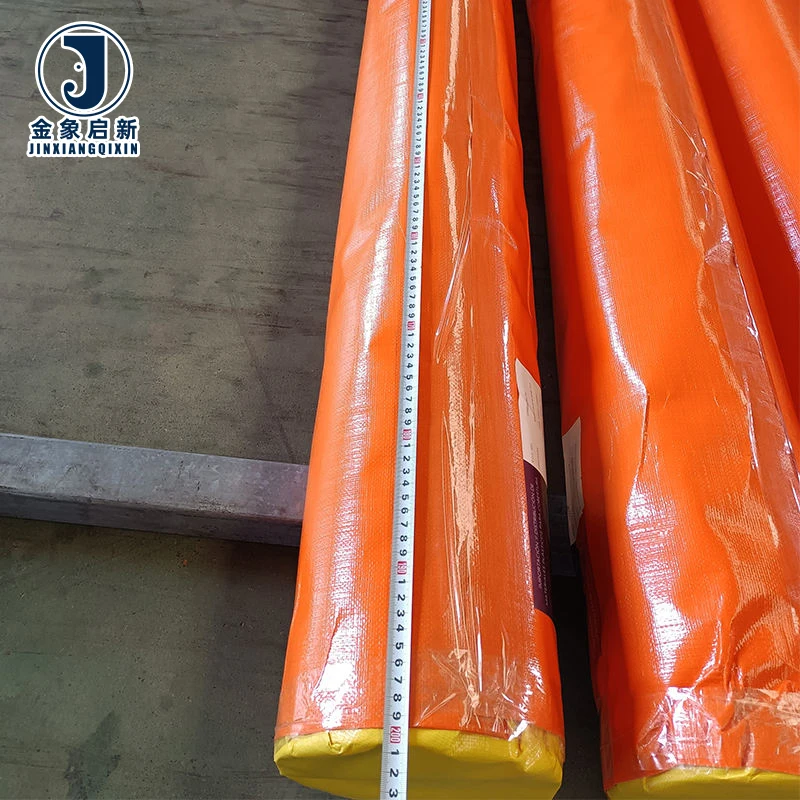
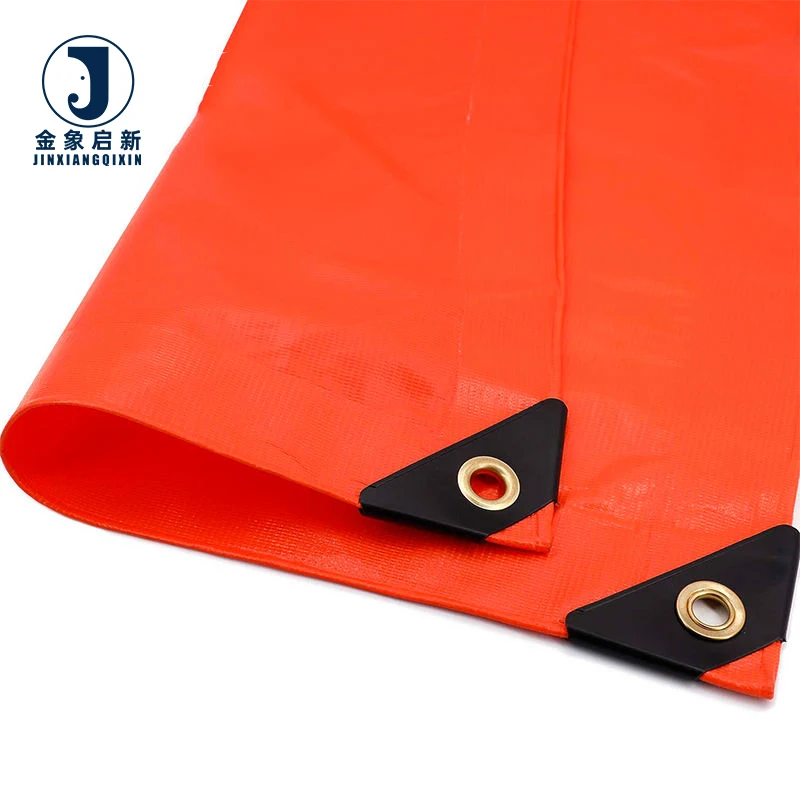
Deep Process Control on Coating Weight — every roll of PE tarpaulin is verified for GSM and tensile consistency across three full production lines before it leaves the facility.
Technical Specifications
| Parameter | Value |
|---|---|
| Product Type | PE Tarpaulin |
| Material | Polyethylene (PE) coated fabric |
| Weight Range | 40g~500g/m² (confirm grade for your application) |
| Thickness Range | 0.18–0.35 mm |
| Knitting Density | 8×8 / 10×10 / 12×12 (options available) |
| Tensile Strength (Lightweight 80–110 g/m²) | Meridian 300–500 / Latitude 250–450 N/5cm |
| Tensile Strength (Medium 120–150 g/m²) | Meridian 500–800 / Latitude 400–700 N/5cm |
| Tensile Strength (Heavy-duty 160–240 g/m²) | Meridian 900–1200 / Latitude 700–1000 N/5cm |
| Water Resistance | Double waterproof surfaces |
| UV Treatment | Available (test basis not stated in source) |
| Anti-Mildew | Available (grade not stated in source) |
| Features | Tear-resistant, anti-aging, reinforced corners |
| Size | Custom size |
| Color | Custom color |
| Standards | ISO 14001, ISO 45001, CE |
Application Suitability
| Application | Exposure & Requirement |
|---|---|
| Mining and tunnelling ventilation duct | Continuous underground airflow, moisture, mandatory fire-retardant and anti-static compliance documentation |
| Aviation ground-support ducting | Flame-retardant fabric certification required, frequent deployment and retraction cycles |
| Specialist membrane and inflatable structures | Tensile load under wind and internal pressure, UV exposure on external surfaces |
| Truck and trailer load protection | Road abrasion, tie-down flex stress, weather and UV exposure |
| Agricultural and warehouse coverage | Prolonged sun and rain contact, mildew risk in humid storage environments |
Why a PE Tarpaulin Without Documented Compliance Fails the Site Inspection
Every roll must leave the factory with test reports and compliance paperwork matched to the exact grade supplied, not a generic certificate.
Ventilation duct and technical fabric shipped without fire-retardant or anti-static documentation specific to the batch creates an immediate compliance gap on mining and aviation sites. The contractor is left holding material that cannot be signed off by the site safety officer, halting installation and delaying project milestones. [NEED_CITE: fire-retardant and anti-static compliance requirements for underground ventilation fabric] When the certification arrives weeks later as a separate PDF that references a different batch number, the inspector will still reject it. This is not a paperwork delay — it is a material rejection that forces a reorder and a schedule slip.
Compliance-Driven Fabric Selection for Technical Applications
Sourcing Fire Retardant PE Tarpaulin or Anti-Static Ventilation Duct fabric is not a commodity purchase — it is a compliance decision. The grade of fire retardancy must match the regulatory framework of the project jurisdiction, whether that is a mining authority’s underground ventilation standard or an aviation ground-support specification. Selecting a fabric without first confirming the required grade and obtaining a matching test report is the most common cause of site rejection.
Mapping Material Grades to Project Requirements
Different sites demand different performance thresholds, and the fabric supplied must carry documentation that references the exact specification the site mandates. Fire-retardant grades vary by market and by application, and anti-static performance is measured by surface resistance values that must fall within the project’s acceptable range. [NEED_CITE: surface resistance measurement methods for anti-static technical textiles] Requesting sample development with compliance documentation before committing to bulk production eliminates the mismatch between what the quotation states and what the site inspector will accept on delivery.
Understanding the Weight-to-Strength Relationship in PE Coated Fabric
GSM alone does not determine how a PE tarpaulin will perform under load. A 150 g/m² fabric with a 10×10 knitting density will behave differently under tensile stress than a 150 g/m² fabric with an 8×8 mesh, because the base fabric construction dictates how load is distributed across the weave. Coating weight and adhesion method further influence tear propagation — a heavier coating does not automatically mean higher tear resistance if the bond between coating and base fabric is weak. The tensile strength values across the lightweight, medium and heavy-duty grades reflect the combined effect of mesh count, base fabric denier and coating thickness working together. Buyers specifying for structural membrane or ventilation duct applications should evaluate tensile data alongside GSM rather than using weight as the sole selection criterion.
The Hidden Cost of Specifying the Wrong Grade for Your Application
Selecting a PE tarpaulin grade based only on price or availability, without verifying that the fire-retardant or anti-static treatment matches the site’s regulatory requirement, leads to material rejection at inspection. [NEED_CITE: consequences of non-compliant ventilation duct fabric in mining operations] Fabric that arrives lighter than the quoted GSM will show premature failure at stress points where the material flexes under load. Colour inconsistency between rolls in a single order becomes visible once the tarpaulin is installed side by side on a truck fleet or site enclosure, forcing a costly replacement. Welded seams on underspecified grades tend to fail before the fabric itself does, precisely at the point where the load flexes most during transport or under wind pressure.
Why Procurement Teams Source PE Tarpaulin From This Facility
Nearly 30 years of focused production on coated fabric provides deep process control over coating weight and adhesion consistency, which directly addresses the risk of GSM deviation on arrival. Three full production lines and 36 sets of professional equipment support bulk capacity with on-time delivery for mining and tunnelling ventilation duct orders. A 10-person R&D team handles custom sizing, material selection and sample development within days for compliance-specific requirements. Dedicated QA and QC at every production stage with 100% pre-shipment inspection ensures that fire-retardant and anti-static test reports match the exact batch supplied. Material specification sheets, pre-shipment inspection records and certificates of origin ship with every order to close the documentation loop.
Documentation & Verification
- Material specification sheet confirming GSM, base fabric, coating weight and colour reference for each PE tarpaulin batch
- Fire-retardant and anti-static test reports issued against the specific grade and batch number supplied
- Pre-shipment inspection record verifying roll-to-roll weight and tensile consistency before dispatch
- Certificate of origin and customs support documentation included with every container shipment
- ISO 14001, ISO 45001 and CE certificates provided as part of the standard shipment package
Fabrication, Handling & Storage
- Heat-sealing temperature and dwell time should be matched to the PE coating thickness grade selected
- Reinforced corners on cut-to-size covers require additional weld passes at high-stress tie-down points
- Roll stock should be stored horizontally on pallets to prevent permanent creasing of the PE coating surface
- Unfold heavy-duty 160–240 g/m² grades in moderate temperatures to avoid stiffness-related cracking at fold lines
- Use mild detergent for cleaning; avoid solvents that degrade the PE coating and anti-mildew treatment
- Allow for seam overlap when calculating cutting layout to maintain structural integrity at welded joints
Requesting a Compliant Material Proposal
Provide the specific fire-retardant or anti-static standard your site requires, along with the application environment and exposure conditions. Specify whether you need roll stock or finished cut sizes with reinforced edges, and include the target dimensions, colour and annual volume for an accurate lead-time and compliance documentation proposal. Sample development is available within days to verify the grade before you commit to production.
Frequently Asked Questions
Q: What fire-retardant grade does the PE tarpaulin carry and does it match my site’s regulatory requirement?
A: Fire-retardant treatment is available across the PE tarpaulin range, but the specific grade must be confirmed against your project’s regulatory standard. We supply the test report matched to the exact batch and grade ordered. Request sample development with documentation before bulk commitment to ensure compliance alignment.
Q: How is anti-static performance measured and what surface resistance value is documented?
A: Anti-static treatment for ventilation duct fabric is characterised by surface resistance values measured against recognised test methods. The documented value is included in the test report that ships with your order. Specify your project’s acceptable range during inquiry so the correct treatment grade is selected and verified.
Q: Can ventilation duct be supplied in custom diameters and lengths with certified joints?
A: Custom sizing is supported across all three production lines for both ventilation duct and tarpaulin applications. Diameter, length and joint configuration are developed based on your project drawings. Samples are produced within days for dimensional and compliance approval before bulk production begins.
Q: What compliance documentation ships with each order for mining and aviation projects?
A: Every shipment includes a material specification sheet, fire-retardant or anti-static test reports matched to the supplied batch, a pre-shipment inspection record, certificate of origin and standard ISO and CE certificates. This documentation package is designed to satisfy site inspection requirements without follow-up requests.
Q: How are custom sizes sampled and approved before bulk production?
A: Provide your application details, dimensions and compliance requirements. The R&D team develops a sample within days, accompanied by the relevant specification sheet and test documentation. Once you approve the sample and its paperwork, bulk production proceeds with identical material, treatment and quality controls.