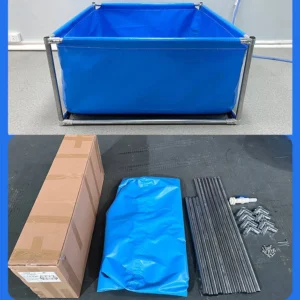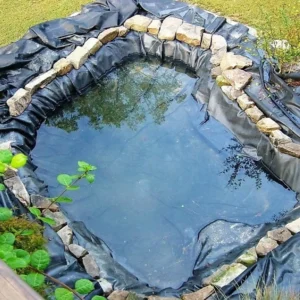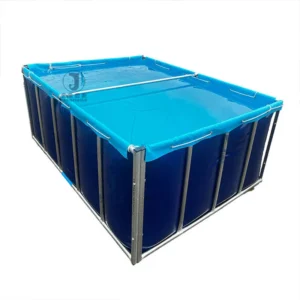
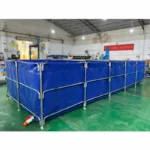
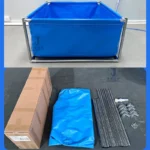
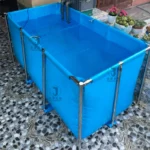
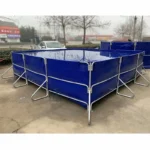
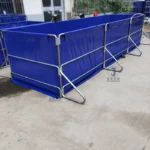
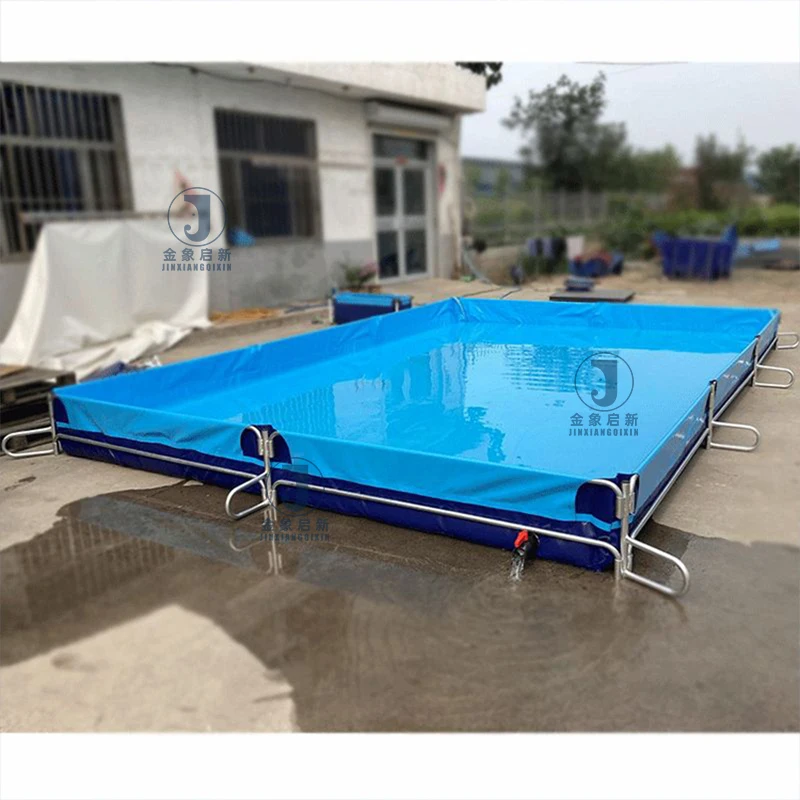
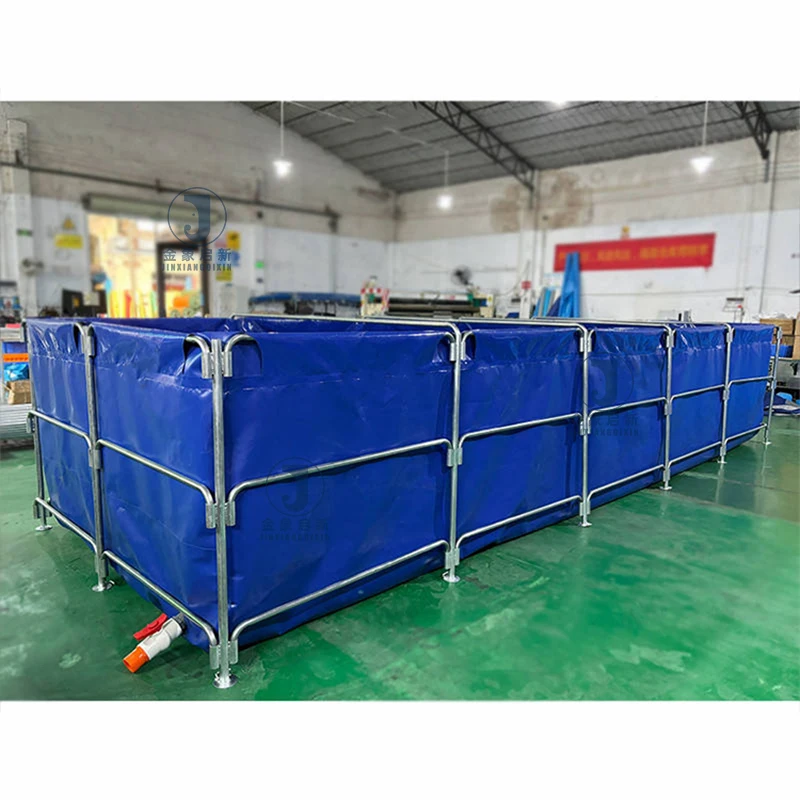
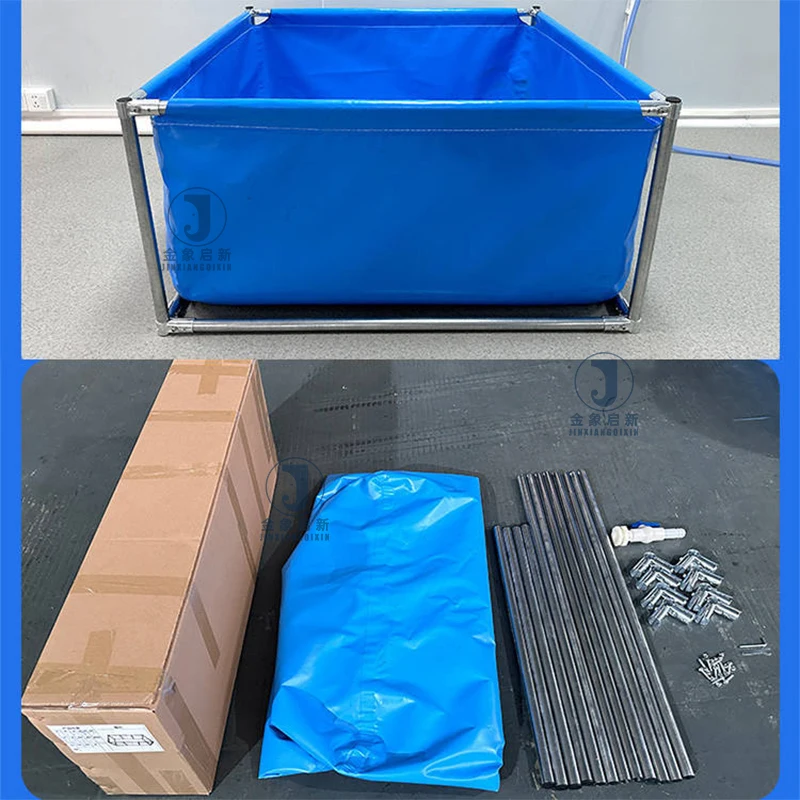
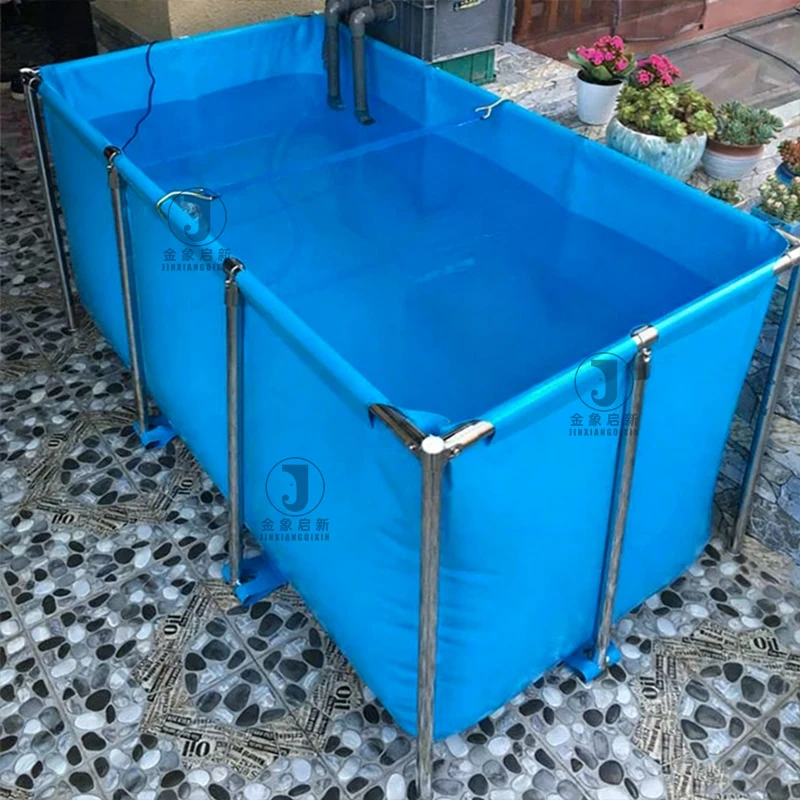
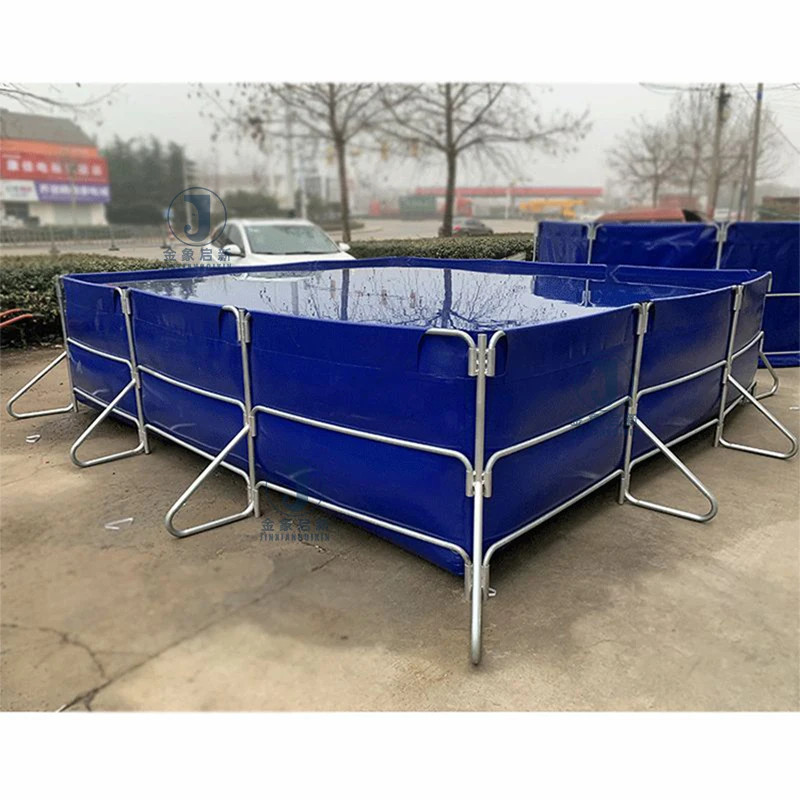
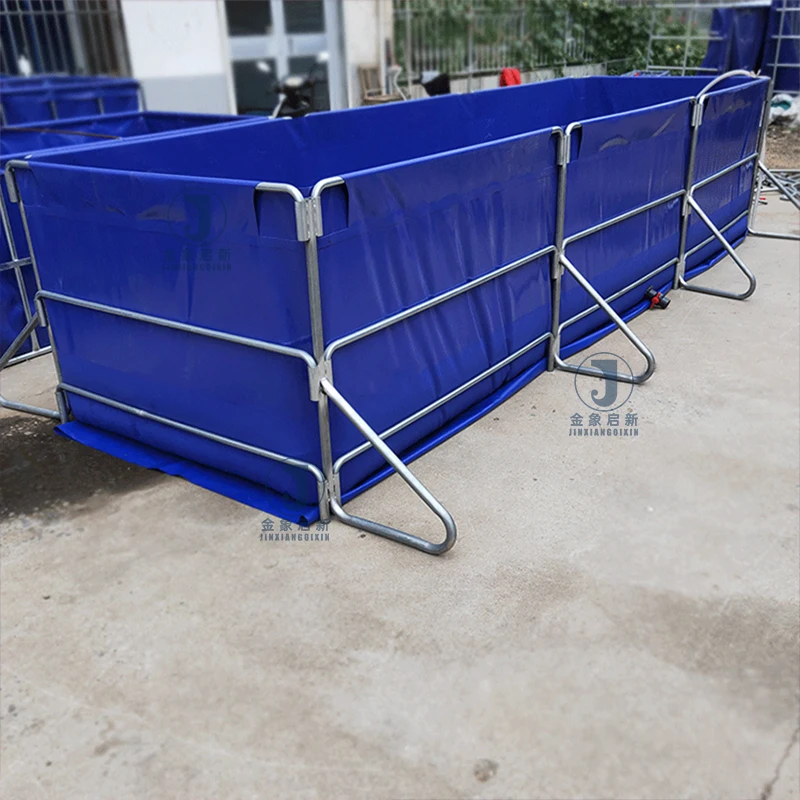
Proven Coating Control — Nearly 30 years of PVC coating process mastery ensures consistent adhesion and weight accuracy across every pond liner order.
Technical Specifications
| Parameter | Value |
|---|---|
| Product Type | Pond Liner |
| Material | PVC coated polyester tarpaulin |
| Base Fabric Yarn Count | 500D-500D |
| Thickness Range | 450-900 g/m² |
| Key Features | Water resistant, waterproof, flame retardant (grade customizable), anti-UV (test basis not stated) |
| Construction Method | Integrated hot-press welding (non-stitched) |
| Surface Texture | Smooth, leather-like finish |
| Repairability | Field repairable via hot air welding |
| Certifications | ISO, CE |
Application Suitability
| Application | Exposure & Requirement |
|---|---|
| Commercial fish and shrimp aquaculture ponds | Permanent water immersion, biofilm contact, periodic drainage and cleaning |
| Foldable and portable aquaculture tanks | Repeated folding and unfolding, UV exposure during seasonal deployment |
| Agricultural irrigation reservoirs | Long-term outdoor weathering, soil chemistry contact, puncture risk from substrate |
| Nursery and hatchery containment systems | Controlled water environment, frequent water exchange, sensitive stock protection |
Why Seam Construction Decides Pond Liner Longevity
Stitched seams leak before the fabric fails — integrated pressing eliminates that weak point entirely.
When a PVC fish pond liner manufacturer supplies liners with stitched and taped seams, the needle holes create permanent penetration paths. Water pressure at depth forces moisture through these micro-channels, and once biofilm accumulates inside the stitch line, delamination accelerates. I have reviewed failed liner returns where the fabric body remained intact but every seam had separated within a single growing season. [NEED_CITE: hot air welding versus stitched seam tensile retention in coated fabrics] The integrated pressing construction used here bonds PVC layers directly at overlap zones, producing a homogeneous joint that matches or exceeds the parent material strength.
Integrated Pressing Eliminates the Stitched Seam Failure Path
The PVC fish pond liner material relies on hot-press welding at every overlap rather than needle stitching. This means no puncture channels exist along the seam lines, and the bonded zone maintains the same waterproof integrity as the field of the fabric. For aquaculture operators managing water volumes measured in thousands of litres, a seam failure is not an inconvenience — it is a stock loss event.
Custom Geometry Without Compromising Waterproof Integrity
Rectangular, circular, and irregular pond footprints each demand different panel layouts. Because this PVC fish pond liner aftermarket supplier uses integrated pressing rather than stitching, complex shapes do not introduce additional leak risk at the junctions. Each overlap is heat-bonded under controlled pressure, so whether the liner has four straight seams or twelve curved panels, the seam performance remains consistent across the entire structure. [NEED_CITE: coated fabric welding parameters for PVC tarpaulin pond containment]
How Base Fabric and Coating Weight Interact
The 500D-500D polyester base fabric provides the structural skeleton, while the PVC coating delivers waterproof containment and abrasion resistance. Yarn denier determines how well the liner resists tearing when dragged across rough substrate during installation. Coating weight — expressed as GSM across the 450-900 g/m² range — governs puncture resistance and overall stiffness. A higher GSM does not automatically mean a stronger liner; a 450 g/m² liner woven from high-tenacity yarn can outperform a heavier liner made with lower-grade base fabric. The relationship between denier, weave density, and coating thickness must be evaluated together when selecting the appropriate grade for your water depth and substrate conditions.
The Hidden Cost of Specifying on Price Per Square Metre Alone
When procurement decisions reduce pond liner selection to unit cost, the consequences surface after installation. A liner that is lighter than the quoted GSM will stretch under hydrostatic load, stressing seams beyond their design capacity. Anti-UV treatment claimed without a supporting test report means accelerated surface chalking and embrittlement after sustained sun exposure. Colour inconsistency across rolls in a multi-liner installation becomes visible once the ponds are filled and viewed side by side. These failures do not appear in the sample approval stage — they emerge weeks or months into operation, when remediation means draining stock, removing the liner, and restarting the cycle. [NEED_CITE: PVC tarpaulin GSM verification discrepancy in delivered shipments]
Why Aquaculture Operators Source Pond Liners Through This Supply Chain
Every roll undergoes GSM weight verification before dispatch, so the coating weight stated on the quotation matches what arrives at the farm. The 10-person R&D team develops custom-shaped liner patterns based on your exact pond dimensions, producing samples within days for fitment confirmation. A dedicated QA/QC process inspects every seam and panel before packing, supported by a 100% pre-shipment inspection record. Three full production lines with 36 sets of professional equipment handle bulk volume without sacrificing the integrated pressing quality each liner requires. Flame retardant grades are available and confirmed against the compliance standard your site demands before production begins.
Documentation & Verification
- Material specification sheet confirming base fabric denier, coating weight, and GSM per roll
- Pre-shipment inspection record covering seam integrity and dimensional accuracy
- UV resistance and flame retardant test reports supplied where grades are specified
- Roll packing list with individual roll weights and dimensions for receiving verification
- Certificate of origin and customs documentation for cross-border aquaculture supply
Fabrication, Handling & Storage
- Hot air weld temperature and speed must be calibrated to the specific PVC coating weight before liner assembly
- Store rolls horizontally on pallets to prevent permanent creasing across the 500D-500D base fabric
- Field punctures in the 450-900 g/m² material are repairable using portable hot air welding equipment
- Avoid dragging unrolled liner panels across sharp aggregate substrate during pond installation
- Clean biofilm buildup with neutral pH agents to preserve the smooth leather-like surface coating
Requesting a Pond Liner Quotation
Provide your pond dimensions, including length, width, depth, and whether the footprint is rectangular, round, or irregular. Specify the water depth and substrate type so the appropriate GSM grade and base fabric can be recommended. Confirm whether your site requires flame retardant certification or UV test documentation for compliance. Indicate the quantity of liners and whether you need flat panels or fully fabricated three-dimensional tanks.
Frequently Asked Questions
Q: How do I measure my pond for a custom liner size?
A: Measure the maximum length, width, and depth of the basin at its fullest intended water level. Add an overlap allowance for anchoring at the perimeter — typically extending beyond the waterline edge. For irregular shapes, provide a scaled sketch or GPS coordinates of the perimeter. The R&D team translates these dimensions into a panel cutting pattern and can produce a sample for fitment confirmation before full production runs.
Q: What GSM weight do I need for my aquaculture application?
A: Shallow nursery tanks with controlled substrates typically perform well at lighter grades within the 450-900 g/m² range, while deeper commercial ponds with rocky or uneven bases require heavier grades for puncture resistance. Water depth creates hydrostatic pressure that stresses the liner, so depth and substrate together determine the specification. Request a material recommendation based on your specific pond profile and operational conditions.
Q: Can the liner be repaired if punctured on site?
A: Yes. The PVC coated polyester construction is repairable using standard hot air welding equipment. Clean the damaged area, apply a patch cut from the same material grade, and weld using temperature and speed settings matched to the coating weight. This produces a bond consistent with the original integrated pressing seams. Portable welders allow repairs without draining the pond if the damage is above the waterline.
Q: Do you supply test reports for UV and flame retardant claims?
A: Test reports are provided for UV resistance and flame retardant grades when these treatments are specified at the quotation stage. Confirm the standard required by your market or site compliance authority so the correct grade is produced and documented. Reports accompany the shipment documentation package alongside the material specification sheet and pre-shipment inspection record.
Q: What is the minimum order for custom-sized pond liners?
A: Minimum order quantities vary depending on the degree of customization — standard rectangular sizes in stock GSM grades carry lower minimums than fully fabricated irregular shapes requiring unique cutting patterns. Contact the sales team with your dimensional requirements and target volume to receive a quotation specifying the applicable minimum and production lead time for your configuration.