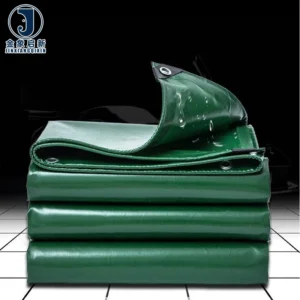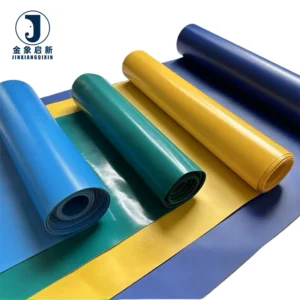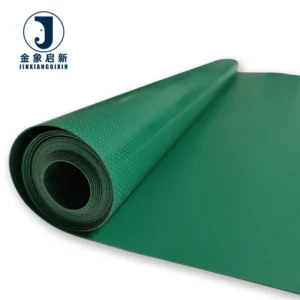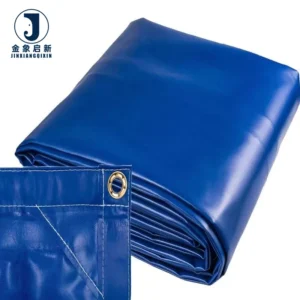

Batch-Verified Coating Weight — Every roll of PVC coated tarpaulin is weighed and measured against specification before dispatch, eliminating the coating weight variance that causes fabricated pool covers to fail tension or seam tests on site.
Technical Specifications
| Parameter | Value |
|---|---|
| Product Type | PVC Coated Tarpaulin |
| Coating Material | PVC (title states PVC coated; parameter table states HDPE weaving with LDPE lamination — verify against manufacturer catalog) |
| Base Fabric | HDPE weaving with LDPE lamination on both sides (source value — verify against manufacturer catalog) |
| Weight Range | 50gr/m2 ~ 220gr/m2 available (range covers product family — confirm the grade for this item) |
| Total Thickness | 0.2-0.4mm / 8 mil-16 mil / Custom |
| Waterproof | Yes |
| UV Treatment | Available (test basis not stated in source) |
| Anti-Mildew | Yes |
| Tear Resistance | Tear resistant super durability (test standard not stated in source) |
| Color Options | Blue, Blue/Orange, Green, Grey, Black, Clear, Grey/Green, Orange, or custom |
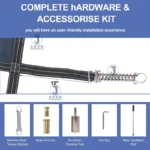
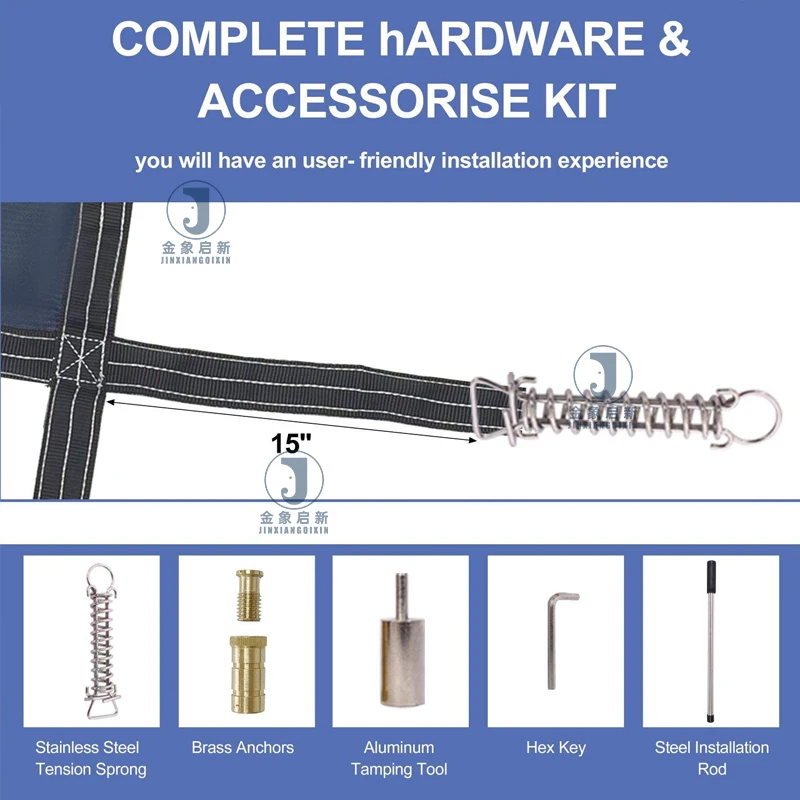
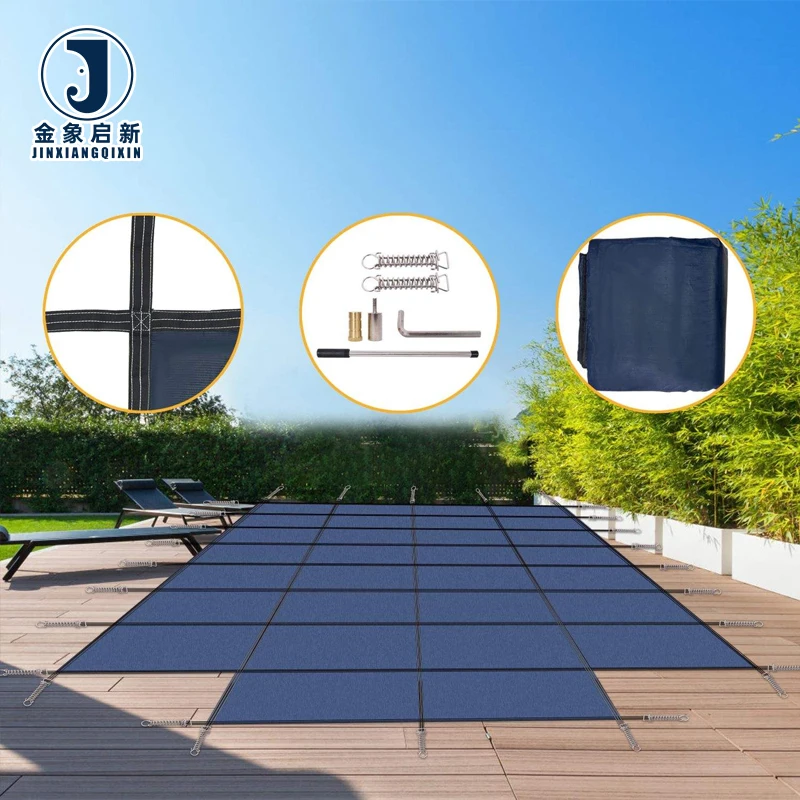
| Pool Cover Hardware Compatibility | Brass Anchor, Triangular Hook, Ratchet System, Aluminium Poles |
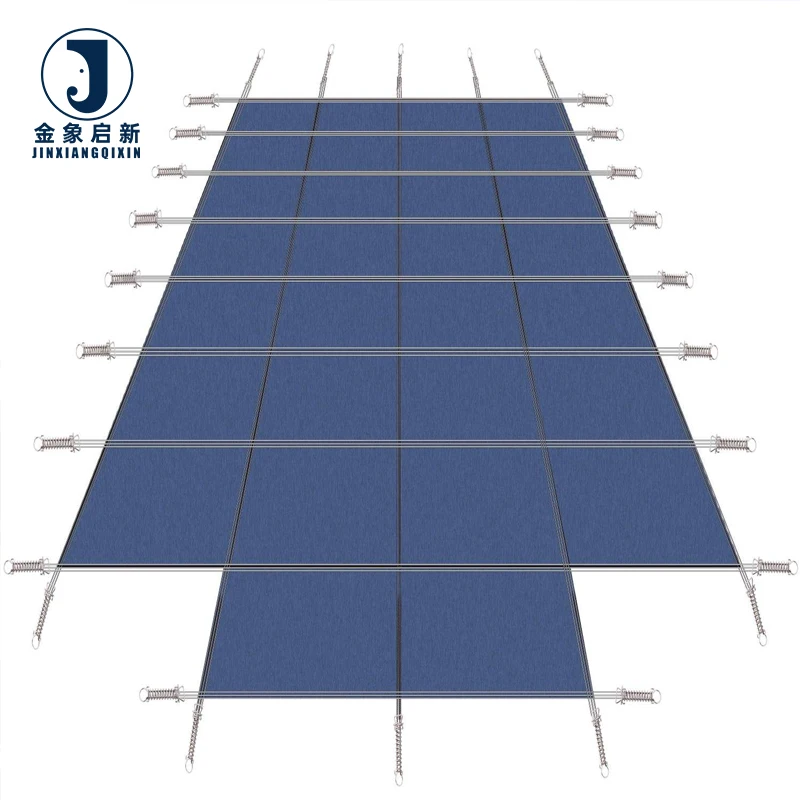
| Pool Cover Operation | Manual or motorized winders, attached at six points using self-sinking stainless steel connections |
| Certification | ISO 9001, ISO 14001, ISO 45001, CE |
Application Suitability
| Application | Exposure & Requirement |
|---|---|
| Residential swimming pool safety covers | Constant UV exposure, chlorine vapour contact, tension from ratchet and brass anchor systems, seasonal deployment and storage |
| Commercial pool enclosure fabric | High-frequency roll and unroll cycles on motorized winders, chemical splash, prolonged sun exposure on pool deck |
| Pool deck protective covers | Foot traffic abrasion, standing water drainage, anti-mildew requirement in humid pool environments |
| Custom-shaped pool covers | Fabrication by roll-fed manufacturers requiring consistent colour and GSM across multiple rolls per project |
Why Roll-to-Roll Colour Consistency Matters More Than the Swatch You Approved
The sample you signed off on is one roll — the container you receive holds dozens, and colour drift between them shows immediately once the pool cover panels are sewn side by side.
When a pool cover manufacturer cuts and assembles panels from rolls produced in different batches or on different coating lines, even slight hue variation becomes visible across the finished cover. This is not a cosmetic complaint from the end user; it triggers rejection at the installation stage, forcing the fabricator to re-cut from matching rolls and absorb the material waste. I have seen fabricators hold entire container loads because three rolls out of twenty did not match the rest [NEED_CITE: colour consistency standards for coated fabrics in batch production]. A PVC coated tarpaulin roll destined for pool cover fabrication must carry a batch reference that ties it back to a specific production run, and the pre-shipment inspection must verify colour under standardised lighting before the rolls are loaded.
Coating Method and Its Effect on Pool Cover Performance
The base structure described here uses HDPE weaving with LDPE lamination on both sides. Lamination bonds the coating layers to the woven scrim through heat and pressure, producing a fabric that is fully waterproof and suitable for the constant moisture environment around swimming pools. For pool cover fabricators, the lamination method affects how the material behaves during heat welding at seam lines — the LDPE layers must reach the correct activation temperature to fuse without delaminating from the HDPE scrim underneath. Selecting a PVC coated tarpaulin roll for pool cover production requires confirming that the thermal window for welding matches the equipment in your fabrication shop.
Thickness, Tension and Hardware Compatibility
Total thickness ranging from 0.2mm to 0.4mm covers the span from lightweight seasonal pool covers to heavier safety covers that must support load and tension from brass anchor and ratchet systems. Thinner grades suit manual winder applications where the fabric rolls and unrolls frequently and must remain pliable in cold weather. Heavier grades suit fixed safety covers stretched across the pool opening with aluminium poles and stainless steel connections at six attachment points [NEED_CITE: tension load requirements for pool safety cover fabrics]. The thickness you specify must align with the hardware your cover system uses — undersized fabric will pull through anchor points under wind load.
Reading the Specification Sheet Beyond GSM
Weight in grams per square metre is the single most quoted number in coated fabric purchasing, yet it tells you nothing about the base fabric denier, the weave density, or the coating-to-scrim ratio. Two rolls can share the same GSM but differ significantly in tear resistance if one uses a higher denier yarn in a looser weave while the other uses finer yarn packed more tightly. For pool cover applications where the fabric must resist puncture from pool edge hardware and resist tear propagation when a seam is stressed, the base fabric construction matters as much as total weight. The coating method — whether lamination, knife-over-roll, or calendering — determines adhesion strength between the LDPE layers and the HDPE scrim, which directly affects how the material performs at welded seams during fabrication.
What Happens When the Wrong Grade Reaches the Fabrication Floor
A pool cover manufacturer who receives rolls lighter than the quoted GSM faces consequences that compound through the production chain. The cover may pass visual inspection but fail the tension test when stretched across the pool, sagging under its own weight or pulling free from brass anchors in moderate wind. Flame-retardant or UV treatment claimed on the quotation but unsupported by a test report means the fabric cannot be certified for commercial pool installations where building codes require documented performance [NEED_CITE: fire classification requirements for pool enclosure materials]. Batch colour variation forces the fabricator to sort and match rolls manually, adding labour hours and generating off-cuts that cannot be used. Each of these failures originates at the point of specification and verification, not at the sewing machine.
Why Fabricators Source This PVC Coated Tarpaulin Roll Here
Three full production lines and 36 sets of professional equipment support the volume requirements of pool cover manufacturers ordering by the container load, with capacity to maintain delivery schedules across multiple concurrent orders. The 10-person R&D team handles material selection, custom thickness, and colour matching from initial sample through to production approval, developing samples within days rather than weeks. Dedicated quality control at every production stage means coating weight, colour, and dimensional accuracy are checked in-process — not only at final inspection. ISO 9001, ISO 14001, ISO 45001 and CE certification provide the audit trail that commercial pool contractors require when specifying cover fabric for tender submissions. Roll-to-roll consistency is enforced through 100% pre-shipment inspection with batch-level traceability across the entire order.
Documentation & Verification
- Material specification sheet stating GSM, base fabric construction and coating type for each roll
- Pre-shipment inspection record verifying weight and colour consistency before container loading
- Roll packing list with batch reference enabling traceability across the full shipment
- ISO 9001, ISO 14001, ISO 45001 and CE certificates available for buyer audit
- UV treatment test report supplied where applicable — confirm the test basis required for your market
Fabrication, Handling & Storage
- Heat welding temperature must match the LDPE lamination activation range to avoid delamination at seam lines
- Store rolls upright on hard paper tubes to prevent flat spots that show as creases when unrolled on the fabrication table
- Brass anchor and ratchet hardware attachment points require reinforced hem folding to distribute tension load across the woven base
- Cut panels should be sequenced from rolls of the same batch reference to prevent visible colour variation in the assembled pool cover
- Motorized winder systems demand consistent roll stiffness — confirm thickness tolerance before committing to full production
Before You Request a Quotation
Provide the pool cover type you are manufacturing — solid safety cover, mesh cover, or thermal blanket — along with the hardware system and winder specification you use. Confirm the GSM range and thickness your cover design requires, and whether UV or anti-mildew treatment must be backed by a specific test standard for your destination market. State the roll width and colour you need, the annual volume, and whether you require finished cut sizes or roll stock only. If colour matching to an existing Pantone or RAL reference is required, note this at inquiry stage so that a production sample can be developed for your approval before bulk runs begin.
Frequently Asked Questions
Q: How is GSM verified on arrival against the quotation?
A: Each roll is weighed and measured during pre-shipment inspection, and a verification record is included with the dispatch documentation. On arrival, you can cut a measured sample from the roll and weigh it on a calibrated scale. If the result falls outside the tolerance stated on your material specification sheet, the batch reference on the roll packing list allows us to trace the production run and investigate.
Q: Can UV treatment be confirmed with a test report?
A: UV treatment is available as an option on this PVC coated tarpaulin roll. The test basis must be confirmed at inquiry stage — specify the standard or exposure duration your market requires, and the corresponding test report will be supplied with the shipment. Without a stated test standard, UV treatment cannot be independently verified by your customer.
Q: How do you control colour consistency across multiple rolls?
A: Rolls within a single order are produced in the same batch wherever possible, with colour checked under standardised lighting during in-process QA and again at pre-shipment inspection. Each roll carries a batch reference tied to the production run. If your order spans multiple batches, we flag this before dispatch so you can plan panel layout accordingly.
Q: What roll widths are available for pool cover fabrication?
A: Width and roll length are confirmed at inquiry stage based on your cutting pattern and container loading plan. State the minimum width your widest pool cover panel requires, and we will confirm the available production width and how many linear metres per roll can be supplied at that specification. Custom widths are subject to minimum order quantities.
Q: How should rolls be protected during ocean freight?
A: Rolls are packed on hard paper tubes and wrapped in the same tarpaulin sheet to protect the coating surface from abrasion and moisture during transit. The wrapping also prevents flat spots from forming where rolls contact each other in the container. Confirm any additional packaging requirements for your destination port at order stage.