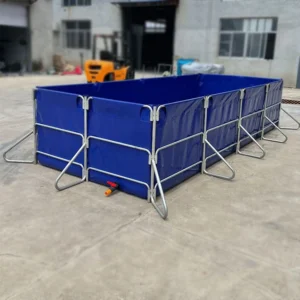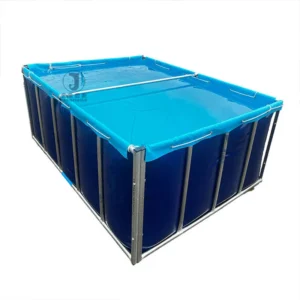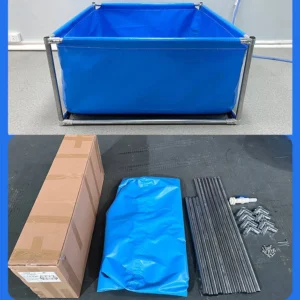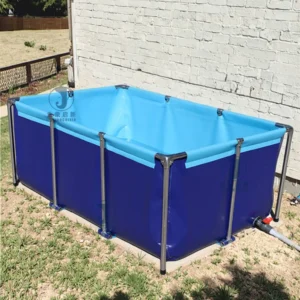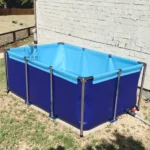
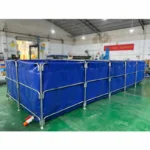
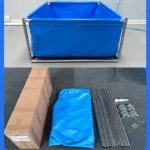
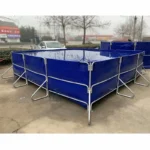
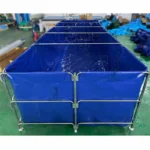
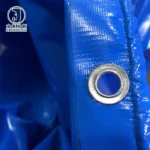
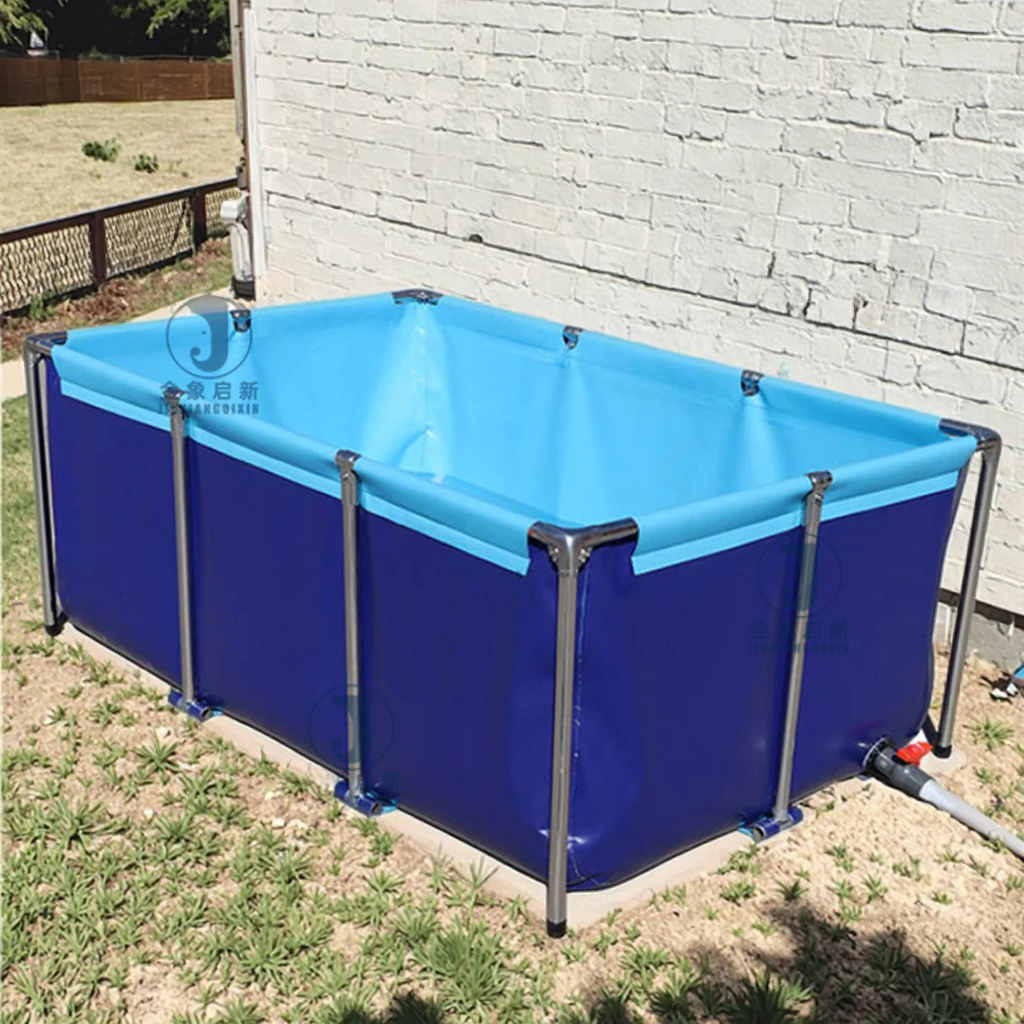
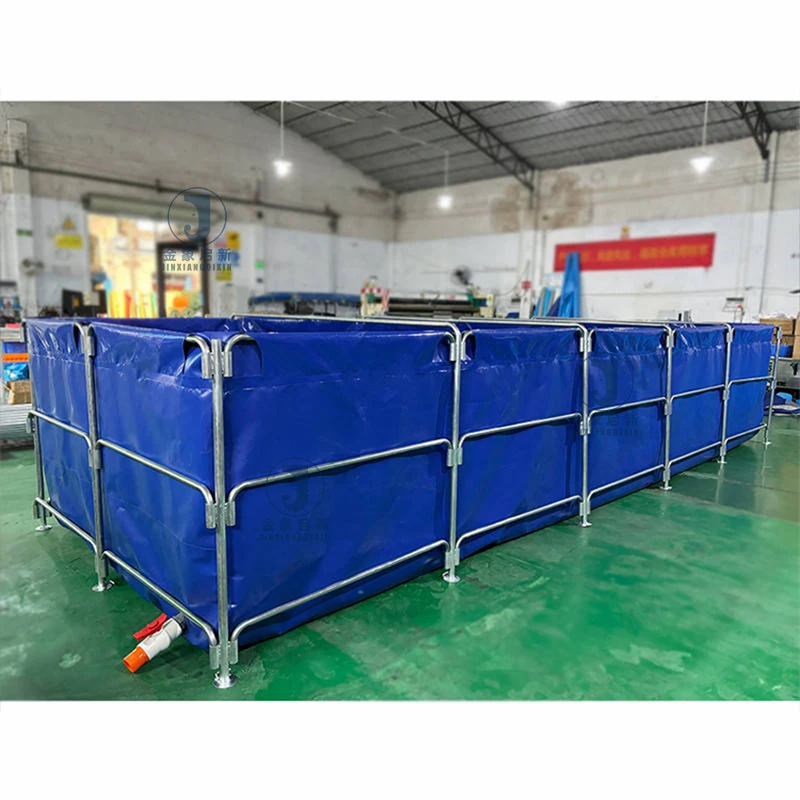
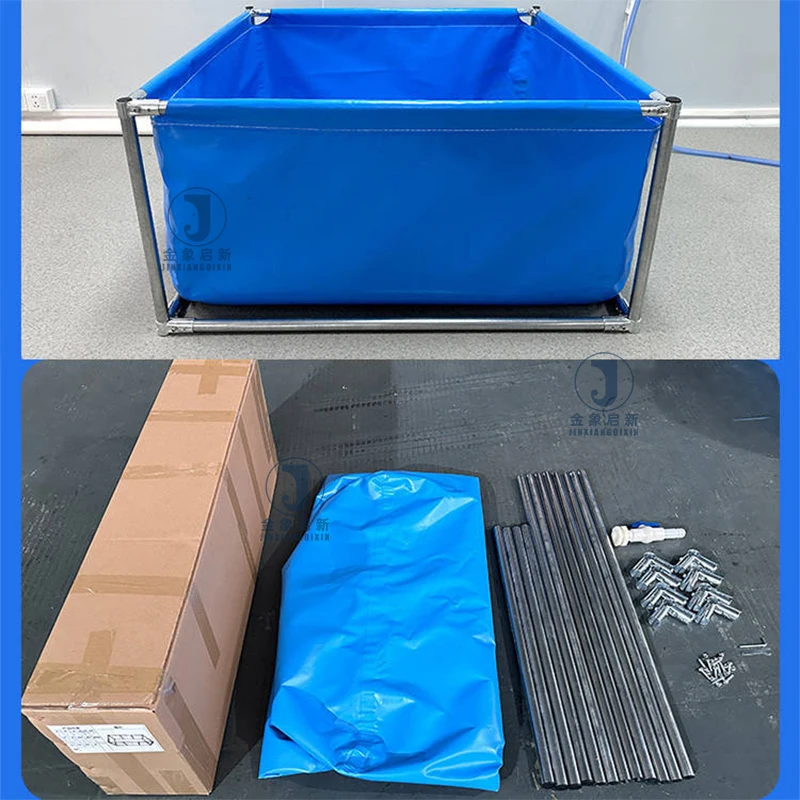
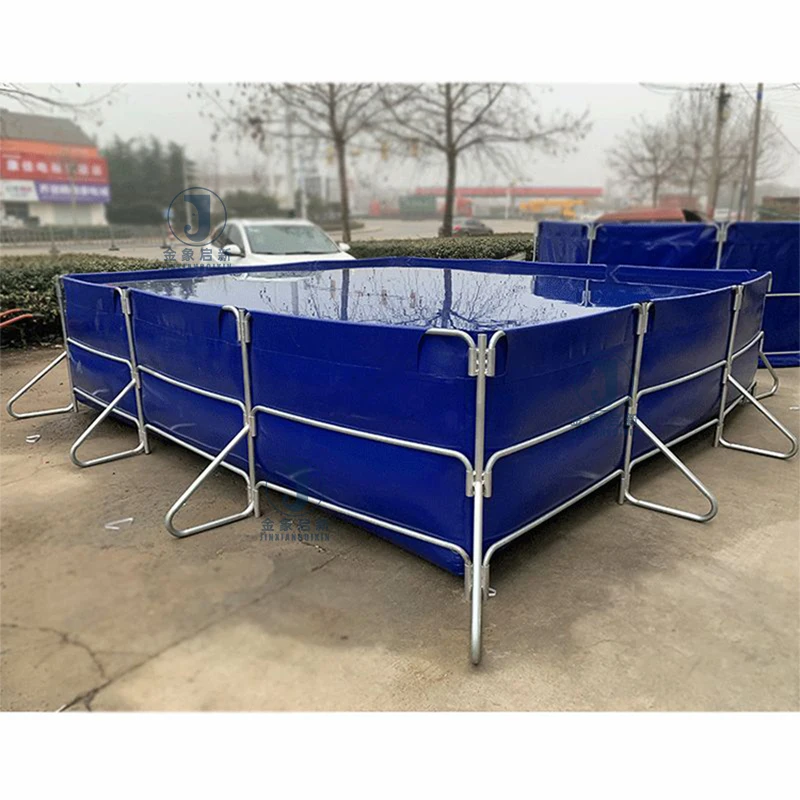
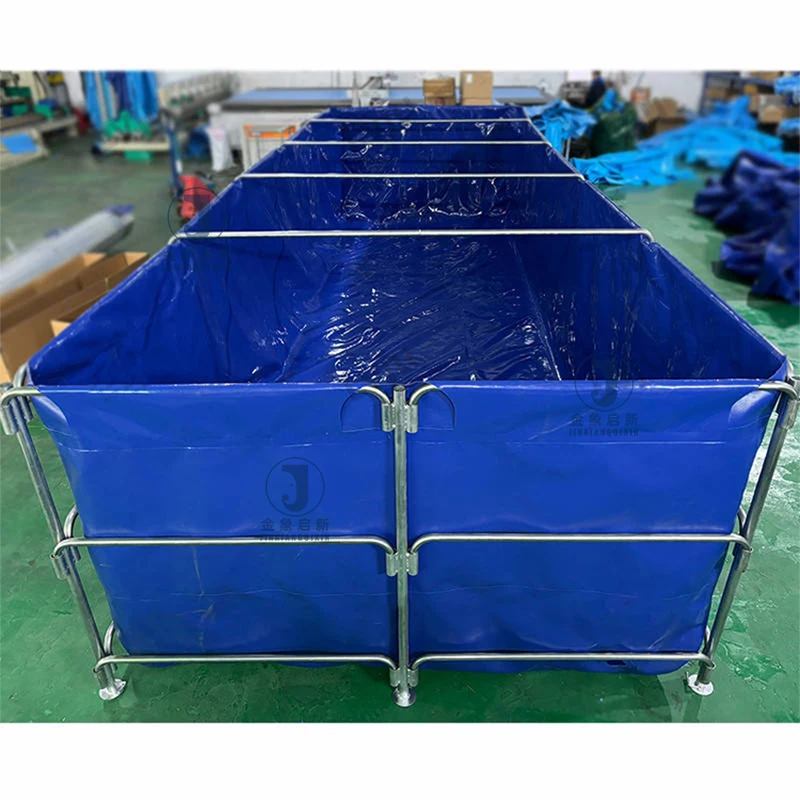
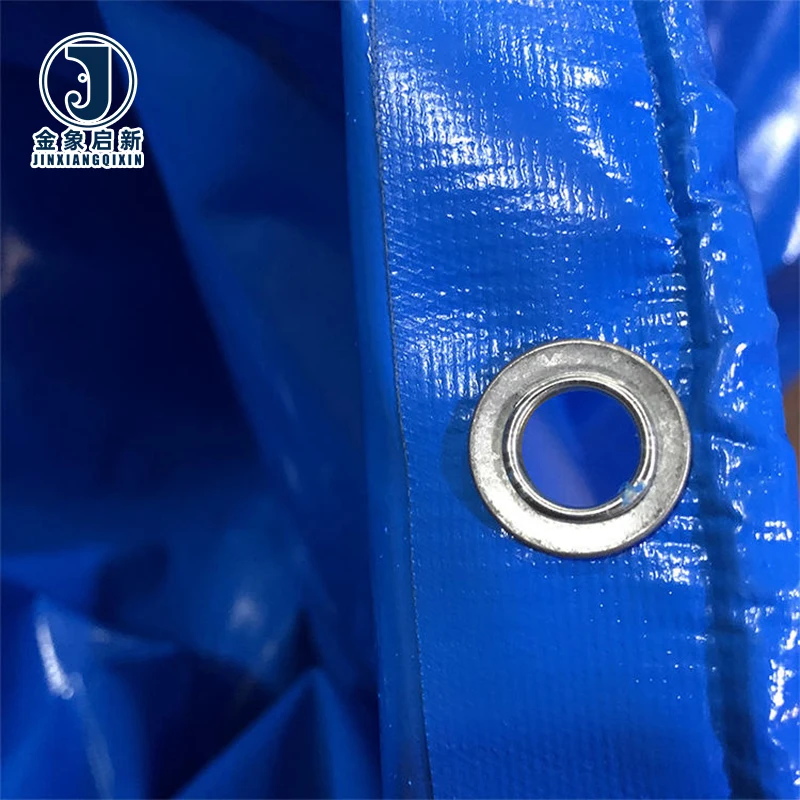
Process-Controlled Coating — every roll of PVC pond liner tarpaulin undergoes stage-by-stage weight and adhesion checks before leaving the line, ensuring GSM consistency across your aquaculture project.
Technical Specifications
| Parameter | Value |
|---|---|
| Product Type | PVC Coated Tarpaulin |
| Base Fabric Denier Options | 500D×840D / 500D×1000D / 1000D×1000D / 1000D×1300D / 1300D×1300D / 1000D×2000D |
| Mesh Count Options | 20×20 / 30×15 / 30×19 |
| Weight (GSM) Options | 350 / 400 / 420 / 500 / 600 / 650 / 750 / 900 |
| Total Thickness Range | 0.29 mm – 0.65 mm |
| Coating Material | PVC, double-sided |
| Tensile Strength Warp | 1650 N – 3900 N (test basis not stated in source) |
| Tensile Strength Weft | 1600 N – 3500 N (test basis not stated in source) |
| Key Features | Water resistant, flame retardant (grade not stated), anti-UV (test basis not stated), anti-bacteria, abrasion-resistant |
| Surface Finish | Smooth |
| Certification | ISO, CE |
Application Suitability
| Application | Exposure & Requirement |
|---|---|
| Commercial fish pond lining | Permanent water immersion, soil chemistry contact, puncture risk from substrate rocks and roots |
| Aquaculture raceway tanks | Continuous water flow abrasion, biofilm accumulation, periodic chemical disinfectant exposure |
| Agricultural reservoir liners | Standing water load, UV exposure at waterline, silt and organic debris settlement |
| Recirculating aquaculture system (RAS) basins | Constant water contact, mechanical stress from aeration equipment, stringent hygiene requirements |
When a Liner Fails Beneath the Water Surface, You Only Find Out After the Fish Are Gone
Substrate puncture and seam delamination are the two silent killers in aquaculture containment.
A pond liner that passes a quick visual inspection can still harbour microscopic coating inconsistencies that open under sustained hydrostatic pressure. In my experience reviewing field returns, the failures almost always trace back to either a base fabric that was too light for the water depth, or a welded seam where the heat setting did not match the coating thickness. The cost is never just the liner — it is the lost stock, the drained pond, and the weeks of downtime. [NEED_CITE: tensile and tear test methods for coated fabrics per ISO 1421]
Double-Sided PVC Coating and What It Means for Water Containment
The PVC coating on this tarpaulin is applied to both faces of the polyester base fabric, sealing the weave from water penetration on either side. For a pond liner, this matters because the underside contacts soil and gravel while the top face holds water — a single-coated fabric would leave the base yarns exposed to moisture wicking from below. The smooth surface also discourages biofilm attachment, making periodic cleaning and disinfection between grow-out cycles more straightforward. Selecting the right PVC pond liner tarpaulin roll for your containment project starts with confirming that both coating faces meet the same weight tolerance.
Anti-Bacteria Treatment and Chemical Stability in Aquaculture Environments
Aquaculture water chemistry is aggressive: dissolved organics, feed residues, and disinfectants such as chlorine or iodine compounds cycle through the liner surface constantly. An anti-bacteria treatment integrated into the PVC compound inhibits microbial colonisation that would otherwise degrade the coating over successive seasons. This is distinct from a surface spray that washes off — the treatment must be compounded into the PVC plastisol before coating. When you specify a PVC pond liner tarpaulin roll, ask whether the anti-bacteria additive is embedded or topical, and request the test protocol that validates its persistence after prolonged water immersion. [NEED_CITE: antimicrobial efficacy testing standards for coated fabrics in wet environments]
Reading the Numbers: Denier, Density, and Why GSM Is Not Enough
The base fabric denier options — from 500D×840D up to 1000D×2000D — determine the yarn thickness in both warp and weft directions. A heavier denier yarn resists puncture from sharp substrate, but if the mesh count (the number of yarns per unit area) is low, gaps between yarns leave the coating bearing the load alone. Conversely, a high mesh count with lighter denier gives good tear propagation resistance but may lack the bulk to stop a pointed stone. GSM alone blends coating weight and base fabric weight into one figure; two liners at 650 GSM can have very different puncture profiles depending on how that weight is distributed between yarn and coating. Always cross-reference the denier, mesh count, and thickness together.
The Cost of Specifying Too Thin a Liner for Your Pond Depth
Buyers sometimes select a lighter GSM grade to save on material cost per square metre, not realising that hydrostatic pressure scales linearly with water depth. A liner that performs adequately at one metre of head pressure can stretch, thin, and eventually split at the welded seams when the pond is filled to two metres. The failure rarely happens on day one — it appears after weeks of sustained load, when the coating has crept and the seam has begun to peel. Replacing a failed liner means draining the pond, removing stock, and losing an entire production cycle. Specify the GSM grade against your maximum design water depth, not against the average. [NEED_CITE: hydrostatic pressure effects on flexible pond liner membranes]
What Our Production Line Does Differently for Aquaculture Orders
Three full production lines allow us to dedicate one line to pond liner runs without interrupting other coated fabric orders, keeping your lead time predictable. The 10-person R&D team develops custom width and length specifications to match your pond geometry, reducing on-site welding and the number of seams that could leak. In-process QA checks coating weight at set intervals across the roll width, catching thickness drift before it becomes a batch-wide problem. Every roll undergoes 100% pre-shipment inspection against the stated GSM, so you receive documented verification rather than hoping the weight is correct. Sample rolls are developed within days when you need to test weld parameters or confirm anti-bacteria treatment before committing to full production volume.
Documentation & Verification
- Material specification sheet listing base fabric denier, mesh count, coating weight, and total GSM for each roll
- Anti-UV and flame retardant test reports provided where the specified grade has been confirmed
- Pre-shipment inspection record with measured GSM values against the purchase order specification
- Roll packing list with individual roll dimensions, net weight, and production batch traceability
- Certificate of origin and customs documentation prepared for cross-border shipment
Fabrication, Handling & Storage
- Hot-air weld temperature must match the selected GSM grade — heavier coatings require higher heat and slower travel speed to achieve full fusion
- Store rolls horizontally on pallets in a shaded area to prevent UV degradation of the outer wrap before deployment
- Unroll in ambient temperatures above 5 °C to avoid coating stiffness that leads to creasing and micro-cracks
- Overlap seams by a minimum recommended width and test peel strength on a scrap piece before field welding begins
- Clean the smooth PVC surface with neutral pH detergent only — solvents and alkaline cleaners attack the plasticiser in the coating
- Cut with a sharp blade on a flat surface; frayed edges from dull tools compromise heat-weld seam integrity
Before You Request a Quote
Share your pond dimensions, maximum water depth, and whether the substrate is compacted earth, sand, or concrete — this drives the denier and GSM recommendation. Let us know if your local regulations require a specific flame retardant grade or if the liner will be exposed to direct sunlight at the waterline, so we can match the anti-UV treatment to your market. Confirm whether you need rolls at standard width or custom width cut to reduce on-site seams, and indicate your annual volume to help us plan production slots.
Frequently Asked Questions
Q: What is the difference between PVC and PE tarpaulin for pond lining applications?
A: PVC coated tarpaulin offers weldable seams that fuse into a continuous membrane, while PE typically relies on heat-sealed or taped joints that are more prone to delamination under sustained hydrostatic pressure. PVC also accepts anti-bacteria compounding during coating, which is harder to achieve with PE film. For long-term aquaculture containment, PVC provides better seam integrity and chemical resistance.
Q: Is the anti-bacteria treatment backed by a third-party test report?
A: Anti-bacteria treatment can be compounded into the PVC coating, but the specific test method and efficacy result depend on the grade selected for your order. We recommend confirming which antimicrobial standard your market requires before production, so the correct test report can be issued alongside the shipment documentation.
Q: What are the minimum order requirements for custom roll widths?
A: Custom widths outside the standard 2 m and 2.1 m options are available, but minimums depend on the denier and GSM grade you select. Heavier grades typically have lower minimums because the coating line runs at a different speed. Contact us with your target width and annual quantity so we can confirm feasibility and lead time for your specific roll configuration.
Q: How should pond liner seams be welded on site?
A: Hot-air welding is the standard method for PVC pond liner seams. The temperature, air pressure, and travel speed must be calibrated to the GSM and coating thickness of the specific grade you receive. Always run test welds on off-cuts from the same production batch before joining full panels, and check peel strength on each test piece to confirm the weld matches the fabric strength.
Q: How do I choose the right GSM grade for my pond depth?
A: Deeper ponds exert greater hydrostatic pressure on the liner, requiring a heavier base fabric and thicker coating to resist stretching and seam creep. As a general approach, match the denier and GSM to your maximum design water depth rather than the average fill level. Share your depth specification with us so we can recommend the appropriate grade from the available range.