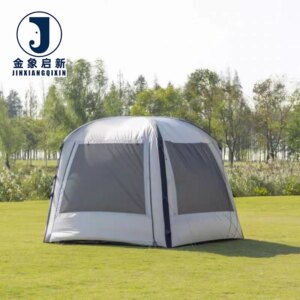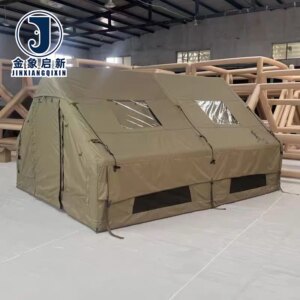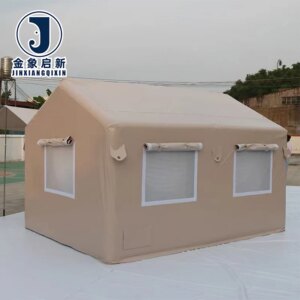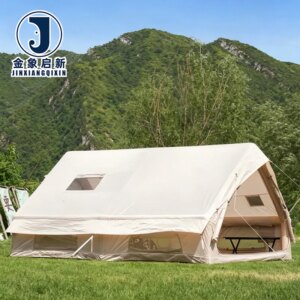



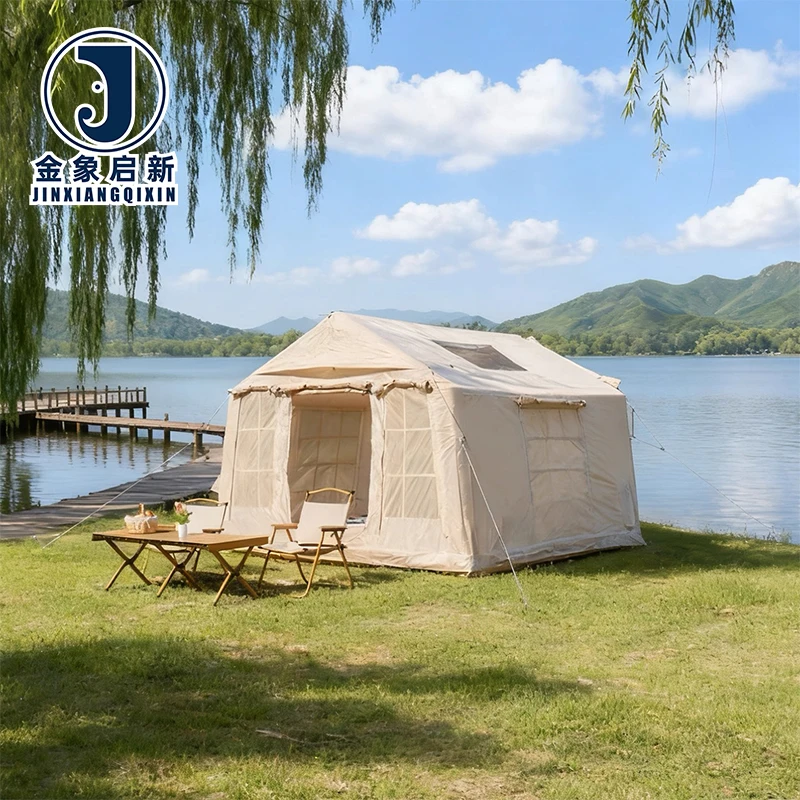
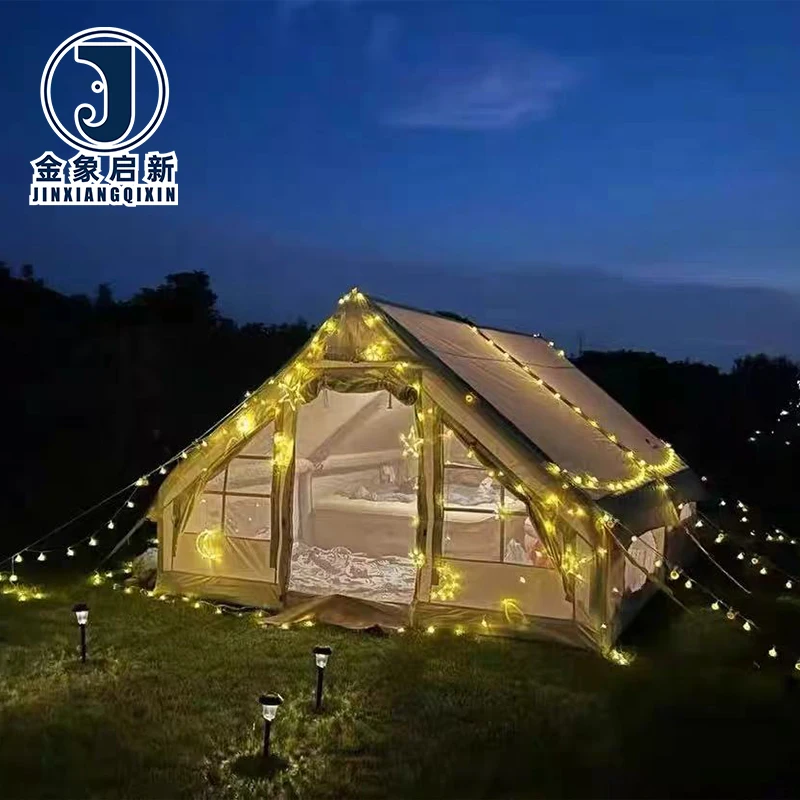
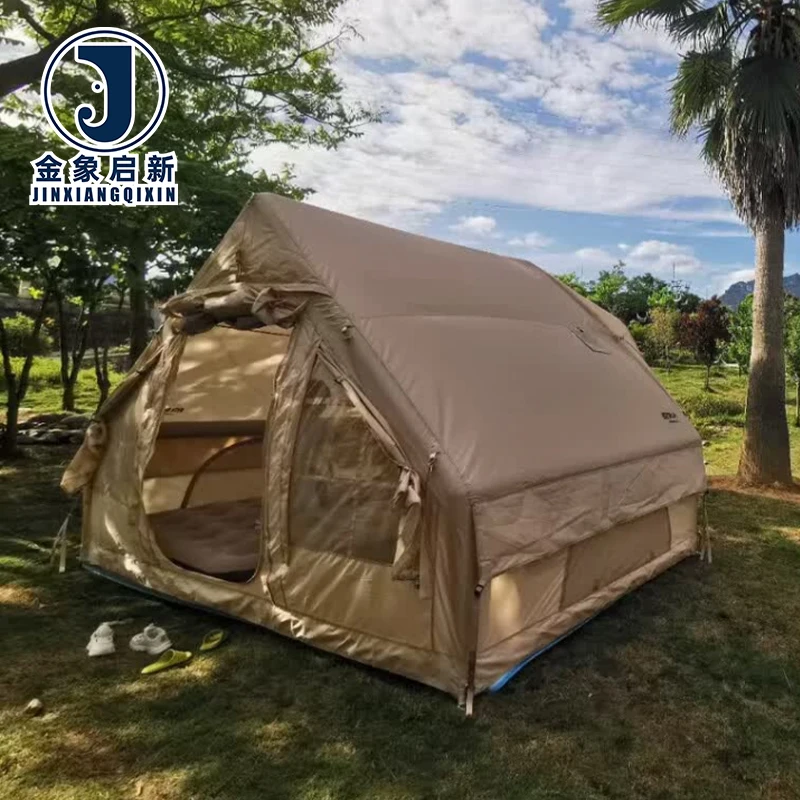
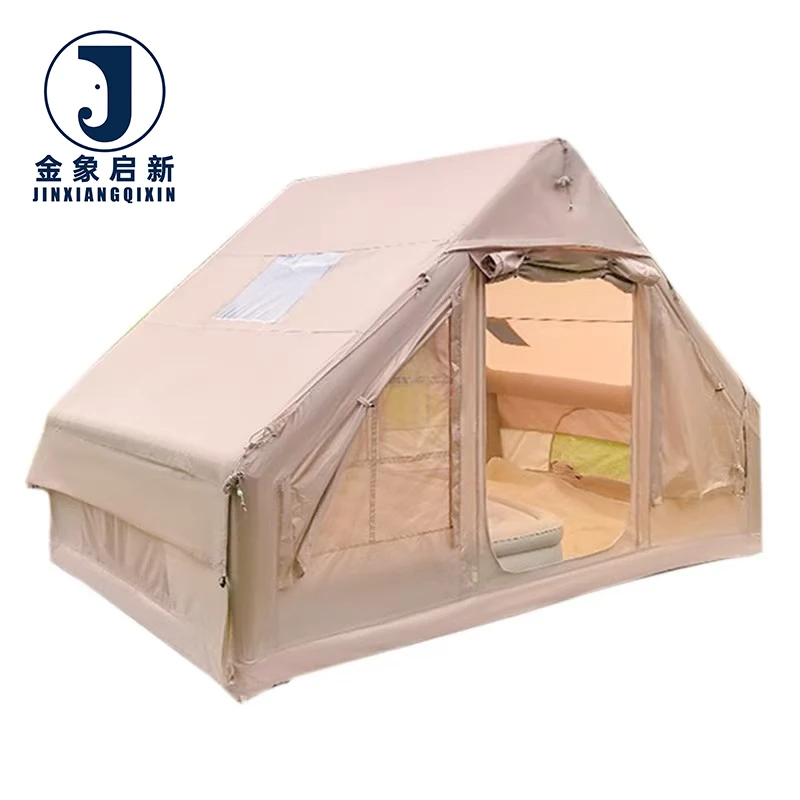
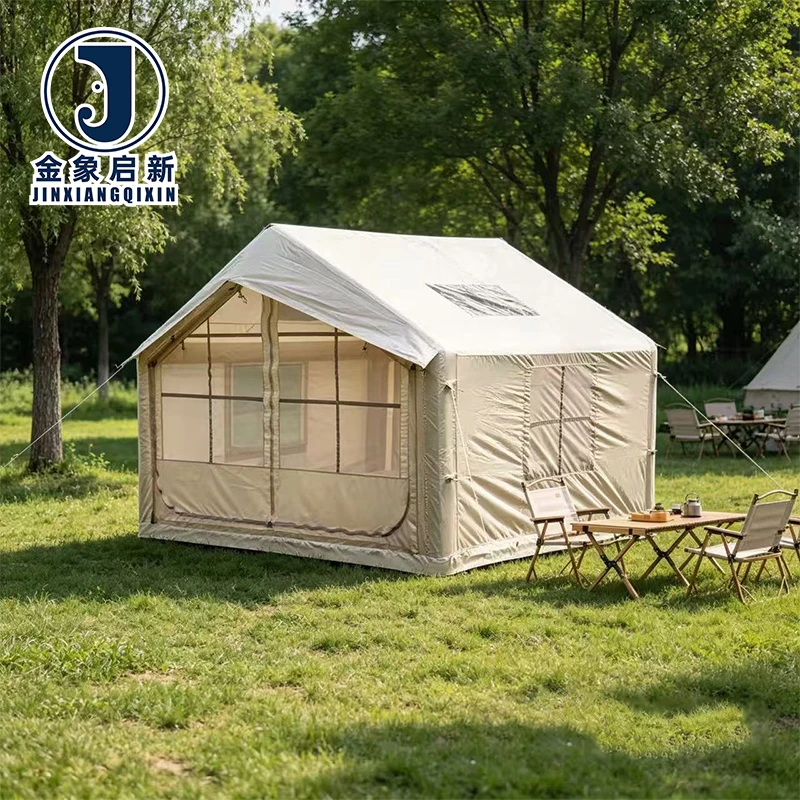
Deep Coating Process Control — Nearly 30 years focused on PVC coated fabric gives us repeatable adhesion, consistent coating weight, and reliable fire-retardant and anti-static treatment across every batch of inflatable structure material we produce.
Technical Specifications
| Parameter | Value |
|---|---|
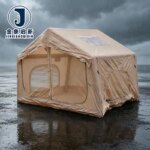
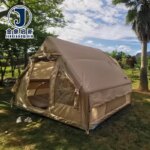
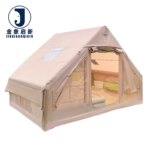
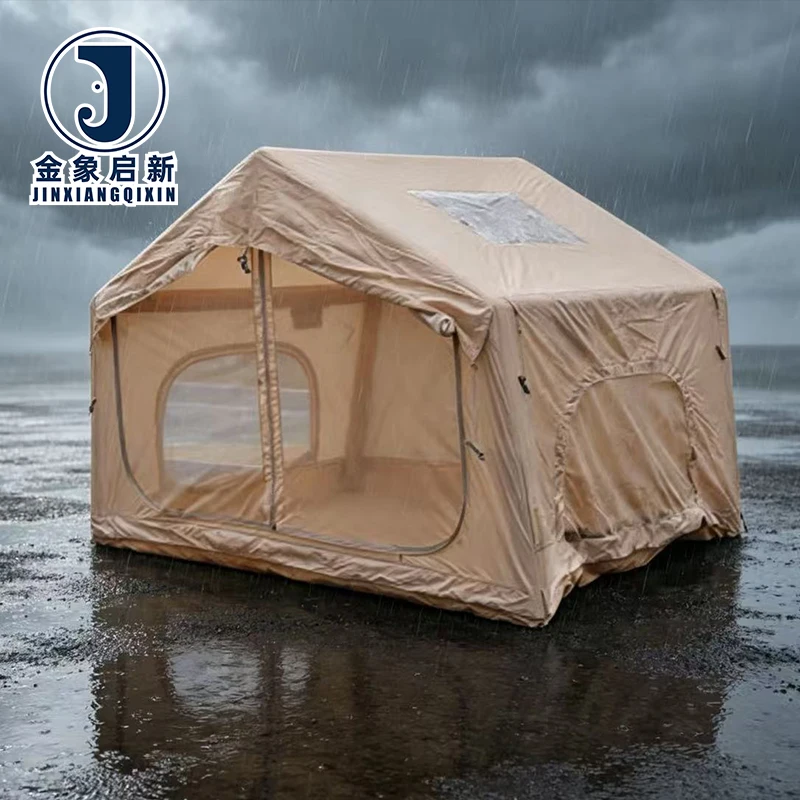
| Product Type | Inflatable Tent |
| Core Material | PVC tarpaulin |
| Fire-Retardant Treatment | Available in fire-retardant grades — confirm the grade required for your market |
| Anti-Static Treatment | Available with anti-static properties — surface resistance data on request |
| Water Resistance | Fully waterproof coated construction |
| UV Resistance | UV-resistant treatment available — test basis confirmed per order |
| Tear Resistance | Tear-resistant base fabric engineered for inflatable air-beam stress points |
| Season Rating | 4-Season |
| Capacity | 5-8 Person |
| Opening Mechanism | Quick Automatic Opening (Inflatable) |
| Customization | OEM & ODM: sample customization, pattern printing, material selection, product design |
| Production Facility | 9,180 m² with 3 full production lines |
| Processing Equipment | 36 sets of professional processing equipment |
| R&D Team | 10 technicians |
| Standards | ISO 9001, ISO 14001, ISO 45001, CE |
Application Suitability
| Application | Exposure & Requirement |
|---|---|
| Mining and tunnelling temporary shelters | Underground dust, confined ventilation, mandatory fire-retardant compliance for enclosed inflatable structures |
| Aviation and industrial site temporary enclosures | Fuel vapour proximity, static discharge risk, anti-static fabric requirement for regulatory sign-off |
| Construction site equipment storage and break areas | Continuous UV exposure, wind loading on inflated beams, abrasion from ground contact and repeated deployment |
| Outdoor event rapid-deployment structures | Fast inflation and deflation cycles, crowd safety compliance, fire-retardant certification for public venues |
| Agricultural mobile storage in remote locations | Weather extremes, chemical exposure from fertilisers, puncture risk from rough terrain during relocation |
What Happens When Inflatable Tent Fabric Lacks Certified Fire and Static Protection
Commercial inflatable shelters deployed on regulated sites fail inspection the moment the safety officer asks for the test report.
Many inflatable tent fabrics are marketed with generic claims of fire resistance or anti-static performance, but without a documented grade or standard behind them. On a mining site or at a public event, that gap between a marketing statement and a compliance certificate can shut an entire operation down. Procurement teams discover this only after the structure is inflated and the auditor is standing in front of it. [NEED_CITE: fire classification standards for temporary membrane structures]
The problem compounds with anti-static requirements. Inflatable structures in aviation or fuel-adjacent environments must dissipate static charge to prevent ignition, yet fabric is often supplied without surface resistance data. The inflatable tent fabric fire retardant certified to a recognised standard eliminates this documentation gap, giving site managers the paperwork they need before the structure goes live.
Engineering the Air-Beam and Shell for Structural Integrity
Inflatable tents place unusual demands on coated fabric. The air-beam sections must hold constant internal pressure while resisting puncture from ground debris and handling damage during deployment. The shell panels must remain dimensionally stable under wind load without excessive stretching that would deform the structure. Our PVC tarpaulin base fabric is selected for tear resistance at these critical stress junctions, where the beam meets the canopy and where tie-down points transfer load into the material. [NEED_CITE: tensile and tear test methods for coated fabrics per ISO 1421]
The 10-technician R&D team works with buyers to match fabric weight and coating formulation to the specific inflation pressure and structural geometry of each tent design, ensuring the material performs as an integrated system rather than a generic shell.
Compliance Documentation That Travels With Every Shipment
Regulated environments demand traceability. When inflatable structures are used on mining concessions, at aviation facilities, or in public event spaces, the fabric must carry documentation that satisfies the site safety officer and the jurisdictional inspector alike. Each shipment of our Inflatable Tent Fabric fire retardant certified material includes a material specification sheet, the applicable test report for the fire-retardant grade specified, and a pre-shipment inspection record.
Anti-static surface resistance data is provided where the application requires it, giving buyers a complete compliance package rather than a partial one. This documentation discipline is built into our production workflow — it is not an afterthought requested post-delivery. Batch-level traceability means that if a site audit occurs months after installation, the paperwork exists and is retrievable.
Reading the Specification Sheet Beyond Marketing Claims
Understanding inflatable tent fabric requires looking at how base fabric construction and coating weight interact. A heavier coating does not automatically mean a stronger material — if the base fabric denier and weave density are low, the coating simply adds weight without proportional gains in tensile or tear strength. The relationship between base fabric construction and coating formulation determines how the material behaves at welded seams, which are typically the first failure point in inflatable structures under cyclic pressure loading.
Coating method also matters significantly. Knife-coated PVC tarpaulin achieves higher adhesion between layers compared to laminated alternatives, which directly affects how well the material withstands the repeated flexing that occurs during inflation and deflation cycles. Surface finish — glossy or matte — influences both cleanability in dusty site environments and the adhesion of printed branding or safety markings applied after fabrication. Fire-retardant chemistry integrated during coating must be matched to the target market’s classification system, as a grade accepted in one jurisdiction may not satisfy another. [NEED_CITE: DIN 4102 fire classification for building materials]
The Real Cost of Specifying Inflatable Fabric on Price Alone
When procurement prioritises unit cost over verified performance data, the consequences surface at the worst possible moment. Fabric that arrives lighter than the quoted weight inflates into structures with softer beams that sag under wind load. Fire-retardant treatment claimed without a test report leads to failed site inspections and work stoppages that cost far more than the savings on the fabric invoice.
Colour variation between rolls in the same order becomes visible once multiple tent units are deployed side by side at an event, undermining the professional appearance the organiser paid for. Welded seams that fail before the fabric does leave the structure deflated and unusable, often in conditions where rapid redeployment is not an option. [NEED_CITE: common failure modes in coated fabric welding for inflatable structures]
Why Technical Buyers Source Inflatable Structure Fabric Here
Our three full production lines and 36 sets of professional processing equipment handle bulk orders of Inflatable Tent Fabric fire retardant certified material with consistent output, supporting the volume requirements of commercial tent manufacturers and large-scale project contractors.
The 10-person R&D team develops custom samples within days, allowing buyers to validate material behaviour under their specific inflation pressures and structural designs before authorising mass production. Dedicated QA and QC staff inspect every production stage, with 100% pre-shipment inspection ensuring that what leaves the factory matches the specification sheet exactly.
Nearly 30 years of coating process control means adhesion strength, coating weight, and treatment consistency are managed through established parameters rather than trial and error. ISO 9001, ISO 14001, ISO 45001, and CE certification underpin the management systems that govern every order from inquiry through dispatch.
Documentation & Verification
- Material specification sheet stating base fabric type, coating formulation, and fire-retardant grade per batch
- Fire-retardant test report aligned to the compliance standard required by your target market
- Anti-static surface resistance data provided for mining and aviation inflatable structure applications
- Pre-shipment inspection record confirming weight, colour, and dimensional accuracy before dispatch
- Certificate of origin and customs documentation included for international inflatable tent fabric shipments
Fabrication, Handling & Storage
- Heat-weld seams using temperature and dwell time parameters matched to the PVC tarpaulin coating formulation for maximum peel strength
- Reinforce tie-down and anchor attachment points with additional PVC patches to distribute load across the inflatable beam structure
- Store rolls upright on pallets in a dry, shaded area to prevent creasing that could weaken the coating at fold lines
- Allow cold-stored fabric to reach ambient temperature before unrolling to avoid cracking the PVC coating in low conditions
- Clean deployed tent surfaces with mild detergent only — solvents may degrade the fire-retardant or anti-static treatment layer
- Plan cutting layouts to minimise waste and reduce the number of welded seams in high-stress beam and canopy zones
Starting Your Inflatable Tent Fabric Enquiry
To specify the right material for your inflatable structure project, share the intended application environment and the compliance standards your site or jurisdiction requires. Let us know the fire-retardant grade needed, whether anti-static certification applies, and the expected order volume and frequency.
Provide your preferred dimensions, colour requirements, and any pattern printing or branding specifications so our R&D team can prepare a matched sample. Confirm whether you need rolls for your own fabrication facility or finished cut-to-size panels ready for assembly.
Frequently Asked Questions
Q: What fire-retardant grade does the inflatable tent fabric carry, and which test standard applies?
A: Fire-retardant treatment is available in multiple grades matched to different market requirements. The specific grade and corresponding test standard are confirmed during the specification phase based on your target jurisdiction and application. We provide the test report with each shipment so your compliance documentation is complete before the structure is deployed on site.
Q: Is anti-static certification available for inflatable structures used in mining or aviation environments?
A: Yes. Anti-static treatment can be applied during coating, and surface resistance data is provided on request. For mining and aviation applications where static dissipation is a regulatory requirement, we work with your safety team to confirm the acceptable resistance range and document it per batch for audit purposes.
Q: How is UV resistance validated for long-term outdoor inflatable tent exposure?
A: UV-resistant treatment is integrated into the PVC coating formulation for outdoor applications. The test basis is confirmed per order and documented accordingly. For projects requiring extended outdoor deployment, we recommend discussing your specific exposure conditions during the sample stage so the formulation can be matched to the expected service environment.
Q: What documentation ships with each order to support site safety compliance audits?
A: Every shipment includes a material specification sheet, fire-retardant test report for the specified grade, pre-shipment inspection record, and packing list. Anti-static data certificates are included where applicable. Certificate of origin and customs documentation are standard for international orders, ensuring full traceability from production through to site installation.
Q: Can custom dimensions and printing be applied while maintaining fire-retardant and anti-static certification?
A: Custom sizing, pattern printing, and branding are handled by our 10-technician R&D team through the OEM and ODM process. Fire-retardant and anti-static treatments are integrated during the coating stage, so downstream cutting and printing do not compromise the certified performance properties of the base fabric.