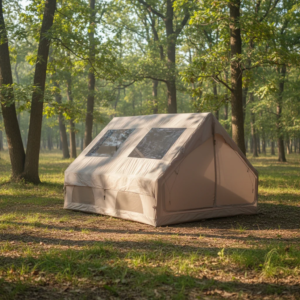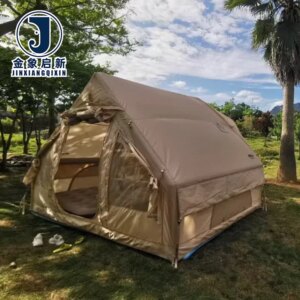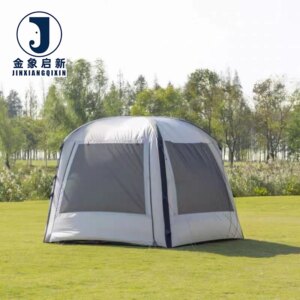
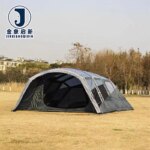
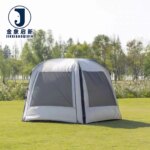
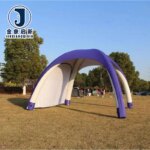
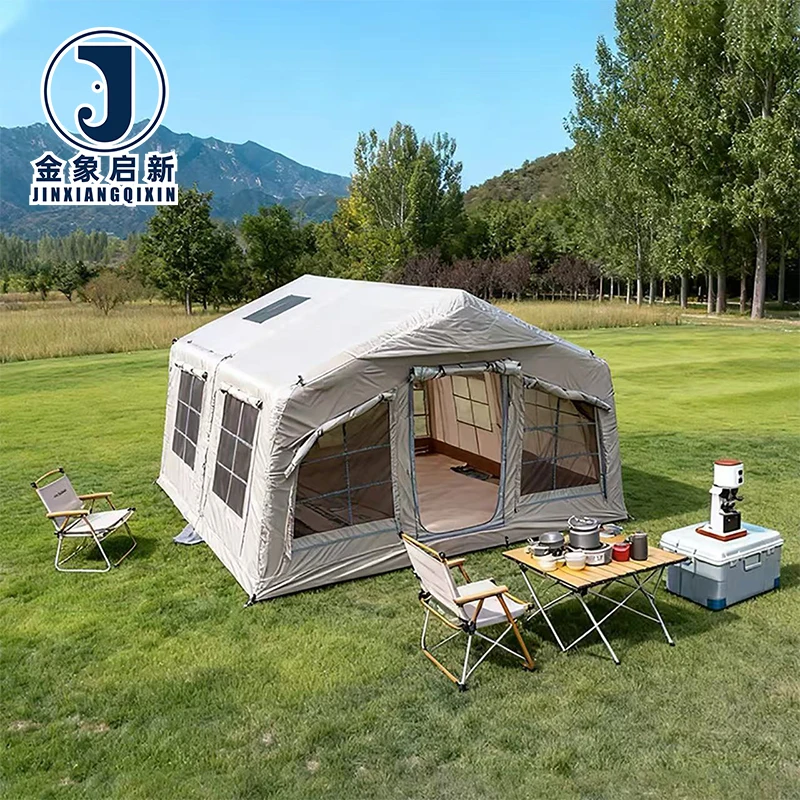
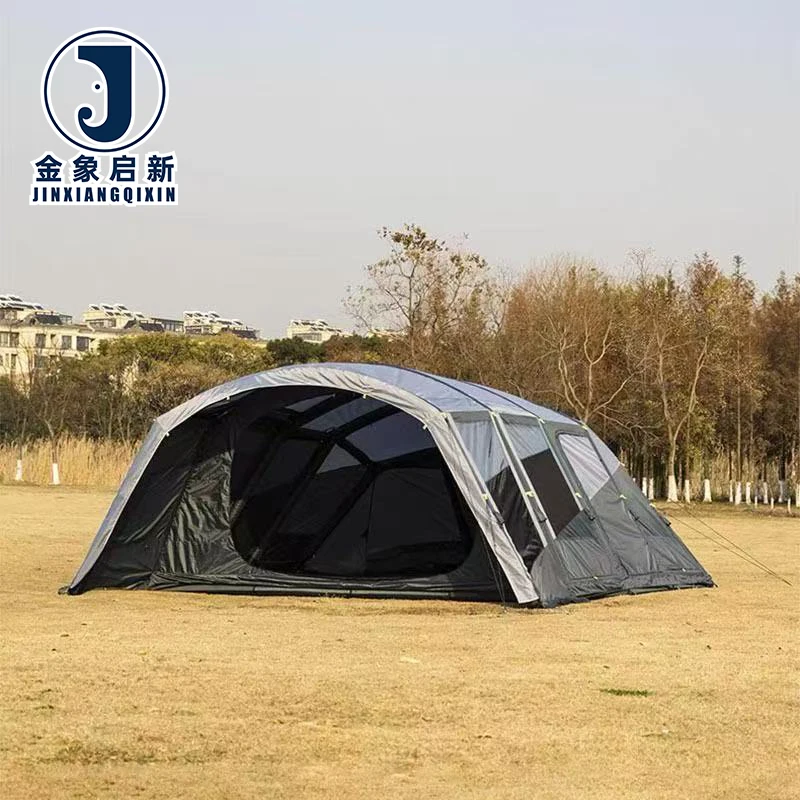
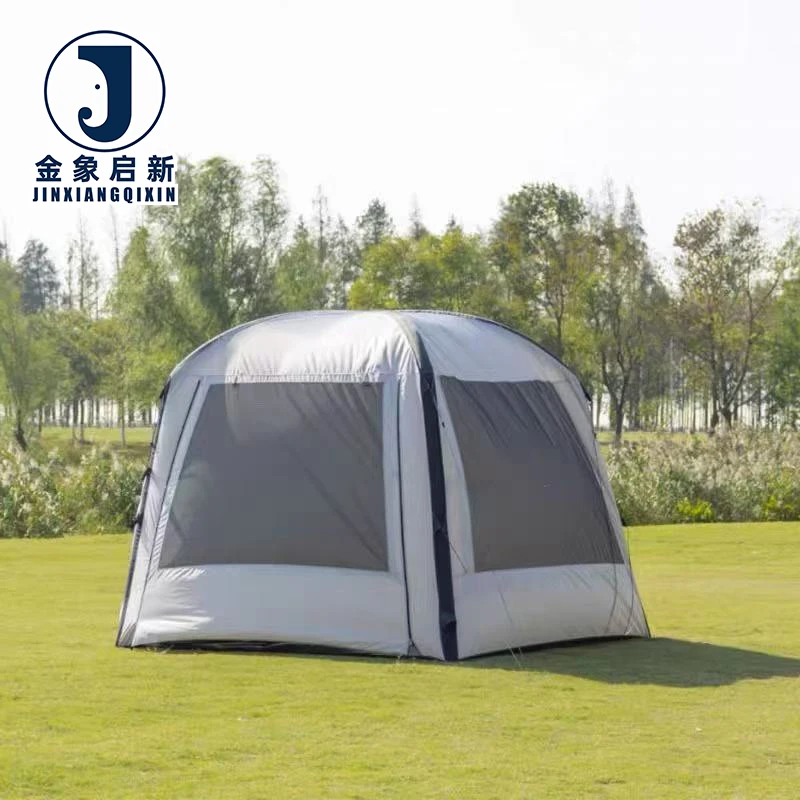
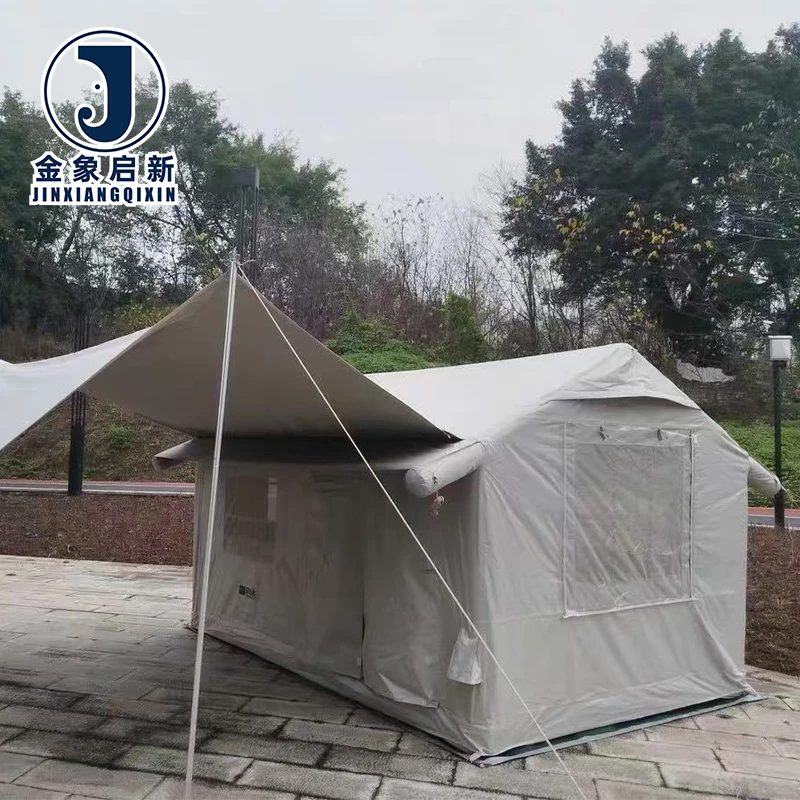
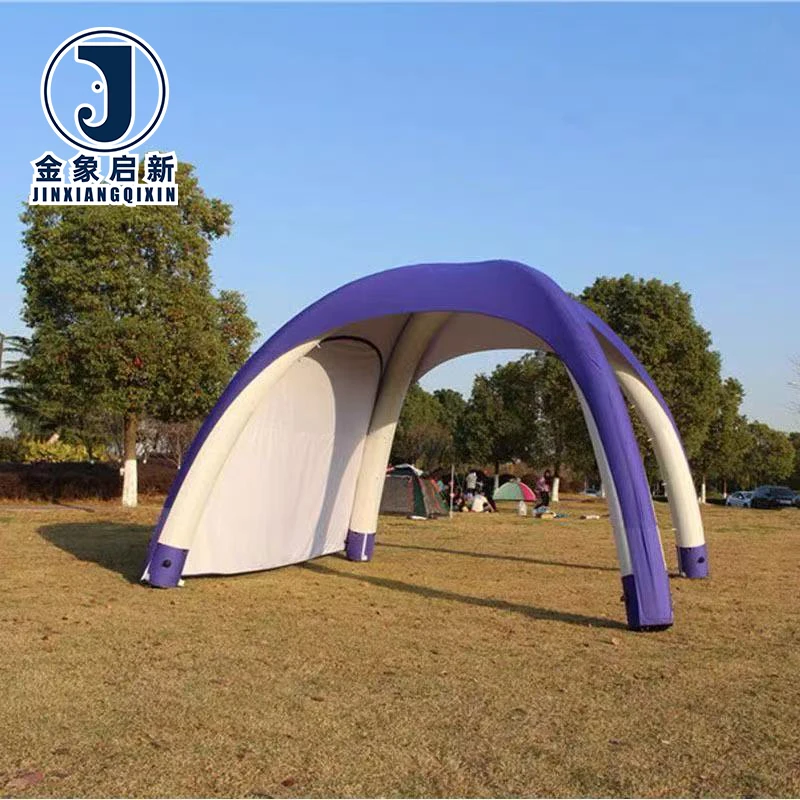
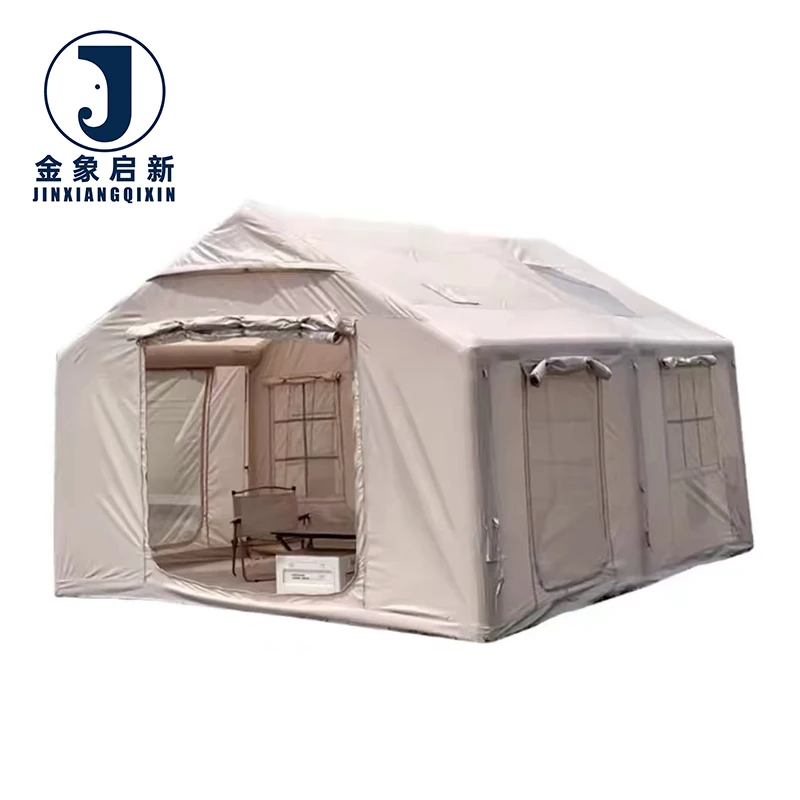
Precision-Engineered Coating Control — Three dedicated production lines and 36 processing systems maintain consistent PVC coating weight and adhesion across every roll of inflatable tent fabric we produce.
Technical Specifications
| Parameter | Value |
|---|---|
| Product Type | Inflatable Tent |
| Core Material | PVC tarpaulin |
| Coating Material | PVC |
| Structure | Single-layer PVC tarpaulin |
| Waterproof | Fully waterproof coated construction |
| UV Treatment | Available with UV-resistant additives — confirm test basis required for your market |
| Flame Retardant | Available in flame retardant grades — confirm the grade required for your jurisdiction |
| Anti-Static | Available with anti-static treatment — confirm surface resistance standard required |
| Tear Resistance | Tear-resistant construction — confirm test standard applicable to your project |
| Customization | OEM & ODM: size adjustments, pattern printing, material thickness modifications |
| Quality Control | Full-process inspection, 24-hour pressure testing on finished units |
| Certifications | ISO 9001, ISO 14001, ISO 45001, CE |
Application Suitability
| Application | Exposure & Requirement |
|---|---|
| Commercial glamping resorts | Continuous 4-season weather exposure, wind load on inflatable frame, guest safety compliance |
| Outdoor event venues | Rapid deployment and teardown cycles, UV exposure during multi-day events, crowd proximity fire safety |
| Temporary hospitality facilities | Year-round moisture and temperature fluctuation, hygiene and cleaning chemical exposure |
| Mining and construction site camps | Mandatory fire-retardant and anti-static certification, abrasive dust and heavy-duty operational use |
| Aviation ground support structures | Static discharge risk, regulatory compliance for airside installations, fuel vapour environments |
What "Certified" Means When Inflatable Tent Fabric Fire Retardant Claims Lack Documentation
Inflatable tent fabric fire retardant certified to a traceable standard is the only specification that satisfies site inspectors and insurance auditors.
Commercial operators and site compliance managers face a recurring problem: inflatable tent fabric arrives with a data sheet claiming fire retardancy, yet the documentation lacks a grade, a test method, or batch traceability. When the local fire authority or aviation site manager requests proof, the procurement record falls short. We have seen entire temporary installations shut down during operation because the fabric documentation could not be matched to the regulatory framework governing the site [NEED_CITE: fire classification standards for temporary membrane structures].
Coating Integrity Under Continuous Inflation Pressure
An inflatable tent relies on constant internal air pressure to maintain structural form. The PVC tarpaulin core material must sustain coating adhesion through repeated stress cycles without delamination at welded seams. Our single-layer construction uses a proprietary waterproof coating formulated to bond with the base fabric under the thermal conditions of high-frequency welding. This matters because inflatable structures concentrate stress at panel junctions where the fabric flexes against the air beam geometry.
Static Discharge Control in Sensitive Environments
Mining ventilation corridors, aviation fuel zones, and certain chemical processing sites classify static discharge as an ignition risk. Inflatable tent fabric fire retardant certified for these environments must also address anti-static properties to a defined surface resistance standard. We treat the PVC coating to reduce static accumulation and supply the corresponding test data so that safety officers can verify compliance against their site-specific risk assessment [NEED_CITE: anti-static requirements for membrane structures in hazardous zones].
Reading the Specifications That Actually Govern Performance
The core material designation — PVC tarpaulin — covers a broad range of base fabric constructions. What separates a fabric suited to a weekend garden party from one rated for commercial glamping in exposed coastal conditions is the combination of base fabric denier, weave density, and coating weight applied to each surface. These three variables collectively determine tensile strength, tear propagation resistance, and the thermal behaviour during welding. A heavier coating does not automatically mean a stronger panel if the base fabric lacks sufficient yarn count to carry the load. Procurement teams specifying inflatable tent fabric fire retardant certified for commercial use should request the full construction breakdown rather than relying on a single headline figure [NEED_CITE: tensile and tear test methods for coated fabrics per ISO 1421].
The Compliance Gap That Stops Projects Mid-Deployment
When fire-retardant or anti-static certification is claimed without supporting documentation traceable to the specific batch delivered, the gap surfaces at the worst possible moment — during the pre-opening safety inspection. Event organisers have been forced to cancel launches, and mining camp operators have faced audit non-conformities because the fabric test report referenced a product grade that did not match the material on site. This is not a material failure; it is a documentation failure that carries the same operational and financial consequence [NEED_CITE: regulatory audit requirements for temporary structures on industrial sites].
Why Procurement Teams Source Inflatable Structures Here
Our 10-person R&D team develops custom material thickness specifications and pattern print layouts matched to the structural and visual requirements of each inflatable tent project, with sample turnaround measured in days rather than weeks. Every production run undergoes full-process quality inspection with dedicated QA and QC staff verifying coating weight, seam integrity, and dimensional accuracy at defined checkpoints. The 24-hour pressure test applied to every finished inflatable tent before shipment validates structural stability under sustained inflation — a protocol that catches seam and valve issues before they become field failures. Our 9,180 m² facility running three full production lines with 36 sets of processing equipment provides the capacity to fulfil bulk orders for commercial glamping developments without sacrificing batch consistency. ISO 9001, ISO 14001, ISO 45001, and CE certifications are maintained and available for compliance audits across jurisdictions.
Documentation & Verification
- Batch-specific quality inspection reports covering PVC tarpaulin material specifications and performance test results
- Fire-retardant and anti-static certification documentation matched to shipment batch for site compliance submission
- ISO 9001, ISO 14001, ISO 45001, and CE certificates available for regulatory review
- Customized parameter sheets for OEM orders detailing design modifications and compliance data
- Pre-shipment inspection records documenting 24-hour pressure test results for each inflatable unit
Fabrication, Handling & Storage
- High-frequency welding parameters must match the single-layer PVC tarpaulin thickness to achieve full seam penetration without burn-through
- Store rolled inflatable tent fabric vertically on pallets to prevent permanent creasing in the PVC coating layer
- Use neutral pH cleaners on the waterproof coated surface to preserve the fire-retardant and anti-static treatment chemistry
- Allow cold-stored rolls to acclimatise to workshop temperature before unrolling to prevent coating micro-cracking
- Confirm pattern printing registration against panel cutting templates before committing to full production run
Structuring Your Inflatable Tent Enquiry
Provide the intended application environment and the specific fire-retardant or anti-static standards your jurisdiction or site operator mandates. Include the required dimensions, material thickness preference, and whether you need finished inflatable units or fabric rolls for your own fabrication line. If pattern printing or custom colour is part of the project brief, share artwork files and Pantone references so we can assess print feasibility and confirm sample lead time.
Frequently Asked Questions
Q: What fire-retardant and anti-static certifications does the inflatable tent fabric carry?
A: The fabric is available in flame retardant and anti-static grades supported by test documentation. Because compliance requirements vary by jurisdiction and site classification, we ask buyers to specify the exact standard their project requires so we can confirm the applicable grade and provide the corresponding batch-traceable certification with each shipment.
Q: Can material thickness and dimensions be customized for specific inflatable tent projects?
A: Yes. Our R&D team adjusts material thickness, panel dimensions, and pattern printing to match project specifications. OEM and ODM customization is supported from sample development through bulk production. We recommend requesting a sample unit first to validate structural behaviour under your intended inflation pressure and environmental conditions.
Q: What documentation is included with each shipment for compliance audits?
A: Each shipment includes batch-specific quality inspection reports, fire-retardant and anti-static test documentation where applicable, ISO and CE certificates, and pre-shipment inspection records. For OEM orders, customized parameter sheets detailing design modifications and material specifications are provided to support your procurement and regulatory records.
Q: How is the inflatable frame tested for structural reliability before dispatch?
A: Every finished inflatable tent undergoes a 24-hour pressure test before shipment. This sustained inflation cycle verifies the structural stability of the air frame, identifies any seam or valve leakage, and confirms that the PVC tarpaulin panels maintain dimensional integrity under continuous internal pressure throughout the test period.
Q: What is the sample development process for custom size and print requirements?
A: After receiving your specifications for dimensions, material thickness, and pattern artwork, our 10-person R&D team develops a sample for your review and approval. Sample turnaround is completed within days for most configurations. Once approved, the sample parameters are locked into the production specification for bulk order consistency.