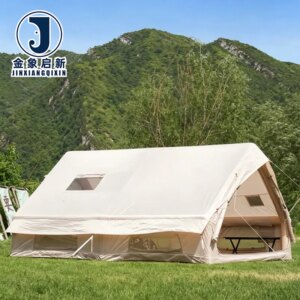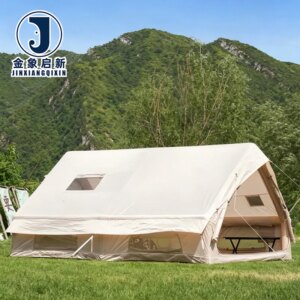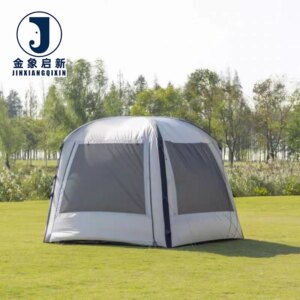




Verified Material Compliance — Every shipment of inflatable tent fabric includes fire-retardant and anti-static test documentation matched to the batch, so your structure passes site inspection without delay.
Technical Specifications
| Parameter | Value |
|---|---|
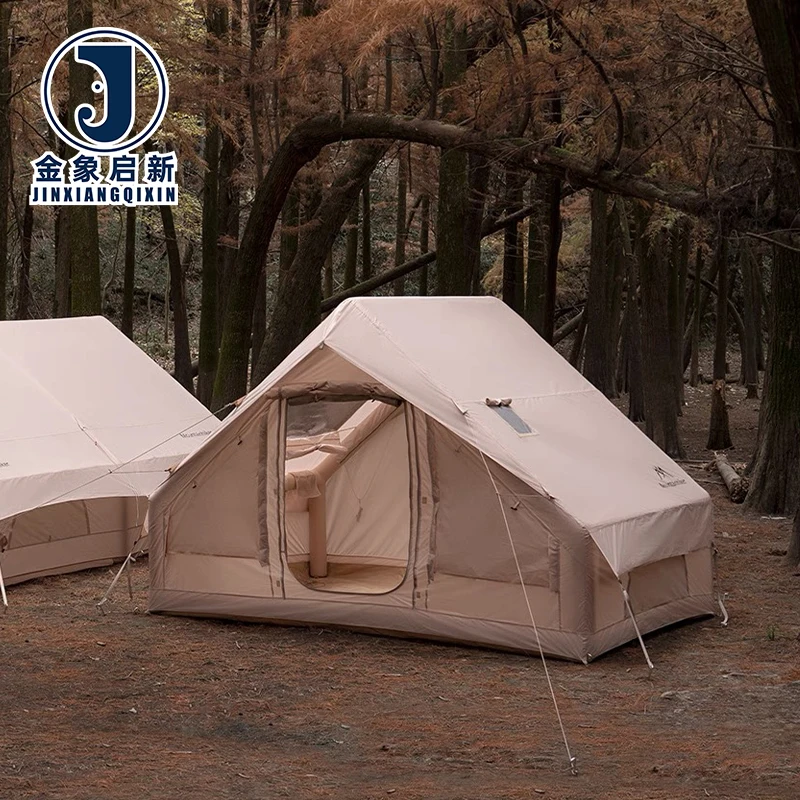
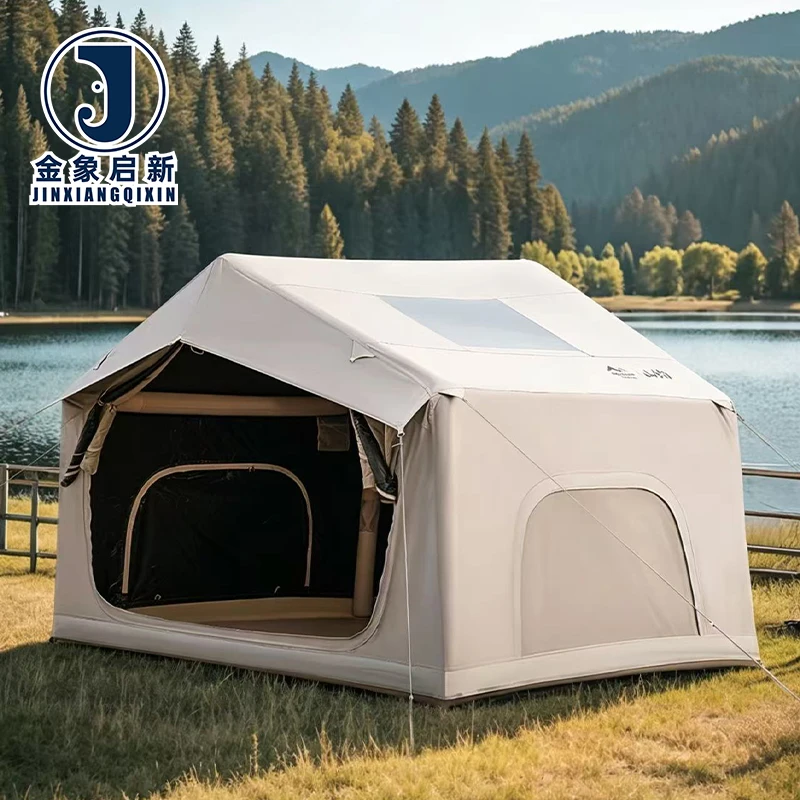
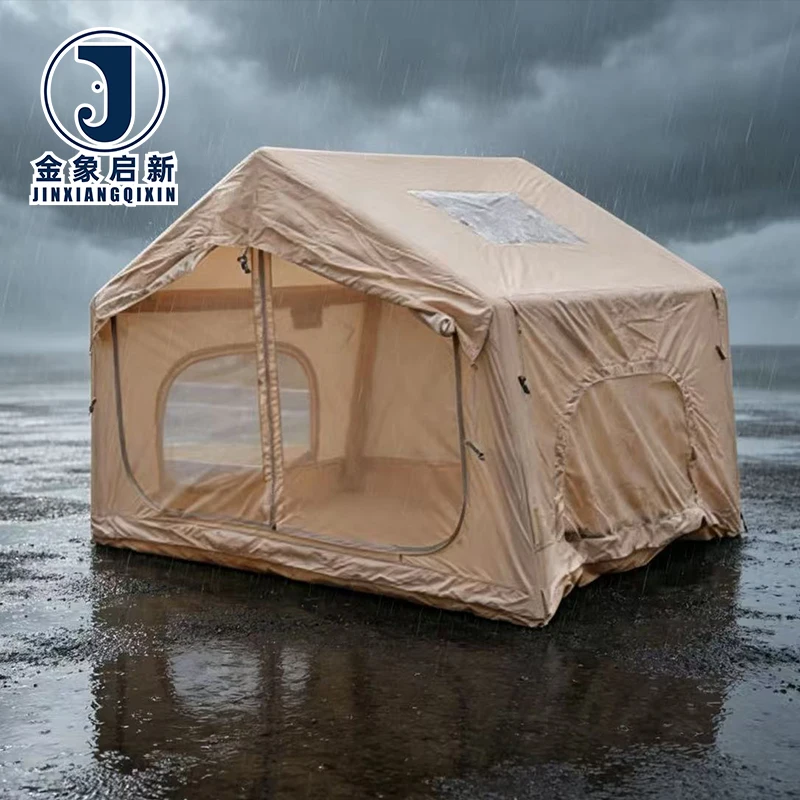
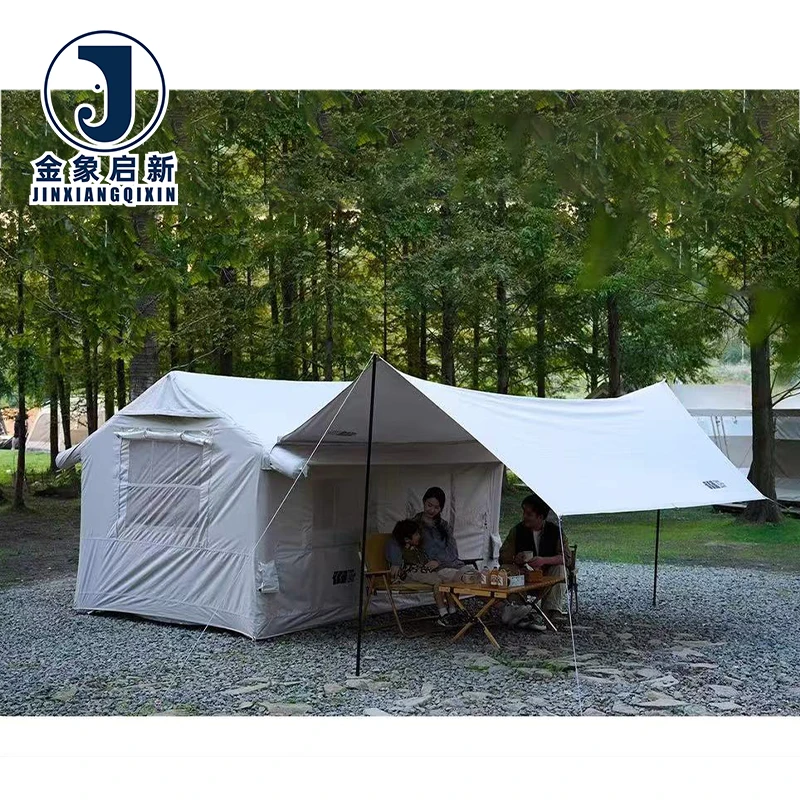
| Product Type | Inflatable Tent |
| Core Material | PVC tarpaulin |
| Construction | Single-layer |
| Capacity | 4-6 Person |
| Opening Mechanism | Quick automatic opening |
| Season Rating | Four-season |
| Waterproof | Fully waterproof coated construction |
| UV Resistance | UV-resistant treatment applied (test basis not stated in source) |
| Fire Retardant | Fire-retardant treatment available (grade to be confirmed per project specification) |
| Anti-Static | Anti-static option available (standard to be confirmed) |
| Tear Resistance | Tear-resistant PVC-coated fabric |
| Customization | OEM & ODM — sample customization, pattern printing, custom dimensions, material thickness adjustments |
| Production Standards | ISO9001, ISO14001, ISO45001, CE |
Application Suitability
| Application | Exposure & Requirement |
|---|---|
| Mining and tunnelling temporary shelters | Confined underground environments requiring verified fire-retardant and anti-static compliance for personnel safety audits |
| Aviation ground support inflatable structures | Open tarmac exposure to wind, fuel vapour and ground equipment; certified material documentation required for airside permits |
| Remote construction crew accommodation | Extended four-season outdoor deployment with UV exposure, rain ingress risk and repeated inflation-deflation cycles |
| Outdoor event management shelters | Rapid-deploy weather protection for time-sensitive setups; single-layer construction for transport portability |
| Industrial site temporary housing | Harsh climatic conditions with prolonged UV exposure, dust ingress and mechanical abrasion from site activity |
What Certified Fire-Retardant Inflatable Tent Fabric Actually Means on a Job Site
A fire-retardant claim without a grade and a matching test report is just a marketing phrase — your site inspector needs documentation, not promises.
We have seen inflatable structures arrive on regulated industrial sites only to be rejected at the gate because the supplier could not produce a fire-retardant test certificate aligned with local mining or aviation safety codes. The Inflatable Tent Fabric fire retardant certified requirement is not optional on these projects; it is the first document the safety officer requests [NEED_CITE: fire classification standards for temporary structures on industrial sites]. When the fabric arrives without verifiable test data tied to the specific batch, the entire deployment stalls — crews remain unsheltered, timelines slip and the procurement team scrambles for a replacement source.
Compliance Documentation That Travels With the Fabric
Inflatable tent structures deployed on mining concessions or aviation facilities must carry material certification that traces back to the production batch. Our approach pairs each roll or finished unit with a test report stating the fire-retardant grade achieved and the anti-static surface resistance measured, so the compliance officer on site can cross-reference the paperwork against the physical material delivered. The Inflatable Tent Fabric fire retardant certified package includes ISO9001, ISO14001, ISO45001 and CE certificates that align with the regulatory frameworks governing temporary industrial structures.
Quick Automatic Opening Meets Regulated Site Timelines
Remote construction projects and emergency response deployments cannot afford hours of manual tent assembly. The quick automatic opening mechanism built into this Inflatable Tent design reduces setup to a matter of minutes, allowing crews to establish shelter before weather conditions deteriorate. The single-layer PVC tarpaulin construction balances structural rigidity when inflated with the portability needed for transport across rough access roads. Four-season waterproof and UV-resistant treatment ensures the fabric performs through extended outdoor exposure without degradation of the coating bond [NEED_CITE: coating adhesion performance under prolonged UV and thermal cycling].
Understanding the PVC Tarpaulin Core and Its Performance Boundaries
The PVC tarpaulin base fabric determines how the inflatable structure behaves under mechanical stress, thermal variation and prolonged weather exposure. Coating weight and base fabric denier together define the tensile and tear envelope — a heavier coating alone does not guarantee higher tear resistance if the underlying yarn count and weave density are insufficient. The single-layer construction used here prioritises rapid inflation response and manageable packed weight while maintaining the puncture resistance required for ground contact on uneven terrain. Fire-retardant treatment is applied to meet the specific grade demanded by the end-use environment; buyers should confirm the classification required by their local authority before production begins. Anti-static performance, where specified, is measured as surface resistance and documented per batch, which matters in environments where sensitive electronic equipment or combustible dust is present. The four-season rating reflects the material’s ability to withstand both high-temperature softening and low-temperature stiffening across a wide climatic range without loss of inflation integrity.
The Hidden Cost of Specifying Inflatable Tent Fabric Without Verification
When a supplier quotes an inflatable tent with claimed fire-retardant and anti-static properties but ships material without batch-specific test reports, the risk transfers entirely to the buyer. We have documented cases where structures passed initial visual inspection but failed the fire safety audit weeks later because the flame-retardant grade did not match the site’s regulatory classification [NEED_CITE: regulatory compliance testing for temporary industrial shelters]. Anti-static performance that is asserted but not measured can create ignition hazards in mining ventilation zones or aviation fuel-handling areas. Colour variation between production batches forces contractors to reject partial shipments and delay project milestones. Welded seams that fail before the fabric itself tears indicate inconsistent heat-sealing parameters — a defect that typically appears only after the structure has been inflated and deflated multiple times on site.
Why Source Inflatable Tent Fabric Through This Facility
Nearly 30 years of focused coated fabric production means the process controls governing coating weight, adhesion and treatment consistency have been refined across thousands of production cycles. Three full production lines and 36 sets of professional processing equipment deliver the capacity needed for large project orders without compressing lead times. The 10-technician R&D team handles custom dimension development, material thickness adjustments and pattern printing from initial sample through to production approval. Dedicated QA and QC staff conduct full-process inspection with 100% pre-shipment verification, catching GSM deviations and coating defects before the material leaves the facility. ISO9001, ISO14001, ISO45001 and CE certification provides the compliance framework that regulated industrial buyers require for audit-ready documentation.
Documentation & Verification
- Material specification sheet stating PVC tarpaulin coating type, base fabric construction and applied treatments
- Fire-retardant grade test report matched to the specific production batch shipped
- Anti-static surface resistance data included where the specification calls for static-dissipative performance
- Pre-shipment inspection record documenting batch traceability and dimensional verification
- ISO9001, ISO14001, ISO45001 and CE certificates available for site compliance filing
- Certificate of origin and customs documentation supporting international shipment clearance
Fabrication, Handling & Storage
- Heat-seal PVC tarpaulin panels using temperature and dwell settings matched to the single-layer coating weight to avoid seam delamination
- Reinforce inflation valve mounting points with additional PVC patches to distribute stress across the coated fabric
- Store rolls or folded units away from direct sunlight and sharp contact surfaces to prevent coating adhesion loss and surface creasing
- Deploy anti-static variants only after verifying surface resistance readings match the values stated in the batch test report
- Clean the PVC tarpaulin surface with mild detergent solutions; avoid solvent-based cleaners that degrade the coating bond
- Repair minor punctures on site using compatible PVC adhesive patches applied to dry, clean fabric surfaces
Requesting a Specification Match for Your Project
To align the inflatable tent fabric with your deployment requirements, share the intended application environment and the specific fire-retardant classification your local authority mandates. Confirm whether anti-static performance is required and which surface resistance standard applies to your site. Provide the target dimensions, quantity of units and any pattern printing or branding specifications so the R&D team can develop a pre-production sample for your approval before full manufacturing begins.
Frequently Asked Questions
Q: What fire-retardant grades are available and how do they align with local mining or aviation safety codes?
A: Fire-retardant treatment is applied to meet the classification your project specifies, with the grade confirmed during the sample development stage. We recommend sharing your local regulatory requirements early so the correct test protocol is applied and documented on the batch test report accompanying your shipment.
Q: How is anti-static performance verified and what surface resistance values can be supplied?
A: Anti-static performance is measured as surface resistance and recorded per production batch. The specific values depend on the formulation selected for your application. Test data is included in the shipment documentation so your site safety team can verify compliance against their required thresholds.
Q: Can you provide certified test reports for site inspection before full production?
A: Yes. Pre-production samples can be tested and accompanied by certified reports so you can submit them for regulatory approval before committing to full-volume manufacturing. This step reduces the risk of compliance rejection once the main shipment arrives on site.
Q: What customization options exist for dimensions, thickness and branding on inflatable structures?
A: OEM and ODM customization covers custom dimensions, material thickness adjustments and pattern printing. The 10-technician R&D team develops samples based on your drawings and specifications, and production proceeds only after your written sample approval.
Q: How do you ensure batch-to-batch consistency across large project orders?
A: Full-process QA and QC inspection covers coating weight, colour consistency and dimensional accuracy at every production stage. A 100% pre-shipment inspection is conducted before dispatch, and the inspection record is included with your documentation package for traceability.