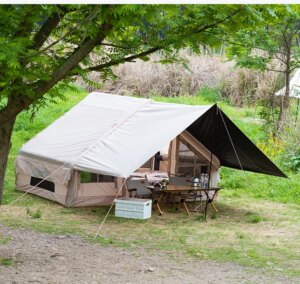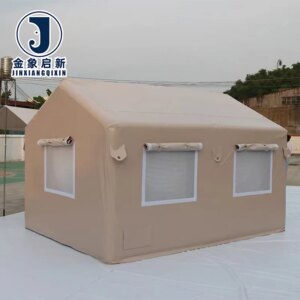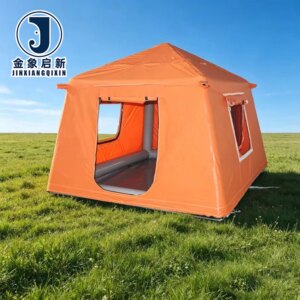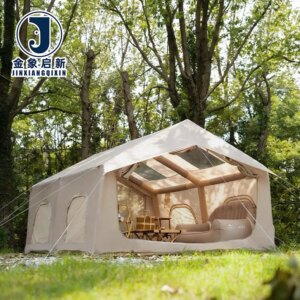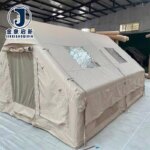
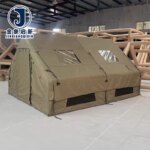
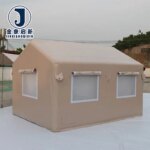
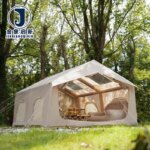
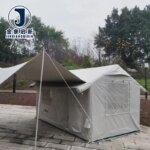
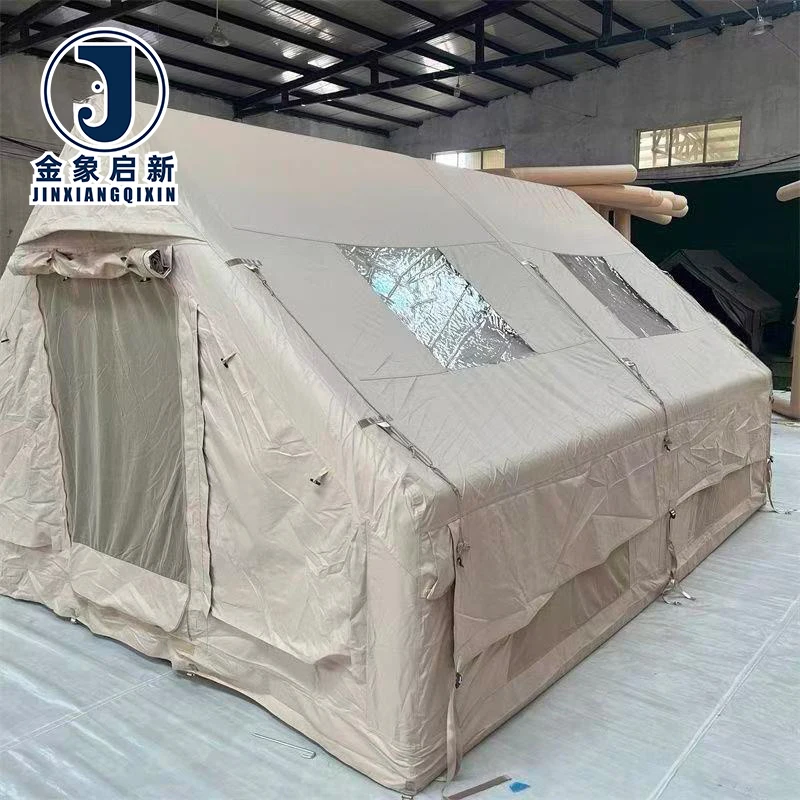
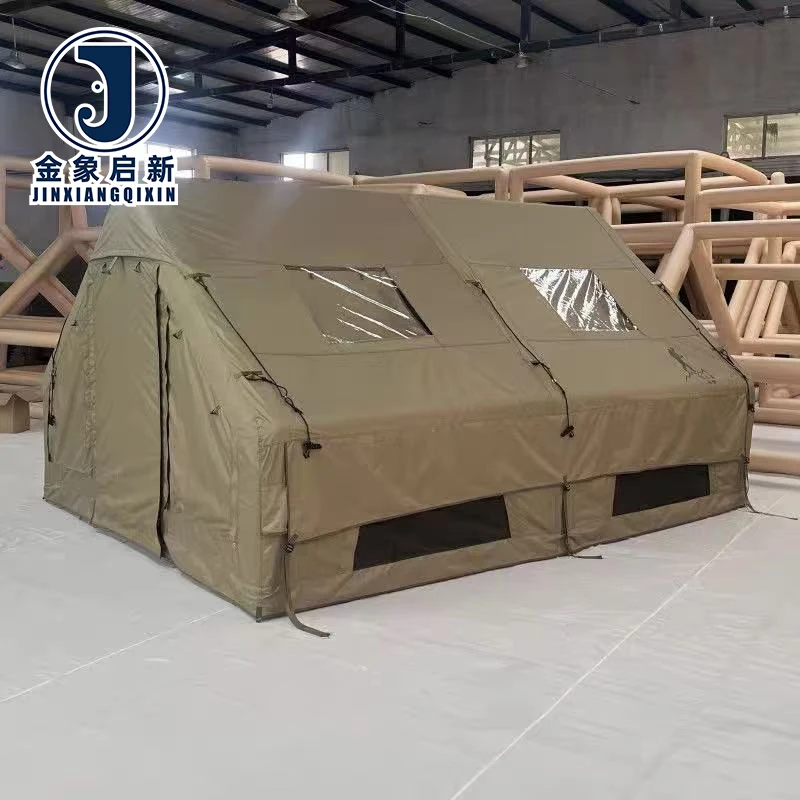
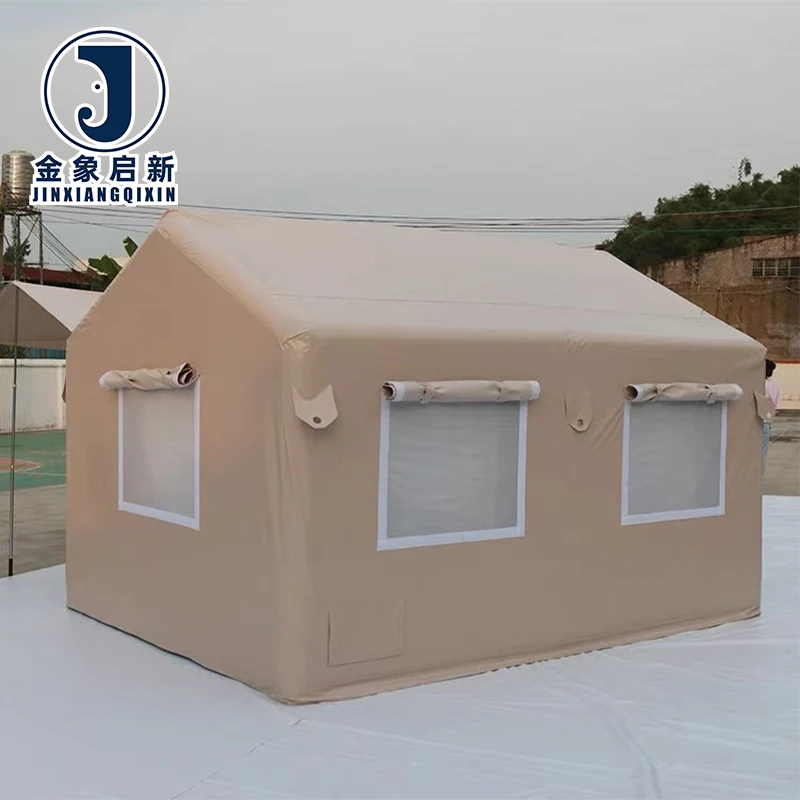
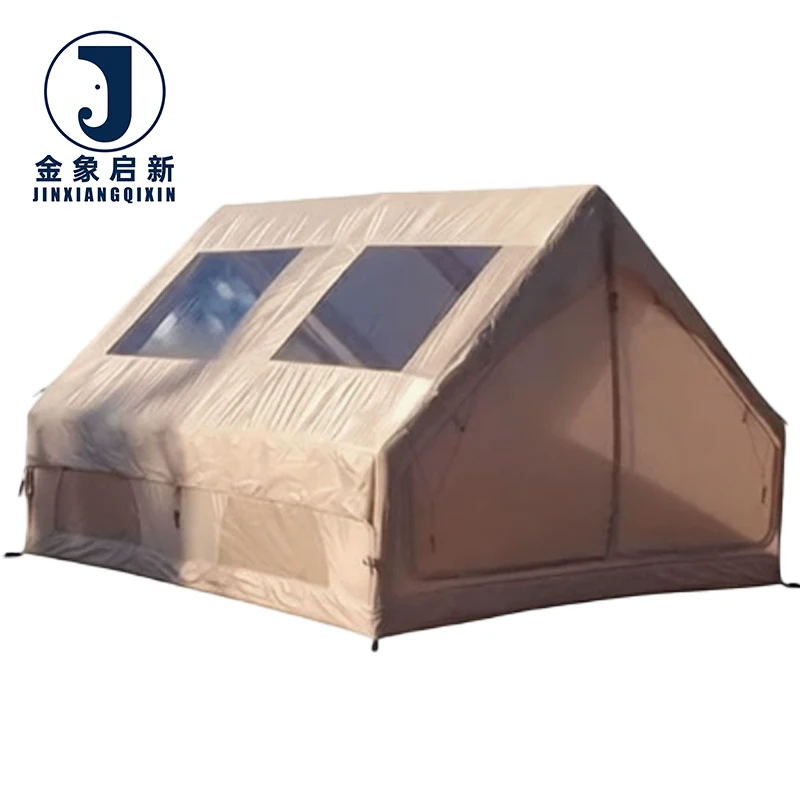
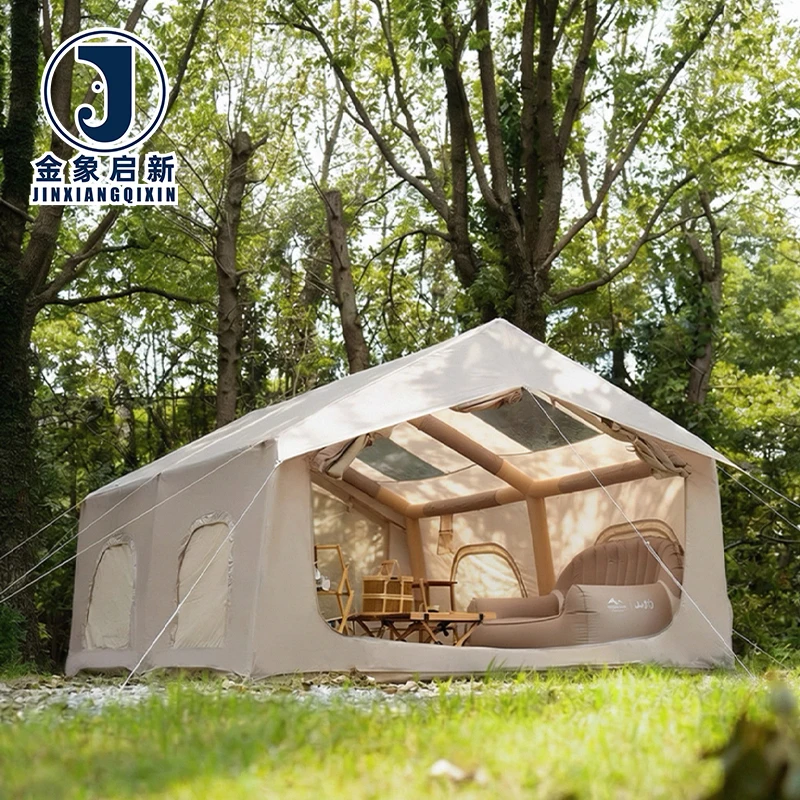
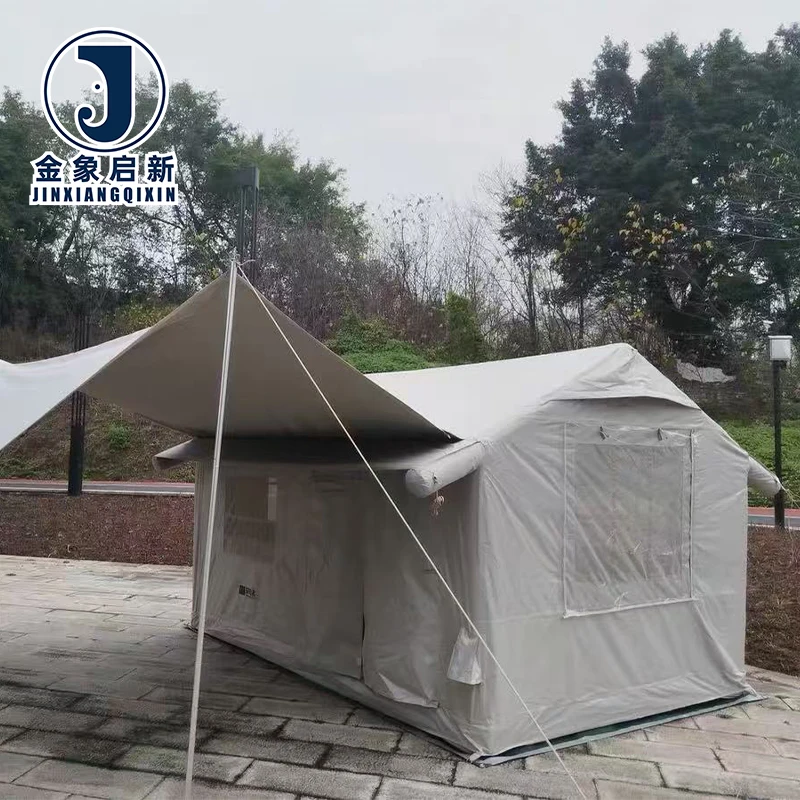
Proven Process Control — Coating weight and adhesion are monitored at every stage across three dedicated production lines, ensuring air-holding integrity for inflatable tent fabric and membrane structure applications.
Technical Specifications
| Parameter | Value |
|---|---|
| Product Type | Inflatable Tent Fabric |
| Core Material | PVC Tarpaulin |
| Key Performance | Waterproof (grade not stated in source), UV-resistant (test basis not stated in source), Tear-resistant (standard not stated in source) |
| Customization Service | OEM & ODM (sample customization, pattern printing) |
| R&D Team Scale | 10 technicians |
| Quality Control System | Strict full-process quality inspection with dedicated QA&QC staff |
| Standards | ISO9001, ISO14001, ISO45001, CE |
Application Suitability
| Application | Exposure & Requirement |
|---|---|
| Inflatable tent and temporary shelter manufacturing | Constant internal air pressure, cyclic inflation/deflation stress, UV exposure during extended outdoor deployment |
| Membrane structure and event structure contracting | High tensile load at anchor points, wind-induced flexing, fire-retardant compliance for public venues |
| Specialist commercial outdoor equipment production | Custom sizing and branding requirements, abrasion during transport and site setup, multi-season weather resistance |
Why "Inflatable Tent Fabric" Spec Sheets Mislead Buyers Without Verified Test Data
Material integrity for inflatable structures depends on documented performance, not marketing claims.
When sourcing inflatable tent fabric for industrial and specialist structure projects, buyers frequently receive specification sheets that list waterproof and UV-resistant properties without referencing any underlying test standard. A membrane that holds air on day one may degrade at the seams after a season of cyclic inflation and sun exposure if the coating adhesion was never validated against a recognised method. We see this pattern repeatedly: the fabric passes visual inspection, the weld seams look clean, and the structure inflates without issue — until the first real weather event exposes what was never tested [NEED_CITE: tensile and tear test methods for coated fabrics per ISO 1421]. The cost of a failed inflatable shelter on a construction site or at a commercial event extends far beyond the fabric replacement.
Air-Holding Integrity Starts at the Coating Interface
The primary demand on inflatable tent fabric for industrial and specialist structure applications is sustained air retention under variable internal pressure. The PVC coating must bond to the base fabric with sufficient peel strength to resist delamination when the membrane flexes during inflation cycles. Our coating process is calibrated to achieve consistent adhesion across the full roll width, which directly determines how well the welded seams hold under repeated pressurisation. A coating that bonds unevenly will create weak points at the heat-welded joints — typically the first location where air loss begins.
Weld Seam Behaviour Under Inflation Load
Every welded seam on an inflatable tent acts as a structural joint that must carry the same load as the parent fabric. The heat-welding process melts the PVC coating on both panels so they fuse into a continuous layer. If the coating weight varies across the roll, the weld temperature that works on one section may under-cure or over-burn another. Our in-house QA tracks coating consistency roll by roll, which gives fabricators a predictable welding window. This matters most on large membrane structures where a single seam failure can deflate an entire section [NEED_CITE: weld seam peel strength testing for PVC coated fabrics].
Reading Between the Lines on PVC Tarpaulin Specifications
Waterproof performance in PVC tarpaulin depends on coating continuity rather than thickness alone. A thin, pinhole-free coating will outperform a thicker layer that has micro-voids from uneven application. UV resistance is similarly dependent on the stabiliser package blended into the coating compound; the same base PVC resin can perform very differently depending on which additives are used. Tear resistance is governed by the base fabric’s denier and weave density — the coating protects the yarns from abrasion but does not add meaningful tear strength on its own. Understanding these distinctions helps buyers ask the right questions when evaluating inflatable tent fabric for industrial and specialist structure projects rather than relying on a single headline number.
The Hidden Cost of Unverified Fabric Batches
Colour variation between rolls in the same order becomes immediately visible once inflatable tent panels are welded side by side on site. A batch that arrives lighter in GSM than the quotation stated will inflate to a softer structure that sags under wind load, forcing the operator to run compressors at higher duty cycles. Flame-retardant treatment claimed without a supporting test report can halt a project at the inspection stage if the venue authority demands documentation. These failures do not show up in the sample approval stage because the sample was cut from a different production run [NEED_CITE: batch-to-batch colour and weight consistency in PVC coated fabric production]. The rework cost — re-cutting, re-welding, re-shipping — routinely exceeds the original material savings.
What Sets This Supply Chain Apart
Our 10-technician R&D team handles material selection, pattern printing, and sample development in-house, which means the specification you approve is the specification that runs on the production line. Three full production lines and 36 sets of professional processing equipment give us the capacity to deliver bulk roll orders without splitting production across external workshops. Dedicated QA and QC staff inspect every roll before it leaves the facility, checking coating weight, colour consistency, and surface finish against the approved sample. ISO9001, ISO14001, ISO45001, and CE certification form the management framework, but the real control happens on the line where operators verify GSM and adhesion at defined intervals. Samples for custom inflatable tent fabric are developed within days, allowing buyers to validate weld parameters and colour match before committing to a full production run.
Documentation & Verification
- Material specification sheet stating base fabric denier, coating weight, and colour reference for each roll
- Test reports for UV and flame-retardant grades supplied where applicable to your market requirements
- ISO9001, ISO14001, ISO45001, and CE certificates included in the shipment documentation package
- Pre-shipment inspection record confirming GSM verification and visual check per roll
- Roll packing list with individual roll weights and dimensions for warehouse receiving
Fabrication, Handling & Storage
- Set heat-weld temperature based on the PVC coating weight stated on the roll label to avoid under-cure or burn-through
- Store rolls upright on pallets in a dry, shaded area to prevent flat-spotting and surface adhesion between layers
- Use a sharp rotary blade when cutting to avoid fraying the base fabric yarns at panel edges
- Clean the PVC surface with a mild detergent; avoid solvent-based cleaners that can soften the coating and reduce weld strength
- Allow cold-stored rolls to reach ambient temperature before unrolling to prevent cracking of the coating in low conditions
- Plan panel layout to minimise transverse welds across the inflation axis where stress concentration is highest
Request a Specification Review
Tell us the inflation pressure range, deployment climate, and any fire-retardant or anti-static classification your project specification demands. Share your target roll width, annual volume, and whether you need custom colour matching or pattern printing for branding. If you are fabricating finished inflatable tents, let us know whether you require cut-to-size panels or full roll stock so we can recommend the most efficient supply format.
Frequently Asked Questions
Q: Can you supply fire-retardant certification for inflatable structures used in regulated venues?
A: We offer inflatable tent fabric in flame-retardant grades and can provide test reports where applicable. Confirm the specific classification your venue or local authority requires — such as B1, M2, or NFPA 701 — so we can match the correct coating formulation and documentation package to your project.
Q: What custom widths and pattern printing options are available?
A: Custom width and length are available, supported by our 10-technician R&D team for pattern printing and branding. Share your required roll dimensions and artwork files so we can prepare a print sample for approval before full production begins.
Q: How do weld seams hold up under repeated inflation and deflation?
A: Weld seam performance depends on consistent PVC coating weight across the roll. Our in-process QA monitors coating uniformity, which gives fabricators a stable welding window and reliable peel strength at the joints during cyclic pressurisation.
Q: How do you verify GSM and batch consistency across multiple rolls?
A: Every roll is weighed and inspected before dispatch. Our 100% pre-shipment inspection checks GSM against the stated specification and verifies colour consistency roll to roll, documented in the inspection record included with your shipment.
Q: What is the sample development process for custom inflatable fabric?
A: Samples are developed within days for custom requirements including colour, coating weight, and surface finish. Approve the sample for weld parameters and visual match before we schedule full production on your order.