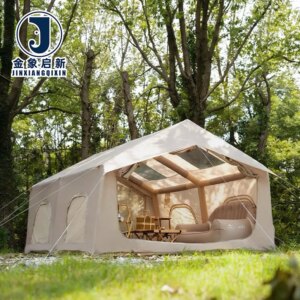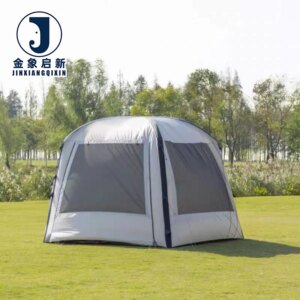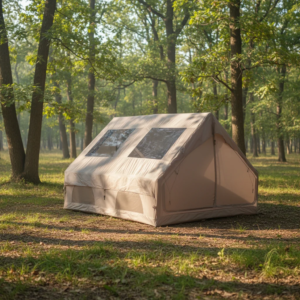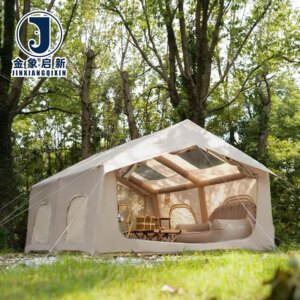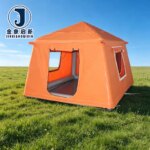
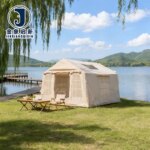

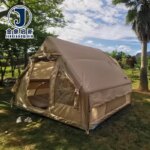
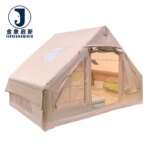
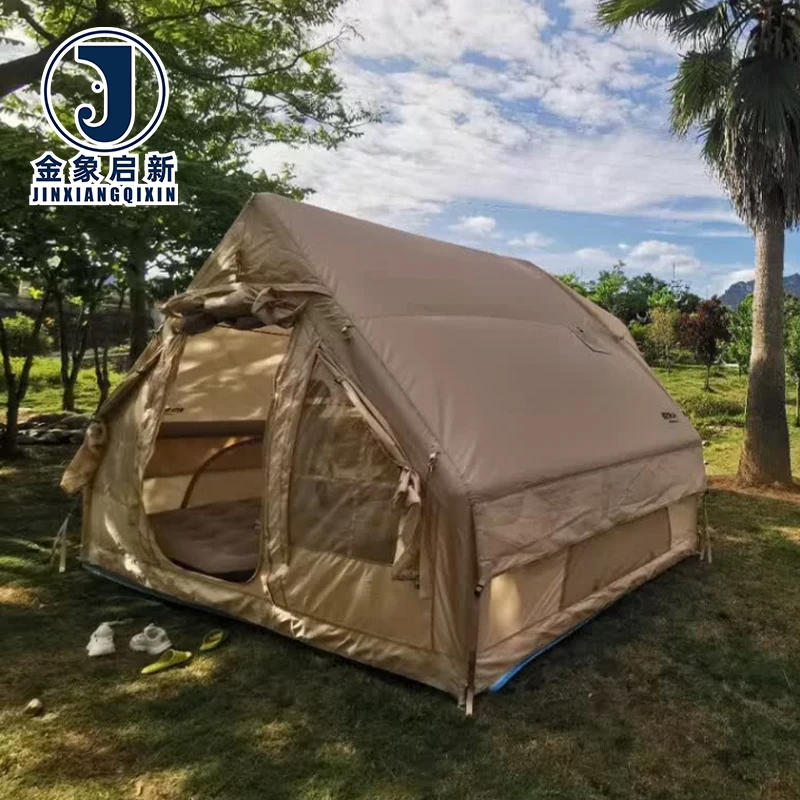
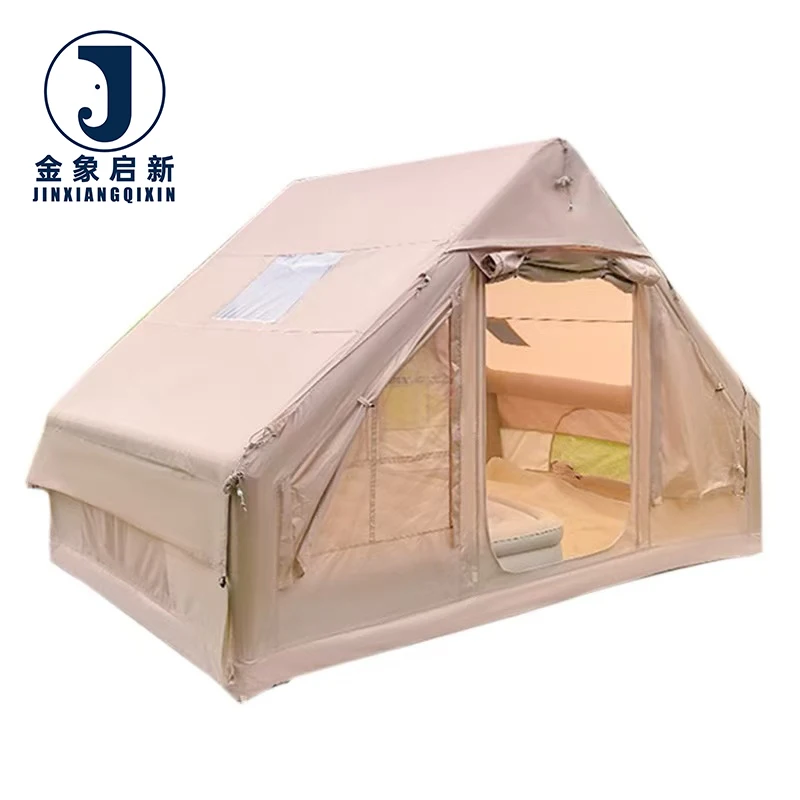
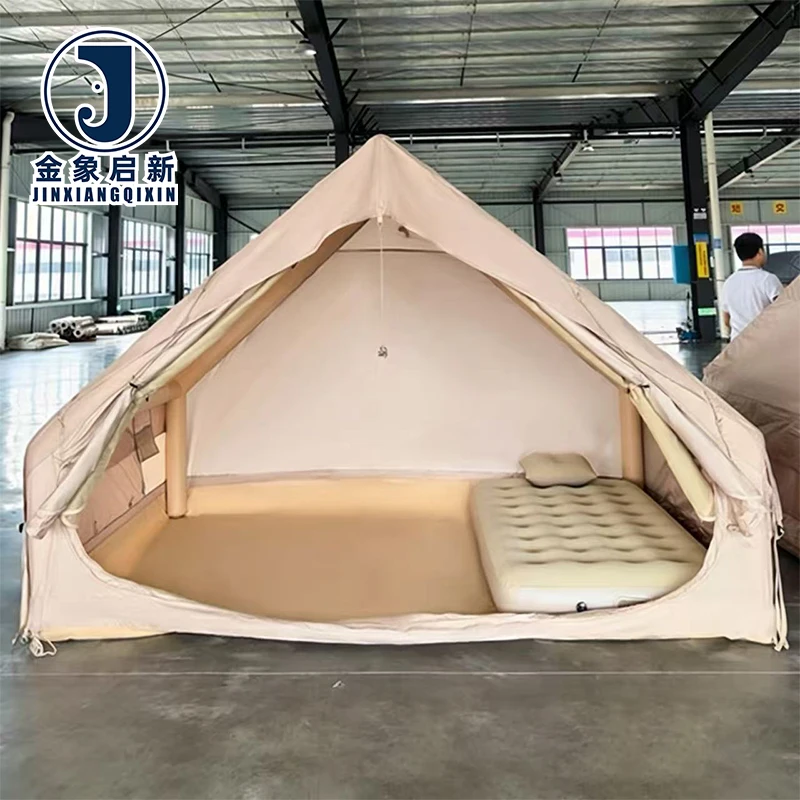
Specialist Fabric Engineering — Every inflatable tent we produce is backed by a dedicated 10-person R&D team managing material selection, structural design, and compliance documentation from initial sample through final dispatch.
Technical Specifications
| Parameter | Value |
|---|---|
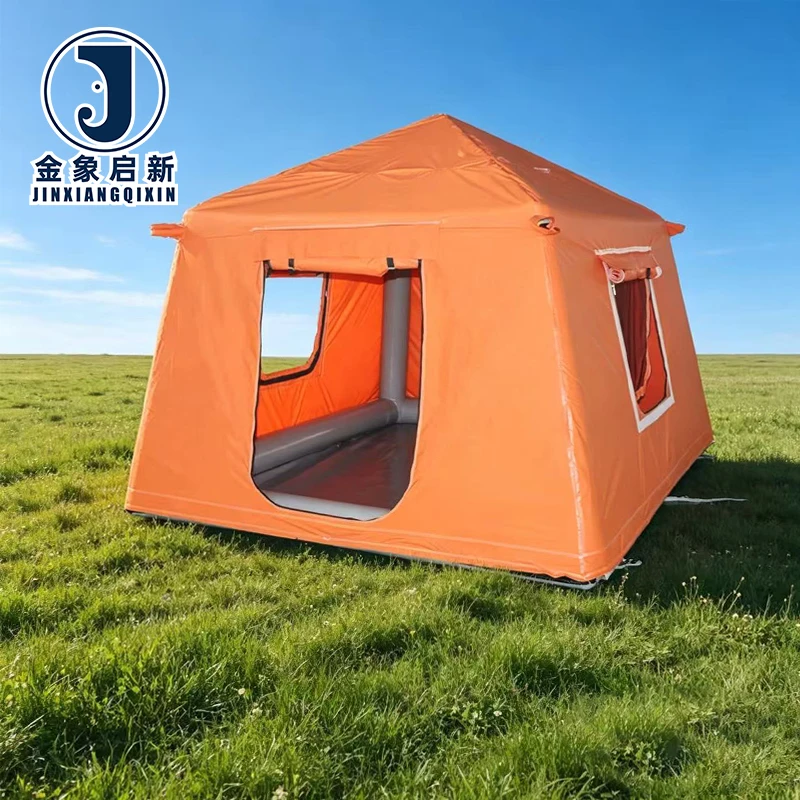
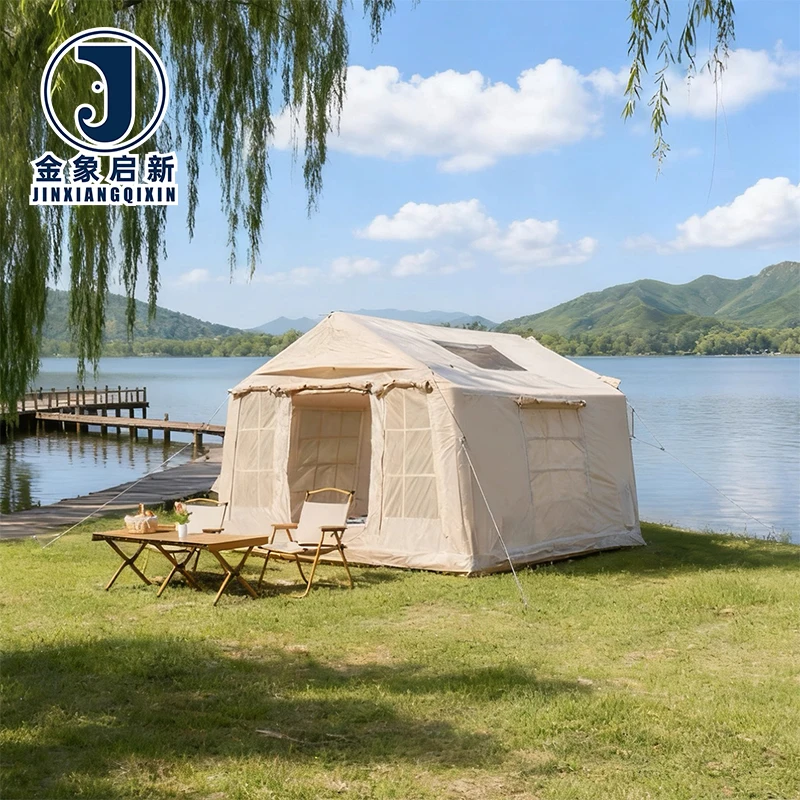
| Product Type | Inflatable Tent |
| Core Material | 420D Oxford |
| Capacity | 5-8 Person |
| Season Suitability | 4-Season |
| Opening Mechanism | Quick Automatic Opening |
| Construction Type | Single Layer |
| Design Type | Extended Type |
| Customization Service | OEM & ODM (Sample customization, pattern printing) |
| Standards | ISO 9001, ISO 14001, ISO 45001, CE |
Application Suitability
| Application | Exposure & Requirement |
|---|---|
| Emergency disaster relief shelters | Rapid deployment under extreme weather, need for immediate structural integrity and thermal retention across temperature ranges |
| Temporary construction site facilities | Continuous exposure to dust, mechanical abrasion from site operations, and variable weather requiring reliable waterproof performance |
| Mobile logistics storage units | Frequent relocation cycles demanding tear-resistant fabric that withstands repeated inflation, deflation, and transport handling |
Why Ventilation Compliance Matters for Inflatable Structures
We supply every inflatable tent with the fire-retardant and anti-static certification documentation your site safety officer requires before deployment.
When an inflatable structure is deployed in mining, tunnelling, or aviation ground support environments, the absence of verified fabric certification stops the entire project. Site safety managers reject inflatable shelters that lack documented flame-retardant grades or anti-static test results because underground and fuel-adjacent operations carry non-negotiable compliance requirements [NEED_CITE: fire classification standards for temporary structures in mining environments]. An inflatable tent manufacturer that cannot produce batch-specific test reports creates procurement risk that extends far beyond the material cost — it delays site mobilization and exposes the contractor to regulatory liability. We address this by making compliance documentation a standard part of every shipment, not an afterthought requested post-delivery.
Airflow and Pressure Retention in Inflatable Tent Design
The 420D Oxford base fabric provides the dimensional stability required to maintain internal air pressure without excessive stretching or deformation at the seams. In inflatable structures, the fabric must resist the constant outward force of pressurized air while remaining flexible enough to fold compactly during transport. As an inflatable tent manufacturer serving industrial contractors, we engineer the base fabric and coating weight to balance these opposing demands — sufficient tensile strength to hold shape under pressure, with enough pliability for rapid inflation cycles.
Sealed Seam Construction for Airtight Performance
Every seam in an inflatable structure is a potential failure point where air escapes under continuous pressure. Our production process uses high-frequency welding on the 420D Oxford material to create seams that match the fabric’s own tensile and tear properties [NEED_CITE: high-frequency welding parameters for coated Oxford fabrics]. The extended type design configuration adds complexity to seam routing, requiring precise alignment at junction points where multiple air chambers converge. Our 36 sets of professional processing equipment support this level of fabrication control across every production run.
Reading the Material Data Beyond the Denier Count
The 420D designation refers to the yarn denier of the Oxford weave base fabric, but denier alone does not determine how the finished inflatable structure performs under load. The weave density — how tightly the warp and weft yarns are interlocked — governs tear propagation resistance, which is critical when an inflated chamber experiences localized stress from contact with sharp ground surfaces or equipment edges. The coating application method and weight applied to this base fabric determine adhesion strength at the fabric-to-coating interface, directly influencing whether welded seams hold or delaminate under repeated inflation cycles. For a four-season inflatable tent, the coating must also maintain flexibility at low temperatures without becoming brittle, while resisting softening and tackiness at elevated temperatures. These properties interact: a heavier coating improves waterproofing but may reduce fold-ability, while a lighter coating improves pack weight but may compromise long-term air retention. Buyers should request the full material specification sheet showing base fabric construction, coating type, and tested performance values rather than relying on denier as a standalone indicator.
The Cost of Undocumented Fabric Performance
When inflatable structures are deployed in emergency relief or industrial settings, fabric failure does not mean an inconvenience — it means displaced personnel lose shelter or a mining operation halts ventilation [NEED_CITE: operational impact of temporary structure failure in emergency deployment scenarios]. Inflatable tents fabricated from material lacking verified flame-retardant certification face rejection at site inspection, forcing contractors to source replacement shelters on compressed timelines. Seam delamination discovered after deployment requires complete deflation and field repair under conditions that rarely match factory quality standards. These downstream costs — project delays, emergency re-procurement, crew idle time — consistently exceed the material savings from choosing a supplier who cannot provide complete batch documentation.
Why Industrial Buyers Specify This Source
Our 10-person R&D team develops custom inflatable structure designs from initial concept through validated production samples, handling material selection specific to your deployment environment. Three full production lines operating within a 9,180 square meter facility support the volume requirements of fleet-scale procurement without sacrificing per-unit inspection. Every production stage includes dedicated QA/QC review, ensuring seam integrity, coating adhesion, and dimensional accuracy before any unit moves to packing. The combination of in-house material expertise, fabrication capacity, and process-level quality control means your inflatable tent specifications are verified at the point of manufacture, not assumed based on a quotation.
Documentation & Verification
- Material specification sheet confirming 420D Oxford base fabric construction and coating parameters per batch
- Test reports documenting fire-retardant and anti-static grades applicable to your deployment jurisdiction
- ISO 9001, ISO 14001, ISO 45001, and CE certificates included in every shipment package
- Pre-shipment inspection record with batch-specific dimensional and seam integrity verification
- Certificate of origin and customs documentation supporting international procurement and clearance
Fabrication, Handling & Storage
- High-frequency welding parameters calibrated to 420D Oxford coating thickness for consistent seam adhesion
- Single-layer construction requires careful fold sequencing to prevent permanent crease marks on the coated surface
- Store deflated units in dry, ventilated conditions away from direct compression to preserve coating flexibility
- Four-season material tolerates cold-temperature deployment but should be unfolded gradually to avoid coating crack
- Clean with mild detergent only — harsh solvents degrade the Oxford coating and compromise airtight performance
- Field repairs require compatible adhesive matched to the specific coating chemistry applied to the 420D base
Requesting a Quotation for Your Application
To provide an accurate specification and lead time, we need your intended deployment environment, the fire-retardant or anti-static grade required by your site safety standards, and the quantity and configuration breakdown across your project scope. If your application involves custom dimensions or branding requirements, include dimensional drawings and colour references so our R&D team can prepare a production sample for your approval before full-run manufacturing.
Frequently Asked Questions
Q: What fire-retardant certifications are available for inflatable tent fabric?
A: We supply fire-retardant grades with test reports matched to your market’s regulatory requirements. The applicable certification depends on your deployment jurisdiction and industry — mining, aviation, and construction sites each reference different classification standards. Specify your required grade at inquiry stage so we include the correct test documentation with your shipment.
Q: How do you ensure airtight seam integrity in inflatable structures?
A: Every seam on the 420D Oxford fabric is high-frequency welded using parameters calibrated to the specific coating weight. Our QA/QC team inspects seam adhesion and air retention at multiple production stages, and pre-shipment inspection records verify structural integrity before dispatch.
Q: What custom sizing and configuration options are supported?
A: Our OEM and ODM services cover custom dimensions, configuration layouts, and pattern printing. The 10-person R&D team develops production samples based on your drawings for validation before mass production. Extended type configurations and capacity modifications are accommodated within the fabrication capability of our 36 processing equipment sets.
Q: Can you provide anti-static treated fabric for mining applications?
A: Anti-static treatment is available for inflatable structures destined for underground mining and tunnelling environments where static discharge poses ignition risk. Confirm the specific anti-static standard required by your site safety officer at inquiry stage so we apply the correct treatment and include the corresponding test report.
Q: What is the lead time for custom inflatable tent development?
A: Lead time depends on customization scope, order volume, and sample approval cycles. Standard configurations move through production faster, while custom dimensions and printed branding add sample development stages. We provide a confirmed schedule at quotation stage based on your specification and required delivery date.