
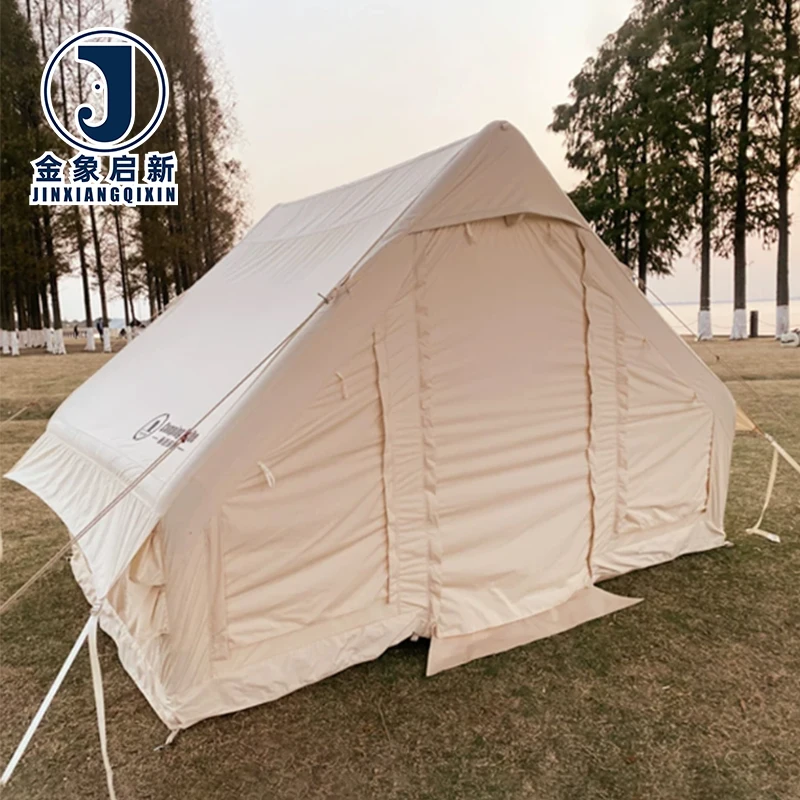
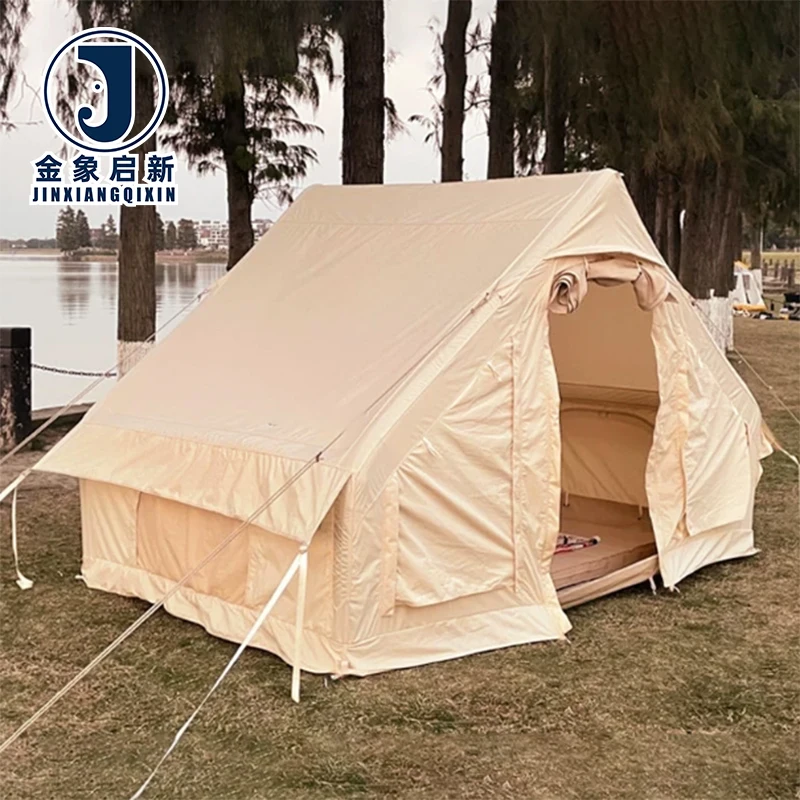
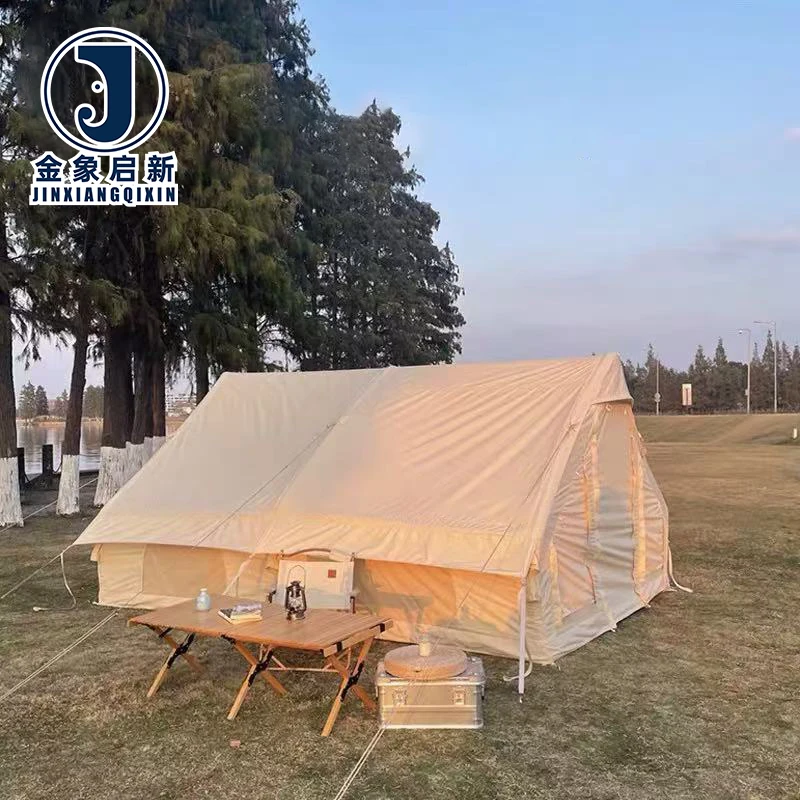
Proven Coated Fabric Expertise — nearly 30 years of PVC and PE coating process control, applied here to inflatable structure fabric where airtightness and UV stability define project success.
Technical Specifications
| Parameter | Value |
|---|---|
| Product Type | Inflatable Tent |
| Core Material | UV Water-resistant PVC Fabric |
| Fabric Thickness | 0.3mm to 0.8mm (customizable) |
| Tear Resistance | >300N warp and weft (test basis not stated in source) |
| Wind Load Resistance | Up to 12m/s |
| UV Protection Retention | 90% after 500 hours accelerated weathering (test standard not stated in source) |
| Airtightness | Maintains pressure for 72 hours |
| Product Form | Single layer inflatable structure |
| Customization | OEM & ODM, sample customization, pattern printing, Pantone color matching |
| Standards | ISO9001, ISO14001, ISO45001, CE |
Application Suitability
| Application | Exposure & Requirement |
|---|---|
| Mining and tunnelling site shelters | Abrasive dust, continuous UV exposure, certified fire-retardant compliance required on-site |
| Construction site temporary accommodations | Wind loading, rain ingress, rapid deployment and relocation across phases |
| Outdoor event and exhibition structures | Multi-day weather exposure, branding and colour consistency across adjacent units |
| Aviation ground support inflatable enclosures | Fuel-adjacent environments requiring anti-static and flame-retardant documentation |
| Mobile marketing activations | Frequent inflation and deflation cycles, transport abrasion, visual appearance retention |
Why Certified Inflatable Tent Fabric Matters More Than Stated Thickness Alone
Thickness without verified test data leaves procurement exposed to compliance failure at the project gate.
Buyers specifying inflatable tent fabric fire retardant certified for regulated sites frequently receive material that meets the thickness callout but arrives without the documentation the safety officer demands. The fabric passes visual inspection yet fails the compliance audit because the fire-retardant grade or the UV test basis was never confirmed against the site’s governing standard. We see this pattern repeat across mining, tunnelling, and aviation ground-support projects where the inflatable structure is critical infrastructure, not a temporary convenience. [NEED_CITE: site safety documentation requirements for inflatable membrane structures in mining operations]
Airtightness as the Real Measure of Inflatable Structure Fabric Quality
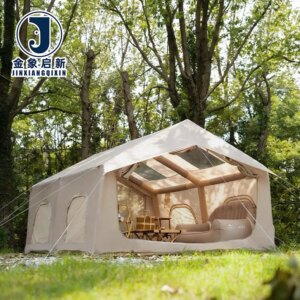
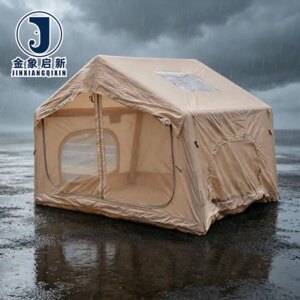
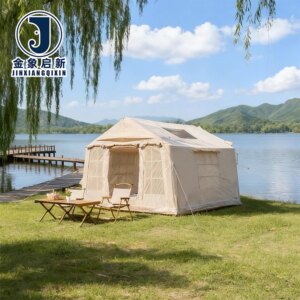
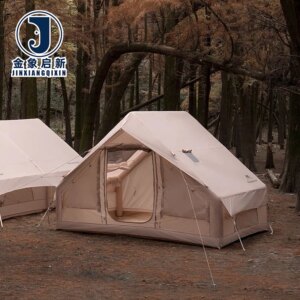
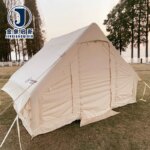
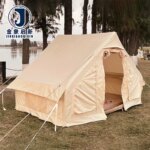
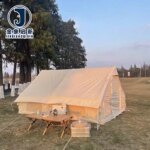
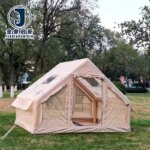
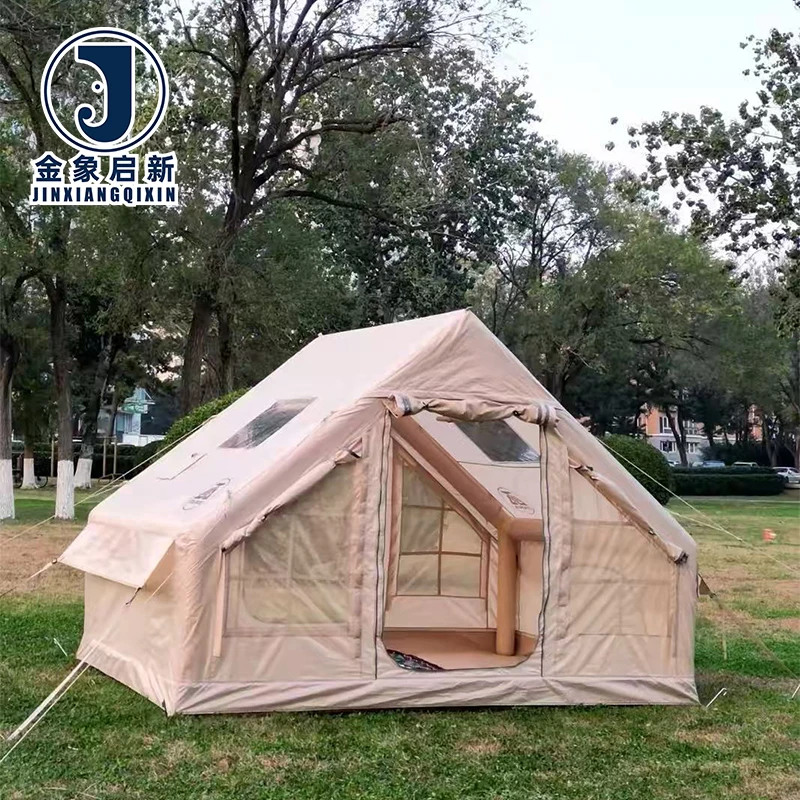
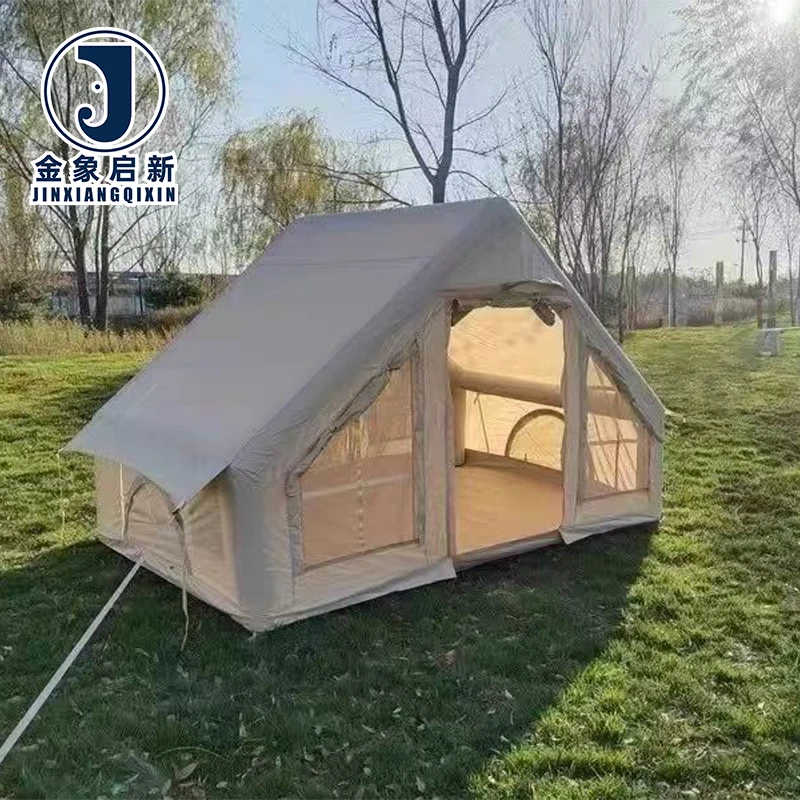
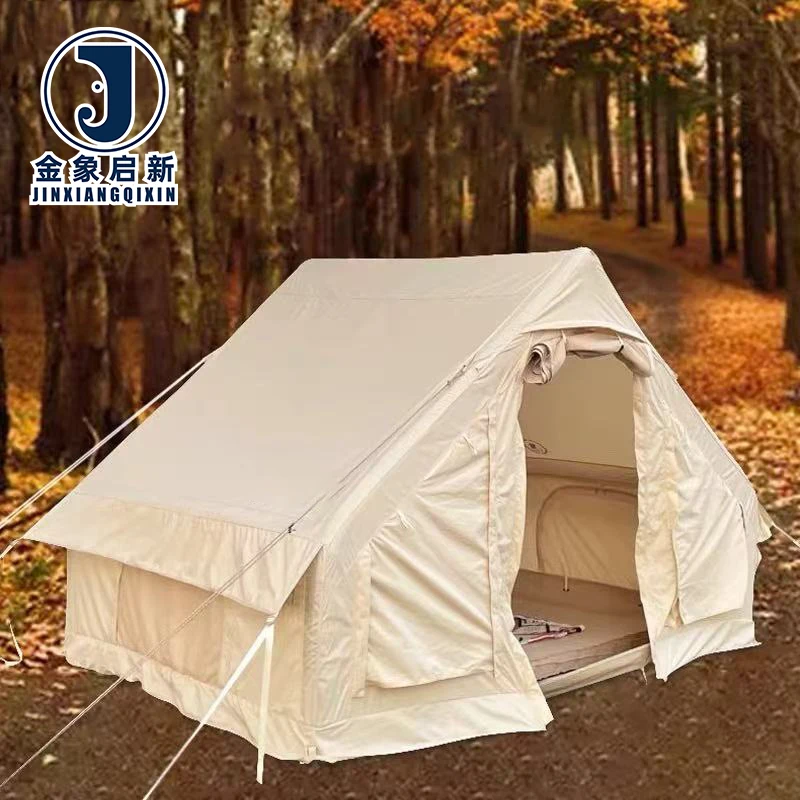
An inflatable tent holds its shape only as long as the membrane retains internal pressure. This 4-person inflatable camping tent is engineered to maintain pressure for 72 hours without re-inflation, which matters most in remote industrial camps where no technician is on standby to monitor air pumps overnight. The single layer construction reduces overall weight for transport between sites while the PVC coating provides the continuous barrier that prevents slow leakage through the fabric body.
UV-Stabilized PVC for Four-Season Commercial Exposure
Outdoor structures in mining camps and exhibition grounds face uninterrupted solar loading across seasons. The UV water-resistant PVC fabric used here retains measurable UV protection after extended accelerated weathering, indicating the stabilizer package continues functioning well beyond initial deployment. For procurement teams evaluating inflatable tent fabric fire retardant certified options, requesting the specific weathering test standard behind the stated retention figure allows a direct comparison against the project’s exposure classification. [NEED_CITE: accelerated weathering test methods for PVC coated fabrics used in temporary structures]
Reading the Specification Sheet Beyond Thickness and Colour
Fabric thickness in the 0.3mm to 0.8mm range sets the baseline for puncture resistance and handling weight, but tear resistance above 300N in both warp and weft directions reveals how the base fabric and coating work together to stop a small cut from propagating under wind load. A single-layer inflatable structure transfers all aerodynamic stress directly to the membrane, meaning the tear value matters more than it would in a framed tent where the pole system carries the primary load. The stated wind load resistance up to 12 m/s should be cross-referenced with the site’s historical wind data, particularly for elevated or coastal installations where gusts exceed average forecasts. Coating adhesion to the base fabric determines whether the membrane delaminates at the heat-welded seams before the fabric itself reaches its tear limit.
The Hidden Cost of Specifying Inflatable Structure Fabric Without Documentation
When inflatable membrane fabric arrives on a mining or construction site without the fire-retardant grade certificate the safety plan requires, the structure cannot be commissioned regardless of how well it performs physically. The project absorbs delay costs while the procurement team sources replacement material or negotiates an after-the-fact test programme. Similarly, when UV retention claims lack a named test standard, the site operator has no basis to predict service life or schedule replacement, leading to unexpected membrane failure during peak operational periods. Batch-to-batch colour variation across an order of inflatable tent fabric fire retardant certified units becomes visible only after inflation, when adjacent structures are viewed side by side in direct sunlight. [NEED_CITE: compliance audit failure rates for temporary structures on regulated industrial sites]
Why Procurement Teams Source Inflatable Structure Fabric Here
Three full production lines and 36 sets of processing equipment support bulk inflatable fabric orders with consistent coating weight across every roll in the shipment. The 10-person R&D team develops custom samples within days, allowing buyers to validate thickness, Pantone colour match, and pattern printing before committing to mass production. A dedicated QA and QC team runs a 12-point inspection during production, covering air pressure retention, tensile verification, and seam integrity before any roll is cleared for dispatch. Full ISO9001, ISO14001, ISO45001, and CE certification accompanies every shipment, closing the documentation gap that frequently delays site commissioning. Custom fabric thickness from 0.3mm to 0.8mm and OEM or ODM capability mean the material can be aligned to the project’s exact structural and branding requirements.
Documentation & Verification
- Material specification sheet stating base fabric, coating composition, and available fire-retardant grades for inflatable tent fabric fire retardant certified compliance
- UV and weathering test reports provided with each batch, naming the test standard used
- ISO9001, ISO14001, ISO45001, and CE certificates included for project compliance audits
- Pre-shipment 12-point inspection record covering airtightness, tensile strength, and seam integrity
- Certificate of origin and customs documentation package for international shipment clearance
Fabrication, Handling & Storage
- Heat-weld seams using temperature and dwell settings matched to the selected PVC thickness between 0.3mm and 0.8mm to prevent coating burn-through
- Store rolls upright on pallets in a shaded, ventilated area to avoid compression creasing of the single-layer inflatable membrane
- Use compatible PVC adhesive for field repairs, ensuring the coating surface is clean and dry before patch application
- Avoid dragging rolls across abrasive ground during site deployment to protect the outer UV-resistant coating layer
- Clean with mild detergent and soft brush; solvent-based cleaners may degrade the PVC plasticizer system over repeated use
Requesting a Specification Match for Your Project
Provide the intended application environment, expected wind and weather exposure class, and any fire-retardant or anti-static grade required by your site safety plan. Specify the fabric thickness range, Pantone colour reference, and whether pattern printing or branding is needed across the inflatable membrane. Indicate whether you require finished inflatable structures or roll stock for in-house fabrication, along with estimated annual volume.
Frequently Asked Questions
Q: What fire-retardant and anti-static certifications accompany inflatable structure fabric for mining and tunnelling use?
A: ISO9001, ISO14001, ISO45001, and CE certificates ship with every order. Fire-retardant and anti-static grades are available for regulated environments — confirm the specific grade your site safety plan requires so the correct test report and documentation package are prepared before dispatch.
Q: How is UV resistance validated, and what test basis supports the stated weathering performance?
A: The UV water-resistant PVC fabric is evaluated through accelerated weathering exposure. Request the named test standard and full laboratory report for your batch to cross-reference the UV protection retention figure against your project’s exposure classification and replacement schedule.
Q: What custom thickness and Pantone colour options are available for project-specific inflatable membrane specifications?
A: Fabric thickness is customizable from 0.3mm to 0.8mm, and Pantone colour matching is available for project-specific requirements. OEM and ODM services include sample customization and pattern printing, with samples developed within days for buyer approval before production begins.
Q: How does the 12-point production inspection process ensure airtightness and seam integrity before shipment?
A: Dedicated QA and QC staff conduct inspections covering air pressure retention, tensile strength verification, and welded seam integrity at multiple production stages. Each inflatable structure is pressure-tested to confirm it maintains inflation for the stated duration before clearance for packing and dispatch.
Q: What documentation is included for customs clearance and on-site compliance verification in regulated environments?
A: Every shipment includes a material specification sheet, applicable test reports, ISO and CE certificates, pre-shipment inspection record, packing list, and certificate of origin. Additional documentation for regulated sites can be arranged — specify your compliance requirements at the inquiry stage.