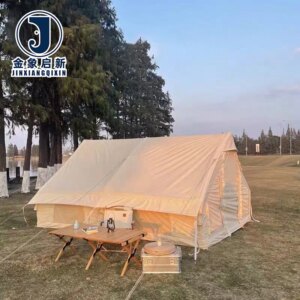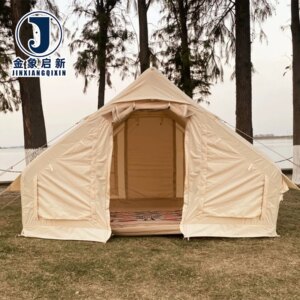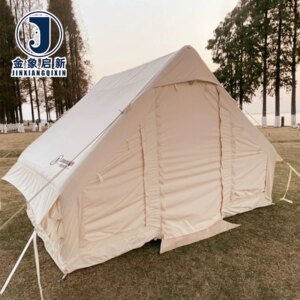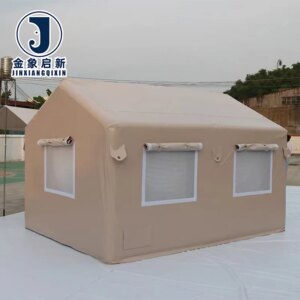

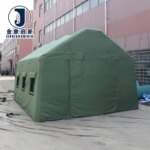
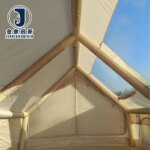

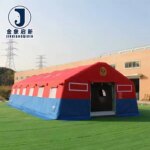
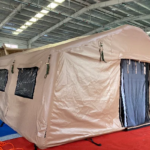
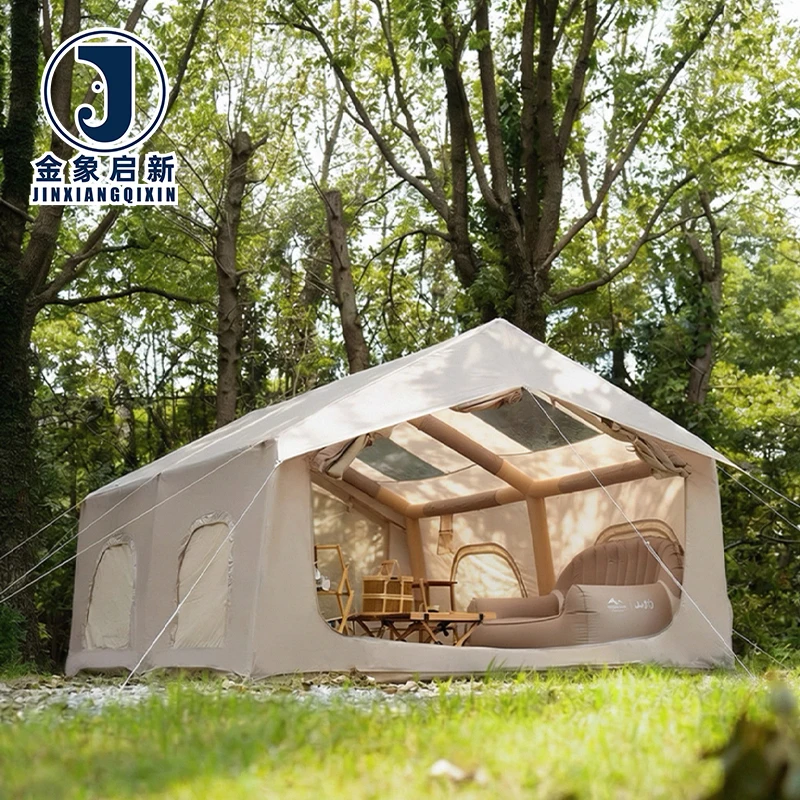
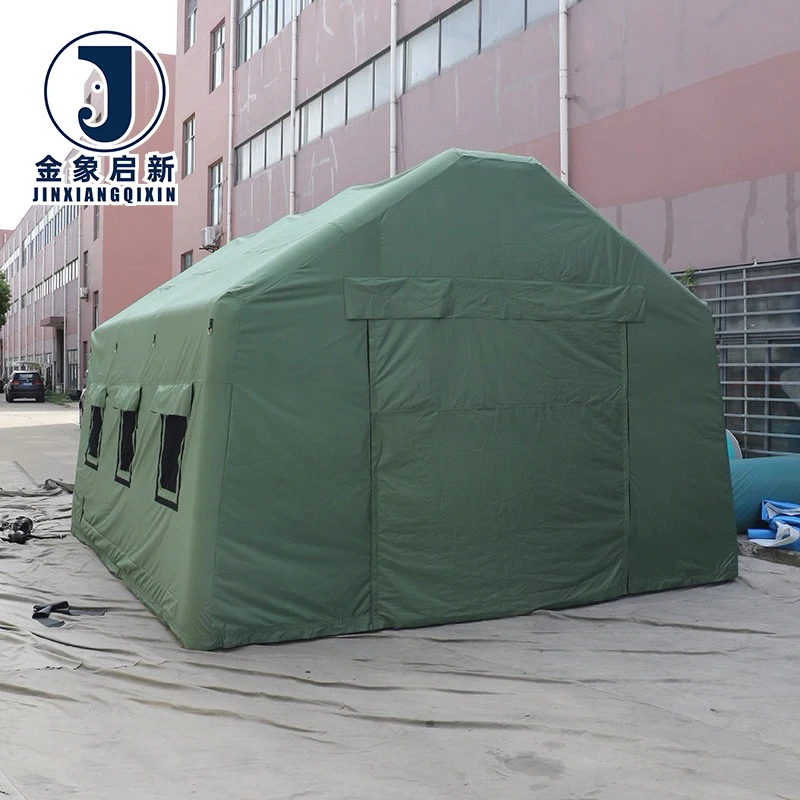
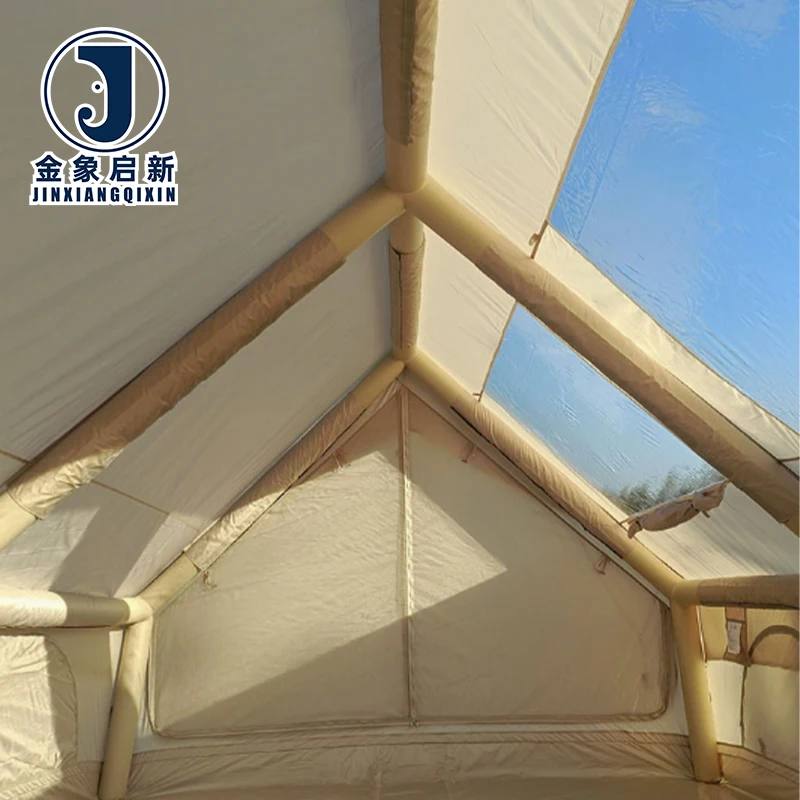
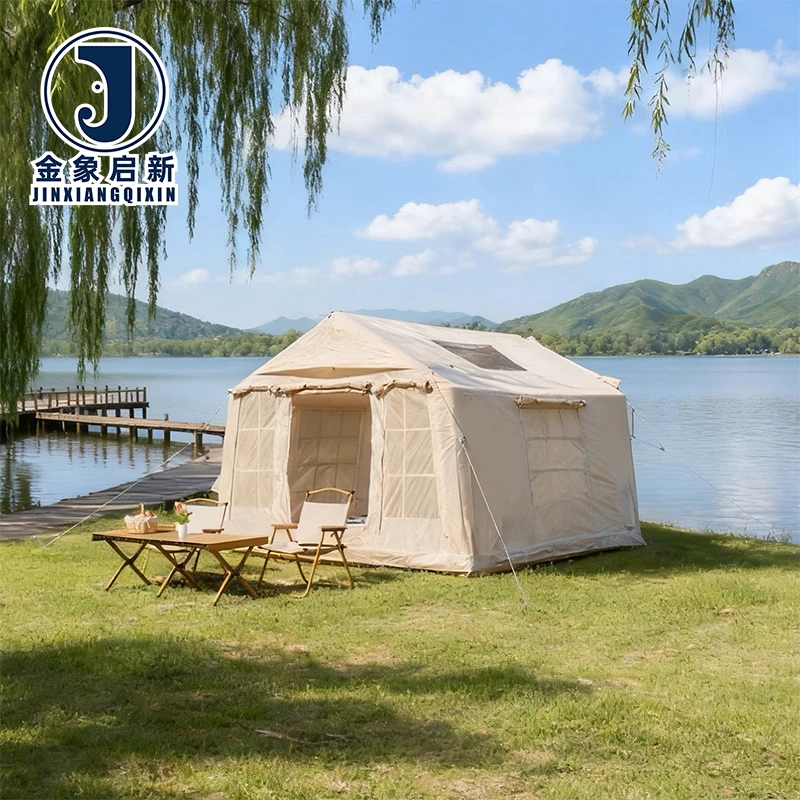
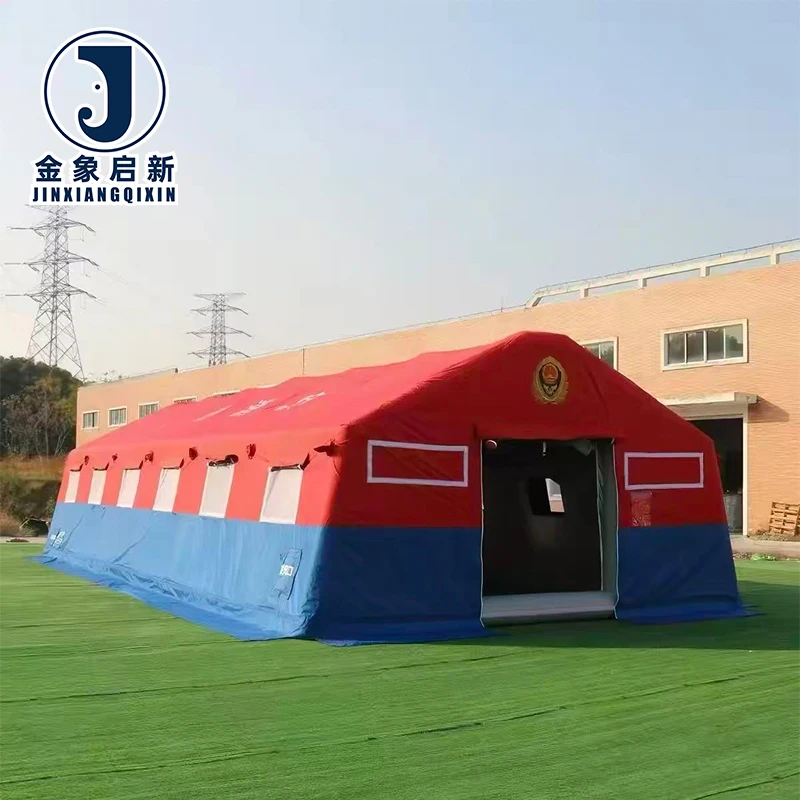
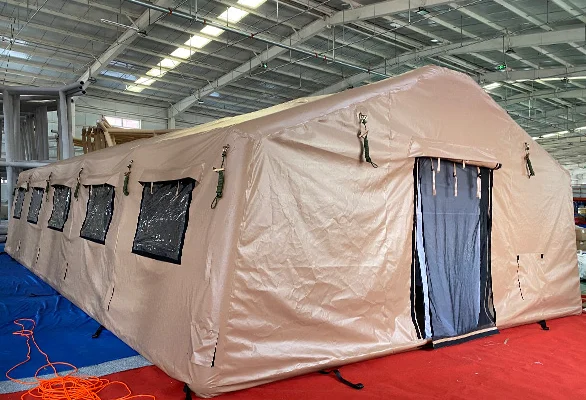
Technical Compliance Focus — Inflatable Tent documentation closes the compliance gap with full traceability from coating formulation to dispatch inspection, backed by ISO and CE certification.
Technical Specifications
| Parameter | Value |
|---|---|
| Product Type | Inflatable Tent |
| Core Material | PVC tarpaulin |
| Key Performance | Waterproof, UV-resistant (test basis not stated), tear-resistant |
| Construction | Single layer |
| Capacity | 2-8 Person |
| Season Rating | 4-Season |
| Opening Mechanism | Quick Automatic Opening (Inflatable) |
| Configuration | Extended Type |
| Certifications | ISO 9001, ISO 14001, ISO 45001, CE |
| Customization | OEM & ODM (sample customization, pattern printing) |
Application Suitability
| Application | Exposure & Requirement |
|---|---|
| Mining and tunnelling site command centers | Constant relocation, dust ingress, certified fire-retardant and anti-static compliance for underground-adjacent operations |
| Aviation ground operations emergency shelter | High-value equipment staging, rapid deployment under strict airside safety protocols |
| Disaster relief logistics hubs | Year-round weather exposure, repeated inflation cycles, cross-border transport requiring full documentation |
| Temporary site accommodations | Extended human occupancy in variable climates, thermal and moisture management across seasons |
What Happens When Your Temporary Structure Fails Its Safety Audit
A structure without traceable certification is a liability, not a shelter.
Procurement teams sourcing inflatable tents for industrial or relief operations frequently discover at the delivery gate that the fire-retardant or anti-static claims on the quotation have no supporting test report. Site auditors reject the deployment. The entire consignment sits idle while replacement stock is sourced, and critical recovery windows close. [NEED_CITE: fire classification requirements for temporary structures on industrial sites]
Rapid Deployment Under Compliance Pressure
When a mining operation requires a certified temporary command center after an incident, or disaster relief teams need covered logistics space within hours of arrival, the Inflatable Tent must deploy without specialized tools or large crews. The quick automatic opening mechanism allows a small team to achieve a fully inflated, weather-sealed structure rapidly. This operational readiness matters most when every hour of exposure costs the project in delayed decisions or unprotected assets.
Balancing Transport Efficiency with All-Weather Protection
The single-layer PVC tarpaulin construction keeps packed weight and transport volume manageable for air-freight or containerized relief shipments. Yet the material must still resist tearing during high-wind inflation and maintain waterproof integrity through consecutive rainy seasons. Buyers specifying Inflatable Tent fabric for these conditions must verify that the base fabric and coating adhesion are engineered for repeated stress cycles, not just initial deployment. [NEED_CITE: tensile and tear test methods for coated fabrics per ISO 1421]
Understanding the Specification Gaps That Matter
The core material is PVC tarpaulin, but that label alone does not tell you how the base fabric denier and weave pattern translate into tear propagation resistance. A high denier count with low thread density can tear more easily than a moderate denier with a tight weave. Coating weight and the method of application—whether calendered, laminated, or knife-coated—determine how well the PVC bonds to the base fabric, which directly affects weld seam integrity when the tent flexes under wind load. Season rating at 4-Season implies deployment across freezing and high-temperature environments; the material must resist low-temperature embrittlement and high-temperature softening without cracking or becoming tacky. Waterproof and tear-resistant claims should be verified against recognized test standards to ensure they hold under your specific operational conditions.
The Cost of Specifying on Appearance Alone
Selecting an Inflatable Tent based solely on capacity or price without verifying material certifications leads to expensive consequences. Structures rejected at the site gate for lacking flame-retardant or anti-static documentation force emergency re-procurement at premium freight rates. Tents deployed in mining-adjacent zones without anti-static surface resistance create ignition risks that violate site safety protocols. Batch-to-batch colour inconsistency across multiple units in a single relief deployment signals poor process control and raises questions about whether material properties also vary between batches. [NEED_CITE: consequences of material property variation across coated fabric batches]
Why Buyers Source Inflatable Tent Fabric Through This Facility
The 10-person R&D team handles material selection and sample development for custom sizing and pattern printing, allowing buyers to validate specifications before committing to bulk orders. Dedicated QA and QC staff conduct inspections at every production stage, with 100% pre-shipment inspection ensuring that the material leaving the facility matches the agreed specification sheet. Three full production lines and 36 sets of professional equipment support volume capacity while maintaining roll-to-roll consistency. ISO 9001, ISO 14001, ISO 45001, and CE certifications provide the compliance documentation required for cross-border relief logistics and industrial site audits. The production process maintains traceability from coating formulation through final dispatch.
Documentation & Verification
- Material specification sheet stating PVC tarpaulin base fabric, coating weight, and treatment references per order
- Test reports for UV-resistant and flame-retardant grades where applicable, traceable by batch
- ISO 9001, ISO 14001, ISO 45001, and CE certificates available for compliance packages
- Pre-shipment inspection record confirming Inflatable Tent material matches the quoted specification
- Roll packing list and certificate of origin supporting cross-border customs clearance
Fabrication, Handling & Storage
- Heat-weld seams using parameters matched to the PVC tarpaulin coating thickness to prevent bond failure
- Inflate and deflate the tent gradually in sub-zero conditions to prevent coating embrittlement cracking
- Store packed units elevated and covered to prevent moisture absorption into folded PVC layers
- Use mild detergent only; solvent-based cleaners degrade the PVC coating surface and reduce waterproof integrity
- Inspect inflation valve seals before each deployment cycle to maintain air retention under load
Request a Specification Review
Provide your deployment environment, expected inflation frequency, and any fire-retardant or anti-static certification requirements for your target market. Specify the number of units, colour requirements, and whether pattern printing or custom sizing is needed. Indicate whether you require finished Inflatable Tent units or fabric rolls for your own fabrication. Request samples for on-site evaluation before confirming production volume.
Frequently Asked Questions
Q: What flame-retardant grade is available and which standard does it meet?
A: Inflatable Tent fabric is available in flame-retardant grades — confirm the grade required for your market. Options may include compliance with standards such as DIN 4102 B1 or NFPA 701. Request the specific test report matched to your target jurisdiction before finalizing your order specification.
Q: Does the tent fabric meet anti-static surface resistance requirements for mining sites?
A: Anti-static treatment is available for mining and tunnelling applications where surface conductivity is mandated. Provide your site’s required surface resistance range so the appropriate formulation can be applied. A test report confirming compliance will accompany the shipment documentation.
Q: What UV test basis supports the stated UV-resistant claim?
A: UV-resistant treatment is applied during coating, but the test basis is not stated in standard specifications. Request the specific UV exposure test method and result for your order batch to verify suitability for your deployment climate and expected duration of outdoor exposure.
Q: What custom sizing, pattern printing and MOQ options apply to inflatable tent orders?
A: OEM and ODM services include custom dimensions, sample customization, and pattern printing. Minimum order quantities vary by customization scope. Submit your required dimensions and print specifications to receive a production timeline and sample lead time for approval before bulk manufacturing begins.