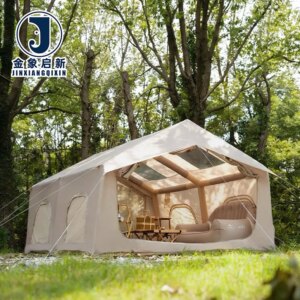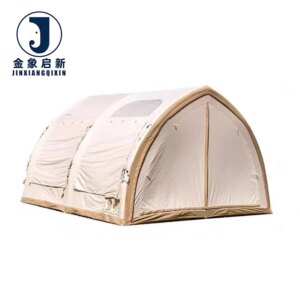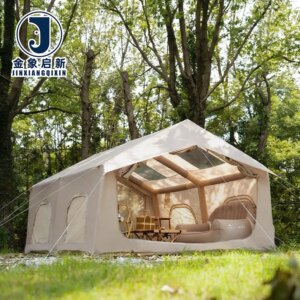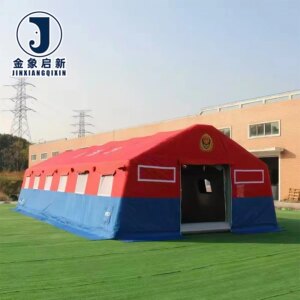
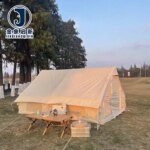

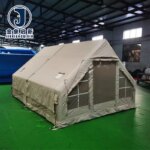
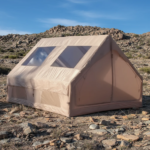

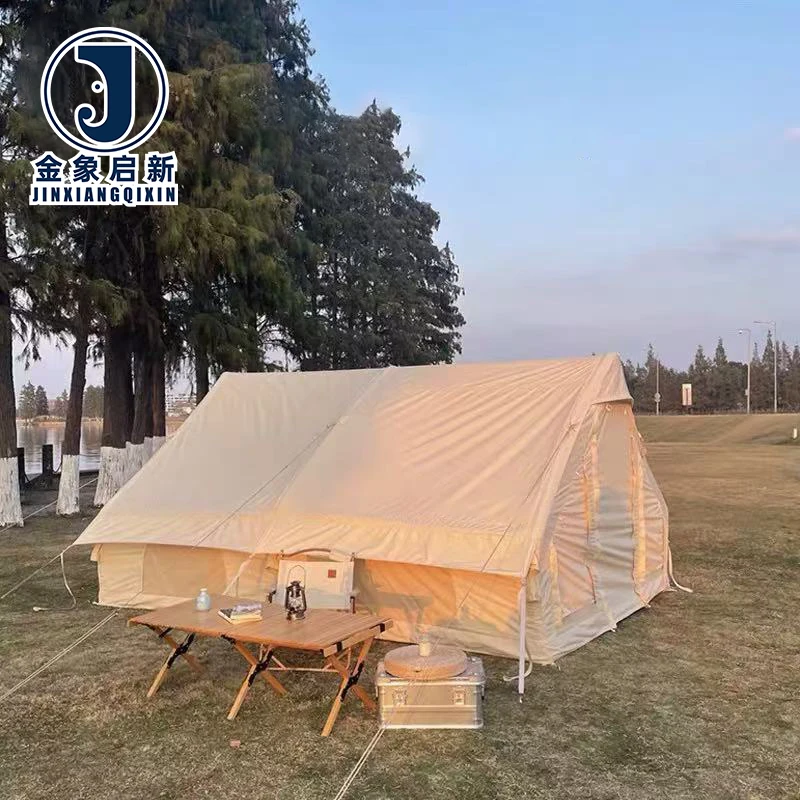
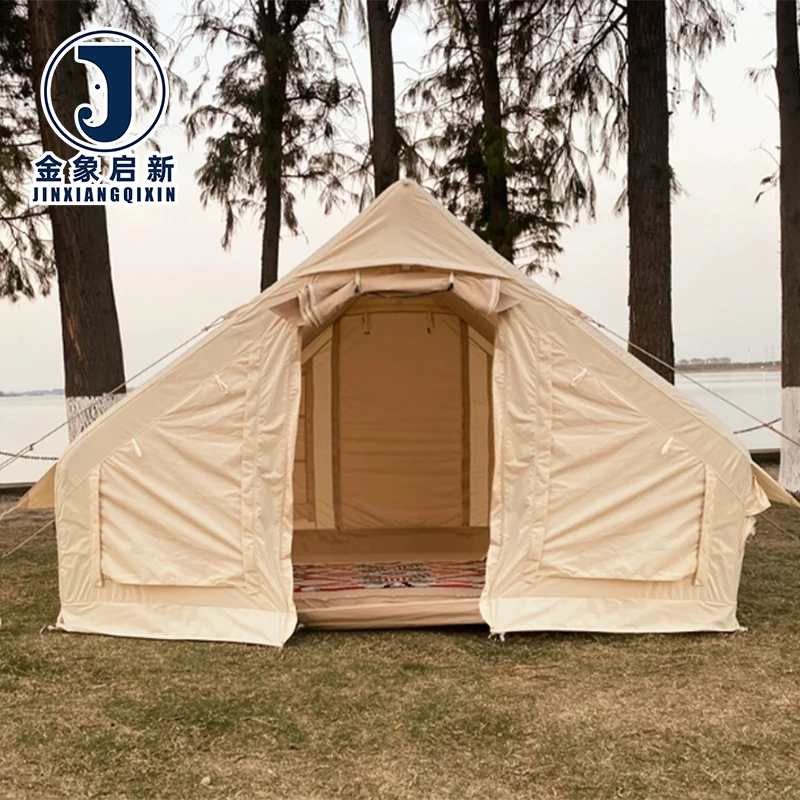
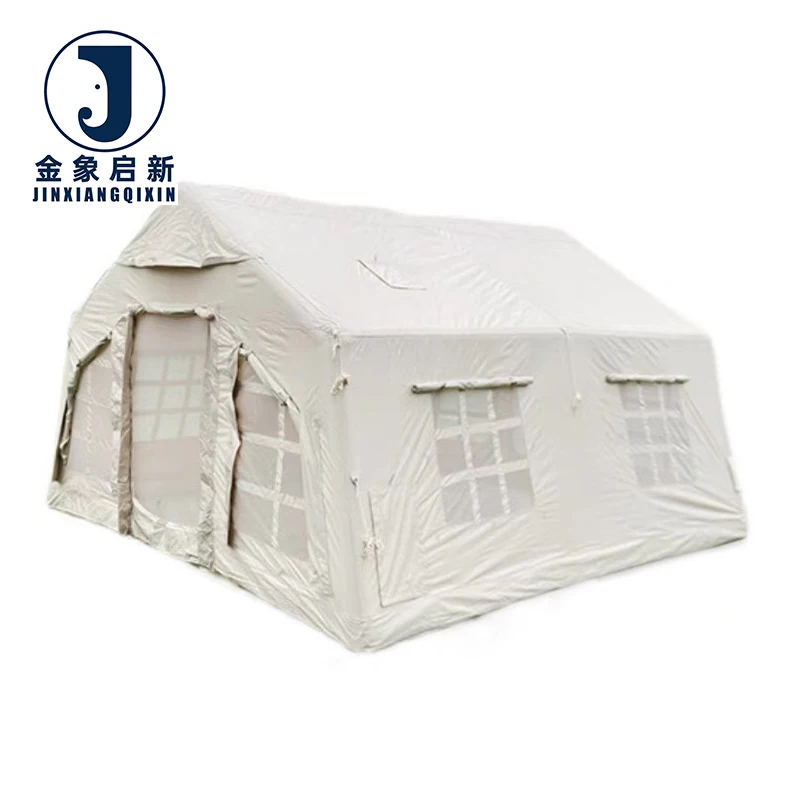
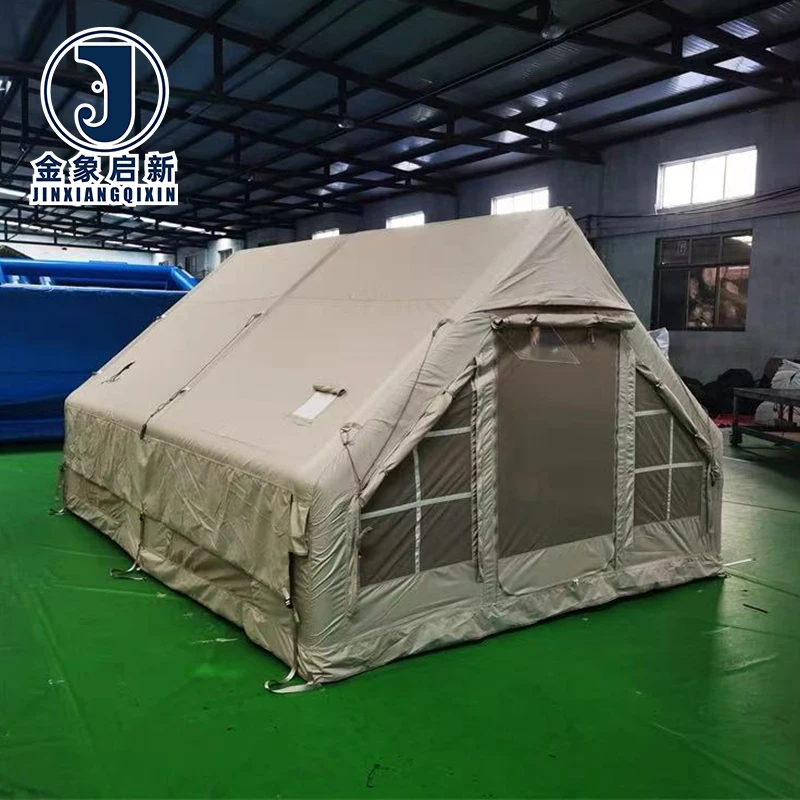
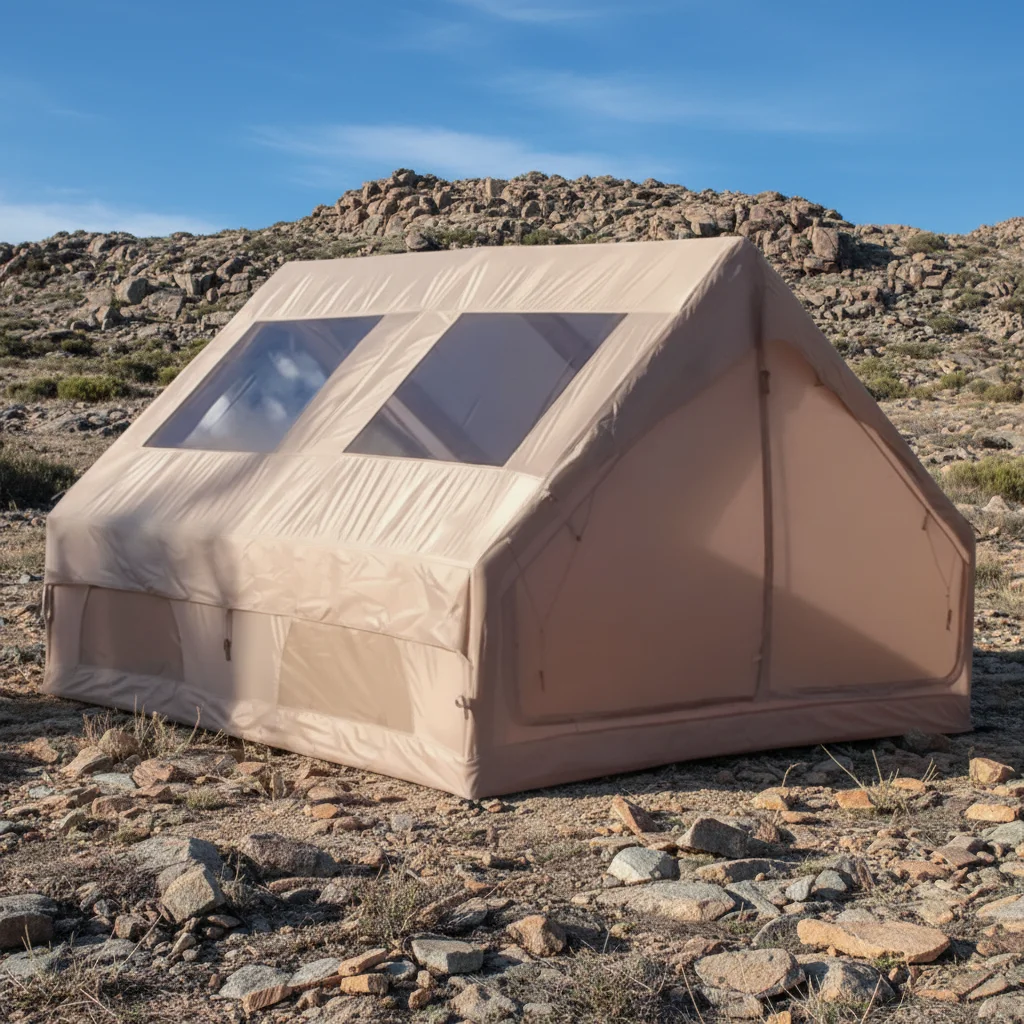

Proven process control — Nearly three decades of coating expertise applied to every roll of inflatable tent fabric, ensuring fire-retardant and anti-static treatments are documented per batch rather than claimed without proof.
Technical Specifications
| Parameter | Value |
|---|---|
| Product Type | Inflatable Tent Fabric |
| Core Material | PVC Tarpaulin |
| Waterproof | Yes |
| UV-Resistant | Available (test basis not stated — confirm standard required for your project) |
| Tear-Resistant | Yes (standard not stated — verify grade against site specification) |
| Flame Retardant | Available in fire-retardant grades (confirm the grade required for your market) |
| Anti-Static | Available with anti-static treatment (confirm surface resistance standard per batch) |
| Product Forms | Single Layer Construction, Extended Type |
| Customization | OEM & ODM including sample customization and pattern printing |
| Production Lines | 3 full production lines |
| Processing Equipment | 36 sets of professional processing equipment |
| R&D Team | 10 technicians |
| Quality Control | Full-process QA/QC with dedicated staff |
| Certifications | ISO9001, ISO14001, ISO45001, CE |
Application Suitability
| Application | Exposure & Requirement |
|---|---|
| Commercial glamping site — four-season inflatable tent deployment | Continuous outdoor weathering, UV exposure, guest safety compliance, repeated inflation and deflation cycles |
| Mining and tunnelling membrane shelter | Fire and anti-static regulatory enforcement, dust-laden ventilation paths, remote site logistics |
| Large-scale event temporary accommodation | Rapid setup and teardown, high guest turnover, local fire marshal inspection at venue |
| Industrial temporary workforce housing | Prolonged outdoor occupancy, wind load on inflated structure, heating system proximity |
What "Fire-Retardant Certified" Actually Means for Your Inflatable Tent Fabric
Every batch of Inflatable Tent Fabric ships with a test report tied to your order number, not a generic claim.
Sourcing inflatable tent fabric for commercial glamping or industrial membrane structures means meeting fire codes that vary by jurisdiction. Some sites accept a self-declaration; others require a specific test standard before the structure can be occupied. When fabric arrives with only a "flame retardant" label and no traceable grade, the entire installation can be shut down at inspection. [NEED_CITE: fire classification requirements for temporary membrane structures in commercial venues]
The Inflatable Tent Fabric fire retardant certified approach means you specify the grade your project demands — whether that aligns with building material classifications or temporary structure codes — and receive batch-specific documentation confirming the treatment matches that requirement. This applies equally to anti-static treatment, where surface resistance data must be verifiable before the fabric enters a controlled environment.
How Fire and Static Compliance Translate to On-Site Approval
Inflatable Tent Fabric destined for mining shelters or aviation maintenance hangars faces scrutiny beyond standard commercial use. The membrane must demonstrate that it will not propagate flame along the inflated surface and that static charge will not accumulate in dust-rich atmospheres. The formulation supports fire-retardant grades — confirm the grade required for your market — and anti-static treatment where surface resistivity thresholds apply. Each order includes documentation mapping the treatment to your specified standard, so the compliance conversation with the site safety officer starts with evidence rather than promises.
Single-Layer Extended Construction and the Inflation Cycle
The single-layer extended-type construction of this Inflatable Tent Fabric is engineered to withstand the mechanical stress of repeated inflation and deflation. Every setup cycle stretches the PVC-coated surface at seam junctions and anchor points, demanding consistent tear resistance across the entire roll. The PVC tarpaulin base delivers waterproof performance without requiring an additional liner layer, reducing both weight and fabrication complexity for glamping operators managing seasonal deployment. [NEED_CITE: tensile and tear test methods for coated fabrics per ISO 1421]
Reading Between the Specs: Coating, Base Fabric, and Real Performance
The performance of PVC-coated inflatable tent fabric depends on the interaction between the base fabric weave and the coating weight applied to it. A heavier coating does not automatically mean higher tear resistance if the underlying yarn denier and weave density are insufficient to arrest a tear once it starts. The coating method — whether knife-over-roll, laminating, or calendering — directly affects peel strength at welded seams, which is critical for inflatable structures where seam integrity maintains air pressure. Surface finish choices influence how well the membrane resists dirt accumulation in glamping environments and how reliably printed branding adheres across production batches. Fire-retardant additives are compounded into the PVC formulation, and their effectiveness depends on uniform dispersion through the coating layer; uneven distribution can leave zones that fail a flame-spread test even when the overall batch passes.
The Hidden Cost of Specifying Fabric Without Batch Traceability
When a glamping operator orders multiple inflatable tents and the fabric arrives with inconsistent coating weight between rolls, the visible result is colour variation across adjacent units — but the structural consequence is uneven weld strength at seam intersections. Fire-retardant treatment claimed on a quotation but unsupported by a batch-specific test report can delay a commercial opening by weeks while inspectors demand re-testing. Anti-static fabric supplied without surface resistance documentation forces the contractor to commission independent lab verification at project cost. [NEED_CITE: common causes of coated fabric failure at welded seams in inflatable structures]
These are not theoretical failures. They represent the gap between a quotation that lists features and a delivery that proves them.
Why Specialist Structure Contractors Source Here
Three full production lines and 36 sets of processing equipment provide the capacity to fulfil multi-roll orders for large glamping deployments without subcontracting coating stages to external facilities. The 10-person R&D team handles material selection, pattern printing alignment, and sample development in-house, meaning custom width and colour requests do not require external approval cycles. Full-process QA with dedicated QA and QC staff at every production stage means inspection is not outsourced to a third-party agency called in only before shipment. ISO9001, ISO14001, ISO45001, and CE compliance is maintained across the production system, providing the certification framework that import regulators and site safety officers require. Batch-specific documentation ties every roll to its production run, so traceability extends from raw material intake through to dispatch.
Documentation & Verification
- Material specification sheet stating base fabric, coating type, and treatment parameters per consignment
- Batch-specific fire-retardant and anti-static test reports available by order number before shipment
- ISO9001, ISO14001, ISO45001, and CE certificates included with every dispatch
- Pre-shipment inspection record confirming coating weight and visual consistency roll by roll
- Certificate of origin and customs support documentation for international shipment
Fabrication, Handling & Storage
- Weld temperature and dwell time must be calibrated to the specific PVC coating formulation to ensure seam peel strength matches the base fabric tear resistance
- Store rolls upright on end-caps to prevent flat-spot deformation of the single-layer PVC tarpaulin construction
- Allow cold-transported rolls to acclimatise to workshop temperature before unrolling to avoid coating micro-cracking
- Use PVC-compatible cleaning agents only; solvent-based products may degrade the fire-retardant additive layer
- Pattern printing registration should be verified on a pre-production sample before committing the full roll batch
Before You Request a Quote
Provide the fire-retardant grade and anti-static standard your site authority requires, along with the total membrane area and number of units in the deployment. Specify whether you need raw roll stock in custom widths or finished panels cut to your pattern. If colour consistency across multiple tents is critical, request a pre-production sample to confirm coating shade and pattern registration before mass production begins. Indicate your target dispatch window so lead time for custom treatments can be confirmed against current line scheduling.
Frequently Asked Questions
Q: Which fire-retardant grade does this fabric meet, and how does it align with mining or event-site regulations?
A: The fabric is available in fire-retardant grades suited to commercial and industrial membrane applications. The specific grade must be confirmed against your local fire marshal or mining authority requirements. Once you provide the applicable standard, the production team compounds the formulation accordingly and ships a batch-specific test report with your order.
Q: What is the anti-static test basis, and can surface resistance data be provided per batch?
A: Anti-static treatment is applied during the coating stage for projects requiring static charge control. Surface resistance data is compiled per production batch and included in the dispatch documentation. Confirm the resistance range your site specification demands so the treatment can be calibrated before production begins.
Q: How are UV-resistance claims substantiated, and what test standard applies?
A: UV-resistant formulation is available for four-season outdoor deployment. The test basis depends on the standard your market or project specification requires. Provide the applicable test method during inquiry so the treatment and corresponding documentation can be aligned before your order enters production.
Q: How is batch-to-batch colour and coating consistency controlled across a multi-roll order?
A: Each production run is monitored by dedicated QA and QC staff across all three production lines. Pre-shipment inspection verifies coating weight and colour consistency roll by roll. For multi-tent glamping projects, a pre-production sample is recommended to lock in shade and pattern alignment before the full batch is coated.
Q: What OEM and ODM options are available for custom sizing, pattern printing, and material specifications?
A: The R&D team supports custom width, pattern printing, sample development, and material specification adjustments. OEM and ODM projects begin with a sample approval stage to validate thickness, colour, and print registration. Confirm your requirements during inquiry so the team can provide accurate lead time and minimum order guidance.