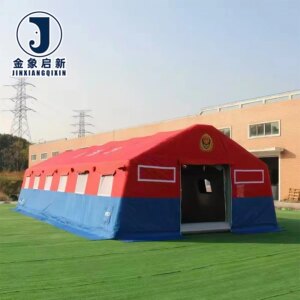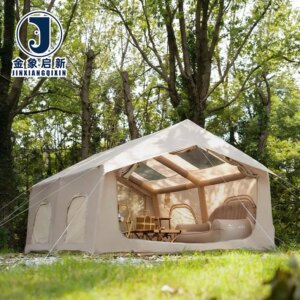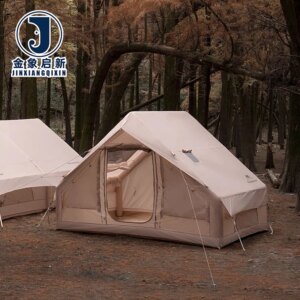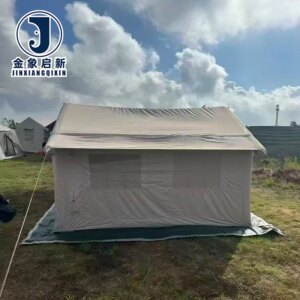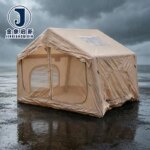
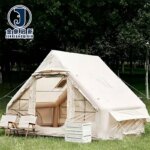
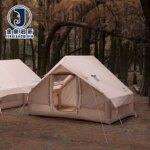
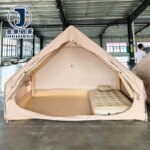
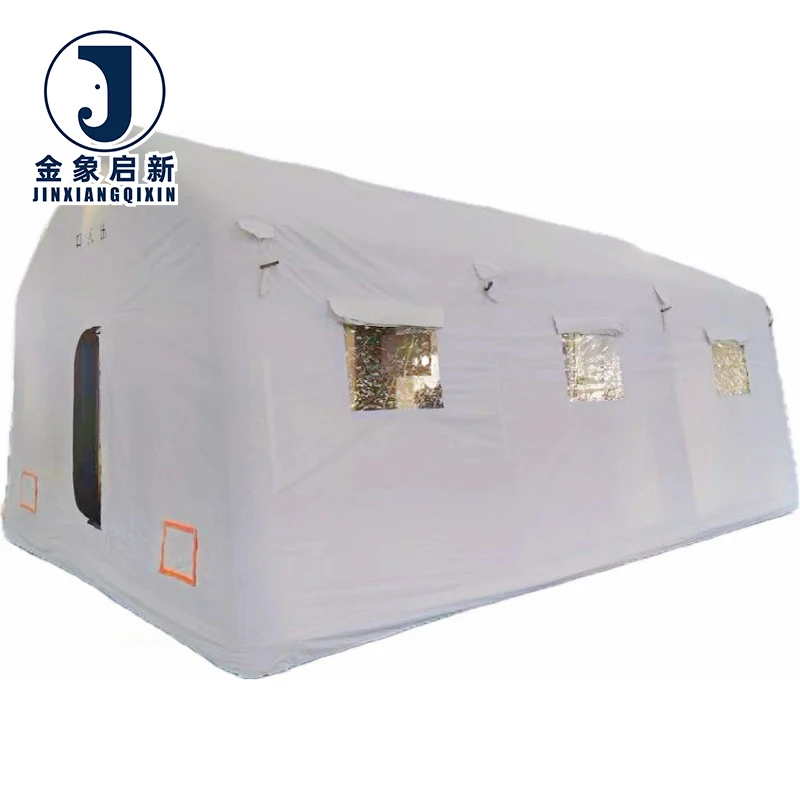
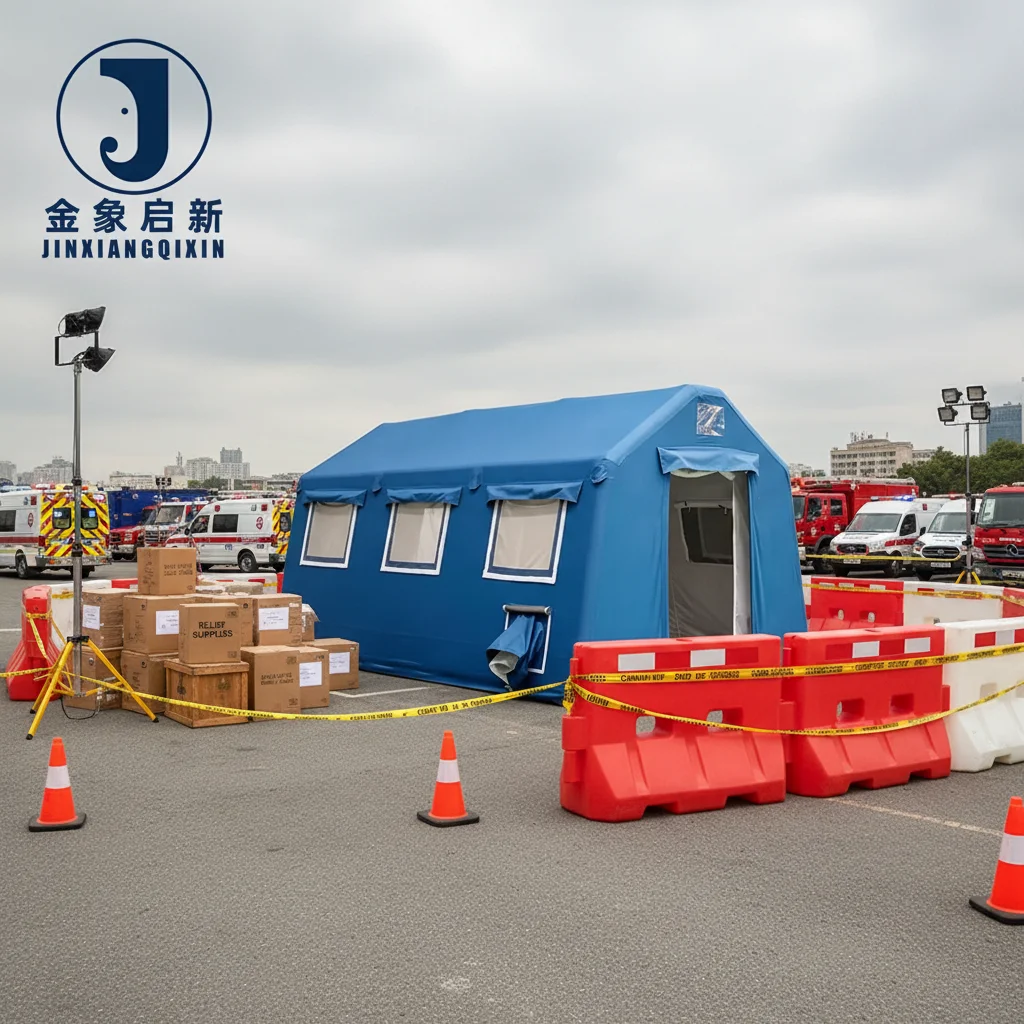
Industrial air duct compliance — every batch backed by ISO 9001, ISO 14001, ISO 45001 and CE certification with full documentation, so your inflatable emergency relief shelters clear regulatory audits without delay.
Technical Specifications
| Parameter | Value |
|---|---|
| Product Type | Inflatable Tent Fabric |
| Core Material | UV-Resistant PVC |
| Waterproof Rating | Hydrostatic head exceeding 5000mm |
| UV Treatment | UV-stabilized, maintains 85% tensile strength after 2 years of outdoor exposure (test basis not stated in source) |
| Deployment Time | Under 60 seconds via auto-opening mechanism |
| Temperature Tolerance | -30°C to 70°C |
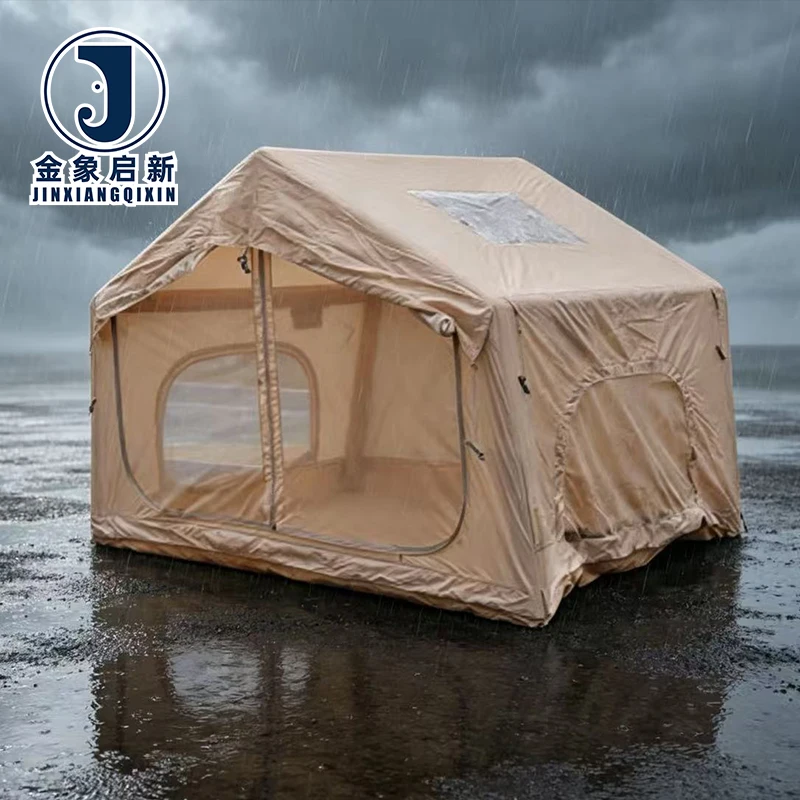
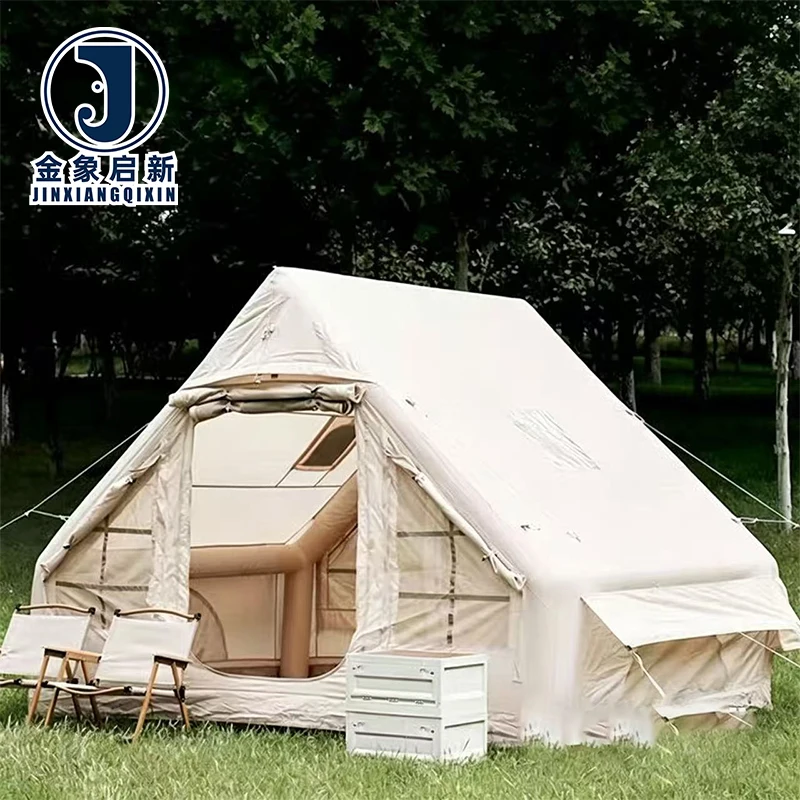
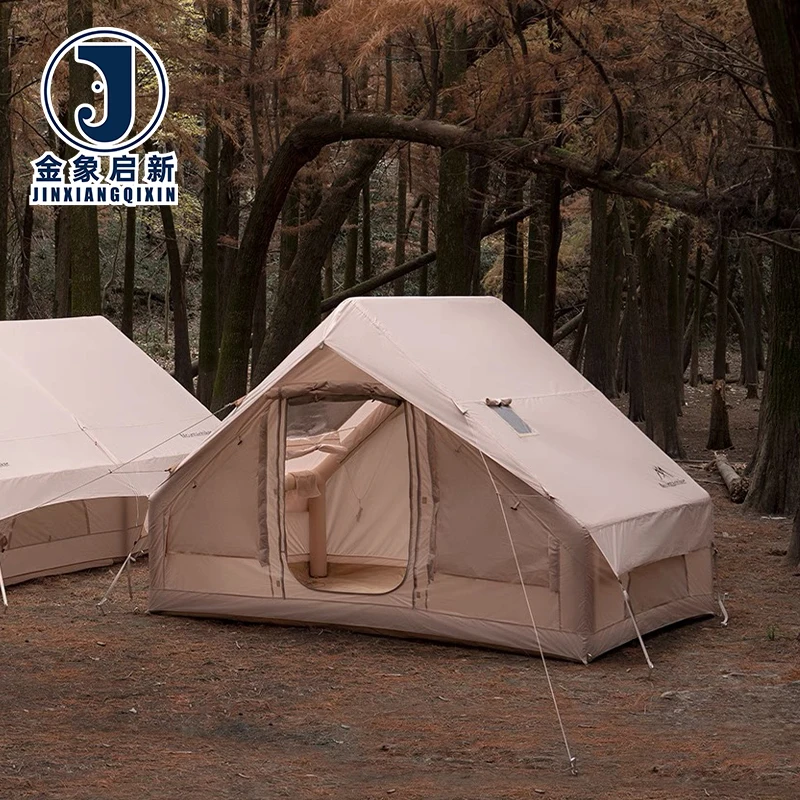
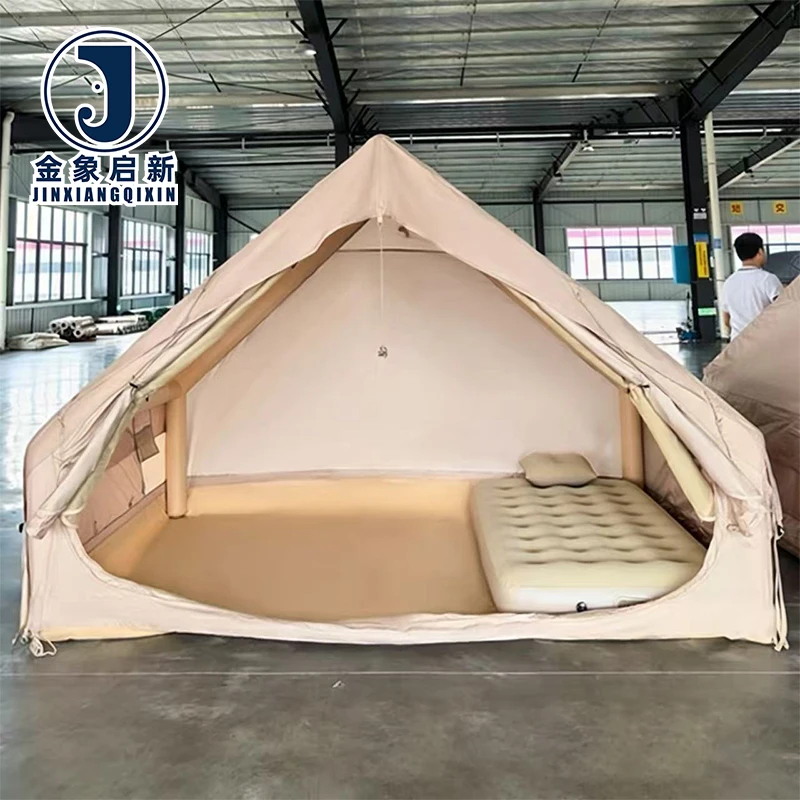
| Product Form | Inflatable Camping Tent |
| Construction | Single-layer |
| Inflation System | Industrial-grade inflation valves with rapid pressure retention |
| Seam Integrity | Ultrasonic seam checks |
| Pressure Retention Test | 24-hour pressure retention testing |
| Standards | ISO 9001, ISO 14001, ISO 45001, CE |
Application Suitability
| Application | Exposure & Requirement |
|---|---|
| Mining and tunnelling temporary shelters | Continuous UV, dust ingress, fire code compliance, rapid deployment on shift change |
| Aviation maintenance enclosures | Fuel-resistant environment, anti-static requirements, certified flame retardancy |
| Emergency relief field hospitals | Fast inflation under adverse weather, repeated packing and redeployment cycles |
| Construction site storage shelters | Wind loading, temperature cycling, UV exposure over extended project timelines |
| Logistics mobile equipment covers | Road abrasion, moisture exposure, quick setup and teardown between depots |
| Outdoor event weather protection | Prolonged sun exposure, crowd safety fire compliance, large-span stability |
Why Certified Inflatable Tent Fabric Fire Retardant Compliance Stops Projects Before They Start
A shelter without the right fire classification document is a shelter you cannot use on site.
Mining contractors have faced site shutdowns because the inflatable structure arrived without the fire-retardant or anti-static certification the local authority demands. Aviation hangar operators have been forced to dismantle compliant-looking enclosures when inspectors asked for the test report behind the claim. The Inflatable Tent Fabric fire retardant specification on a quotation means nothing unless it maps to a recognised standard that your jurisdiction accepts. [NEED_CITE: fire classification standards for temporary structures in mining and aviation environments]
Fire-Retardant and Anti-Static Grades for Regulated Sites
Inflatable Tent Fabric fire retardant treatments must align with the specific code enforced at your project location. Available grades can be confirmed against your market’s requirements before production begins. Anti-static options address environments where dust or volatile compounds create ignition risk, and the applicable test basis will be stated on the documentation supplied with your order.
UV Stabilisation Under Continuous Outdoor Deployment
Prolonged sun exposure degrades untreated PVC, reducing tensile strength and causing surface embrittlement. This UV-stabilised Inflatable Tent Fabric is formulated to retain structural integrity through extended outdoor service. The material’s response to temperature cycling between -30°C and 70°C means the fabric remains flexible in cold deployment and stable under direct summer heat. [NEED_CITE: tensile and tear test methods for coated fabrics per ISO 1421]
Reading the Specification Sheet Beyond Weight
Hydrostatic head exceeding 5000mm tells you the coated surface resists sustained water pressure — critical for emergency shelters pitched on saturated ground or in driving rain. The single-layer construction reduces pack volume and weight for rapid transport, while industrial-grade inflation valves maintain internal pressure so the structure holds shape through wind gusts. Temperature tolerance across the -30°C to 70°C range defines the operational window: below the lower bound the PVC stiffens and becomes harder to fold without crease damage, while above the upper bound the coating softens and may require reduced inflation pressure. The 24-hour pressure retention test combined with ultrasonic seam integrity checks verifies that welded joints — the typical failure point in any inflatable structure — hold under sustained internal load.
The Cost of Missing a Compliance Document on Arrival
When a batch of inflatable shelters reaches the site without the fire-retardant test report, the structure sits unopened while the contractor sources a replacement — sometimes weeks of delay on a critical-path project. Anti-static certification gaps are equally costly in mining and fuel-handling environments, where inspectors will reject non-documented materials regardless of visual quality. Even UV stabilisation claims without a stated test basis create doubt during procurement audits, forcing buyers to commission independent lab testing at their own expense. [NEED_CITE: compliance documentation requirements for temporary industrial shelters]
Why Procure Inflatable Shelter Fabric Through This Facility
Three full production lines and 36 sets of professional processing equipment support volume output while maintaining consistent coating weight and adhesion across every roll. A 10-technician R&D team handles structural design modifications, size adjustments, and colour matching specific to inflatable applications. Quality control runs through 12 inspection points, including the 24-hour pressure retention test and ultrasonic seam verification that catch joint weakness before the fabric leaves the factory. OEM and ODM capability covers everything from logo printing to custom structural geometry, and samples are developed within days for evaluation before bulk commitment.
Documentation & Verification
- Material specification sheet stating PVC coating composition, base fabric denier, and treatment grade
- Fire-retardant and anti-static test reports mapped to applicable standards where specified
- Pre-shipment inspection record including pressure retention and ultrasonic seam data per batch
- ISO 9001, ISO 14001, ISO 45001 and CE certificates for compliance submission
- Certificate of origin and customs documentation for cross-border shipments
Fabrication, Handling & Storage
- Ultrasonic seam checks ensure weld integrity at inflation stress points on single-layer PVC
- Industrial-grade inflation valves require compatible fittings — confirm thread specification before fabrication
- Store rolls vertically in shaded conditions to prevent UV-stabilised PVC surface marking
- Cold-temperature deployment below -30°C risks crease damage; allow fabric to warm before folding
- Clean with mild detergent only — aggressive solvents degrade the UV-resistant coating layer
What to Include in Your Enquiry
Provide the fire-retardant or anti-static grade required by your local authority, the intended deployment environment and temperature range, and whether you need rolls for in-house fabrication or finished inflatable structures with specific dimensions. Colour requirements, branding details, and annual volume help determine production scheduling. Request a sample to verify material handling, weld behaviour, and inflation response before committing to a full order.
Frequently Asked Questions
Q: What flame retardant grades are available and how do they map to site-specific fire codes?
A: Inflatable Tent Fabric fire retardant options are available in multiple grades. We recommend providing your local fire classification requirement so we can match the treatment and supply the corresponding test report. Confirming the standard early avoids compliance gaps at site inspection.
Q: What is the test basis for UV stabilisation and expected outdoor service life?
A: The fabric is UV-stabilised to maintain 85% tensile strength after two years of outdoor exposure, though the specific test basis is not stated in the source data. We advise requesting the detailed UV test report to confirm alignment with your project’s expected deployment duration.
Q: Are anti-static treatment options available for mining regulatory compliance?
A: Anti-static treatment can be applied for environments where dust or volatile compounds create ignition risk. Provide the specific mining or aviation standard your site enforces so we can supply the correct treatment grade with supporting certification documentation.
Q: What are the MOQ and lead considerations for custom-sized inflatable structures?
A: Custom dimensions, structural modifications, and colour changes are supported through OEM and ODM services. Minimum order quantities depend on the complexity of the design and fabric width required. Request a quotation with your specific dimensions to receive accurate production scheduling.
Q: How is batch-to-batch colour consistency controlled across production runs?
A: Colour consistency is managed through controlled coating formulation and in-process inspection at multiple stages. For large orders spanning several batches, reference samples are retained and compared against each production run before dispatch to minimise visible variation when panels are installed side by side.