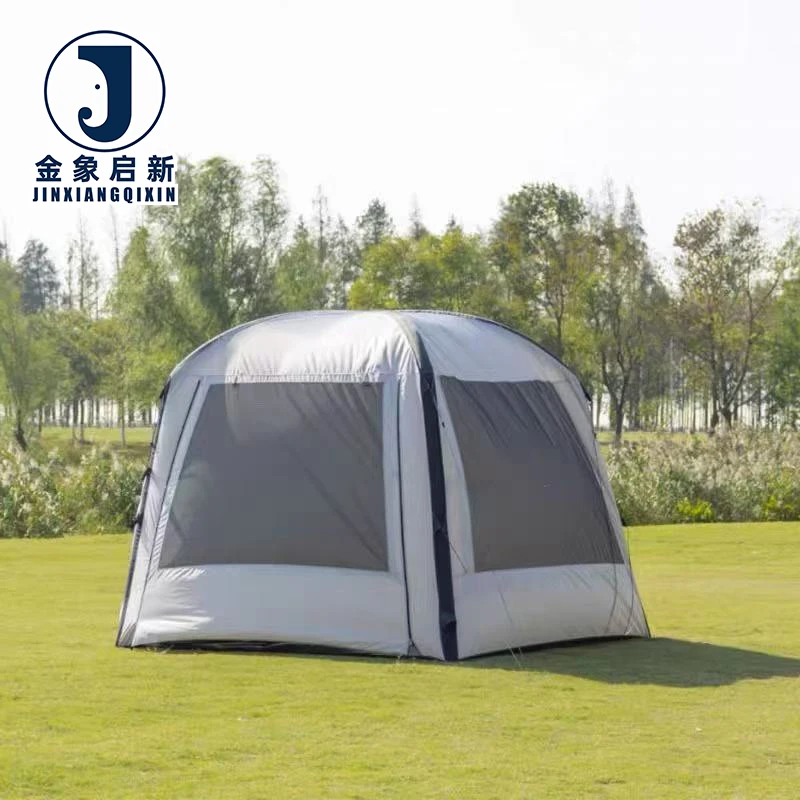
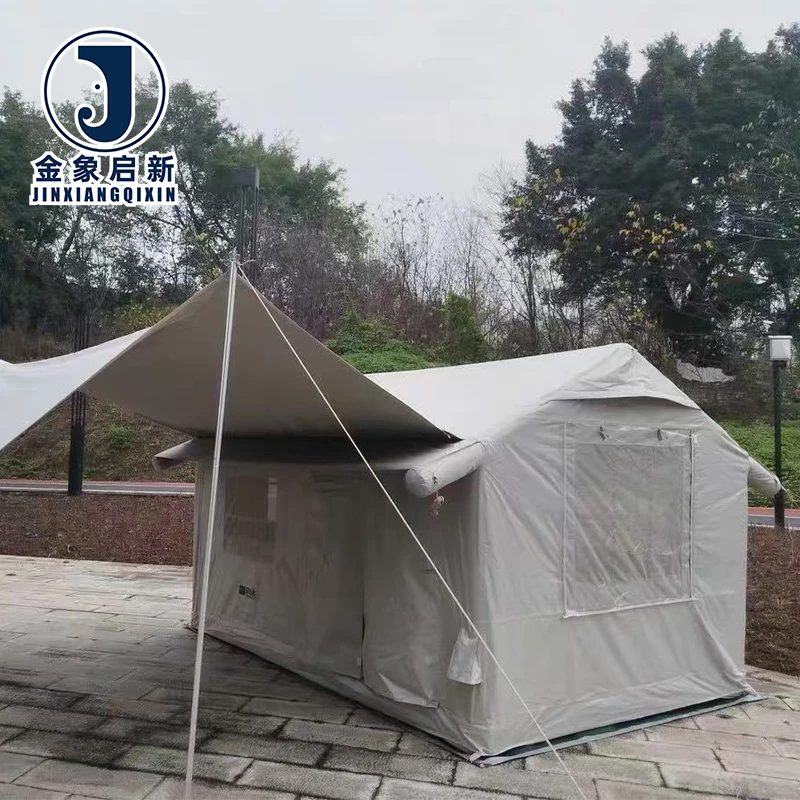
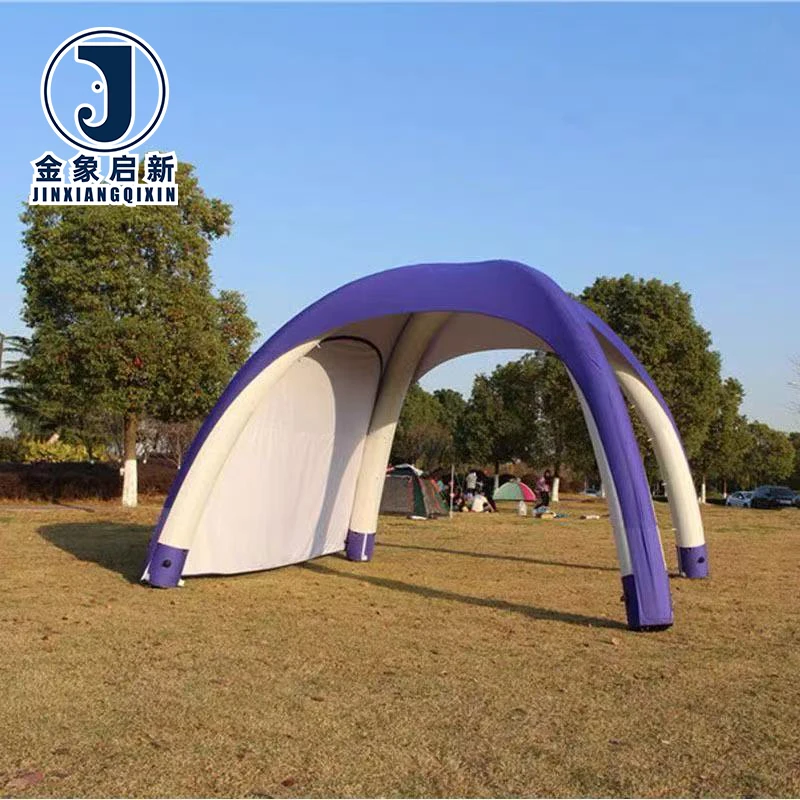
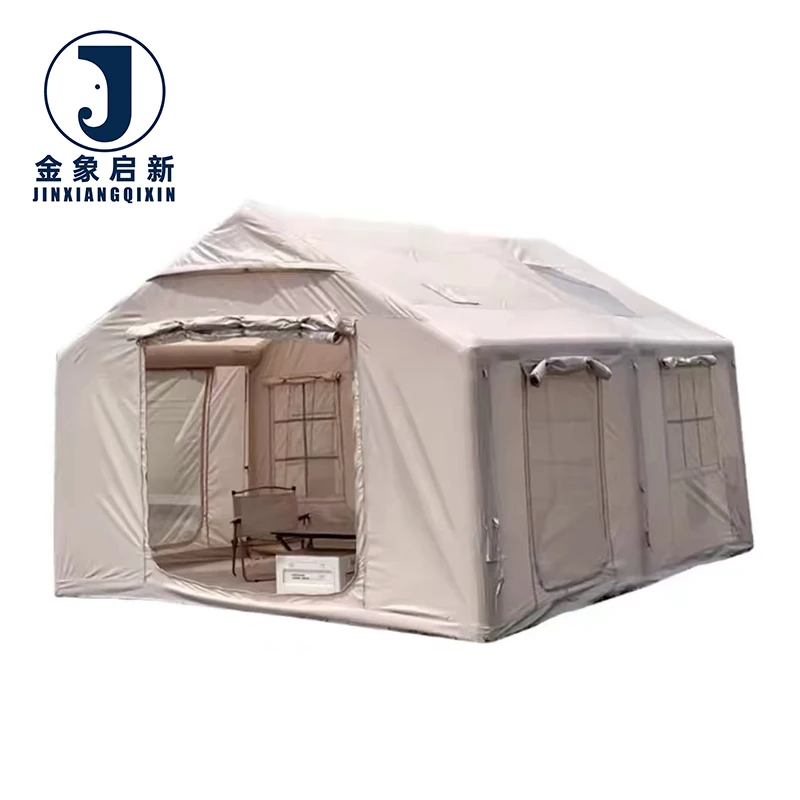
Custom Compliance Documentation — Every roll of inflatable tent fabric ships with batch-specific fire-retardant and anti-static test data matched to your project’s regulatory framework, verified across 36 processing stations before dispatch.
Technical Specifications
| Parameter | Value |
|---|---|
| Product Type | Inflatable Tent Fabric |
| Core Material | PVC tarpaulin |
| Structure | Single-layer PVC construction |
| Waterproof | Yes (proprietary waterproof coating, rating not specified) |
| UV Treatment | UV-resistant (test basis not stated in source) |
| Flame Retardant | Fire-retardant (grade not stated in source) |
| Anti-Static | Anti-static (surface resistance or standard not confirmed) |
| Tear Resistance | Tear-resistant (test standard not stated in source) |
| Opening Mechanism | Quick automatic opening |
| Season Rating | 4-season |
| Certifications | ISO 9001, ISO 14001, ISO 45001, CE |
| Production Lines | 3 full production lines |
| Processing Equipment | 36 sets |
| R&D Team | 10 technicians |
| Customization | OEM & ODM — sample customization, pattern printing, size adjustments, material thickness modifications |
| Quality Control | Full-process inspection, 24-hour pressure testing before shipment |
Application Suitability
| Application | Exposure & Requirement |
|---|---|
| Mining and tunnelling inflatable shelters | Continuous underground deployment, fire-retardant and anti-static compliance mandatory, abrasive particulate environment |
| Aviation ground support enclosures | Tarmac UV exposure, fuel vapour proximity, strict fire safety certification required by airfield authorities |
| Commercial membrane structure fabrication | Roll-stock sourcing for on-site welding, batch colour consistency across multiple membrane panels |
| Glamping resort inflatable tents | Year-round weather exposure, rapid deployment between seasons, guest-facing aesthetics and durability |
| Temporary event and hospitality structures | Frequent setup and teardown cycles, variable wind and rain loading, transport abrasion on folded fabric |
Why "Fire-Retardant" on a Datasheet Means Nothing Without the Grade Behind It
Inflatable tent fabric fire retardant certified to a named standard is the only version you can submit to a building inspector or site safety officer.
I have reviewed project submissions where contractors specified fire-retardant inflatable membrane fabric, received material with a generic "FR" label, and then failed the site audit because the local authority required a classification per a specific national standard. The delay was not measured in days but in weeks, while the structure sat unoccupied on a revenue-generating site. Inflatable Tent Fabric fire retardant certified to an identifiable grade eliminates this gap. When the grade is not stated on the quotation, request the test report before the production run begins [NEED_CITE: fire classification standards for temporary membrane structures vary by jurisdiction].
Ventilation and Membrane Fabric Compliance Starts at the Raw Material Stage
Fire-retardant and anti-static additives must be compounded into the PVC resin before coating, not applied as a surface finish after the fact. Surface treatments wash out and abrade; compounded additives remain active through the fabric’s service life. For inflatable tent fabric fire retardant certified to a verifiable standard, the entire chain from resin lot to finished roll must carry traceable batch documentation so the certification body can link the test report to the material on site.
Anti-Static Requirements in Hazardous Environments
Mining ventilation structures and aviation ground enclosures often require electrostatic discharge control to prevent ignition in dust-laden or fuel-vapour atmospheres. Anti-static treatment for PVC inflatable tent fabric must achieve a surface resistance value that the site safety plan can reference. When the surface resistance or test standard is not confirmed on the specification sheet, ask the supplier to provide a measured value per a recognised method before the order proceeds [NEED_CITE: electrostatic discharge standards for inflatable structures in mining environments].
How Base Fabric and Coating Weight Interact in Inflatable Structures
Inflatable chambers place continuous hoop stress on the fabric every minute the structure is pressurised. The base fabric denier and weave density determine how the material resists tear propagation if a puncture occurs, while the PVC coating weight governs abrasion resistance and weld strength at seam overlaps. A heavier coating does not automatically compensate for a lighter base fabric, and a high-denier yarn in an open weave may still allow coating penetration failures. For inflatable tent fabric fire retardant certified to a specific grade, both the base fabric construction and the coating formulation must be validated together — specifying one without the other leaves structural performance to chance.
Pressure Testing and Structural Integrity Verification
Every inflatable chamber in a finished tent or membrane structure must hold pressure continuously to remain rigid. A 24-hour pressure test on each unit before shipment identifies seam leaks, valve seat failures, and coating pinholes that would otherwise surface only after installation on site. This testing protocol applies to both complete inflatable tents and fabricated membrane panels welded from roll stock. Catching chamber integrity failures at the factory eliminates the cost and schedule impact of field repairs, where access to heat-sealing equipment and clean work surfaces is rarely available.
Specifying Inflatable Tent Fabric Without Verifying the Certification Trail
Contractors who accept a generic fire-retardant claim on a quotation without requesting the underlying test certificate expose the project to regulatory rejection at the inspection stage. Inflatable tent fabric fire retardant certified to a named standard carries documentation that maps the test report to the production batch. When this traceability is absent, the entire structure may need to be dismantled or re-certified at the owner’s expense [NEED_CITE: regulatory consequences of uncertified fire-retardant materials in temporary structures].
Why Source Inflatable Structure Fabric Through This Facility
Three full production lines and 36 sets of professional processing equipment support both roll-stock supply and finished inflatable unit fabrication without switching between external workshops. A 10-technician R&D team handles material selection, pattern printing, custom sizing, and sample development in-house, so OEM design changes do not cycle through third-party consultants. Full-process quality inspection at every production stage, backed by 24-hour pressure testing on completed inflatable units, means structural integrity is verified before the material leaves the factory. Dedicated QA and QC staff maintain batch-specific records so the documentation accompanying each shipment traces back to the raw PVC resin lot. ISO 9001, ISO 14001, ISO 45001, and CE certification frameworks underpin the management systems governing production and compliance documentation.
Documentation & Verification
- Material specification sheet stating PVC base fabric type, coating formulation, and available treatment grades
- Fire-retardant test report matching the grade required by your project jurisdiction, supplied with shipment
- Anti-static surface resistance test certificate provided upon request for hazardous environment compliance
- Batch-specific production record linking raw resin lot to finished roll or fabricated unit
- Pre-shipment inspection record confirming 24-hour pressure test results on every inflatable chamber
- ISO 9001, ISO 14001, ISO 45001, and CE certificates available for regulatory submissions
Fabrication, Handling & Storage
- Heat-seam parameters must match the specific PVC coating formulation to prevent delamination at weld overlaps
- Store rolls upright on pallets to avoid compression creases that weaken the coating at fold lines
- Unfold single-layer PVC material at ambient temperature; cold-stiffened fabric cracks when forced open
- Use compatible PVC adhesive for field patch repairs on inflatable chamber surfaces
- Pattern printing and branding should be specified before production so ink adhesion is validated against the coating
- Allow welded seams to cure fully before pressure inflating the chamber to test structural integrity
Requesting a Quotation That Matches Your Project Requirements
Provide the fire-retardant grade and anti-static surface resistance standard required by your local authority or site safety plan so the correct material formulation is selected before sampling. Specify whether you need finished inflatable units or roll stock for on-site fabrication, along with the panel widths and lengths your welding setup can handle. Confirm colour references and any pattern printing requirements so batch consistency can be verified against your approved sample before the production run begins.
Frequently Asked Questions
Q: What fire-retardant grade does the inflatable tent fabric carry, and does it meet my local mining or aviation compliance standard?
A: The fabric is produced with fire-retardant properties, but the specific grade must be confirmed against your market’s regulatory framework. Provide the standard reference required by your site authority, and the matching test report will be supplied with shipment to support your compliance documentation submission.
Q: Is the anti-static treatment certified with a surface resistance value, and can a test report be supplied?
A: Anti-static treatment is available for environments requiring electrostatic discharge control. The surface resistance value and applicable test standard should be specified at the inquiry stage so the correct formulation is applied and a verifiable test report accompanies the shipment.
Q: Can the inflatable structure fabric be supplied by the roll for on-site fabrication, and what are the width options?
A: Yes, the fabric can be supplied as roll stock for field welding and fabrication. Confirm the roll widths and lengths compatible with your heat-sealing equipment and site workspace so the material is cut and packed accordingly.
Q: How is batch-to-batch colour and coating consistency controlled across a multi-unit inflatable structure order?
A: Production runs are managed through full-process quality inspection with dedicated QA staff monitoring coating weight and colour at each stage. Batch-specific records link every roll to its raw material lot, enabling traceable consistency across large-volume orders.
Q: What additional material certifications and performance data can be furnished for project regulatory submissions?
A: ISO 9001, ISO 14001, ISO 45001, and CE certificates are available alongside batch-specific quality reports, fire-retardant test data, and pre-shipment inspection records. Specify the documentation package required by your regulatory body at the quotation stage.