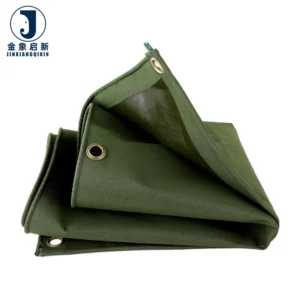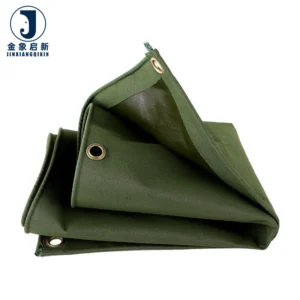



Coated Fabric Process Control — deep expertise in coating weight and adhesion across three dedicated production lines ensures every roll of heavy-duty canvas tarpaulin meets the specified GSM and thickness grade before it leaves the factory.
Technical Specifications
| Parameter | Value |
|---|---|
| Product Type | Canvas Tarpaulin |
| Material | Polyester cotton industrial textile with 8–12 strands of fine cotton yarn |
| Weight | 600gsm |
| Total Thickness | 0.5mm / 0.6mm / 0.7mm |
| Roll Size | 2m width × 100m length |
| Finish Product Size | Custom cut-to-size or sold from inventory |
| Color | Army Green Camouflage / Custom colors available |
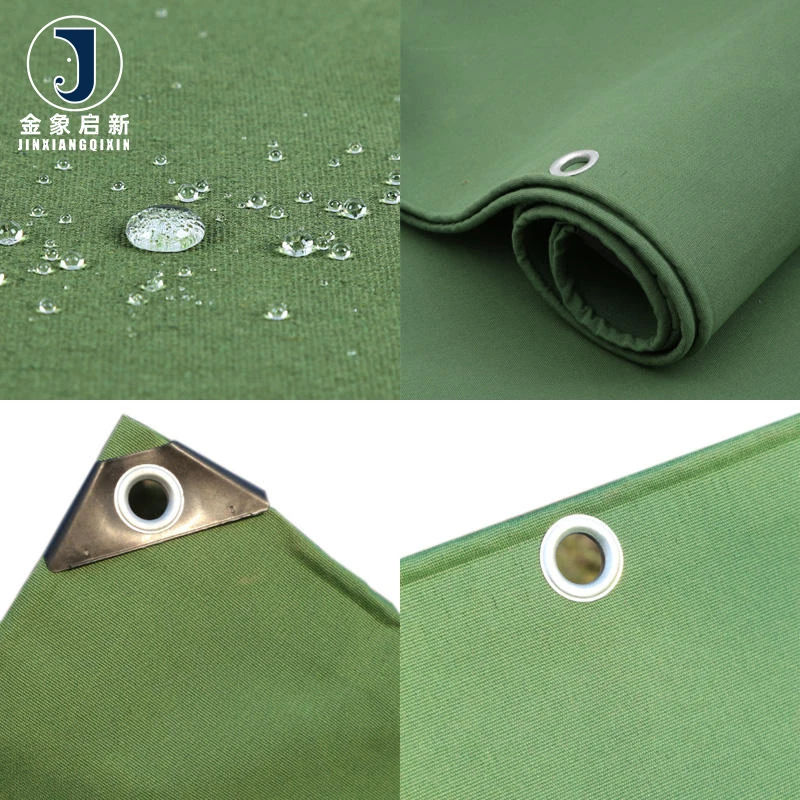
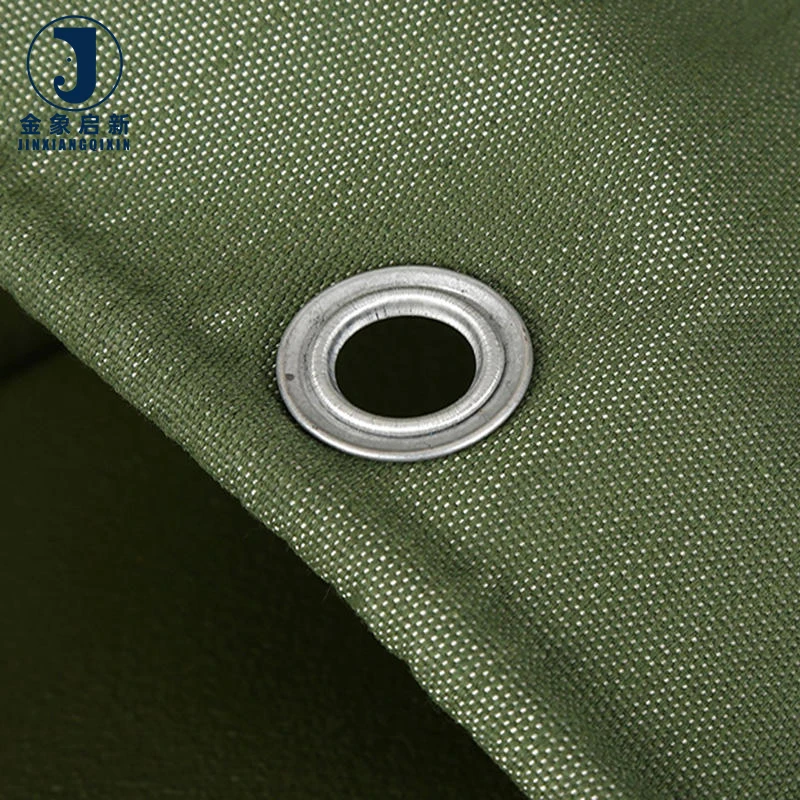
| Eyelet & Hem | Rustproof aluminum grommets every 1 meter at corners and hem |
| Seam Construction | Welded and sewn with poly rope reinforcement |
| Waterproof | Waterproof (test basis not stated in source) |
| UV Resistance | UV resistant (test basis not stated in source) |
| Anti-Mildew | Mold resistant (test basis not stated in source) |
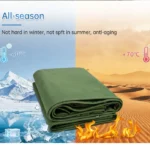
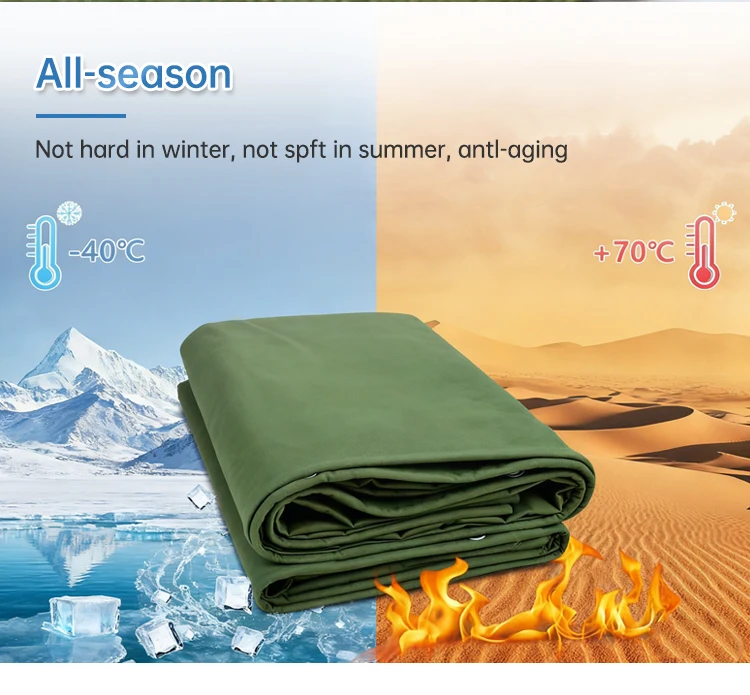
| Key Features | Wear-resistant, corrosion-resistant, tensile-resistant, high- and low-temperature resistant |
| Certifications | CE, ISO (specific certification numbers not stated in source) |
Application Suitability
| Application | Exposure & Requirement |
|---|---|
| Ventilation duct wrapping and temporary enclosure | Constant airflow pressure, dust ingress, requirement for fire-retardant or anti-static compliance on site |
| Mining and tunnelling brattice cloth | Underground humidity, mechanical abrasion from rock contact, flame-retardant regulatory mandates |
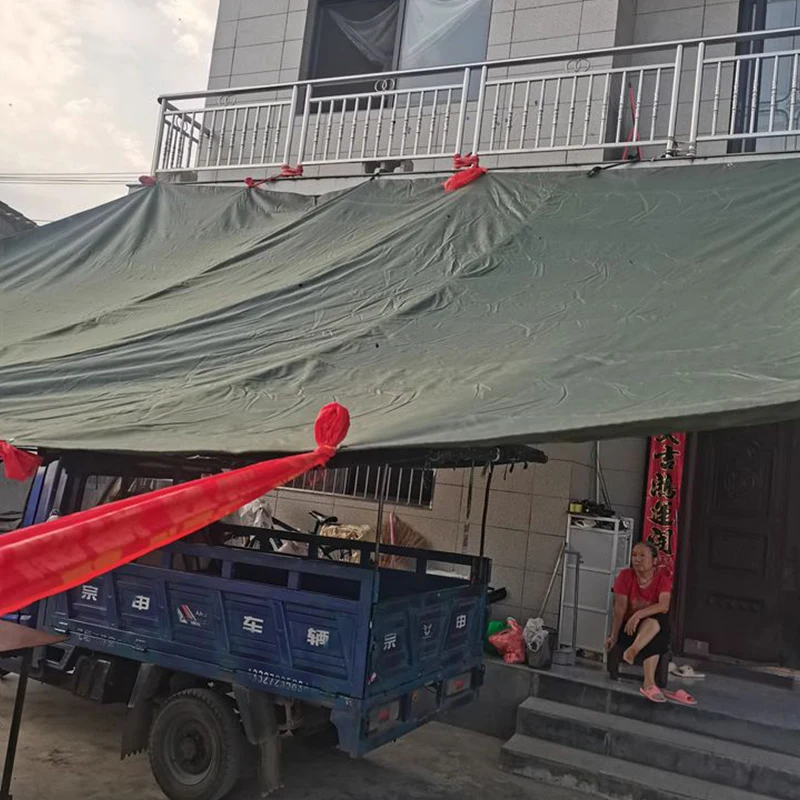
| Construction site equipment and asphalt cover | Prolonged UV exposure, rain and wind loading, puncture risk from sharp aggregate |
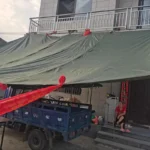
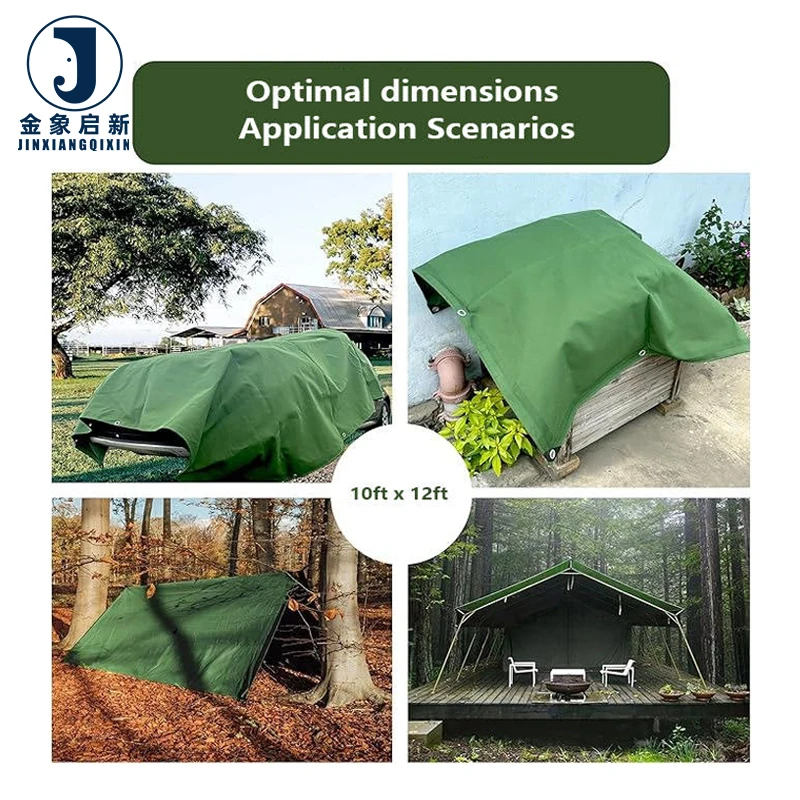
| Truck and trailer load protection | Road vibration, flexing at tie-down points, weather exposure during transit |
| Tent, canopy and camping shelter roof | Sustained tensile load from frame tension, rain pooling, UV degradation over seasons |
| Woodpile and agricultural stock cover | Moisture ingress prevention, mold growth risk, seasonal temperature fluctuation |
Why Specified Weight and Seam Integrity Matter More Than Price Per Roll
A canvas tarpaulin that arrives lighter than quoted and splits at the hem is never a bargain.
When procurement teams evaluate heavy duty canvas tarpaulin, the conversation often stops at GSM and price per square meter. Yet field failures rarely originate in the body of the fabric. They begin at the welded or sewn seams where flex loads concentrate, or they appear months later when the coating weight delivered does not match the weight on the quotation. I have reviewed return reports where the fabric itself remained intact but the hem stitching had unraveled under repeated wind load — [NEED_CITE: typical failure modes in coated and woven industrial fabrics under cyclic loading]. Specifying the correct seam construction and verifying GSM on arrival are the two most cost-effective steps a buyer can take.
Ventilation and Specialist Structure Use Cases
For mining ventilation, tunnelling brattice curtains, and inflatable membrane structures, the base fabric must maintain dimensional stability under sustained air pressure. This 600gsm polyester-cotton canvas tarpaulin provides the woven density and tensile resistance required for these environments. The welded-and-sewn seam construction with poly rope reinforcement addresses the flex fatigue that causes hems to split when ducting vibrates under airflow. Fire-retardant and anti-static grades are available in this canvas family — confirm the grade required for your project jurisdiction before placing the order.
Transport and Construction Cover Demands
Truck fleets and construction contractors expose covers to road vibration, tie-down tension, and UV degradation simultaneously. The rustproof aluminum grommets spaced every meter distribute tie-down load across the hem rather than concentrating stress on a single point. The 2m roll width supports efficient panel layout for standard trailer dimensions, reducing the number of cross-seams that become failure points under load flex — [NEED_CITE: seam fatigue in transport tarpaulins under road vibration conditions]. Available thickness options of 0.5mm, 0.6mm, and 0.7mm allow specifiers to match material mass to the severity of the exposure environment.
How Base Yarn Density and Coating Weight Define Real-World Performance
The 600gsm weight of this canvas tarpaulin results from the combined mass of the polyester-cotton base fabric and its coating treatment. Weight alone does not determine tensile or tear resistance — the 8–12 strand fine cotton yarn count defines the weave density, which governs how load distributes across the fabric plane before reaching the coating layer. A tightly woven base resists tear propagation because each yarn must be broken sequentially rather than simultaneously. Coating weight contributes to abrasion resistance and waterproofing but adds stiffness that can reduce drape and increase crease damage during folding. Understanding this balance allows buyers to select the 0.5mm grade for lighter applications requiring flexibility or the 0.7mm grade for heavy abrasion environments where surface wear is the primary concern.
The Hidden Cost of Specification Mismatches
When GSM stated on the quotation is not verified on arrival, the delivered material may lack the tensile reserve needed for the intended load — a canvas that should withstand sustained wind pressure fails instead at the first storm. Seam construction that relies on adhesive bonding alone, without mechanical sewing and poly rope reinforcement, tends to peel under cyclic flex rather than stretch with the fabric. Color variation between rolls in the same order becomes visible once panels are installed side by side on a large canopy or brattice wall, forcing rework that erases any unit-price savings — [NEED_CITE: batch colour consistency standards for coated and woven textile orders]. Verifying material specification sheets against delivered rolls before fabrication begins is the simplest way to prevent these downstream costs.
Production Capability Backed by Coated Fabric Experience
Nearly 30 years focused on coated and industrial fabric production means the coating weight, adhesion, and weave tension parameters for this canvas tarpaulin are controlled from raw yarn through finished roll. Three full production lines and 36 sets of professional equipment support bulk roll output without the scheduling bottlenecks that delay project timelines. A 10-person R&D team handles material selection, custom sizing, and sample development, producing samples within days for project-specific dimensions. Dedicated quality inspection runs at every production stage, with 100% pre-shipment verification ensuring GSM and thickness match the agreed specification. The combination of process control and capacity allows custom width, color, and cut-size orders to ship within typical production schedules rather than facing extended backlogs.
Documentation & Verification
- Material specification sheet confirming 600gsm weight, polyester-cotton base fabric composition, and selected thickness grade
- Pre-shipment inspection record with roll-by-roll weight and dimension verification
- CE and ISO certification documentation supplied with each dispatch
- UV and mold resistance test reports provided where applicable to the specified treatment grade
- Roll packing list detailing quantity, dimensions, and net weight per roll
- Certificate of origin and customs support documentation for international shipments
Fabrication, Handling & Storage
- Hot-air welding temperature must match the coating formulation to avoid delamination on this 600gsm canvas
- Sewn hems should use poly rope reinforcement to prevent stitch pull-through under tie-down tension
- Store rolls upright on pallets to avoid crease marks across the 2m width
- Allow cold-stored canvas tarpaulin rolls to reach ambient temperature before unrolling to prevent coating crack
- Use mild detergent and soft brush for cleaning; solvent-based cleaners may degrade the surface treatment
Requesting a Specification Match
To move from inquiry to sample, provide the intended application and exposure conditions so the correct thickness grade can be recommended. Specify whether fire-retardant or anti-static certification is required for your site jurisdiction, along with the standard your project references. Indicate the required width, cut size, grommet spacing, and color so a fabrication-ready sample can be developed for approval before the production run.
Frequently Asked Questions
Q: How is the 600gsm weight verified on arrival and what tolerance should I expect?
A: Each roll is weighed during pre-shipment inspection against the stated GSM specification. A material specification sheet is supplied confirming the base fabric composition and coating weight. Buyers are encouraged to conduct their own sample weigh on receipt. Minor manufacturing tolerance exists across any woven-coated production run; the inspection record documents the measured value per roll.
Q: What UV and mold resistance test basis supports the outdoor durability claims?
A: UV and mold resistance treatments are applied based on the specified grade. Where a test standard is required for project compliance, confirm the standard your market or site mandates so the appropriate test report can be supplied. Untested generic claims are not used as performance guarantees in the documentation package.
Q: Can the canvas tarpaulin be supplied in custom widths, lengths, and cut sizes with reinforced eyelets?
A: Custom cut sizes are available alongside standard 2m × 100m roll stock. Rustproof aluminum grommets can be placed at specified intervals along hems and corners. Provide your panel dimensions, grommet spacing, and hem reinforcement requirements so a sample can be produced for approval before bulk fabrication begins.
Q: How is batch-to-batch color consistency controlled across multiple rolls in one order?
A: Color reference is confirmed at sample approval stage and maintained across the production run through controlled dye formulation and coating parameters. A pre-shipment inspection verifies visual consistency roll-to-roll. For large canopy or brattice installations where adjacent panels must match, specify this requirement at inquiry stage so additional matching checks are scheduled.
Q: What fire-retardant or anti-static grades are available for mining and ventilation applications?
A: This canvas tarpaulin family is available in fire-retardant and anti-static grades for specialist applications. The specific grade required depends on your site regulation or project specification. Confirm the standard your jurisdiction mandates — such as the applicable mining ventilation code — so the correct treatment and supporting certification documentation can be included with your order.