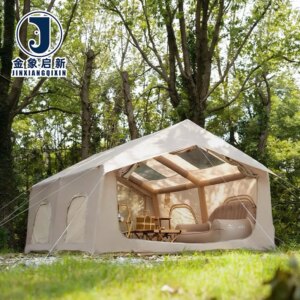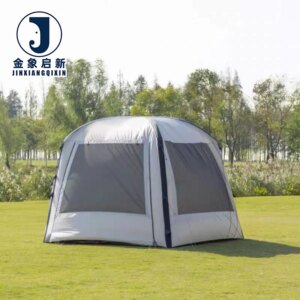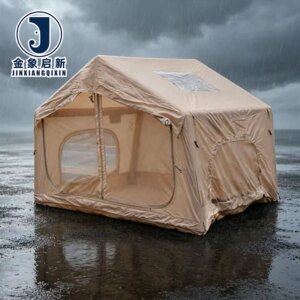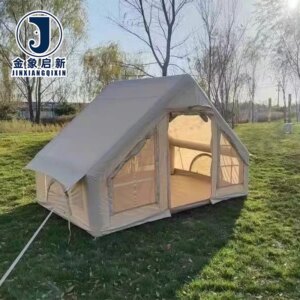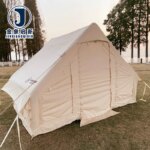
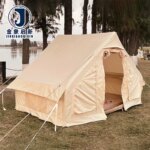
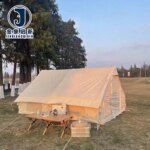
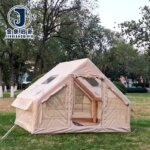

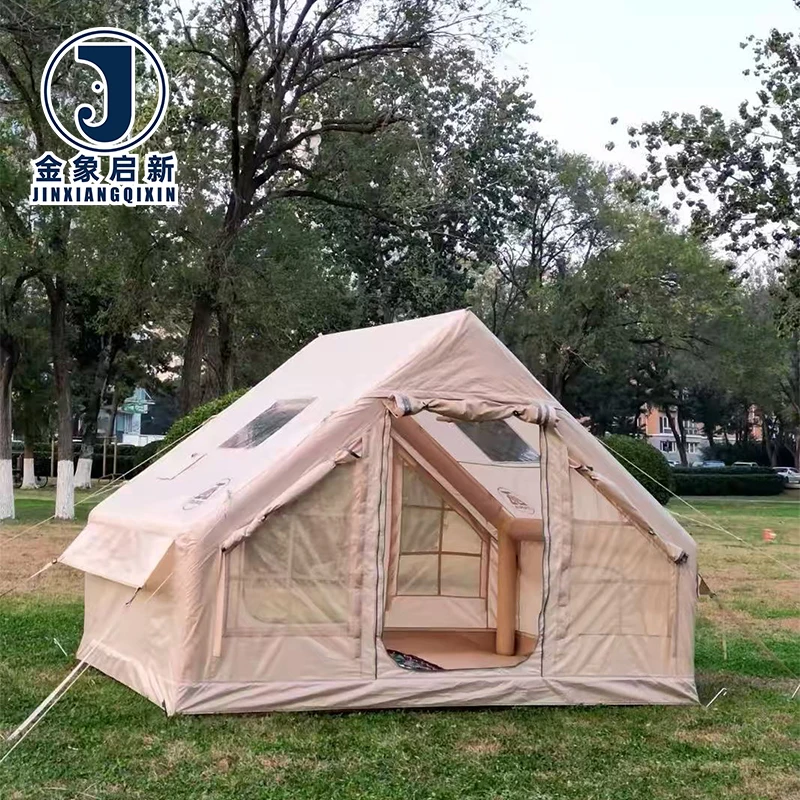
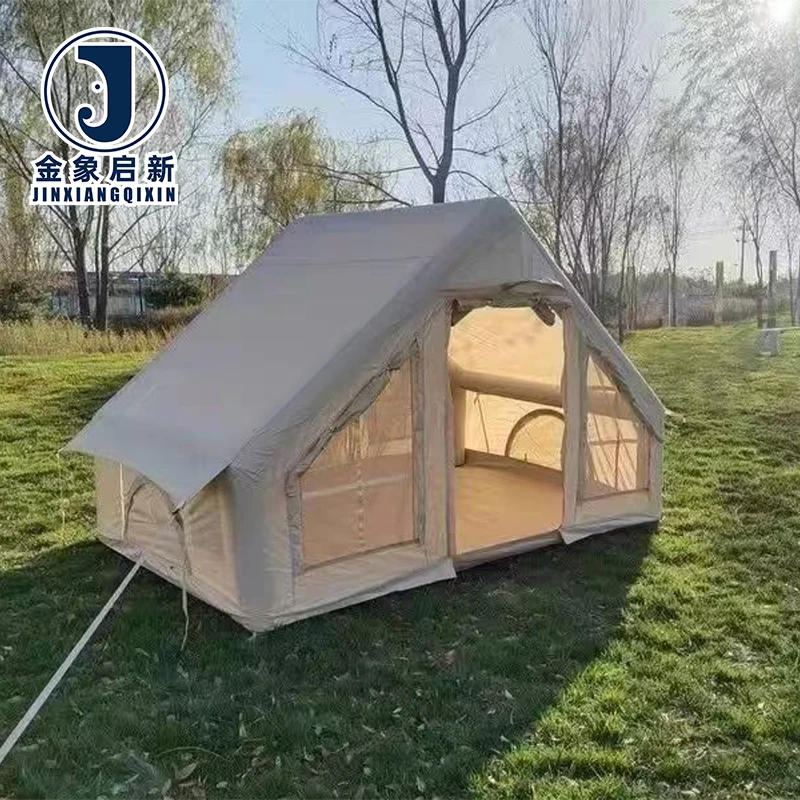
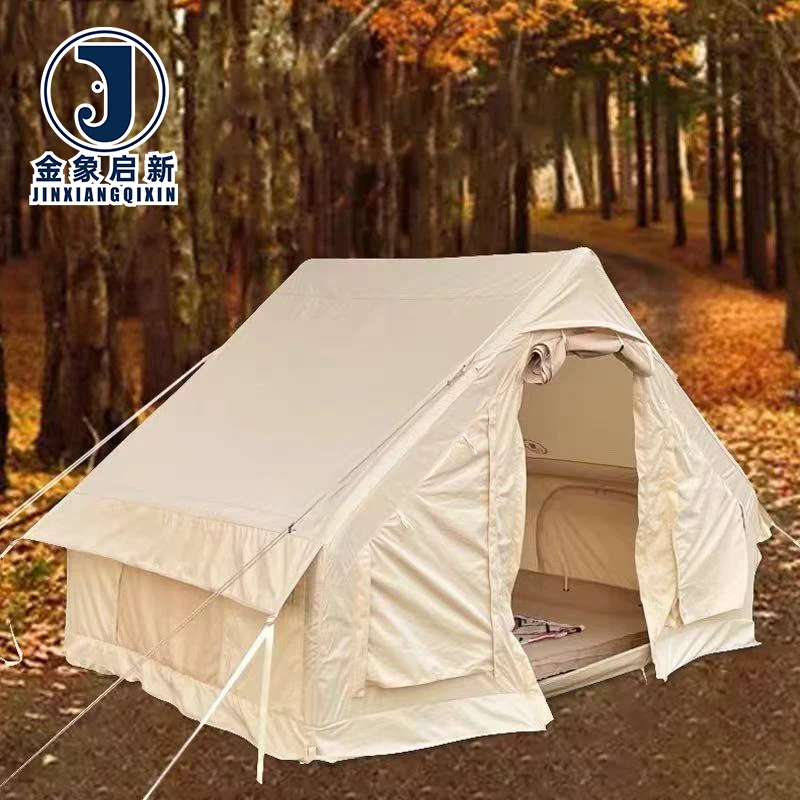
Proven Coating Expertise — Nearly 30 years focused on coated fabric translates to deep process control over PVC adhesion and seam integrity, ensuring every roll of Inflatable Tent Fabric meets structural demands for pressurized enclosures.
Technical Specifications
| Parameter | Value |
|---|---|
| Product Type | Inflatable Tent Fabric |
| Core Material | UV Water-resistant PVC Fabric |
| Fabric Thickness Range | 0.3mm to 0.8mm (customizable) |
| Tear Resistance | Exceeds 300N warp and weft (test basis not stated in source) |
| UV Protection Durability | Maintains 90% of UV protection after 500 hours of accelerated weathering |
| Wind Load Resistance | Up to 12m/s |
| Airtightness Validation | Maintains inflation pressure for 72 hours under continuous test |
| Key Features | Waterproof, UV-resistant, tear-resistant, single-layer design |
| Structural Weight Advantage | 15% lighter than traditional multi-layer tent constructions |
| Customization Options | OEM & ODM, sample customization, pattern printing, Pantone colour matching |
| Production Lines | 3 full production lines |
| Processing Equipment | 36 sets of professional equipment |
| Annual Output Capacity | Up to 5,000 units |
| On-time Delivery Rate | 98% |
| R&D Team | 10 technicians |
| Certifications | ISO9001, ISO14001, ISO45001, CE |
Application Suitability
| Application | Exposure & Requirement |
|---|---|
| Mining and tunnelling inflatable shelters | Continuous underground moisture, dust ingress, fire-retardant compliance, rapid deployment between work faces |
| Aviation ground-support temporary enclosures | Wind loading on open tarmac, UV exposure during extended outdoor staging, anti-static requirements near fuel handling zones |
| Construction site temporary accommodations | Weather cycling across seasons, mechanical abrasion from equipment movement, structural stability under inflation |
| Outdoor event and exhibition structures | High-visibility appearance, UV and rain exposure over multi-day installations, frequent packing and redeployment |
| Specialist membrane and inflatable structure builds | Precise thickness and colour specification per architectural design, consistent batch-to-batch coating weight |
Why "Flame Retardant Inflatable Tent Fabric" Is Meaningless Without a Grade
Certified Inflatable Tent Fabric with verified fire classification is the only specification that passes a site safety audit.
Contractors sourcing inflatable shelters for mining, aviation or construction sites frequently receive fabric described simply as "flame retardant" with no supporting test report. When the site inspector asks for documentation aligned with regional fire codes, the project stalls. Inflatable Tent Fabric supplied without a traceable grade leaves the buyer exposed — both contractually and operationally [NEED_CITE: DIN 4102 fire classification for building materials]. We have seen projects delayed by weeks because the membrane fabric arrived without the specific fire-retardant classification the local authority required, forcing a full resubmission of compliance paperwork or an emergency material swap.
How Coating Chemistry Determines Structural Reliability in Inflatable Frames
Inflatable structures depend entirely on the fabric’s ability to hold internal pressure while resisting the mechanical stress concentrated at seam lines and curvature points. Inflatable Tent Fabric in this range uses a PVC coating system engineered for consistent adhesion to the base fabric, which directly governs how well heat-welded seams perform under sustained inflation. When coating weight and formulation vary across a production run, welders on site encounter inconsistent melting behaviour — some seams fuse cleanly while others delaminate under load.
Airtightness as the True Performance Divider
A fabric that leaks pressure slowly over hours rather than days forces operators to run compressors continuously, burning fuel and accelerating wear on inflation equipment. This Inflatable Tent Fabric is tested to maintain inflation pressure for 72 hours in a controlled setting, providing a documented baseline for field deployment planning [NEED_CITE: tensile and tear test methods for coated fabrics per ISO 1421]. The 0.3mm to 0.8mm thickness range allows specifiers to balance portability against pressure retention — thinner gauges suit short-duration mobile exhibitions, while heavier grades suit semi-permanent mining or construction shelters that must remain inflated through wind events up to 12m/s.
Reading the Specification Sheet Beyond Thickness Numbers
Tear resistance exceeding 300N in both warp and weft directions indicates that the base fabric denier and weave density are matched to the coating weight, preventing tear propagation once a puncture occurs. UV-resistant PVC coating retaining 90% protection after 500 hours of accelerated weathering suggests a formulation with integrated UV stabilisers rather than a surface-applied treatment that washes off. The single-layer construction achieving a 15% weight reduction versus multi-layer alternatives eliminates inter-layer delamination risk, which is a common failure mode in laminated structures that flex under wind load. Thickness alone does not predict performance — a 0.5mm fabric with a high-density base weave and consistent coating adhesion will outperform a 0.7mm fabric with a loose weave and poor bond strength.
What Happens When Fabric Grade Is Chosen on Price Alone
Selecting Inflatable Tent Fabric based on the lowest cost per square metre often leads to field failures that dwarf the initial savings. Coating that is too thin for the specified thickness will crack at fold lines after repeated deployment cycles. Fabric without documented tear resistance may split along a weld seam the first time the structure experiences lateral wind loading, requiring a full panel replacement rather than a field repair [NEED_CITE: coated fabric seam failure modes under cyclic inflation pressure]. Batch-to-batch colour variation becomes visible when two rolls are welded side by side on a large membrane structure, forcing the contractor to reject the entire installation and wait for replacement material.
Why Technical Buyers Source Inflatable Structure Fabric Here
Dedicated QA and QC staff inspect every production stage, with a 12-point inspection protocol covering coating adhesion, dimensional accuracy and surface consistency before any roll is cleared for shipment. The 10-technician R&D team develops custom samples — including specific Pantone colour matches and pattern printing — within days rather than weeks, allowing specifiers to validate appearance and weld behaviour before committing to a full order. Three full production lines and 36 sets of processing equipment provide the capacity to fulfil project-scale volumes up to 5,000 units with a 98% on-time delivery rate. ISO9001, ISO14001, ISO45001 and CE certifications are maintained across the production system, supporting compliance documentation for regulated sectors.
Documentation & Verification
- Material specification sheet stating PVC coating composition, base fabric denier and available treatment grades for each order
- Fire-retardant and anti-static test reports issued per batch, traceable to purchase order number
- Pre-shipment inspection record covering air-pressure retention, tensile strength and seam integrity checks
- ISO 9001, ISO 14001, ISO 45001 and CE certificates available for customs clearance and site compliance audits
- Roll packing list with thickness verification and colour reference confirmed against approved sample
Fabrication, Handling & Storage
- Heat-weld parameters must be adjusted for the specific 0.3mm–0.8mm thickness to avoid delamination at seams
- Store rolls vertically in shaded conditions to prevent flat-spot deformation on the PVC coating surface
- Use compatible PVC adhesive for field repairs on single-layer construction to maintain airtightness integrity
- Avoid dragging unrolled fabric across abrasive ground surfaces to protect the water-resistant coating finish
- Cut panels with allowance for weld overlap to preserve tear resistance above 300N at joined edges
What to Include in Your Enquiry
Specify the deployment environment — underground mining, open-air aviation site, or seasonal outdoor event — along with the fire-retardant or anti-static grade required by your local regulatory authority. Confirm the fabric thickness range you need within the 0.3mm to 0.8mm options, your target colour or Pantone reference, and whether you require finished panels or roll stock. Indicate your project volume and whether a pre-production sample is needed to validate weld parameters and colour accuracy before full production begins.
Frequently Asked Questions
Q: Which fire-retardant grades are available for inflatable structure fabric, and how do they align with regional codes?
A: Inflatable Tent Fabric is available in flame-retardant grades suited to mining, aviation and construction applications. The specific grade required depends on your jurisdiction’s fire code — confirm the classification your site inspector expects, and the matching test report will be issued per batch, traceable to your order number.
Q: What anti-static certification is provided, and what surface resistance range is guaranteed?
A: Anti-static treatment is available for Inflatable Tent Fabric deployed in environments where static discharge poses a risk, such as aviation ground support or fuel-adjacent operations. The guaranteed surface resistance range and corresponding test standard are confirmed during the specification phase to match your site’s compliance requirements.
Q: How is airtightness tested and documented before shipment?
A: Each production batch of Inflatable Tent Fabric undergoes inflation pressure testing validated to maintain pressure for 72 hours. A pre-shipment inspection record documenting the test results, along with tensile and seam integrity checks, accompanies every order for your quality assurance files.
Q: Can fabric thickness and colour be customised, and what is the sample lead time?
A: Fabric thickness is customisable from 0.3mm to 0.8mm, with Pantone colour matching and pattern printing available through OEM and ODM channels. The 10-person R&D team develops samples within days, allowing you to verify weld behaviour and colour accuracy before authorising full production.
Q: What documentation accompanies each batch for on-site compliance inspection?
A: Every shipment includes a material specification sheet, fire-retardant or anti-static test reports where applicable, pre-shipment inspection records, ISO and CE certificates, and a roll packing list. This documentation package supports both customs clearance and on-site compliance audits by project safety officers.