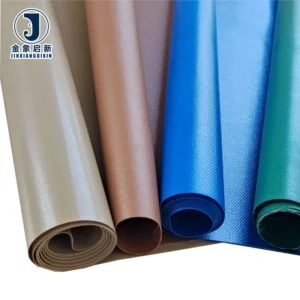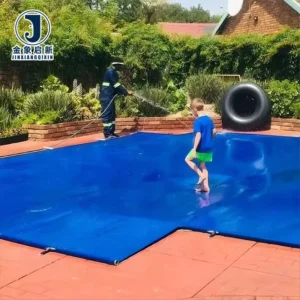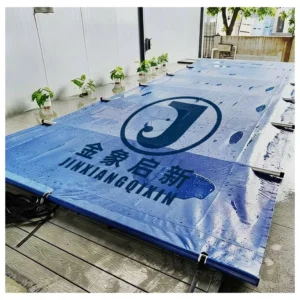
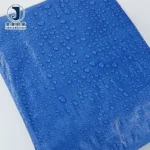
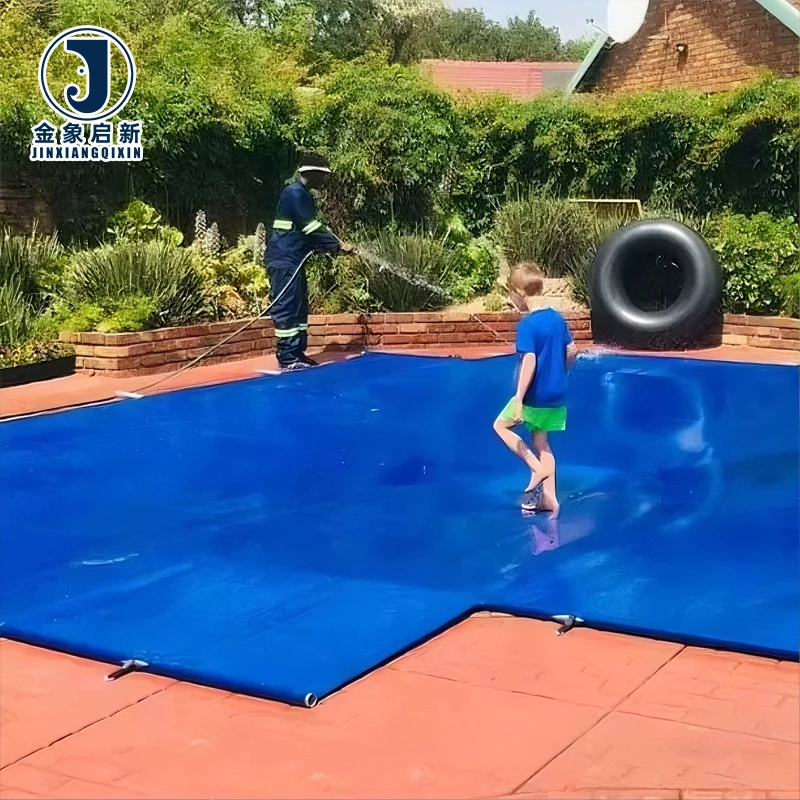
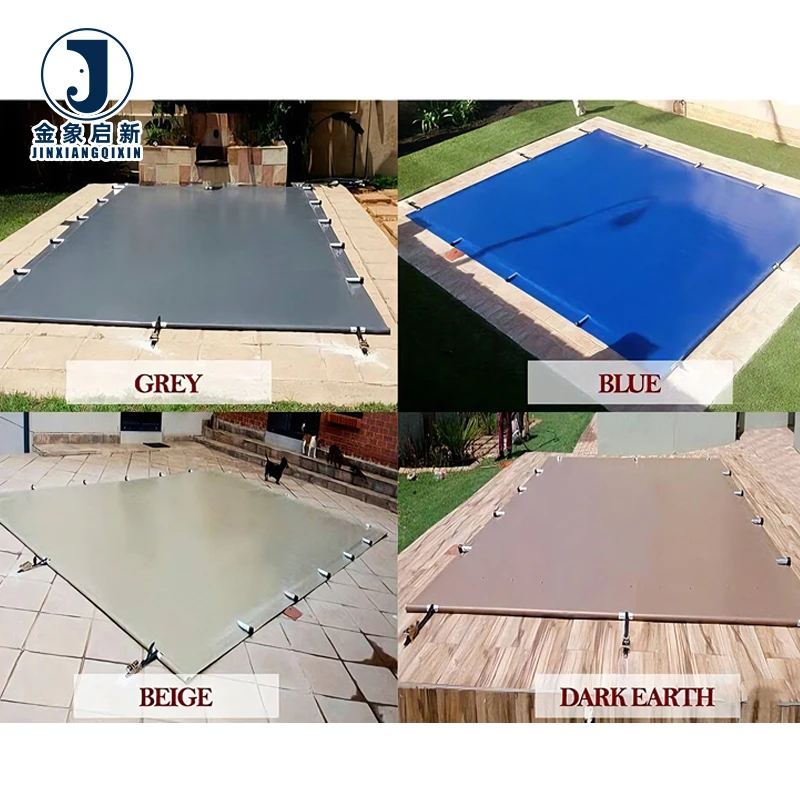
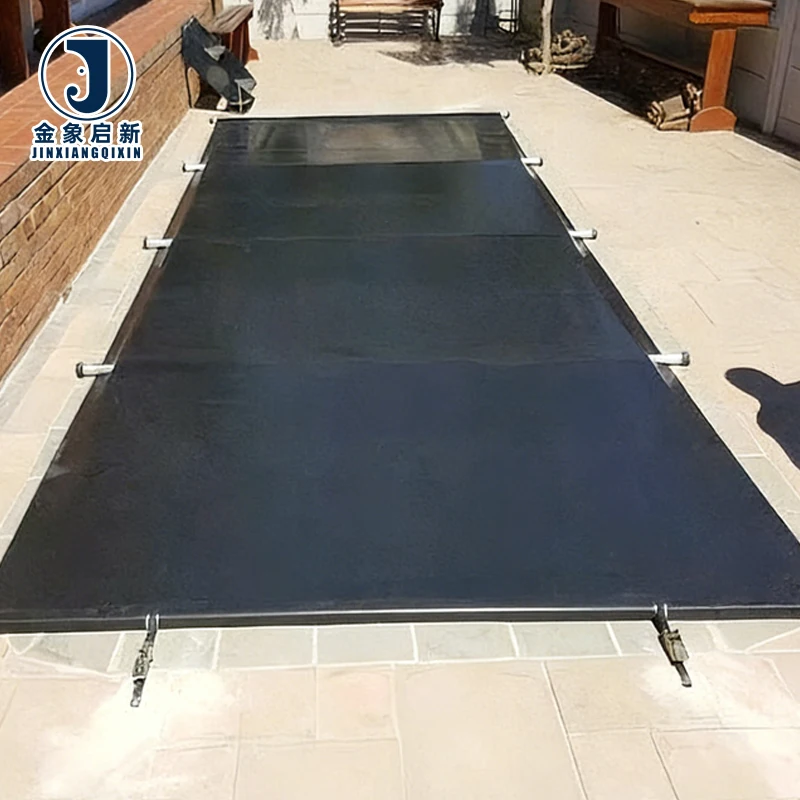
Deep Process Control — coating weight and adhesion are verified at every stage across three full production lines, ensuring each roll of technical fabric meets the specification stated on the order.
Technical Specifications
| Parameter | Value |
|---|---|
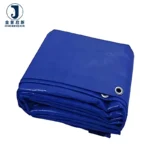
| Product Type | PVC Coated Tarpaulin |
| Base Fabric | High-strength polyester mesh fabric |
| Coating Method | Laminated technology & Hot-melt coating technology |
| Weight Options | 350gsm / 420gsm / 500gsm / 550gsm / 600gsm / 750gsm |
| Total Thickness | 0.32mm / 0.35mm / 0.4mm / 0.45mm / 0.5mm / 0.65mm |
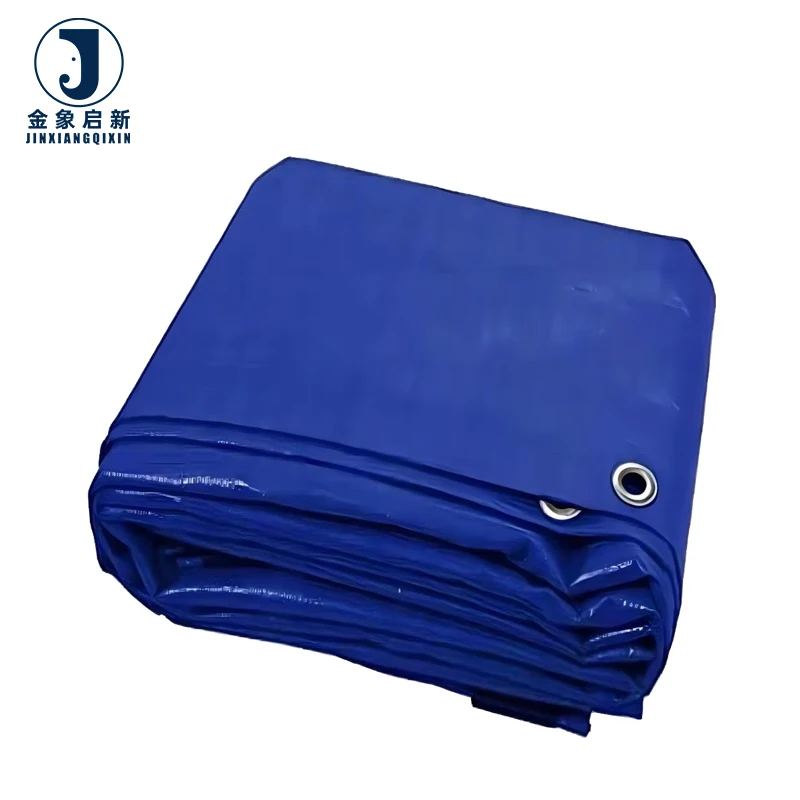
| Roll Dimensions | 2m × 75m / 2.1m × 50m |
| Finished Product Size | Custom cut to project dimensions or supplied as roll stock |
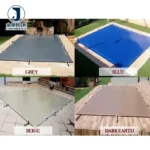
| Colour Range | Blue / Red / Yellow / Light Blue / Grey (custom options available) |
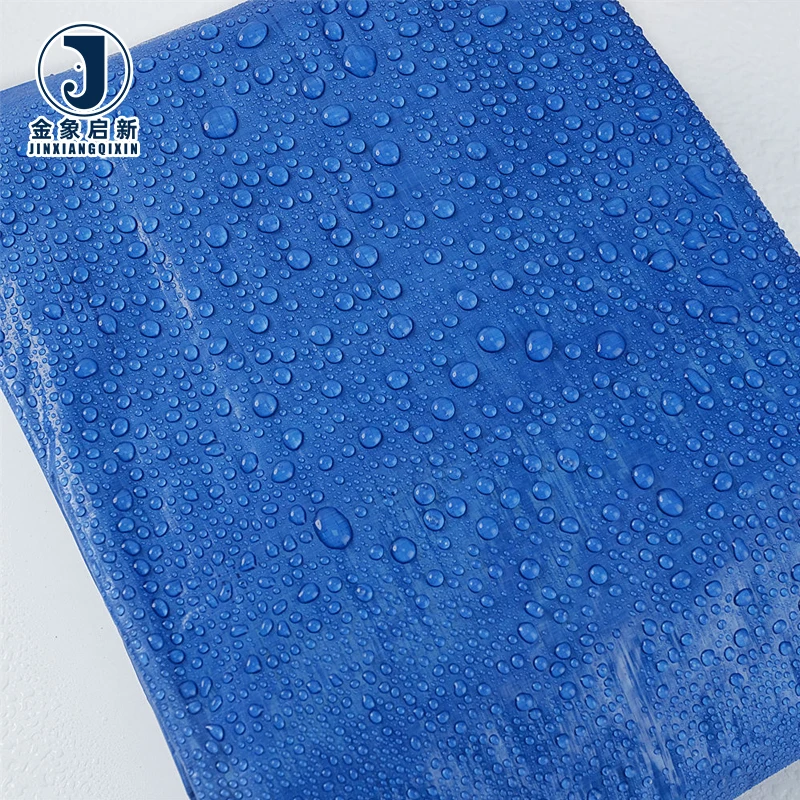
| Key Features | Cold crack resistance, anti-mildew, waterproof, sunproof, best color fastness, anti-static treatment (grade not stated in source — confirm required standard), outstanding tearing strength for welding, good flexibility and adhesion strength |
| Standards | ISO, CE certified production |
Application Suitability
| Application | Exposure & Requirement |
|---|---|
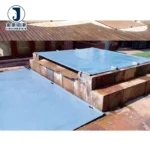
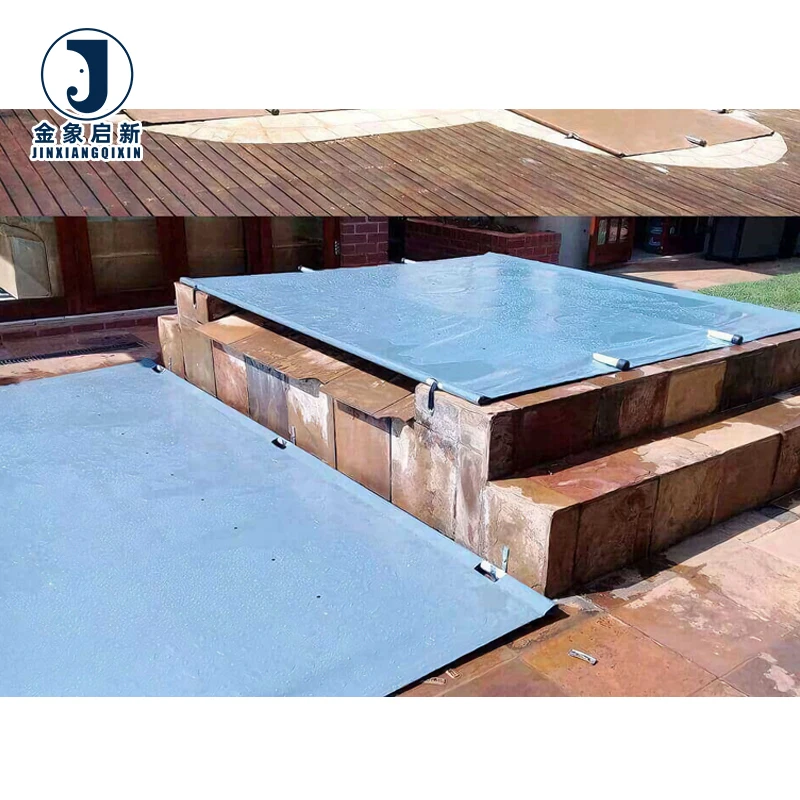
| Custom-shaped pool safety covers | Hook fixation system, sustained tension at anchor points, continuous UV and water exposure, frequent handling during seasonal deployment |
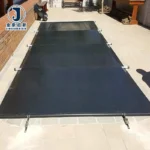
| Large rectangular pool covers | Aluminium bar tensioning method, high span load across the water surface, ratchet strap tension, wind uplift resistance |
| Aquaculture and fish tank liners | Permanent water immersion, biological fouling, anti-mildew demand, chemical exposure from water treatment agents |
| Inflatable and membrane structures near water | Humid environment, flex cycling from air pressure variation, fire-retardant compliance for enclosed public spaces |
What Happens When a Ventilation or Pool Cover Project Fails Certification
Every roll must ship with a test report matched to its batch, not a generic data sheet from a different production run.
Specialist aquatic facilities and enclosed structures require documented fire-retardant and anti-static performance before inspectors sign off. PVC pool cover tarpaulin aftermarket supplier quotations often reference these treatments in general terms, but the certification paperwork arrives weeks later — or references a standard that the local authority does not recognise. By that point the fabric is already on site, and replacement means project delay, double freight cost, and strained contractor relationships [NEED_CITE: fire classification requirements for building materials in aquatic environments]. The gap between a claim and a certificate is where most compliance failures originate.
Adhesion Between Coating and Base Fabric
The laminated and hot-melt coating process bonds the PVC layer directly to the high-strength polyester mesh under heat and pressure. This produces a composite where the coating does not delaminate at the weld line or along edges exposed to pool chemicals. For fabricators producing custom-shaped pool covers, strong adhesion means the welded seam holds at a tension level comparable to the body of the fabric itself, reducing returns caused by seam failure during the first season of use.
Tension and Load Distribution Across Pool Spans
Rectangular pool covers using the aluminium bar method place sustained tension on the fabric across the full span. The polyester mesh base fabric distributes that load through its warp and weft yarn structure. When the PVC pool cover tarpaulin aftermarket supplier provides material with consistent coating penetration, the fabric resists stretch creep over months of tension, keeping the cover taut and preventing water pooling on the surface that would otherwise accelerate biological growth.
Welding Behaviour at Flex and Anchor Points
Welded seams on pool covers face repeated stress at anchor bars and where the fabric folds during removal. The hot-melt coating technology allows heat welding at temperatures that fuse both the PVC coating and the base yarn surface without burning through the mesh [NEED_CITE: welding temperature parameters for PVC-coated polyester fabrics]. Fabricators report fewer rejected panels when the coating thickness is uniform across the roll width, because consistent thickness translates to a predictable welding window on hot wedge and high-frequency equipment.
Reading GSM and Thickness Together
Weight in grams per square metre and total thickness in millimetres must be evaluated as a pair. A 350gsm fabric at 0.32mm is suited to lighter domestic pool covers handled frequently by one person, while a 750gsm fabric at 0.65mm carries the span load of a commercial pool with wider unsupported distances between anchor bars. The coating method — laminated versus hot-melt — also affects how that weight translates into tensile performance, because laminated fabrics typically show higher peel strength between layers, which matters when the cover flexes under wind load or snow accumulation. Thickness alone does not indicate base fabric density; two fabrics at the same total thickness can differ substantially in tear resistance depending on the denier and weave of the polyester mesh underneath the coating.
The Cost of Ordering the Wrong Grade
A cover specified at a GSM too low for its span will stretch under sustained tension, losing its shape within the first year and allowing water to collect on the surface. Fire-retardant treatment claimed without a matching test report means the facility inspector refuses to sign off, and the entire installation must be replaced before the pool can open to the public. Batch colour variation across rolls ordered for a large-format commercial pool becomes visible once the panels are welded side by side, forcing the contractor to either accept a mismatched appearance or re-order material at their own cost [NEED_CITE: colour consistency standards for architectural and aquatic coated fabrics]. Welded seams that fail before the fabric body does point to a coating formulation or thickness that does not suit the welding equipment in use, not to operator error.
Why Fabricators Source This Material Here
Three full production lines with 36 sets of professional equipment mean that roll stock and custom-cut panels are produced on dedicated lines, keeping lead times predictable even during peak seasonal demand for pool cover fabric.
The 10-person R&D team develops samples within days for custom colour and sizing requests, so fabricators can confirm welding parameters and anchor point behaviour before committing to a full production run.
Dedicated QA/QC at every production stage, with 100% inspection before shipment, catches GSM variation and coating defects before rolls leave the facility — the verification that buyers need when they have been burned by lighter-than-quoted material arriving on site.
Coating weight and adhesion are controlled through nearly 30 years of focused experience in coated fabric production, giving process consistency that newer suppliers cannot replicate on specialty grades like cold-crack resistant and anti-mildew treated pool cover material.
Material specification sheets, test reports, and pre-shipment inspection records ship with every order, eliminating the paperwork chase that delays project sign-off.
Documentation & Verification
- Material specification sheet stating exact GSM, base fabric construction, coating method, and colour reference per roll
- Fire-retardant and anti-static test reports matched to batch and grade — confirm the standard required for your market
- Pre-shipment inspection record with 100% QA coverage before dispatch
- ISO and CE certificates included with customs documentation and certificate of origin
Fabrication, Handling & Storage
- Hot wedge welding parameters should be tested on a sample swatch of the selected GSM grade before full production begins
- Rolls should be stored upright on end caps to prevent flat-spot creasing that shows through the finished pool cover panel
- Allow cold-stored rolls to reach ambient temperature before unrolling to avoid cracking the cold-crack resistant PVC coating surface
- Cut panels should be kept separated with interleaving paper to prevent plasticiser migration between stacked sheets of the same colour
- Aluminium bar anchor points require reinforced welding patches at stress concentration zones on the heavier 600gsm and 750gsm grades
Preparing Your Inquiry
Provide the pool dimensions, the fixation method in use (hook system or aluminium bar), and the tension load your anchor hardware is rated for. State the fire-retardant or anti-static standard your local authority requires, along with the annual volume and whether you need roll stock or finished cut panels. Colour references and sample requirements should be noted so the R&D team can prepare matched swatches for welding trials.
Frequently Asked Questions
Q: How do I choose the right GSM for my pool cover project?
A: Smaller domestic pools with hook fixation typically use lighter grades in the 350gsm to 420gsm range. Larger rectangular pools with aluminium bar systems and wider spans require heavier grades, often 550gsm to 750gsm, to resist stretch under sustained tension. Share your pool dimensions and anchor hardware specifications so the appropriate grade can be confirmed.
Q: Are fire-retardant and anti-static certifications available with this fabric?
A: Fire-retardant and anti-static treatments are available in various grades. The specific grade and corresponding test report must be confirmed against the compliance standard required by your local building or aquatic facility authority. Request matched batch documentation when placing your order to ensure paperwork aligns with your project specification.
Q: Will multiple rolls in the same order have consistent colour?
A: Colour consistency across rolls within the same production batch is controlled through in-process QA. For large-format pool installations requiring multiple panels welded side by side, specify that all rolls must come from a single production run to minimise visible variation between adjacent panels.
Q: Can the welded seam strength match the fabric body strength?
A: Welded seam performance depends on coating uniformity, welding equipment settings, and the selected GSM grade. The hot-melt and laminated coating technology provides a predictable welding window. Fabricators should run test welds on sample swatches to confirm peel strength before full panel production.
Q: Should I order roll stock or pre-cut finished panels?
A: Roll stock suits fabricators with in-house cutting and welding capability producing multiple cover sizes. Pre-cut panels reduce waste and labour for projects with fixed dimensions. Both options ship with full documentation and pre-shipment inspection records.