
Verified Compliance Documentation — PE tarpaulin grades specified for mining, tunnelling and specialist ventilation applications must carry test reports matching the jurisdiction’s fire-retardant and anti-static requirements before installation begins.
Technical Specifications
| Parameter | Value |
|---|---|
| Product Type | PE Tarpaulin |
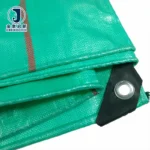
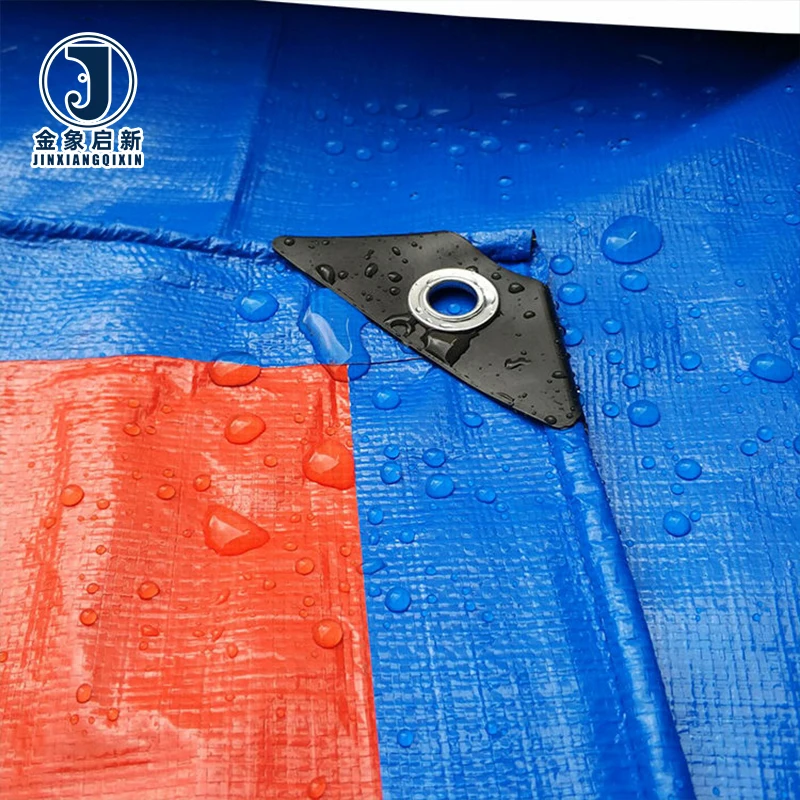
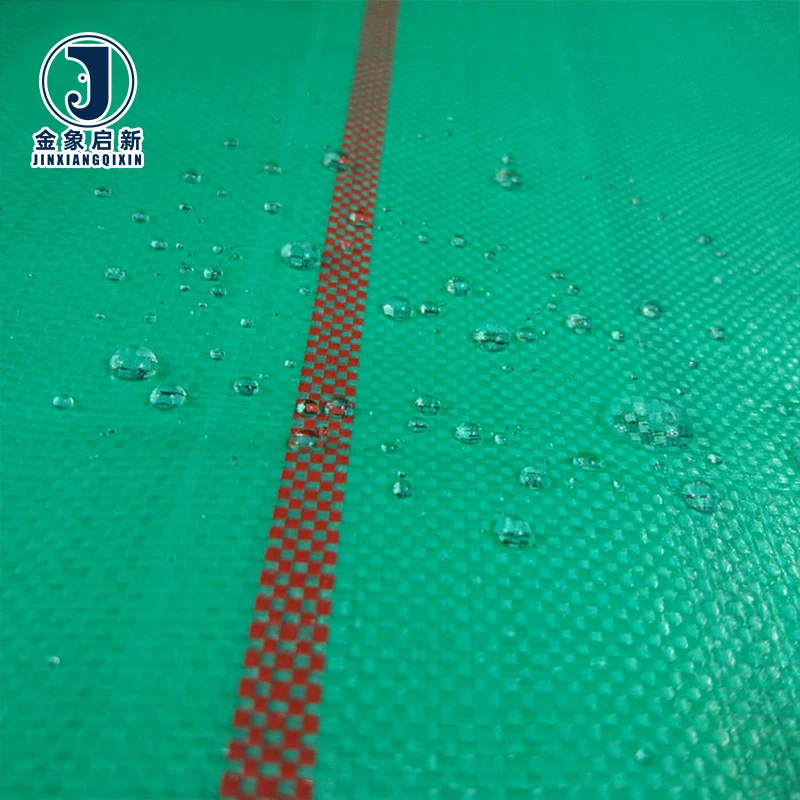
| Material | HDPE weaving with LDPE lamination on both sides |
| Coating Method | Laminated |
| Weight (GSM) | 50gr/m2 ~ 220gr/m2 (range covers product family — confirm the grade for this item) |
| Total Thickness | 0.2-0.4mm / 8 mil-16 mil |
| Mesh Count Options | 6×6, 6×7, 7×7, 7×8, 8×8, 9×9, 8×10, 10×10, 12×12, 14×14, 14×16 weave |
| Roll Width | 6ft, 8ft, 10ft, 12ft or 2m, 4m, 6m |
| Roll Length | 100 yards, 100 meters, or custom |
| Finished Sizes | 2×2m to 8×10m |
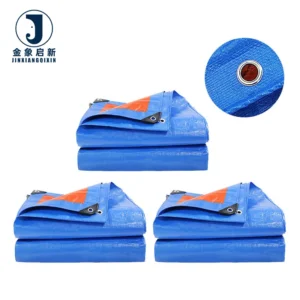
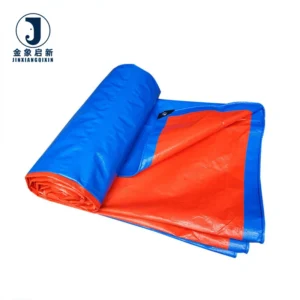
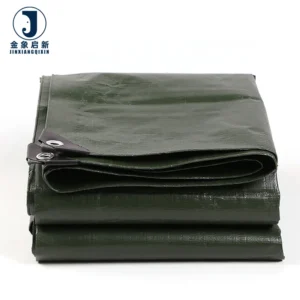
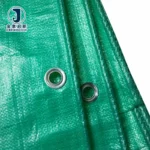
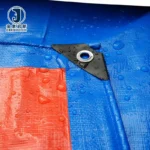
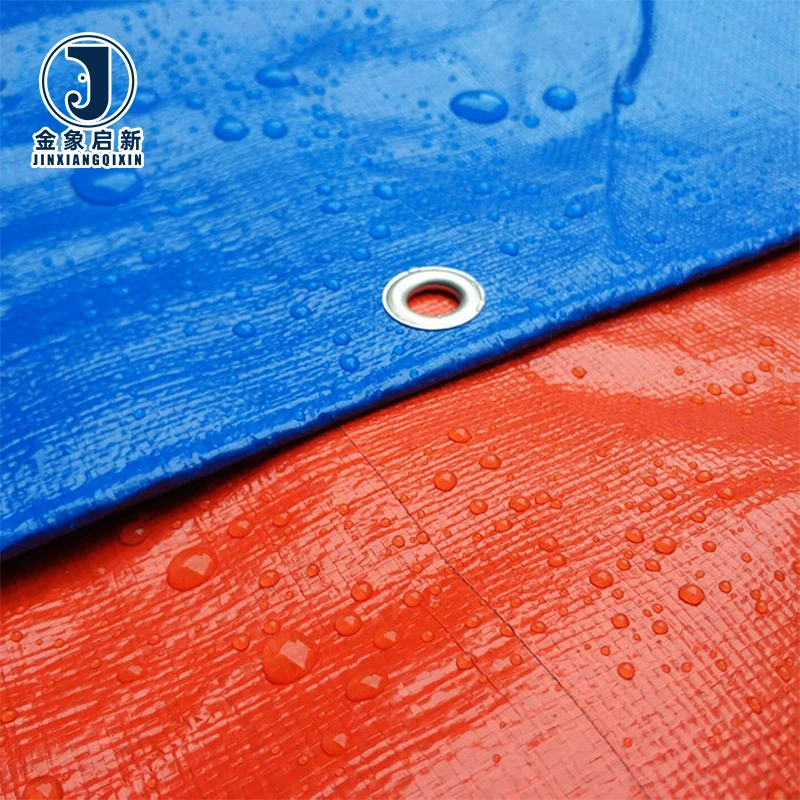
| Color | Blue, Blue/Orange, Green, Grey, Black, Clear, Grey/Green, Orange, or custom |
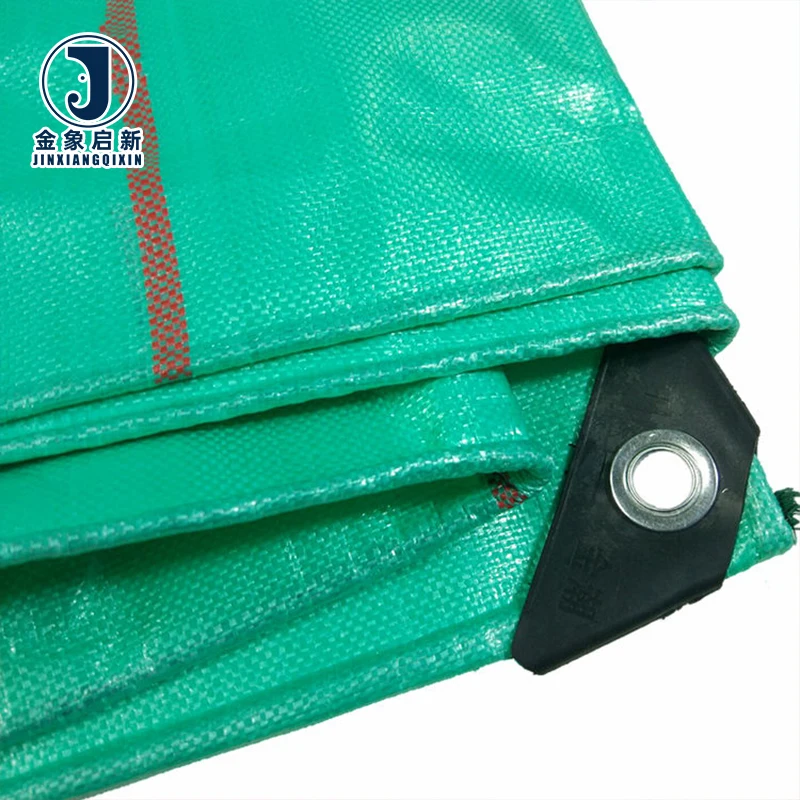
| Edge Reinforcement | PP rope in hem (all four edges) |
| Eyelets | Galvanized, every 3ft or 1 meter interval |
| Corners | Reinforced plastic corners |
| Key Features | Waterproof, washable, mildew proof, anti-aging, UV treatment available (test basis not stated in source) |
Application Suitability
| Application | Exposure & Requirement |
|---|---|
| Mining and tunnelling ventilation duct outer wrap | Constant airflow pressure, underground humidity, strict fire-retardant and anti-static compliance required by site regulation |
| Temporary brattice cloth for underground airflow control | Abrasion against rock surfaces, moisture exposure, mandatory flame-retardant certification for underground use |
| Specialist inflatable and membrane structure covers | Wind load tension, UV exposure above ground, fire-retardant grade matching local building code |
| Aviation and construction site temporary enclosures | Weather exposure, frequent installation and removal, equipment protection from dust and moisture |
What "Fire Retardant" Means Without a Grade Behind It
A PE tarpaulin labeled fire retardant without a cited test standard is a compliance liability on any regulated job site.
Mining and tunnelling contractors routinely receive ventilation duct material that claims flame resistance but ships without a test report tied to a recognized standard. When the site inspector asks for documentation, operations halt until the correct paperwork arrives — a delay that costs far more than the material itself. Anti-static PE tarpaulin specified for underground ventilation faces the same gap: surface resistance values must be verified against the jurisdiction’s threshold, not just described in general terms. [NEED_CITE: fire-retardant classification standards for underground ventilation materials]
Matching Fire-Retardant Grades to Site Regulation
Different markets enforce different fire classification systems for PE tarpaulin used in ventilation and temporary structures. A grade accepted on a European tunnelling project may not satisfy an Australian mining regulator. Before committing to a production run, the specific standard — whether M2, B1, NFPA 701 or another — must be confirmed against the site’s compliance requirement, and the test report must reference that exact standard.
Anti-Static Verification for Underground Ventilation
Underground environments demand controlled surface resistance to prevent static discharge near combustible atmospheres. Anti-static PE tarpaulin must be tested to a defined ohm range, and the measured value must appear on a test report accompanying the shipment. Without documented verification, the material cannot pass the pre-installation safety audit that mining and tunnelling sites enforce. [NEED_CITE: surface resistance requirements for anti-static materials in underground mining ventilation]
Reading Weave Density Against Duct Wall Load
Mesh count directly governs how the HDPE base fabric distributes tension across the duct wall or membrane panel. A 6×6 weave at the lower GSM range suits lightweight temporary enclosures, while 14×14 or 14×16 weave delivers the tensile density needed for continuous ventilation duct runs under sustained airflow pressure. Selecting the correct density-to-GSM mapping prevents over-engineering cost on low-stress applications and under-specifying on high-load duct sections. The lamination process bonds LDPE to both sides of the woven base, locking the weave in place and providing the waterproof barrier that underground and outdoor environments demand.
The Cost of Supplying Material Without Certification
When PE tarpaulin arrives at a mining or tunnelling site without the fire-retardant or anti-static test report the regulator requires, the entire installation stops. Contractors face re-inspection fees, project timeline penalties, and in some cases full material rejection and replacement. This compliance gap is not a paperwork inconvenience — it halts revenue-generating operations until the correct documentation is produced and accepted. [NEED_CITE: project delay costs from non-compliant ventilation material in mining and tunnelling]
Why Procurement Verification Matters Here
Jinxiang maintains dedicated QA/QC at every production stage, with 100% pre-shipment inspection specifically checking that the fire-retardant or anti-static treatment applied matches the purchase order specification. The 10-person R&D team develops custom samples within days, allowing contractors to validate material performance and secure test reports before bulk commitment. Three full production lines and 36 sets of professional equipment support continuous duct-run roll lengths and custom widths up to 6m, reducing the number of field seams on large ventilation installations. Each order ships with a complete documentation package — not just the material, but the compliance evidence the site demands.
Documentation & Verification
- Material specification sheet confirming GSM, base fabric denier, mesh count and lamination type per roll
- Fire-retardant test report citing the specific standard required by the destination jurisdiction
- Anti-static surface resistance test report with measured ohm value and test method
- ISO and CE certificates included in the shipment documentation package
- Pre-shipment inspection record verifying treatment application and dimensional accuracy
Fabrication, Handling & Storage
- Heat-seal LDPE laminated surfaces using temperature settings matched to the selected GSM grade to avoid delamination at seams
- Reinforce galvanized eyelet positions with the PP rope hem to distribute tie-down tension across the woven base
- Store rolls upright on hard paper tubes to prevent creasing that weakens the lamination bond at fold lines
- Allow cold-stored PE tarpaulin rolls to reach ambient temperature before unrolling to avoid cracking the LDPE coating
- Cut panels from 6m-wide rolls using plotted layouts to minimize off-cuts and reduce seam count on large duct sections
Requesting a Specification Match
To move forward, provide the fire-retardant or anti-static standard your site enforces, the required roll width and continuous run length for your duct fabrication, and the target GSM or mesh count for the application load. If the end use involves inflatable or membrane structures, share the span dimensions and local building code reference so the correct grade can be confirmed before sampling.
Frequently Asked Questions
Q: Which fire-retardant standard applies to my mining or tunnelling site?
A: Fire-retardant requirements vary by jurisdiction and project specification. Before ordering Certified PE Tarpaulin, confirm the exact standard — such as M2, B1 or NFPA 701 — with your site safety officer. We supply test reports matching the cited standard once the grade is confirmed, ensuring the documentation passes your pre-installation compliance audit without delay.
Q: How is anti-static surface resistance verified for underground ventilation use?
A: Anti-static PE Tarpaulin is tested to a defined surface resistance range, and the measured value appears on the accompanying test report. Underground ventilation regulations specify maximum ohm thresholds to prevent static discharge. Confirm your site’s required range before sampling so the treatment formulation can be matched and documented prior to bulk production.
Q: How is GSM validated before shipment and upon arrival?
A: Every roll undergoes weight verification against the stated GSM during our 100% pre-shipment inspection. The material specification sheet included in the documentation package records the measured value. Upon arrival, buyers can cross-check using a calibrated scale and a cut sample of known area to confirm the delivered weight matches the order specification.
Q: What are the MOQ and lead time for custom-width PE tarpaulin rolls?
A: Custom roll widths up to 6m and non-standard lengths are available for Fire Retardant PE Tarpaulin and Anti-Static PE Tarpaulin grades. Minimum order quantities and lead times depend on the selected mesh count, treatment requirement and colour. Request a quotation with your target dimensions and annual volume for a specific production schedule.
Q: How are PE tarpaulin rolls packed for container shipping?
A: Rolls are wound on hard paper tubes and wrapped to protect the LDPE lamination surface during transit. Loading plans for 20GP and 40HQ containers account for roll diameter and weight distribution to prevent crushing and edge damage. A detailed packing list accompanies each shipment, listing roll count, dimensions and net weight for receiving verification.