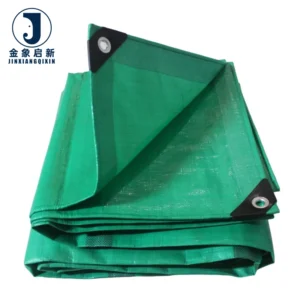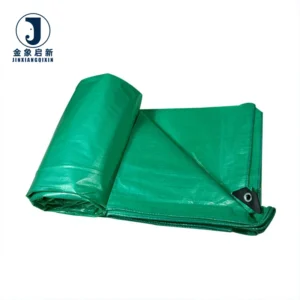

Precision Coating Control — Every roll undergoes in-process QA at each production stage so the weight specified on your order is the weight that ships, eliminating GSM discrepancies before dispatch.
Technical Specifications
| Parameter | Value |
|---|---|
| Product Type | PE Tarpaulin Roll / Finished PE Tarpaulin |
| Material | HDPE weaving with LDPE lamination on both sides |
| Weight (GSM) | 50 g/m² – 300 g/m² across 8 weave-density tiers |
| Thickness | 0.2–0.4 mm / 8 mil–16 mil |
| Mesh Count & GSM Mapping | 6×6 or 6×7 → 50–60 g/m²; 7×7 or 7×8 → 60–80 g/m²; 8×8 or 9×9 → 80–90 g/m²; 8×10 → 90–100 g/m²; 10×10 → 100–120 g/m²; 12×12 → 120–150 g/m²; 14×14 → 150–250 g/m²; 14×16 → 250–300 g/m² |
| Roll Width Options | 6 ft, 8 ft, 10 ft, 12 ft, 2 m, 4 m, 6 m |
| Roll Length Options | 100 yards, 100 meters, or custom |
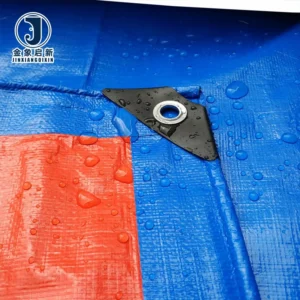
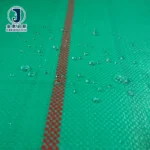
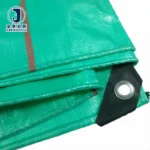
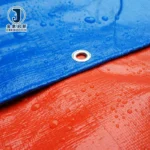
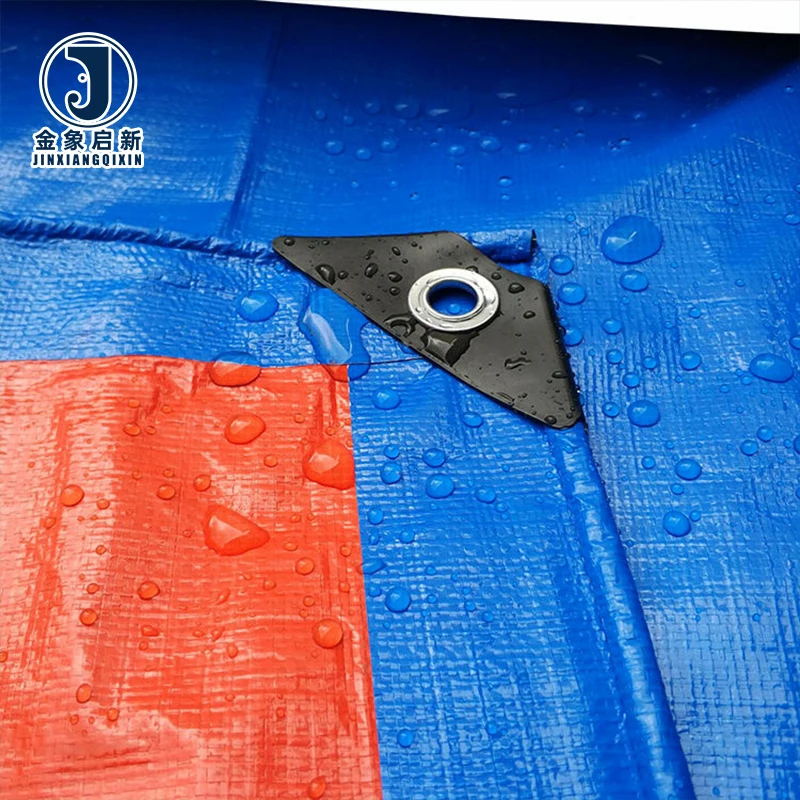
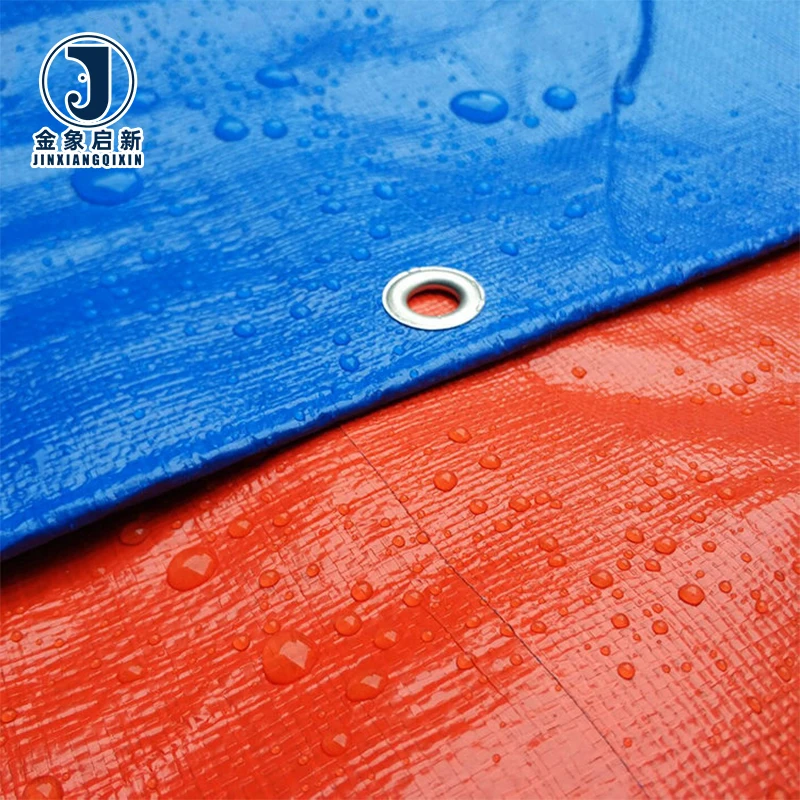
| Color Options | Blue, Blue/Orange, Green, Grey, Black, Clear, Grey/Green, Orange, or custom |
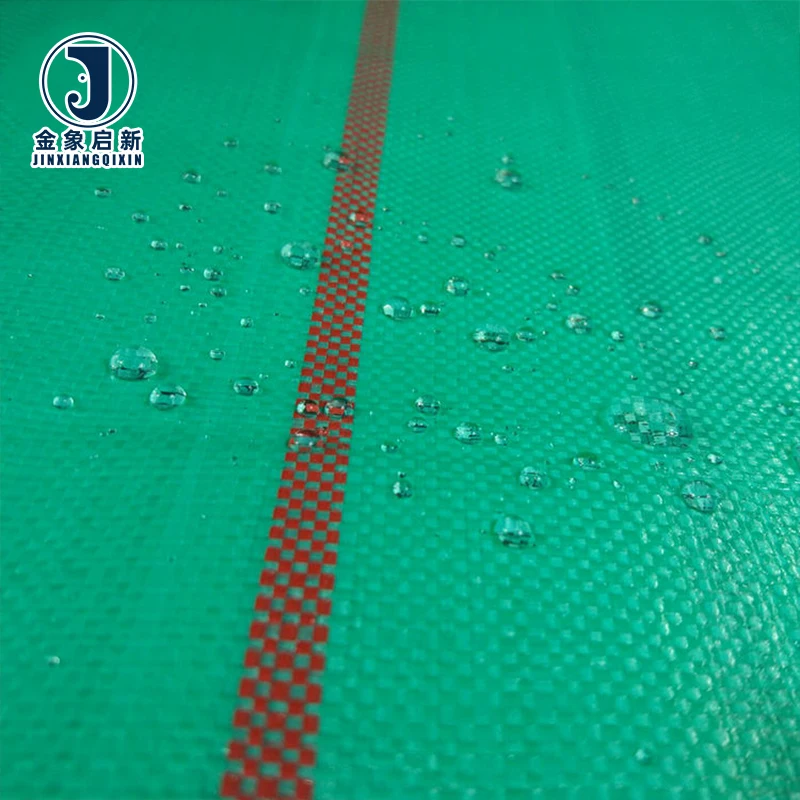
| Waterproof | Yes — fully laminated construction prevents moisture ingress |
| UV Treatment | Available — confirm the test basis required for your market |
| Anti-Mildew & Anti-Aging | Available — confirm the test basis required for your application |
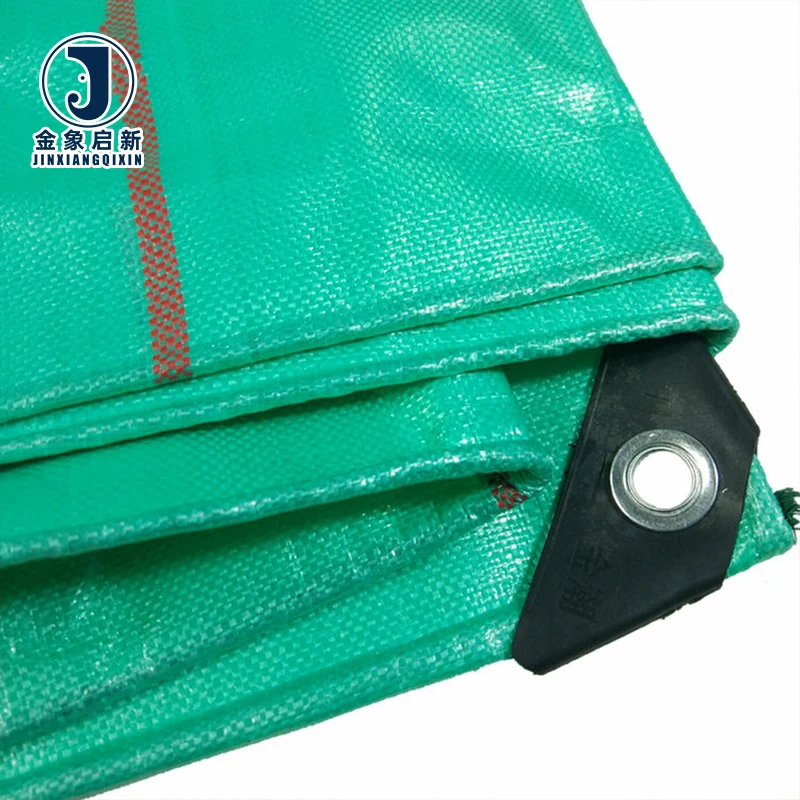
| Finished Tarpaulin Hem | All four edges reinforced with PP rope in hem |
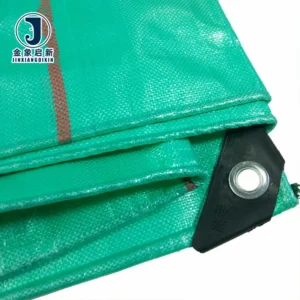
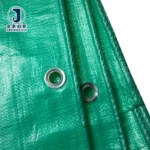
| Eyelets | Galvanized eyelets every 3 ft or 1 meter interval |
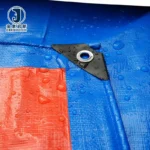
| Corner Reinforcement | Reinforced plastic corners |
| Finished Tarpaulin Regular Sizes | 2×2 m through 8×10 m and intermediate sizes |
| Custom Printing | Accepted — branding and pattern printing available |
Application Suitability
| Application | Exposure & Requirement |
|---|---|
| Truck, trailer and container covers | Road debris abrasion, wind uplift at highway speed, repeated tie-down tension on eyelets |
| Agricultural stock covers — hay, cotton, timber | Prolonged UV exposure, moisture from rain and ground condensation, mechanical handling with forks and loaders |
| Construction scaffolding wraps and site enclosures | Wind loading across large unsupported spans, dust containment, scaffolding tube abrasion at contact points |
| Pond and reservoir liners (temporary) | Constant water contact, soil chemistry, puncture risk from substrate irregularities |
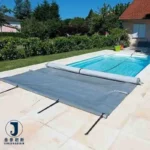
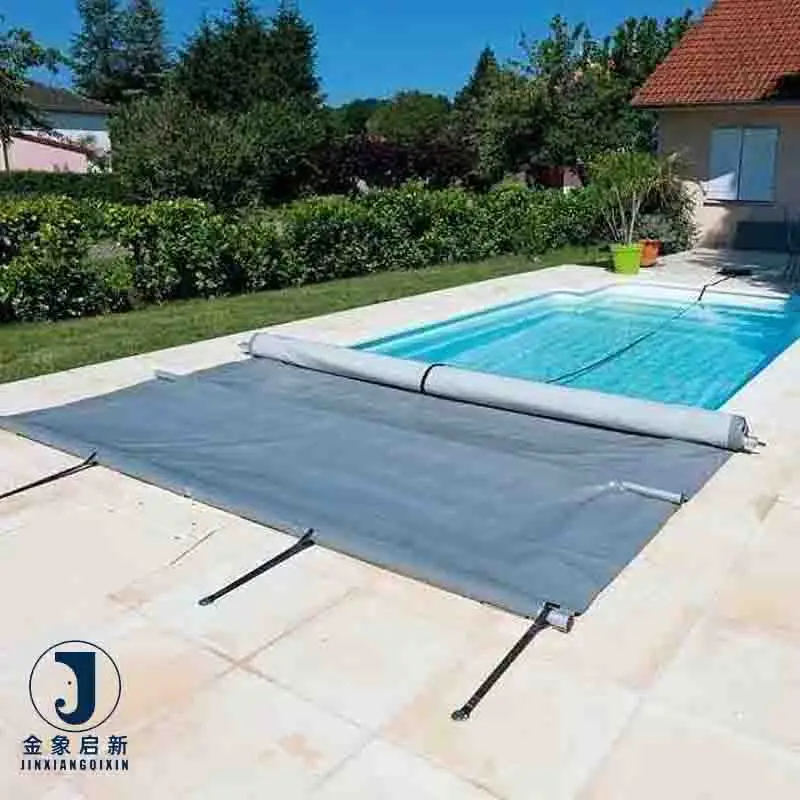
| Home and garden covers — furniture, gazebos, pools | Seasonal UV cycling, folding and storage stress, mildew in humid storage conditions |
Why Stated GSM Without Weave Density Leaves You Guessing
A PE tarpaulin’s real durability depends on how that weight is distributed across the base fabric, not just the total number on the quote.
Buyers routinely receive rolls that match the quoted GSM on a scale test yet tear far earlier than expected under field tension. The reason is often a low-density weave carrying a heavier coating to hit the target weight — the coating adds mass without contributing meaningful tensile or tear resistance. When the substrate has fewer yarns per inch, the load concentrates on individual strands, and a single puncture propagates into a full-width split. Specifying the mesh count alongside GSM removes this blind spot and gives you a reliable predictor of how the PE Tarpaulin fire retardant grade or standard grade will behave under load [NEED_CITE: relationship between mesh count and tear propagation in woven PE fabrics].
Mesh Count as the Structural Backbone
The HDPE woven base carries the mechanical load in every PE tarpaulin. Jinxiang offers eight weave-density tiers from 6×6 through 14×16, each mapped to a defined GSM band. A 6×6 weave at 50–60 g/m² suits lightweight, short-term covers where cost and flexibility matter. A 14×16 weave at 250–300 g/m² delivers the yarn density needed for heavy-duty industrial enclosures that face sustained wind loading and repeated handling. Choosing the right tier means the fabric fails at a predictable load rather than at an arbitrary point dictated by coating thickness alone.
Double-Side LDPE Lamination and Waterproof Integrity
Both sides of the HDPE base receive an LDPE lamination layer, sealing the weave intersections so water cannot wick through capillary channels. This construction also locks the yarns in place, reducing the internal abrasion that causes fibrillation when the fabric flexes repeatedly. The lamination weight can be adjusted independently of the base weave, giving buyers the option of a lighter, more flexible sheet or a stiffer, more puncture-resistant panel at the same mesh count. When you request PE Tarpaulin certified documentation, the lamination-to-base ratio can be stated so your QA team has a second verification point at receiving.
Reading the Specification Sheet Beyond the Headline Weight
GSM alone tells you what the scale reads, but the mesh count, yarn denier and lamination weight together determine how that mass translates into field performance. A 10×10 weave at 100–120 g/m² will resist tear propagation substantially better than a 7×7 weave padded to the same weight with extra coating, because the load distributes across more yarns per inch. Thickness — stated here as 0.2–0.4 mm — correlates with puncture resistance but not necessarily with tensile strength, which is why both figures need to appear on the material specification sheet. Roll width options from 2 m to 6 m also affect how many field seams your project requires; wider rolls reduce seam count and the associated failure risk at each weld line [NEED_CITE: weld seam failure rates relative to field joint count in PE sheet installations].
The Hidden Cost of Under-Specifying Weave Density
When a buyer orders solely by GSM and receives a low-mesh, high-coating sheet, the consequences surface weeks or months into service. The coating chips and cracks at fold lines, exposing the sparse weave beneath, and the fabric tears along a single yarn line rather than distributing the stress. Colour variation between rolls from the same shipment compounds the problem — panels installed side by side show visible shade differences that force a full replacement on visible enclosures. Welded seams on low-density fabric also fail earlier because the lamination has less yarn surface area to bond to, and the load transfers to the heat-affected zone at the exact point where the cover flexes most under wind [NEED_CITE: peel strength variation across mesh densities in LDPE-laminated PE fabrics].
Why Source Your PE Tarpaulin Through Jinxiang
Three full production lines with 36 sets of professional equipment allow Jinxiang to run multiple weave densities simultaneously, so your order ships from a dedicated line rather than being squeezed between unrelated products. A 10-person R&D team handles sample development within days, matching mesh count, lamination weight and colour to your specification before bulk production starts. Dedicated QA/QC inspectors check GSM, colour consistency and lamination adhesion at every production stage, with 100% inspection before shipment — the weight you order is the weight that arrives. Roll packing lists and container loading plans are prepared per shipment, giving your logistics team exact roll counts and bale weights for freight planning. ISO and CE certificates are available to support compliance documentation at your destination port.
Documentation & Verification
- Material specification sheet stating exact GSM, mesh count and lamination weight per roll grade
- Pre-shipment inspection record confirming 100% inspection before dispatch
- Roll packing list with individual roll weights and dimensions for container loading
- UV and anti-aging test documentation for treated grades upon confirmation of required test basis
- Certificate of origin and customs support documentation for destination clearance
- ISO and CE certificates available to accompany the commercial invoice
Fabrication, Handling & Storage
- Heat-seal at moderate temperature to avoid burning through the LDPE lamination on lighter 50–60 g/m² grades
- Galvanized eyelets at 3 ft or 1 m intervals distribute tie-down load — reinforce corners additionally for high-wind sites
- Store rolls upright on hard paper tubes to prevent flat-spot creasing across the 2–6 m widths
- Unfold finished tarpaulins in temperatures above 5 °C to prevent LDPE lamination cracking at fold lines
- Clean with mild detergent; avoid solvents that degrade the LDPE surface on both sides
- Patch field damage with LDPE-compatible repair tape applied to a clean, dry surface
What to Include in Your Enquiry
Specify the end-use environment — whether the cover will face sustained UV, mechanical abrasion, or permanent water contact — so the correct mesh-count tier and treatment package can be recommended. State the required roll width and whether you need finished sheets with hems and eyelets or roll stock for your own fabrication line. If your market mandates fire-retardant or anti-static compliance, name the standard so the appropriate grade and test documentation can be prepared. Provide your target colour reference and annual volume to confirm lead time and batch consistency planning.
Frequently Asked Questions
Q: How do I verify the actual GSM on arrival against my order specification?
A: Every roll is weighed and recorded during pre-shipment inspection. The inspection report ships with your order, listing measured GSM per roll against the quoted specification. You can cross-check on arrival with a simple scale-and-area test. Any deviation beyond tolerance is flagged before dispatch so corrective action happens at the factory, not at your warehouse.
Q: What UV treatment test basis supports the outdoor durability claim?
A: UV treatment is available across the range, but the specific test method and exposure hours must be confirmed for your market’s requirements. When you state the standard your end customer demands, Jinxiang prepares the corresponding test documentation and includes it with the shipment. This ensures the claim is backed by a recognised third-party result rather than a generic statement.
Q: How do I choose between roll stock and pre-cut finished tarpaulin sizes?
A: Roll stock suits fabrication shops cutting custom shapes and welding seams in-house. Pre-cut finished sheets — available from 2×2 m through 8×10 m — arrive hemmed with PP rope and galvanized eyelets, ready for immediate deployment. Your choice depends on whether you have heat-seal capability on site and whether the final dimensions match standard sizes or require bespoke panels.
Q: What is the minimum order and lead time for custom width or colour?
A: Custom widths up to 6 m and non-standard colours are available, with minimums and lead times depending on the mesh-count tier and order volume. Providing your annual requirement and target colour reference at enquiry stage allows the production team to confirm batch scheduling and dye-lot consistency across your entire order.
Q: How do you control batch colour consistency across multiple rolls?
A: Colour is matched against a reference standard at the lamination stage, and dedicated QA inspectors check shade uniformity roll-to-roll before packing. Rolls from the same dye lot are grouped together in the packing list. If panels will be installed side by side on a visible enclosure, state this at order stage so additional visual inspection checkpoints are applied during production.