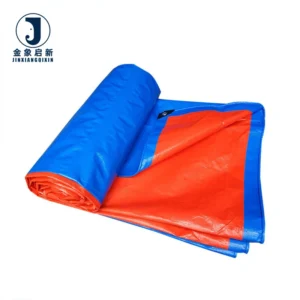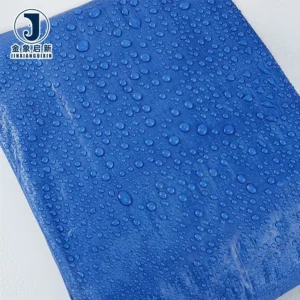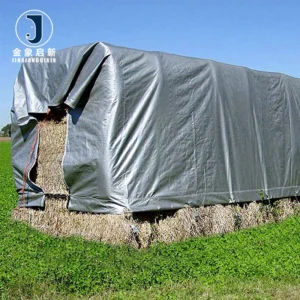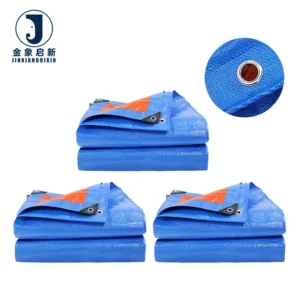
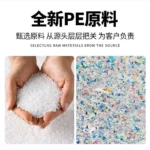
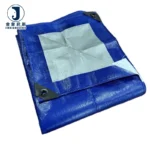
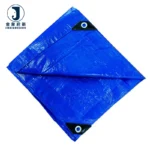
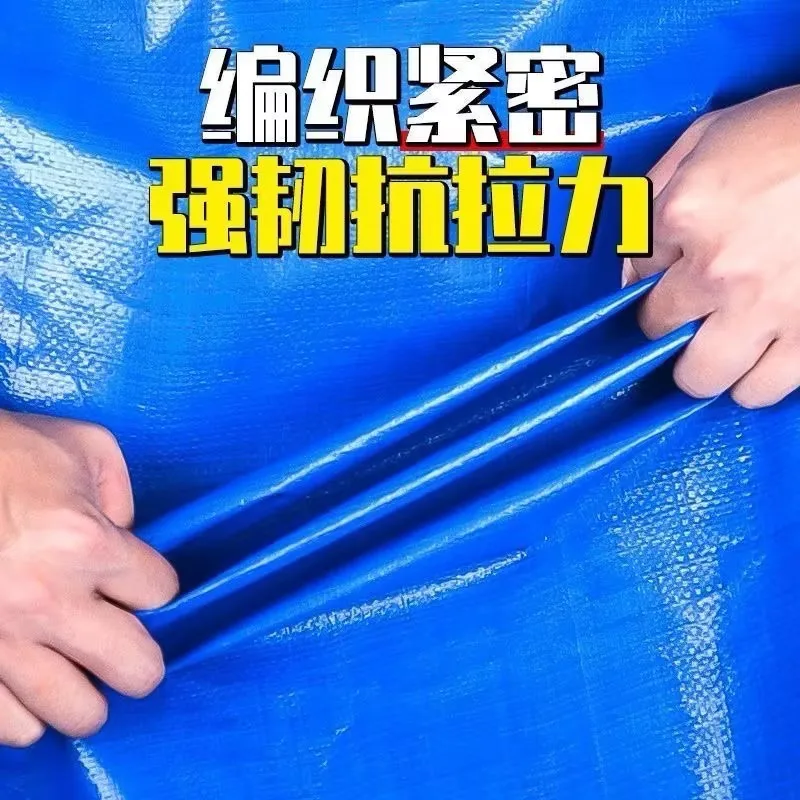
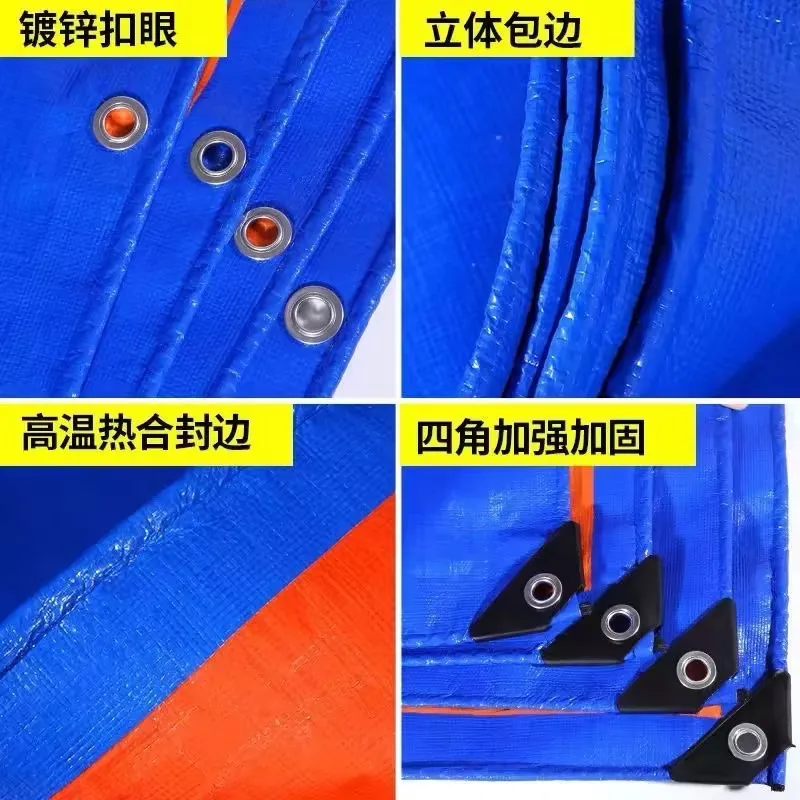

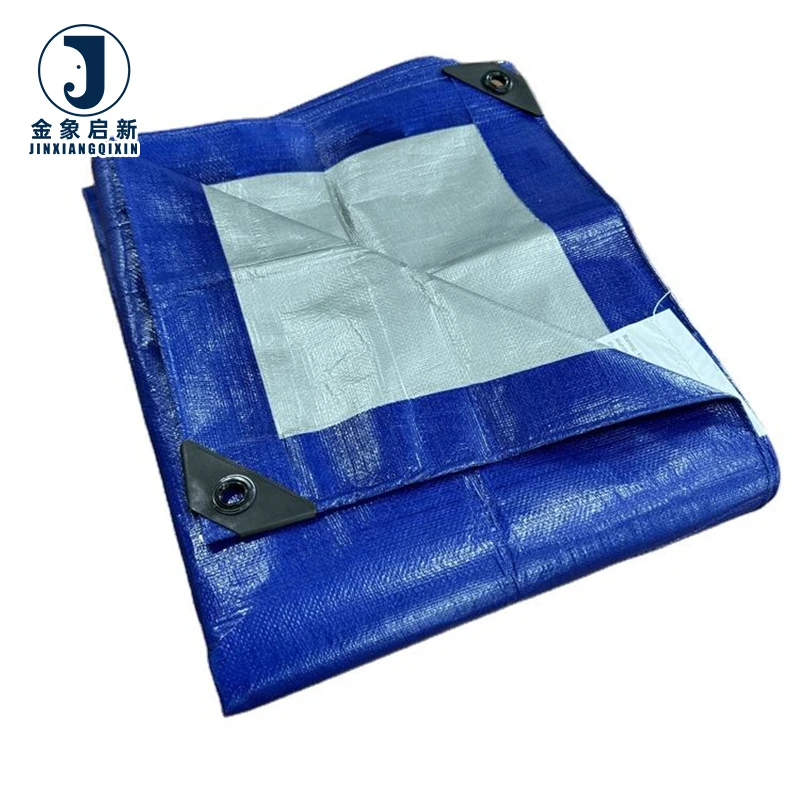
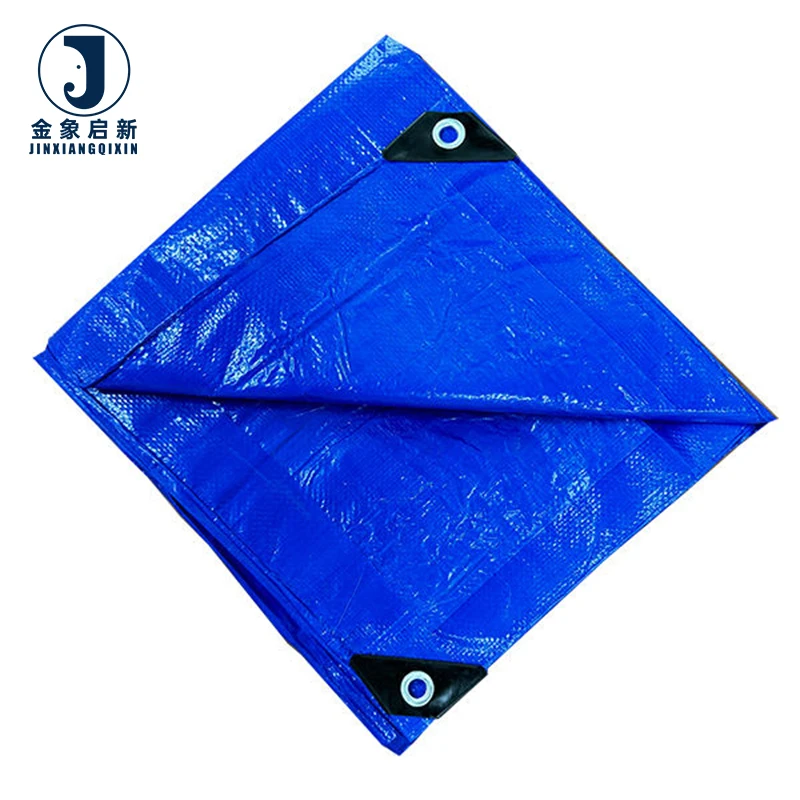
Deep Process Control — every roll of PE Tarpaulin undergoes in-process coating weight verification and 100% pre-shipment inspection to ensure stated GSM and treatment performance match the specification sheet before dispatch.
Technical Specifications
| Parameter | Value |
|---|---|
| Product Type | PE Tarpaulin |
| Material | PE (Polyethylene) Woven Fabric |
| Weave | Plain |
| Surface Treatment | Waterproof Coating |
| UV Protection | UV Resistant (test basis not stated — confirm UV rating for project specification) |
| Mildew Resistance | Mildew-Proof |
| Construction | Heavyweight |
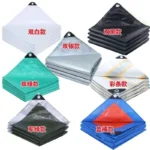
| Customization | Available in various sizes and colors |
Application Suitability
| Application | Exposure & Requirement |
|---|---|
| Tent coverings for outdoor events | Prolonged sun and rain exposure, tensioned framing loads, rapid deployment and teardown cycles |
| Vehicle and car protection covers | Road debris impact, standing water pooling, UV degradation on horizontal and vertical surfaces |
| General outdoor waterproof coverings | Continuous weather exposure, wind lift forces, mildew risk in humid or shaded environments |
| Specialist outdoor covers for mining and tunnelling sites | Heavy dust accumulation, mechanical abrasion, compliance verification for site safety standards |
Why PE Tarpaulin Weight Claims Fail at the Loading Bay
The quotation states one weight, but the roll arriving at your site tells a different story.
When sourcing PE Tarpaulin for industrial ventilation and specialist structures, the gap between quoted GSM and actual delivered weight is one of the most common disputes between buyers and mills. Lightweight material slips through because verification rarely happens before the container seals. For contractors installing tent structures or fabricating equipment covers, underweight fabric means premature failure at stress points, seam separation under wind load, and replacement costs that dwarf the original savings [NEED_CITE: tensile and tear test methods for coated fabrics per ISO 1421].
The issue compounds when UV resistant or mildew-proof claims appear on the data sheet without an accompanying test report. Without documented exposure hours or a rating grade, there is no way to confirm the treatment will hold through an entire season of outdoor deployment.
Structural Stability Through Plain Weave PE Construction
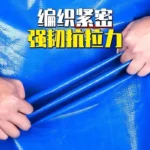
The plain weave structure in this PE Tarpaulin provides balanced warp and weft interlacing, which distributes tension evenly across the fabric plane. For tent structures and temporary shelters where the membrane is tensioned over frames, this even load distribution reduces the risk of localised distortion or thread slippage at attachment points. The heavyweight construction adds mass that resists wind uplift and limits flutter-induced fatigue along welded seams.
Waterproof and Mildew-Proof Treatment for Extended Deployment
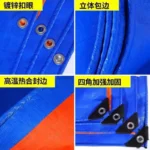
Waterproof coating on PE woven fabric prevents moisture ingress through the weave intersections, which is where untreated fabrics typically start to leak under sustained rainfall. The mildew-proof treatment addresses the secondary failure mode that occurs when trapped moisture promotes fungal growth on organic contaminants lodged in the fabric surface. Together, these treatments extend service intervals for PE Tarpaulin used in long-term outdoor installations where regular cleaning access is limited [NEED_CITE: mildew resistance testing standards for coated textile materials].
Reading the Specification Sheet Beyond GSM
GSM alone does not define how a PE tarpaulin will perform in the field. The base fabric denier and the weave density determine how the load transfers between individual yarns, which directly affects tear propagation resistance. A heavyweight PE woven fabric with low denier yarns may achieve the target GSM through excessive coating weight rather than structural yarn mass, which can lead to coating delamination under flex stress. The PE coating application method influences peel strength between the coating and the base fabric, determining whether the material can be reliably heat-welded for fabricated structures. Buyers specifying PE Tarpaulin for industrial ventilation and specialist structures should evaluate GSM in combination with base fabric construction data and coating weight to understand the true balance between flexibility and mechanical strength.
The Cost of Specification Mismatches on Site
When a fire-retardant or anti-static certification is assumed rather than verified, the installation may fail site safety inspection, forcing removal and replacement under deadline pressure. Colour variation between rolls in the same order becomes visible once panels are installed side by side on a tent structure, requiring selective replacement that disrupts the project timeline. Welded seams that fail before the fabric body does typically trace back to incorrect heat settings for the specific coating formulation, leaving the contractor liable for rework costs [NEED_CITE: weld strength testing for PE coated fabrics].
Why Buyers Source PE Tarpaulin from Jinxiang
Three full production lines and 36 sets of professional equipment support bulk roll output with consistent coating application, meaning the PE Tarpaulin you receive in the third shipment matches the first. The 10-person R&D team develops custom samples within days, allowing you to verify colour, weight, and treatment response before committing to a full production run. Dedicated QA/QC inspection at every stage catches coating weight deviations and surface defects before the roll reaches the packing bench. Material specification sheets, test reports for UV and flame-retardant grades where applicable, and pre-shipment inspection records accompany every dispatch, giving your receiving team the documentation to verify the order independently [NEED_CITE: DIN 4102 fire classification for building materials].
Documentation & Verification
- Material specification sheet stating GSM, base fabric denier, and PE coating weight for every roll
- UV resistance test report confirming exposure rating when UV treatment is specified
- Pre-shipment inspection record verifying waterproof coating integrity and dimensional accuracy
- Roll packing list with batch numbers for traceability across the full order quantity
- Certificate of origin and customs documentation supporting international shipment clearance
Fabrication, Handling & Storage
- Heat welding parameters must match the PE coating formulation to prevent seam failure on heavyweight fabric
- Store rolls horizontally on pallets to avoid compression marks on the waterproof coating surface
- Allow cold-stored rolls to reach ambient temperature before unrolling to prevent PE cracking
- Cut patterns should account for plain weave grain direction to maximise tear resistance in tensioned applications
- Use compatible PE-based repair tape for field patching to maintain waterproof continuity
- Avoid solvent-based cleaners that may degrade the mildew-proof treatment on the coating surface
Project Specification and Sampling
To move from inquiry to sample approval, provide the intended application and environmental exposure conditions so the correct treatment combination can be recommended. Specify the target market and any fire-retardant or anti-static compliance requirements the installation site mandates. Indicate the required roll widths, annual volume, and whether you need PE Tarpaulin supplied as stock rolls or finished cut-to-size panels with edge reinforcement.
Frequently Asked Questions
Q: How can I verify that the GSM on the quotation matches the PE Tarpaulin I receive?
A: Request a material specification sheet before order confirmation that states the exact GSM, base fabric denier, and PE coating weight. On arrival, weigh a measured sample from each roll and compare it against the stated specification. The pre-shipment inspection record included with your order documents the verified weight of every roll before dispatch.
Q: What fire-retardant or anti-static certification is available for mining and tunnelling sites?
A: Fire-retardant and anti-static treatments are available in various grades, but the specific certification required depends on the site operator and local regulations. Confirm the exact standard your site mandates during inquiry so the correct grade can be applied and documented with a test report supplied alongside the shipment.
Q: How is UV resistance tested and what exposure duration does the treatment support?
A: UV resistance is claimed for this PE Tarpaulin, but the test basis and exposure hour rating should be confirmed for your specific project specification. Request a UV test report stating the exposure duration or rating grade, and cross-reference it against the expected service interval for your installation environment.
Q: What are the minimum order requirements for custom sizes and colors?
A: Custom sizing and color matching are available through the R&D team, which develops samples within days for project-specific requirements. Minimum order quantities and lead times depend on the custom width, color, and volume requested. Provide your target dimensions and annual usage during inquiry to receive a precise quotation with production timeline.
Q: What guidance is available for welding PE woven tarpaulin in structural applications?
A: Heat welding parameters must be matched to the PE coating weight and formulation to achieve reliable seam strength. Incorrect temperature or dwell time causes the weld line to fail before the fabric body under tension. Request fabrication guidance specific to your roll specification during the sampling phase to validate weld settings before full production.