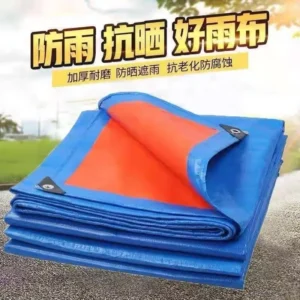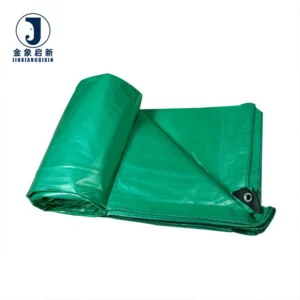
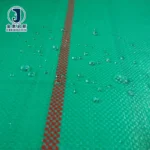
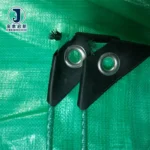

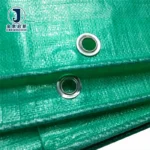
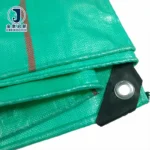
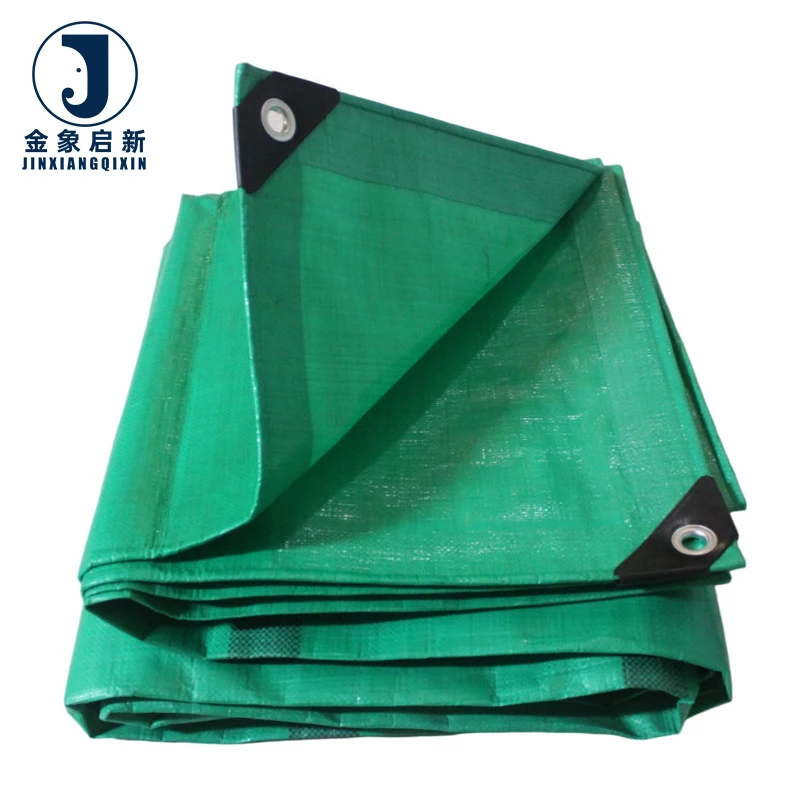
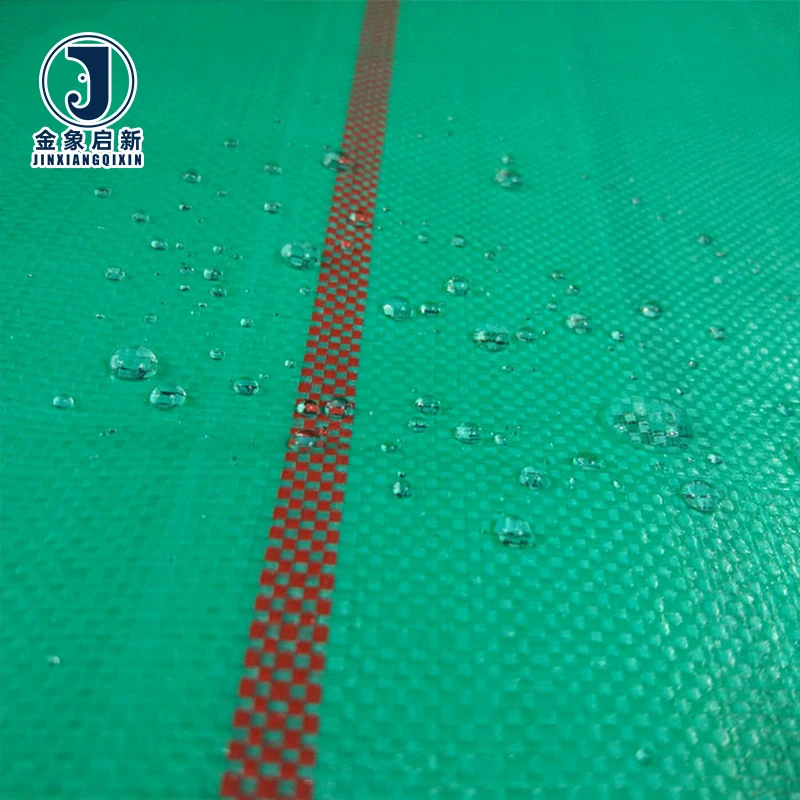
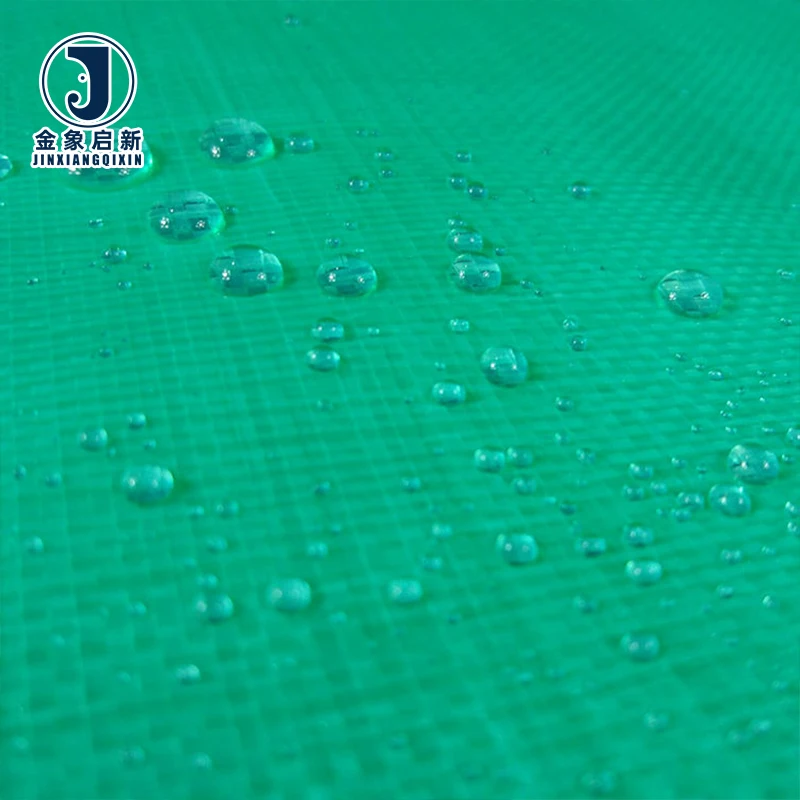
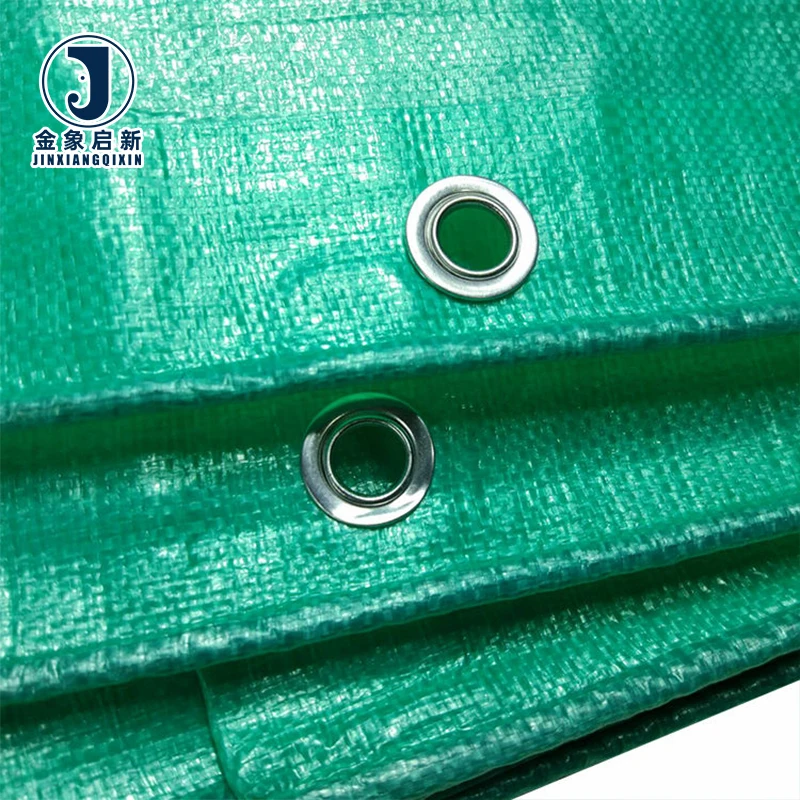
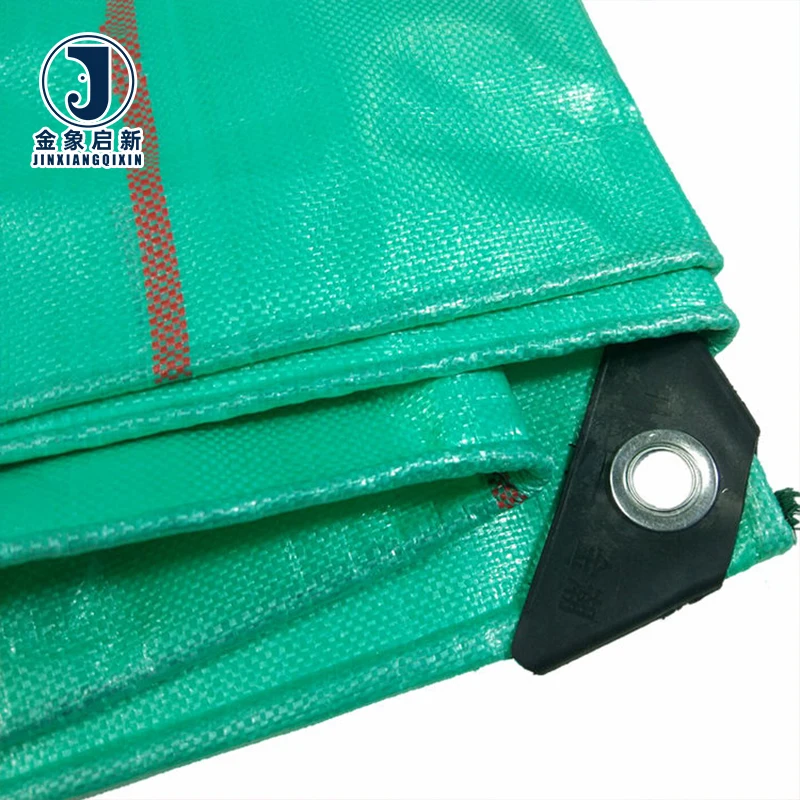
Process-Controlled Coating — Every roll of this PE tarpaulin is produced on dedicated lines with in-process weight checks, ensuring the HDPE weave and LDPE lamination meet the stated specification before dispatch.
Technical Specifications
| Parameter | Value |
|---|---|
| Product Type | PE Tarpaulin |
| Material | HDPE weaving with LDPE lamination on both sides |
| Weight (GSM) | 50gr/m2 ~ 220gr/m2 available (confirm the grade for this item) |
| Total Thickness | 0.2–0.4 mm / 8 mil–16 mil / Custom |
| Roll Width | 6ft, 8ft, 10ft, 12ft or 2m, 4m, 6m |
| Roll Length | 100 yards, 100 meters, or custom |
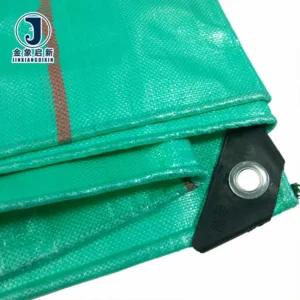
| Edge Reinforcement | PP rope in hem on all four edges |
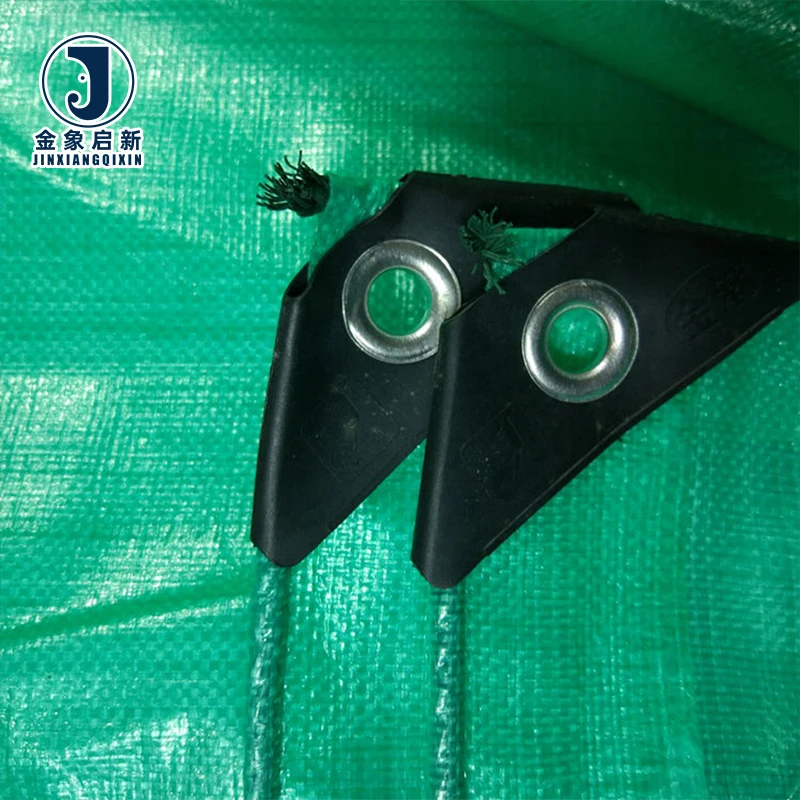
| Eyelets | Galvanized, every 3ft or 1 meter interval |
| Corners | Reinforced plastic corners |
| UV Treatment | Available (test basis not stated — request specific test report) |
| Flame Retardant Grade | Not stated (available in flame retardant grades — confirm the grade required for your site) |
| Anti-Static | Not stated |
| Key Features | Waterproof, washable, tear resistant, weather proof, sunproof, mildew proof, anti-aging |
Application Suitability
| Application | Exposure & Requirement |
|---|---|
| Mining and tunnelling site equipment covers | Corrosive dust, abrasive particulates, acid-alkali contact, continuous outdoor UV exposure |
| Aviation and construction temporary weather barriers | Rain ingress, wind-driven debris, frequent deployment and folding, sun exposure |
| Specialist structure ground covers and membrane wraps | Soil chemistry, puncture risk, prolonged weathering, dimensional stability under tension |
| Truck and trailer load protection | Road spray, tie-down abrasion at eyelets, flex fatigue at fold points, sun and rain cycling |
Why "Medium Duty" Without a GSM Breakdown Leaves You Exposed
GSM alone does not define how this PE tarpaulin for industrial ventilation and specialist structures performs under site loads.
A buyer specifying a PE tarpaulin for industrial ventilation and specialist structures often receives a quotation stating a single GSM figure. That number, without supporting data on base fabric denier and LDPE coating weight distribution, tells you very little about tear propagation resistance or seam integrity at flex points. I have seen rolls arrive within the quoted GSM range yet fail at the hem because the weave density was too low to hold the eyelet under tension [NEED_CITE: tensile and tear test methods for coated fabrics per ISO 1421]. The coating may account for most of the weight while the structural HDPE base remains underspecified.
Lamination Integrity Across the Roll Width
This PE tarpaulin uses HDPE weaving with LDPE lamination applied to both sides. Dual-side lamination is critical for specialist structure applications where the fabric may contact alkaline substrates on one face while exposed to weathering on the other. If the lamination adhesion is uneven across a 6-metre roll width, delamination begins at the weaker edge — typically the first point of failure during wind uplift on a temporary enclosure. Our production lines maintain consistent nip pressure during lamination to reduce this risk.
Anti-Aging Formulation for Extended Site Deployment
The anti-aging additive package incorporated during LDPE extrusion includes anti-oxidants that slow polymer chain degradation under UV and thermal cycling. For mining or aviation site covers that remain deployed for extended periods, this treatment delays embrittlement and surface chalking. Without anti-oxidant stabilisation, LDPE laminates lose flexibility after sustained sun exposure, making the fabric prone to cracking at fold lines during removal [NEED_CITE: oxidative degradation mechanisms in polyolefin laminates].
Reading the Specification Sheet Correctly
The GSM range of 50gr/m2 to 220gr/m2 covers the full product family — the specific grade for your order must be confirmed before production. Within that range, tensile and tear performance depend on how the total weight is distributed between the HDPE base fabric and the LDPE coating layers. A 90gr/m2 grade with a high-density weave and thin lamination will resist tearing better than a 90gr/m2 grade where most of the weight sits in the coating. Similarly, thickness readings of 0.2–0.4 mm correlate with puncture resistance but not necessarily with seam strength at the eyelet. Always request the material specification sheet showing base fabric denier and coating weight separately.
What Happens When Colour Consistency Is Not Controlled
Roll-to-roll colour variation is a recurring complaint when PE tarpaulin is sourced from suppliers without batch-level pigment control. On a specialist structure project where multiple panels hang side by side, even a slight hue shift between rolls becomes visible once installed. This is not merely cosmetic — inconsistent pigment loading can signal uneven additive distribution, which affects UV stability across the installation. We control masterbatch dosing per production run and run comparison checks against the approved colour reference before dispatch.
What Happens When the Weld Fails Before the Fabric
On truck covers and site enclosures, welded seams carry load at the points where the fabric flexes most — around eyelets, at hem corners, and along tie-down lines. If heat-sealing parameters are not matched to the LDPE lamination thickness, the weld becomes the weakest element in the assembly. I have seen laminated PE tarpaulin assemblies where the weld line separated cleanly while the surrounding fabric remained intact [NEED_CITE: heat-seal parameter optimisation for polyolefin laminates]. Correct temperature, dwell time, and pressure settings must be established for each GSM grade.
Why Procure This PE Tarpaulin Here
Three full production lines and 36 sets of professional equipment give us the capacity to run custom widths and lengths without disrupting standard roll output. The 10-person R&D team handles material selection, sample development, and specification matching for each project — not a generic catalogue pick. Every roll undergoes 100% pre-shipment inspection covering GSM verification, eyelet spacing, hem reinforcement integrity, and surface quality. Samples for custom width, colour, or printing requirements are developed within days, not weeks. ISO and CE documentation ships with every order, and our QA team maintains inspection records traceable to the production batch.
Documentation & Verification
- Material specification sheet stating confirmed GSM, base fabric denier, and LDPE coating weight for the ordered grade
- Pre-shipment inspection record covering weight, dimensions, eyelet count, and hem reinforcement per roll
- ISO and CE certificates included in the dispatch documentation package
- UV treatment test report supplied where anti-UV is specified — confirm the test basis required for your market
- Roll packing list with batch reference for traceability and customs clearance support
- Certificate of origin available for preferential tariff claims
Fabrication, Handling & Storage
- Heat-seal temperature and dwell time must match the specific LDPE lamination thickness to prevent weld failure
- Galvanized eyelets at 3ft or 1m intervals require PP rope hem backing to distribute tie-down loads
- Store rolls on pallets away from direct sunlight to preserve anti-aging additive effectiveness before deployment
- Unfold laminated PE tarpaulin carefully in cold conditions — LDPE stiffens at low temperatures and may crack if forced
- Reinforced plastic corners should be inspected after transport for displacement before site installation
- Clean with mild detergent only; solvents degrade the LDPE lamination surface and reduce waterproof integrity
What to Include in Your Enquiry
To specify the correct PE tarpaulin for industrial ventilation and specialist structures, provide the deployment environment (mining, aviation, construction, or other), expected exposure conditions including chemical contact and UV duration, and the compliance standards your site requires. Confirm whether you need roll stock or finished cut sizes with eyelets and hems, and specify any custom width or length beyond the standard options. If fire-retardant or anti-static performance is mandated on your project, state the grade or test standard so we can confirm availability and supply supporting documentation.
Frequently Asked Questions
Q: How is the GSM verified before shipment and what documentation supports the quoted weight?
A: Every roll is weighed and measured during pre-shipment inspection, and the result is recorded against the agreed specification. We supply a material specification sheet and inspection record showing the confirmed GSM for your specific grade, not a generic product family range. This allows you to verify the weight on arrival against documented evidence.
Q: What UV test basis supports the anti-UV treatment for outdoor exposure?
A: UV treatment is available, but the specific test basis depends on the grade selected. We recommend you state the test standard required for your market and exposure duration so we can confirm the appropriate treatment level and supply the corresponding test report with your shipment documentation.
Q: Can custom widths and lengths be supplied for specialist structure projects?
A: Yes. Roll widths beyond the standard 2m, 4m, and 6m options can be produced, and custom lengths are available on request. Our R&D team will confirm the minimum order quantity and lead time based on your specific width and colour requirement during the sample development stage.
Q: How is batch-to-batch colour consistency controlled across rolls in the same order?
A: Pigment masterbatch dosing is controlled per production run, and each roll is compared against the approved colour reference before packing. For large orders spanning multiple production batches, we run cross-batch comparison checks to ensure panels installed side by side show no visible variation.
Q: Are fire-retardant or anti-static certifications available if the tarpaulin is used near ventilation ducts on regulated sites?
A: Fire-retardant and anti-static grades are available within our product range, but the specific grade must be confirmed against your site’s regulatory requirements. State the standard your project mandates, and we will confirm availability and include the relevant certification in the documentation package with your order.