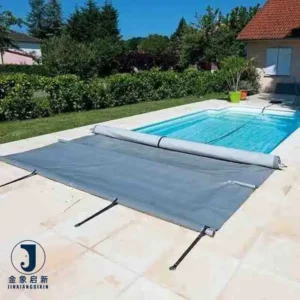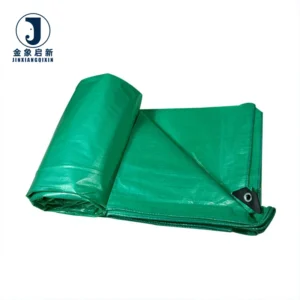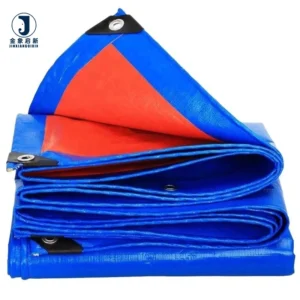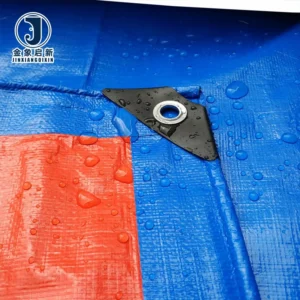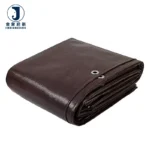
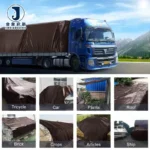
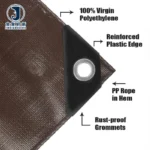
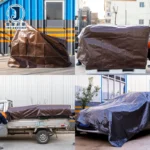


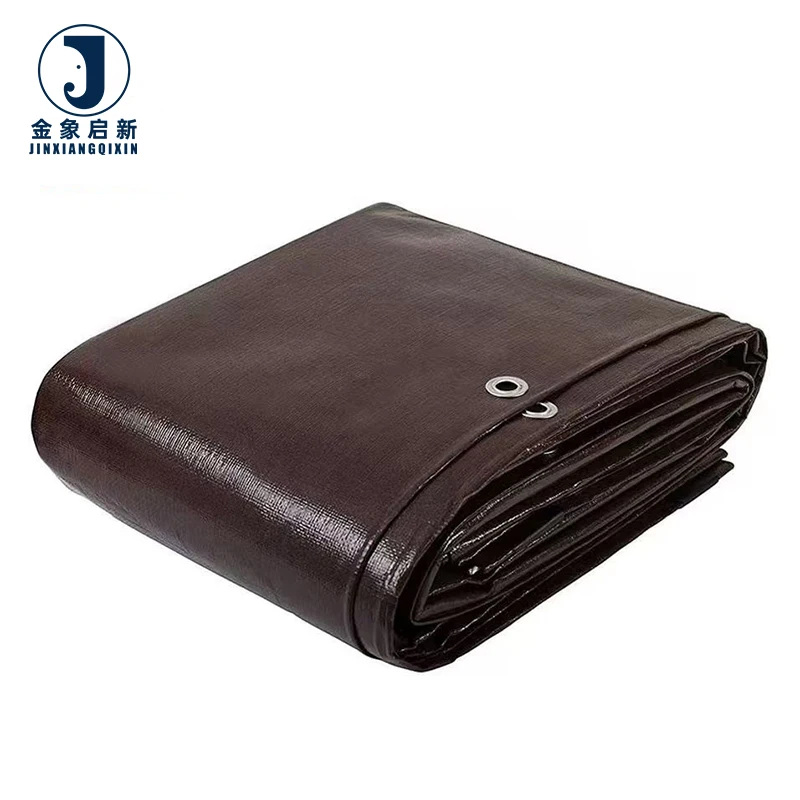
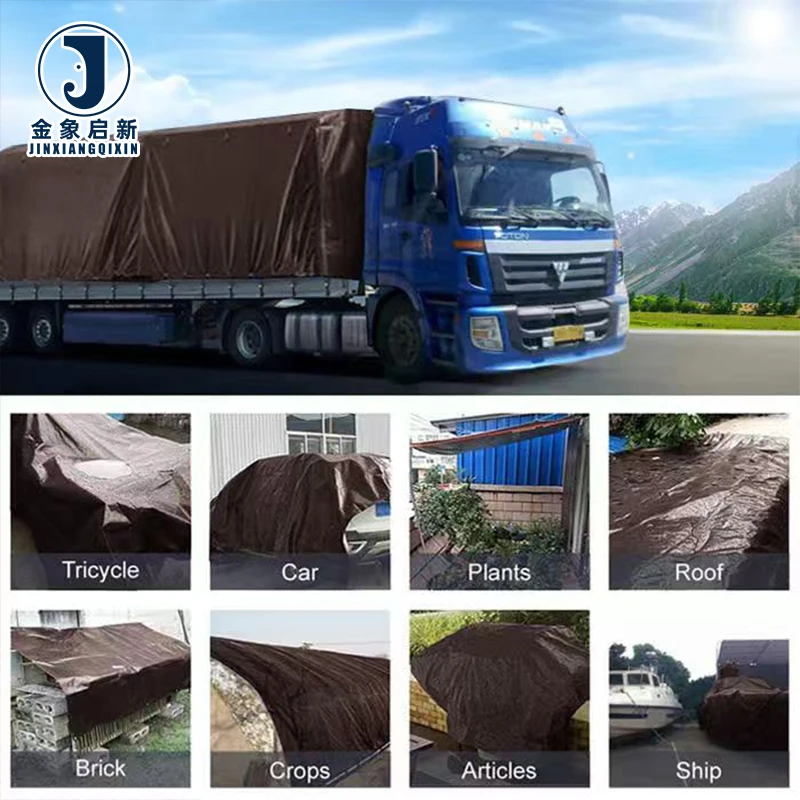
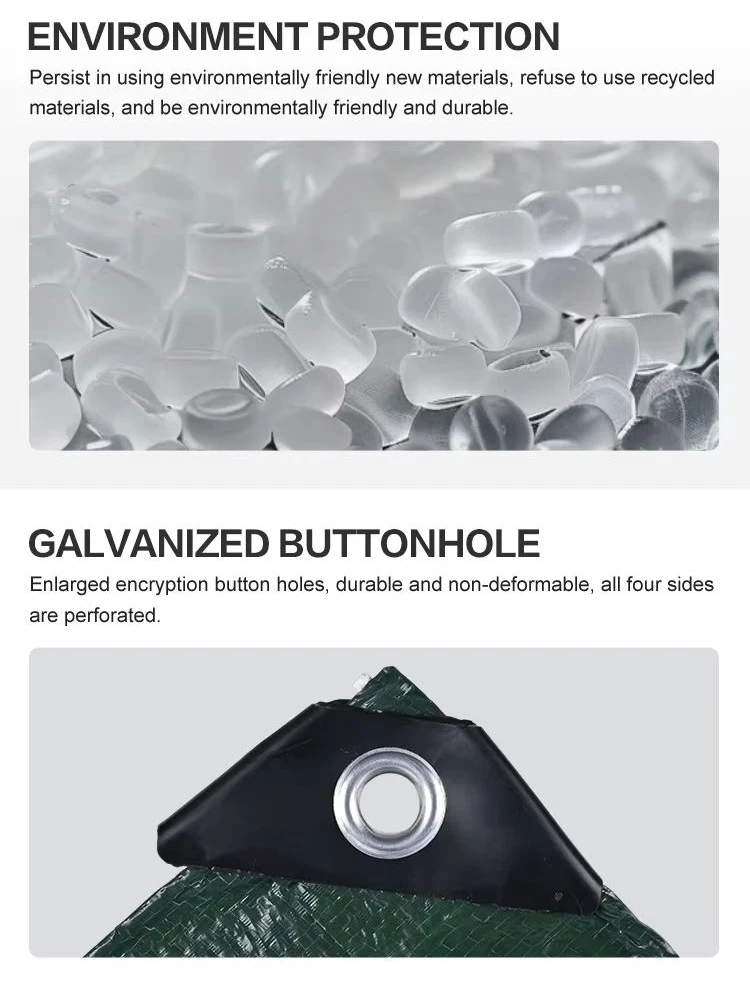
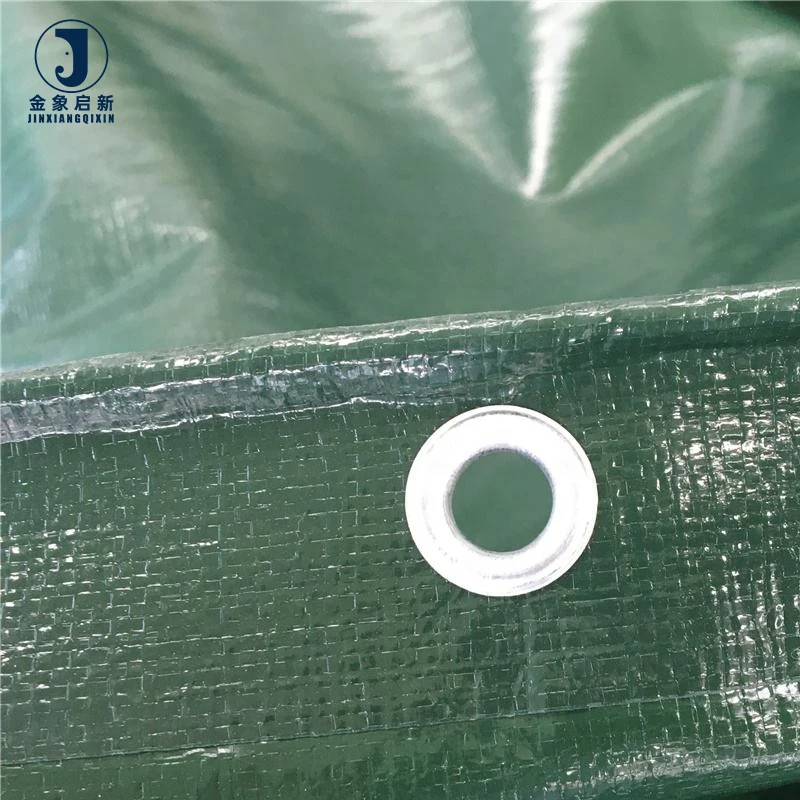
Verified Weight Per Roll — every PE tarpaulin roll undergoes GSM check against the quotation before dispatch, supported by a pre-shipment inspection record.
Technical Specifications
| Parameter | Value |
|---|---|
| Product Type | PE Tarpaulin |
| Material | Polyethylene |
| Weight Range | 40g~500g/m² (confirm the grade for your application) |
| Thickness | 0.18–0.35 mm |
| Knitting Density | 8×8, 10×10, 12×12, up to 20×20 |
| Tensile Strength (Meridian) | 300–1200 N/5cm (test basis not stated in source) |
| Tensile Strength (Latitude) | 250–1000 N/5cm (test basis not stated in source) |
| Size | Custom size |
| Color | Custom color |
| Surface Treatment | UV treatment available — confirm the grade required for your market |
| Additional Treatment | Mildew proof, anti-aging (test basis not stated in source) |
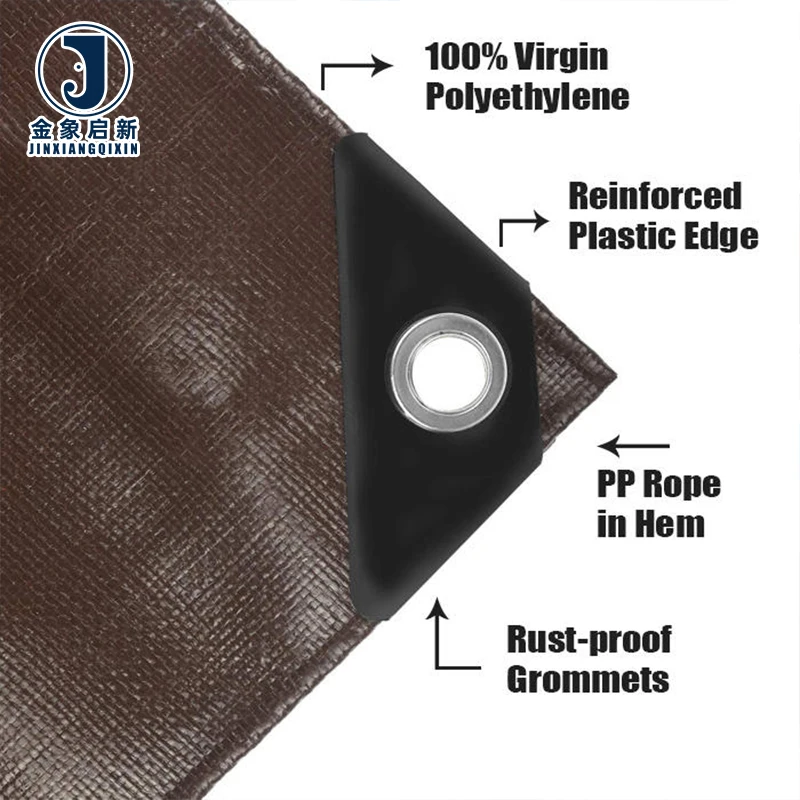
| Water Resistance | Double waterproof surfaces |
| Reinforcement | Reinforced corners |
| Certification | ISO, CE |
Application Suitability
| Application | Exposure & Requirement |
|---|---|
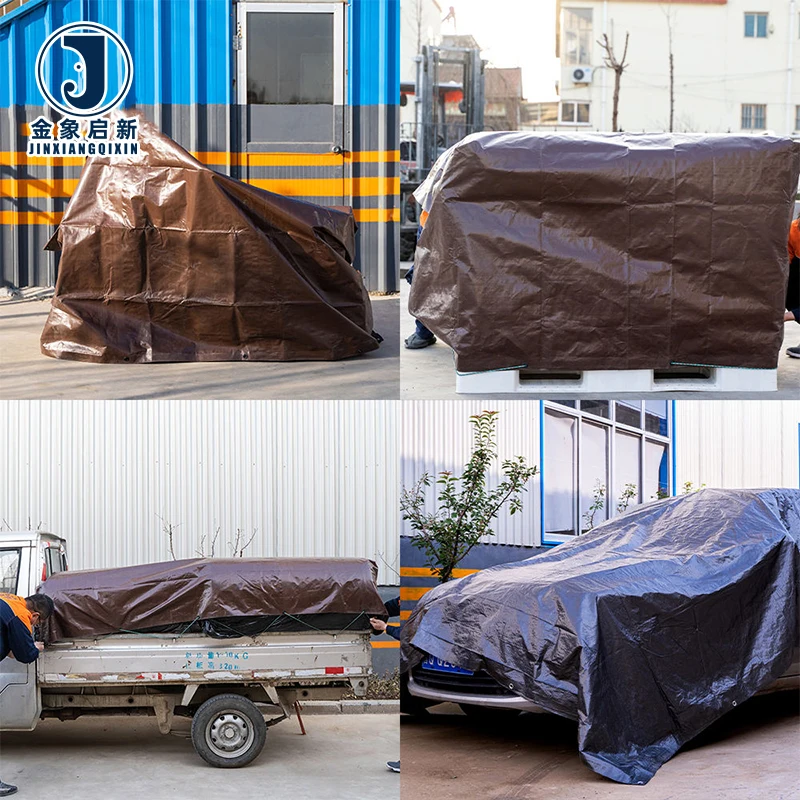
| Industrial equipment covers | Dust, moisture, UV exposure during yard storage; requires abrasion resistance at tie-down points |
| Warehouse and stockpile covering | Prolonged weather exposure, wind uplift on large spans; demands consistent water resistance across seams |
| Transport and logistics load protection | Road debris impact, constant vibration, flexing at load edges; needs tear resistance and reinforced corners |
| Agricultural and aquaculture site covers | Direct sunlight, soil contact, chemical exposure from fertilizers; requires mildew resistance and waterproof integrity |
Why PE Tarpaulin Roll Wholesale Bulk Buyers Cannot Rely on GSM Alone
GSM tells you what the fabric weighs, not how the base fabric distributes load across its weave.
A 200 g/m² PE tarpaulin woven at 8×8 density behaves entirely differently under tension than the same weight woven at 12×12. The heavier weave concentrates more yarn at stress points, which delays tear propagation when the fabric flexes over uneven loads. Distributors who specify only by weight often receive rolls that pass the scale test but fail on the truck within weeks. [NEED_CITE: tensile and tear test methods for coated fabrics per ISO 1421]
Ventilation Duct and Specialist Fabrication Requirements
When PE tarpaulin is used as a component in specialist structures or temporary enclosures, the knitting density directly controls how the material responds to negative pressure and wind oscillation. A loose 8×8 weave allows micro-movement between yarns, which gradually enlarges puncture points under cyclic loading. Industrial contractors specifying PE tarpaulin aftermarket supplier stock for these applications need the denser 12×12 or higher constructions to maintain dimensional stability.
Coating Adhesion and Waterproof Integrity
The double waterproof surfaces on this PE tarpaulin family depend on consistent coating penetration into the woven substrate. If the base fabric has uneven tension from the loom, the polyethylene coating bridges gaps rather than bonding into the weave, creating delamination points that appear after the first season of outdoor storage. This is why roll-to-roll consistency matters more than the coating thickness stated on the data sheet. [NEED_CITE: coating adhesion test methods for polyethylene laminated fabrics]
Reading GSM, Density, and Tensile Data Together
The knitting density figures (8×8 through 20×20) define how many yarns per unit area carry the load, while GSM reflects total mass including the polyethylene coating. A high GSM with low density means most of the weight sits in the coating rather than the structural yarns — this produces a stiff fabric that re*the surface. The tensile strength range from 300 to 1200 N/5cm across the meridian corresponds to the density tier selected, so confirming both values before production prevents mismatch between expected and delivered performance. The thickness range of 0.18–0.35 mm aligns with lightweight through heavy-duty grades and should be verified alongside knitting density rather than used as a standalone indicator of durability.
The Hidden Cost of Specifying the Wrong Grade
Ordering lightweight 8×8 stock for transport covering leads to early failure at corner reinforcements, where the fabric cannot distribute tie-down loads across enough yarns. Conversely, specifying heavy-duty 12×12 for agricultural pond lining adds unnecessary material cost and makes the roll harder to deploy on soft ground. Batch color variation across a mixed-grade order becomes visible when rolls are installed side by side on warehouse roofs, forcing contractors to reject entire shipments. [NEED_CITE: common failure modes in polyethylene tarpaulin field applications]
What This Supply Chain Delivers
Three full production lines and 36 sets of professional equipment support bulk PE tarpaulin roll output with on-time dispatch against confirmed lead times. A 10-person R&D team develops custom width, color, and size samples within days for distributor evaluation before committing to container volumes. Dedicated QA/QC at every production stage ensures 100% inspection before shipment, with every roll checked against the agreed GSM and color reference. Nearly 30 years of coated fabric process control underpins the adhesion consistency across the full weight range from 40g to 500g/m².
Documentation & Verification
- Material specification sheet stating confirmed GSM, knitting density, and coating type per roll
- Weight verification per roll against the stated GSM before dispatch
- 100% pre-shipment inspection record confirming dimensions and color consistency
- Roll packing list with container loading plan by count and weight
- Certificate of origin and customs documentation for international freight
- ISO and CE certificates applicable to the production facility
Fabrication, Handling & Storage
- Hot-air welding parameters vary by thickness — test on the 0.18–0.35 mm range before production runs
- Reinforced corners require bar-tack stitching aligned with the knitting density direction
- Store rolls vertically on pallets to prevent flat-spot deformation on the polyethylene coating
- Allow cold-stored rolls to reach ambient temperature before unrolling to avoid surface cracking
- Use mild detergent only — solvents degrade the mildew-proof and anti-aging surface treatment
- Nest custom-size cuts within roll width to maximize yield and minimize offcut waste
Moving from Inquiry to Confirmed Order
Provide the target GSM, knitting density preference, and intended application so the correct grade is matched to your exposure conditions. Specify the required roll width and whether you need container-load quantities or mixed-grade pallets. Confirm any UV treatment grade or color reference needed for your market, and request a sample roll before committing to bulk PE tarpaulin roll wholesale bulk volume.
Frequently Asked Questions
Q: How do I select the right GSM and knitting density for my application?
A: GSM indicates total weight including the polyethylene coating, while knitting density (8×8 through 20×20) determines how the structural yarns distribute load. For transport covering, higher density resists tear propagation at flex points. For agricultural covering, lighter GSM with moderate density keeps deployment manageable. Submit your application details so the correct tier is matched.
Q: Can custom sizes and colours be produced with consistent quality across a large order?
A: Yes. The 10-person R&D team develops custom width, color, and size samples within days. Once approved, production runs follow the same QA/QC process applied to stock grades, with color uniformity verified across all rolls in the same order to prevent visible variation when installed side by side.
Q: What test reports are available for UV and water resistance claims?
A: UV treatment is available across the range, and the specific grade should be confirmed for your market requirements. Test documentation supporting the stated treatment level is supplied with the material specification sheet. Request the applicable report during the inquiry stage to ensure compliance with your regional standards.
Q: How are corners and seams reinforced for heavy-duty industrial use?
A: Reinforced corners are standard across the range, with bar-tack stitching recommended at tie-down points. The double waterproof surfaces maintain integrity at stress concentrations when the correct knitting density is selected for the expected load. Welded seams should be tested against the specific thickness grade before full production.
Q: What pre-shipment inspection records and certificates are included with each dispatch?
A: Every shipment includes a 100% pre-shipment inspection record confirming weight, color, and dimensions per roll, along with a roll packing list, certificate of origin, and applicable ISO and CE documentation. The material specification sheet states the exact GSM and knitting density verified against the quotation before production.