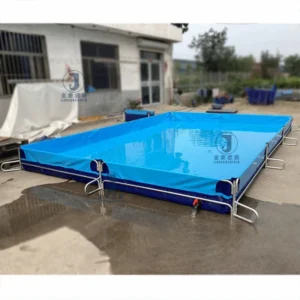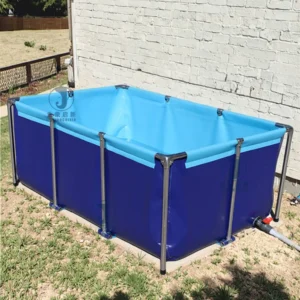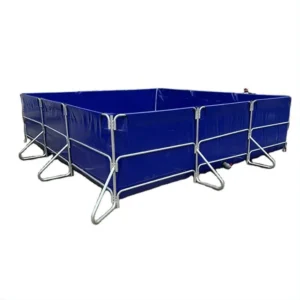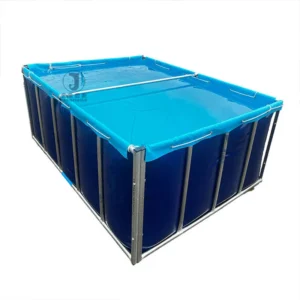
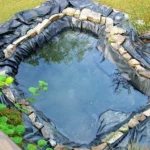
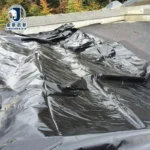
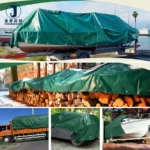
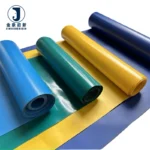


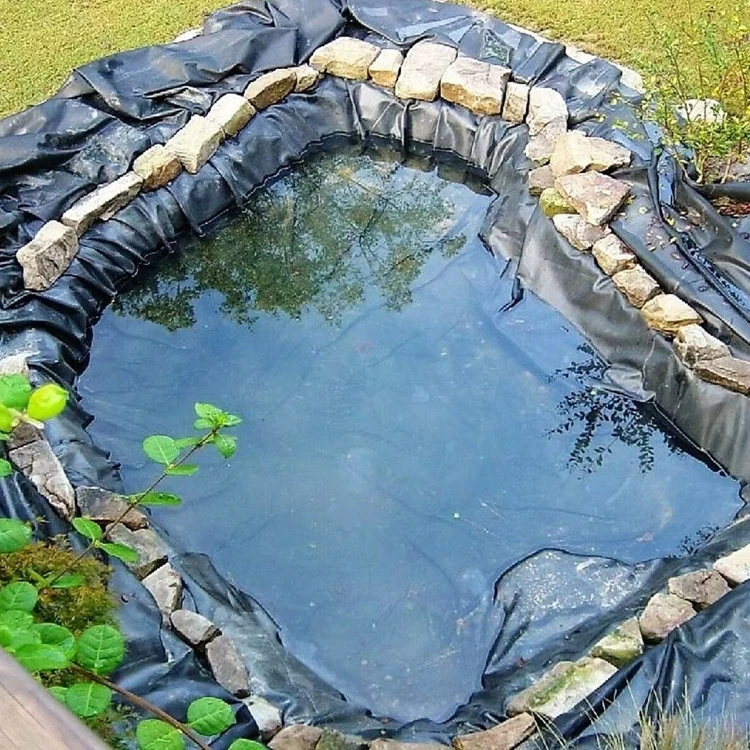
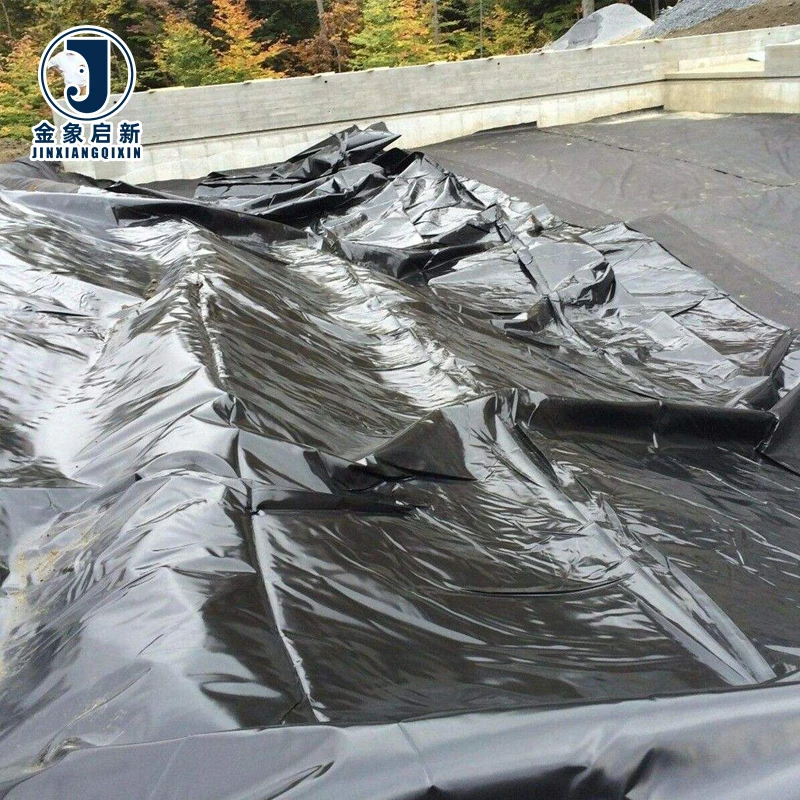
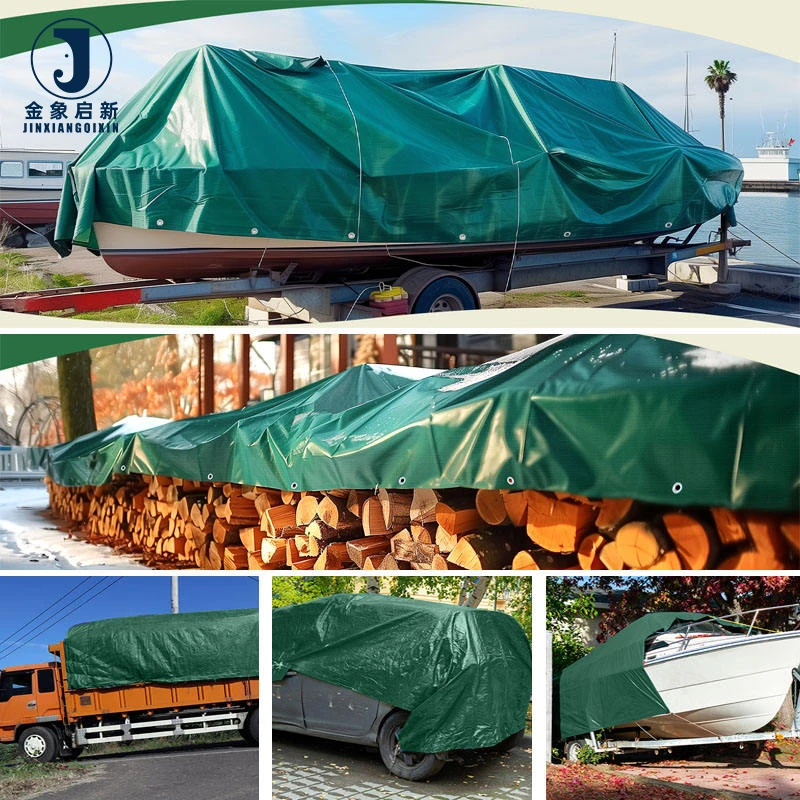
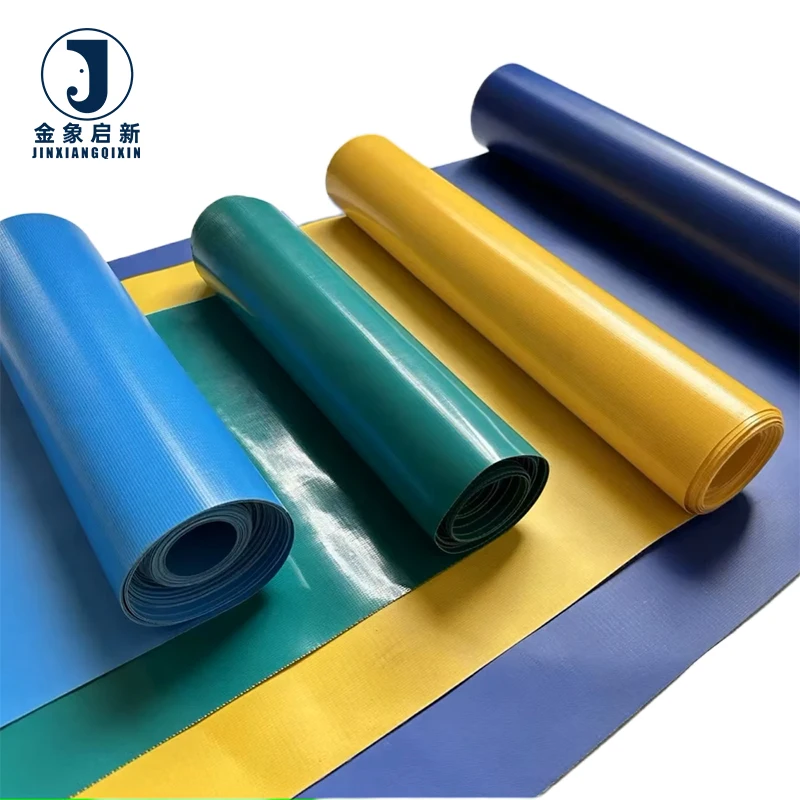
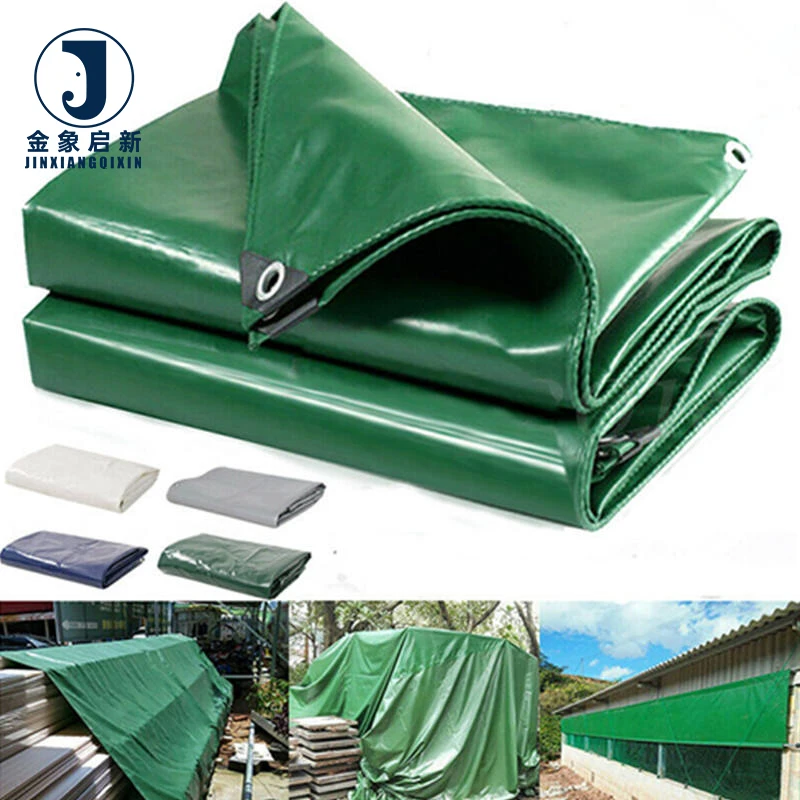
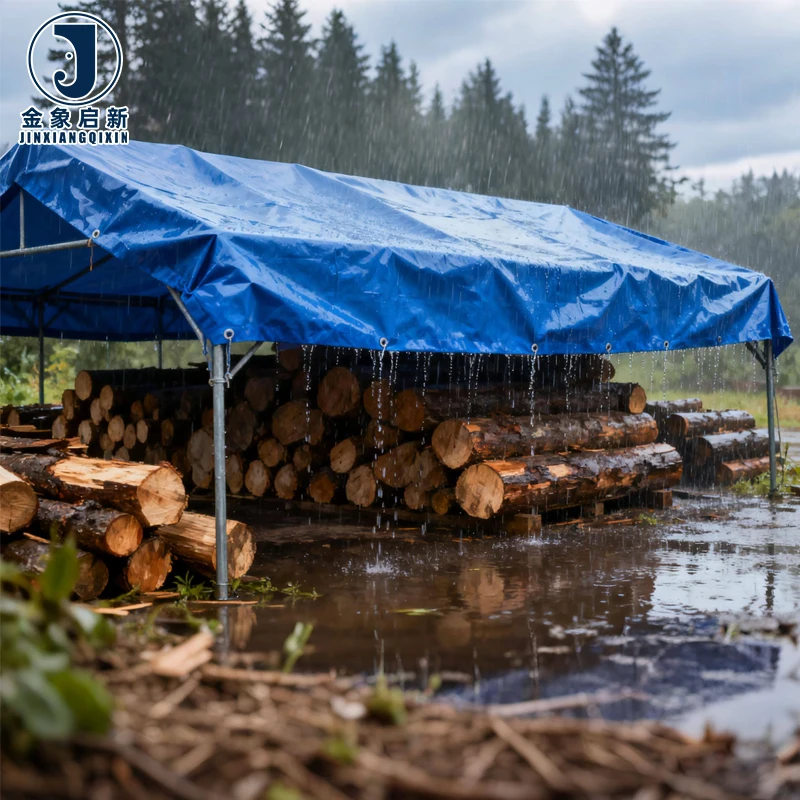
Coating adhesion control — hot-melt and laminated coating processes on high-tenacity polyester mesh deliver consistent bond strength verified at every production stage for aquaculture and technical containment applications.
Technical Specifications
| Parameter | Value |
|---|---|
| Product Type | PVC Coated Tarpaulin |
| Material Composition | PVC coating on high-strength polyester mesh fabric |
| Available Weight Grades | 350 gsm / 420 gsm / 500 gsm / 550 gsm / 600 gsm / 750 gsm |
| Available Thickness | 0.32 mm / 0.35 mm / 0.4 mm / 0.45 mm / 0.5 mm / 0.65 mm |
| Coating Technology | Laminated technology & hot-melt coating technology |
| Standard Roll Dimensions | 2 m × 75 m or 2.1 m × 50 m |
| Finish Product Sizing | Custom cut to buyer-specified dimensions or supplied as inventory rolls |
| Waterproof Construction | Fully waterproof coated surface |
| Anti-UV Treatment | Available — confirm test standard required for your exposure conditions |
| Flame Retardant Treatment | Available — confirm the grade required for your market |
| Anti-Static Treatment | Available — confirm surface resistance standard required |
| Anti-Mildew Treatment | Yes |
| Cold Crack Resistance | Yes |
| Weld Tear Strength | Outstanding tearing strength for welding (test standard not stated) |
| Colour Options | Blue / Red / Yellow / Light blue / Grey — custom colours available |
| Colour Fastness | Best colour fastness (grade not stated) |
| Certifications | ISO, CE |
Application Suitability
| Application | Exposure & Requirement |
|---|---|
| Aquaculture fish and shrimp ponds | Permanent water contact, soil chemistry exposure, puncture resistance from substrate |
| Agricultural reservoir and irrigation ponds | Continuous water containment, seasonal UV exposure, mechanical damage from maintenance equipment |
| Inflatable and membrane structures | Tensile load under air pressure, weather exposure, fire-retardant compliance for enclosed spaces |
| Industrial liquid containment and tank liners | Chemical resistance to stored liquids, seam integrity under hydrostatic pressure |
| Mining and tunnelling site water control | Abrasion from rock and aggregate, anti-static requirements in confined environments |
Why Fire-Retardant and Anti-Static Certification Matters for PVC Fish Pond Liner Fire Retardant Anti-Static Certified Specifications
A material certificate is only as reliable as the test standard it references — specifying without a grade leaves compliance to chance.
When a PVC fish pond liner fire retardant anti-static certified claim appears on a quotation, buyers in mining, aviation or enclosed-structure projects need more than a line item. Sites require documentation that references a recognised standard body and test method, not merely a supplier declaration. Without this, the liner may pass visual inspection on arrival but fail the site safety audit before installation begins. [NEED_CITE: fire classification standards for PVC coated fabrics in industrial containment]
Facilities operating under strict safety regimes cannot accept generic compliance language. The gap between "treated for flame retardancy" and "tested to a named grade" determines whether a containment liner or ventilation-adjacent membrane gets approved or rejected at the gate.
Coating Bond Integrity Under Containment Load
The hot-melt and laminated coating processes used on this PVC fish pond liner fire retardant anti-static certified fabric create a bond between the PVC layer and the polyester mesh that resists delamination under hydrostatic pressure. In pond and reservoir applications, the water column exerts continuous force on every welded seam and coated surface. If the coating adhesion is weak, separation begins at fold lines and weld overlaps — the exact points where containment failure causes the most damage. The dual-process coating approach addresses this by building adhesion through both thermal bonding and pressure lamination.
Selecting the Correct Grade for Technical Environments
Not every containment project demands the highest GSM. Shallow aquaculture ponds with stable substrates may perform well with lighter grades, while deep reservoirs or sites with rocky subgrades require heavier construction to resist puncture and sustained hydrostatic load. The available weight range from 350 gsm to 750 gsm, corresponding to thickness options between 0.32 mm and 0.65 mm, allows specification based on actual engineering demand rather than defaulting to the heaviest option. For mining or tunnel-adjacent water control, the PVC fish pond liner fire retardant anti-static certified specification must additionally address site-specific compliance requirements that go beyond basic water containment. [NEED_CITE: selection criteria for coated fabric liners in industrial water containment]
What GSM, Coating Method and Mesh Density Mean for Liner Performance
Weight in grams per square metre indicates total material mass but does not isolate coating thickness from base fabric density. A 550 gsm fabric with a dense polyester mesh and thin coating may outperform a 550 gsm fabric with loose mesh and thick coating in tear resistance, because the mesh carries the structural load while the coating provides waterproofing and chemical resistance. The hot-melt coating process forces PVC into the mesh interstices under heat and pressure, producing higher peel strength than simple knife-over-roll coating. This matters directly for welded seams: when two panels are joined by hot-air or wedge welding, the seam strength depends on coating-to-coating fusion. If the coating bond to the mesh is weak, the seam fails not at the weld but at the coating-mesh interface, leaving a leak path that is difficult to detect and repair in the field. Base fabric denier and thread count per centimetre determine how far a puncture or tear will propagate before the mesh structure arrests it. Higher thread density limits tear spread, which is critical for liner applications where a single substrate protrusion can initiate damage. The available thickness range maps to these combined variables — selecting by thickness alone without confirming the underlying mesh specification can lead to a liner that meets the number on paper but underperforms in puncture scenarios.
The Hidden Cost of Specifying Liner Fabric on Price Per Kilogram
Purchasing PVC coated liner fabric on a cost-per-kilogram basis incentivises suppliers to meet the stated GSM through heavier coating rather than denser mesh, because adding PVC compound is cheaper than increasing polyester yarn count. The result is a roll that passes the weight check on arrival but tears more easily at weld points and flex zones. For aquaculture operators, this failure mode appears as seam separation during the first fill cycle. For industrial containment buyers, it surfaces when the site safety team requests the PVC fish pond liner fire retardant anti-static certified test documentation and receives a generic statement instead of a graded result. Batch-to-batch colour inconsistency across rolls in the same order compounds the problem when liners are installed side by side in visible locations, forcing selective panel replacement. [NEED_CITE: coating weight versus base fabric density impact on coated fabric tear performance]
Why Technical Buyers Source This Fabric Here
Deep process control over coating weight and adhesion means every roll of this PVC coated liner undergoes coating bond verification during production, not only a final weight check. The ten-person R&D team develops material formulations matched to specific containment and compliance requirements, including fire-retardant and anti-static grades where the project demands it. Three full production lines and 36 sets of professional equipment provide the capacity to fulfil bulk roll orders with consistent lead times, while dedicated QA/QC at every stage — from mesh inspection through coating, winding and packing — ensures that the specification on the quotation matches the roll on the container floor. Pre-shipment inspection covers 100 percent of output before dispatch, and samples for custom colour, width or treatment are developed within days so that buyers can validate the material before committing to production volume.
Documentation & Verification
- Material specification sheet confirming GSM, base fabric denier, coating weight and colour reference for every roll
- Test reports for fire-retardant and anti-static grades referencing the applicable standard where treatments are specified
- Pre-shipment inspection record with per-roll weight and visual verification before container loading
- ISO and CE certificates included with dispatch documentation
- Roll packing list detailing net weight, gross weight and dimensions for customs clearance
- Certificate of origin and full customs support documentation provided on request
Fabrication, Handling & Storage
- Hot-air welding temperature and speed must be calibrated to the selected gsm and coating thickness to achieve full fusion without mesh scorch
- Reinforced hem tape applied before eyelet insertion distributes point loads on the 350 gsm to 750 gsm range, preventing tear-out at tie-down points
- Store rolls upright on pallets in covered space to prevent flat-spot deformation that creates visible crease lines when the liner is unrolled on site
- Allow cold-stored rolls to reach ambient temperature before unrolling to avoid coating crack at the core where the material has been under tension
- Clean welded seams with neutral pH detergent only; solvent-based cleaners degrade the PVC coating surface and reduce colour fastness over repeated wash cycles
- Field repairs to punctures require a patch of matching gsm with hot-melt adhesive compatible with the original coating chemistry for lasting bond
What We Need to Quote Your Project Accurately
Provide the containment application type, pond or reservoir dimensions, and maximum water depth so we can recommend the appropriate GSM and thickness from the available range. If your site requires fire-retardant or anti-static compliance, specify the standard or grade your local authority mandates. Confirm whether you need rolls in standard 2 m or 2.1 m widths or custom widths, and whether finished panels cut to your dimensions with welded seams are required. Share your target colour reference and annual volume so we can confirm lead time and batch consistency planning.
Frequently Asked Questions
Q: How do I match the fire-retardant grade to my market’s requirements?
A: Fire-retardant treatment is available across the PVC coated liner range, but the applicable grade depends on your local building or industrial safety code. Specify the standard your site authority requires — such as a national building material classification or industrial containment regulation — and we will confirm whether the available grade meets it, supported by a test report.
Q: What test basis supports the anti-static treatment claim?
A: Anti-static treatment can be applied during coating formulation. The relevant surface resistance value or test method depends on the application environment, particularly in mining or enclosed-structure settings where static discharge is regulated. Provide your site requirement and we will confirm the treatment specification with supporting documentation.
Q: How do I select GSM and thickness for a specific pond depth?
A: Deeper ponds exert greater hydrostatic pressure on the liner, demanding higher puncture and tear resistance. The available range spans 350 gsm at 0.32 mm through 750 gsm at 0.65 mm. Share your pond depth, substrate condition and expected service environment so we can recommend the grade that balances containment reliability with material efficiency.
Q: Is colour consistency guaranteed across multiple rolls in one order?
A: Roll-to-roll colour consistency is maintained through controlled coating formulation and in-process QA at every production stage. For orders spanning multiple rolls, we recommend requesting a production sample from the actual batch before full dispatch to verify colour match, particularly when panels will be installed adjacent to each other in visible locations.
Q: What documentation accompanies each shipment?
A: Every dispatch includes a material specification sheet confirming GSM, base fabric and coating details, a pre-shipment inspection record, ISO and CE certificates, a roll packing list and certificate of origin. Fire-retardant and anti-static test reports are included where the corresponding treatment has been specified in the order.